
Quick Take
- Retiring a single chimpanzee costs far more than most people would ever guess, a number that reveals just how complex lifelong sanctuary care really is. See the full cost →
- A 64-year-old chimp explored a forest for the first time in decades, and what happened next says everything about what sanctuary life can offer even late in life. Read about their arrival →
- America's use of chimps in biomedical research did not quietly fade out. It ended with a landmark decision that set off a years-long chain of events still unfolding today. See the NIH decision →
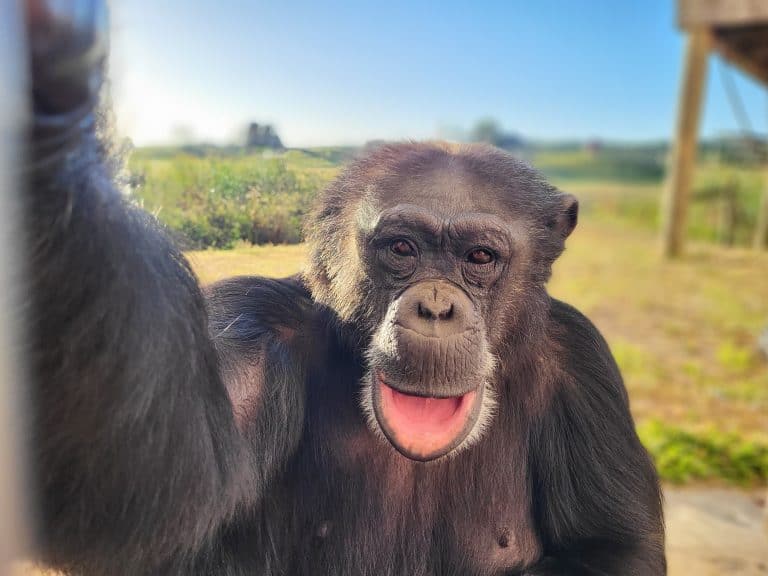
Home to about 300 chimps, Chimp Haven in Keithville, Louisiana, is the largest chimpanzee sanctuary in the world. Most of the sanctuary’s residents are retired chimps from biomedical research that now get to live on 200 forested acres.
In this article, I speak with Rana Smith, President and CEO of Chimp Haven. Learn more about the end of chimp research in America and the lifelong care the sanctuary offers to these incredible animals.
About Chimp Haven
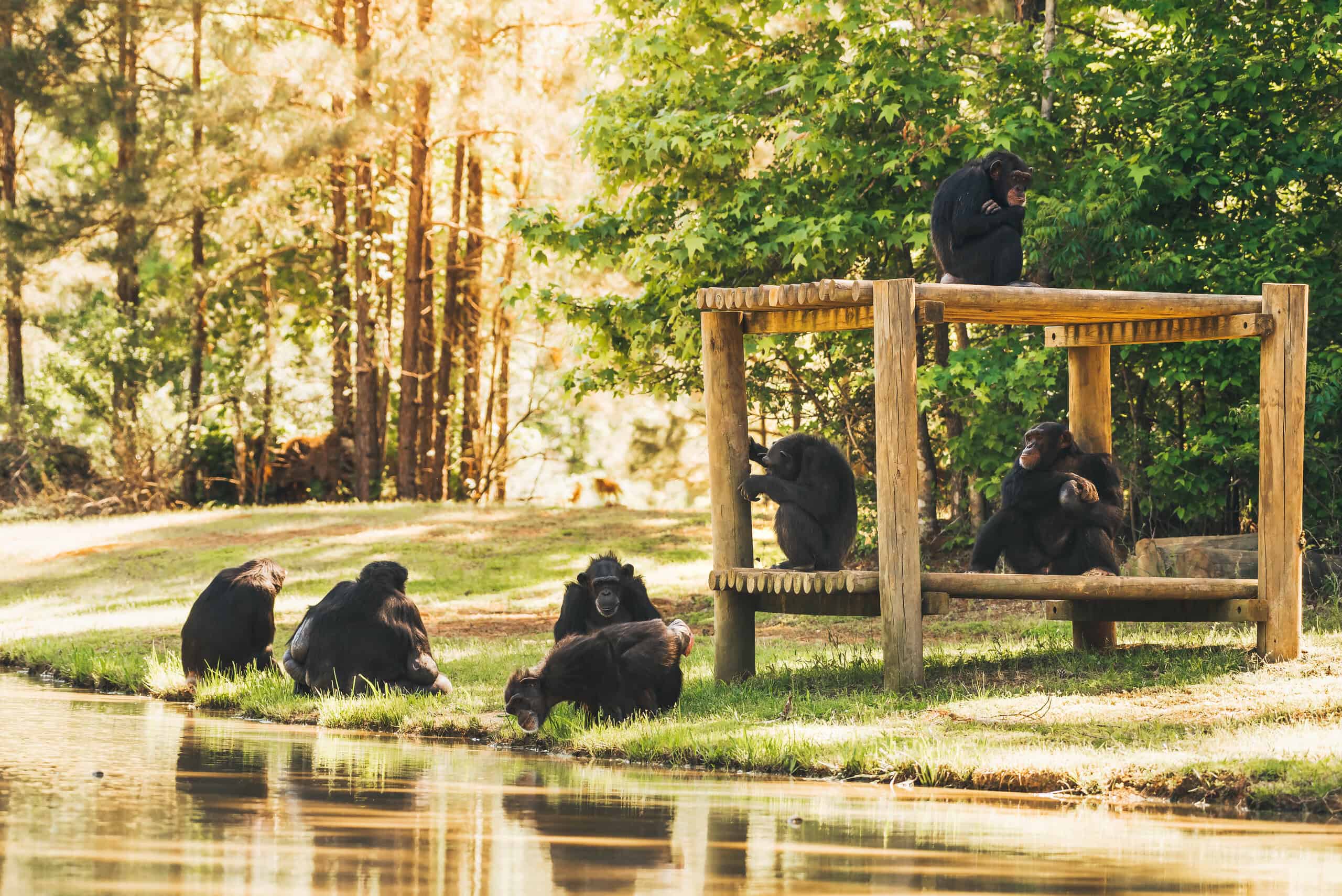
As stated above, Chimp Haven is the world’s largest chimp sanctuary. It offers a life of freedom to retired chimps who haven’t lived in the wild in years. At the haven, the animals are able to climb trees, build friendships, play, and eat their favorite fruits. Unfortunately, during their time in research facilities, the chimps were deprived of these “luxuries.”
“In the early 1990s, Chimp Haven co-founders Amy Fultz and Linda Brent were working as behaviorists for chimpanzees in research and began imagining a different future for them, one where they could retire to a sanctuary with room to roam, climb trees and live in social groups,” says Smith. “At the time, more than 1,000 chimpanzees were living in U.S. research facilities, but there was no sanctuary dedicated to their retirement. Together with veterinarian Tom Butler, they founded Chimp Haven in 1995 to make that vision a reality.”
Five years after they founded the sanctuary, Caddo Parish in Louisiana donated 200 acres of forested land to Chimp Haven. That same year, the Chimpanzee Health Improvement, Maintenance, and Protection Act (Chimp Act) was signed into law. This created a sanctuary system for chimpanzees retired from federally funded biomedical research.
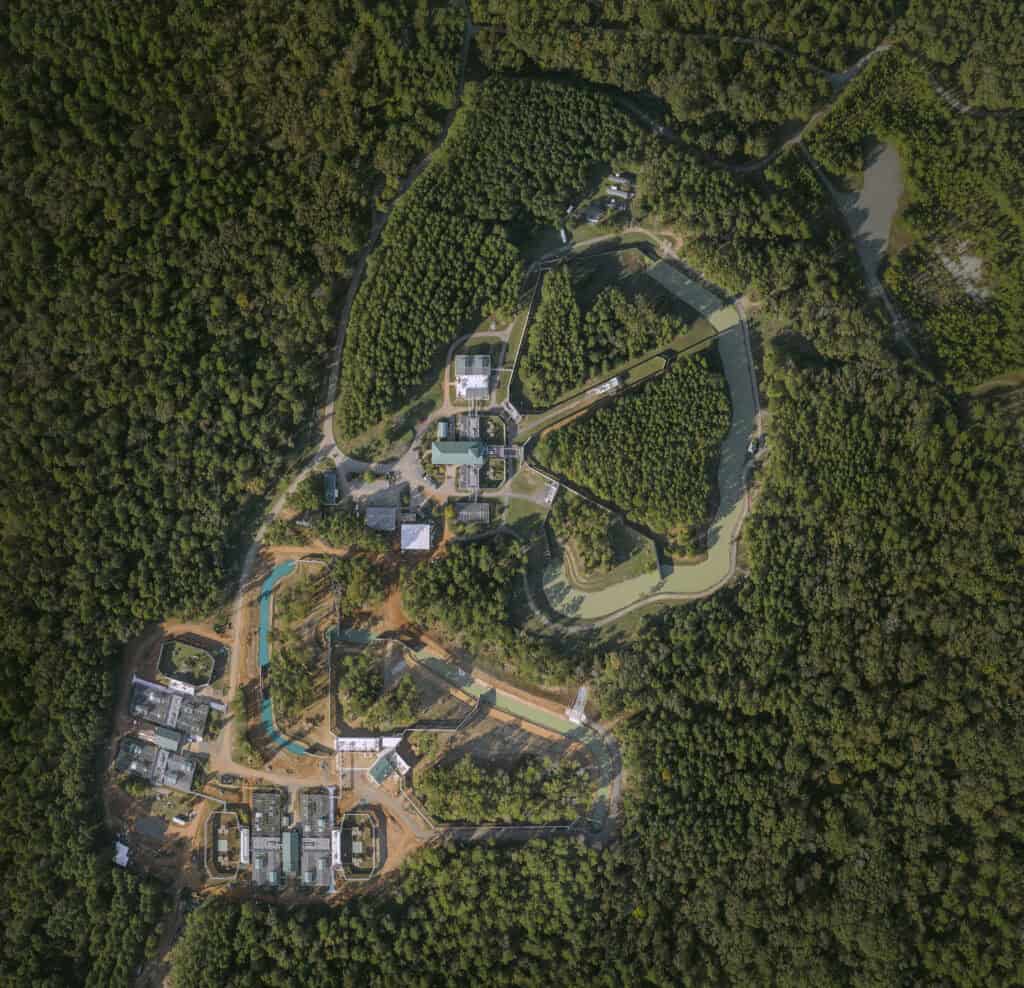
Chimp Haven sits on 200 acres of forested land.
©Chimp Haven
“Chimp Haven was selected to operate the national chimpanzee sanctuary in 2002,” Smith shares.
The sanctuary received its first residents, Rita and Teresa, in 2005. Since then, they’ve been dedicated to their mission and the well-being of their chimps.
“Today, we continue to fulfill our founders’ vision of a retirement where chimpanzees receive lifelong care and have the freedom to enjoy what we call the ‘Chimp Life,’” Smith says.
- 1995 Chimp Haven is founded Amy Fultz, Linda Brent and veterinarian Tom Butler found the sanctuary.
- 2000 Land donated and Chimp Act signed Caddo Parish donates 200 acres of forested land, and the Chimp Act is signed into law.
- 2002 Chosen to run the national sanctuary
- 2005 First residents arrive Rita and Teresa are the first residents.
- 10 years later
- 2015 NIH ends support for invasive chimp research
Supporting the Transition from Biomedical Research to Forested Sanctuary
Most of the retired chimpanzees were confined to research facilities for years before entering the sanctuary. To help each resident adjust to their new forested home, Chimp Haven focuses on understanding the individual chimpanzees. Staff can then tailor their transition to those needs, Smith explains.
“Chimps arrive with different health histories, personalities, and social needs,” she shares. “Our veterinary and behavioral teams assess each new resident and develop an individualized care plan, which may include specialized diets, medication, and positive reinforcement training to help them adjust to their new environment.”
Perhaps one of the most important steps is making social introductions between the chimps and their new groups.
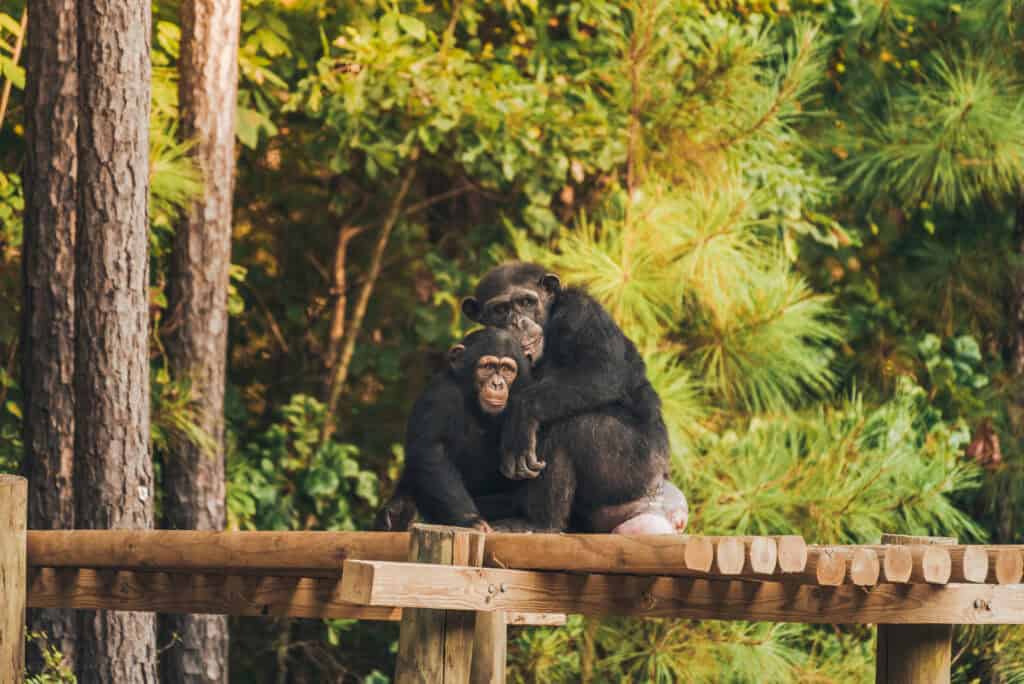
Chimpanzees develop deep social bonds.
©Chimp Haven
“Relationships are an important part of chimpanzee life, and, as new arrivals settle in, our team closely observes interactions to help build compatible social groups,” Smith says.
Additionally, Chimp Haven’s dedicated behavior team develops tailored activities, like sensory experiences and food puzzles, for daily enrichment.
“Our year-round enrichment program also supports their transition by giving the chimps opportunities to explore their surroundings and engage in natural behaviors,” Smith says. “Care staff regularly introduce activities and food-based puzzles to keep the chimps mentally and physically engaged, then observe their responses to better understand their interests. Just as important is giving the chimps opportunities to make their own choices. Whether they want to climb, explore, spend time with companions, or simply rest, we want them to have as much freedom as possible to decide how they spend their days.”
The End of Chimpanzee Use in Biomedical Research
Back in 2015, the National Institutes of Health (NIH) announced it would no longer support invasive biomedical research involving chimpanzees. Under the CHIMP Act, the remaining research chimps were relocated to sanctuaries like Chimp Haven.
“The NIH’s 2015 decision to end its support for invasive biomedical research involving chimpanzees was a landmark moment,” says Smith. “These chimpanzees spent years contributing to human health research, and I believe we have a responsibility to give them the opportunity to enjoy the best lives possible in retirement. After so many years spent serving human needs, it’s our turn to care for them.”
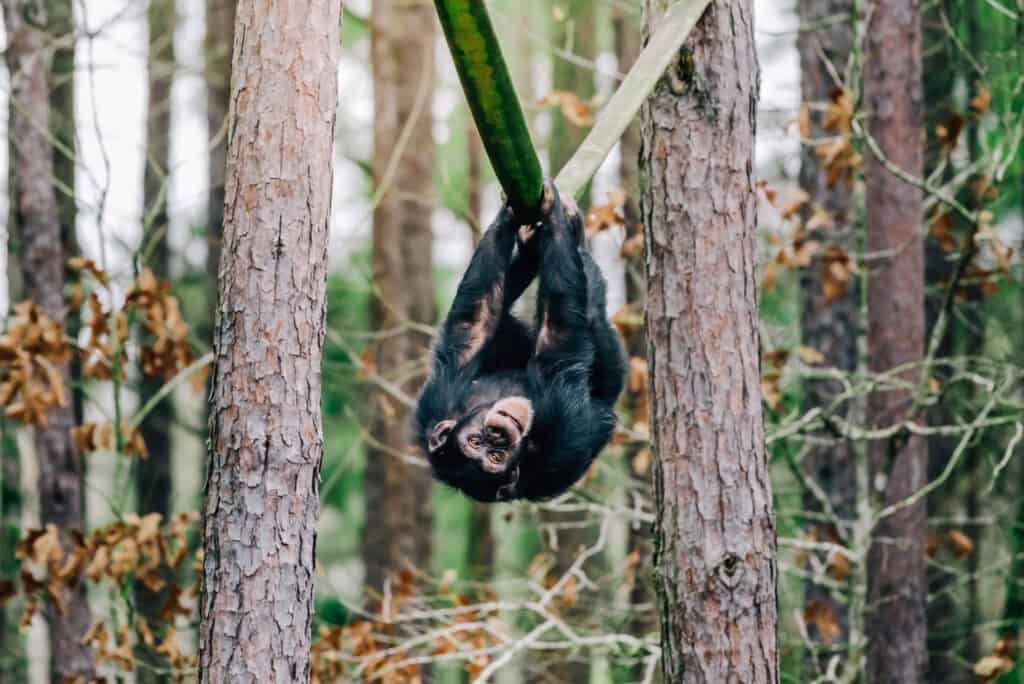
At Chimp Haven, these retired animals truly live their best lives.
©Chimp Haven
Just last year, Chimp Haven received the last of the retired research chimpanzees. This group came from the Alamogordo Primate Facility in New Mexico.
“Welcoming the final group from Alamogordo was an incredibly meaningful moment for our team and the many people who had worked for years to make their retirement possible,” Smith shares. “Many were among the oldest and most medically fragile chimpanzees we had welcomed, and our team put considerable care into preparing for their arrival and supporting their transition.”
According to Smith, many of the Alamogordo chimps were actually born in the wild. However, as babies, they were brought to the U.S. for research purposes and separated from those of the opposite sex. Chimp Haven staff have since witnessed them settling in and forming new social bonds.
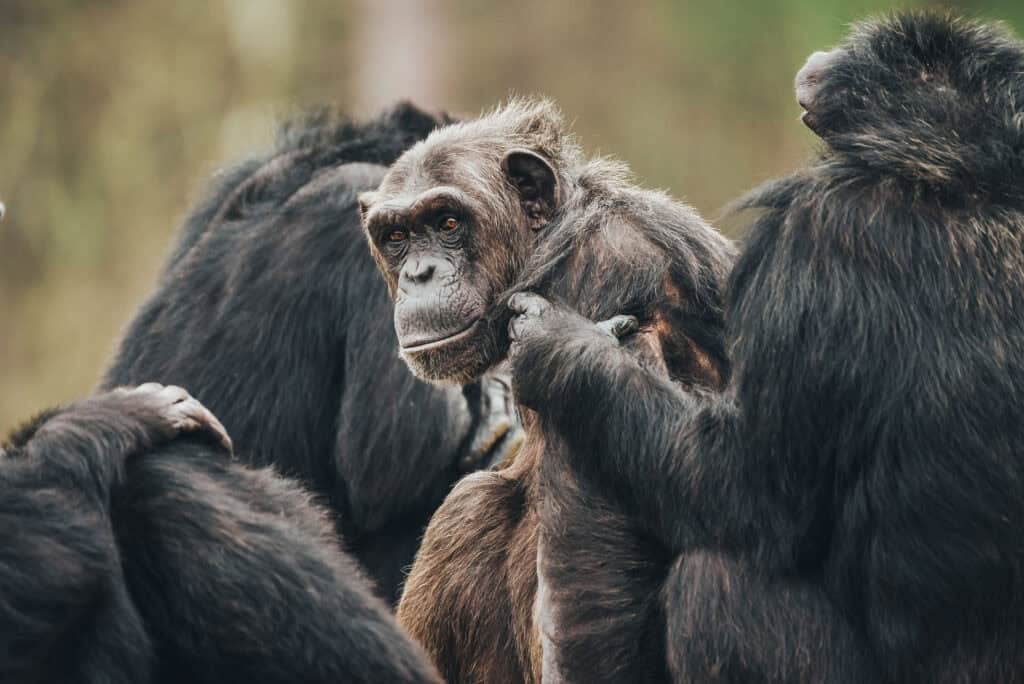
Social bonding is incredibly important for chimpanzees.
©Chimp Haven
“Al and Kamaka [two of the new resident monkeys], for example, joined an existing social group and quickly began grooming, playing, and resting with their new companions, including several bold ladies who took a liking to them immediately,” Smith shares. “Sixty-four-year-old Henry Danger took on the role of alpha of his new social group and explored the forest for the first time in decades. Those everyday interactions show what sanctuary can offer, even later in life.”
Maintaining Lifelong Care
Unfortunately, lifelong care for retired chimpanzees is not cheap. According to Smith, it costs around $33,000 per chimp per year. This includes food, veterinary care, enrichment, and other necessities, adding significant financial pressures and responsibility on Chimp Haven.
33,000
$
per chimp per year to provide lifelong care
“As many of our residents reach advanced ages, their care becomes increasingly complex, often requiring specialized veterinary attention and additional support,” Smith adds. “Inflation and rising costs for supplies and staffing add to those financial pressures.”
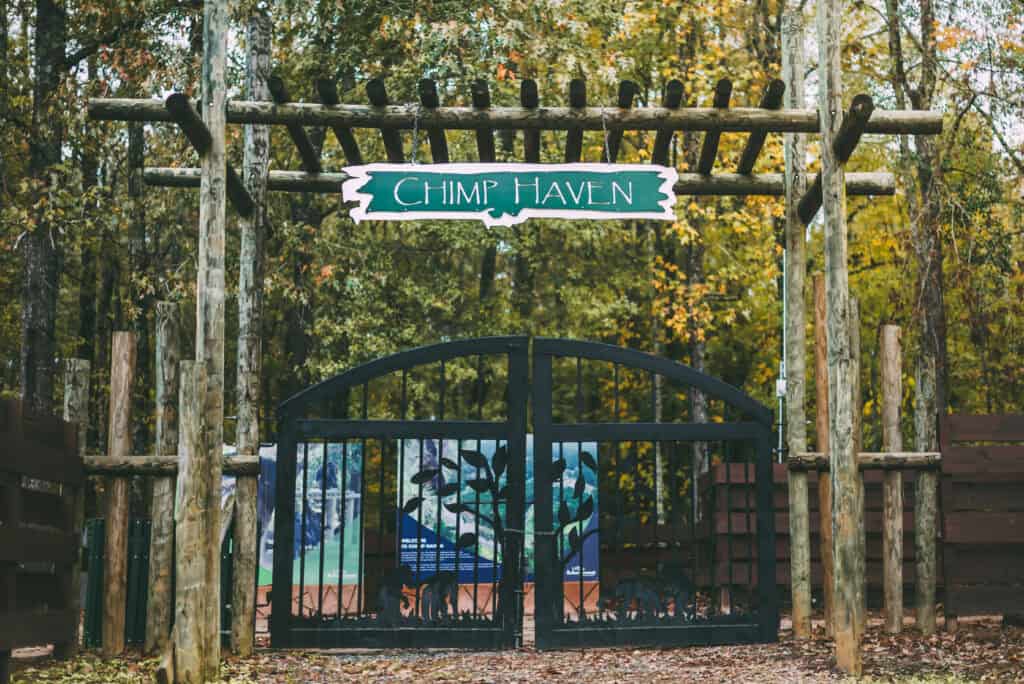
Chimp Haven is dedicated to providing high-quality yet costly care to its chimpanzees.
©Chimp Haven
The organization relies on both federal funding and private support to cover these costs.
“For chimpanzees whose care receives federal funding, NIH covers approximately 75% of care costs,” Smith says. “We rely on private support to cover the remaining portion, as well as expenses such as building and maintaining habitats that federal funding does not cover. Our recent expansion to accommodate the chimpanzees from Alamogordo is an example of this commitment, with supporters contributing more than $5.6 million to create additional living spaces for the chimps.”
How to Support Chimp Haven
As noted above, Chimp Haven thrives off donations and private support. If you’d like to give back, you can donate at this link or sponsor a chimp through the sanctuary’s Best Friends program. If you’d prefer a more intimate experience, Chimp Haven also provides private sanctuary tours on a limited basis. Additionally, consider attending one of the two annual Chimpanzee Discovery Days for an in-person visit.
“Sustaining this high level of care takes long-term financial planning and the generosity of donors who understand the commitment of lifelong sanctuary care,” Smith says. “Some of our younger residents will depend on us for decades to come.”
Chimp Haven is home to nearly 300 chimpanzees. Every chimp has its own story, individual needs, favorite foods, and unique personality.
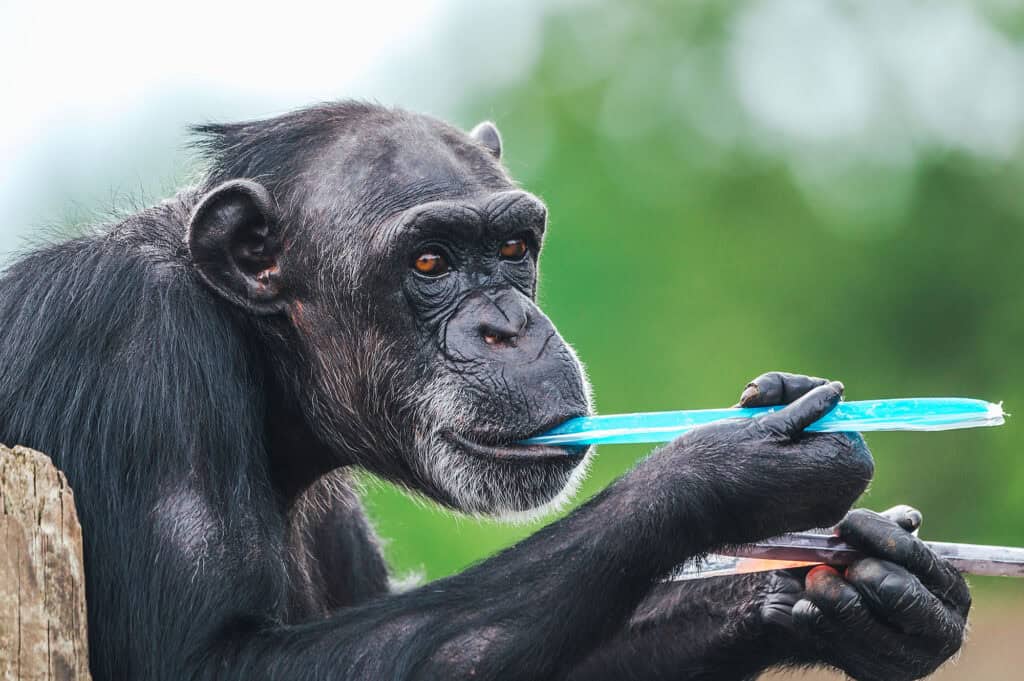
Every chimp is unique, requiring specialized care and love.
©Chimp Haven
“We are the world’s largest chimpanzee sanctuary, but our mission comes down to the daily life of each chimpanzee who calls this place home,” Smith says. “For us, that means providing expert care, meaningful social relationships, and the freedom to choose how they spend their days. That’s what the Chimp Life is all about.”