
Quick Take
- Owl pellets look like waste, but they're actually something far more revealing about an owl's health and habits. Discover what pellets reveal →
- Owls swallow prey whole, and what happens next inside their bodies is stranger than you'd expect. See the digestion process →
- A single pellet on the ground can tell researchers more about an entire ecosystem than almost any other clue in nature. Explore ecosystem insights →
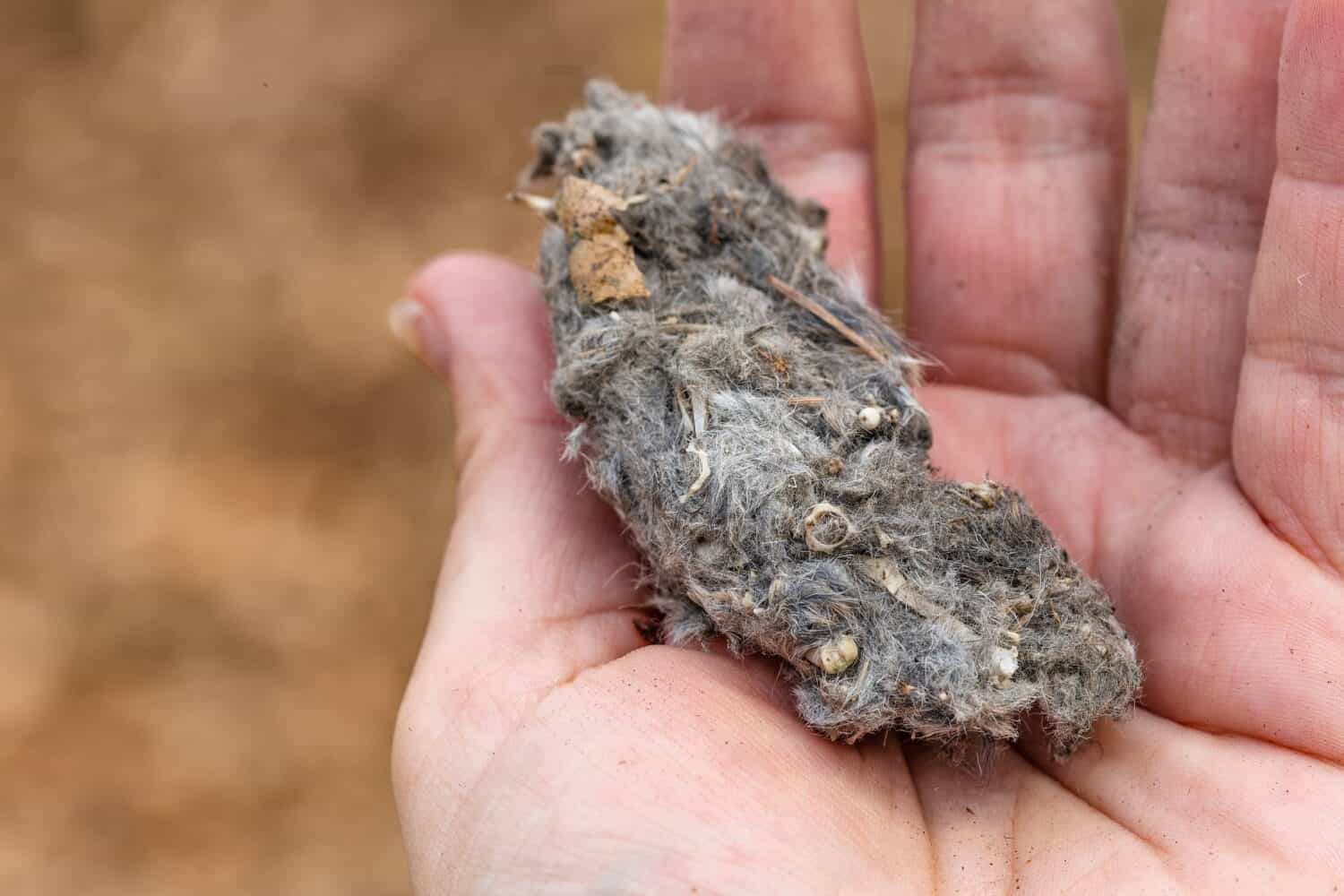
If you ever had to dissect an animal pellet in grade school, it might be a relief to know it wasn’t owl waste. It might look like feces, but it’s actually the regurgitated remnants of an owl’s dinner. Whether this is more or less appealing is a matter of personal opinion. And while finding them is relatively common, seeing these pellets come out is extremely rare.
This Instagram video captures a perfectly timed moment when a great horned owl regurgitated its meal. The process might be grotesque, but it’s actually good for the owl and could also benefit scavengers waiting below for the inevitable plop.
Why Do Owls Regurgitate Their Prey?
Pulling apart an owl pellet isn’t glamorous, but it reveals the owl’s diet and overall health. Pellets contain everything from tiny mammal bones to fur, teeth, and even feathers from smaller birds. Because of their shape and contents, people often mistake them for feces. But owls defecate like any other species: a runny, white or berry-colored liquid.
Pellets get their shape from the route they take as they are projected from an owl’s mouth. On the outside, they’re typically covered with the hair or fur that keeps them tightly compacted. Inside are the prey animal’s undigestible remains.
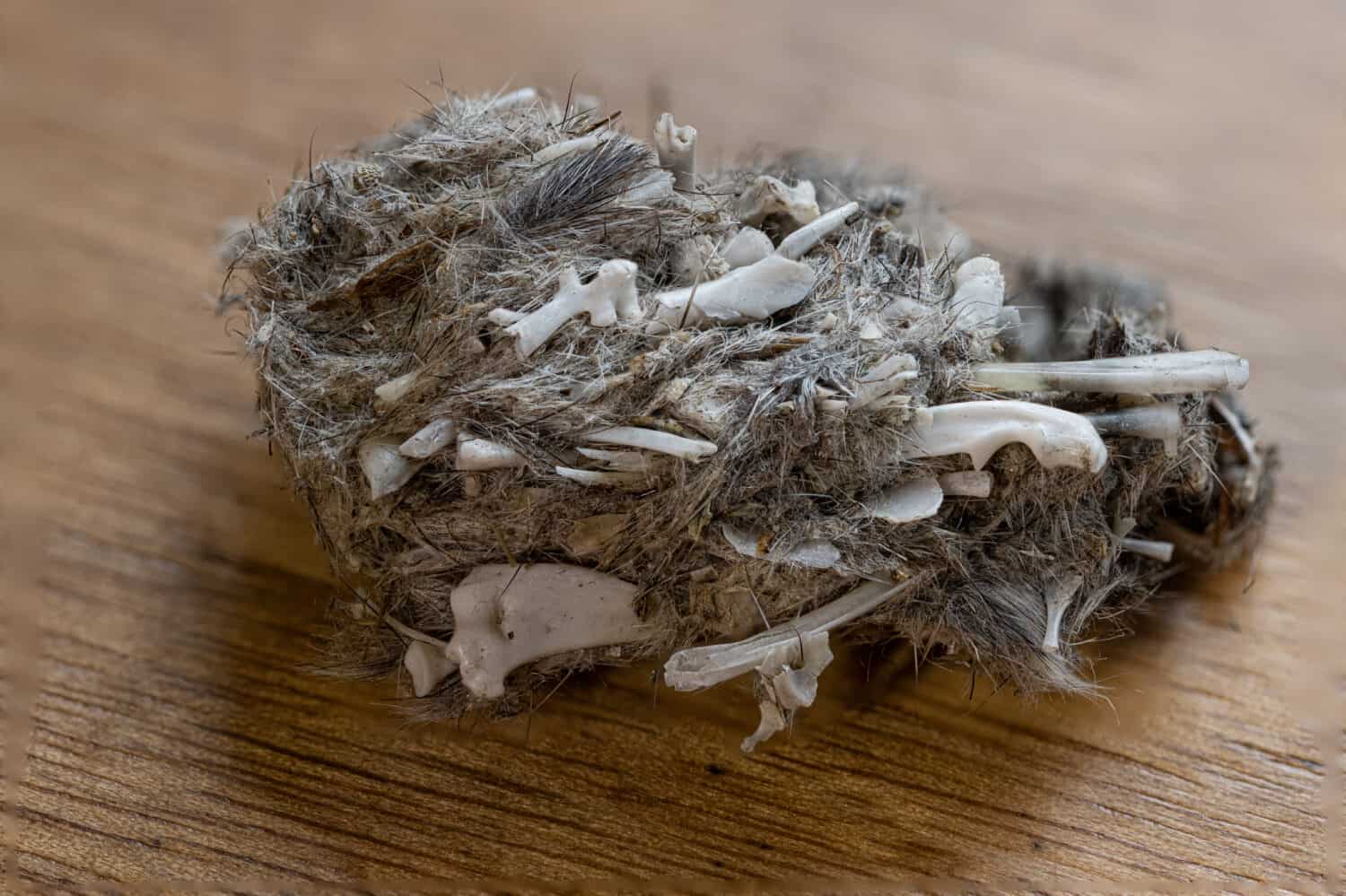
Many pellets contain a mix of undigestible bones, fur, and hair.
©Kenneth Schmidt/Shutterstock.com
Owls swallow their prey whole and rely on mild stomach acid to break down soft tissue. Whatever’s left travels from the stomach to the gizzard, which compacts it like trash. Bones, teeth, and cartilage are tightly wrapped to keep them from puncturing or cutting the owl’s digestive tract. As it squeezes pellets into a semi-soft ball, any liquid nutrients make their way to the intestines.
On average, an owl will regurgitate one to two pellets per day. However, this depends on its feeding schedule and the availability of prey.
Birds Can Be Identified By Their Pellets
Each pellet is unique to a certain owl species, and no two look the same. Great horned owl pellets—like the one in the Instagram video—are the largest, making them easy to identify. These typically contain more vole and mouse bones and fur than anything else, though their diet varies considerably by region, with rats often dominating in urban areas. Kestrels, which are far smaller than most owls, expel pellets that typically contain small mammals and insects. One might contain the hard exoskeletons of spiders or scorpions instead of fur or bones.
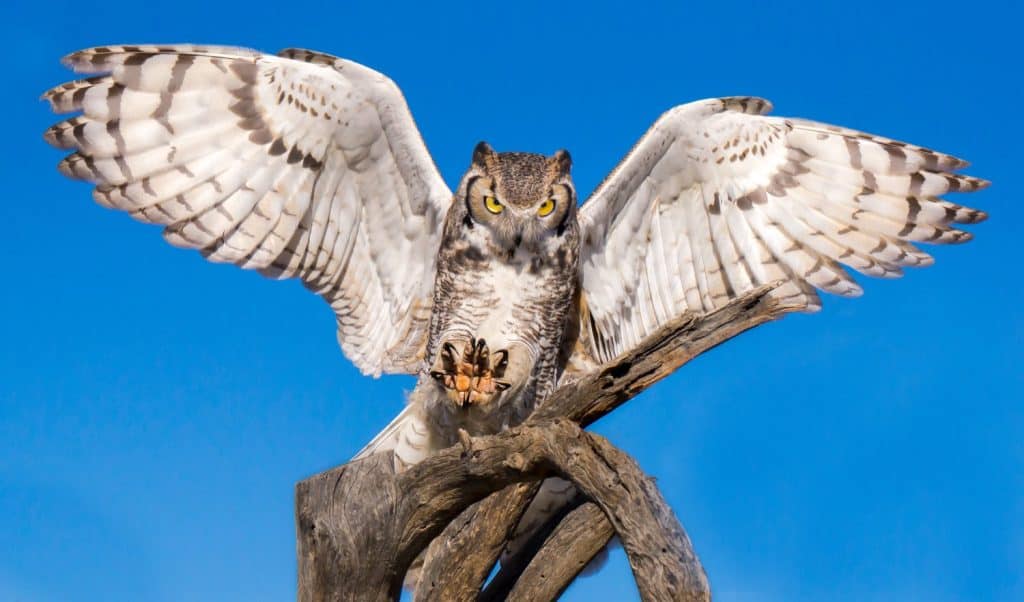
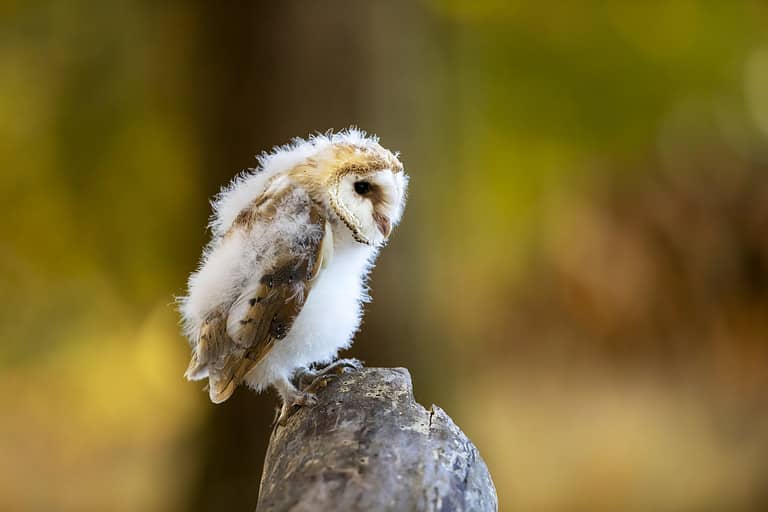
Great Horned Owls can expel two pellets a day, depending on their diet.
©JayPierstorff/Shutterstock.com
As omnivores, jackdaws are opportunistic feeders and eat a wide variety of things. One day, their pellets might contain seeds, nuts, and insects; the next, carrion or mouse bones. The breeding season also affects their pellets, since they eat insects primarily during this time. During the fall and winter, when live prey is scarce, you might find more seeds and nuts in their pellets.
Photographer Francois Potvin, who shared the video above, wrote, “I’ve seen Great Horned Owls regurgitate their pellets before, but this one was a whole cigar! I couldn’t believe how big it was!” Potvin added that the experience was unforgettable, underscoring how rare it is to see an owl expelling a pellet.
I’ve seen Great Horned Owls regurgitate their pellets before, but this one was a whole cigar! I couldn’t believe how big it was!
What Can We Learn From Owl Pellets?
Owl pellets are a veritable goldmine for researchers studying owls. They can range in color from brown to off-white, come in a variety of sizes, and contain the indigestible remnants of everything an individual has eaten in the last 6 to 12 hours. In researchers’ hands, this information is a valuable tool for assessing a bird’s health and environment.
The first thing we can learn from finding owl pellets is that the area has regular activity. A fresh pellet suggests an owl is likely nearby, which helps researchers track the species. If researchers find multiple pellets, for example at the base of a tree, there might be a nest above.
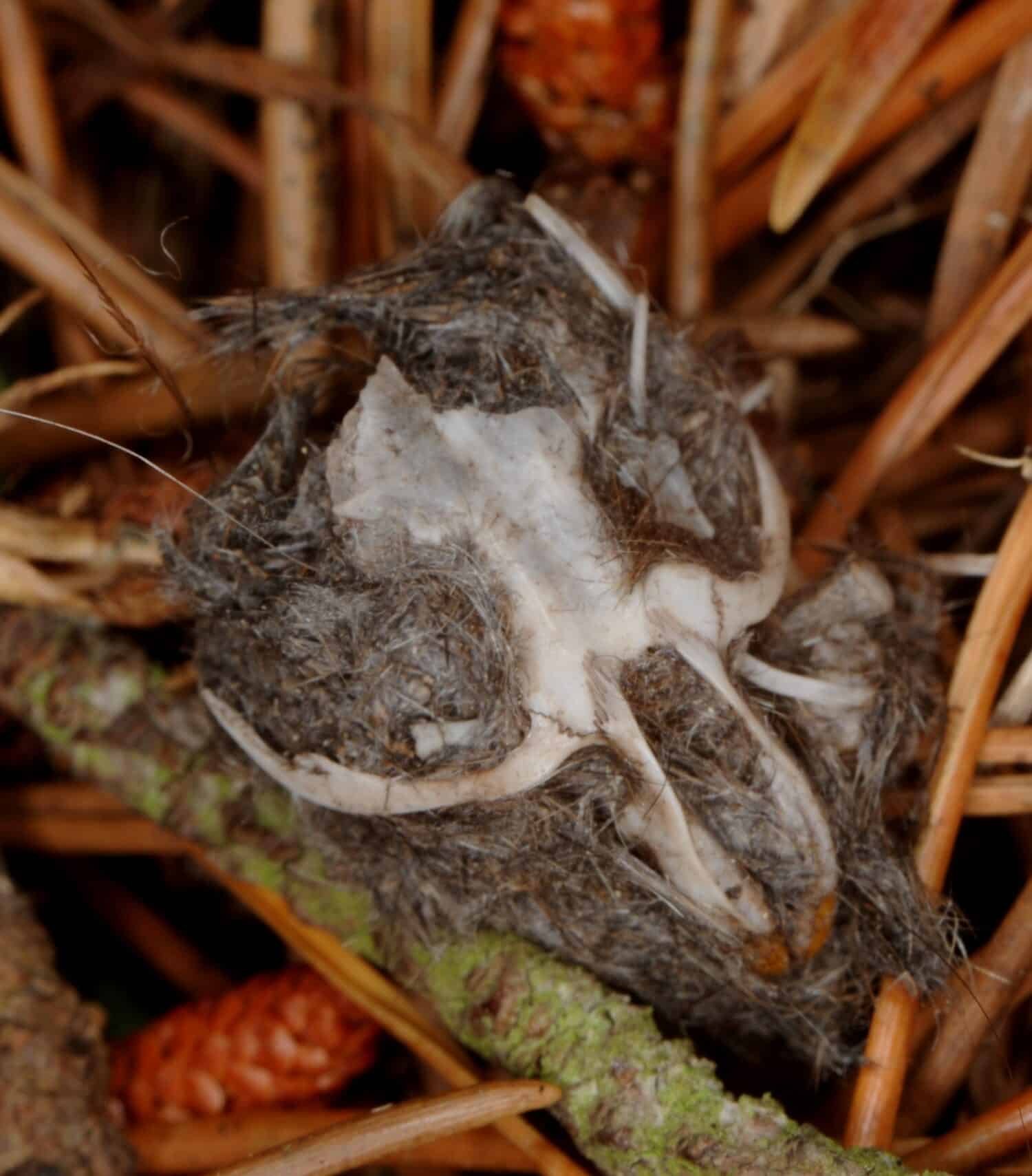
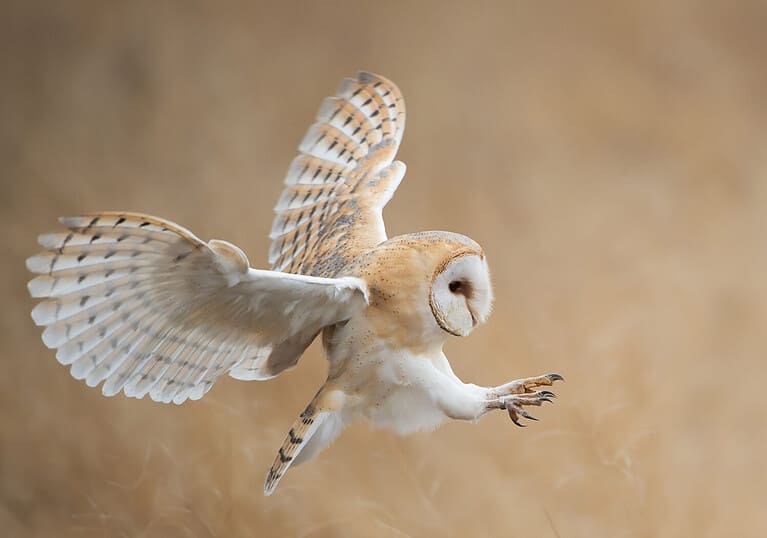
Pellets tell experts about the individual bird and the health of its habitat.
©valda butterworth/Shutterstock.com
Researchers might be able to determine the species based on the pellet’s appearance and size. If not, the pellet’s contents will likely provide that information. Additionally, much can be discerned about health. A pellet rich in animal bones, fur, and hair indicates a healthy bird. Alternatively, pellets that lack substance or contain less nutritious byproducts could indicate an owl’s food source is dwindling.
This is how pellets become bioindicators of the habitats where they’re found. Each species has a dietary benchmark, and its pellets should reflect that. Pellet dissection is a powerful tool for assessing ecosystem health, starting with one of its top predators. Judging by the pellet’s sheer size in this Instagram video, that great horned owl is healthy, well-fed, and likely full of mice!