
Quick Take
- A single observation by a 26-year-old researcher shattered what scientists believed separated humans from every other animal on Earth. Discover Goodall's breakthrough →
- Chimps share more with us than just DNA, and their social behaviors reveal something deeply unsettling about what we consider uniquely human. See how close we are →
- Female chimpanzees face a life-altering social choice that males never have to make, and the reason why is stranger than you'd expect. Explore chimp social structure →
- Chimpanzee numbers have collapsed to a fraction of what they once were, and the forces driving that decline aren't all obvious ones. See the population collapse →
When Jane Goodall was just 26 years old, she witnessed something that changed the world’s understanding of chimpanzees. The scientist, on a research assignment in Gombe, Tanzania, observed a chimp strip leaves off a twig, then use the stick to dig termites out of a mound.
It was the first known instance of a chimpanzee making and then using a tool. Goodall’s observations set the stage for her to become the world’s most famous chimpanzee researcher.
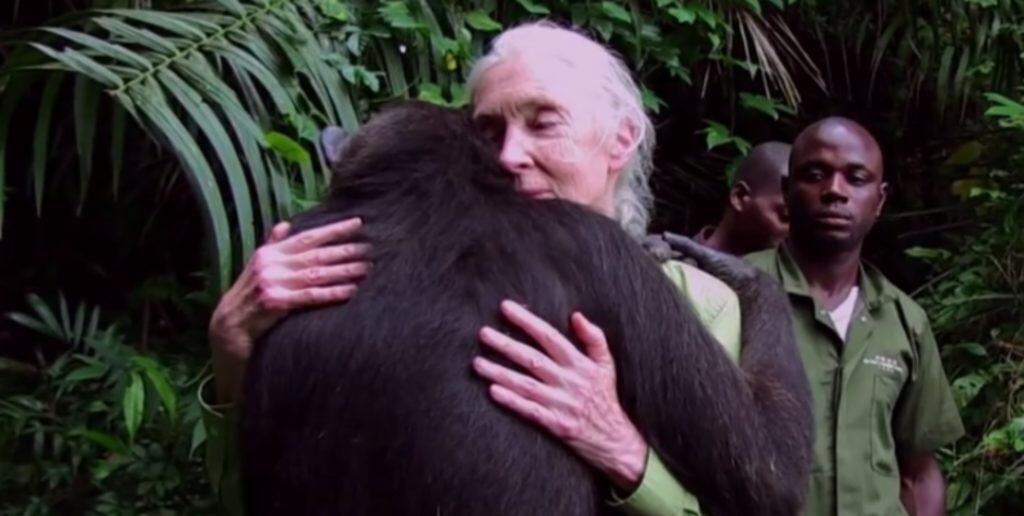
Jane Goodall spent her life studying and working toward the conservation of chimpanzees.
© – Original
In honor of the day Goodall first arrived in Gombe, World Chimpanzee Day is celebrated each year on July 14. Here’s everything to know about these amazing apes.
Our Closest Living Cousins
Regardless of personal beliefs about human origins, genetic research shows that chimpanzees are our closest living relatives, sharing approximately 98.8% of our DNA, according to the American Museum of Natural History. Chimps also share other important traits with humans.
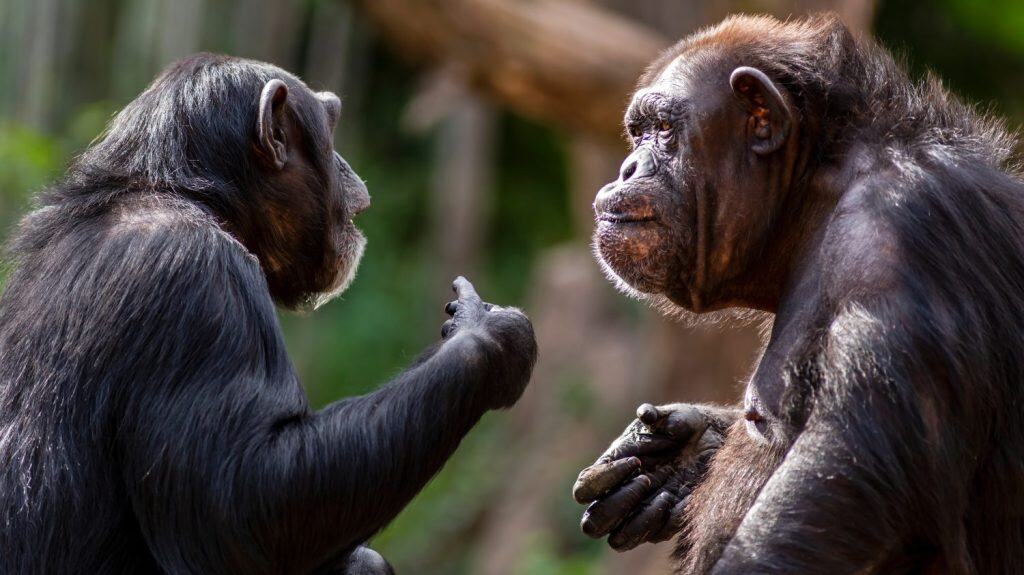
Chimpanzees share about 98 percent of their DNA with humans.
©Patrick Rolands/Shutterstock.com
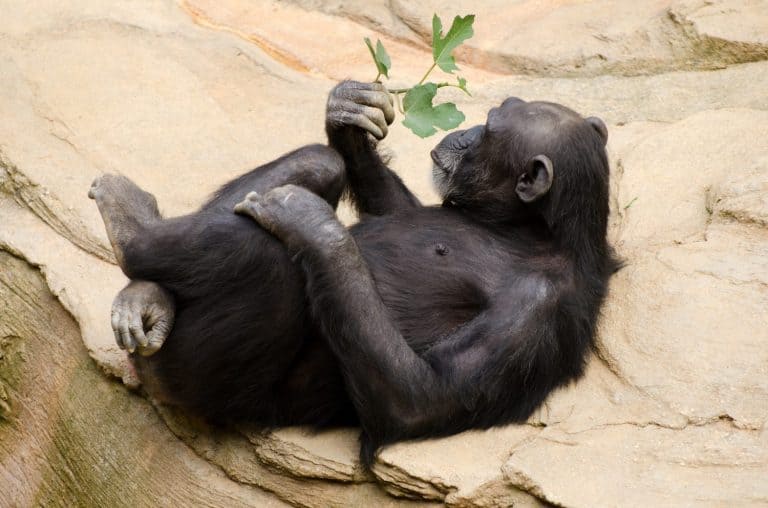
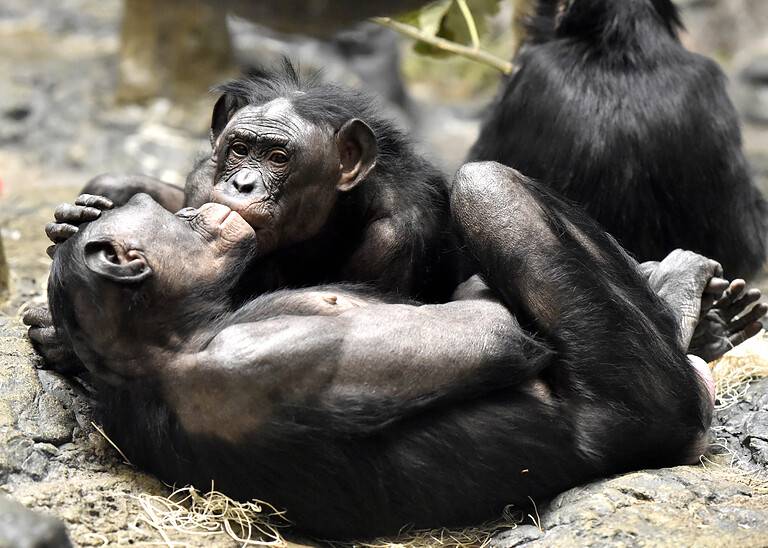
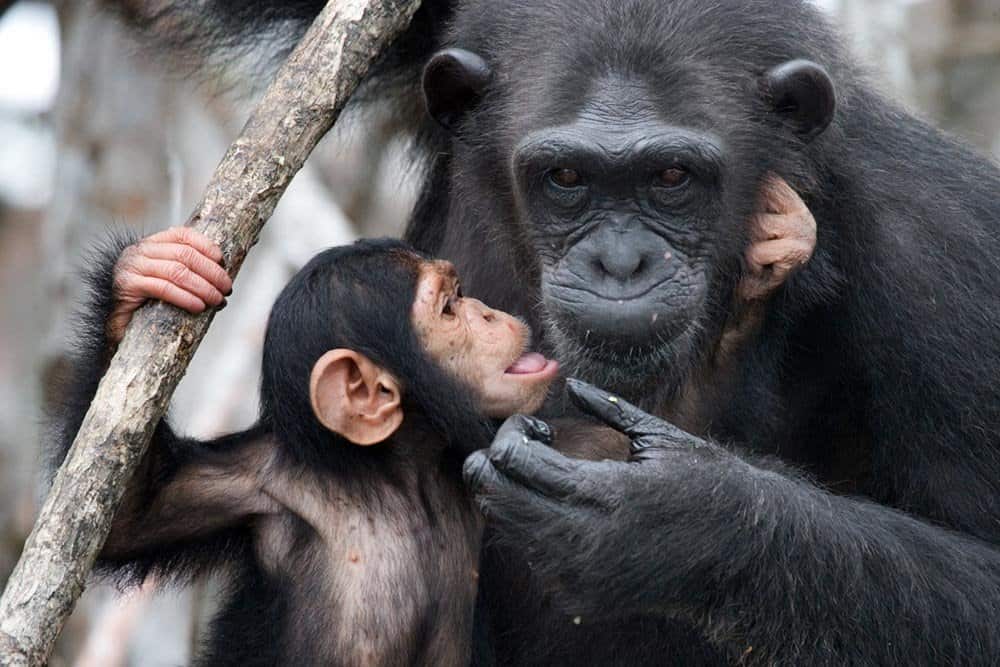
Chimps display strong emotions and form close bonds with other chimpanzees. They hug, comfort each other, and even show behaviors similar to grieving. One study that tracked two chimp groups for ten years found that behaviors such as touching, hugging, and grooming upset members of the group demonstrate that chimpanzees are empathetic. These behaviors were not isolated incidents, but were repeatedly observed over time.
Chimpanzees also use tools regularly, as Goodall first observed, but their methods vary between groups. According to the IUCN, different chimp groups have distinct tool traditions. They can also adapt to environmental changes caused by humans. For example, some groups have started using non-native plants for bedding, while others now eat agricultural crops instead of foraging for their traditional foods.
Goodall’s Discoveries
In October 1960, Jane Goodall was observing a chimp named David Greybeard in Gombe, a Tanzanian forest. She watched as the ape slowly stripped leaves off a twig before plunging the bare stick into a termite mound to extract a snack. It was the first time anyone had seen chimps make or use a tool. Until then, scientists believed only humans were capable of that.
Goodall made other important discoveries about chimps as well. She found that they hunt in groups and eat meat. She also observed that chimpanzee families often remain in close-knit groups throughout their lives. Her work laid the foundation for one of the longest-running wild animal studies ever conducted. According to the Jane Goodall Institute, during her 65-year career, Goodall recorded over 165,000 hours of notes at Gombe.
She studied the chimps at Gombe continuously from her initial discovery in 1960 until her passing on October 1, 2025.
How Chimps Live Together
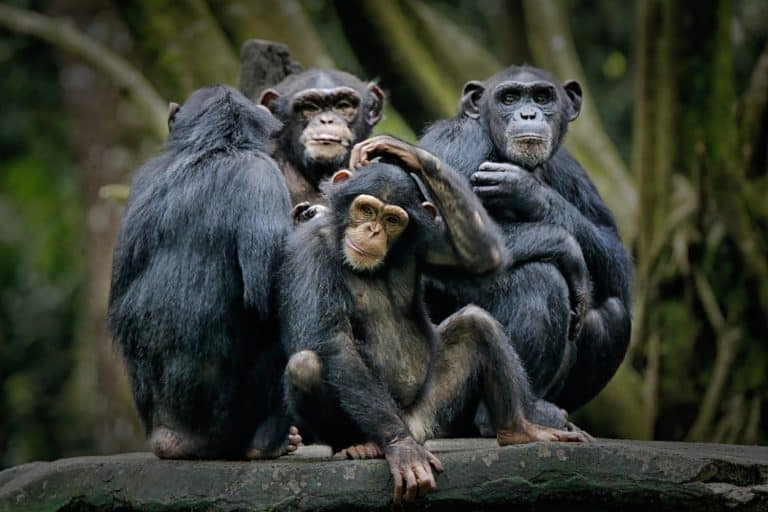
The tight-knit groups that Goodall observed are typical of chimpanzee behavior. The species typically forms groups of 20 to 150 apes, often breaking into smaller groups that later rejoin the main group. This process of splitting up and coming back together is called a “fission-fusion” group.
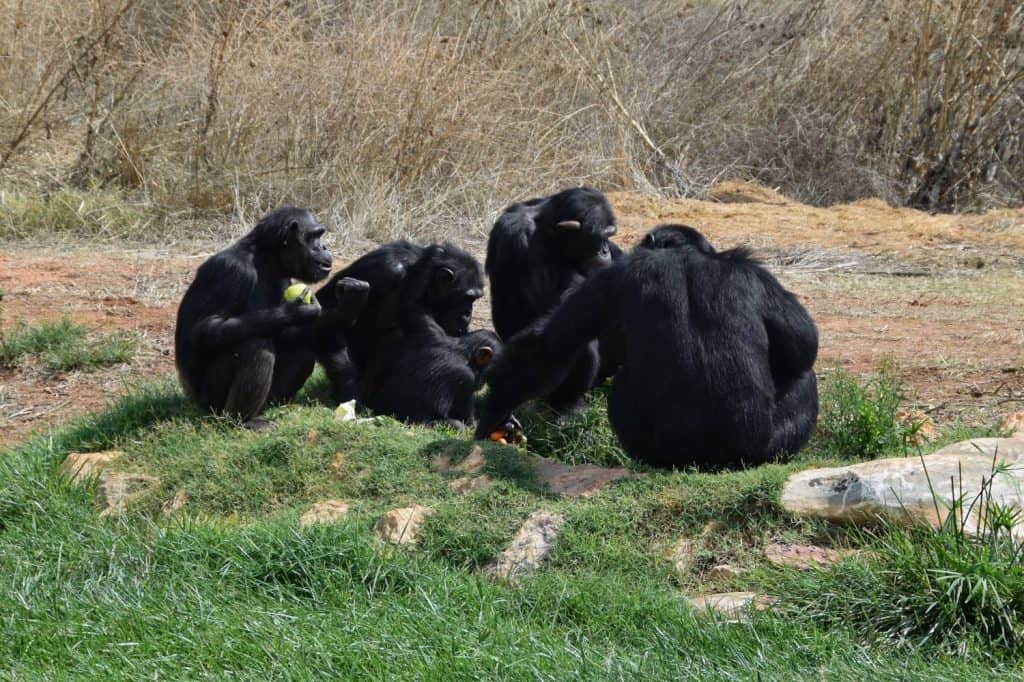
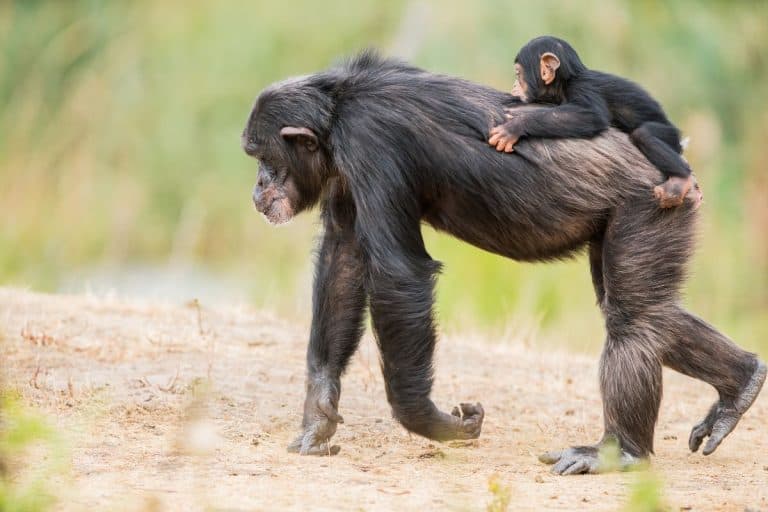
Chimpanzees live in groups.
©dimitris_k/Shutterstock.com
Male chimps tend to stay with their original group for life. Female chimps have a tougher choice to make. Often, they leave their original groups and integrate into new chimp groups. Scientists believe the move is a way to avoid inbreeding with males in the original group that may be the female’s brothers. Not all females leave, though. If their mother has a high rank within the group, a female may choose to stay for the protection and safety of being close to mom.
Within the groups, chimps communicate using a combination of facial expressions, hand gestures, and a vocabulary of unique sounds.
Chimpanzees Are Under Threat
An estimated one to two million chimps lived across 25 African countries 100 years ago. Today, those numbers are closer to 340,000, according to the Jane Goodall Institute. Other conservation organizations put that number even lower. SAFE Worldwide estimates only 170,000 to 300,000 chimpanzees still exist in the wild.
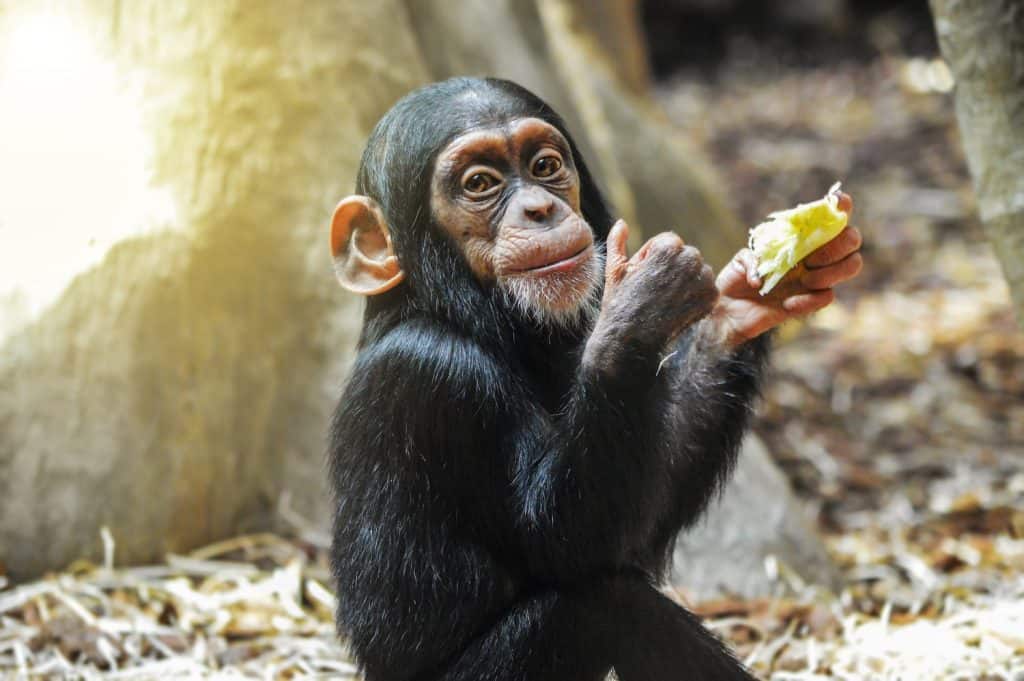
Chimpanzees are listed as endangered, with the western chimp group listed as critically endangered.
©Michaela Pilch/Shutterstock.com
All chimpanzees are listed as endangered, but the western chimp group is an exception – it’s listed as critically endangered by the IUCN. Western chimp numbers dropped 80 percent between 1990 and 2014.
The biggest threats to chimpanzees are deforestation to make way for farms and logging, hunting for their meat, disease, and baby chimps stolen for the illegal pet trade.
Chimps Get a Second Chance
For displaced chimpanzees, sanctuaries are often their last, best hope. One example is the Tacugama Chimpanzee Sanctuary in Sierra Leone. More than 120 rescued chimps currently live there. Another is Ngamba Island in Uganda. There, more than 50 orphaned and rescued chimps live on a 95-acre forest island.
Sanctuaries that care for rescued chimpanzees are making a long-term commitment. Since chimps can live for 50 to 60 years, these sanctuaries must provide care for decades.
How You Can Help
World Chimpanzee Day is a great time to lend a hand to help this endangered species. While you may not be able to move to Tanzania and spend decades studying these apes, there are things you can do closer to home to support them.
Donate to accredited sanctuaries. If you plan to visit wild chimps, choose a tour agency that follows ethical rules. Support groups fighting the illegal wildlife trade and habitat loss, like the JGI ForeverWild campaign.