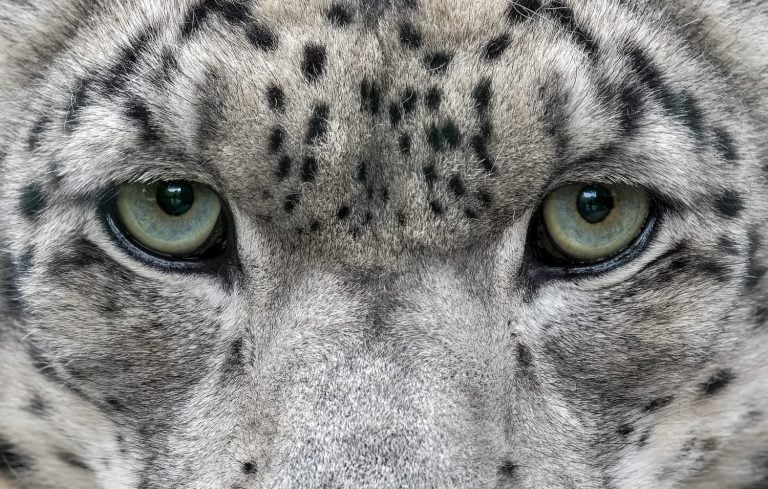
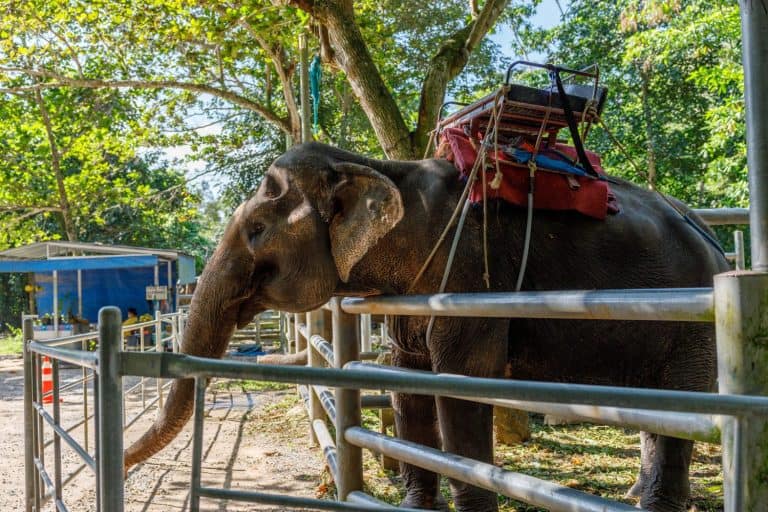
In the 21st century, many zoos have undergone a massive transformation. Thanks to organizations like the Association of Zoos & Aquariums (AZA) and the World Association of Zoos and Aquariums (WAZA), the focus has shifted from simply entertaining people to focusing on education, conservation, and research. Many of today’s zoos feature naturalistic habitats that promote animal welfare and encourage natural behaviors, giving visitors the unique chance to see animals from all over the globe. These incredible zoos aren’t just a collection of exotic animals; they are massive, conservation-focused institutes that can span thousands of acres. When measuring the largest zoos by area, these institutions stand at the top of the list. Forget the tiny, animal-packed cages of the past; here are eight of the largest zoos in the world!
10. Australia Zoo (Beerwah, Queensland, Australia)
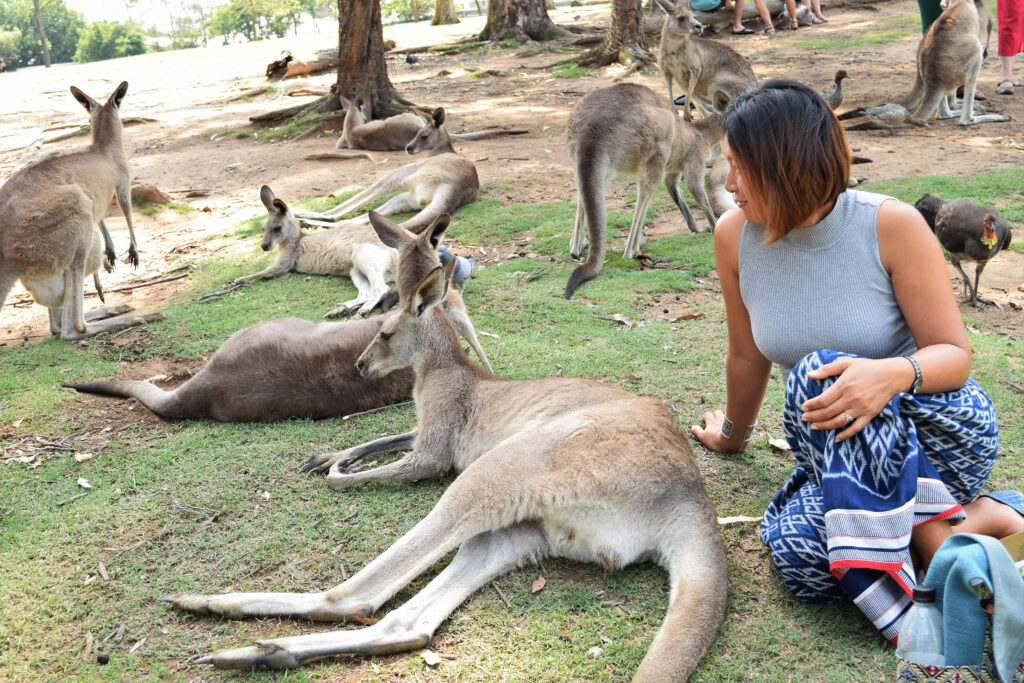
Visitors to the Australia Zoo can hand-feed wallabies and kangaroos.
©Patnaree Asavacharanitich/Shutterstock.com
Located in Beerwah, Queensland, the Australia Zoo has grown from a humble 2-acre wildlife park to a sprawling, world-renowned conservation hub spanning over 700 acres. Originally founded by Lyn and Bob Irwin, the zoo’s international fame skyrocketed thanks to their son, Steve Irwin, the iconic “Crocodile Hunter.” Today, his legacy lives on through his family. His wife, Terri, and their children, Bindi and Robert, continue to run the zoo.
The Australia Zoo is a sanctuary for over 100 animal species, including crocodiles, as a tribute to Steve Irwin’s passion. While the zoo is dedicated to showcasing local Australian species like dingoes, kangaroos, koalas, and wombats, it also provides a home for other animals from around the world, including cheetahs, tigers, rhinos, and Komodo dragons. The zoo is also home to the Australia Zoo Wildlife Hospital, which rescues and rehabilitates over 7,000 animals annually.
9. Toronto Zoo (Toronto, Canada)
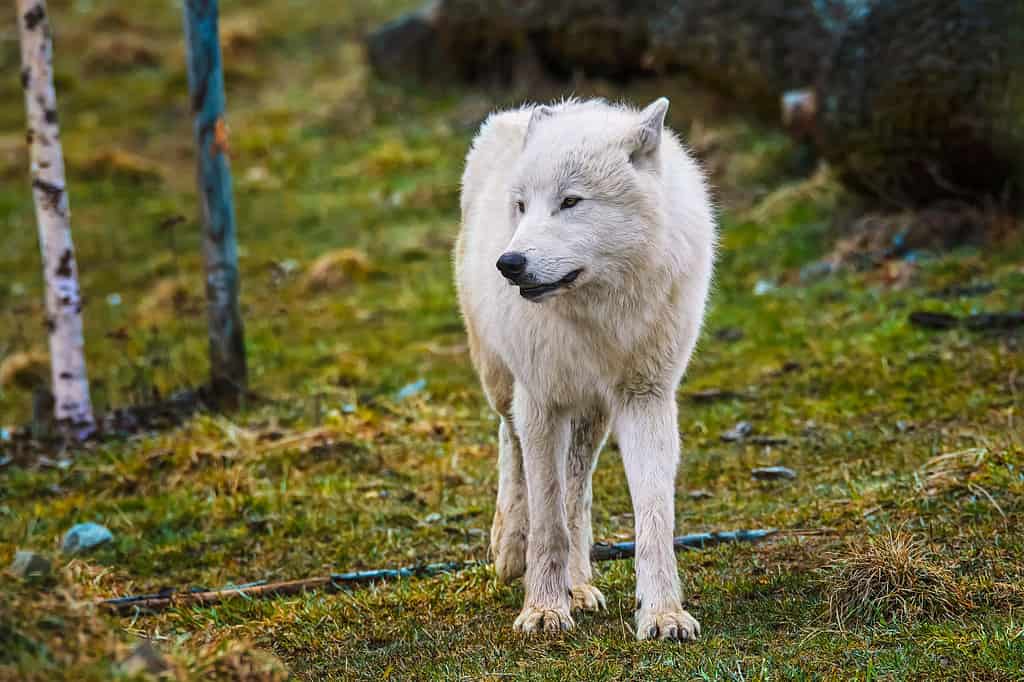
The Tundra Trek exhibit at the Toronto Zoo is popular, with incredible animals like polar bears, Arctic wolves, and caribou.
©Ondrej Chvatal/Shutterstock.com
As Canada’s largest zoo, the Toronto Zoo spans 710 acres and is home to over 3,000 animals from more than 300 species. The zoo is renowned for its animal diversity, which is divided into seven distinct zoogeographic regions: the Americas, Africa, Indo-Malaya, Eurasia, Australasia, Tundra Trek, and the Canadian Domain. You can get an up-close look at the animals during daily zookeeper talks and scheduled feedings.
The Toronto Zoo is also a leader in wildlife conservation. Its team has rescued orphaned animals, including polar bear cubs, and participates in international breeding programs for endangered species such as black-footed ferrets, Sumatran tigers, and western lowland gorillas. The Toronto Zoo even hosted visiting giant pandas from China. In 2015, giant panda Er Shun made history when she gave birth to twins — the first ever born in Canada!
8. Zoo Miami (Miami, Florida)
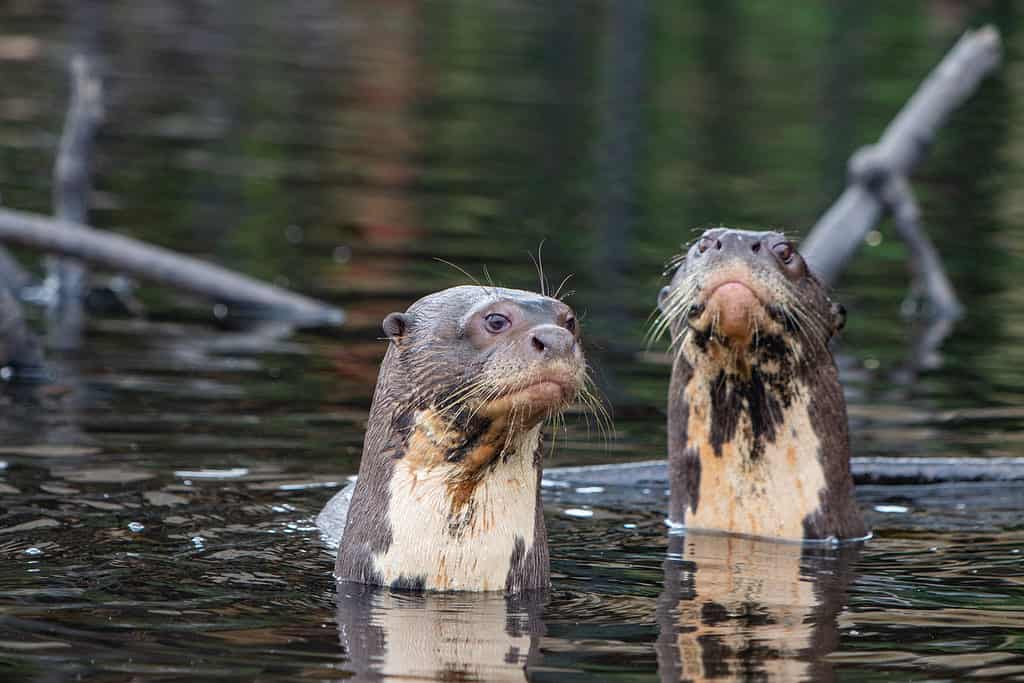
Zoo Miami is home to a group of giant river otters, animals that can grow 6 feet long and weigh 75 pounds!
©Johnny Giese/Shutterstock.com
Spanning 750 acres, Zoo Miami is not only the largest zoo in Florida but also one of the largest in the country. 4 miles of walkways lead to a sprawling landscape that’s home to more than 2,000 animals from over 375 species, as well as more than 750 types of trees. Thanks to South Florida’s subtropical climate, the zoo can give animals from around the world plenty of room to roam in open-air, cageless habitats. Visitors can explore a variety of exhibits, featuring wildlife from the Amazon, Australia, Africa, and Asia, as well as native species from the Florida Everglades.
The zoo’s Sea Turtle Hospital treats injured sea turtles found along the Miami coast, including endangered Kemp’s ridley, loggerhead, and green sea turtles. In partnership with the National Park Service and the Florida Fish and Wildlife Conservation Commission, Zoo Miami also plays a vital role in protecting Florida panthers, a species found exclusively in the state. Zoo veterinarians often treat injured or orphaned panthers. Some of these animals, who are unable to survive on their own, even find a permanent home at the zoo, where they serve as ambassadors for their species.
7. Nandankanan Zoological Park (Barang Village, Odisha, India)
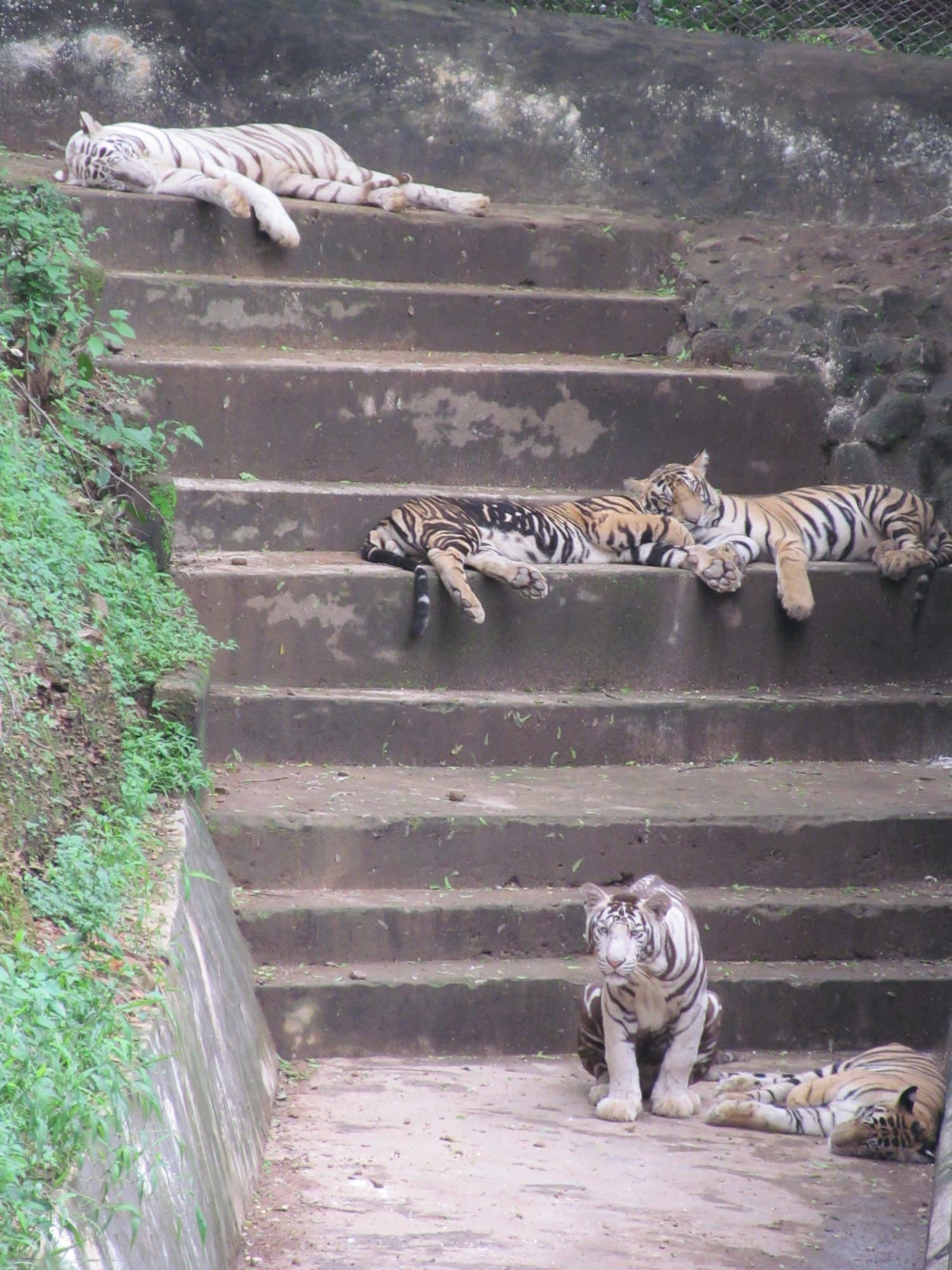
The Nandankanan Zoological Park’s breeding program supports white, Bengal, and melanistic tigers.
©Victor Mukherjee/Shutterstock.com
Located within the Chandaka Forest in India, the Nandankanan Zoological Park spans 1,080 acres, encompassing parts of the Jujhagarh and Krishnanagar protected forests and the scenic Kanjia Lake. Its name, “Nandankanan,” means “The Garden of Heaven.” The park is a haven for over 3,000 animals from 156 different species, housed in a mix of traditional enclosures and open, moated habitats. The zoo also plays a vital role in protecting local wildlife within its grounds, with numerous species of reptiles, birds, butterflies, and mammals that freely roam within this safe environment.
Nandankanan Zoological Park’s commitment to global conservation was recognized in 2009 when it joined the World Association of Zoos and Aquariums (WAZA). It is the only zoo in India to house eastern rosellas, patas monkeys, and openbill storks. It is also one of only two zoos in the country with Indian pangolins, Burmese pythons, and orangutans.
6. The Living Desert Zoo and Gardens (Palm Desert, CA)
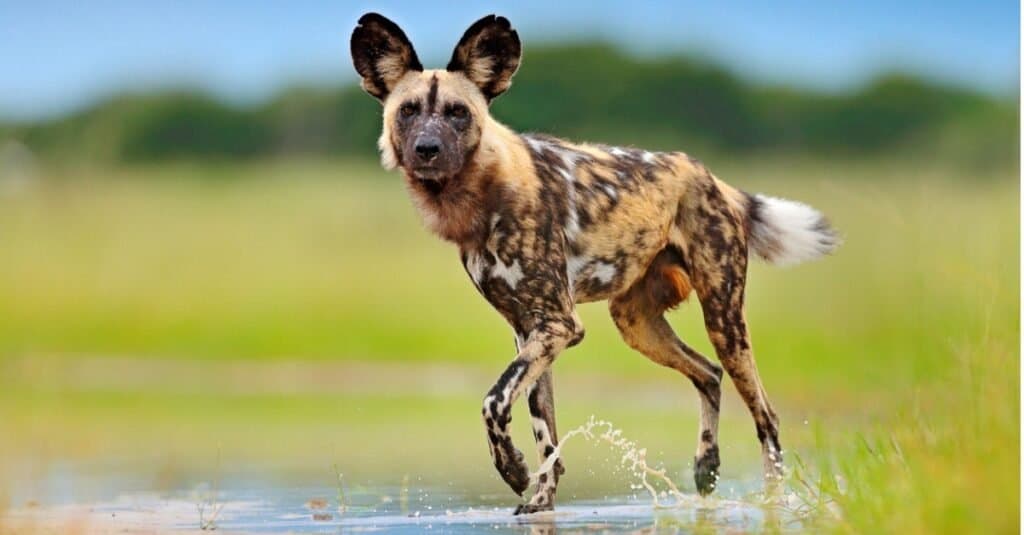
The Living Desert Zoo and Gardens is home to the endangered African painted dog and actively participates in dozens of conservation projects to help these animals and many others.
©iStock.com/Ondrej Prosicky
Opened in 1970, The Living Desert Zoo and Gardens spans 1,200 acres. Visitors can explore miles of hiking trails within the zoo and observe over 500 animals representing more than 150 different species. Unlike traditional zoos, The Living Desert specializes in desert wildlife and their ecosystems. The exhibits at this zoo are carefully designed to replicate the animals’ natural habitats.
The Wild Americas area showcases animals native to North American deserts, including mountain lions, bobcats, coyotes, and Mexican wolves. The Rhino Savanna highlights black rhinoceroses, waterbucks, and springboks. The Giraffe habitat is home to ostriches, greater kudu, and giraffes. At the Village WaTuTu, you can find camels, leopards, and hyenas, and even interact with Nigerian dwarf goats.
5. Arignar Anna Zoological Park (Vandalur, India)
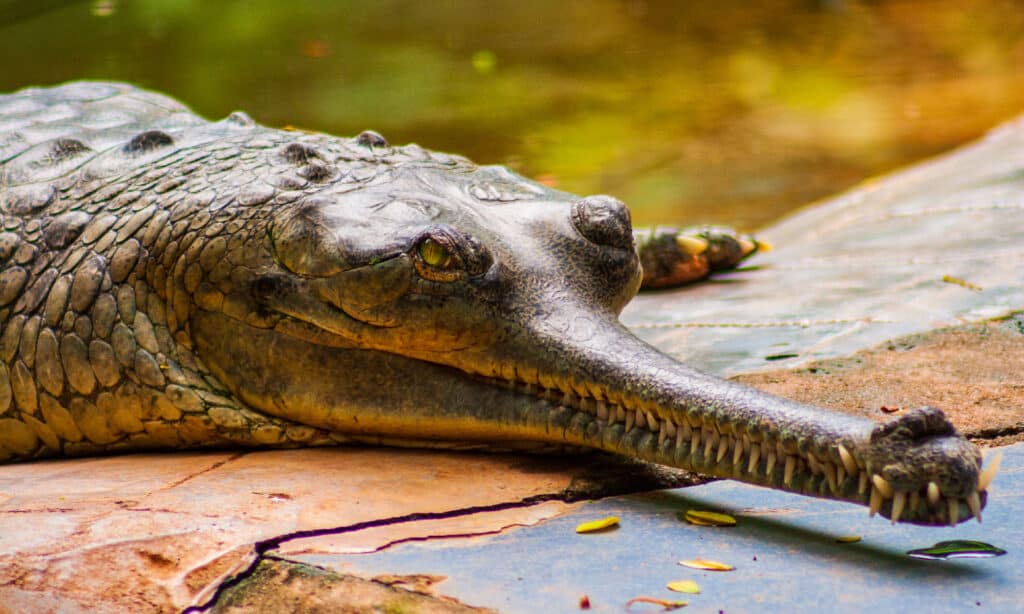
The Arignar Anna Zoological Park is one of the oldest zoos in India.
©iStock.com/palliki
Originally established as the Madras Zoo in 1855, the Arignar Anna Zoological Park was relocated to its current 1,490-acre site in Vandalur, India. This zoo offers an incredible variety of exhibits, each designed to showcase a different facet of the animal kingdom. The Amphibian Centre features a unique collection of frogs and toads, while 245 different bird species soar in the free-flight aviary. At the Butterfly Park, visitors can witness a kaleidoscope of color, and at the Serpentarium, they can see a variety of reptiles, including cobras and pythons. The Primate House is a favorite, with its lion-tailed macaques, Nilgiri langurs, and chimpanzees. The zoo also houses large mammals like tigers, elephants, giraffes, rhinoceroses, and lions.
The Arignar Anna Zoological Park is deeply committed to the conservation, rescue, and rehabilitation of wildlife. The zoo provides a safe haven and expert care for animals that have been injured or rescued from poachers.
4. San Diego Zoo Safari Park (Escondido, CA)
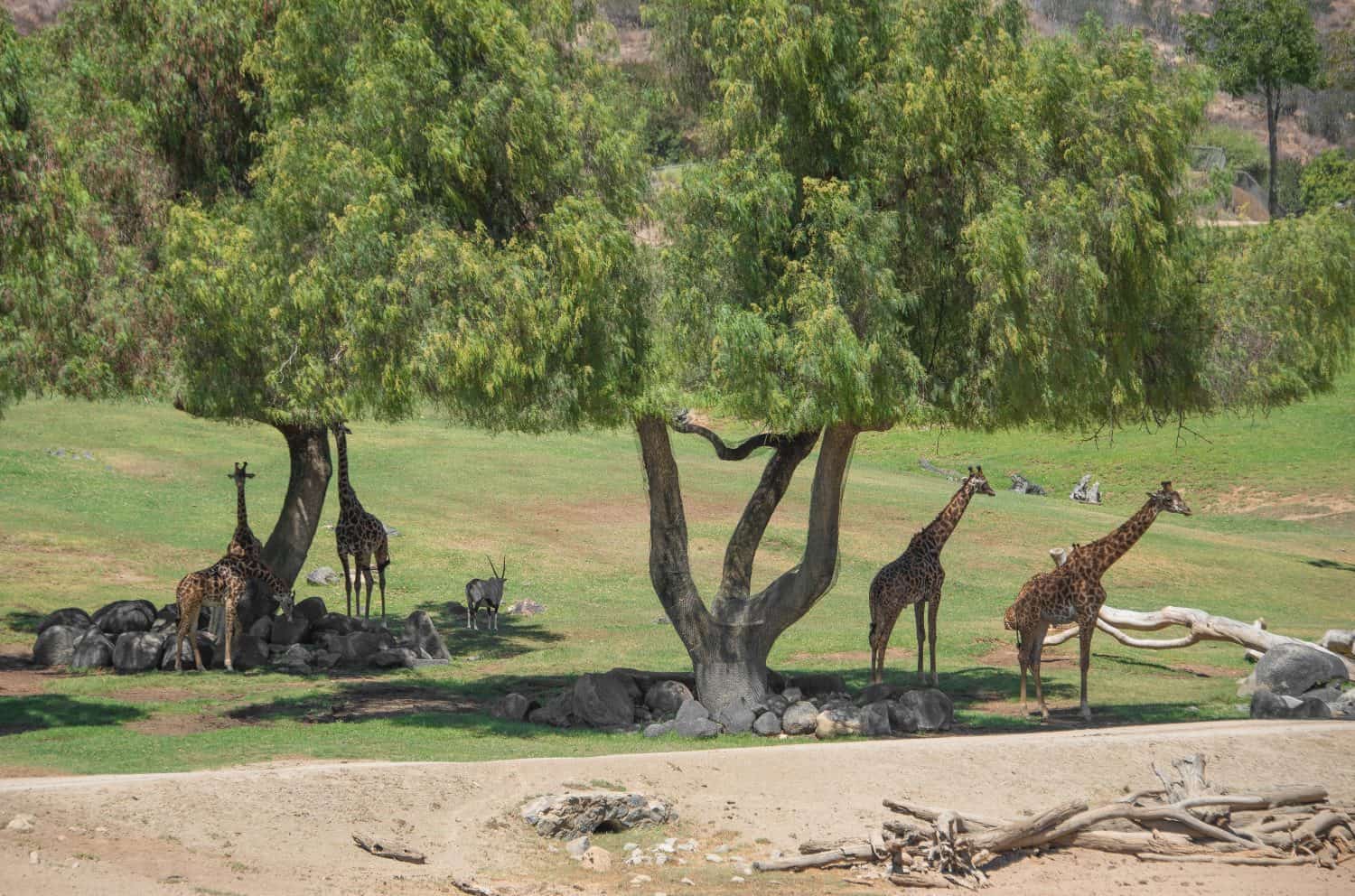
The park’s sprawling size allows for massive, naturalistic exhibits that transport you to different places around the world.
©Stas Bobkov/Shutterstock.com
Spanning an incredible 1,800 acres, the San Diego Zoo Safari Park is one of the largest and most renowned zoos in the world. With over 3,000 animals from 300 species, a visit here is an immersive adventure that typically takes around six to seven hours to fully enjoy. In Nairobi Village, visitors can discover a variety of smaller creatures like ring-tailed lemurs and black-footed cats, while the Tiger Trail is home to the zoo’s majestic Sumatran tigers. Condor Ridge showcases endangered native species such as California condors, desert bighorn sheep, and black-footed ferrets. The park also features animals from Australia, including western grey kangaroos and red-necked wallabies. As of 2025, the San Diego Zoo Safari Park is also home to the only platypuses currently found outside Australia!
Visitors can choose their own adventure at the park, from a traditional walking tour to an exciting open-air safari truck ride through the savanna habitats. For truly adventurous guests, the Flightline Safari lets you zipline high above the park for a one-of-a-kind view.
3. North Carolina Zoo (Asheboro, NC)
The North Carolina Zoo is the largest natural habitat zoo in the world.
©ZikG/Shutterstock.com
Spanning more than 2,600 acres in Asheboro, the North Carolina Zoo is one of the world’s largest natural habitat zoos. Over 5 miles of walking trails lead visitors through stunning landscapes, showcasing 1,700 animals and an impressive 52,000 plants. The zoo is organized into two main geographic sections: North America, which features animals from polar bears to bison, and Africa, which is home to one of the largest chimpanzee troops in the United States. A third section, featuring animals from Asia, is set to open in 2026.
At its core, the North Carolina Zoo is a powerful force for conservation. The zoo actively protects 2,800 acres of land surrounding its property, creating a safe haven for local species like the pine barrens treefrog and American red wolf. The zoo also operates the Valerie H. Schindler Wildlife Rehabilitation Center, which cares for injured and orphaned native wildlife.
2. Sri Venkateswara Zoological Park (Tirupati, India)

The zoo’s motto, “Jeevakarunyameva paramavadhiha,” translates to “Love and compassion towards life is the heavenly path.”
©Jayavardhan/Shutterstock.com
Encompassing an impressive 3,100 acres, the Sri Venkateswara Zoological Park is the largest zoo in Asia by area. Located in Tirupati, the park is named after the local lord of the Seven Hills and is uniquely designed around a mythological theme.
This massive zoo stands apart from traditional zoos by housing its animals in expansive, naturalistic habitats that closely mimic their native environments. The park is home to 46 bird species, such as green-winged macaws, Alexandrine parakeets, and purple herons. It also houses 31 mammal species, featuring large animals like white tigers, Bengal tigers, Asiatic lions, and Indian guars. The zoo also features seven reptile species, including gharials as well as saltwater and mugger crocodiles.
1. The Wilds Safari Park (Cumberland, OH)
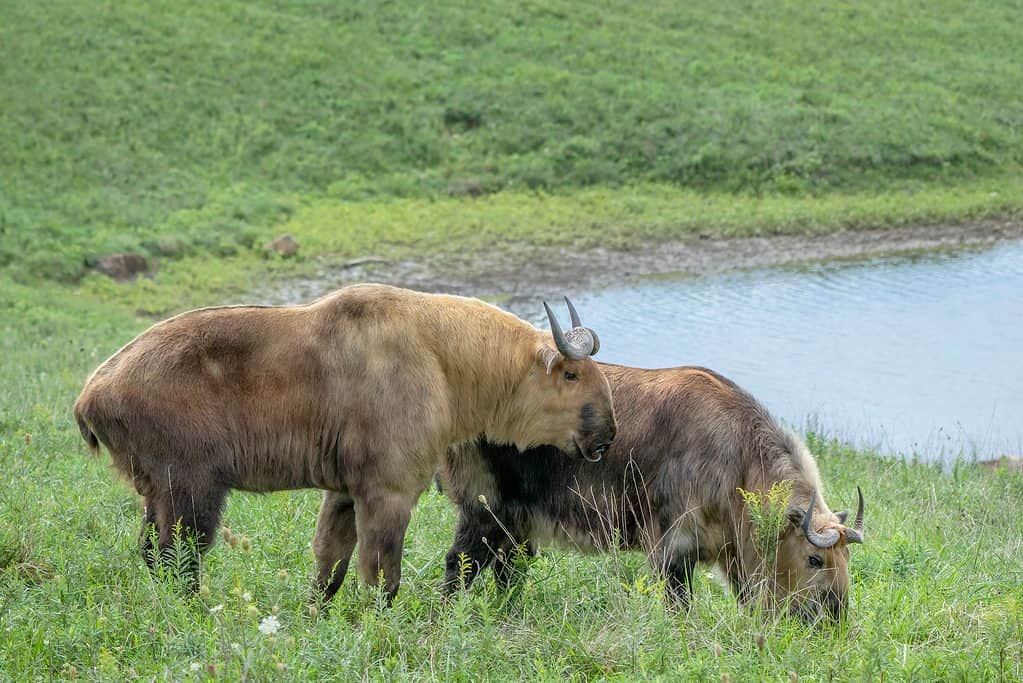
North America’s largest breeding herd of Sichuan takins lives at The Wilds Safari Park in Ohio.
©Mark_Kostich/Shutterstock.com
Located in Cumberland, Ohio, The Wilds Safari Park spans over 10,000 acres. Like its partner, the Columbus Zoo and Aquarium, The Wilds is accredited by both the Association of Zoos & Aquariums (AZA) and the World Association of Zoos and Aquariums (WAZA) and is committed to high standards of animal care and conservation. Unlike a traditional zoo, The Wilds offers a more adventurous and immersive visitor experience. Rather than walking through exhibits, guests can choose from a variety of guided safaris. You can explore the landscape on an open-air safari bus, go horseback riding, or even get a bird’s-eye view by ziplining through the park. For a truly unforgettable experience, you can even spend the night in a yurt outside with the animals.
The park’s enormous size allows animals to roam in herds throughout large, naturalistic habitats. Here, you can see dozens of unique species from around the globe, including greater one-horned and southern white rhinoceroses, cheetahs and dholes, critically endangered species like the scimitar-horned oryx, and Père David’s deer, a species once extinct in the wild, which The Wilds is helping to bring back.