
For decades, the debate over keeping whales in captivity has churned like a restless tide. Does that comparison sound cliché? Perhaps. Is it true? Absolutely.
Now, a new wave is rolling in, and it’s one shaped by science, ethics, and some truly impressive marine engineering. On a quiet stretch of Nova Scotia coastline, the Whale Sanctuary Project (WSP) is building the first-of-its-kind seaside haven for formerly captive belugas and orcas. Think of it as a retirement village for whales (minus the shuffleboard, plus about 100 acres of ocean).
To understand how a project of this magnitude goes from vision to reality, we spoke to Charles Vinick, the Whale Sanctuary Project’s Chief Executive Officer. Vinick has spent decades in marine conservation, including work on the Free Willy/Keiko relocation project, so he knows a thing or two about moving whales — a job description that sounds equal parts heroic and terrifying.
What’s emerging off Nova Scotia is nothing short of groundbreaking: a marine sanctuary where whales can live out their lives with space, autonomy, and dignity while still receiving world-class care. And yes, the engineering is as wild as you might imagine.
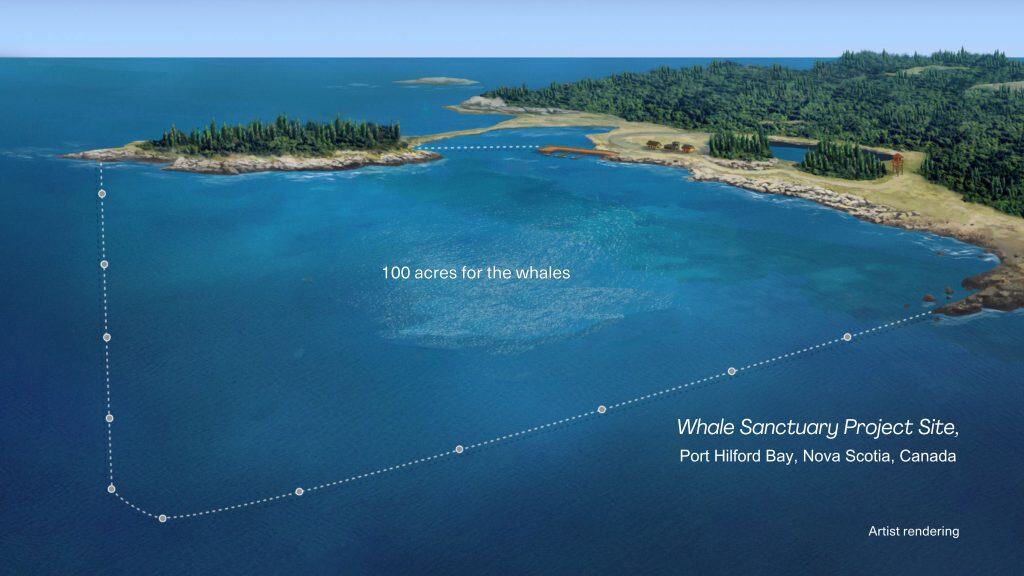
A look at the Whale Sanctuary Project layout. This rendering outlines the protected ocean area where whales will one day swim, dive, and settle into their new home.
©The Whale Sanctuary Project
The Anatomy of an Ideal Whale Haven
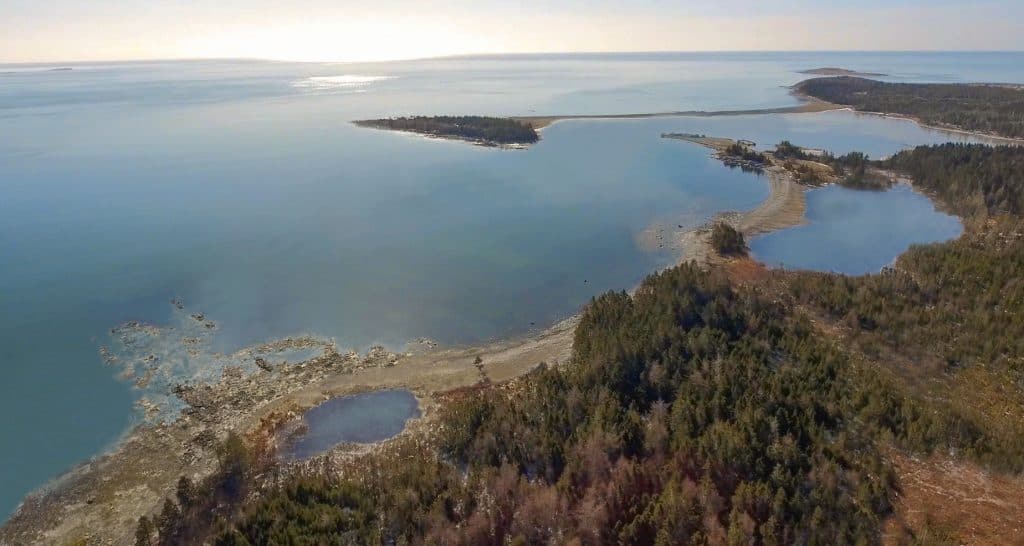
The community of Port Hilford, Nova Scotia, is about to become famous for more than lobster rolls and postcard-worthy coves. The site offers deep, protected waters, minimal marine traffic, and the kind of quiet that suits a species whose conversations travel for miles.
The sanctuary spans roughly 100 acres of ocean — about 40 hectares — with depths reaching nearly 60 feet. It’s big enough for whales to stretch their fins literally and figuratively, but enclosed enough to ensure their safety.
When complete, the sanctuary is expected to host 8 to 10 whales, though Vinick emphasizes that quality of care, not headcount, will always dictate capacity.
Engineering a Humane Ocean Home (a.k.a How to Build a Giant Underwater Neighborhood Fence)
Some people build backyard fences. The Whale Sanctuary Project is installing a perimeter net nearly a mile long and anchored down to depths of about 18 meters. And that’s every bit as complicated as it sounds.
“Designing and installing the perimeter net encompassing the 100 acres of sanctuary waters is challenging,” Vinick says. “This is a net approximately a mile in length with depths up to 18 meters.”
To pull it off, the WSP has tapped engineers who normally build for industries like aquaculture and hydroelectric operations. If you can design gear that holds up to centuries-old ocean tantrums, a sanctuary net is right up your alley.
There’s also the matter of whale transport, a logistical dance involving veterinary prep, custom transport equipment, and a director who has orchestrated “numerous cetacean transports,” according to Vinick. In other words, they’ve got the A-team on this one.
Who’s Paying for a Whale Sanctuary?
Unlike many large-scale marine projects, this one isn’t supported by corporate sponsorships or government funding.
“The Whale Sanctuary Project is philanthropically supported,” Vinick says. Donations from individuals and private foundations fund both the construction and the ongoing care of the whales who will call the sanctuary home.
This funding model means the organization is accountable directly to public values, a refreshing twist at a time when many conservation efforts struggle for independence.
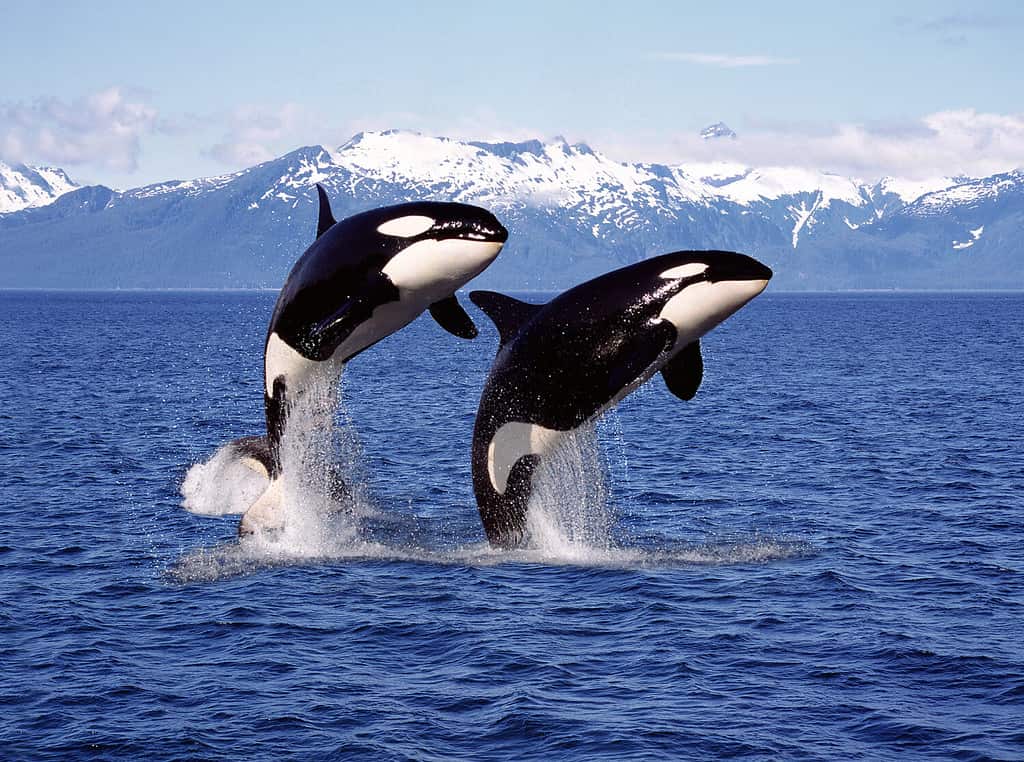
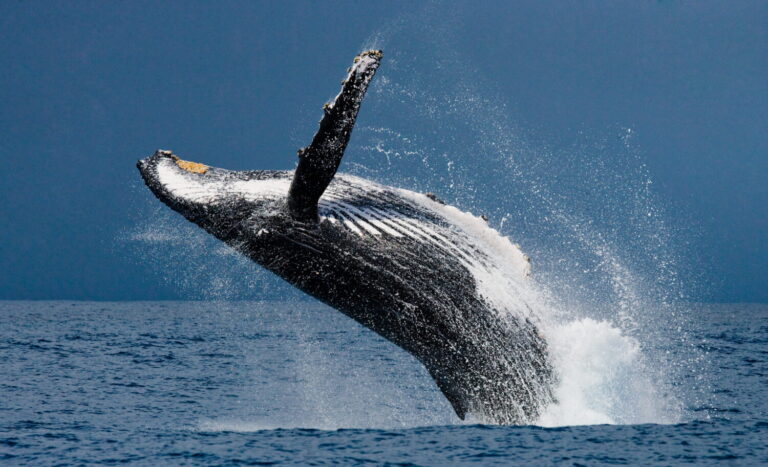
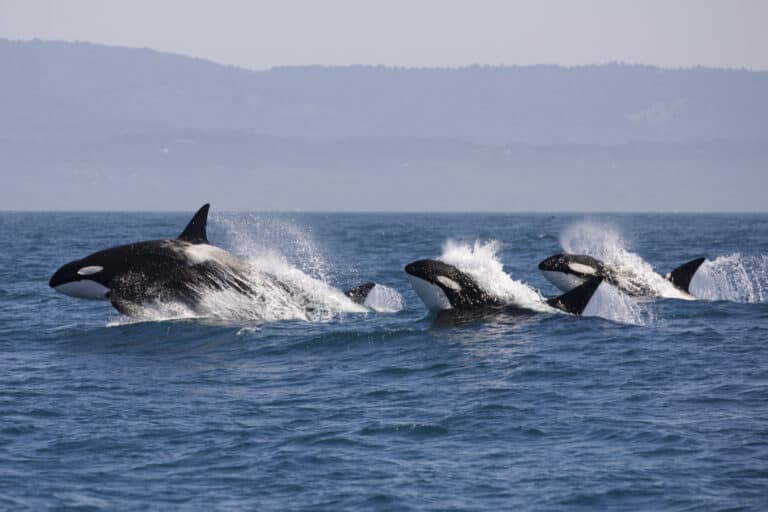
Two wild whales breach in unison, demonstrating the freedom and athleticism the sanctuary is designed to restore.
©slowmotiongli/Shutterstock.com
Preparing Whales for a Life They’ve Never Known
Imagine growing up inside a building your entire life, then suddenly being told you’re moving to a national park. That gives you a sense of what formerly captive whales experience during sanctuary transition.
But before any transport happens, WSP conducts comprehensive health assessments.
“In advance of transport, complete veterinary evaluations of each individual whale are necessary,” Vinick explains. That includes reviewing years of medical history and ensuring any ongoing care needs can be met at the sanctuary.
There’s also whale “orientation,” during which whales are gradually introduced to the native flora and fauna they’ll encounter in Nova Scotia waters, followed by a staged arrival.
In the bay pen, whales can get their bearings in a smaller, secure space. Then comes the full sanctuary, an open-water expanse where they can (for the first time) behave like wild whales.
“In the sanctuary, the whales receive all the care they are used to,” Vinick says, “while also having the benefits of living in a natural ocean environment with space to swim, dive, and explore.”
Why This Matters
Whale captivity has become increasingly controversial, with public sentiment shifting sharply toward alternatives that prioritize welfare over entertainment. The sanctuary model offers a middle path for whales who cannot be released into the wild yet deserve far more than concrete tanks.
The Nova Scotia sanctuary represents a prototype that could reshape how marine parks transition animals out of performance-based lives. It also gives researchers unprecedented opportunities to study rehabilitation, emotional well-being, and long-term behavioral health in formerly captive whales.
The vision is not to create a tourist attraction. It’s to create a model for global change.
“I foresee a vibrant sanctuary with eight to 10 whales thriving in their ocean home,” Vinick says. He pictures them navigating with echolocation, diving at will, exploring natural features of the bay, and receiving consistent, compassionate care from the staff who know them best.
It’s a world where whales can simply be whales.
“Designing and installing the perimeter net encompassing the 100 acres of sanctuary waters is challenging, as this is a net approximately a mile in length with depths up to 18 meters,” explains Charles Vinick, the Whale Sanctuary Project’s Chief Executive Officer.
©The Whale Sanctuary Project
In the sanctuary, the whales receive all the care they are used to while also having the benefits of living in a natural ocean environment with space to swim, dive, and explore.
Charles Vinick, the Whale Sanctuary Project’s Chief Executive Officer
The Road Ahead
According to the Whale Sanctuary Project’s most recent status report, the team is deep into the permitting, environmental assessments, and infrastructure design needed to bring the sanctuary online. From net installation to animal care logistics, the next few years will involve meticulous planning and community collaboration.
But the momentum is strong. The concept once considered “too ambitious” is now becoming a blueprint for the future.
The creation of a seaside whale sanctuary isn’t just a conservation milestone; it’s a cultural one. It acknowledges that whales are not props, performers, or splash-zone accessories. They’re intelligent, emotionally complex beings who deserve environments that respect their nature. And soon, on the wind-swept shores of Nova Scotia, they’ll have just that.