
Quick Take
- Florida has 1.3 million alligators, but one detail about where they actually show up will catch you off guard. See where they appear →
- The old advice about outrunning an alligator in a zigzag is wrong, and following it could actually get you hurt. Get the escape facts →
- Feeding a wild alligator seems harmless, but it triggers a behavioral shift that makes every future encounter more dangerous. Why feeding raises risk →
- Southern Florida is the only place on Earth where two apex reptile species naturally share the same territory, a fact made more surprising by how difficult it can be to tell them apart. Explore the shared habitat →
A routine lacrosse practice at Alonso High School in Tampa, Florida, came to a temporary stop when an unexpected visitor decided to cross the field. The American alligator (Alligator mississippiensis) can be seen walking across the grass while members of the Alonso Ravens lacrosse team line up at a safe distance and wait for it to move along.
For a Florida high school, an alligator sighting is not exactly impossible. The Florida Fish and Wildlife Conservation Commission estimates that the state is home to about 1.3 million alligators, and they occur in all 67 counties. Still, having one wander directly through lacrosse practice is probably enough reason to put the drills on hold for a minute. Watch the field crossing below.
Practice Stops for an Unexpected Field Crossing
Where Do American Alligators Live?
American alligators are native to the southeastern United States, with their range extending from southeastern Oklahoma and eastern Texas east through the Gulf Coast states and into the Carolinas and Florida. The species has made a remarkable recovery after populations were severely depleted during the 20th century. Today, the U.S. Fish and Wildlife Service estimates that nearly five million American alligators live across the Southeast.
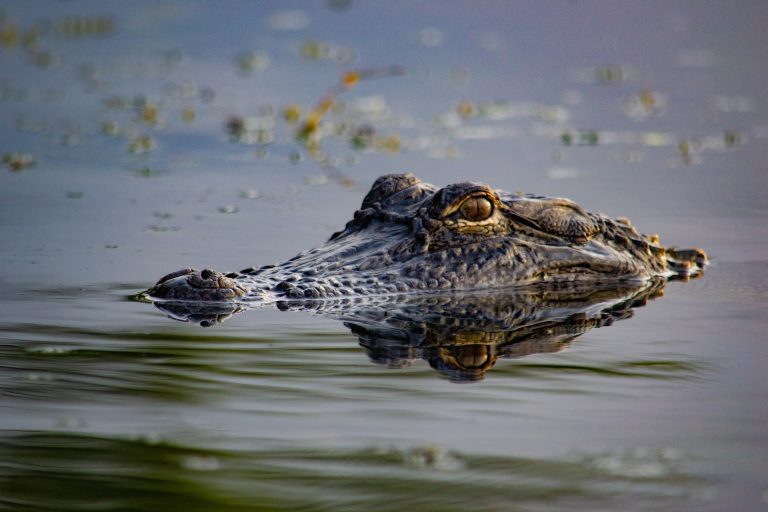
Alligators are most closely associated with freshwater habitats such as lakes, ponds, slow-moving rivers, swamps, marshes, wetlands, and canals. They can also use brackish water and occasionally turn up in saltwater, although freshwater is very much their home turf.
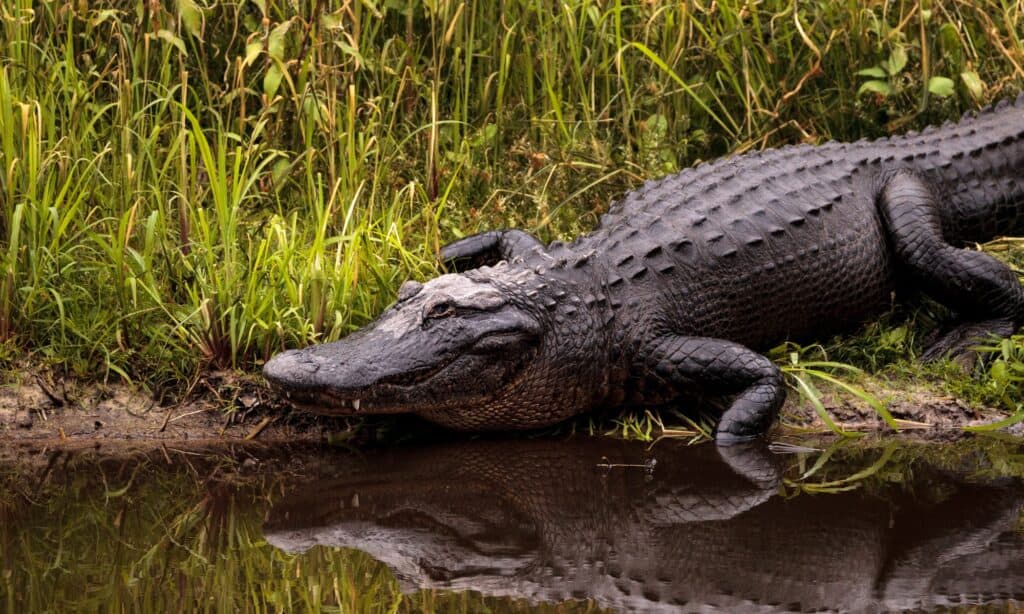
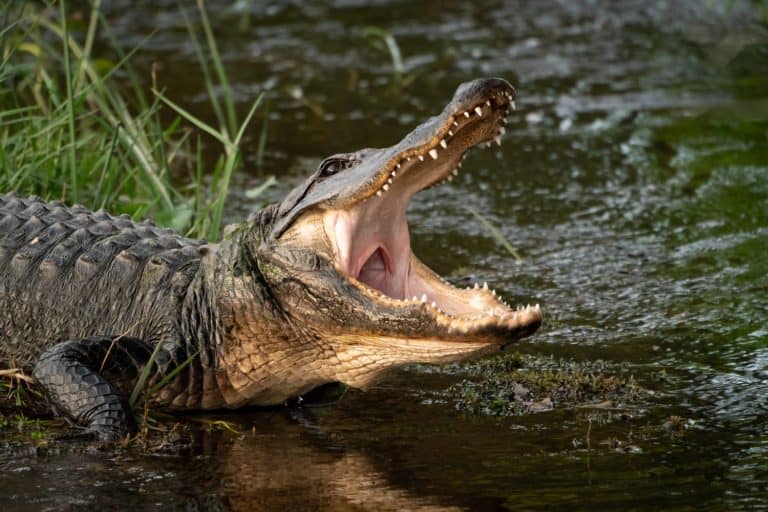
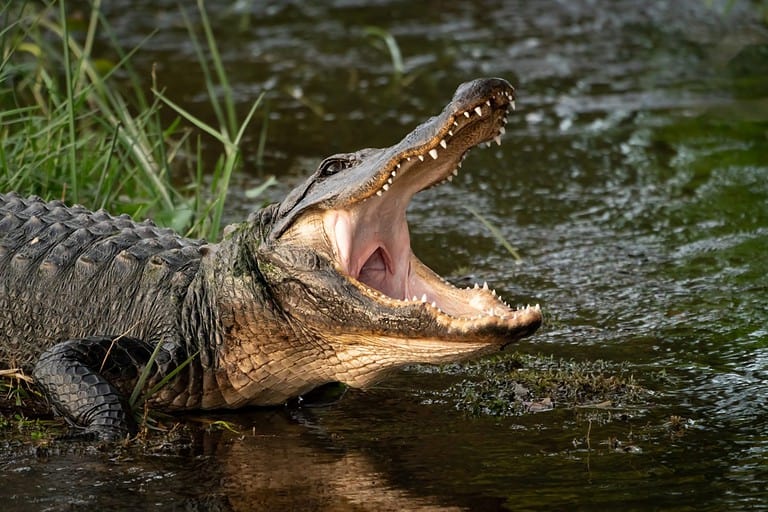
American alligators live in and near water
©iStock.com/LagunaticPhoto
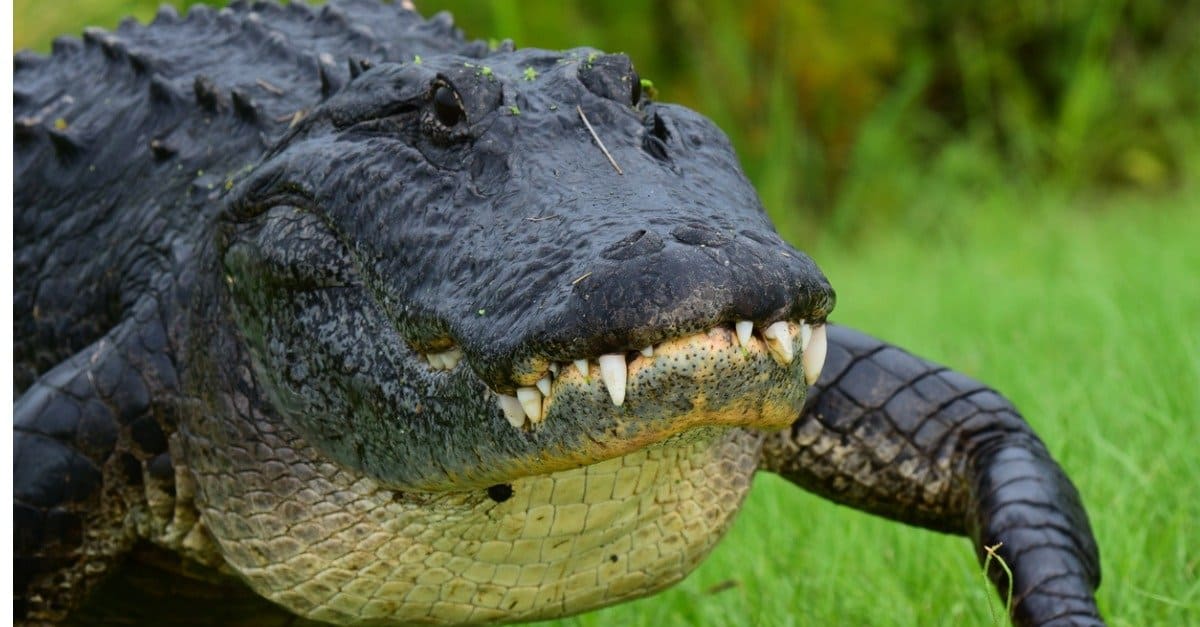
Southern Florida is especially unusual because it is the only place in the world where American alligators and American crocodiles naturally coexist in the wild. Alligators typically have broader, rounded snouts, and usually only their upper teeth are visible when the mouth is closed. American crocodiles have narrower snouts, and the fourth tooth on each side of the lower jaw remains visible. Female alligators rarely exceed 10 feet, but males can grow considerably larger. Florida’s official length record is 14 feet, 3 1/2 inches, while its heaviest officially recorded alligator weighed 1,043 pounds.
Do Alligators Attack Humans?
The lacrosse players in the video did exactly what wildlife officials recommend: they kept their distance and let the alligator move along. Alligators are opportunistic predators whose normal diet includes fish, turtles, snakes, birds, small mammals, and other animals they can catch. They are capable of seriously injuring people, but attacks on humans are uncommon.
Florida has recorded unprovoked alligator attacks over the years, including fatal encounters, but the Florida Fish and Wildlife Conservation Commission describes serious injuries caused by alligators as rare. Risk goes up when people get too close, enter alligator habitat, deliberately interact with the animals, or treat a wild alligator as if it is accustomed to humans.
The basic rules are simple: keep your distance, never feed or harass an alligator, supervise children and pets around the water, and give any alligator you encounter plenty of room to leave. Feeding wild alligators is particularly dangerous because it can make them associate people with food. Females guarding nests or young can also become defensive if approached.
Can a Person Outrun an Alligator?
Alligators can move faster on land than their low-slung bodies make it look. University of Florida wildlife experts put their short-distance running speed at roughly 7.5 to 9 mph. They are not built for long pursuits, however, and chasing people across open ground is not normal alligator behavior.
If an alligator ever does make an aggressive charge, forget the old advice about running in a zigzag. Wildlife experts recommend moving away quickly in a straight line. Zigzagging only makes you cover more ground while putting yourself at greater risk of tripping.
More importantly, do not rely on your running ability as an alligator safety plan. Give the animal space in the first place. That is exactly what the Alonso players did here, turning what could have become a dangerous interaction into a brief interruption before practice could continue.