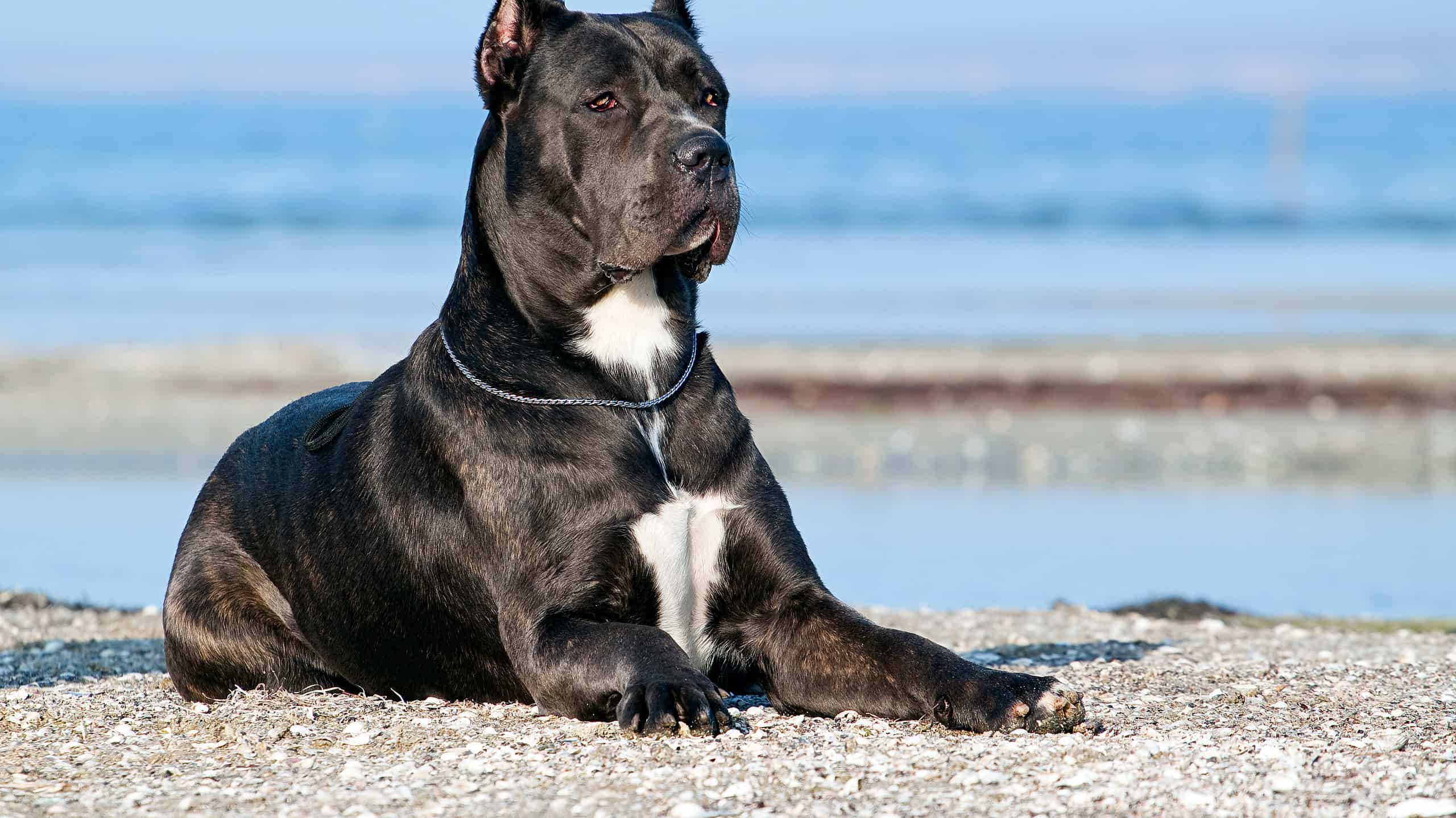

Cane Corsos are known for their agility and athleticism. Unlike many mastiff breeds, Cane Corsos have a very high energy level. They’re also very people-oriented and need plenty of companionship. These dogs can be considerably protective, which is why many people like them. However, problems can arise with Cane Corsos as these traits also have a negative side. Without the proper socialization and training, their temperament can quickly turn sour.
We’ll look at some of the most common Cane Coroso complaints. You can prevent some of these complaints with proper care, but others are simply part of the breed.
1. High Socialization Need

Socialization should be a big focus for your Cane Corso as they age.
©Sbolotova/Shutterstock.com
Cane Corsos tend to be very friendly as puppies but quickly become more aloof as they age. They require extensive socialization with other people and pets to temper their protective instincts. Otherwise, they’ll grow to see everyone as the “bad guy” and potentially become aggressive.
These dogs can be good guard dogs, but that requires extensive socialization. For many people, this is a lot of work.
2. Strong Temperament
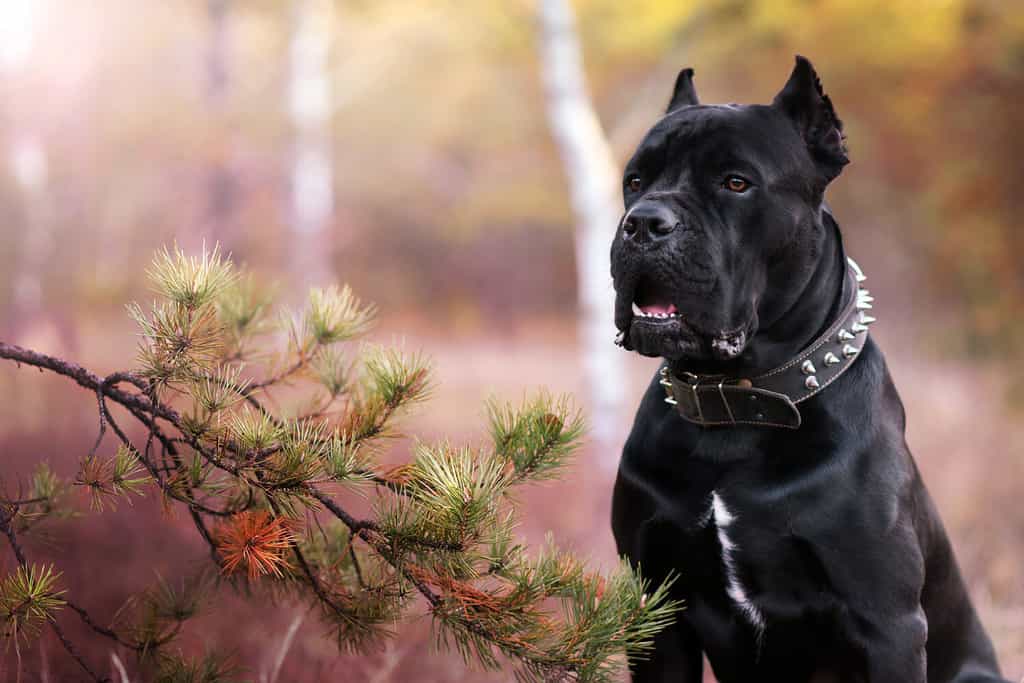
Gettings these dogs in puppy classes early is important. Otherwise, they can become overwhelming to deal with.
©Natalia Fesiun/Shutterstock.com
Cane Corsos have a very strong temperament. They may be more trainable than other mastiff breeds. However, they’re very independent. Training them isn’t straightforward, and they aren’t masters of obedience. Often, these dogs like to make their own decisions, so they won’t always listen to commands in real-world situations.
You must provide plenty of extra training and consistency. We don’t recommend these dogs for new dog owners simply because they are hard to train.
Plus, the extra training can be a lot on top of the extra socialization.
3. Exercise Balancing
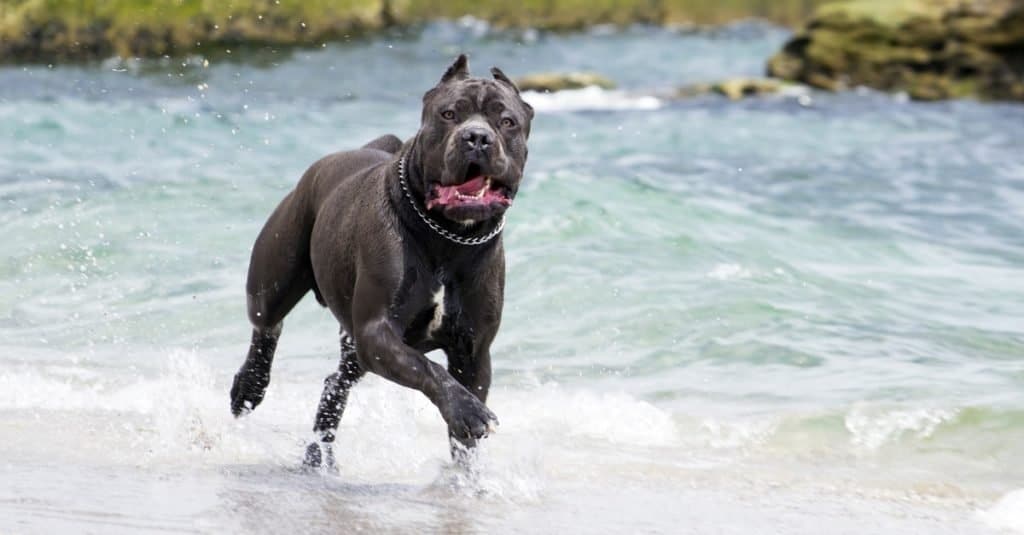
The Cane Corso needs a balanced mental and physical exercise routine.
©Sbolotova/Shutterstock.com
Exercising your Cane Corso is a bit complicated. On one hand, you need to provide enough exercise for your canine for them to stay lean and healthy. These dogs are more active than other large breeds, so exercise should be a daily routine.
However, they are also prone to joint wear. Exercising them too much can result in health issues, especially when they are younger. They’re also prone to overheating, so exercising them in hot weather is a no-go.
You’ll need to minimize the exercise for your Cane Corso when they are younger. For this reason, expect them to be a bit more hyper. You cannot wear them out, which means they’ll spend much of the day romping around.
We recommend substituting some of their exercise time with companionship and training. Try to wear out their minds since you can’t wear out their body. Destructive behaviors are always something to worry about, so crate training is absolutely necessary.
4. Dog Aggression

Often, these dogs aren’t very friendly with other canines. They’re naturally aloof.
©Samoilova_Olena/Shutterstock.com
Cane Corsos are known for being aggressive and intolerant of other dogs, especially those of the same sex. Sometimes, they won’t tolerate the opposite sex, either. Therefore, they aren’t a good option for multi-dog households.
These dogs may also have strong chase instincts and may chase smaller dogs. Remember, Cane Corsos are exceptionally big. They can easily injure even a medium-sized dog by playing too roughly.
In some cases, Cane Corsos will get along fine with other breeds. However, this requires that lots of things end up right. Your dog must be properly bred, socialized, and trained.
5. Unusual Sounds
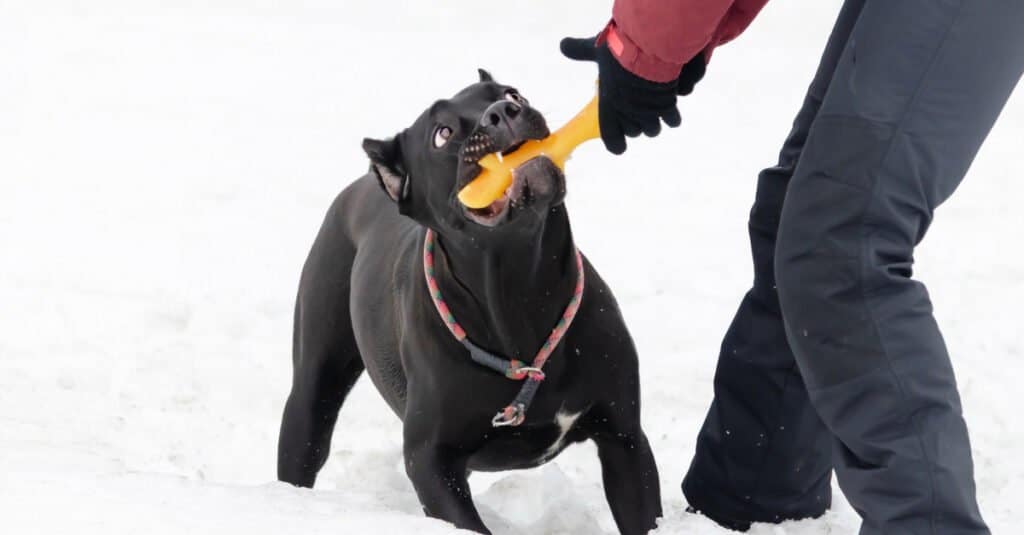
Individuals who are sensitive to sounds may not do well with a Cane Corso, as noises can be a common complaint.
©Taisya Korchak/Shutterstock.com
Cane Corsos aren’t terribly noisy dogs. However, they absolutely made some weird noises. They tend to grunt and snore loudly, which some people find unsettling. Others think it’s cute, so it largely depends on your preferences.
6. Gassiness

Feeding these dogs can be very expensive due to their larger size. They tend to get very large very quickly, raising food prices substantially.
©Olga Aniven/Shutterstock.com
Like most short-faced breeds, Cane Corsos tend to be rather gassy. They gulp in a lot of air when they breathe or eat, and that air has to go somewhere. Some diets make this gassiness even worse. Those with lots of fiber or hard-to-digest ingredients may make these dogs more gassy.
Sensitive stomach formulas are often a good choice. Of course, this is also an individual thing. Some Cane Corsos can eat anything, while others have very sensitive stomachs.
Some owners report that dogs fed homemade diets have less trouble with gassiness. However, it likely depends on what’s in the homemade diet. If you do decide to go this route, be sure that you work with your vet to ensure your dog gets everything they need.
7. Short Lifespan

You can help extend the life of your Cane Corso with consistent veterinary care, a good diet, and a safe exercise routine.
©xkunclova/Shutterstock.com
Cane Corsos are very large. Like most larger dogs, they don’t live very long. They’re also prone to a range of health problems, including serious joint issues. Some are crippled long before the end of their lifespan thanks to hip dysplasia and arthritis. Others may have heart disease, bloat, or cancer in middle age.
Sadly, these dogs don’t stick around for very long, even when well-bred, though researchers currently want to change that.