
Quick Take
- Some basset hound puppies are born a completely different color than they'll wear as adults, and the transformation begins earlier than you'd expect. See the color transformation →
- One basset hound color is so rare that even finding a breeder is a challenge, and owning one may come with a hidden health trade-off. Explore the rarest color →
- The tri-colored basset hound isn't just one look, and nearly a dozen distinct combinations are hiding under that label. See all tri-color combinations →
- A recessive gene quietly shapes one of the lightest basset coats, and its effects kick in weeks after birth. Learn about the recessive gene →
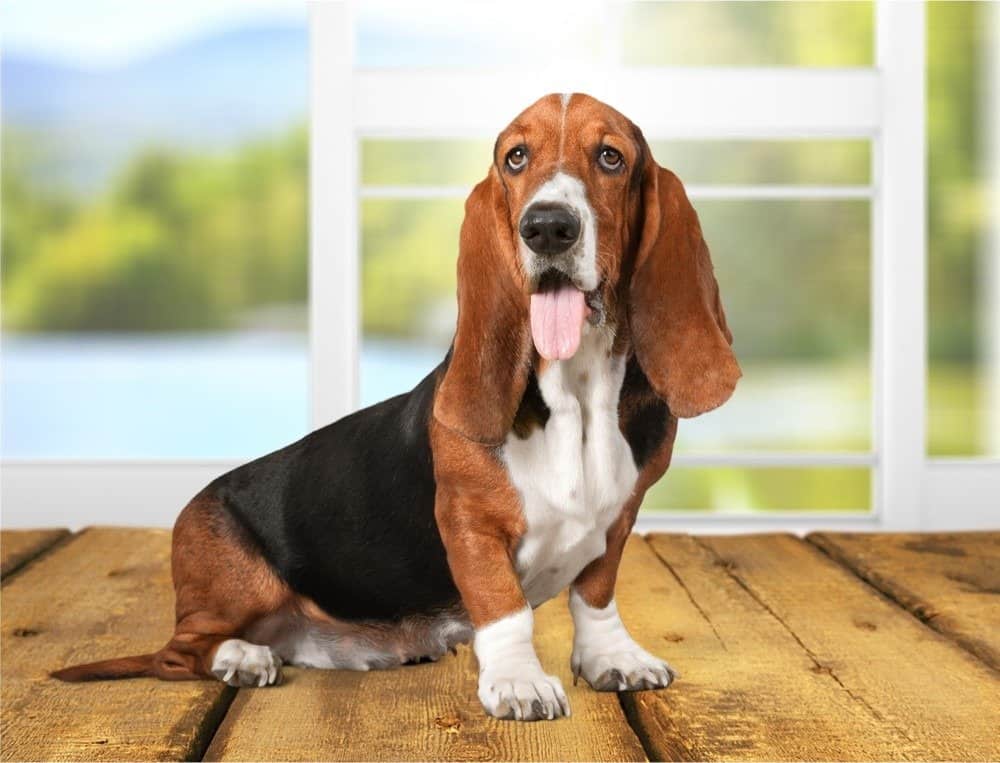
Celebrated for their irresistibly melancholy mugs, basset hounds pair a sweet, laid-back lounge persona with the sharp instincts of a tracking pro. Tracing their roots back to 6th-century French monks at the Abbey of St. Hubert, these sturdy, 65-pound detectives use their iconic long ears and loose skin to trap scents. Continue reading to uncover the spectrum of their short, smooth coats, from everyday classics to the rarest hues, in the following guide.
Tri-Colored
The tri-colored basset hound coloring is the most common. However, there are many variations of colors, including:
- Black, brown, and white
- Black, white, and tan
- Black, tan, and white
- Black, white, and brown
- Brown, black, and white
- Black, red, and white
- Blue, tan, and white
- White, black, and brown
- White, black, and red
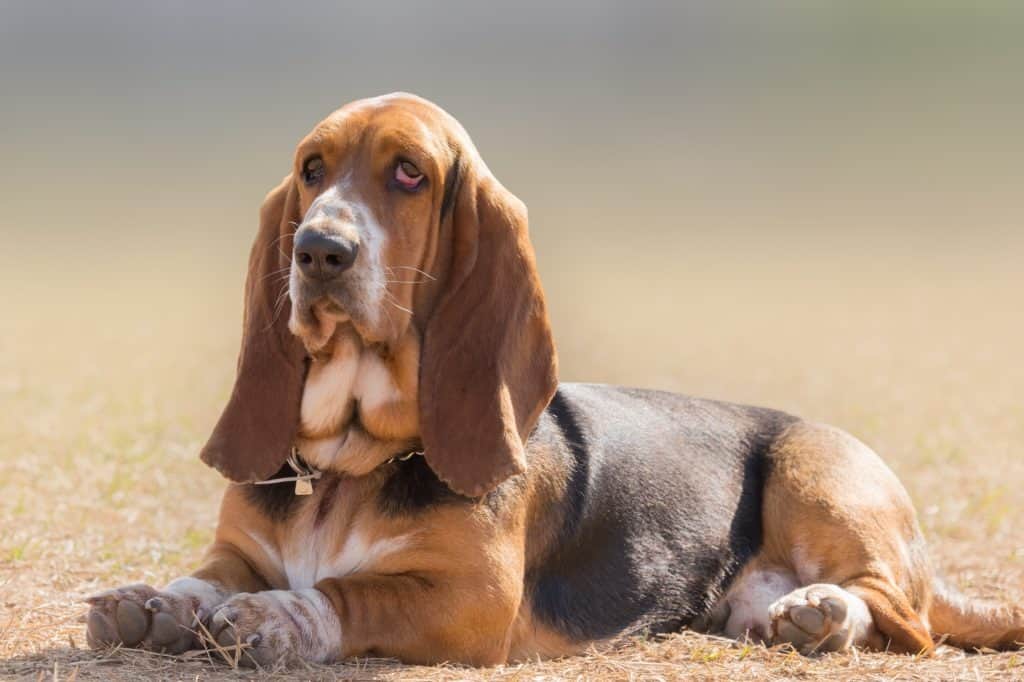
The tri-colored basset hound coloring is the most common coat color.
©Bill Anastasiou/Shutterstock.com
Red and White
Red and white basset hounds have coats that are covered in red patches. As puppies, their coloring appears jet-black or chocolate, but as they grow older, it starts to fade. This usually happens around three months of age. The red basset hound’s back is covered in red, while the tip of its tail, chest, paws, and belly are usually white. Red and white basset hounds also typically have a white band around their necks.
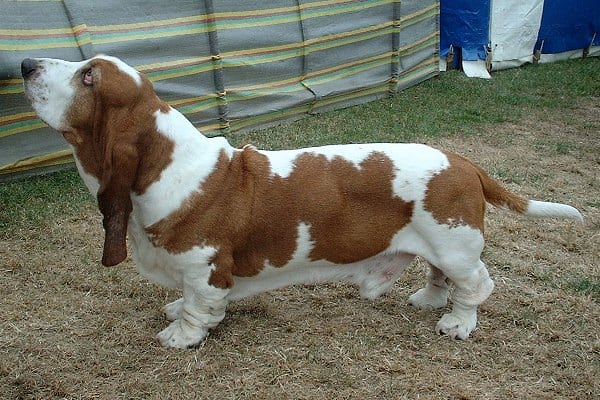
The red basset’s back is covered in red, while the tip of its tail is usually white, along with the chest, paws, and belly.
Brown and White
Brown and white basset hounds come in several variations, including honey, chocolate, liver, and hazel. These colors are often present on their bellies and chests, with brown and white also appearing on their faces.
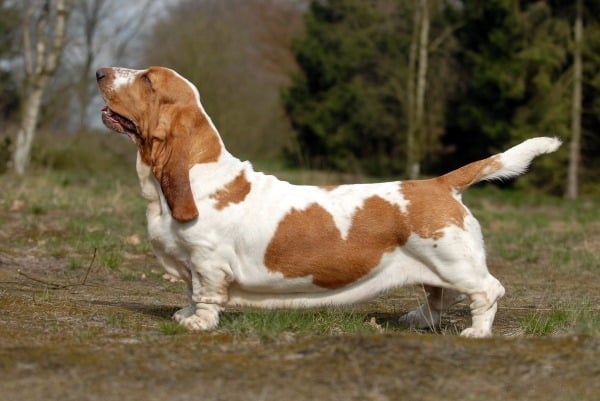
Brown and white basset hounds have a white coat with brown patches.
©Bonnie van den Born, http://www.bonfoto.nl, Cwazi at nl.wikipedia, CC BY-SA 3.0, via Wikimedia Commons – Original / License
Black and Brown
Black and brown basset hounds resemble other breeds with the same color combination, such as Rottweilers, Dobermans, and Dachshunds. They have a top coat of black, shaded and framed in brown.
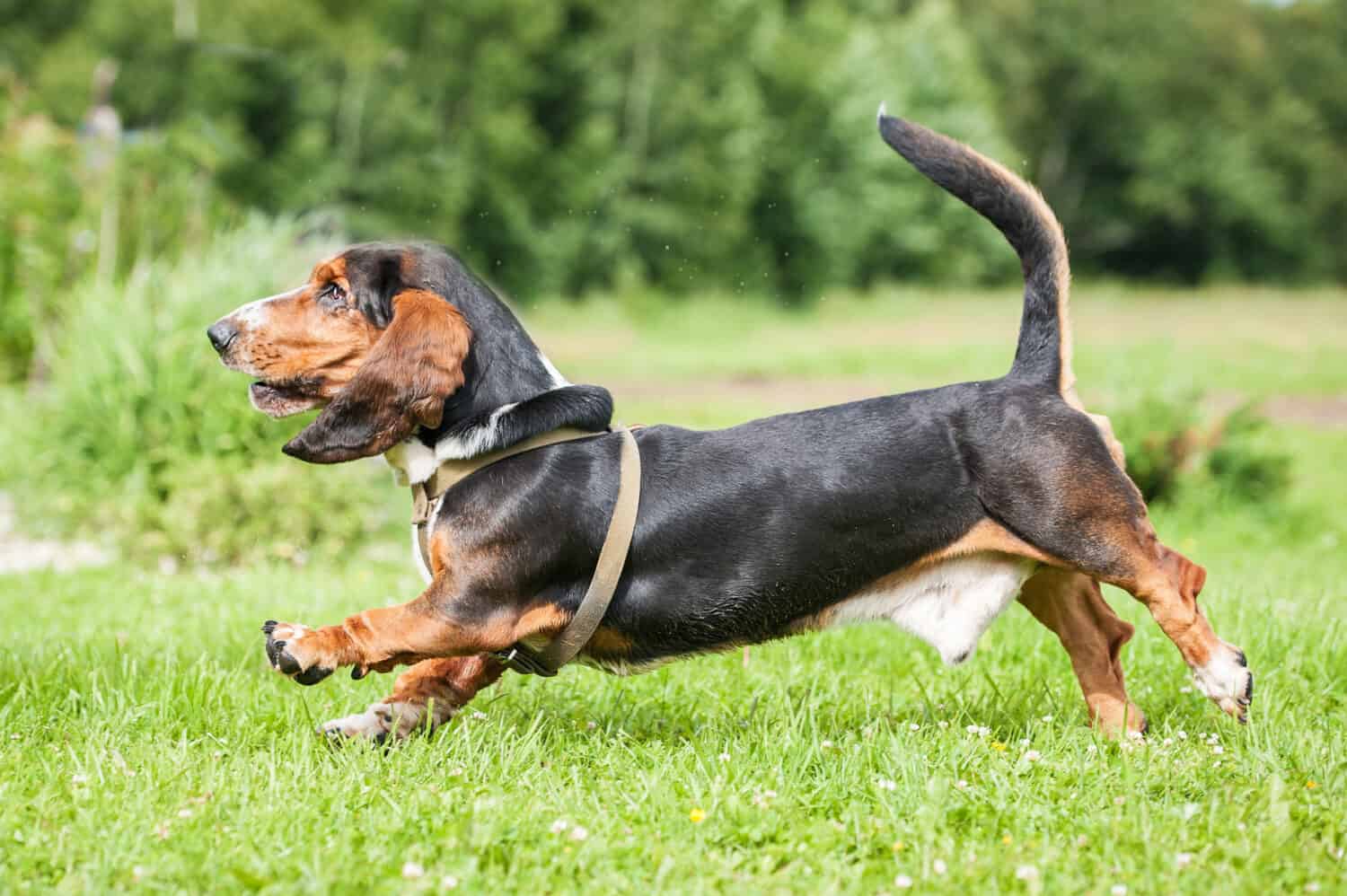
Black and brown basset hounds display similar markings to other dog breeds of similar colors.
©Rita_Kochmarjova/Shutterstock.com
Mahogany and White
Mahogany and white basset hounds have a white base color with dark brown patches that have a red hue. They are also rare, and finding a breeder can be difficult.
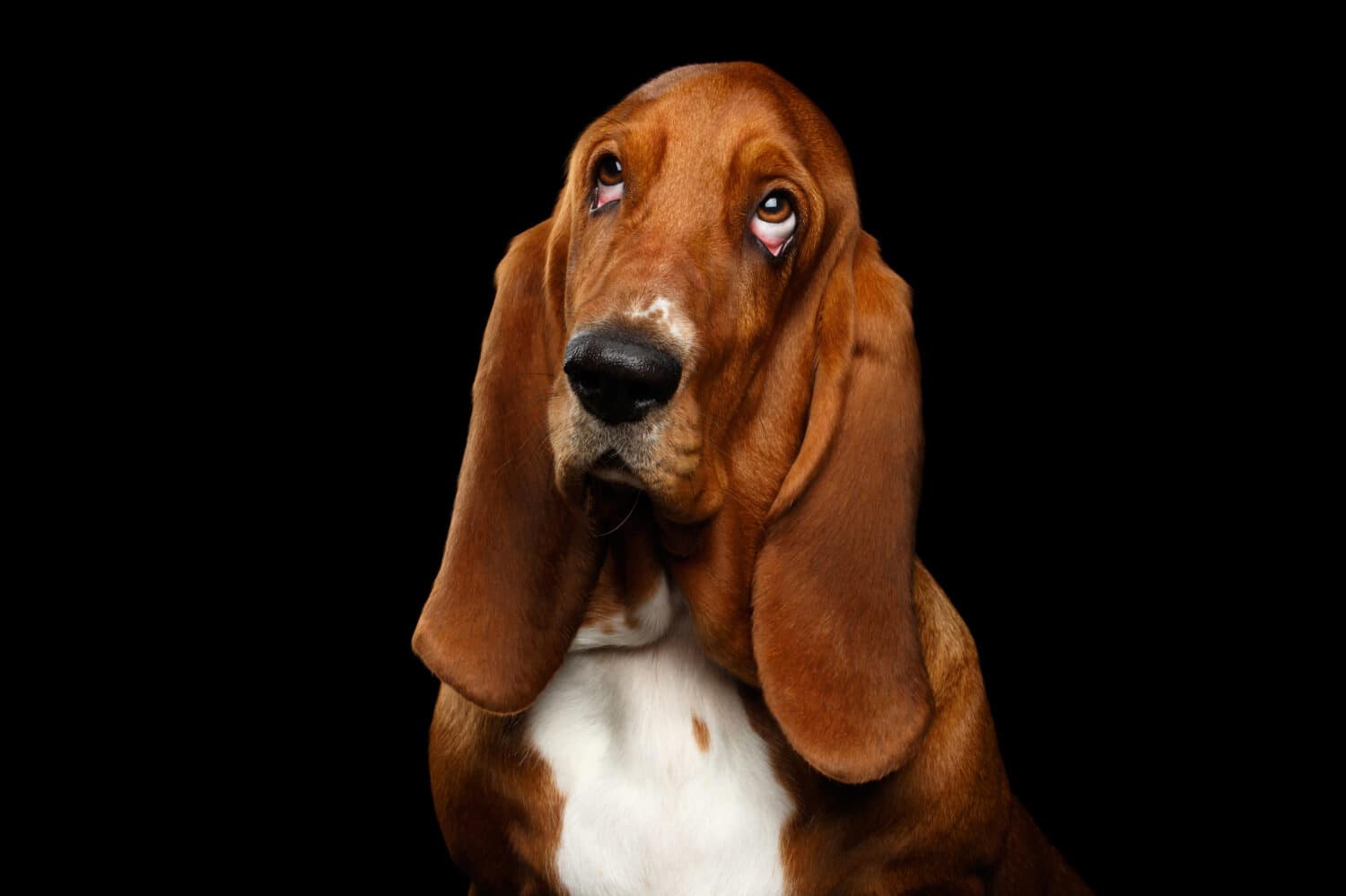
The mahogany and white basset hounds have a white base color and dark brown patches with a red hue.
©Seregraff/Shutterstock.com
Tan and White
The tan shade of a tan and white basset hound is closer to brown than yellow and is often present on the basset’s face or ears.
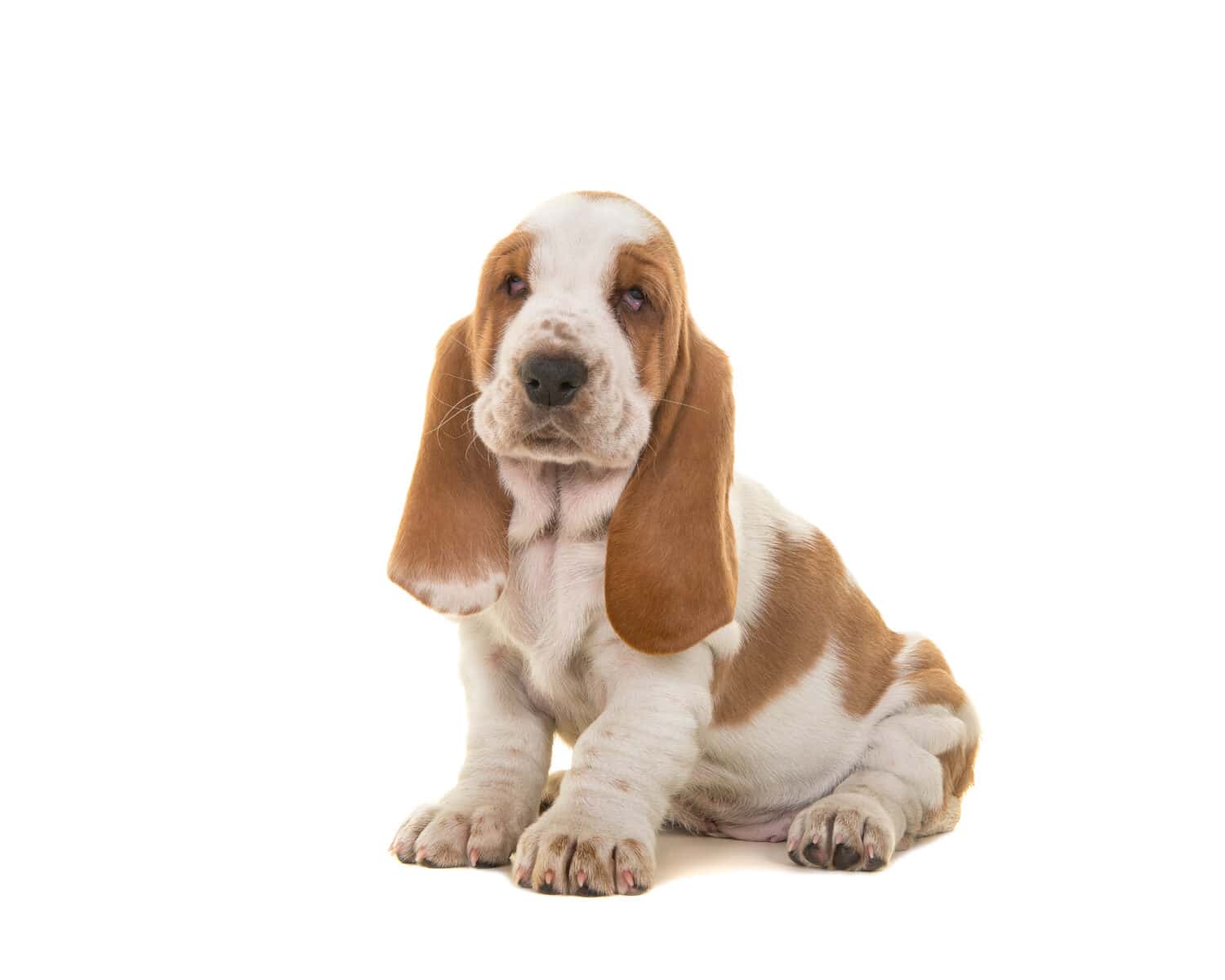
There is a slight difference between lemon and tan basset hounds, which is the depth of the fawn color.
©MirasWonderland/Shutterstock.com
White and Lemon
The lemon markings of a white and lemon basset hound look blonde. In this color combination, there are no traces of darker fur on the body. This coat color is a trait of a recessive gene that makes coat colors fade over time. Puppies are born with darker hair, which begins to fade as early as eight weeks.
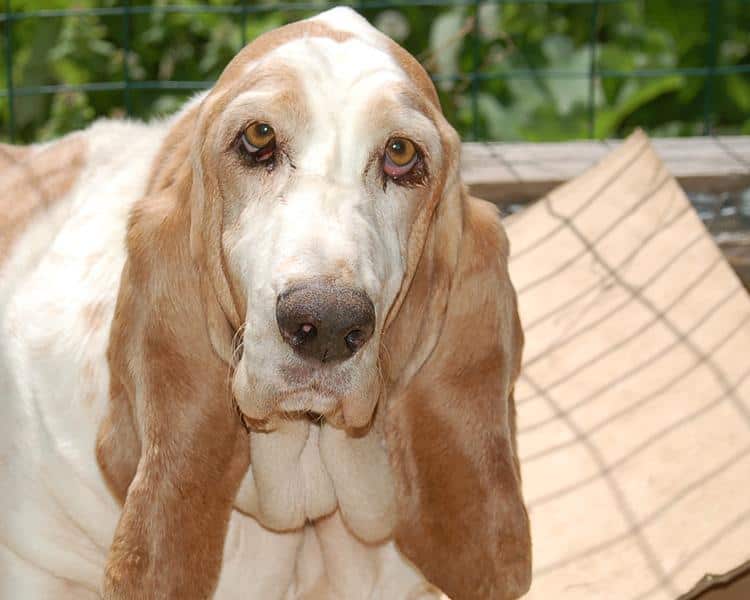
White and lemon basset hounds have one of the lightest coats.
Blue and White
The AKC recognizes blue and white basset hounds, but like the lemon coats, they are extremely rare.
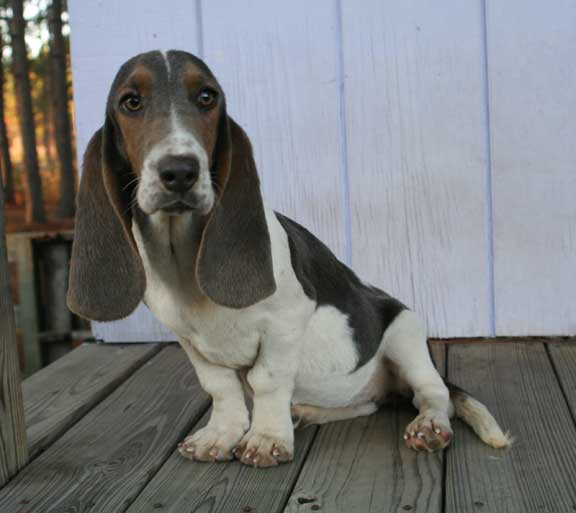
Many people believe that blue basset hounds have genetic defects that lead to severe health conditions.
Blue
The rarest basset hound color is blue. However, because the American Kennel Club (AKC) does not accept this color in the breed standard, finding a breeder is challenging.
The AKC does not officially recognize blue or blue and white basset hounds as standard colors, and these colorations are considered rare and non-standard. The blue coloration in dogs can be associated with certain genetic health risks, such as skin issues and allergies.
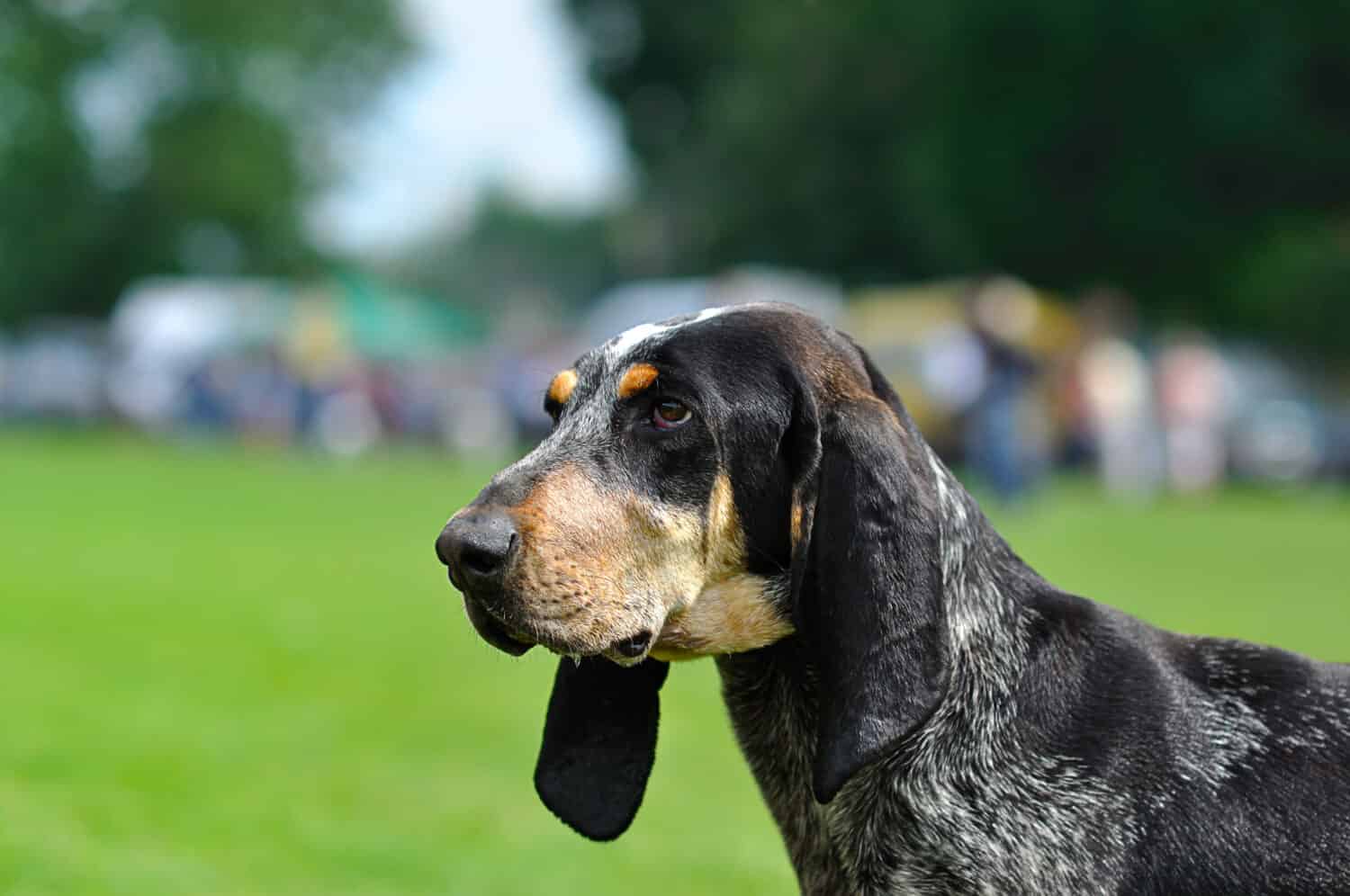
One blue variation, the Basset Bleu de Gascogne, is frequently listed as its own individual breed.
©The Len/Shutterstock.com