
Quick Take
- There are two condor species: the Andean condor and the California condor.
- Condors are two of seven species of New World vultures that live in North and South America.
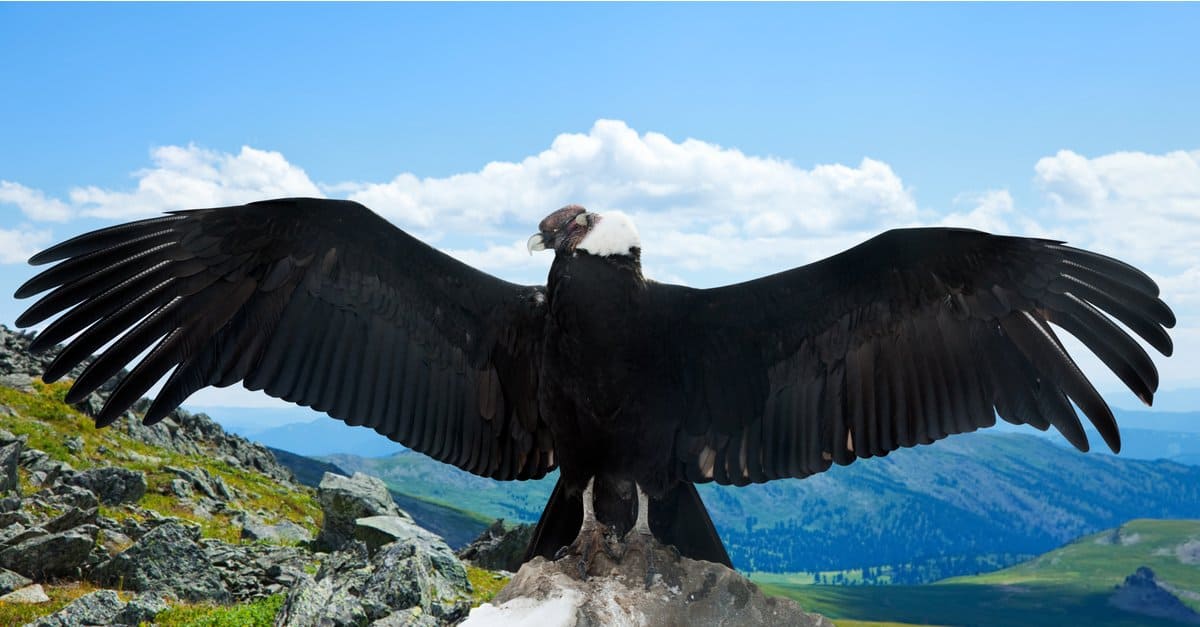
- The Andean condor’s wingspan can reach 10.5 feet, which is among the largest wingspans on Earth.
- The wingspan of the California condor measures 9.7 feet.
There are two condor species: the Andean condor (Vultur gryphus) and the California condor (Gymnogyps californianus). However, did you know condors are actually vultures? These majestic scavengers frequently appear on lists of birds with the largest wingspans, and for good reason! They are two of the largest flying birds in the world. Let’s take a closer look at condors and discover the wingspan and size of these incredible birds.
What Is a Condor?
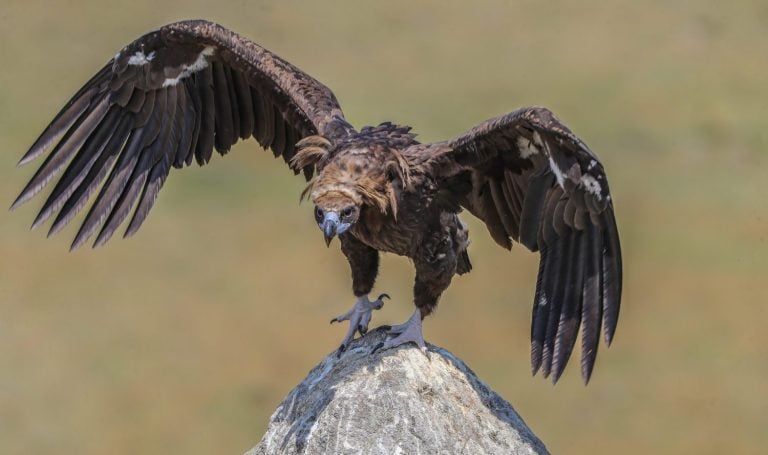
The terms condor, raptor, and vulture are often used interchangeably, so there is sometimes confusion around their usage. As noted above, condors are classified as vultures that belong to the family Cathartidae. Although they are not “true raptors” taxonomically, vultures are considered raptors, so condors are also considered raptors.
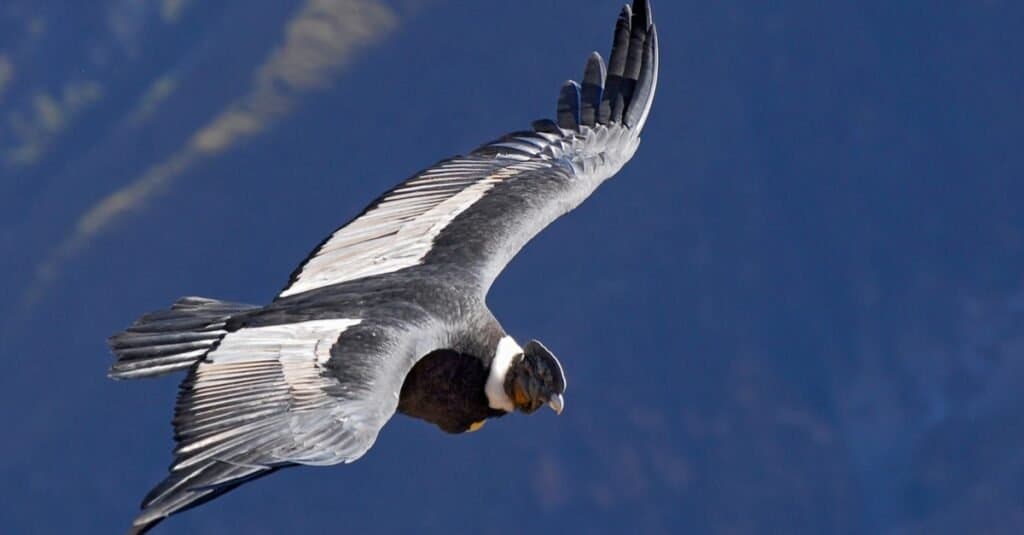
Condors are two species of vultures in the New World vulture group.
©Cezary Wojtkowski/Shutterstock.com
There are two distinct regions where vultures live: the Old World and the New World. There are 23 vulture species. Condors are two of seven species of New World vultures that live in North and South America. The Andean condor and the California condor are called “condors” instead of vultures to differentiate them from other vulture species, primarily due to their large size and evolutionary history. The name “condor” is derived from the word “kuntur,” which was the Inca name for the Andean condor.
Condor Wingspan and Size
The Andean condor is the larger of the two condors and the largest flying land bird in South America. Adult condors have bald heads, primarily black feathers with white patches on their wings, and white neck ruffles. The Andean condor is the only species of New World vulture to show significant sexual dimorphism. Unlike most vulture species, males are usually larger than females. Female Andean condors weigh up to 24 pounds, while males weigh up to 33 pounds. Males also have neck wattles and combs on top of their heads, but females have neither. The Andean condor’s wingspan can reach 10.5 feet, which is among the largest wingspans in the entire world. When standing, they reach over 4 feet tall.
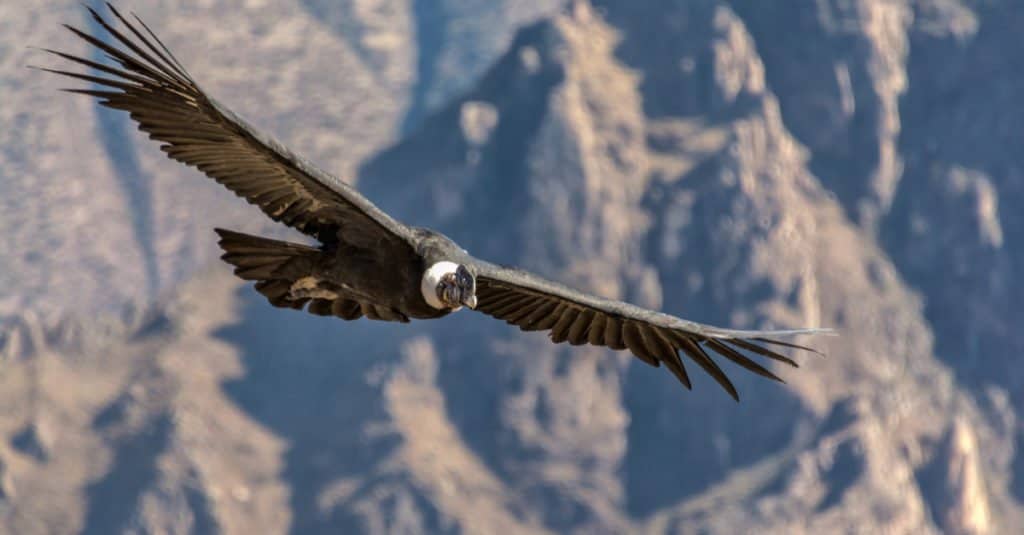
The Andean condor has a wingspan of up to 10.5 feet.
©Gus Martinie/Shutterstock.com
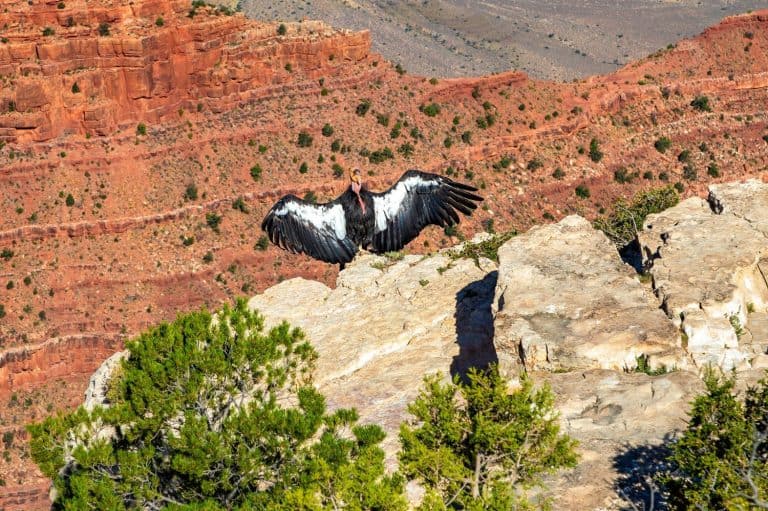
The California condor is slightly smaller than the Andean condor, but it is still the largest flying land bird in North America. They typically weigh between 16 and 25 pounds, but some individuals may grow larger. Male California condors are slightly larger than females, but these birds show minimal sexual dimorphism. Males and females are nearly identical in appearance. Adult condors have featherless, pink and orange heads and black plumage with white patches on their underwings. The wingspan of the California condor measures 9.7 feet. They stand up to 3.5 feet tall.
Condor Ecology
Andean condors live across the entire range of the Andean mountain range in western South America, although their numbers are in decline. Along the Andean mountains, their diet includes large animals, while inland groups primarily feed on cattle and dead farm animals. Coastal populations live off of beached sea life and the associated carcasses. They are carrion eaters and spend their days searching for dead animals.
The California condor currently has a small range, only living in parts of Utah, Arizona, California, and Mexico. They were considered extinct in the wild until conservation groups were able to re-release them into a few small regions. Now, their population seems to be growing, but they are still rare, partially due to low reproductive rates. Their diet consists mainly of medium to large mammals, but they will feed on almost any available carrion.
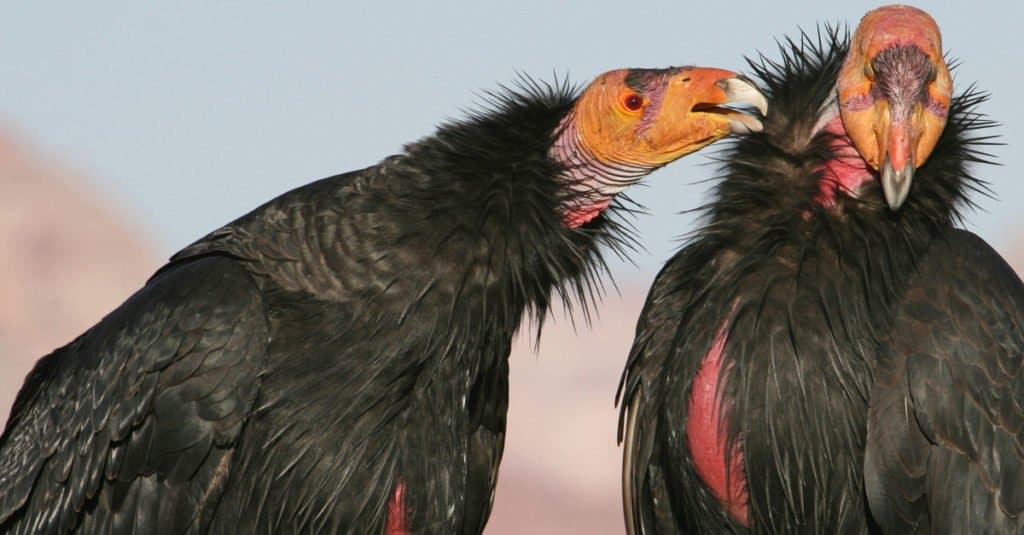
By 1982, there were only 23 California condors left in the world.
©MTKhaled mahmud/Shutterstock.com
With their large wingspans, condors are able to cover large distances in their search for food. The California condor is able to float on warm air thermals as high as 15,000 feet, soaring for hours over large swaths of territory. There are some reports that the Andean condor is able to fly 100 miles without flapping its wings, conserving energy as they float on thermals across mountain ranges. Unlike turkey vultures, condors have a poor sense of smell, so they use their enhanced eyesight to spot potential food sources from the sky.