
Quick Take
- Stranded animals on tiny islands rarely survive, but Mount Chappell Island's tiger snakes not only endured but thrived. The reason why is stranger than you'd expect. How the snakes survived →
- Two people willingly call this snake-overrun island home, and their reasons for staying reveal something unexpected about life among dozens of deadly serpents. Meet the two residents →
- The island's tiger snakes evolved a very specific physical trait that makes them deadlier than their mainland cousins, and this trait is entirely the result of a narrow feeding window they experience each year. See the evolved traits →
- A herpetologist was bitten by one of these mutant snakes during fieldwork but kept coming back anyway, ultimately uncovering how the population got there in the first place. Meet Simon Fearn →
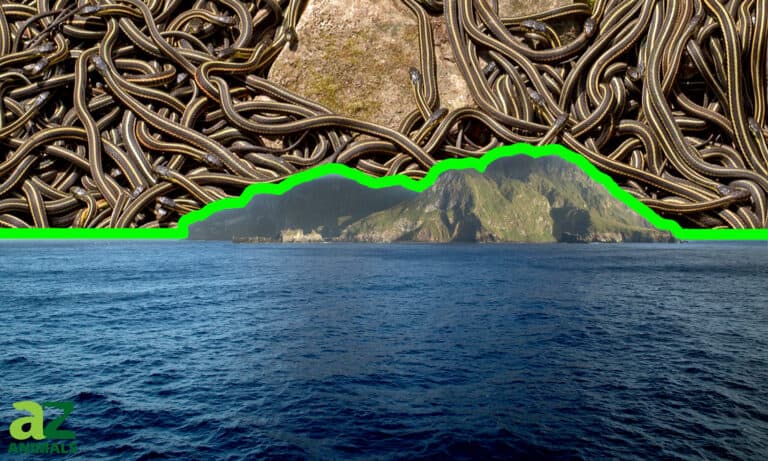
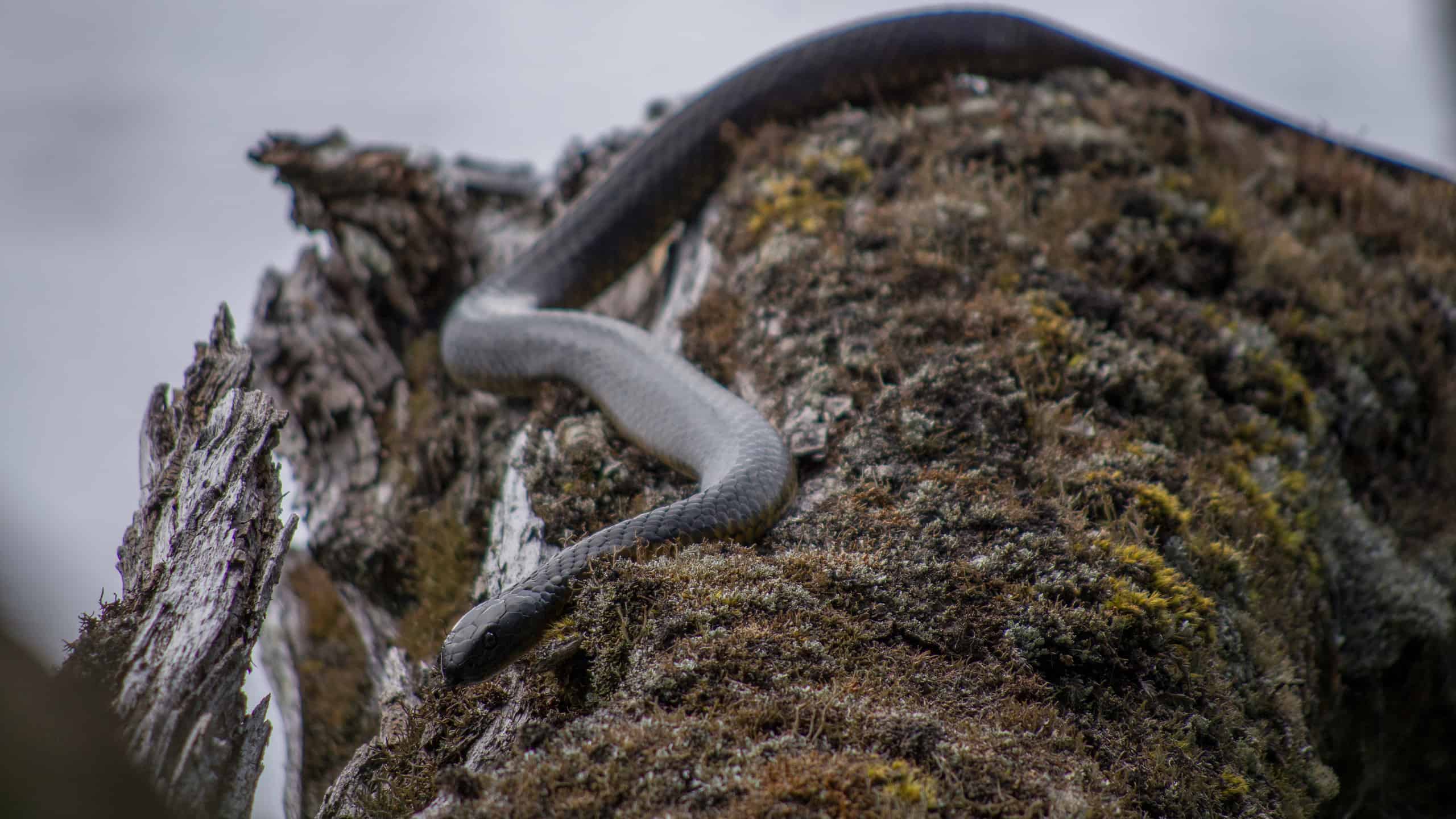
Mount Chappell Island, Tasmania, is home to Australia’s largest and most venomous tiger snakes (Notechis scutatus). This tiny island looks like it comes straight out of an adventure or fantasy novel and is home to a huge population of unusually large tiger snakes. These snakes are reportedly twice the size of those found on the mainland. As a result, the island is notorious, and there are several horror stories of tourists scrambling to get off Mount Chappell when seeing dozens of slithering snakes within minutes of their arrival. This mysterious snake-infested island has only two human residents. Continue reading to learn about their incredible experience living on an island with an infestation of tiger snakes.
Who Lives on Mount Chappell Island?
Mount Chappell Island is a granite island that is part of the Furneaux Group within the Bass Strait, Australia. Park ranger Grahame Stonehouse is one of the residents of Mount Chappell Island. In fact, he has split his time between this island and the mainland for 11 years. That is a lot of time spent with what he describes as tiger snakes that are twice as large as those found in other parts of Australia. Although Stonehouse believes the myths about these mutant snakes are exaggerated, he acknowledges that they are indeed larger and more numerous than elsewhere.
These snakes are not easy to identify because they come in a range of colors, from jet-black to olive, yellow, or orange-brown, often with dark, contrasting bands. Stonehouse loves being one of the island’s two residents because he enjoys the calm scenery, which has helped him re-establish a connection to his country and culture after moving away from Tasmania as a child.
Herpetologist Simon Fearn, the Other Resident of this Snake Infested Island
Simon Fearn, a member of the Natural Sciences team at the Queen Victoria Museum and Art Gallery, has studied reptiles for years. In addition, Fearn is a herpetologist who was bitten by a mutant tiger snake during one of his visits to this snake-infested island in 1991. His research determined that a large tiger snake population was stranded on the island when the sea level rose after the last Ice Age.
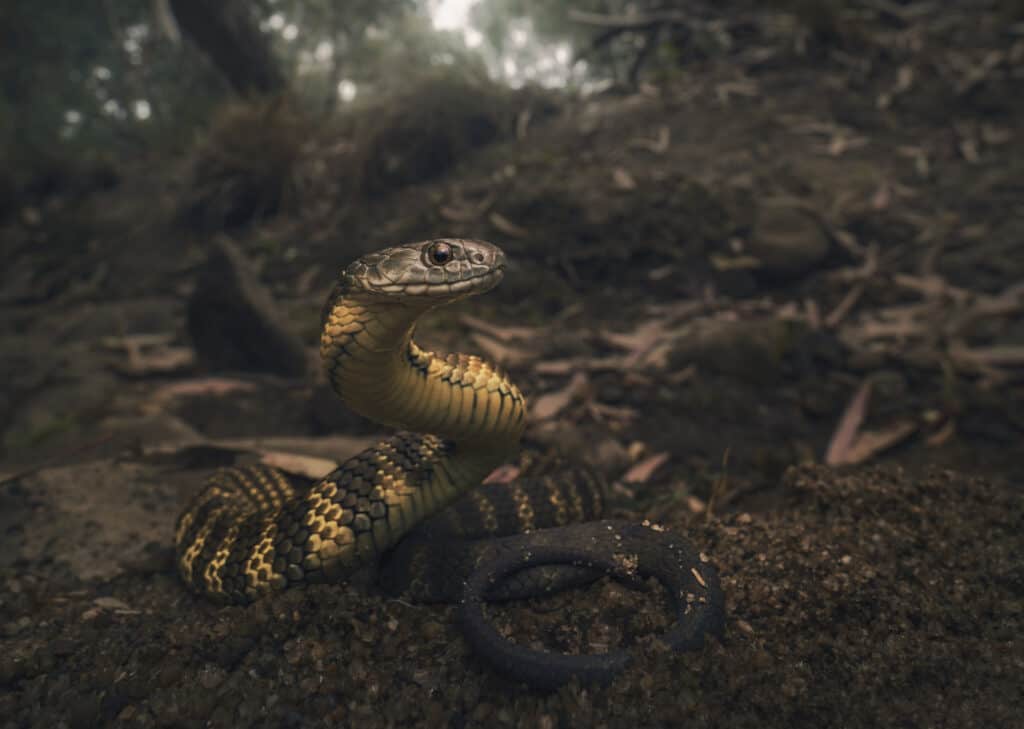
The wild tiger snake is a highly venomous snake from Australia.
©Kristian Bell/Shutterstock.com
It’s extraordinary that these snakes have survived all these years because animals stranded on tiny islands like Mount Chappell usually don’t survive from a lack of prey. However, there is a large breeding population of short-tailed shearwater muttonbirds (Puffinus tenuirostris) on the island, and the snakes feed primarily on their chicks. Tiger snakes can only consume these chicks up to five weeks of age, after which they become too large to devour. Therefore, snakes with smaller heads have less time to feed on these rapidly growing chicks before they become too large for the snake to eat.
Statistics suggest that the Mount Chappell Island tiger snake population produces approximately 20,000 baby tiger snakes each year, although only one percent make it to adulthood.
The Snakes on Mount Chappell Island
Tiger snakes on Mount Chappell Island have evolved over thousands of years to adapt to their surroundings. The heads of the tiger snakes on Mount Chappell Island are larger than those of other tiger snakes found in Australia. Because their primary food source is muttonbird chicks, which grow quickly, these snakes have evolved larger heads (mouths) to consume them.
Short-tailed shearwater eggs usually hatch in mid-January, and by February, the chicks are growing and learning to forage with help from their burrow-nesting parents.
This is when they become prey for the island’s tiger snake population, which gorges itself during this period. Fearn explains that, since there is no other food source on the island, the snakes spend most of the year living off the fat reserves they accumulate during the feeding frenzy.
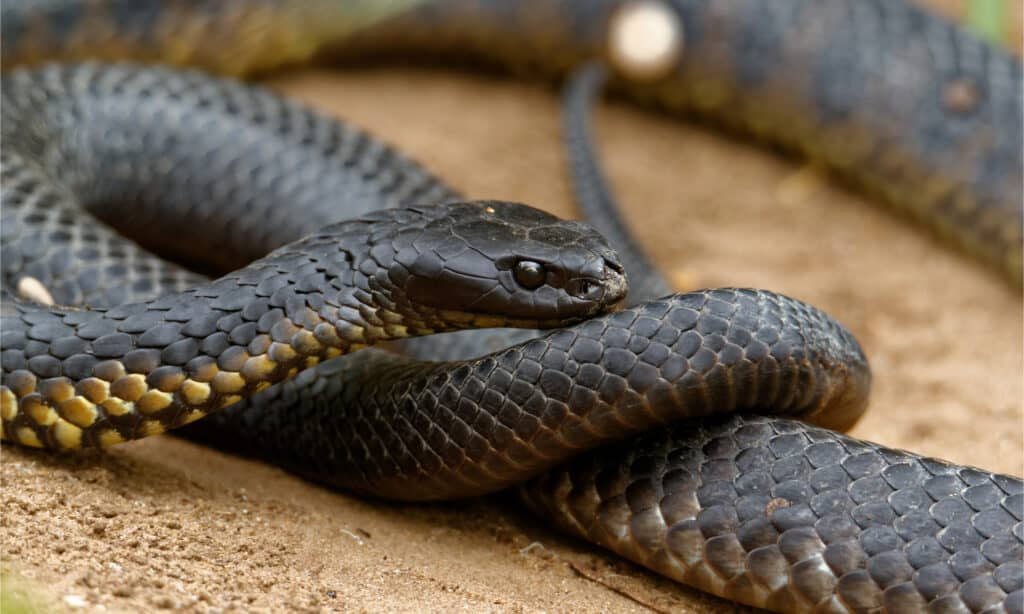
The tiger snakes on Chappell Island can reach lengths of up to eight feet.
©Michal Pesata/Shutterstock.com
The tiger snakes on this island are likely the deadliest of their kind in Australia. While their venom is less toxic than that of tiger snakes on the mainland, they have large fangs that can deliver a larger dose. While this mysterious snake-infested island may seem unique, there are approximately 40 islands around the Bass Strait, many of which remain untouched. Mr. Stonehouse believes that other thriving populations of unusually large tiger snakes may exist on these islands.
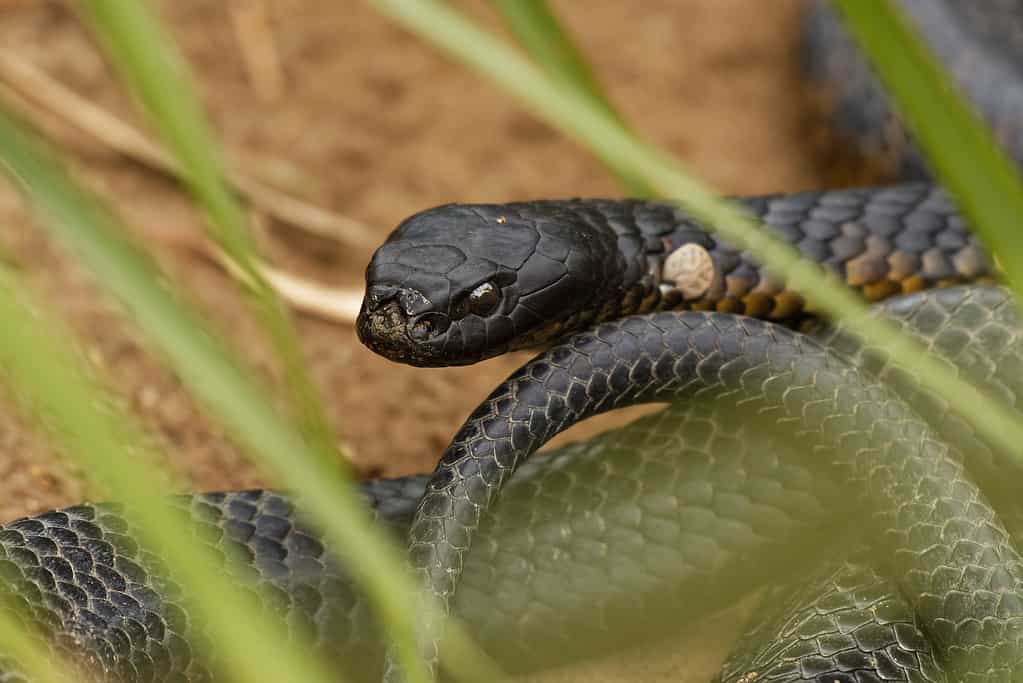
Tiger snakes on Chappell Island gorge themselves once a year on muttonbird chicks.
©Martin Pelanek/Shutterstock.com
Mount Chappell Island
Mount Chappell Island was named by explorer Matthew Flinders in 1799 for his wife’s family, whose surname was Chappelle. Currently, it is a privately owned island primarily used for grazing sheep and Cape Barren geese. Mount Chappell Island is part of the Chalky, Big Green, and Badger Island Groups Important Bird Area, which is recognized for its significance to bird conservation. Unfortunately, Mount Chappell Island’s habitats have been damaged by activities such as plowing, grazing, burning, and vegetation clearing.
Besides sheep, other animals were intentionally introduced to the island include:
- Rats
- Reptiles
- Feral cats
- Spotted skink
- Bougainville’s skink
- Metallic skink
- Three lined skink
- Tiger snake