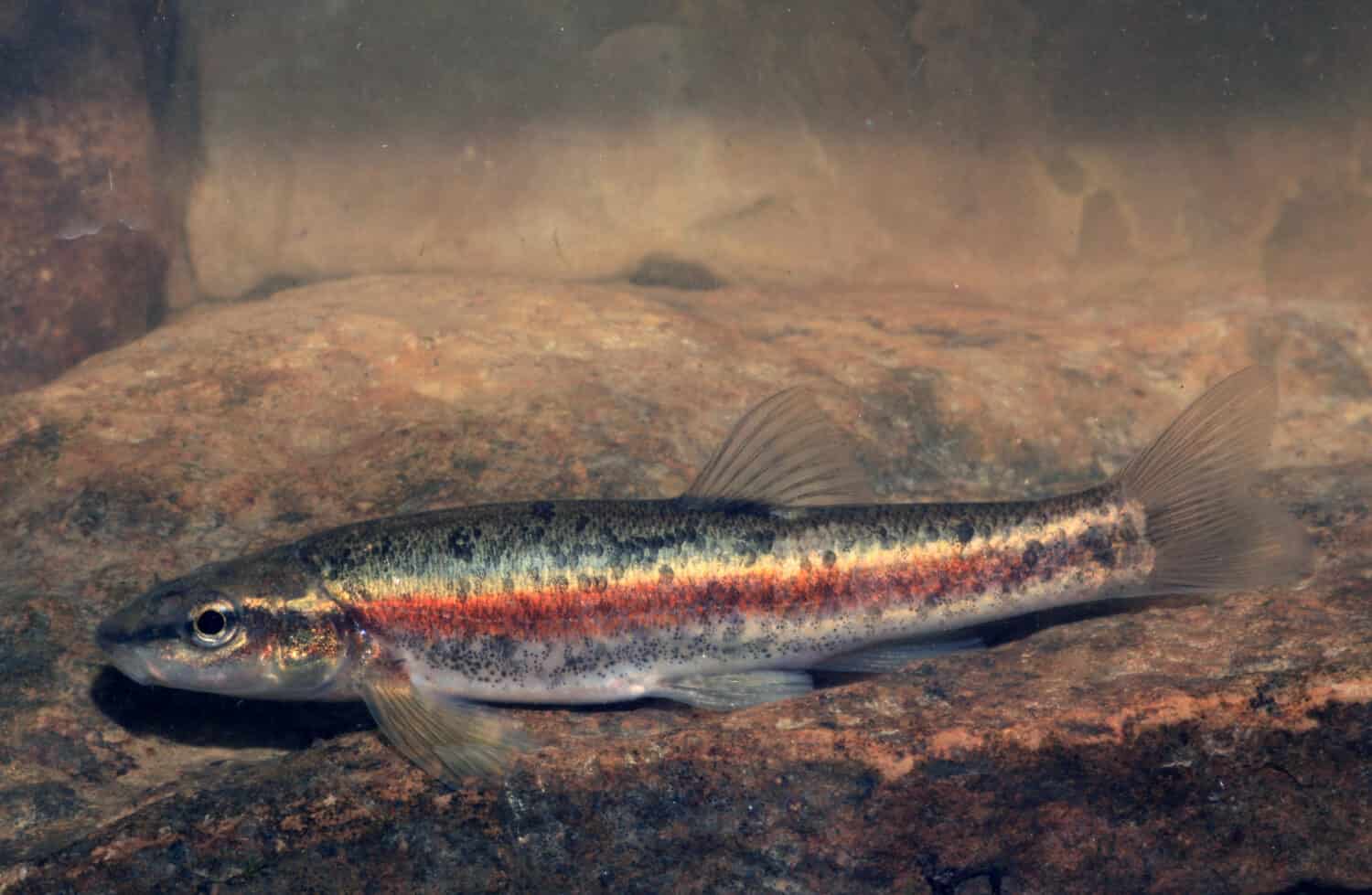

The world is full of millions of fish that can be broken up into 33,000 different species. It is impossible for anyone to accurately state how many fish there are, but the educated guess (and that’s all it is a guess) is that there are 3.5 trillion fish alive.
It is quite amazing how many fish species there are and how they can vary in size, weight, and lifespan. To give you an idea of the vast difference, fish can range anywhere from 6.2 millimeters to 40 feet long! That’s quite a significant difference. Let’s dive right into the smallest fish ever to be caught.
What is the Smallest Fish Ever Caught?
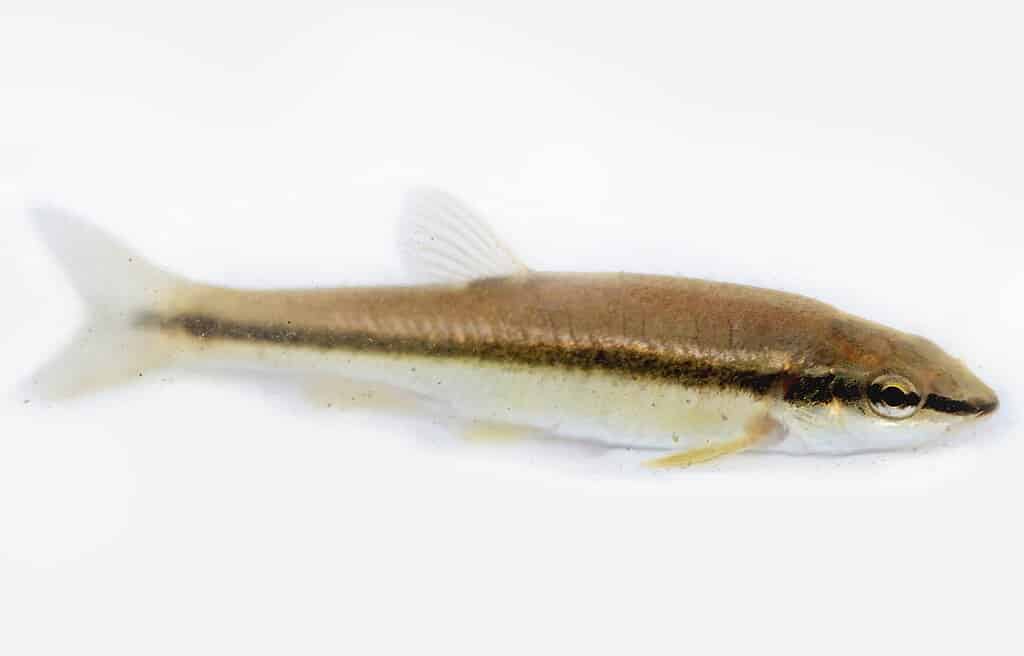
There are two blacknose dace. The Western blacknose dace and the Eastern blacknose dace. This one is the Eastern blacknose dace (Rhinichthys atratulus)
The World Record Academy reported the smallest fish ever caught using a rod and reel was the blacknose dace caught by 28-year-old Andy Pelphrey. The blacknose dace measured 2.4 inches long (60.96 millimeters), 0.9 inches round (22.86 millimeters), and weighed a whopping 0.008 pounds (3.5 grams).
While this isn’t the smallest fish in the world, that title belongs to the Photocorynus spiniceps, it is absolutely one of the smallest fish ever to be caught.
Andy Pelphrey is a resident of Johnson County, Kentucky. He caught the blacknose dace in Hood Creek on the Lawrence County side of the creek. Despite this fish’s size, he stated that this was some of the toughest fishing he’s ever done. He used a four-pound line on his rod and reel and a small piece of a wax worm to catch this particular fish.
The Kentucky Department of Fish And Wildlife weighed and certified this small catch. And he won the world record for catching the smallest fish ever to be recorded.
Blacknose Dace Facts
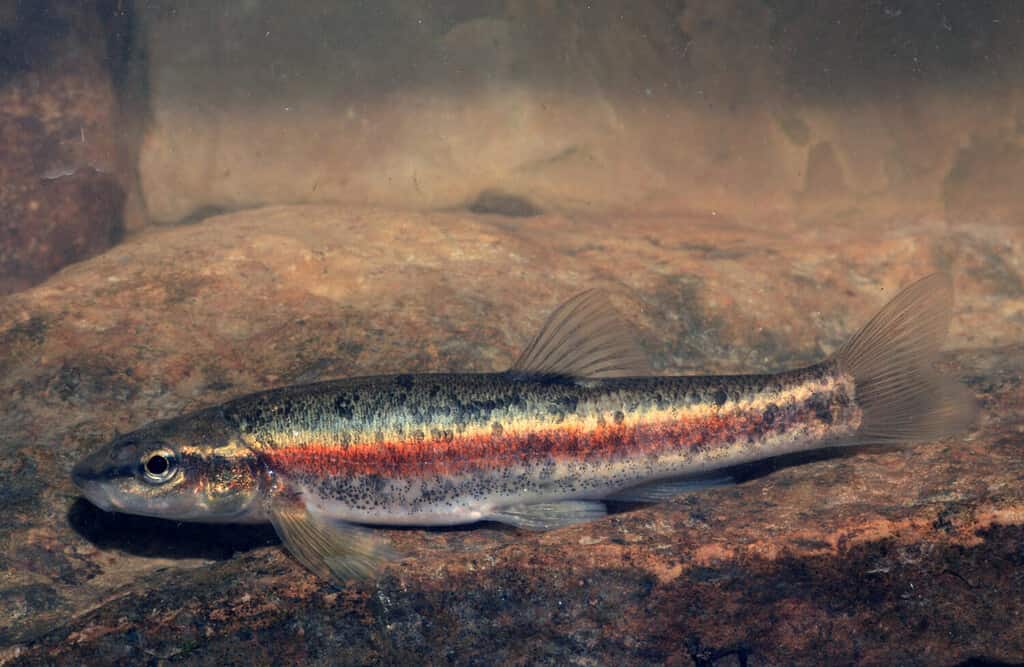
The blacknose dace distinguishing mark is the line running across his body.
©Michael Benard/Shutterstock.com
The most common dace is the Leuciscus leuciscus, which can be found in Europe. This particular dace, the blacknose dace, Rhinichthys atratulus, is a species of dace that can be found in North America.
This small fish typically is about 5 millimeters long (0.20 inches), while some blacknose dace can reach slightly over 100 millimeters (3.94 inches).
Their scales are a dark brown to olive-looking color. And what helps to set the blacknose dace apart is that it has a lateral band that is black in color that runs from the tip of his snout across his body to the tip of his tail.
Their name originally comes from the old French word “dars” which means “dart” and directly describes their swimming pattern.
The blacknose dace will prey on small insects, worms, algae, and small crustaceans. Because of how small they are, they will also feed on certain plants as well.
Predators who prey on blacknose dace are smallmouth bass, book trout, brown trout, and rainbow trout.
While small, the blacknose dace is certainly not the smallest fish in the world. It is the smallest ever caught. The smallest fish discovered is the following: Celestial Pearl Danio, Corfu dwarf goby, Chili Rasbora, Midget dwarf goby, Dwarf pygmy goby, Paedocypris progenetica, Stout infantfish, and ending with the smallest one in the entire world, the Photocorynus spiniceps.