Quick Take
- A recreational dive turned into a landmark scientific discovery, though the species almost went unnoticed. Meet the discovery →
- Nudibranchs defend themselves using weapons they steal from their victims, and the delivery mechanism is stranger than it sounds. Explore their defense weapons →
- These creatures start life looking nothing like what you'd expect, and at some point they make a dramatic, irreversible change. See their life cycle →
- Finding specimens nearly ended before it began, though the obstacle had nothing to do with the slugs' size. Learn about collection obstacles →
When you’re out on a recreational scuba dive, you see all sorts of interesting things. Marine life comes in all shapes and sizes, from large pelagic species swimming past in the deep blue to tiny baby fish hugging the rock and corals for safety.
But when something is the size of a sesame seed and hiding in the sand, even the most experienced diver might miss it. Thankfully for one eagle-eyed diver’s attentive gaze, a brand new species was discovered. The finding was announced in a new study published in ZooKeys.
What Did the Diver Discover?
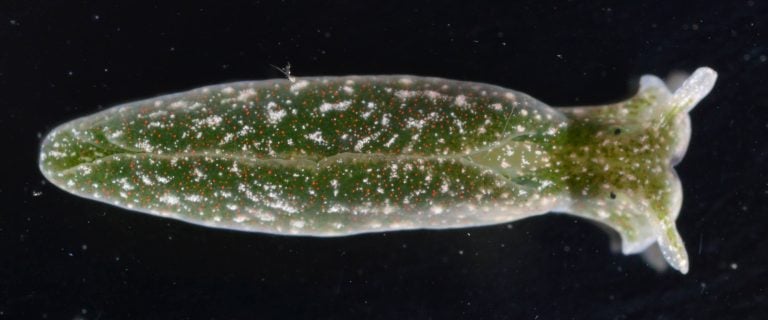
Barely the size of a grain of rice, Thecacera sesame is a newly identified species of sea slug found in the coastal waters off northern Taiwan. Less than three millimeters long, it is the smallest known species in the genus Thecacera. Its body is nearly translucent and covered with a series of black and yellow spots surrounded by white, snowflake-shaped blotches.
The tiny sea slug, a member of the nudibranch family, was found by researcher Ho-Yeung Chan, an undergraduate student at the time. He was out on a recreational dive during the summer of 2019 off the coast of northern Taiwan.
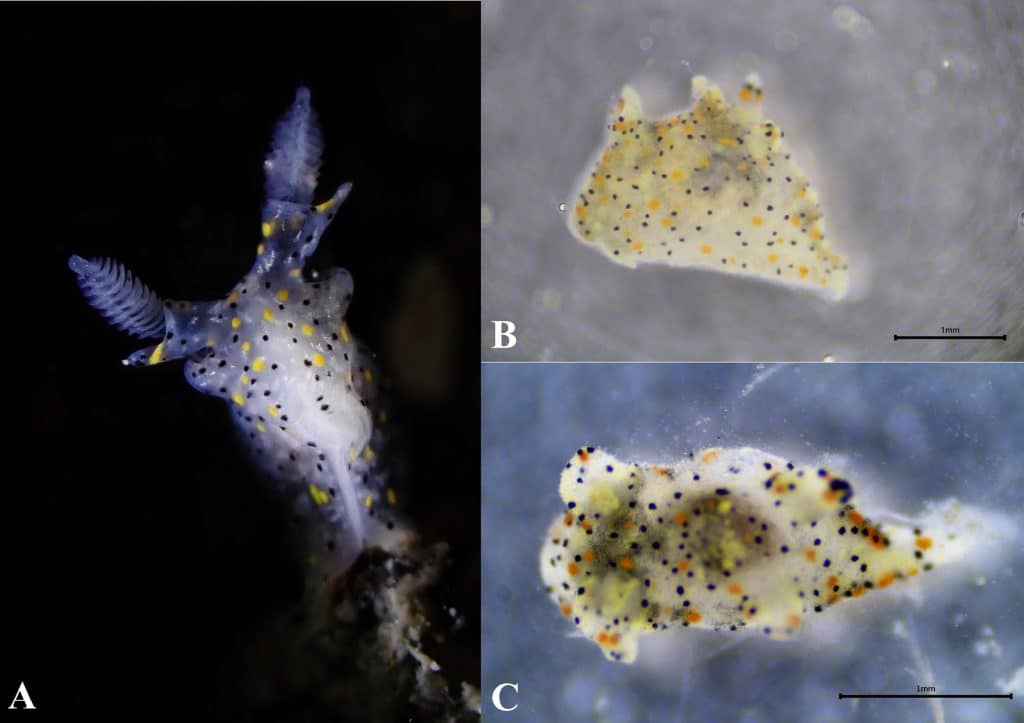
Living specimens of the newly discovered Thecacera sesame.
When he spotted the tiny creature, he thought perhaps he had found a rare species of nudibranch. As it turned out, it was a species never before identified in any scientific literature. Chan didn’t realize it was a completely new discovery until he reached out online to Hsini Lin, a sea slug expert, on Facebook, hoping Lin could identify what he had observed.
Once Chan learned he had discovered an entirely new species, he formed a research team to return and collect samples.
The Challenges of Collecting Sesame Samples
Unfortunately, the waters off Taiwan’s north coast are not the easiest to explore by scuba diving. The winter monsoon season brings huge waves and cold water that sometimes dips below 60 degrees Fahrenheit. In the summer, regular typhoons pummel the area. Realistically, divers had about a four-month window each year to conduct their nudibranch studies and collection.
Then there is the matter of finding the creatures at all. They are tiny and not easy to spot. They are also not common on the coastal reefs, so divers had to be very lucky to find any.
Where Does the Sesame Slug Fit Into the Ocean Ecosystem?
Nudibranchs, also called sea slugs, play an important role in the world’s oceans. They are active hunters, regularly devouring other invertebrates commonly found on the reef, like sponges, sea anemones, and jellyfish.
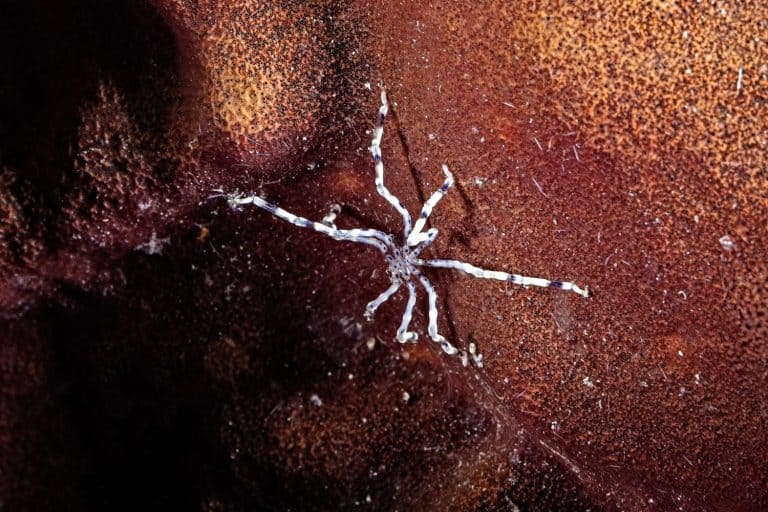
They are also food for larger species, like sea stars, sea spiders, and sea turtles. Even some species of fish are known to eat nudibranchs.
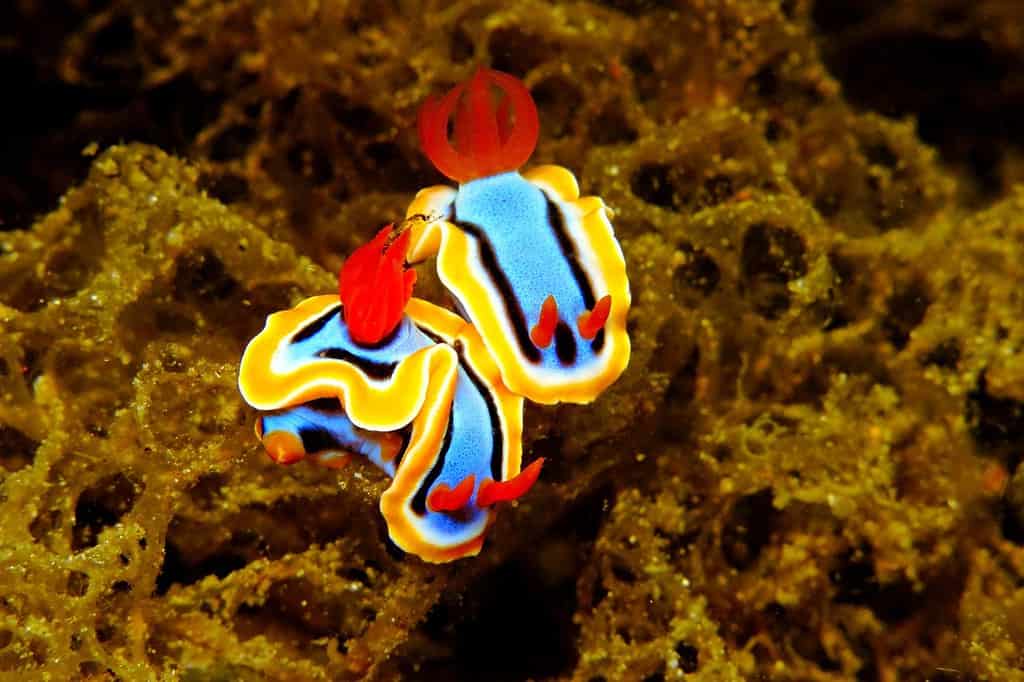
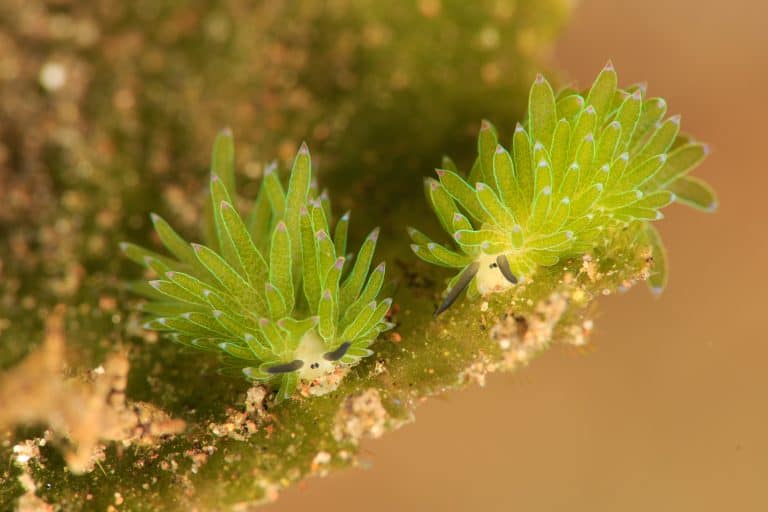
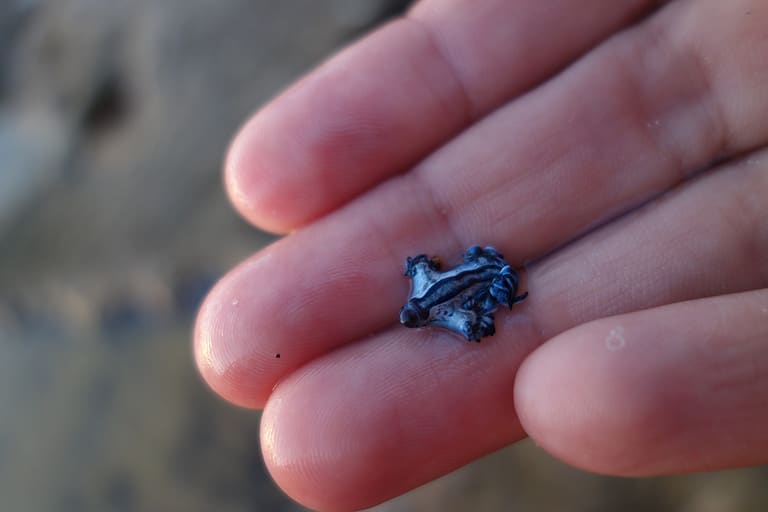
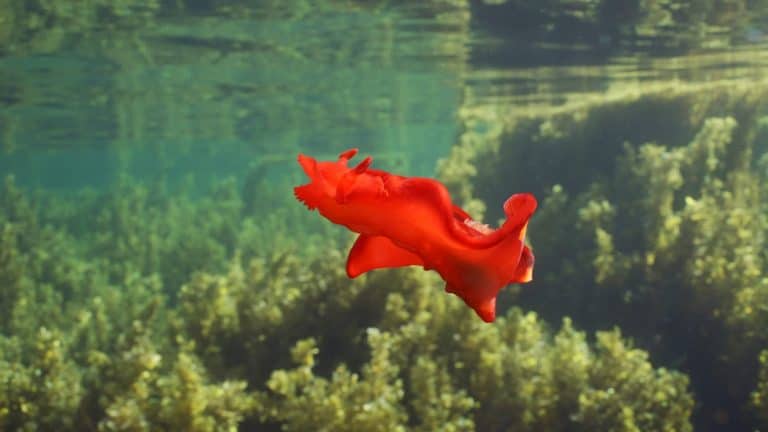
Nudibranchs come in a variety of shapes and colors.
©blue-sea.cz/Shutterstock.com
The nudibranch’s diet is very precise, making the species an excellent indicator of reef and ocean health. When few sea slugs are found, it is a sign the reef is struggling. A large nudibranch population generally indicates a healthy ecosystem.
More About Nudibranchs
The lifespan of a nudibranch depends on the species. Some can live up to a year, while others are only around for less than a month. Some more evolved species may survive for up to three years, but that is the exception. For Thecacera sesame, no lifespan is yet known.
All nudibranchs, including Thecacera sesame, start life with a hard shell during their veliger larval stage. They hatch as larvae already bearing a shell, which they shed upon metamorphosing into adults, eventually resembling the soft-bodied creatures people are familiar with.
You’ll also find nudibranchs at all depths, from shallow reefs to deep ocean waters over 2,300 feet. However, most tend to stay in shallower areas, making them easier for recreational divers to spot.
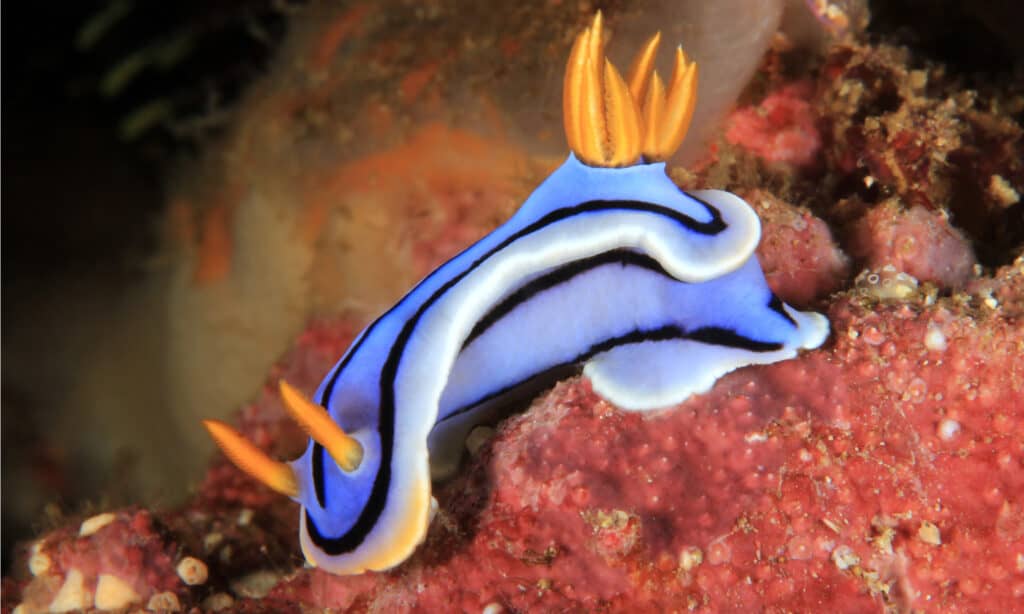
Nudibranchs can be found in all of the world’s oceans.
©Daniel Lamborn/Shutterstock.com
Nudibranchs can be found all over the world. They live in the ice-cold Arctic waters and the balmy tropical seas, plus everywhere in between. They generally prefer to stay near rocky outcrops, sponges, and in tidal pools, but you might spot one anywhere when you’re snorkeling or diving.
No matter where they live, nudibranchs have developed effective defense mechanisms to ward off predators. They use an interesting technique: nudibranchs ingest stinging cells, called nematocysts, from their prey and move these cells to the tips of their own body appendages. When threatened, they deploy the nematocysts against predators.
Sea slugs also display a wide range of colors, from muted earth tones to flamboyant reds, blues, and greens. Their coloration is influenced by their diet.
What This Discovery Means
At a local level, the latest discovery demonstrates that Taiwan’s waters could be rich with more biodiversity than has ever been documented. The discovery also provides a starting point for future marine research, not only in Taiwan but throughout East Asia.
On a global scale, the discovery is proof of just how many undiscovered species remain in the world’s waters.