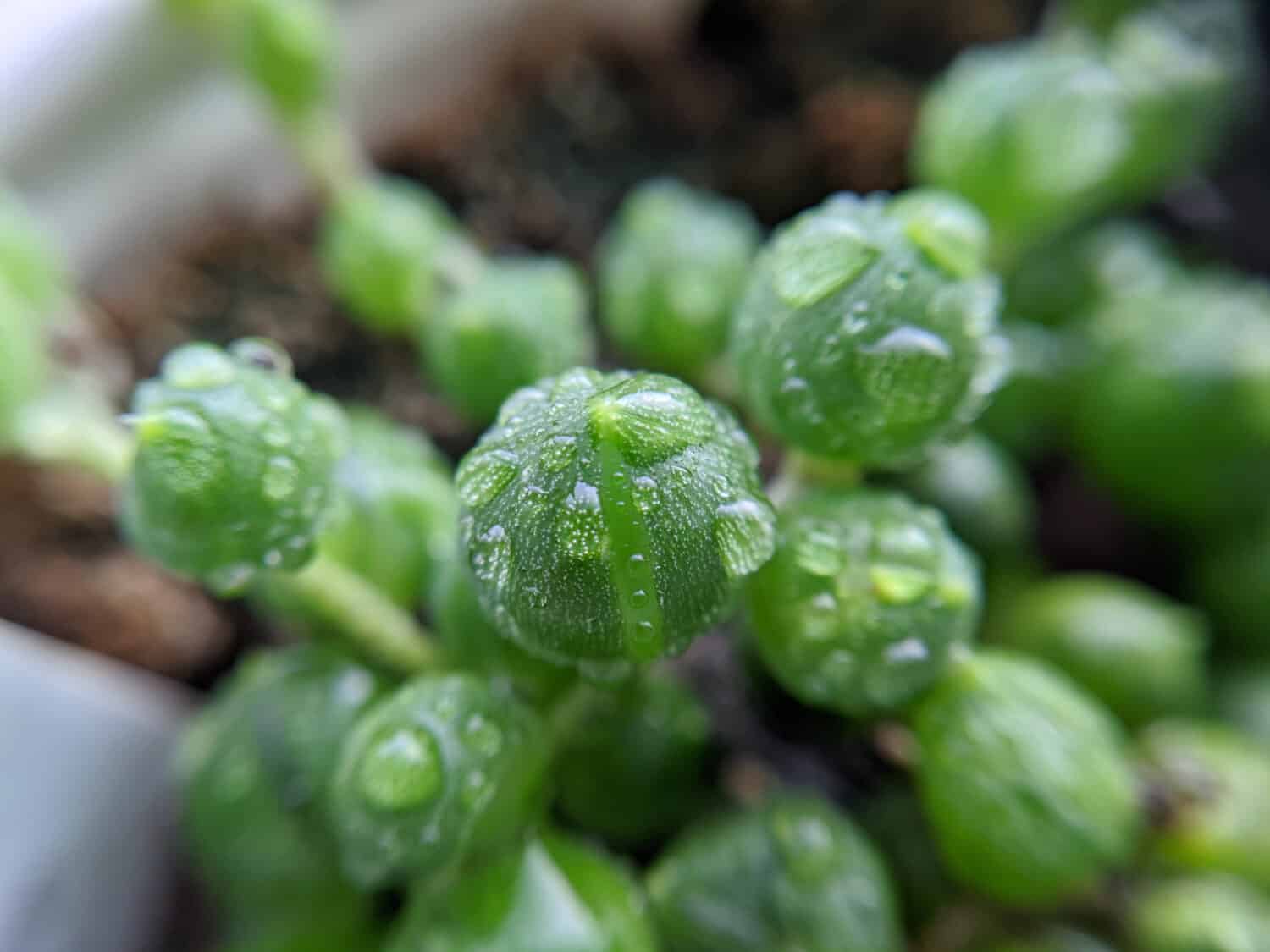

The string of pearls succulent, scientifically known as Senecio rowleyanus, is known and loved for its vining tendencies and delicate pearl-like leaves. Plant parents love hanging this beauty in a planter and letting the tendrils form an eye-catching curtain.
Like their namesake, the string of pearls can be delicate and requires a sensitive touch — especially when it comes to watering.
In this article, we’ll cover how often to water a string of pearls and some critical care tips to help this succulent thrive.
Let’s dig in!
How Often to Water String of Pearls
Like most succulents, the string of pearls is sensitive to overwatering. These plants are experts at storing water, which helps them survive in their native dry, hot conditions of South Africa. The round droplet-like leaves keep moisture to nourish the plant between waterings.
How often to water a string of pearls depends on a few factors:
- the season
- the climate
- its location in the home
Your string of pearls will need to be watered more in the summer during active growth and less in the winter during its dormancy. Similarly, if it gets hot, direct sunlight each day, it may need more water than a plant set back away from a sunny window sill.
With those factors in mind, you should water your string of pearls approximately every 2-3 weeks during active growth. Reduce this to 3-5 weeks during the dormancy period.
Many plant parents have reported watering their string of pearls no more than once per month with promising results. You’ll know your string of pearls is overdue for a drink when its beads start to look wrinkled — try not to let it get to that point.
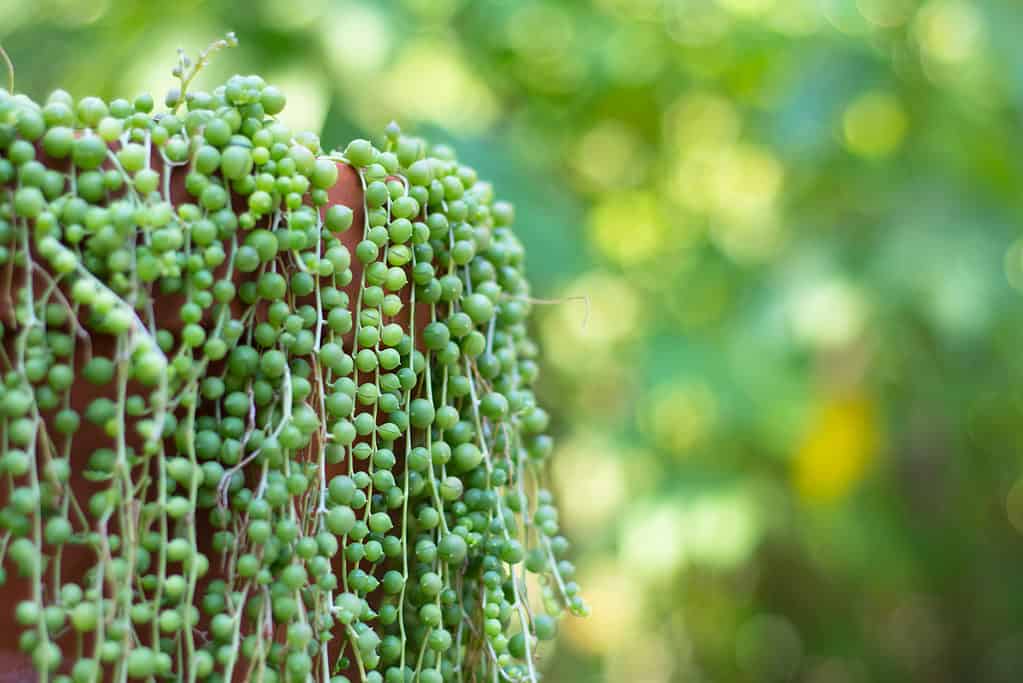
The string of pearls plant derives its name from the pearl-shaped leaves on its trailing stems.
©iStock.com/Tatyana Consaul
How to Water a String of Pearls
There are three ways to water your string of pearls:
- Top watering – the traditional approach of pouring water into the top of the pot.
- Bottom watering – placing the pot in a basin of water for 20-30 minutes to let it absorb at the roots.
- Dunking – placing the entire succulent under water and immediately bringing it back up.
Dunking is controversial, with gardening and plant experts at odds over whether it does more harm than good for succulents. While succulents are somewhat hydrophobic, they’re more prone to root rot after prolonged exposure to water (i.e., in a pot without drainage).
While top watering won’t kill the string of pearls, it can be challenging as the plant thickens and grows. That’s why bottom watering is preferred for this plant.

Bottom watering is the preferred method for a string of pearls. All you need is a bowl of clean water.
©AlxeyPnferov/iStock via Getty Images
How to Bottom Water a String of Pearls:
- Pour enough water into a bowl or tray to cover your string of pearls’ pot to the halfway point.
- Gently place your string of pearls in the bath.
- Set a timer and leave your string of pearls for 20-30 minutes.
- Remove the pot from the bath and let it drip dry.
Bottom watering delivers the water directly to the roots where it’s needed the most.
Should I Mist My String of Pearls?
You should not mist an established string of pearls plant. While it’s best practice to mist propagates or seedlings until the roots are established, a mature string of pearls plants don’t need it or want it.
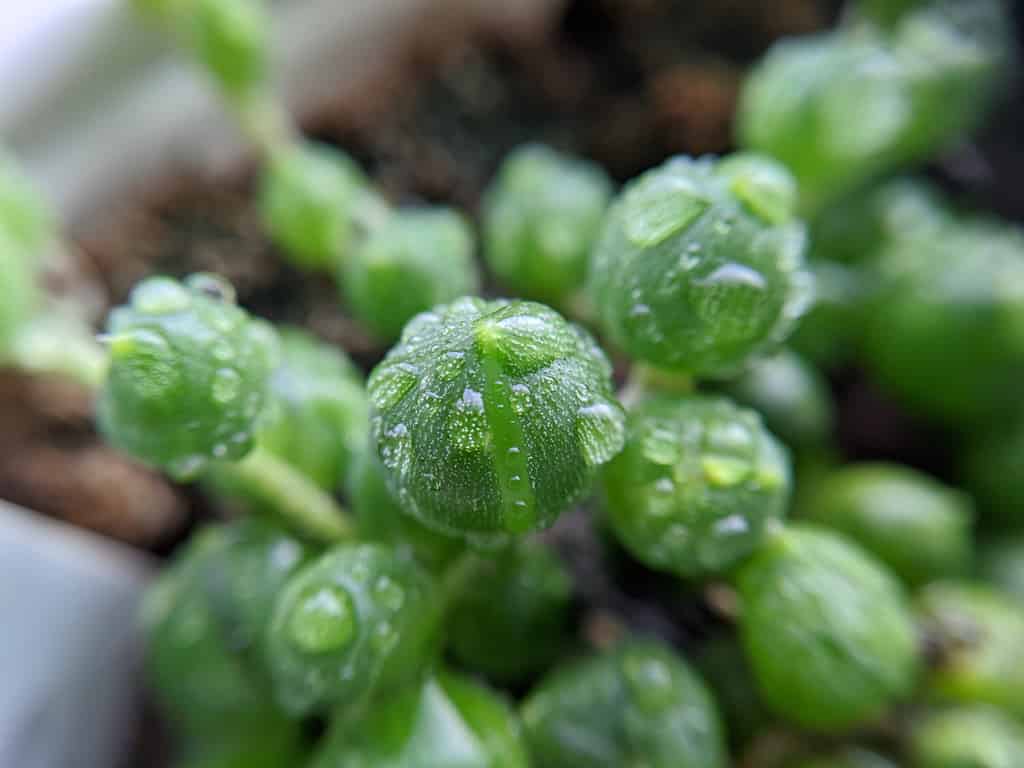
Do not mist the string of pearls.
©itscaramel/Shutterstock.com
How to Care for a String of Pearls
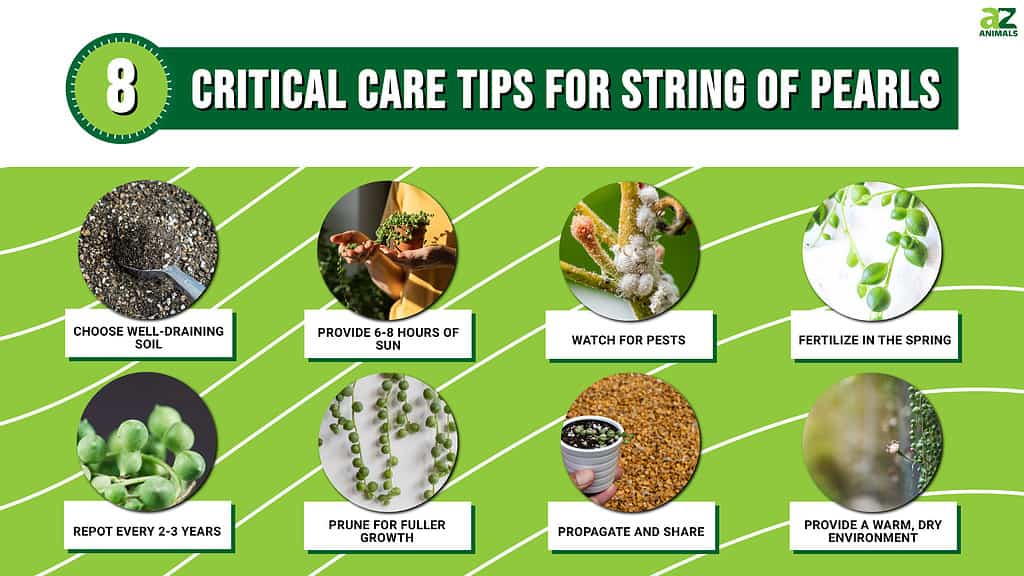
Now that you know how to water a string of pearls, let’s explore other critical care tips to help this succulent thrive.
1. Choose Well-draining Soil
Choose a well-draining succulent soil for your string of pearls. Traditional potting soil will not suffice.
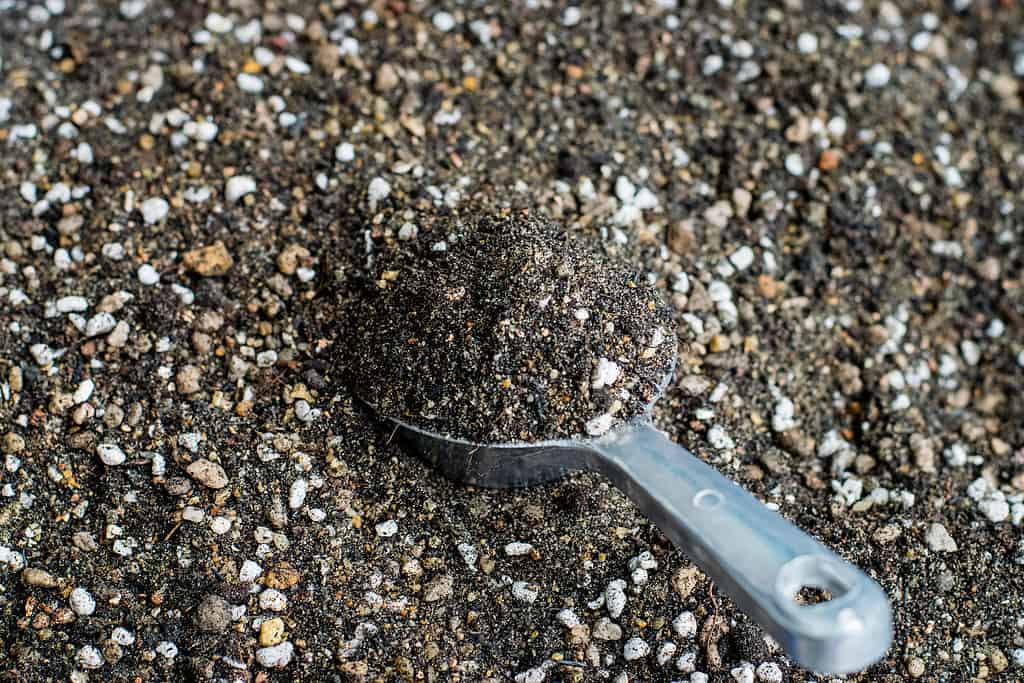
Use succulent soil for your string of pearls.
©iStock.com/naramit
2. Provide 6-8 Hours of Sun
The string of pearls needs 6-8 hours of sunlight per day but shouldn’t be placed in direct, intense overhead sunlight. Place it in a South or East-facing window. Supplement with a grow light if necessary.
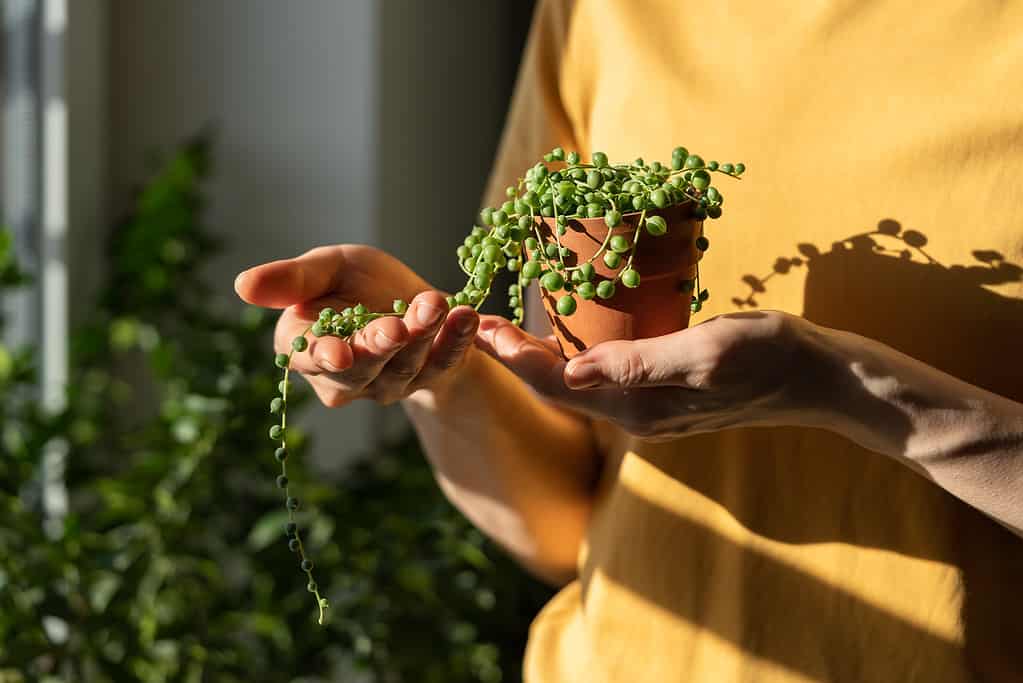
String of pearls loves the sun.
©Dima Berlin/iStock via Getty Images
3. Watch for Pests
Watch for signs of spider mites, mealy bugs, and scale insects on your string of pearls. If you find them, remove them with a warm cloth damp with water and dish soap and treat them with neem oil.
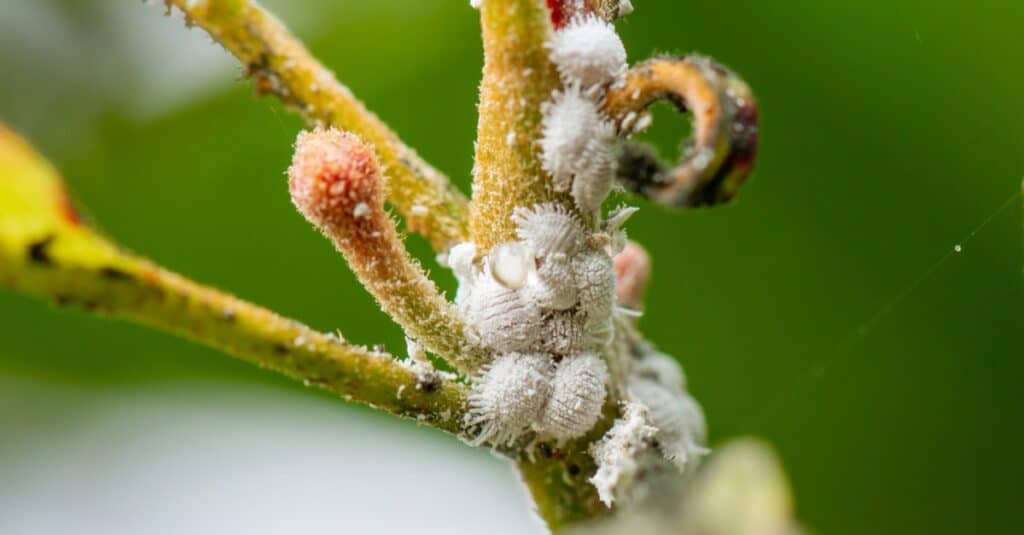
Mealy bugs often attack succulents.
©phomphan/Shutterstock.com
4. Fertilize in the Spring
Choose a mild or diluted succulent-friendly fertilizer for your string of pearls and feed during the active growing season. This succulent doesn’t require fertilizer, but it is a slow grower that performs better with nourishment.
Never fertilize your string of pearls during the winter dormancy period, as the slow absorption rate could damage your plant.
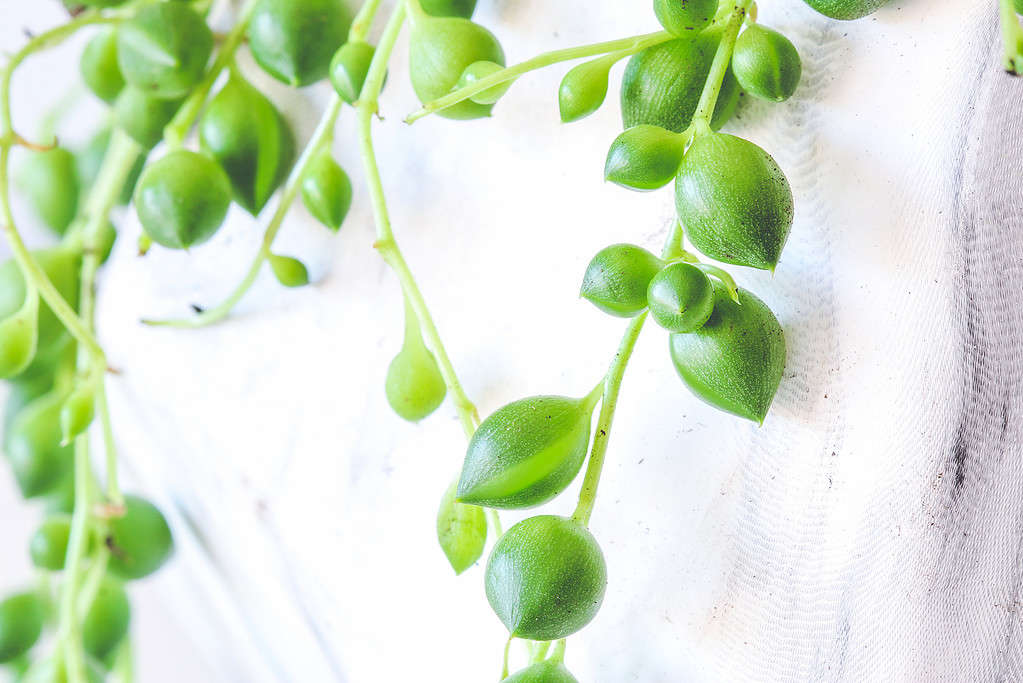
Fertilize your string of pearls in the spring.
©janzwolinski/iStock via Getty Images
5. Repot Every 2-3 Years
String of pearls plants have a shallow root system and slow growth habits; they don’t need annual repotting and do fine with crowding.
However, you should repot every 2-3 years to replenish soil nutrients.
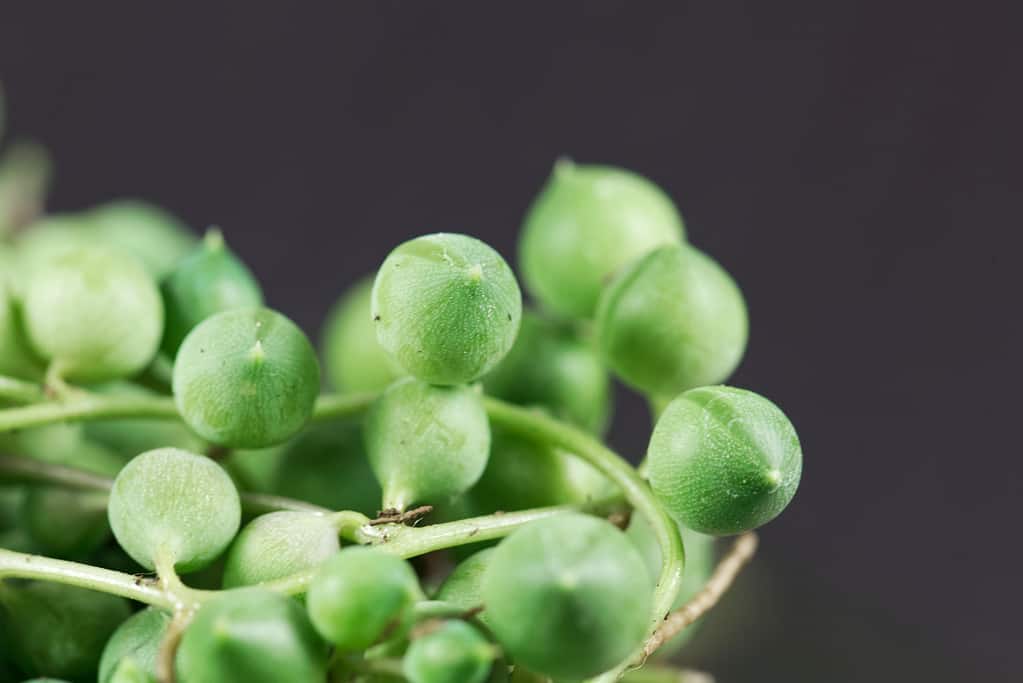
String of pearls does well with some crowding.
©weisschr/iStock via Getty Images
6. Prune for Fuller Growth
You can prune your string of pearls to make it grow fuller and bushier. You may also choose to trim away dead growth or leggy vines. Use clean, sharp shears for this purpose.
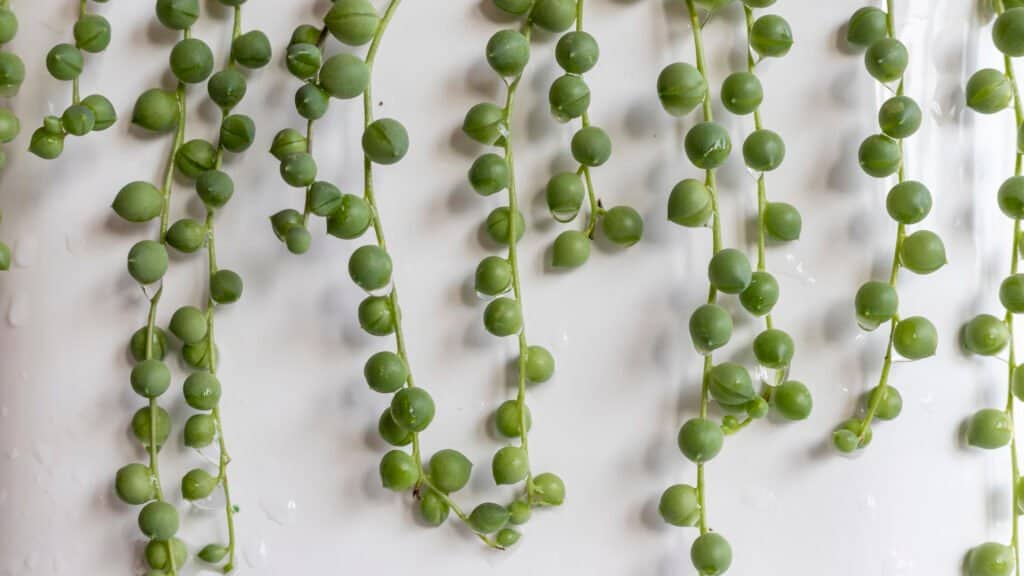
Trim your string of pearls to encourage fuller growth.
©iStock.com/Bilal photos
7. Propagate and Share
String of pearls are easy to propagate with cuttings.
- Cut an established vine, ensuring there are at least 3-5 pearls on it.
- Place the vine atop a pot filled with succulent soil, gently pressing it down into the soil so the vine is covered and the pearls are exposed.
- Place the pot in bright, indirect sunlight.
- Mist the cutting regularly until the roots are established.
Slow and steady wins the race with this propagated succulent!
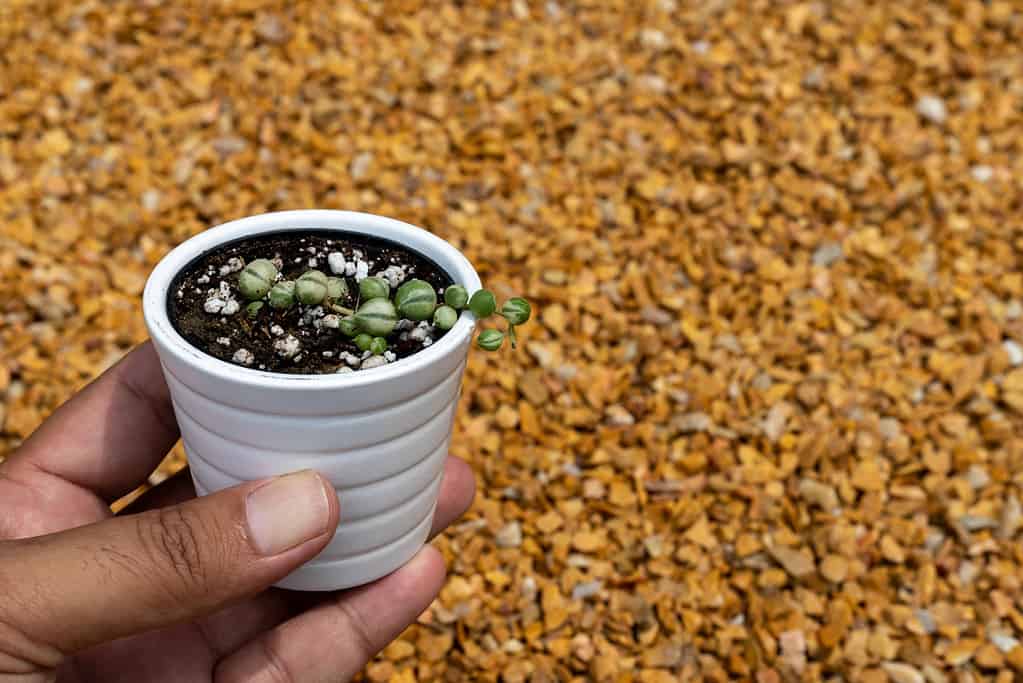
Propagating string of pearls is easy.
©Bilal photos/iStock via Getty Images
8. Provide a Warm, Dry Environment
The string of pearls likes dry, warm air. Place it away from vents and drafts for best results.
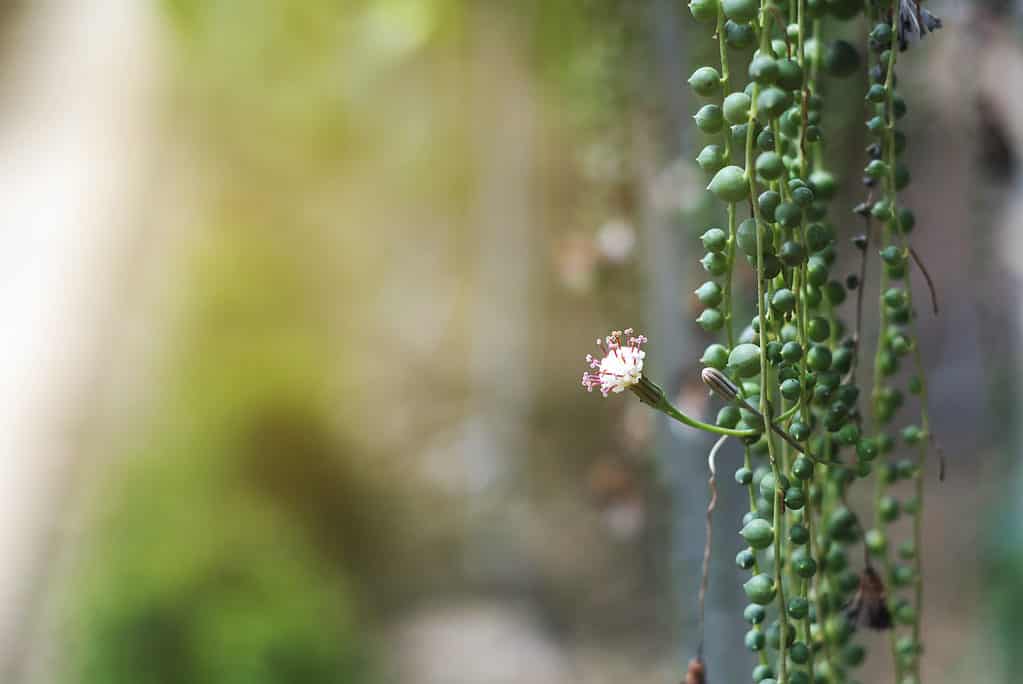
String of pearls like arid environments.
©iStock.com/Cn0ra