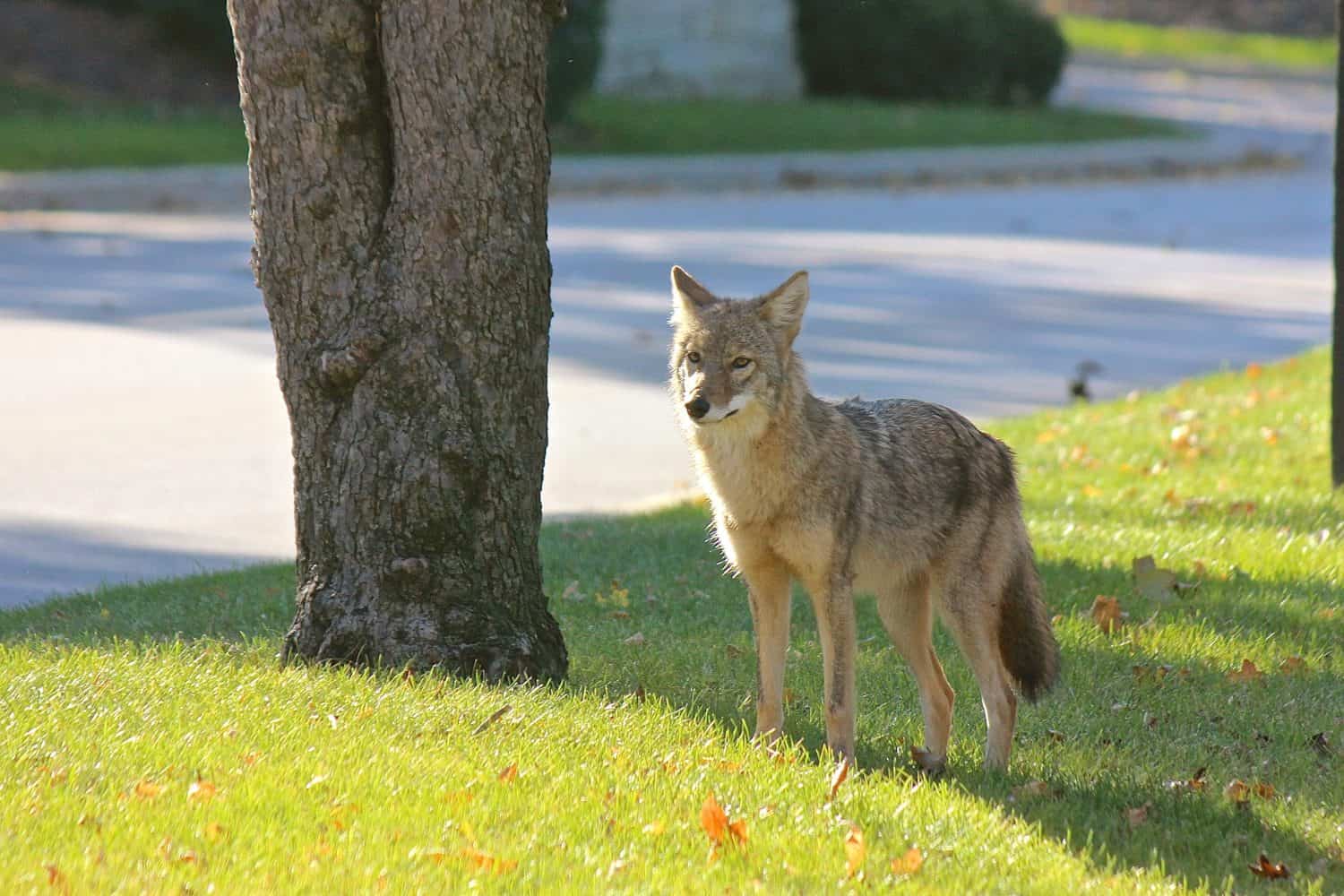

Coyotes have become a common sight in suburbs across North America, sparking a mix of curiosity and concern among residents. These adaptable wild canids thrive in human-dominated landscapes where food and shelter are easy to find. Learning how to safely coexist with coyotes is essential, not only to protect pets but also to preserve the ecological role they play. When people understand coyote behavior, know how to deter them, and realize that aggressive management strategies such as broad culling often backfire, communities are better prepared to share space with these intelligent survivors.
A Personal Experience

Omaha is by far the largest city in Nebraska, but at night, its suburbs can become a bit of a wild kingdom.
©Steve O'Donnell/Shutterstock.com
I used to live in a suburb of Omaha, Nebraska, with the city sprawling to the north and prairie farmland all the way to Kansas in the south and beyond. It seemed like the best of both worlds: modern convenience and rural peace. But though we lived in a dense suburban development, we shared it with a variety of wildlife. Our doorbell cam often caught footage of a red fox trotting past the front porch. I saw a bobcat cross the road up ahead on a drive in the country. Red-tailed hawks lived in our neighbor’s big tree. Once a mountain lion made the news, slinking through parking lots and behind dumpsters to the mixed excitement and horror of local residents.
And then there were the coyotes. I once saw a pack of four crossing a busy four-lane divided highway through town. Friends in the country said the noise they raised sometimes woke them up at night. And though our back yard was fenced, we learned never to let our dogs outdoors alone, especially at night. It all left me with mixed feelings. As a nature lover, I was thrilled all these predators were close by… as long as I was safely in my house or car. But as a pet owner, I wanted them to stay away. Had my children been small, that feeling would have been magnified tenfold. This personal experience made me want to research why predators like coyotes are comfortable coming into the suburbs, and what can be done about them.
Coyotes in the Suburbs
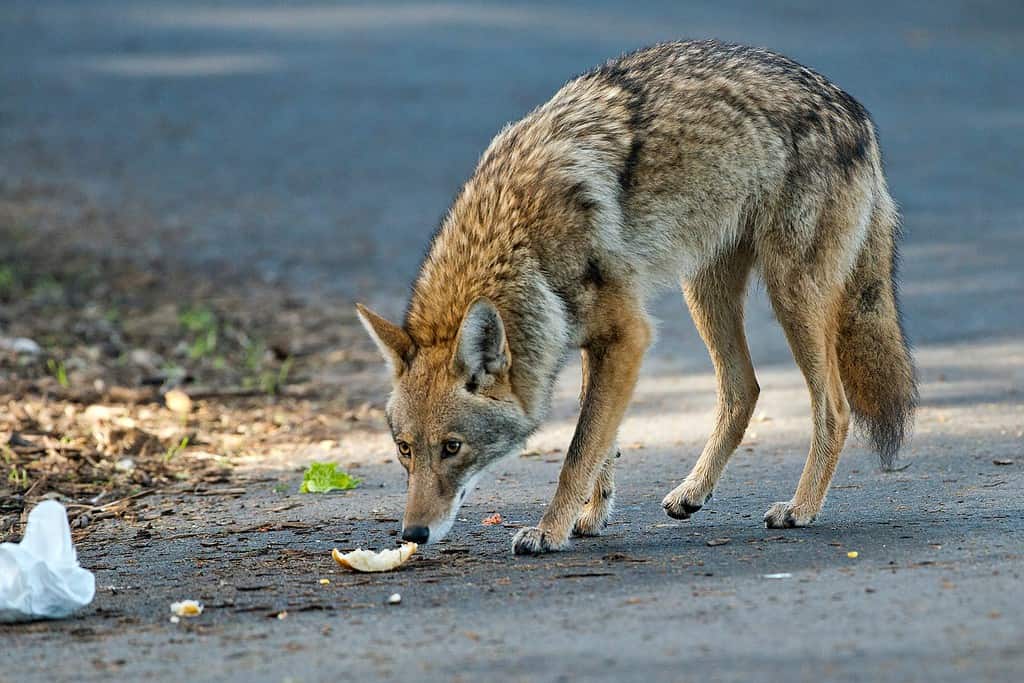
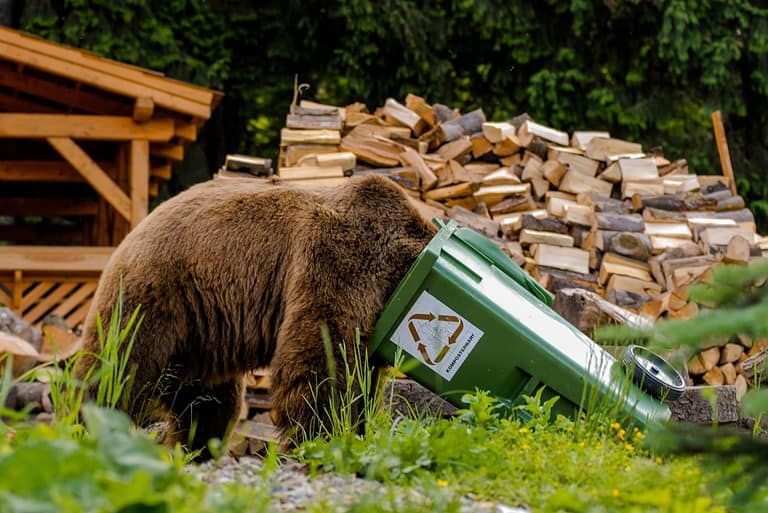
Garbage provides an easy meal for suburban coyotes.
©Matt Knoth/Shutterstock.com
Coyotes, scientifically known as Canis latrans, are masters of adaptation and resourcefulness. Their success in urban and suburban areas comes from an abundance of food, water, and shelter, along with few natural predators in most neighborhoods. Suburban streets and yards often provide many essentials: rabbits, mice, fallen fruit, accessible trash, pet food left outdoors, and water sources such as ponds and birdbaths. These resources allow coyotes to expand their territories and adjust their activity patterns. As a result, they may appear late at night or early in the morning to avoid direct contact with people.
Research shows that suburban coyotes use patches of green space, wooded areas, and narrow corridors such as railroad tracks or drainage ditches to travel without drawing attention. While generally wary of humans, coyotes can lose their natural caution if they are intentionally fed or if residents never scare them away. Their flexible diet includes wild prey and discarded human food, which makes them highly opportunistic. Despite their closeness to houses, urban coyotes usually place their dens in quiet corners of parks or under dense shrubs only a short distance from human homes.
Why Are Coyotes Drawn to Suburbia?
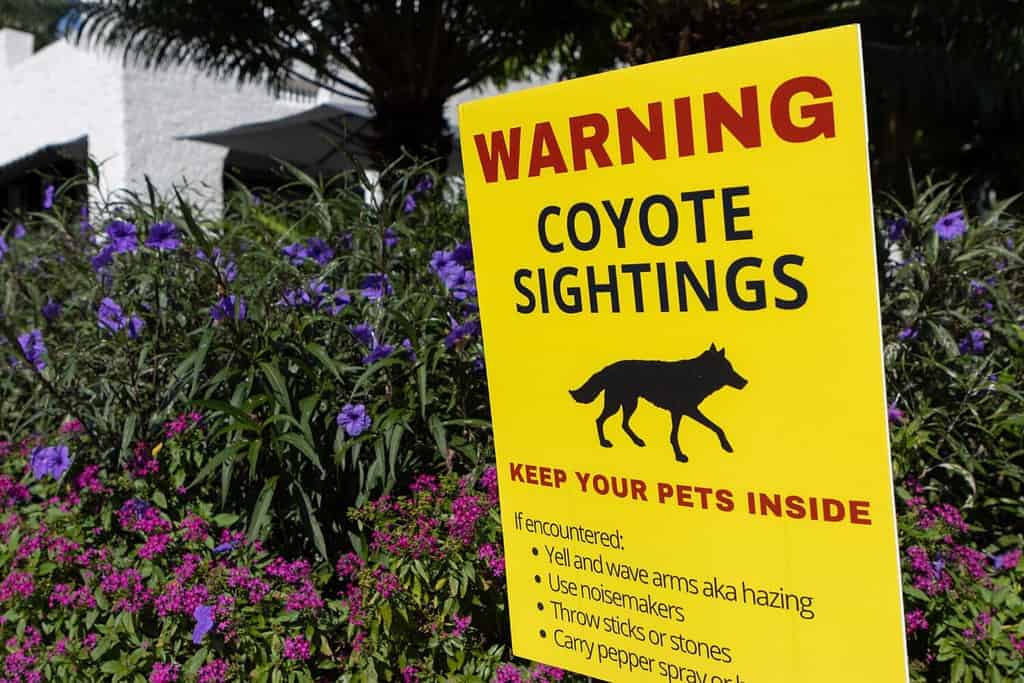
Neighborhoods have to work together to have an effective strategy to keep coyotes away.
©Ajax9/Shutterstock.com
Suburban and urban landscapes offer coyotes favorable conditions, yet some yard designs make a neighborhood far more attractive than others. Overgrown bushes, woodpiles, thick landscaping, or easily reached crawl spaces under decks and sheds provide comfortable shelter. Coyotes are also drawn to unfenced yards, overturned trash cans, outdoor pet food, bird feeders, and fruiting plants, all of which supply food and water. Pet water bowls, decorative ponds, and compost piles can serve as steady sources of moisture and food scraps, turning a yard into an inviting stop on a nightly patrol.
There are, however, practical ways to discourage coyotes. Neighborhoods that limit easy food sources by storing trash securely, feeding pets indoors, and clearing fallen fruit become less inviting very quickly. Motion-activated lights and sprinklers, removal of dense hiding places, installation of coyote-resistant fencing at least six feet tall and extending underground, and closing entry points under decks or porches can sharply reduce encounters. When neighbors coordinate these steps, the risk of attracting coyotes drops for everyone on the block.
Keeping Coyotes at a Distance
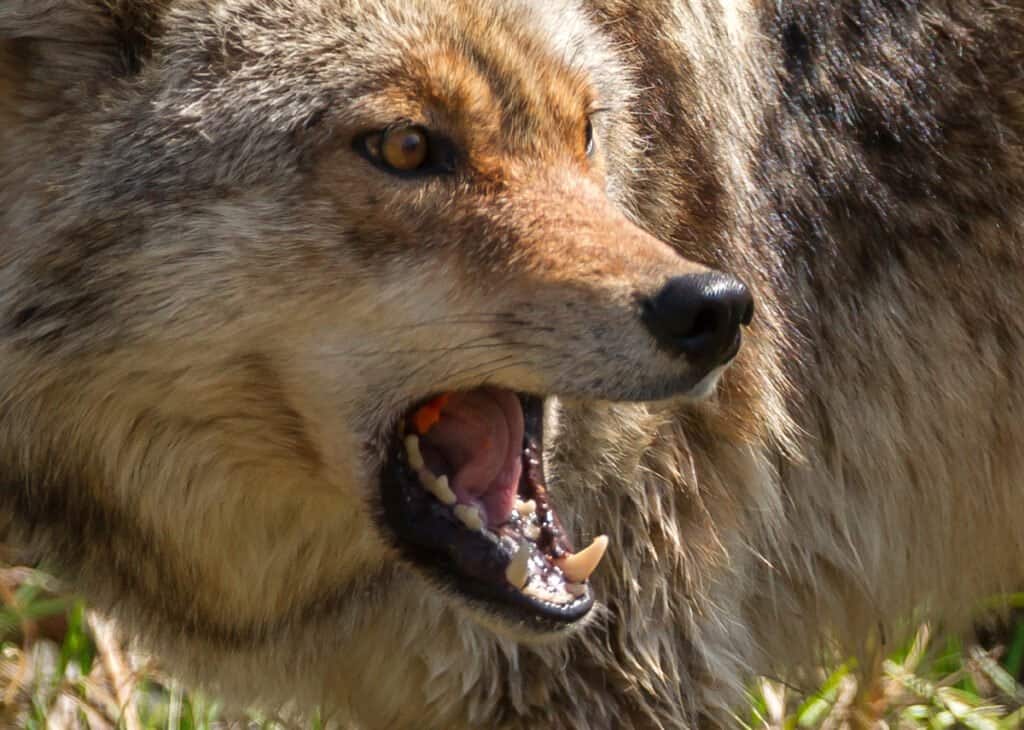
As omnivores, coyotes use their teeth to eat other mammals and carrion meat
©Derek R. Audette/Shutterstock.com
The most important action residents can take is to reinforce coyotes’ natural fear of humans through hazing. Hazing is a technique that discourages coyotes from approaching homes, pets, or people. It helps maintain a healthy boundary between human and animal communities. When a coyote is seen nearby, hazing uses loud, firm actions designed to drive it away, such as yelling and waving arms, using noisemakers like whistles or air horns, banging pots or pans, or tossing small objects such as sticks, tennis balls, or pebbles in the animal’s direction. Water hoses, pepper spray, or bear repellent can be used in more persistent cases. Direct physical harm should be avoided. Attempting to physically harm a coyote may leave the animal injured and more dangerous, or could result in injury to you.
Recent research in 2025 shows that while hazing can be effective in some cases, its success is inconsistent. To improve the results, hazing needs to be repeated and varied so that coyotes do not grow used to any single stimulus. Animals that are consistently hazed, rather than ignored or fed, learn to avoid people and busy neighborhoods. Hazing is most successful when entire communities take part. There should also be strong physical barriers, such as fences and closed gates, to prevent easy access to yards and pets.
Protecting Pets in Coyote Country

Cats that love to gaze out the window can enjoy the experience even more with a cat window perch.
©Patricia Tureay/Shutterstock.com
For pet owners, encounters with coyotes can be alarming, yet proactive safety measures are highly effective. Cats should stay indoors, and dogs should be supervised outside. This is especially true during dusk, dawn, and nighttime hours when coyotes are most active. Keeping dogs on a leash during walks is essential. Unleashed pets are far more vulnerable to attacks, particularly in parks, wooded areas, or along greenbelts and drainage corridors.
Home design can also protect pets. Secure pet doors and install sturdy fencing around yards, making sure barriers are tall and buried at least two feet below ground to reduce digging. If coyotes visit your area frequently, skip walking dogs in high-risk zones during periods of peak activity. Never leave pet food outdoors, promptly clean up spilled birdseed and fallen fruit, and bring in toys and bowls at night. Turning on yard lights when pets go outside and making noise at the door can give coyotes a clear signal that people are present and alert.
If a coyote approaches while you walk a pet, do not run. Stand tall and haze the animal by shouting, waving your arms, or swinging a stick. Move calmly toward shelter when you can, keeping your dog close to your side. If your pet is injured, seek veterinary care immediately. Report the incident to local wildlife officers. Also, improve the security of your yard and your walking habits to lower the chance of a repeat encounter.
Can Culling Solve the Problem?
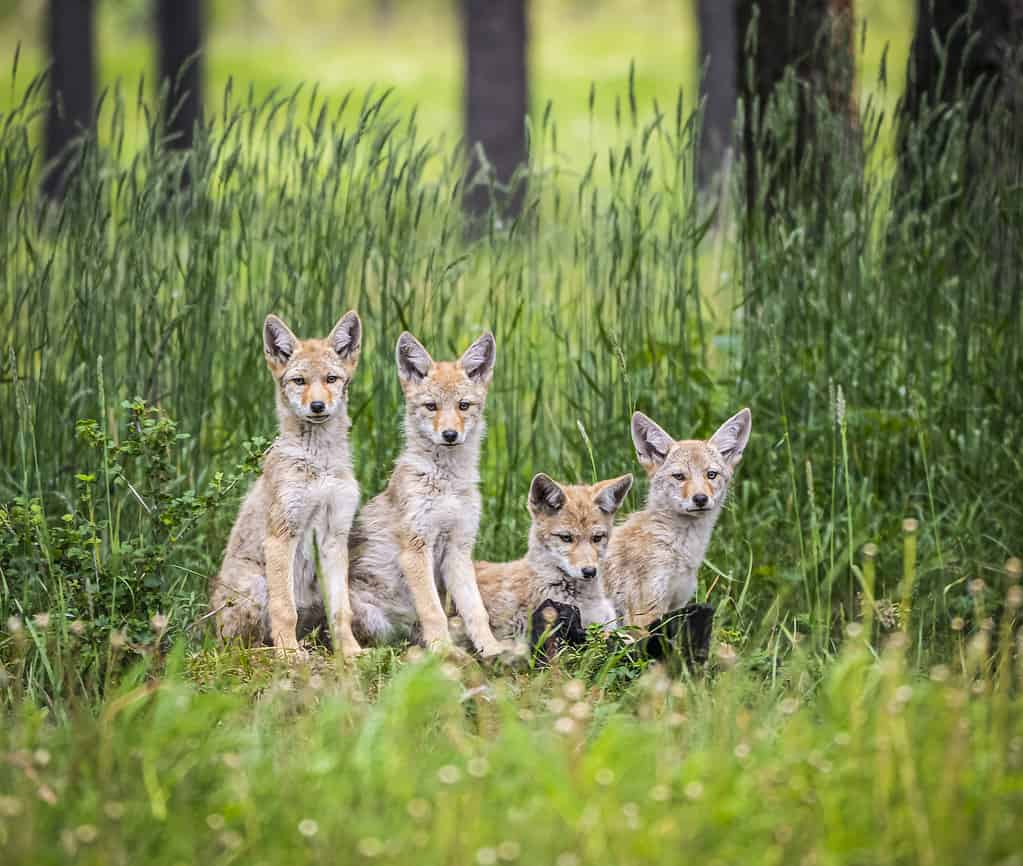
Curious coyote pups await the return of their mother by the entrance to their den.
©Annie Hewitt/iStock via Getty Images
A common response to growing coyote sightings is lethal management. However, multiple recent studies and wildlife agency reports as of 2025 show that wide-scale, non-targeted culling fails to reduce coyote populations or curb conflict in the long term, and may even exacerbate the issue. Coyotes possess a biological adaptation known as compensatory breeding. In many stable packs, only the dominant pair produces pups in a given year. When members of a pack are killed, the social structure breaks down. Previously suppressed individuals, often yearlings or non-breeding adults, may start to reproduce. Litter sizes can grow, and pup survival can rise as more resources become available with fewer adults competing for food.
This pattern means that killing coyotes can lead to rapid population rebounds, or even increases in their numbers. More young are born, and new coyotes move in from nearby areas to fill the open spaces. In regions with heavy coyote mortality, packs may dissolve. This results in more transient individuals who behave in less predictable ways and may take greater risks near people. Several studies and wildlife reports have found that wide-scale, non-targeted culling usually fails to reduce overall populations or curb conflict in the long term. Targeted education, preventive measures, and non-lethal deterrents provide a more sustainable path for communities that share space with coyotes.
What Coyotes Want and What They Avoid

If you feed your pets outdoors, bring the food indoors to avoid attracting coyotes.
©Gorodenkoff/Shutterstock.com
Coyotes gravitate toward landscapes that combine cover, food, and water with minimal direct disturbance. In suburbs, that often means greenbelts, golf courses, vacant lots, and wooded edges beside roads or creeks. These places provide travel routes and denning sites while still keeping coyotes fairly close to small prey and human-related food that surrounds residential zones.
At the same time, coyotes are deeply wary of unfamiliar threats, sudden noises, and unpredictable human behavior. To make a home less attractive, residents can thin dense vegetation, close crawl spaces, and store trash in bins with tight lids. Removing outdoor pet food, bird feeders, and open compost piles cuts down on easy calories. Installing fencing that is at least six feet high and extends into the soil, clearing brush on a regular schedule, and keeping gates latched all encourage coyotes to seek space farther from homes.
How Are Coyotes Useful?
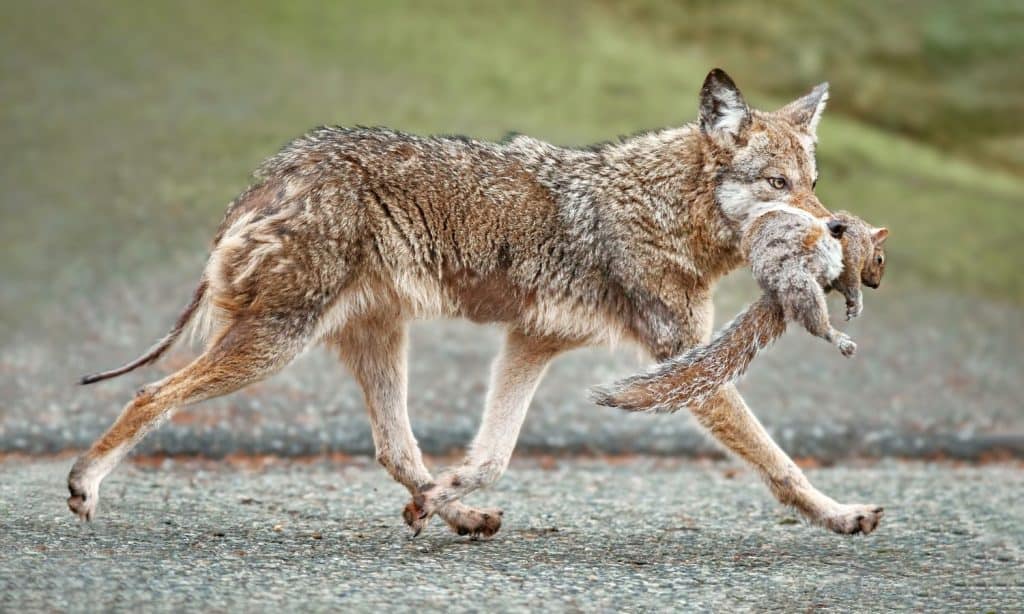
Coyotes are mid-sized predators.
©RobDemPhoto/Shutterstock.com
Coyotes serve an essential ecological function in many North American landscapes. As mid-sized predators, they help keep rodent and rabbit populations in check, which can reduce crop damage and lower the risk of some rodent-borne diseases. They also scavenge carrion and spread seeds through their droppings, which can support plant growth in fragmented environments. In regions where larger carnivores such as wolves have disappeared, coyotes fill part of the gap in the food web and can influence the behavior and numbers of prey animals.
Their flexibility and keen problem-solving skills have made them successful urban dwellers. Coyotes learn traffic patterns, locate safe crossing points, and adjust their activity to quieter hours so they encounter fewer people. By understanding how coyotes fit into the larger ecological picture, residents can see them not only as potential threats to pets but also as contributors to healthier, more balanced ecosystems in and around their communities.
Living Safely with Coyotes
Safe coexistence with coyotes in suburban areas is entirely possible when communities understand, deter, and respect these adaptable animals. By prioritizing pet safety, practicing consistent hazing, and adopting landscaping measures that make yards less inviting, residents can prevent many negative encounters. Leaving behind ineffective broad culling in favor of education and targeted deterrence protects neighborhood safety as well as the local environment. Coyotes, with their intelligence and resilience, remind us that wildlife can still make itself at home in the places we, too, call home.