
Quick Take
- Microplastics from your daily bathroom routine are entering the ocean and contaminating wildlife through a route most people never consider. See microplastic types →
- Seabirds face a plastic death threshold that is shockingly specific, and they are unknowingly carrying the danger back to their chicks. See the 90% death threshold →
- Plastic toxins don't stop with the animal that swallows them. They amplify through the food chain in a way that puts the ocean's apex predators at disproportionate risk. See toxic biomagnification →
- Ocean plastic cleanup has reached a point where one leading solution sounds closer to science fiction than environmental policy, targeting the pollution that traditional methods can't touch. Explore the robo-fish solution →
September 19th, 2026, is International Coastal Cleanup Day. Millions of volunteers worldwide join together to remove marine litter from beaches, rivers, lakes, and waterways while collecting valuable data that helps shape environmental policies and solutions. The majority of this litter is plastic. We explain why this matters so much and what you can do to help.
Continue reading
What Exactly Is Plastic?
Plastic is a general term describing a material that can be formed and molded under heat and pressure. All modern plastics are made of polymers, which are large molecules made up of repeating smaller molecules (monomers). The very first plastic was invented in 1862 by a chemist called Alexander Parkes. It was called Parkesine and was lauded as a cheap and colorful substitute for ivory and tortoiseshell.
Later, a new plastic called celluloid was widely used in products such as combs, billiard balls, cinema film, and sunglasses.
It was during the 20th century, however, that plastic production really took off and entirely synthetic plastics became available. In the early 1900s, petroleum and chemical industries entered the scene, providing waste material from processing crude oil and natural gas. These still provide most raw materials used in the plastic industry today. Since then, plastics have been used for an incredible variety of products all over the world.
When Did Plastic Become a Problem?
The very properties that make plastic so useful and durable also make it very hard to dispose of. It can take tens of thousands of years to degrade, and that creates an environmental problem. What’s more, when plastic does break down, it forms microscopic particles that enter the environment.
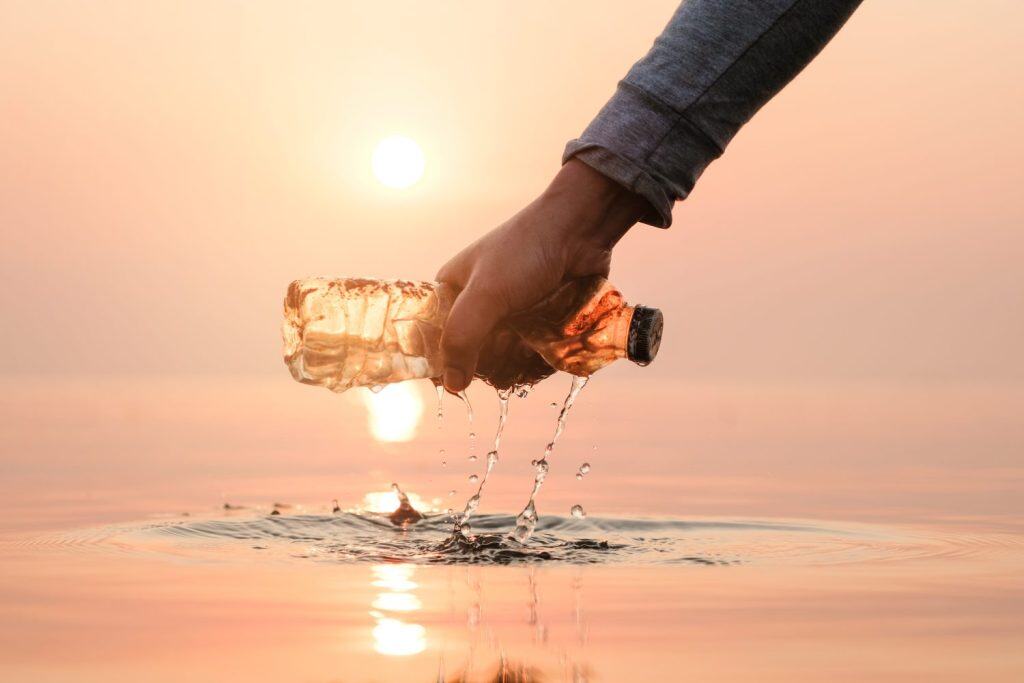
Plastic is contaminating our oceans.
©seamind224/Shutterstock.com
The ‘plastic problem’ first emerged after World War II when plastic began to replace more expensive materials such as paper, glass and metal. Landfills began to fill up with plastic, and a lot of it ended up in the seas. The worst offenders are polyethylene shopping bags and polystyrene food containers, along with PET (polyethylene terephthalate, a form of polyester) drink bottles. Mass-produced cheap plastic products led to the single-use culture that we have today. Around 500 billion plastic bottles are sold every year, and this is increasing. The majority of these items end up in the oceans.
Why Is Plastic in Oceans So Damaging?
Nature operates on a cycle of renewal and recycling. Plants and animals grow, die, and decay. They become food for other organisms, and substances are constantly recycled through many organisms. There is no role for materials like plastics that do not degrade. All natural environments are now contaminated with plastics. However, it is our oceans that are likely most vulnerable.
Once a plastic item enters the sea, there are no boundaries to stop it from moving. Waves, currents, and storms carry them long distances, and they can accumulate in delicate marine ecosystems. But this is just part of the story. The action of waves and tides breaks down plastic into increasingly smaller pieces, which become deeply embedded in the marine environment and within the organisms living there.
Types of Plastic in the Ocean
Macroplastics are the pieces larger than ¾ inch. This includes six-pack rings, plastic bottles, and fishing gear. The danger here is that mammals and fish can get stuck inside them or entangled in them, leading to injury and starvation. Discarded fishing equipment can smother and break coral reefs.
Mesoplastics are fragments of plastic between 0.2 inches and 0.4 inches. They can float on the surface of the sea where animals, including seabirds, can mistake them for food. This can lead to suffocation, starvation, and toxic contamination.
Finally, microplastics and nanoplastics are smaller than 0.2 inches, and many are microscopic. These include particles formed by larger plastics breaking down. However, they are also made up of tiny granules from face scrubs and toothpastes and microfibers from textiles. Even though these particles are invisible to the naked eye, they can still cause significant damage. Wildlife consume them, and once inside their bodies, they adsorb toxins. This means that a thin film of toxins forms on their surface. These toxins can then transfer to the fatty tissues. We still do not know the full extent of the damage that microplastics and nanoplastics can cause.
The Effect of Plastics on Whales and Predators
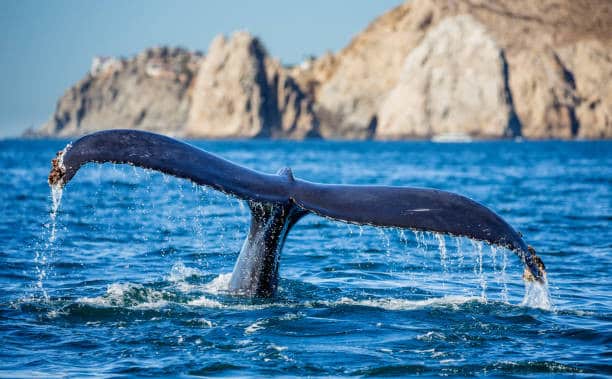
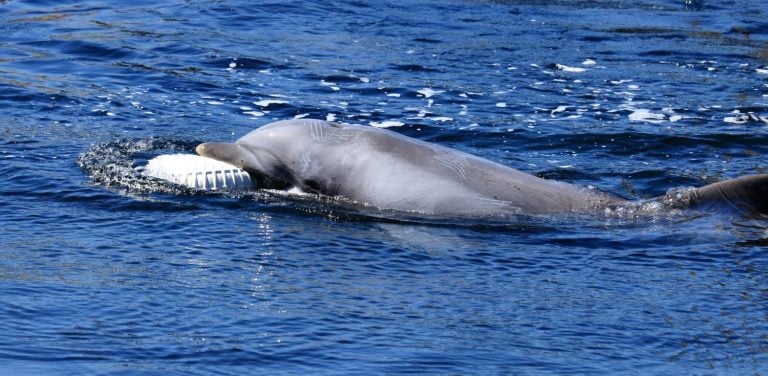
Large marine animals such as whales are at risk of getting entangled in discarded plastic ropes, nets, and pots. According to research using photo-identification, as many as 60 percent of blue whales and fin whales in Canada’s Gulf of St Lawrence have come into contact with fishing ropes and nets. This can lead to suffocation. An estimated 300,000 whales, dolphins, and porpoises a year die after being injured in nets or lines. However, these animals can also ingest plastic. For example, one Cuvier’s beaked whale was found dead in the Philippines, having died from gastric shock. It had 88 pounds of plastic waste in its stomach! This included 16 rice sacks, 4 banana bunch covers, and multiple shopping bags. In 2018, a small male pilot whale died after swallowing more than 80 plastic bags.
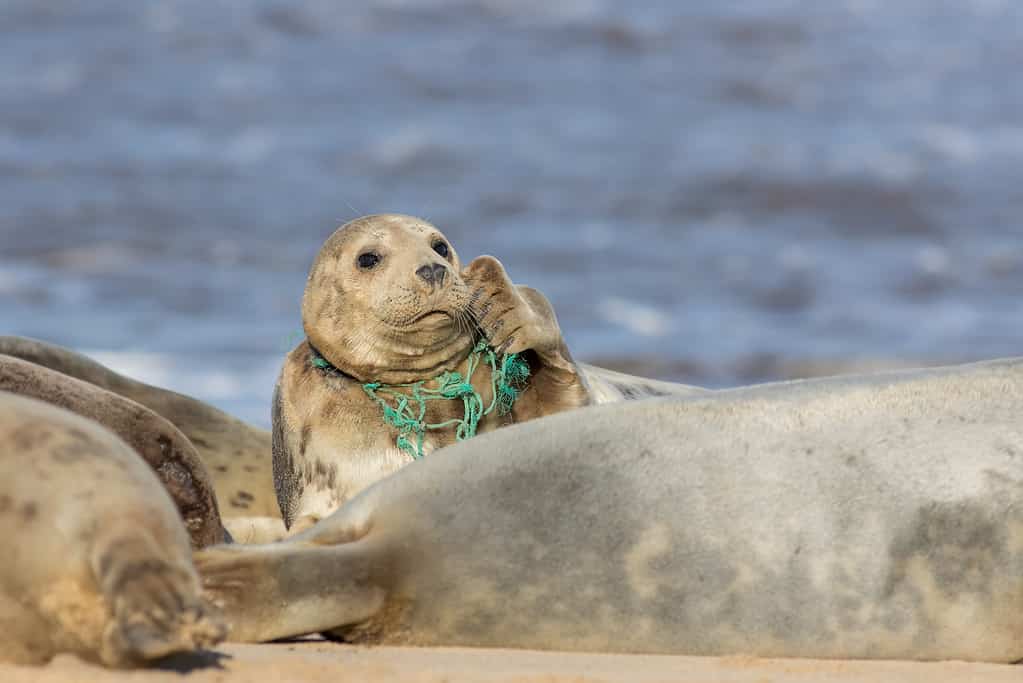
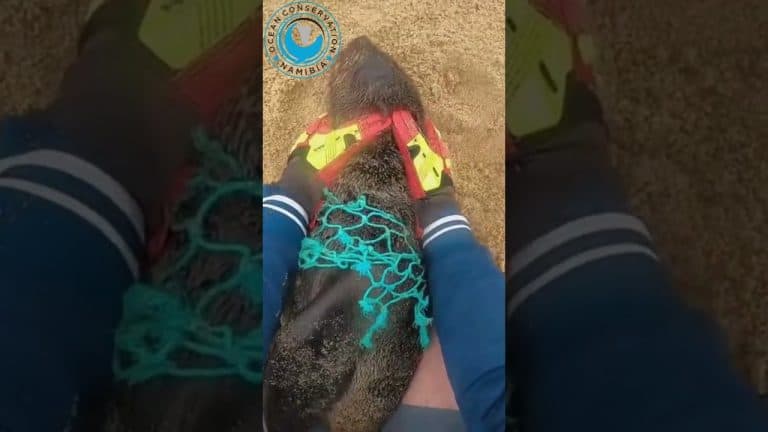
Seals often become entangled in fishing nets, which threatens their lives.
©Ian Dyball/iStock via Getty Images
Apex predators at the top of food chains face a cumulative impact from the plastic consumed by all the other animals below them in the chain. What’s even more worrying is that plastic particles can adsorb up to one million times more toxic chemicals than the water around it. This leads to an effect called biomagnification, where the chemicals build up in fatty tissue. These chemicals have been found in higher concentrations in the fatty tissue and breast milk of orcas.
Sea Turtles and Plastic
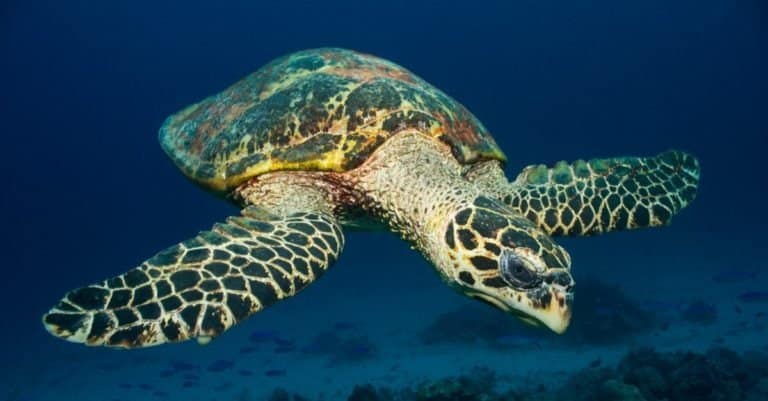
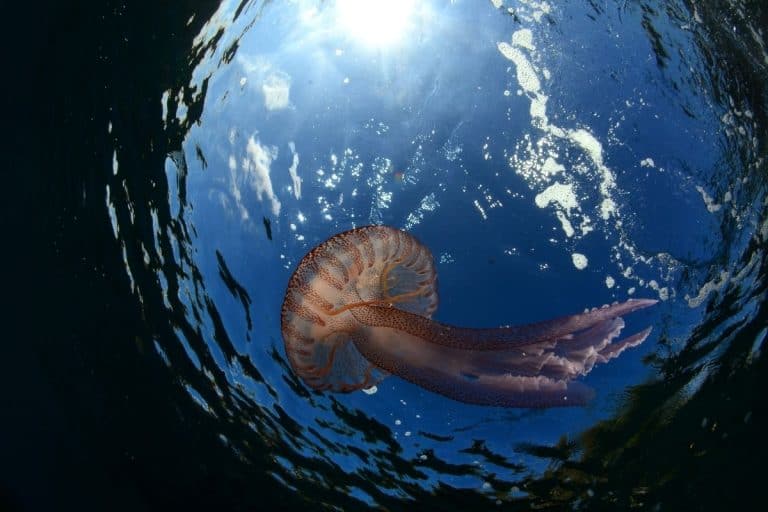
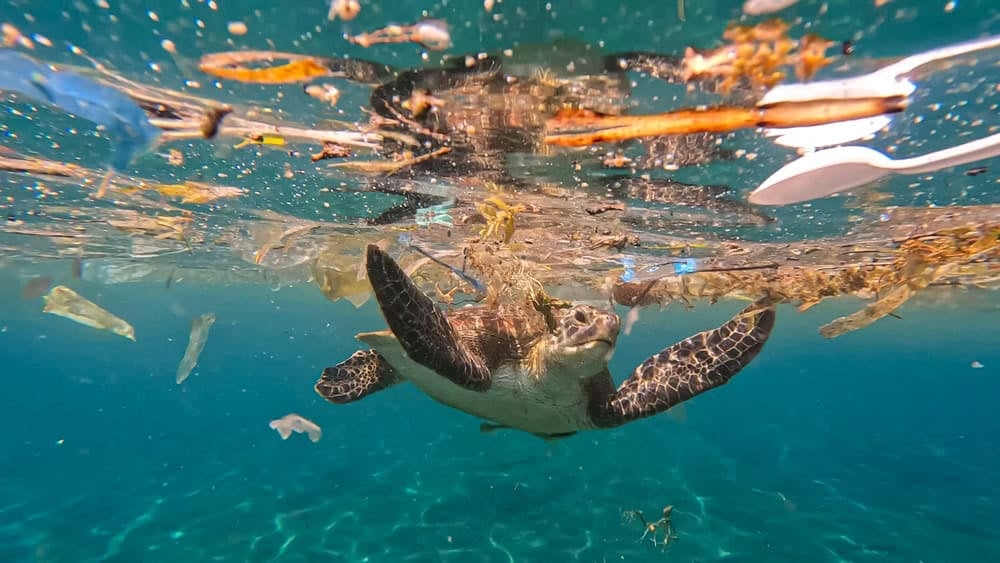
Turtles also mistake plastic for food. Their diet includes jellyfish and seaweed. Unfortunately, plastic bags and fishing nets look very similar to these when you are a turtle! Turtles with a plastic bag lodged in their stomach do not feel hungry and stop eating. This can lead to starvation. Research has shown that microplastics are found in the guts of several species of turtles. These include fibers from clothing, tires, cigarette filters, and maritime equipment.
These include fibers from clothing, tires, cigarette filters, and maritime equipment. These likely entered the turtle’s body via seawater, sediments, prey, or plants. In addition, sea turtles can also get entangled in six-pack rings, which get stuck around their necks and shells.
Seabirds and Plastic
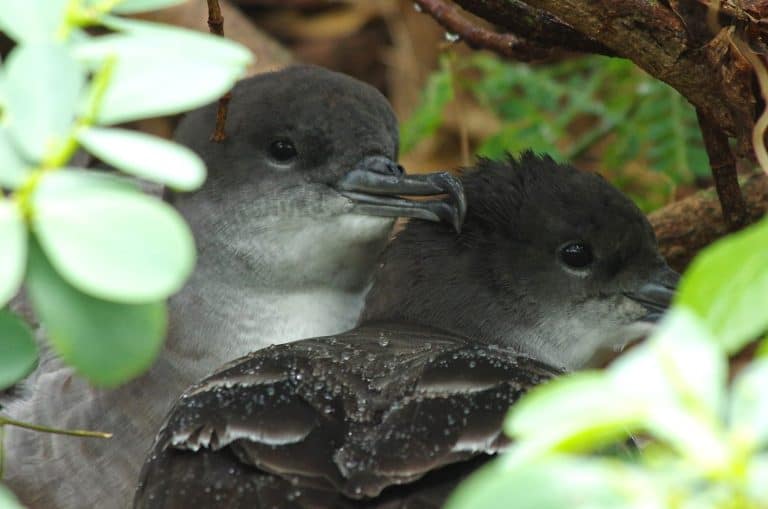
Seabirds feed on small fish and algae floating on or just below the surface of the ocean. It’s hardly surprising that they confuse bits of plastic for food and ingest it. The plastic can cause suffocation and starvation. Some birds can regurgitate plastic, but others, such as petrels, cannot. Also, the birds take plastic back to their nests and feed it to their young. Research has indicated that swallowing 23 pieces of plastic gives a seabird a 90 percent likelihood of dying.
Plastic Dangers for Fish and Molluscs
Fish and marine molluscs also ingest microplastics. There are hundreds of research papers describing hundreds of fish species that have consumed plastic. It is hardly surprising that fish confuse plastic pieces and pellets for food. New research has now shown that plastic pollution is accumulating in the world’s most remote and extreme ecosystems, namely deep-sea hydrothermal vents. A staggering 90 percent of deep-sea snails and mussels living on vents at depths of 6,600 feet below sea level are contaminated with microplastics. Some of it originated from polystyrene, which is widely used globally for packaging and single-use food containers.
Cleaning Up Our Oceans
While some argue that it is impossible to remove all the plastic from the oceans, others believe that it is never too late to make a difference. Solutions range from massive offshore systems that remove plastic by the ton to innovative river interceptors that stop pollution at its source.
The Ocean Cleanup initiative is run by a non-profit organization. They use U-shaped floating barriers with a skirt hanging beneath them. The system is towed by two vessels, acting like an artificial coastline that concentrates floating plastic. Support vessels periodically remove it for recycling on land.
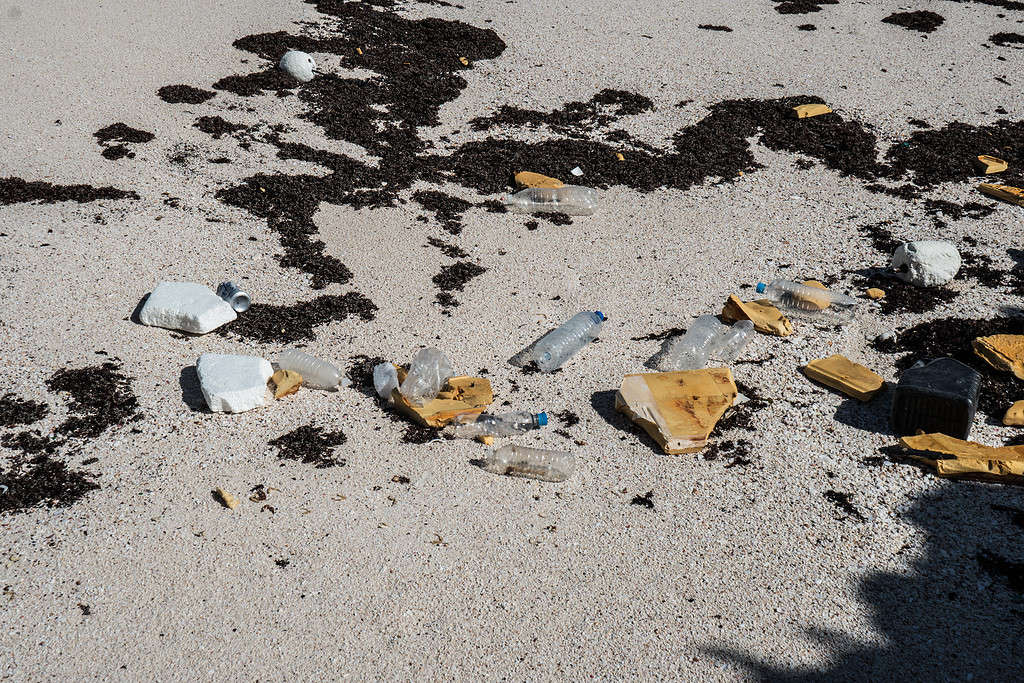
Plastic removal from oceans is challenging.
©TraceRouda/iStock via Getty Images
Using an alternative approach, Everwave uses waste collection boats and AI-powered drones to identify and collect plastic from polluted rivers. Then there is the Seabin, which was developed in Australia and pulls in floating debris. It even captures microplastics as small as 0.08 inches. We can’t leave out the tiny self-propelled robo-fish that absorbs microplastics into its soft, flexible body!
What You Can Do to Help the Oceans
So, what can you do to help with plastic pollution? You can start by reducing your use of single-use plastics. These include items such as water bottles, straws, cups, utensils, dry cleaning bags, and take-out containers. Use reusable alternatives such as cloth grocery bags and metal water bottles. Lend your support to legislation that reduces plastic production, improves waste management, and makes plastic producers responsible for the waste they generate. Share your views with your elected representative.
If you must use single-use plastics, make sure that you recycle them. Finally, participate in a river or beach cleanup to make a direct impact!