
Quick Take
- Why do these cranes skip countless other wetlands and crowd into one small Japanese plain?
- A habitat this perfect still gets a surprising helping hand from humans.
- One invisible threat could turn this crowded refuge into a catastrophe.
- Their journey here spans several countries and a tightly timed calendar.
In Japanese culture, cranes are considered a sign of good luck. Therefore, when most of the world’s hooded cranes spend their winter in one Japanese town, the region’s luck overflows.
Over Ten Thousand Cranes Winter in Izumi Plain in Japan
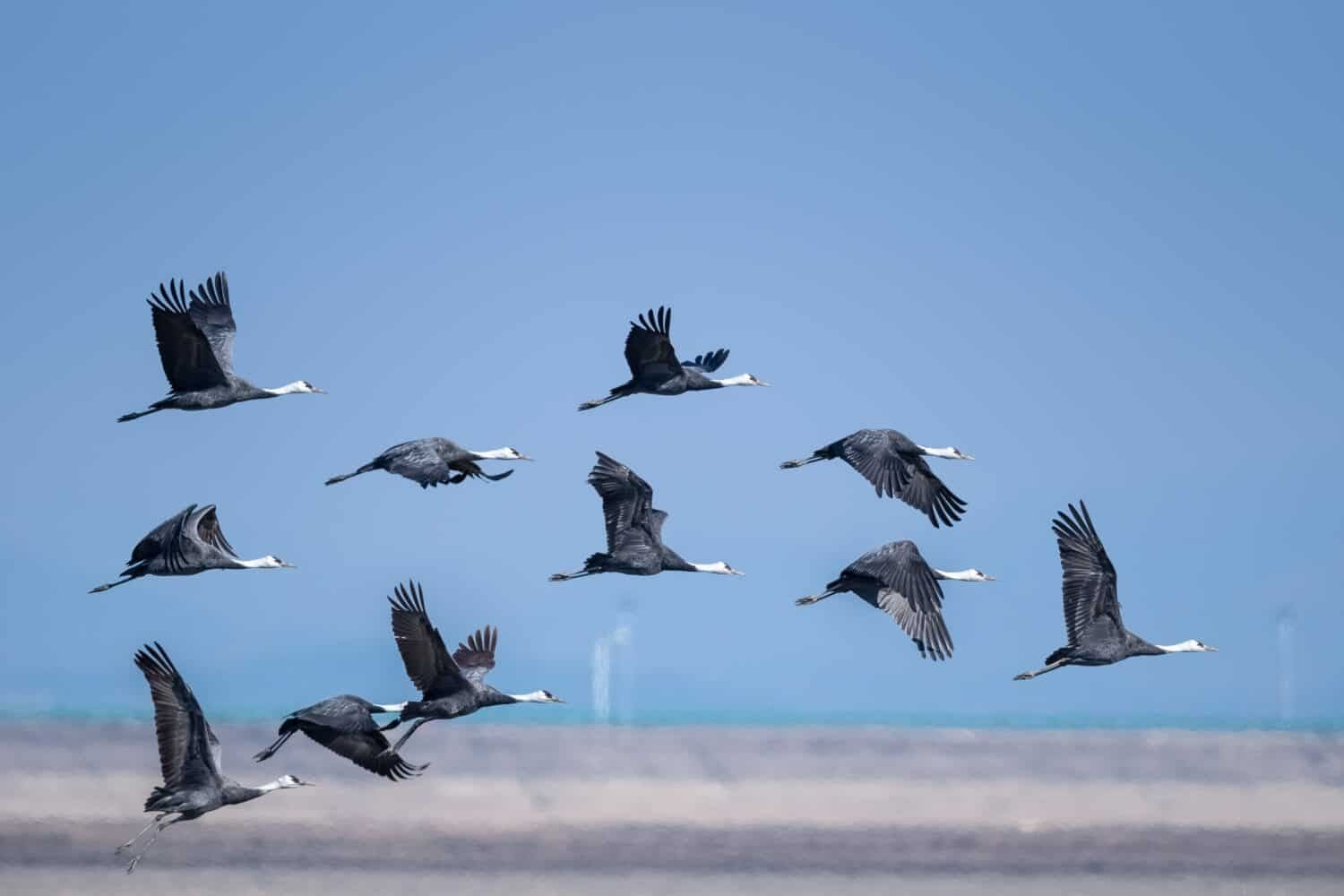
Each winter, the Izumi Plain in Japan turns stark white with patches of gray. This is not due to snow but because thousands of cranes converge on the region for their winter migration.
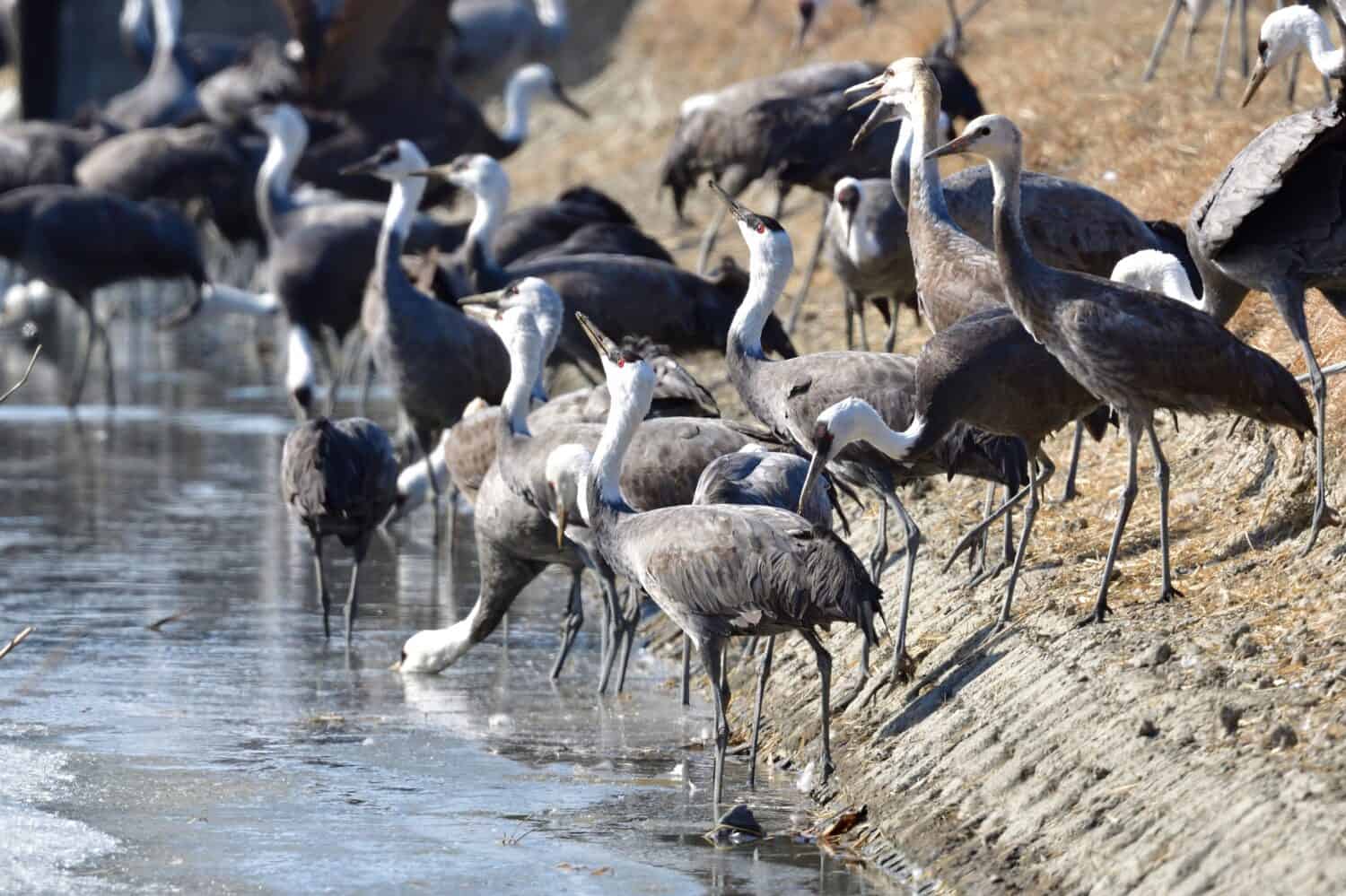
Up to 15,000 cranes will winter in Izumi Plain.
©S. Van der Kim/Shutterstock.com
Between 10,000 and 15,000 cranes will migrate to Izumi Plain. The region covers nearly 1,200 acres and includes wetlands, marshes, and reclaimed rice paddy fields. Here, 10,000 hooded cranes and 3,000 white-naped cranes converge. This accounts for 90% of Japan’s wintering crane population. More incredibly, this accounts for 90% of the world’s hooded crane population and 40% of the world’s white-naped crane population.
To observe the incredible number of cranes, the Izumi Crane Observation Center was built in 1952. The center not only helps care for the cranes but also allows those interested in seeing them in their wintering habitat to do so without disturbing them. This protects the birds and lets the public learn about conservation, making it a win-win for the cranes.
90
%
of the world's hooded cranes winter on Izumi Plain
Where Do the Cranes Come From?
The hooded cranes and white-naped cranes that winter in Izumi Plain are not native to Japan. Instead, they come from multiple regions to rest and recover during the colder months.
Where the Izumi Plain cranes breed
| Breeds in Russia | Breeds in Mongolia | Breeds in China | |
|---|---|---|---|
| Hooded cranes | Breeds in Russia | Breeds in China | |
| White-naped cranes | Breeds in Mongolia | Breeds in China |
Most cranes that come to Japan travel long distances to get there. While the majority come from Siberia and China, others also come from Mongolia. The white-naped cranes typically breed in northeastern Mongolia and northeastern China. Hooded cranes breed in southeastern Russia and northeastern China.
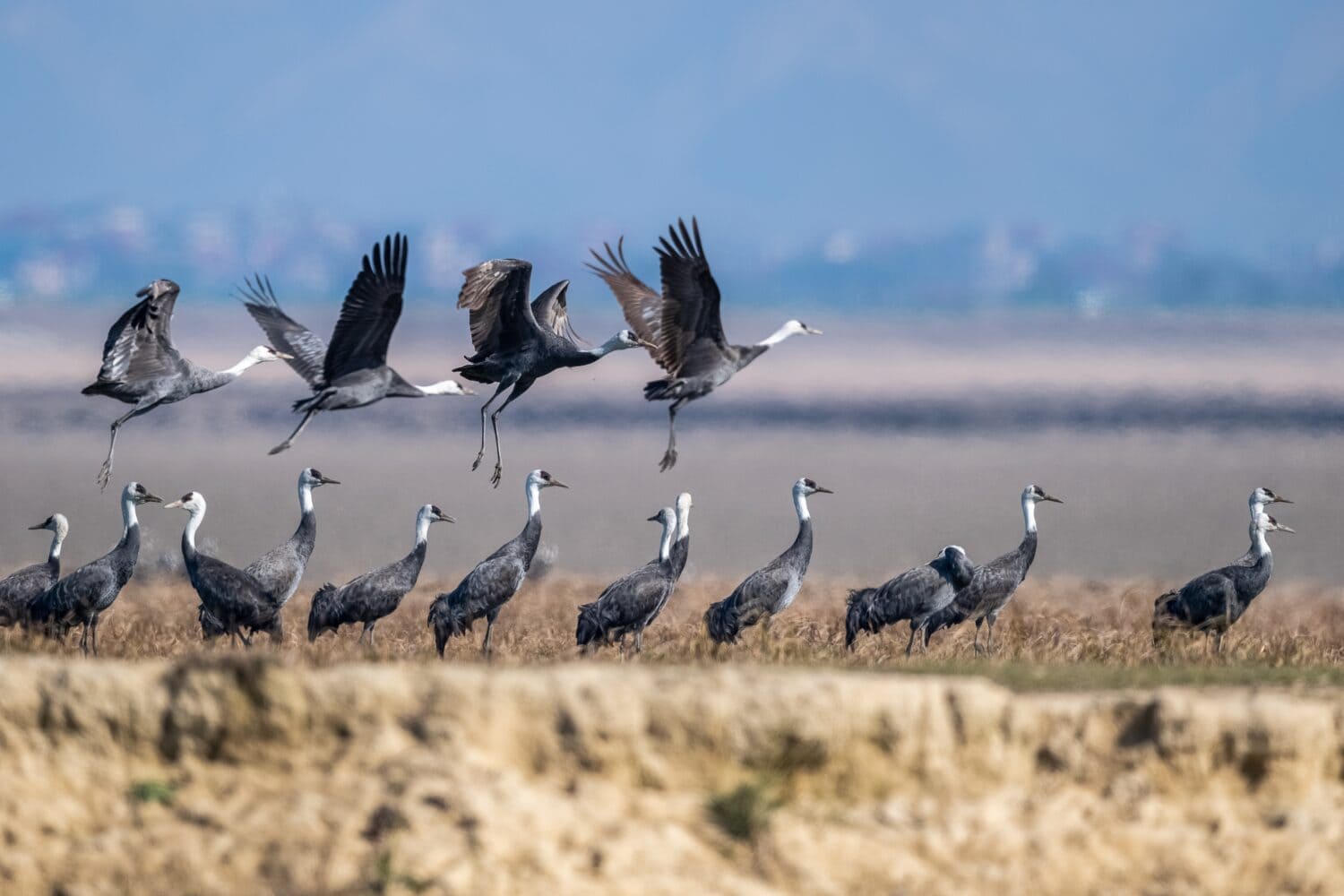
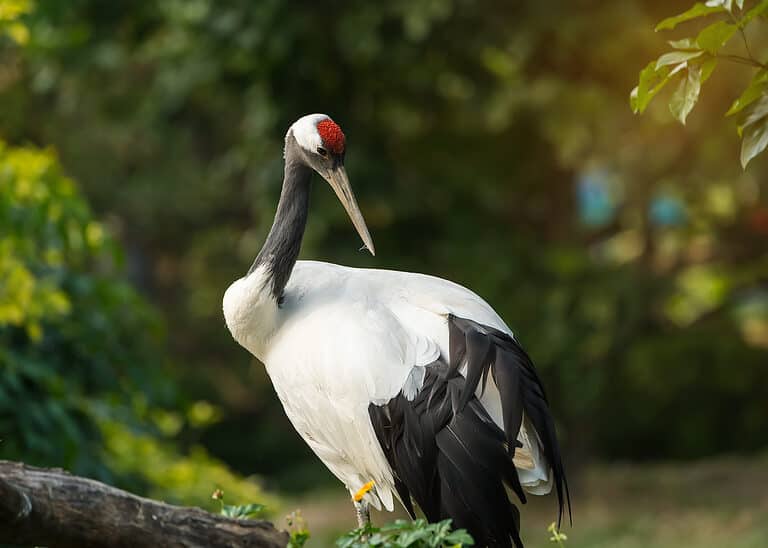
Hooded cranes are native to Russia and China, while white-naped cranes are native to Mongolia and China.
©lightrain/Shutterstock.com
The cranes make their way to the Izumi Plain starting in mid-October through mid-November. During this time, other cranes move to their wintering grounds. This rotation is all part of the Asian crane migration system.
The Izumi Plain cranes remain in Japan until late February to late March. They then return to their native countries to breed, where spring conditions are far more temperate than in winter.
What Draws the Cranes to Izumi Plain
Birds migrate to a region because there is plenty of food, shelter, water, and protection from predators. These reasons, and more, draw cranes annually to Izumi Plain.
Both hooded cranes and white-naped cranes converge on Izumi Plain to spend their winter in a mild region. Japan’s coastal climate keeps temperatures fairly constant and above the levels of freezing. Consequently, there is plenty of food for foraging during the winter, thanks to the wetlands, marshes, and paddy fields.
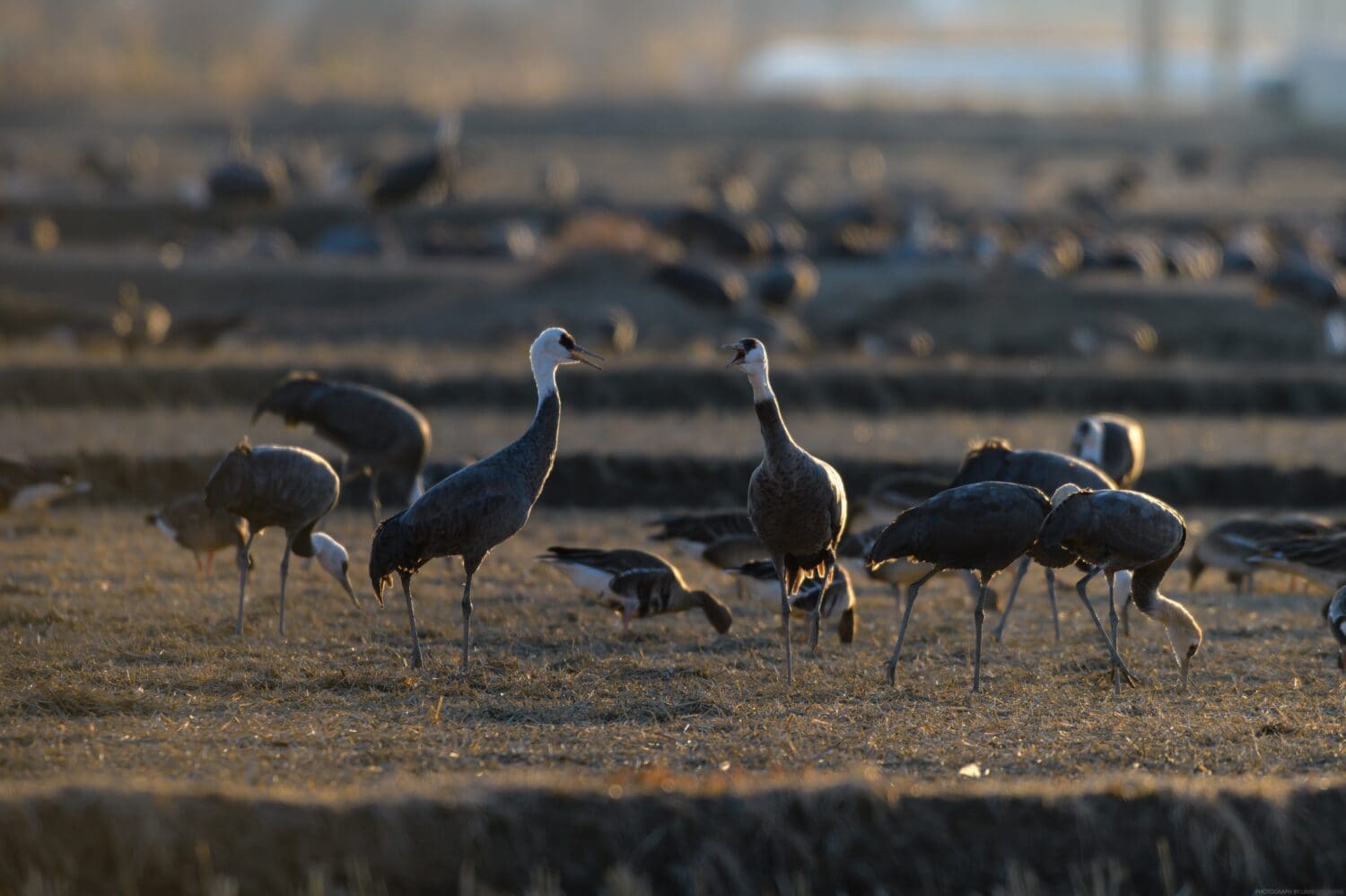
Cranes come to Izumi Plain thanks to moderate temperatures, an abundance of food, and safe shelter.
©vampirerrrr/Shutterstock.com
Cranes eat during the day and then roost at night. Thanks to the shallow waters in Izumi Plain, there are plenty of safe places for the cranes to roost at night without worrying about predators. Additionally, artificial roosts are set up by conservation groups and local authorities to ensure the cranes’ safety.
With all the positives of Izumi Plain, it is little wonder that cranes continue to return to the region and remain there until it is time for them to make their spring migration north in March.
Risks for So Many Cranes Converging on Izumi Plain
The convergence of tens of thousands of birds, not just cranes, on Izumi Plain indicates that the ecosystem is healthy and capable of supporting the birds. However, without proper management, problems can get out of hand quickly as the birds winter in the region.
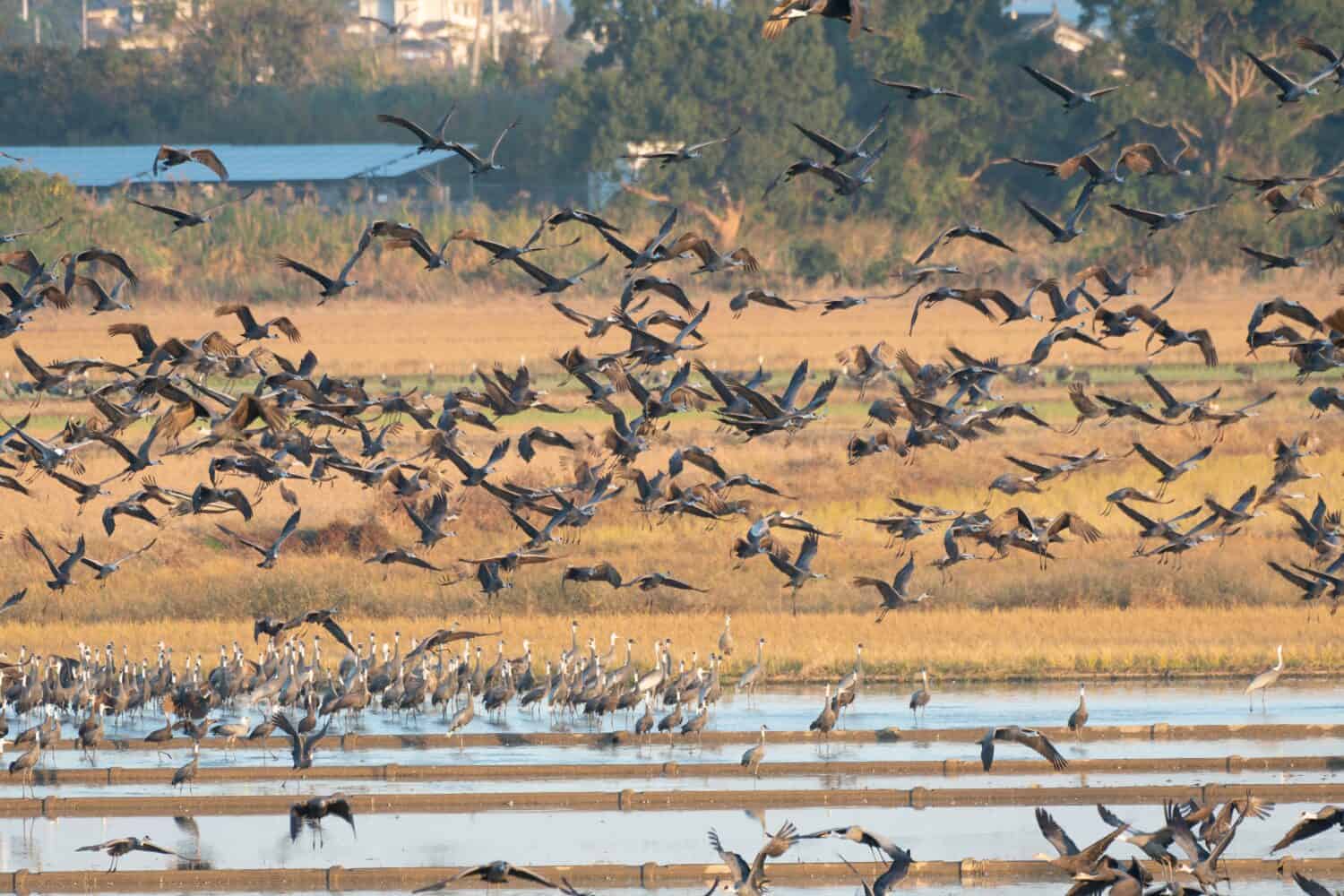
The biggest fear of so many cranes converging on one site is the spread of avian flu.
©Marty Oishi/Shutterstock.com
Some of the biggest problems that the cranes face in Izumi Plain face include:
- Competition for food
- Too many birds in one area leads to stress
- Habitat can easily become degraded with too many birds trampling it
Perhaps most importantly, because the bird population is so large in the winter in the Izumi Plain, avian flu or other diseases are at risk of spreading quickly. If this happened, it would be devastating not only to the cranes that winter in the region but also to future populations. This is why authorities and conservation groups constantly monitor the cranes to ensure their time in Japan allows them to rest and fatten up before their spring migration.
Are the Cranes Supported When Wintering in Izumi Plain?
Izumi Plain is a vast region where tidal flats, former rice paddy fields, and reed beds are sustained by open waterways, creating ideal foraging habitat for the cranes. It is not only protected from local predators but also designated a Ramsar Site and a National Special Natural Monument, meaning the land is protected from human development and other disturbances.
Despite this ideal habitat, local conservation groups still support the cranes as they winter in the Izumi Plain. They do this by spreading over 70 tons of various grains and eight tons of sardines in the region before the birds are ready to migrate in the spring.
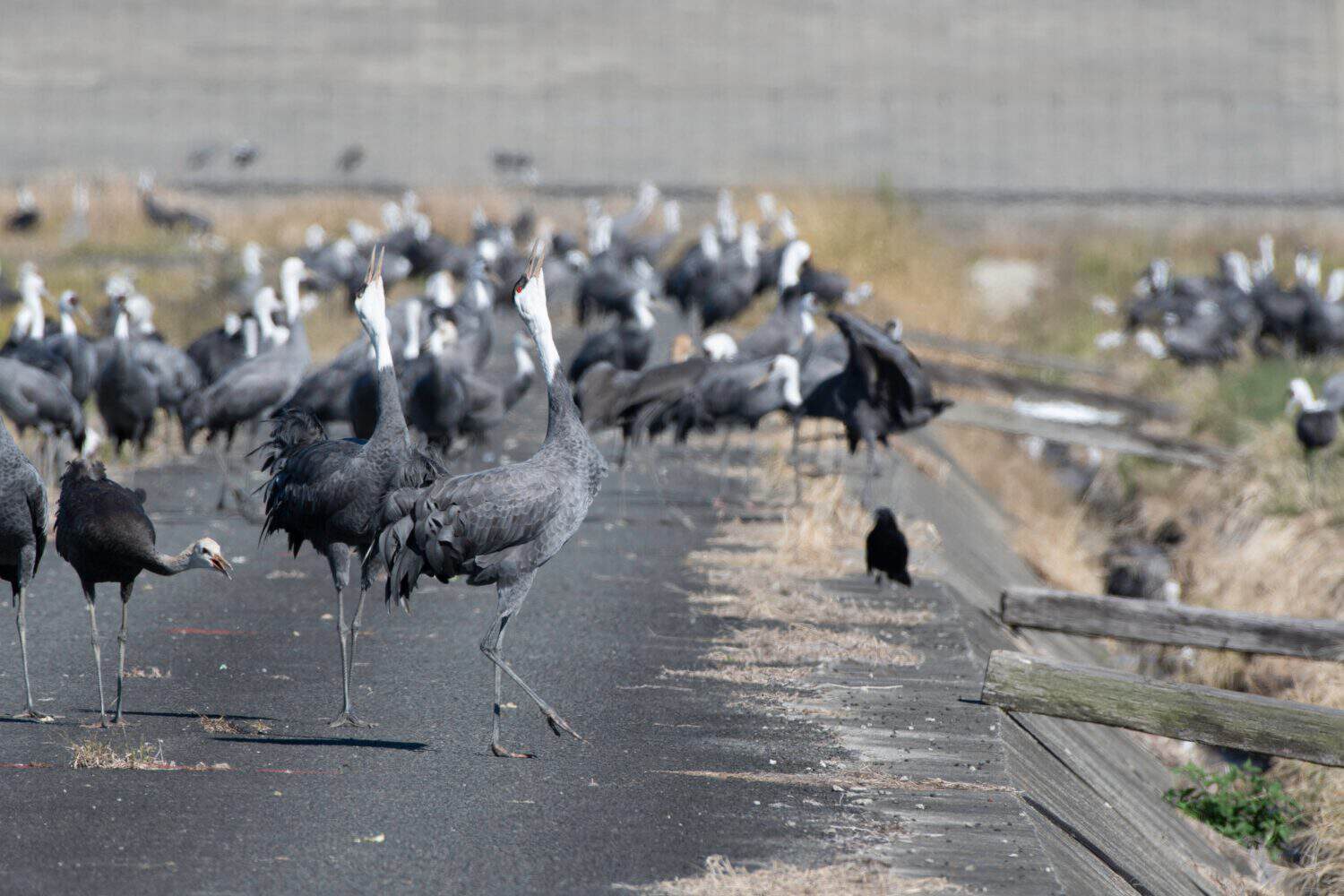
Hooded cranes are helped when they winter in Izumi Plain by being fed grains and fish, having the water levels monitored, and being provided with safe roosting locations.
©Marty Oishi/Shutterstock.com
Additionally, water levels are monitored continuously to ensure they remain consistent. This allows authorities to know as early as possible if something is off. Whatever the cause, it can be remedied before vegetation, roosting, and foraging sites are damaged.
By actively participating in the health and well-being of the cranes and their habitat, conservationists are ensuring that crane populations will continue returning to the Izumi Plain.