Quick Take
- One tiny bird skims the treetops yet crosses continents. How it survives the trip might surprise you.
- A single species can be a globe-trotter in one state and a homebody in another. Find out what decides which.
- Hummingbirds prep for their trip with a bizarre pre-flight ritual, and some skip the shoreline entirely.
- One riverbank hosts most of a species on its way north. Which bird, and where?
During the cold winter months, many birds migrate south to warmer climates. Some migrate in small flocks, while others form large formations of thousands or even millions of birds. These travelers often cover hundreds, if not thousands of miles on their journey, and some species may cross entire continents. However, not all birds migrate. Some stay in one place year-round, while others move only a short distance. Keep reading to discover some of the most common migratory birds.
1. Barn Swallows
Barn swallows (Hirundo rustica) are long-distance migrants that migrate twice each year. In early spring, they fly north to breed and nest in North America, often arriving in April or May. Then, towards the end of summer, they begin to migrate from their North American breeding grounds to spend the winter in Central and South America.
Barn swallows fly quite low, often just skimming the treetops. This makes them particularly vulnerable to predators and bad weather, so they travel in large flocks of hundreds or thousands of individuals. They fly at a speed of up to 44mph and can cover up to 200 miles in a single day.
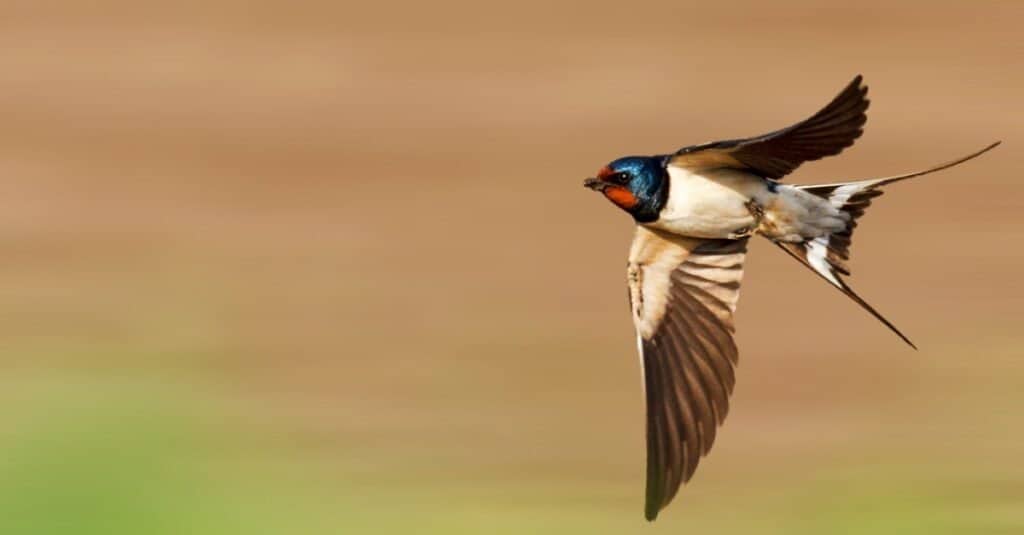
Barn swallows spend the winter in Central and South America.
©iStock.com/drakuliren
2. Canada Geese
Predictably, the usual nesting sites for Canada geese (Branta canadensis) are in Canada and the northern U.S. However, most travel farther south to the United States or northeastern Mexico for the winter. Some geese may overwinter in southern Canada as long as they can find food and open water. Canada geese prepare for their journey in midsummer while they are still nesting. These birds fly in large iconic V-formations. They can cover 1,000 miles daily if the weather remains favorable.
Canada geese learn their migration routes from their parents and often use the same nesting sites yearly. They may also explore new routes if weather conditions or food availability become unfavorable. Despite being a waterfowl species, Canadian geese eat leaves, berries, stems, roots, oats, soybeans, seeds, and other crops.
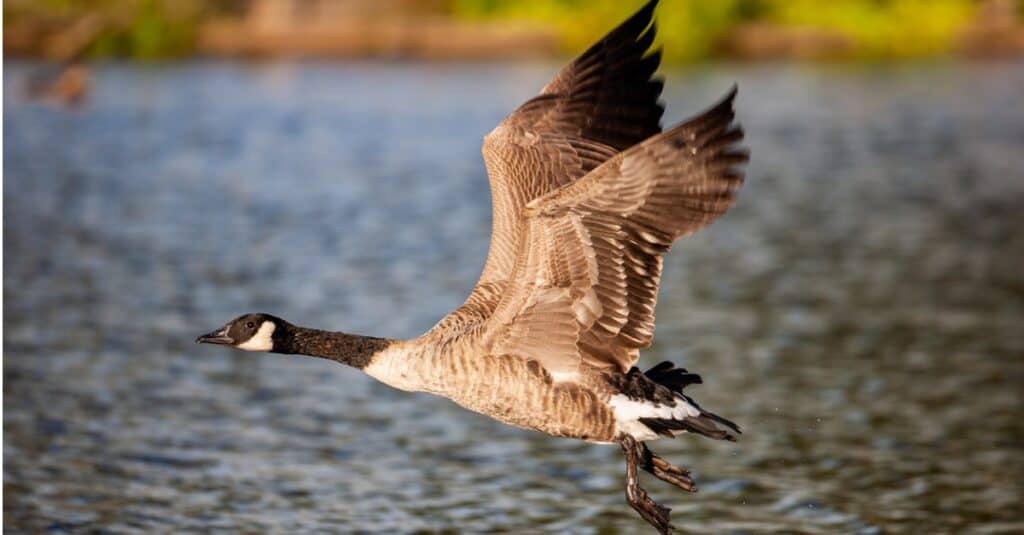
Canada geese learn their migration routes from their parents and often use the same nesting sites yearly.
©iStock.com/Wayne Marinovich
3. Chimney Swifts
Chimney swifts, or Chaetura pelagica, are long-distance migrants with their original breeding sites in the eastern parts of the United States and southeastern Canada. During winter, they migrate to South America to escape the low temperatures and the lack of food sources.
Chimney swifts usually start migrating in August through October and return in April when winter is over. They fly across the Gulf of Mexico or skirt along the Texas coast. However, many chimney swifts use the Atlantic coast, the east side of the Appalachians, and the Mississippi River flyways. These small birds usually migrate in loose flocks that can number in the hundreds. On rare occasions, they stray to the western United States in spring.

Chimney swifts are long-distance migrants, spending their winters in South America.
©iStock.com/Matthew Jolley
4. Goldfinches
Goldfinches (Spinus tristis) are among the most widely distributed birds in North America. These small, vibrant songbirds are a common sight for backyard bird feeders throughout the year. However, come wintertime, northern populations of these beautiful birds migrate southward to warmer climates, searching for food and shelter.
Migrating flocks from Canada and the northern U.S. winter in southern states including Texas, Louisiana, and Florida, as well as parts of northern Mexico. Southern populations tend to stay in their habitats year-round. These birds prefer eating seeds from plants like thistle, which are not as plentiful during the colder months.
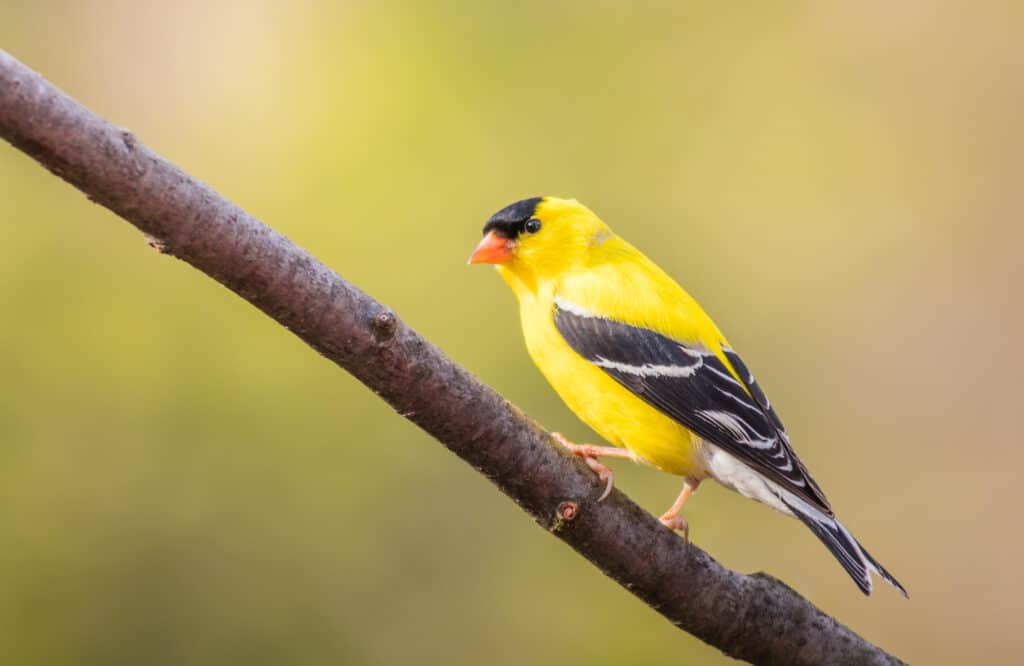
The goldfinch is one of the most common birds in North America.
©Rabbitti/Shutterstock.com
5. Hummingbirds
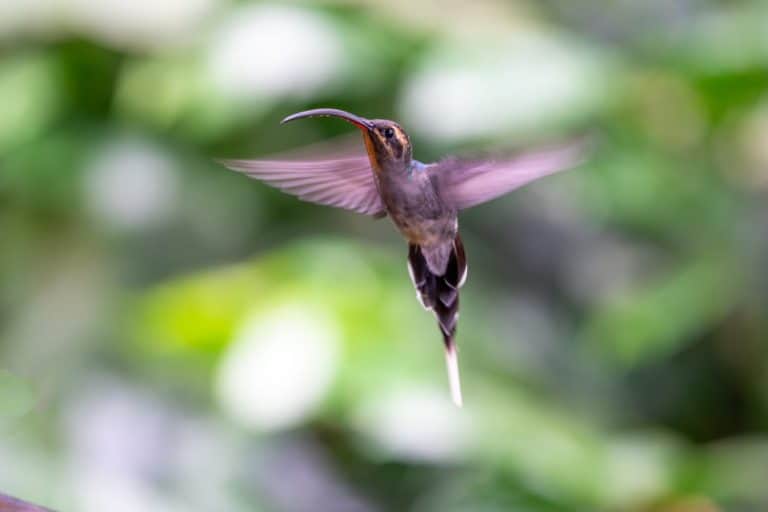
Nearly all North American hummingbirds are migratory, moving away from cold temperatures to find food sources. To support their migration, they go through a process called “fattening up.” This is a method through which they store fat that will sustain their flights south.
Hummingbirds fly south to Mexico and Central America to escape cold winter temperatures that can make it difficult to find food or build nests. Some hummingbirds like the ruby-throated hummingbird fly non-stop across the Gulf of Mexico, while others take the overland route. Hummingbirds’ main food sources are insects, larvae, spiders, mosquitos, insect eggs, and nectar which are hard to find in winter.
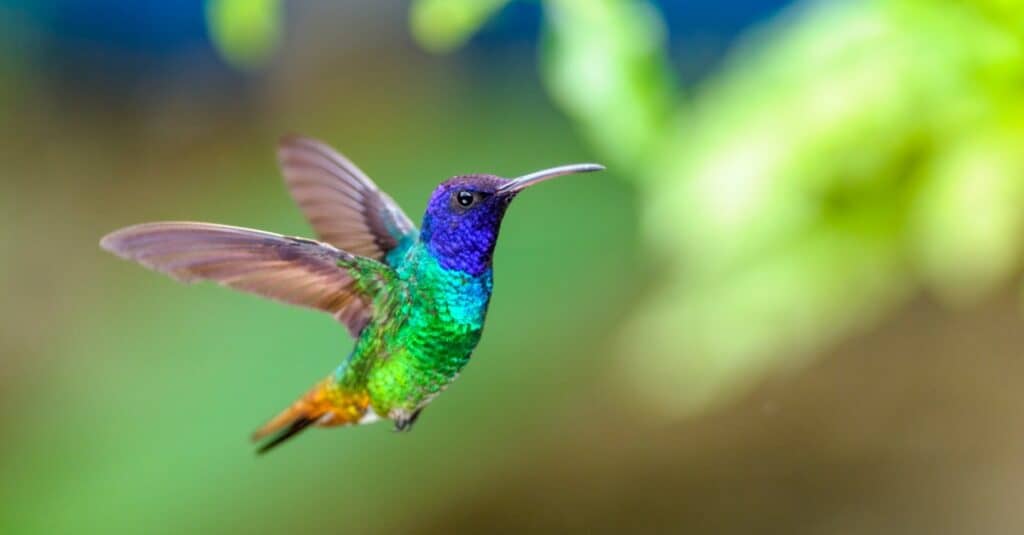
Hummingbirds are migratory birds that move to warmer climates to find food sources.
©iStock.com/photofxs68
6. Mourning Doves
Mourning doves (Zenaida macroura) are partial migrants, with some populations traveling long distances while others remain year-round. Migratory populations usually fly to the southern U.S. and Mexico south from September to early November to find food sources such as grains, seeds, and fruits.
They fly low in flocks for thousands of miles to their new temporary home before they migrate back to their breeding grounds in the spring. Birds in the central and southern parts of the U.S. may only migrate a few hundred miles, or they may remain year-round residents.

Northern mourning dove populations usually migrate south from September to early November.
©Phoo Chan/Shutterstock.com
7. Sandhill Cranes
Sandhill cranes (Antigone canadensis) are large birds found throughout North America and parts of Alaska, Canada, and Siberia. These birds are known for their distinctive long-necked appearance, reddish foreheads, and gray body and wing feathers. These birds migrate to their wintering grounds in the southern United States and Mexico beginning in late September through December, depending on the region.
They typically spend the winter months feeding on grains, seeds, and insects before heading north when temperatures rise again in the spring, generally late February through April. Approximately 80% of the world’s sandhill cranes, more than 500,000 birds, stop to rest and feed along Nebraska’s Platte River before continuing north.
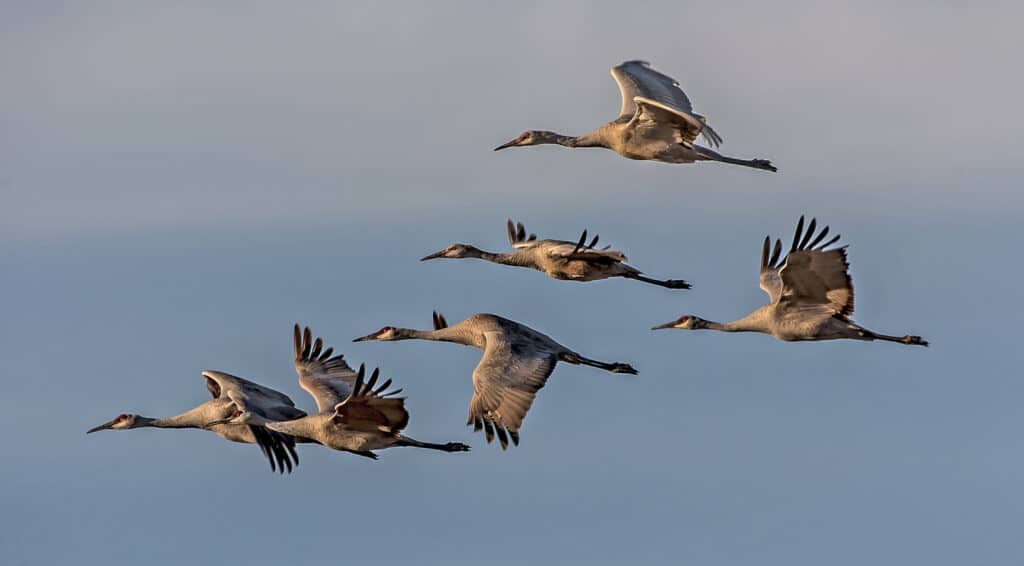
Sandhill cranes are known to stop and rest along Nebraska’s Platte River during spring migration.
©Tom Zeman/Shutterstock.com
8. Scarlet Tanagers
Scarlet tanagers (Piranga olivacea) are medium-sized North American songbirds easily recognizable by their bright red feathers and black wings. They are most commonly found in deciduous and mixed forests of eastern North America.
Scarlet tanagers feed mainly on large-bodied insects, such as grasshoppers, beetles, and caterpillars. During summer, these birds can be seen foraging high in the trees or flying from tree to tree, searching for fruits. Scarlet tanagers migrate south for food.
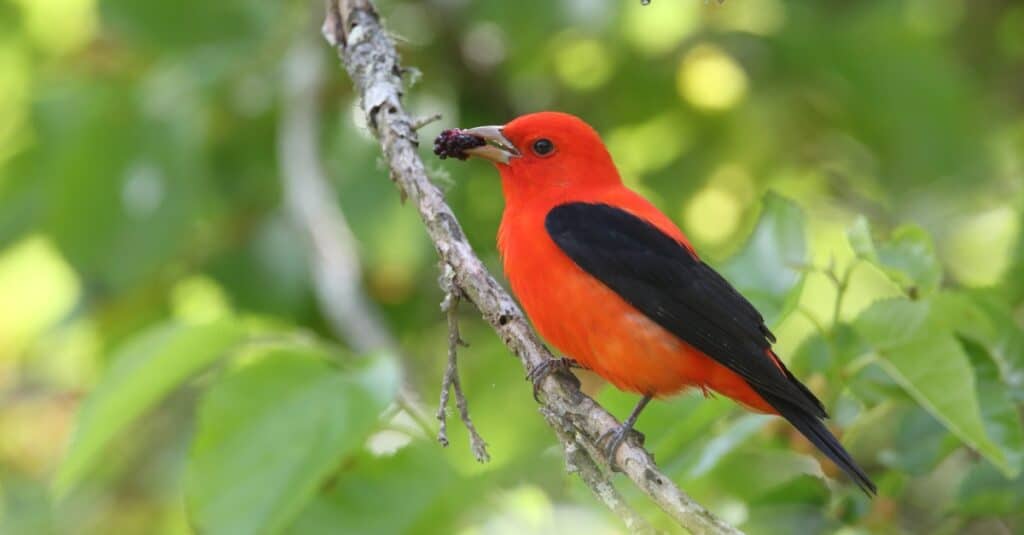
Scarlet tanagers feed mainly on large-bodied insects, such as grasshoppers, beetles, and caterpillars.
©iStock.com/BrianLasenby
9. American White Pelicans
American white pelicans (Pelecanus erythrorhynchos) are a species of large water birds native to North America. These birds are among the largest on the continent. They nest in colonies on isolated islands in freshwater lakes, marshes, and wetlands in the interior of the continent, specifically western and central North America.
American white pelicans fly south from October to November to winter on the Gulf Coast, California, and Mexico. They mainly stay near coastal waters, bays, and estuaries. On their wintering grounds pelicans typically forage during the day, but when they return north to breed season, they typically forage at night.
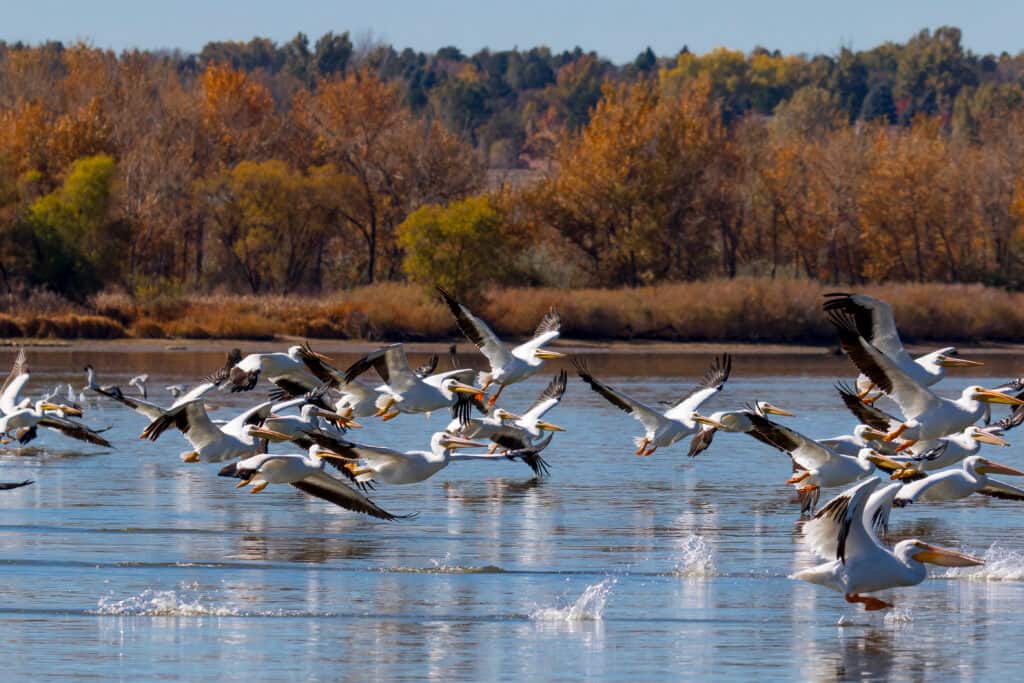
American white pelicans can be found in temperate, boreal, subtropical, and tropical wetlands.
©Images by Dr. Alan Lipkin/Shutterstock.com
10. Wood Ducks
Wood ducks (Aix sponsa) are a species of waterfowl that breed and live in North America. They inhabit wooded swamps, shallow lakes, marshes, ponds, and rivers with dense vegetation, making them ideal for roosting and nesting. They generally nest in the cavities of trees that are either near or over water.
Wood ducks migrate south in the fall and can be spotted along the Atlantic coast. Ducks from northern states and provinces migrate to the southern U.S., Mexico, and Cuba during the early fall. Wood ducks that live in southern regions and along the Pacific coast are considered year-round residents and do not migrate.
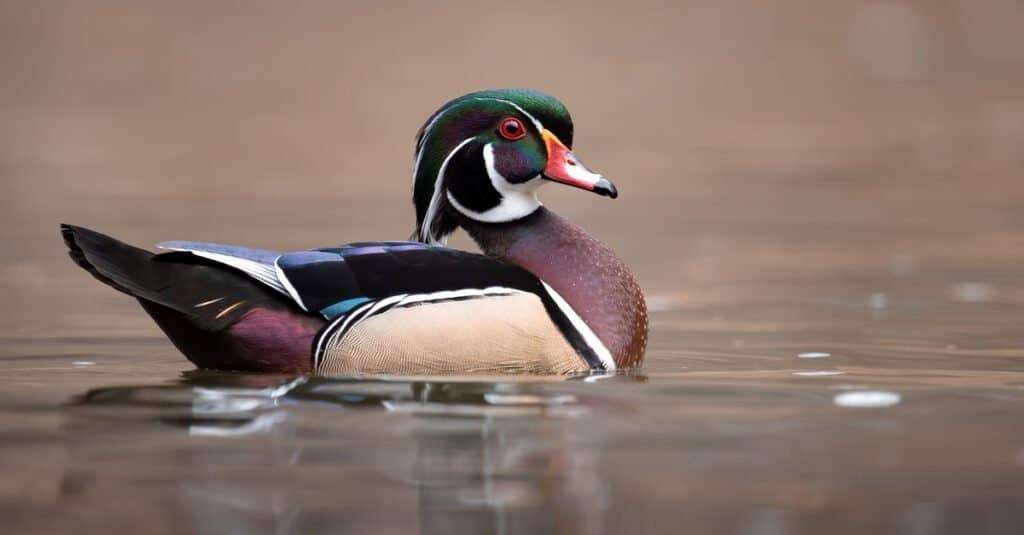
Northern wood duck populations migrate south in the fall and can be spotted on the Atlantic coast.
©Harry Collins Photography/Shutterstock.com