
Quick Take
- Those neck feathers do more than dazzle. Watch what males do with them when it counts.
- One sex gets all the glamour. The other got a very different, very practical wardrobe.
- A bird this flashy should be easy to spot, yet it's famously hard to find in the wild.
- Most of its body length is not what you'd expect. Wait until you see the tail math.
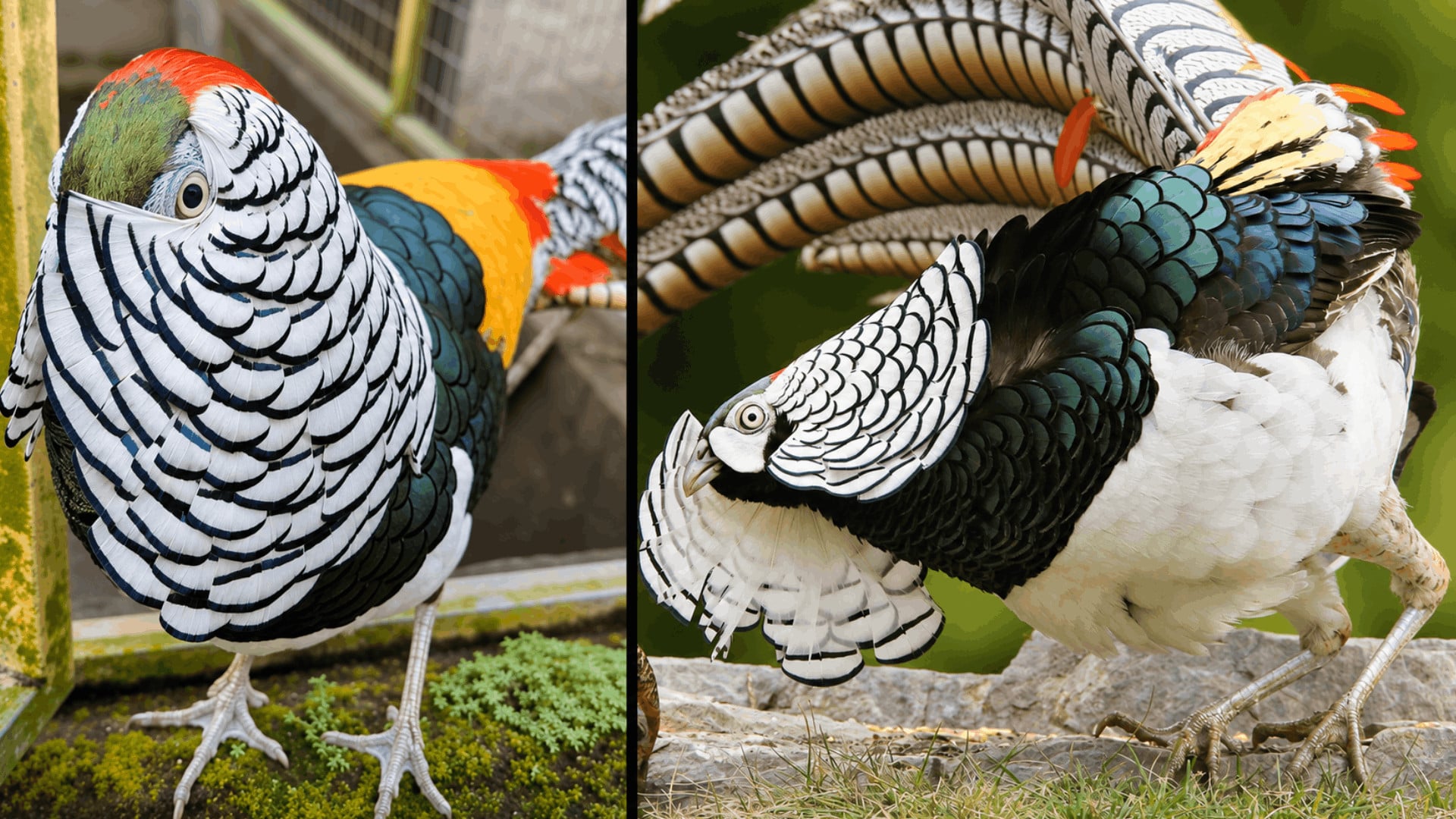
With artificial intelligence making it increasingly difficult to distinguish real animals from digital creations, Mother Nature occasionally reminds us that she has quite the imagination herself. The male Lady Amherst’s pheasant is a spectacular example.
From its intricately patterned neck feathers to its brilliant red, yellow, blue, and green plumage, the bird featured in this video looks like something straight out of a fantasy movie.
A Bird Dressed to Impress
It’s difficult to decide which feature of this pheasant is the most impressive. Its overlapping black-and-white neck feathers resemble individually painted scales, while its metallic green body feathers almost look like a suit of armor. Add in a bright red crest, golden-yellow rump, and extraordinarily long tail, and you’ve got one remarkably decorated bird.
Those elaborate neck feathers aren’t just for show, either. During courtship, males can spread their feathered cape around their heads, partially concealing their faces as they perform an elaborate dance to attract females.
Female Lady Amherst’s pheasants, meanwhile, have considerably less flashy brown plumage that helps them blend into their surroundings.
Male and female plumage
-
Male
- red
- yellow
- blue
Red crest, golden-yellow rump
-
Female
- brown
Helps them blend into their surroundings
Where Do Lady Amherst’s Pheasants Live?
Native to southwestern China and northern Myanmar, these birds inhabit dense forests, bamboo thickets, and wooded hillsides. Despite their extravagant appearance, they’re surprisingly elusive in the wild.
Adult males can reach nearly four feet in length, although their impressive tails account for roughly two-thirds of that measurement.
Like other pheasants, they spend much of their time foraging along the ground for seeds, leaves, roots, insects, and other small invertebrates. Although capable of flight, they generally prefer running when threatened and will fly into trees to roost at night.
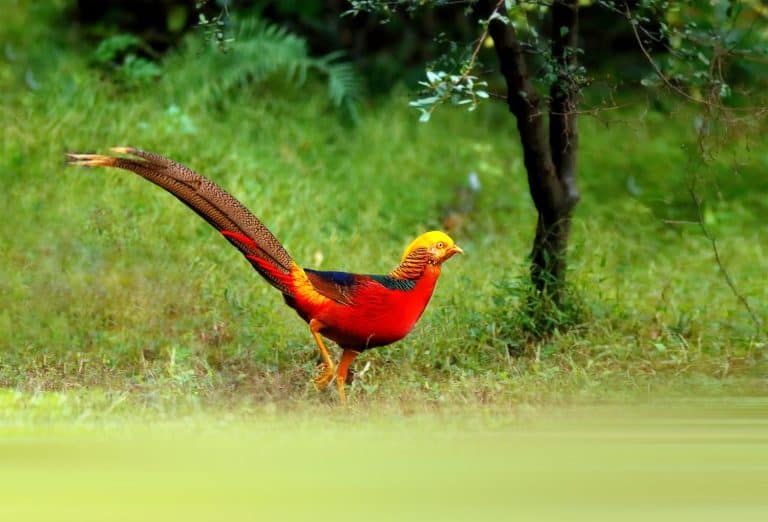
They’re also closely related to another exceptionally colorful bird, the golden pheasant.