
Quick Take
- 70 years of total isolation transformed the Demilitarized Zone (DMZ) in Korea from the deadliest border into an ecological sanctuary.
- Lethal landmines have counterintuitively preserved the DMZ as a biological time capsule for nearly 6,200 species.
- Vulnerable species like the Asiatic black bear and Siberian musk deer now flourish in the DMZ.
- The zone serves as a critical stopover and sanctuary for millions of migratory birds.
Established along the 38th parallel after World War II, the Korean Demilitarized Zone (DMZ) forms a 155-mile barrier that splits the Korean Peninsula. Created by the 1953 armistice that ended the Korean War, the DMZ is a 2.5-mile-wide buffer zone between North and South Korea. On paper, it is the most heavily fortified border on Earth. More than a million landmines are buried in its soil. Roughly 30,000 soldiers guard its perimeter with fences, sensors, and surveillance towers. Yet inside, this tense strip of land has become one of the world’s most unusual ecological sanctuaries.
For Korea’s wildlife, the DMZ has become a kind of militarized Eden. Weapons meant to kill have inadvertently protected life by keeping away the most destructive predator of all: humans. Over the past 70 years, the absence of farming, logging, and development has allowed nature to reclaim the landscape, transforming it into a hidden wilderness supporting nearly 6,200 species.
The “no-man’s land” of the DMZ reveals a striking security paradox: The more dangerous a landscape becomes for humans, the safer it becomes for wildlife. In this case, at least, nature thrives not despite war, but because war forced humans to leave.
How War Created an Ecological Vacuum
The Korean War began on June 25, 1950, when North Korea invaded the South. Although the conflict lasted just over three years, its destruction was immense. From the Nakdonggang River to the Yalu River, roughly 80 percent of the peninsula’s infrastructure and landmass was devastated.
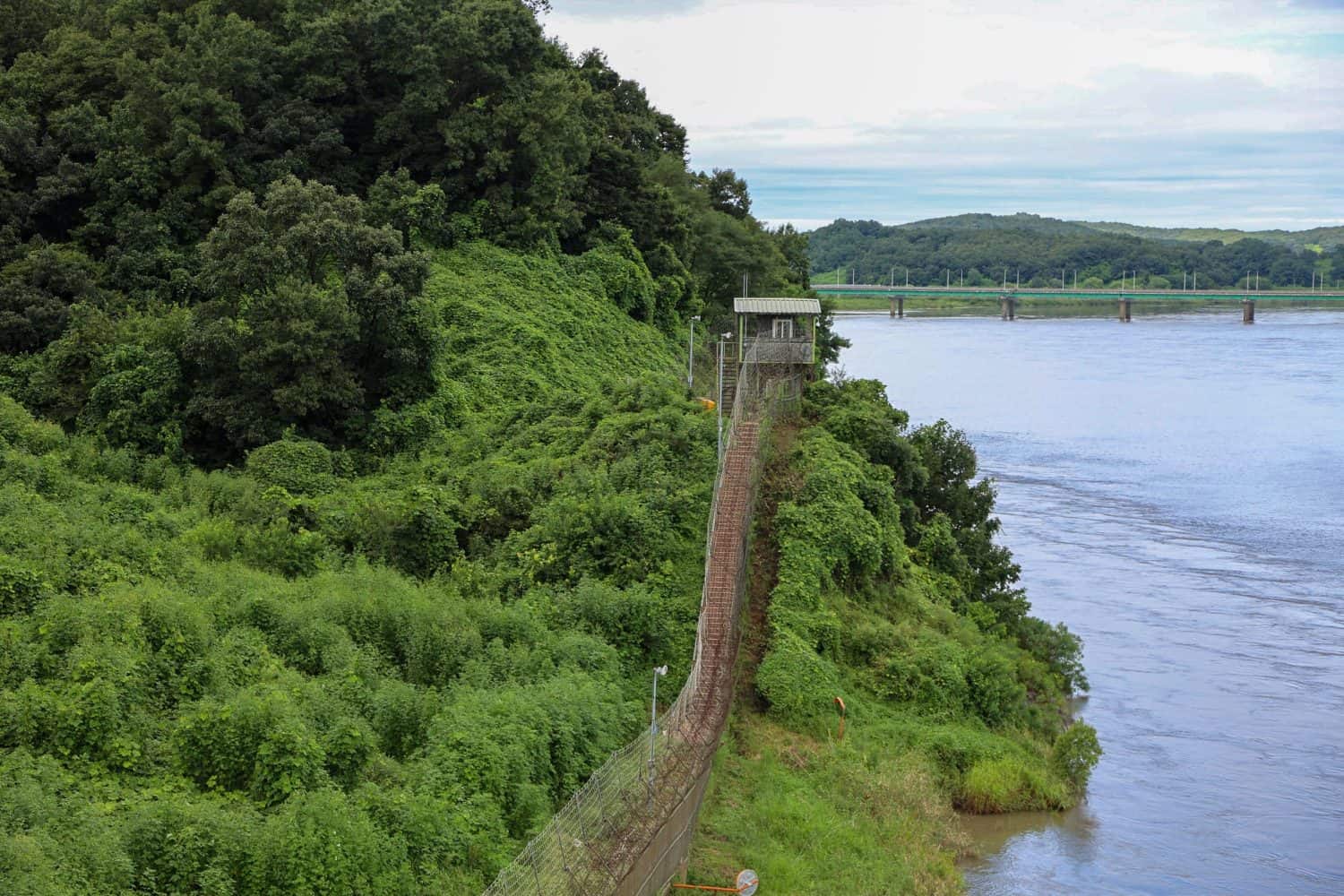
The rich habitats within the DMZ include coastal estuaries, wetlands, and forests.
©Barney.DC/Shutterstock.com
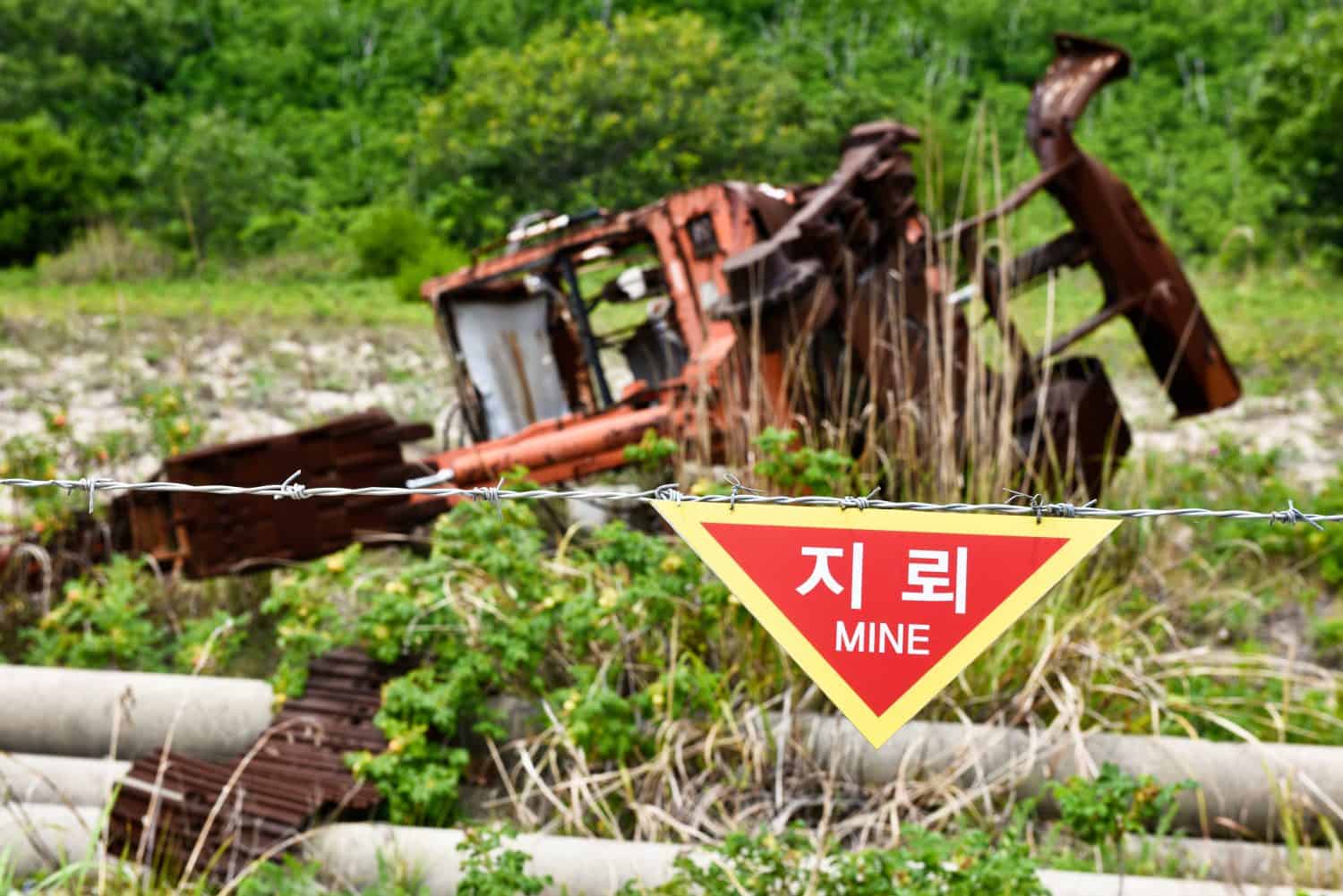
Armistice negotiations began in 1951 and culminated in the 1953 agreement that created the DMZ. The treaty effectively froze time across a narrow strip of land stretching across the peninsula. However, legal restrictions alone do not keep people away. The real deterrent is the estimated one million landmines scattered across the zone. These make logging, poaching, development, and even casual exploration deadly.
As a result, the DMZ has existed for seven decades without farms, highways, or cities, allowing the landscape to gradually return to its pre-industrial state. Within the borders of the DMZ, trees can grow for decades without the threat of an axe. Rivers meander freely without being forced into concrete channels. The high-voltage fences and thermal sensors, originally built to stop soldiers and defectors, now serve as the world’s most effective anti-poaching system.
The Rare and Hidden Predators of the DMZ
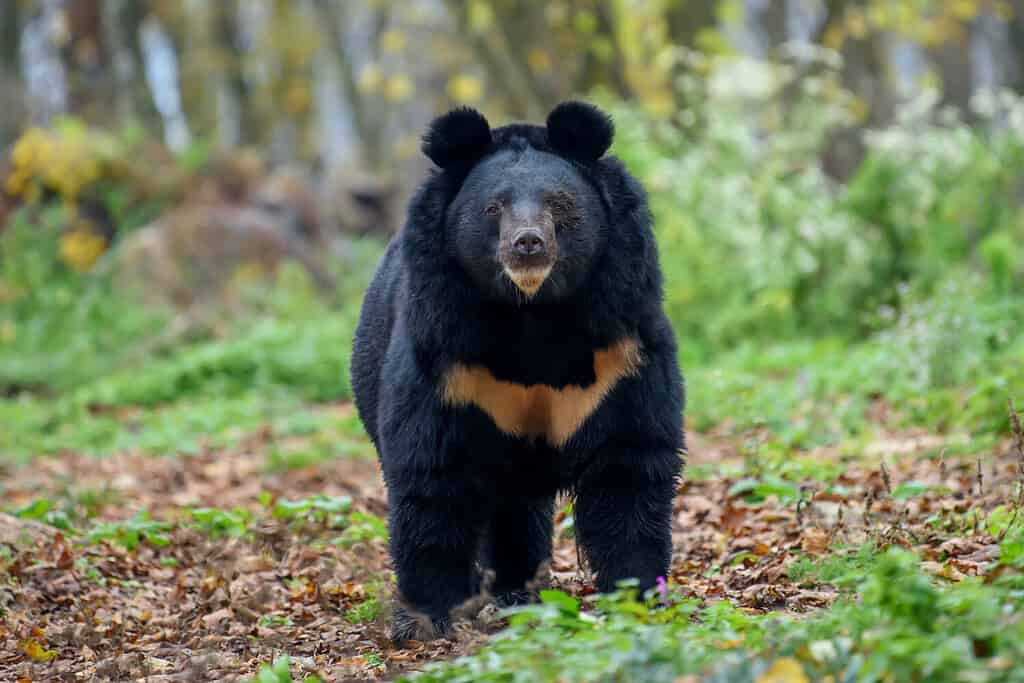
The white crescent shape easily identifies this bear species, which is thriving in the DMZ, where the species is raising its young in the eastern mountains.
©Volodymyr Burdiak/Shutterstock.com
The DMZ is no longer just a border; it has become a thriving, hidden refuge for wildlife. Here, species that vanished elsewhere on the peninsula are making a comeback in the absence of humans.
The Asiatic black bear (Ursus thibetanus) is often called the “moon bear” in Korean folklore because of the pale crescent shape on its chest. These bears raise their cubs in the rugged eastern mountains of the DMZ, safe from the interference of human hikers and hunters.
The Siberian musk deer (Moschus moschiferus) is a shy, fanged species that depends on deep, undisturbed forest habitat. While this habitat has largely vanished across the rest of the developed peninsula, it remains intact within the DMZ.
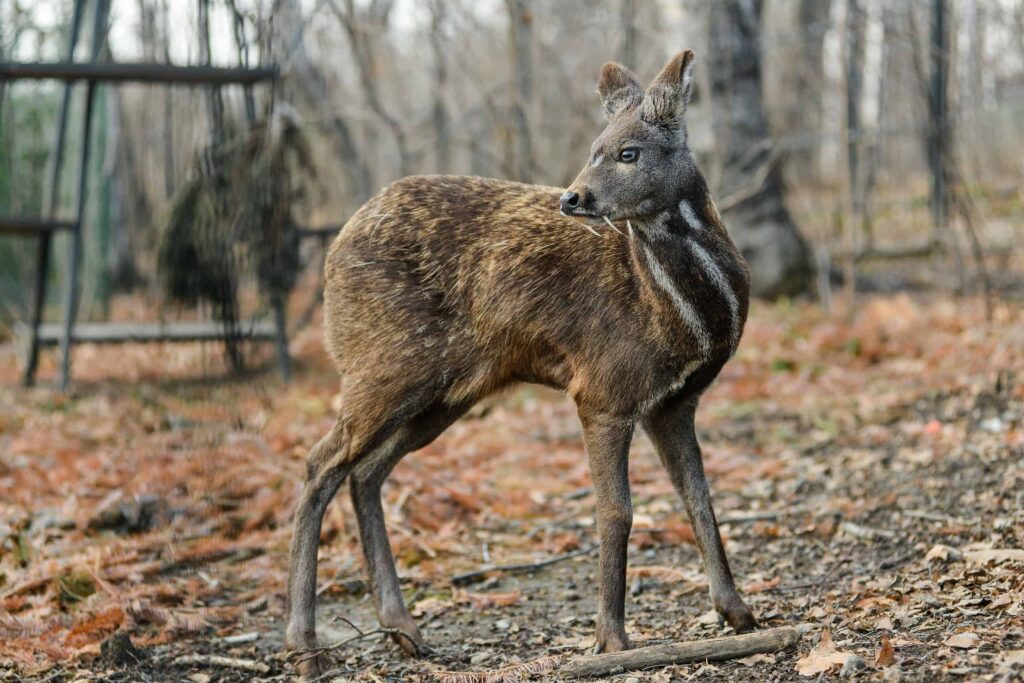
Adult male Siberian musk deer grow sharp upper canines that can reach 4 inches long.
©Suvorov_Alex/Shutterstock.com
The DMZ’s unique ecosystem thrives from the ground up. With no pesticides or agriculture, insect populations have flourished. These support about 1,120 species of plants and wildflowers that fuel the entire food web.
In this strange wilderness, the distant rumble of a military vehicle is little more than background noise to an ecosystem that has largely moved on from human influence.
A Global Sanctuary for Birds
While landmines keep the ground in a state of frozen tension, the sky above the DMZ is wide open. The border lies along the East Asian-Australasian Flyway, one of the world’s great migration routes. Each year, millions of birds pass through the region. The protected wetlands and rice paddies near the DMZ have also become a crucial resting place.
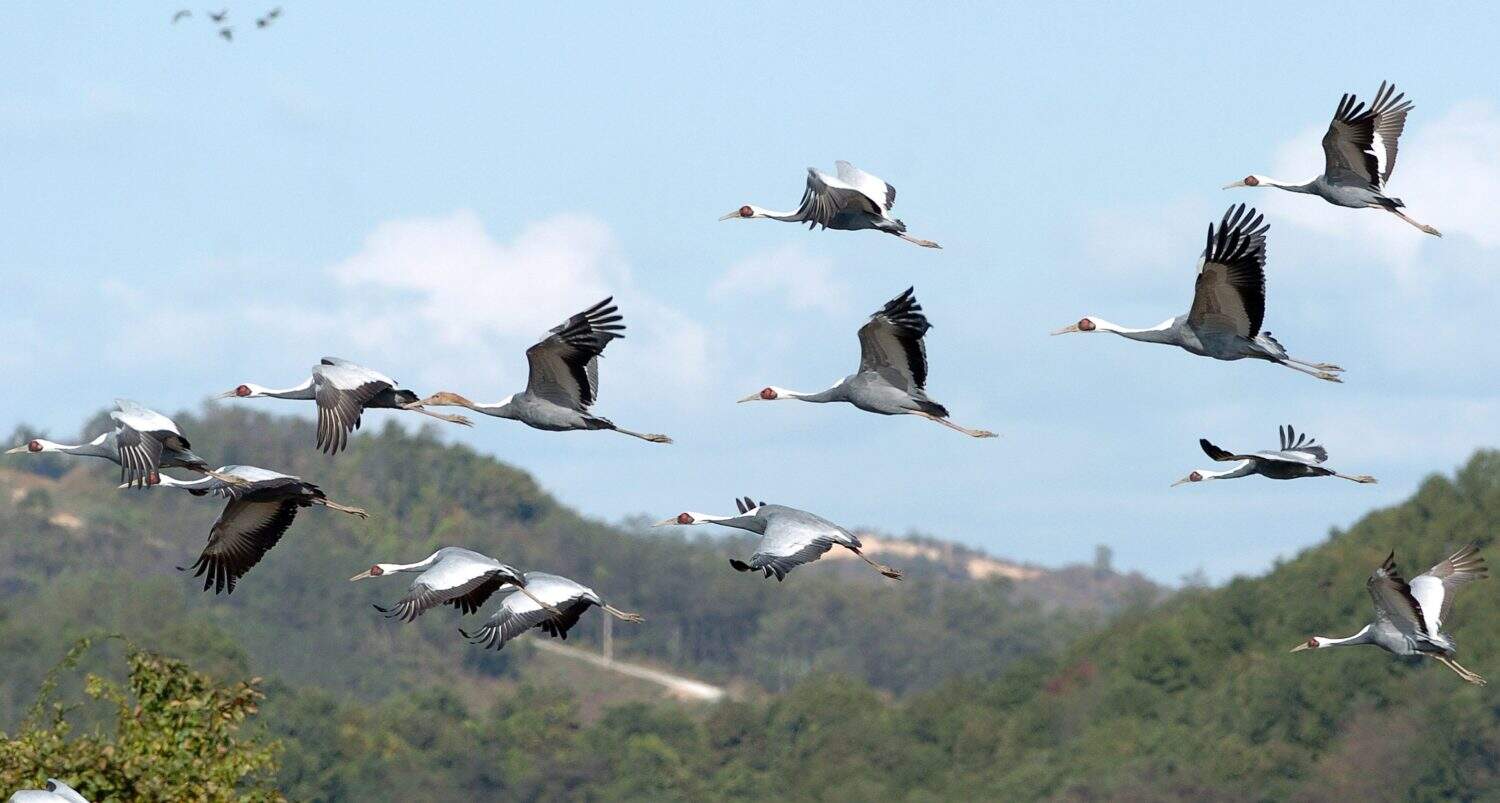
Both red-crowned cranes and white-naped cranes are endangered.
©SEMOYEO/Shutterstock.com
Some of the world’s rarest avian species rely on this corridor. The black-faced spoonbill (Platalea minor), a globally threatened waterbird, feeds in the untouched tidal flats. The massive cinereous vulture (Aegypius monachus), sometimes called the “monk of the sky,” glides silently above abandoned guard posts and watchtowers.
However, the most iconic feathered visitors are the cranes. Seven of the world’s 15 crane species use the DMZ as a haven, including the elegant red-crowned crane (Grus japonesis) and the white-naped crane (Antigone vipio). In Korean culture, cranes symbolize peace and longevity. Ironically, these birds have chosen the world’s most militarized border as their refuge.
Cranes are shy and require vast, undisturbed wetlands to survive—something almost impossible to find on a densely populated peninsula with 75 million people. However, the high-security DMZ provides the silence that these birds need. Just south of the border lies the Civilian Control Zone (CCZ), where development restrictions preserve traditional rice farming. These paddies provide fallen grain for the cranes to feed on. The nearby minefields also serve as a fortress where the birds can roost safely at night.
A Landscape Reclaimed by Nature
Over time, the DMZ has become a vast experiment in ecological recovery. Without pesticides or landscaping, around 1,200 native plant species have reclaimed the land. Botanists increasingly view this region as a living genetic vault, preserving rare flora that has vanished elsewhere.
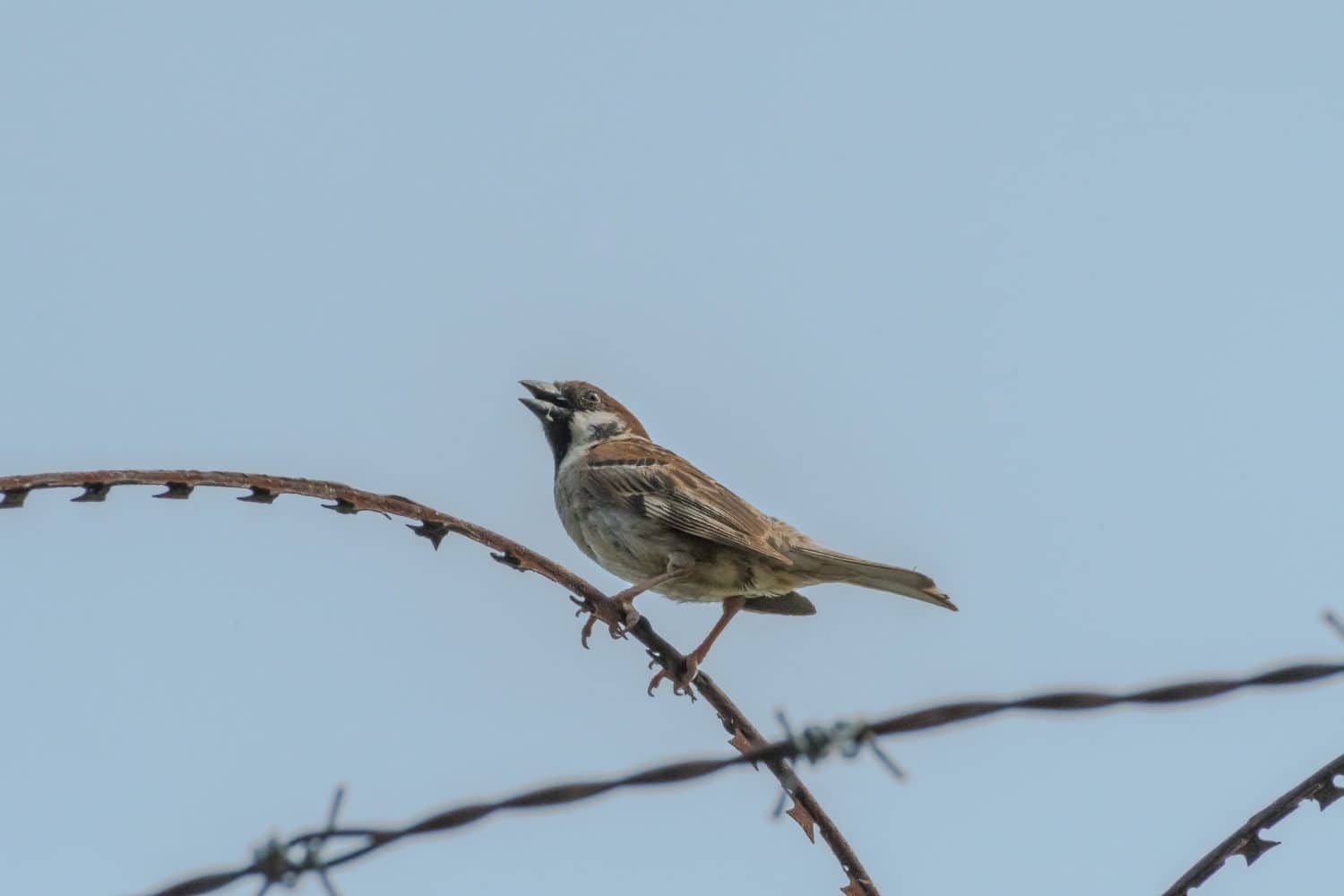
About 100 of South Korea’s 267 endangered species live in the DMZ.
©PapilionemK/Shutterstock.com
Even the relics of war have been absorbed into the lush ecosystem. Old trenches have filled with soil and roots. Abandoned houses stand half-consumed by moss and vines, their courtyards transformed into nurseries for deer and wild boars. The railway lines that once linked Seoul to Pyongyang have become completely overgrown. These rusted paths now function as secret corridors for small mammals navigating the dense forest. The concrete anti-tank barriers known as Dragon’s Teeth are now softened by lichen and leaf litter. Today, they serve as perches for kingfishers and as sunning stones for lizards.
The Fragile Future
The most haunting irony of the DMZ is that peace—the outcome hoped for since 1953—could become the region’s greatest ecological threat. If the border opened tomorrow, the land would instantly become some of the most valuable real estate on the Korean Peninsula. Economic pressure could quickly replace wilderness with railways, highways, factories, and housing.
In fact, proposals for a future unified Korea already envision trans-Korean rail lines and major infrastructure projects crossing the region. Such development could slice through migration corridors, drain wetlands used by cranes, and fragment habitat for animals like the Asiatic black bear and Siberian musk deer.
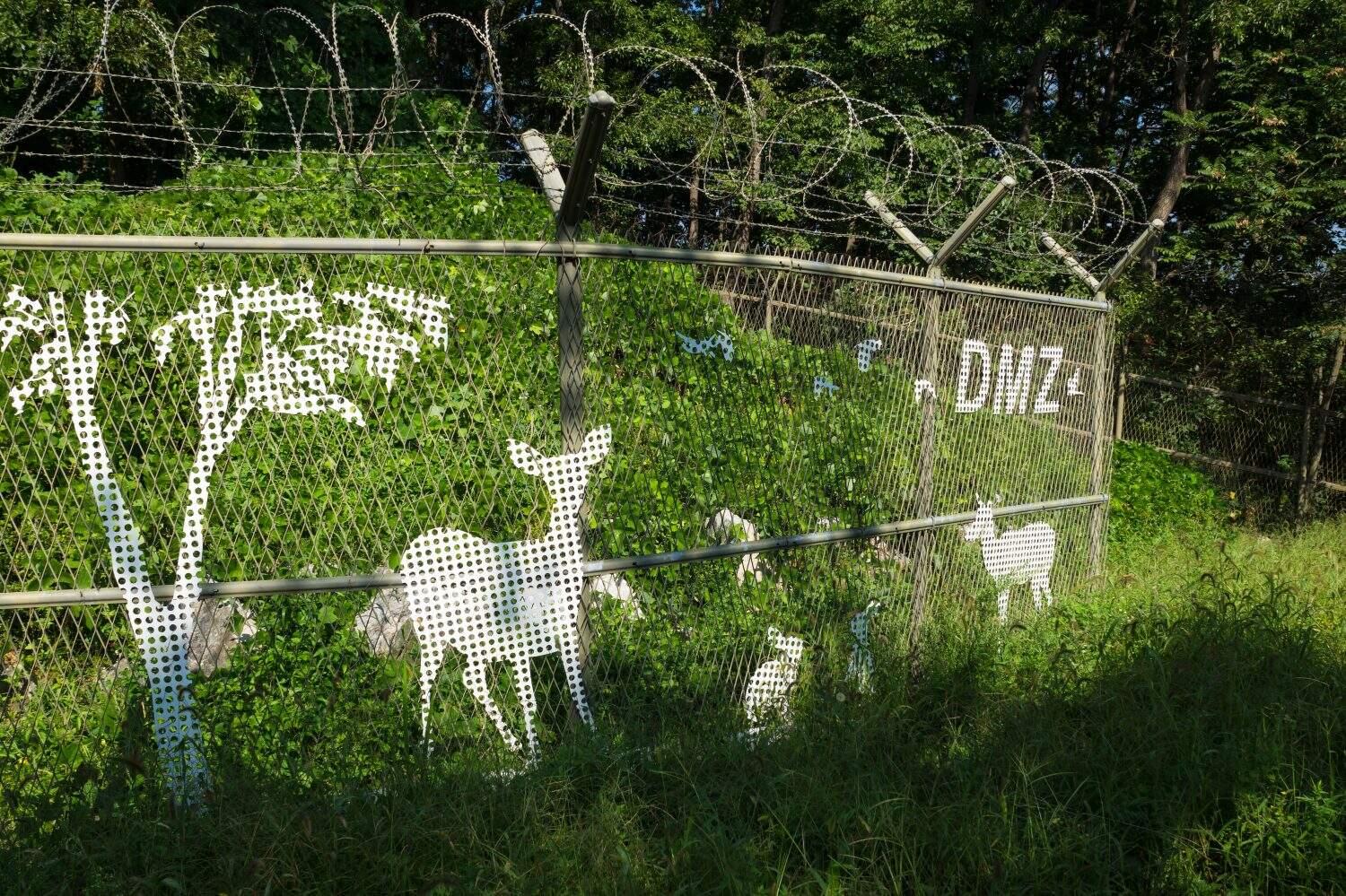
Though currently protected, the future of wildlife in the DMZ remains uncertain.
©Loes Kieboom/Shutterstock.com
To prevent this, conservationists, including researchers at the DMZ Ecology Research Institute, are pushing for a new vision. Rather than viewing the DMZ as a construction site or relic of war, they propose protecting it as a UNESCO Biosphere Reserve or an international Peace Park — a place where biodiversity, carbon storage, and ecological recovery are valued more than development.
Lessons from a No-Man’s Land
The story of the DMZ is a powerful reminder of nature’s vulnerability and resilience. For 70 years, a landscape defined by weapons and political division has paradoxically become one of the least human places on Earth. In the shadow of landmines and guard towers, forests have returned, wetlands have flourished, and rare animals have reclaimed lost ground. The world’s deadliest border now shelters life that has disappeared almost everywhere else.
And in this strange, silent wilderness, the DMZ reveals a humbling truth: Sometimes the most powerful conservation strategy is not management or technology. Sometimes, the best thing we can do for the planet is to step away and let it recover on its own.