
Quick Take
- Up to 1 million Sandhill Cranes are expected to converge on the Platte River during the 2026 migration.
- Narrowing river channels—often less than 400 feet wide—can create nighttime security gaps for roosting cranes, potentially impacting the 2026 migration if not managed.
- Harvested cornfields provide a major food source, with waste grain making up a large portion of the birds’ diet during their stay.
- Pre-migration aerial surveys help monitor sediment distribution near Kearney, informing habitat management for the cranes.
Every year, Nebraska’s Platte River becomes a corridor of motion and sound as sandhill cranes arrive from the south. By mid- to late February 2026, the first birds are likely to be circling low over shallow channels, inspecting roost sites and nearby cornfields.
As winter fades, more than a million cranes funnel into this narrow valley. The combination of river channels, agricultural land, and open sky draws birds from across the Central Flyway. For residents and visitors, the migration offers a close look at how large birds manage long-distance travel. The Platte River stopover plays a central role in that journey, allowing cranes to rest, feed, and prepare for the final leg north.
Early Arrivals and Roost Selection
On cold February mornings, small groups of Sandhill Cranes appear along the river, often mixed with snow geese and watched by perched bald eagles. These early birds search for roosting sites with shallow water that allows standing sleep while limiting access for predators. Channels with firm sandbars and open sightlines attract the most use.

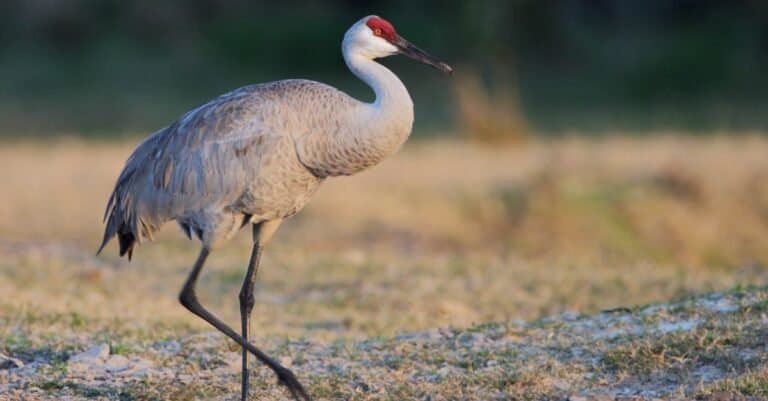
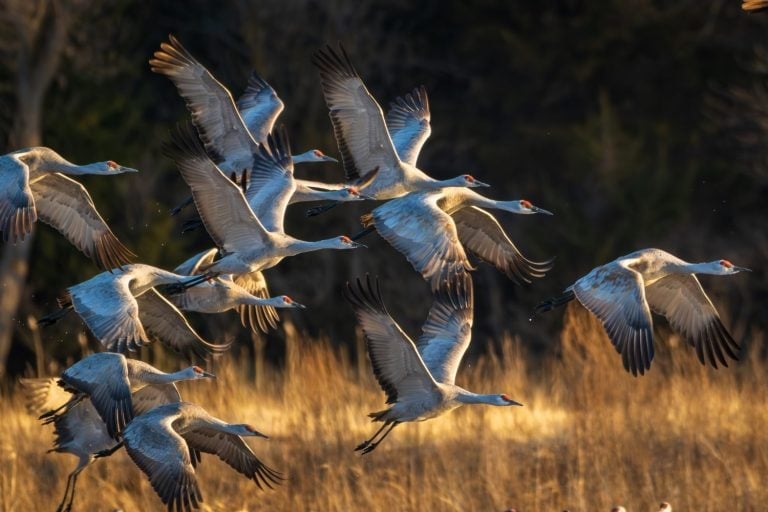
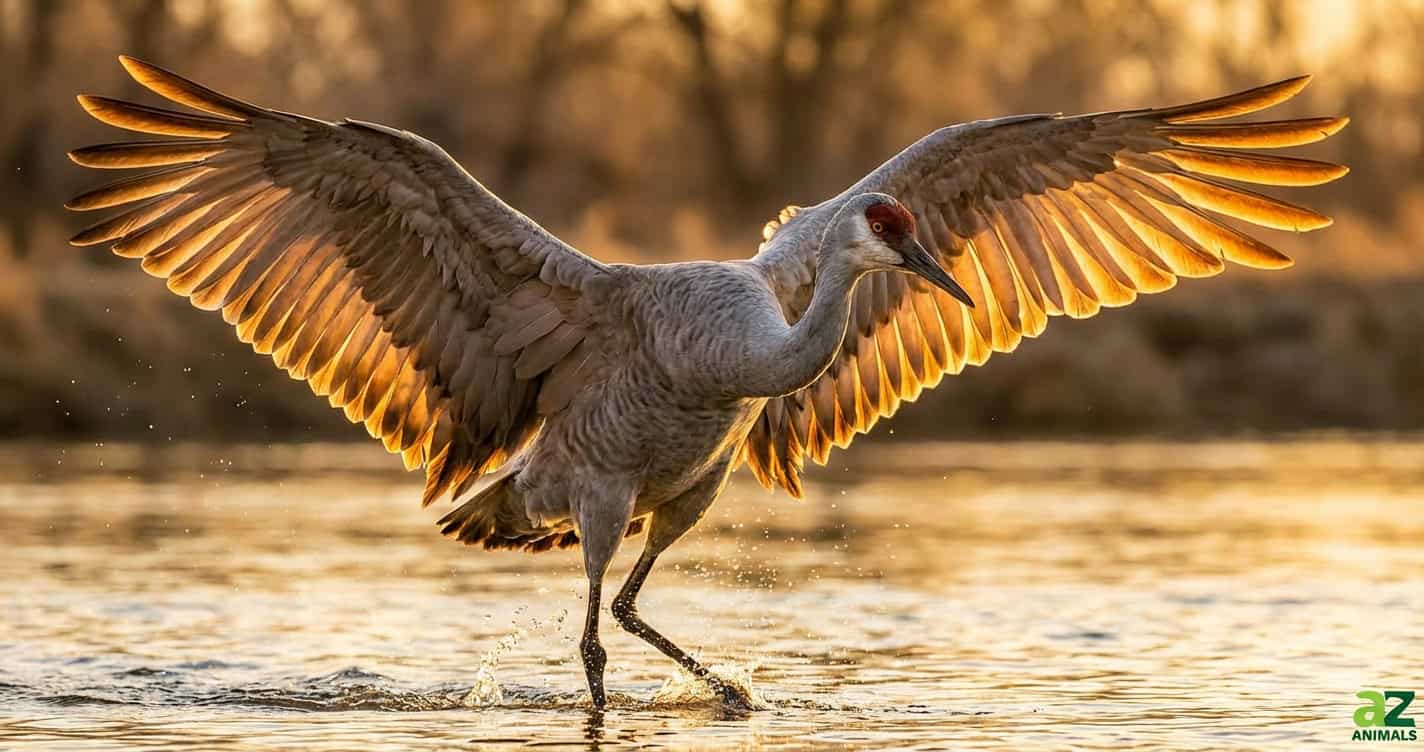
Sandhill cranes arrive in growing numbers during late winter, gathering along river corridors as spring migration begins.
©David Grimes/Shutterstock.com
Once cranes settle into suitable stretches, additional birds follow. Counts rise steadily through February as flocks concentrate near towns such as Kearney, Wood River, and Gibbon. By late winter, favored river segments may hold tens of thousands of birds packed closely together at night. Their presence signals that spring migration has entered its most active phase.
A Long Journey from Southern Wintering Grounds
The cranes that gather in Nebraska have already traveled hundreds of miles. Many winter in Texas, New Mexico, northern Mexico, and along the Gulf Coast. Tracking studies show that individuals follow established flyways, moving between wetlands and agricultural areas that offer safe rest and food.
From Nebraska, the birds continue toward breeding areas across northern Canada and Alaska, with a smaller number traveling as far as eastern Siberia. The Platte River sits near the midpoint of this route. Without a reliable staging area at this latitude, many cranes would reach breeding grounds in poor condition. The stopover allows them to rebuild energy reserves before entering regions where early spring food remains limited.
Feeding in Agricultural Landscapes
During daylight hours, cranes leave the river and spread across nearby farmland. Harvested cornfields provide a major food source, with waste grain making up a large portion of the birds’ diet during their stay. Cranes also forage in meadows and alfalfa fields, where they find earthworms, snails, and insect larvae.
Biologists estimate that corn can account for 60-90 percent of intake while cranes remain in the Platte Valley. Over several weeks, individual birds may gain close to a pound of fat, increasing body mass by roughly 20 percent. These reserves support sustained flight and help adults arrive on nesting grounds ready to defend territories and raise young.
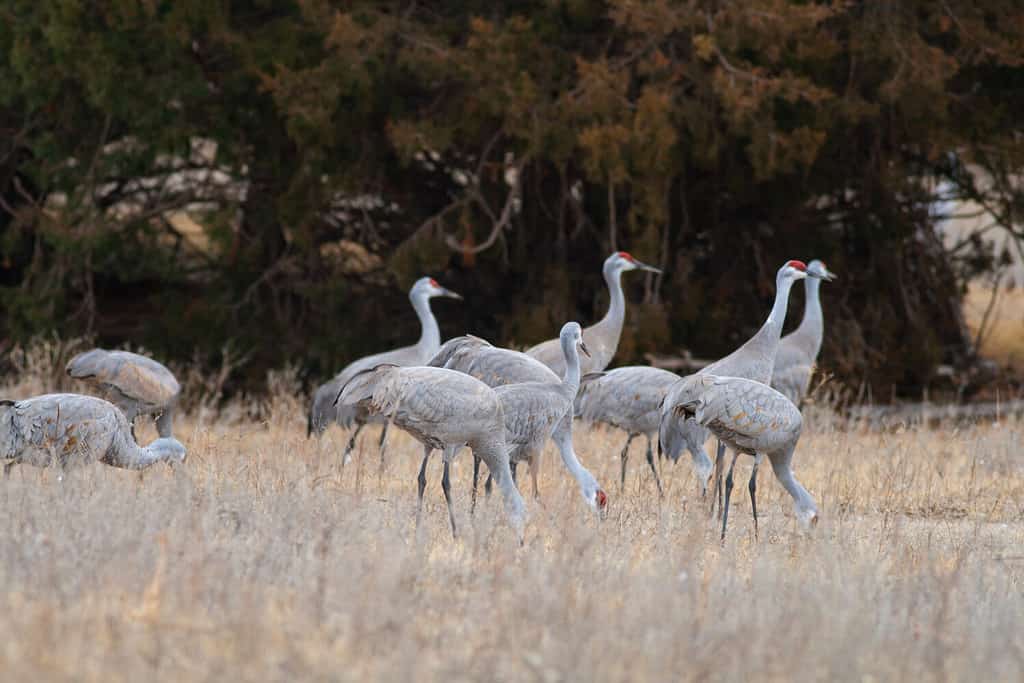
Sandhill cranes forage across open fields during the day, feeding heavily to build fat reserves that fuel their long migration north.
©Benjamin Tillotson/Shutterstock.com
River Conditions That Favor Cranes
The Platte River’s physical structure suits crane roosting needs. In central Nebraska, the river spreads wide and shallow, forming braided channels with sandy bars just above or below the surface. Cranes favor water around six inches deep, which allows standing rest while keeping most predators at bay.
Historically, seasonal flooding and ice movement cleared vegetation from sandbars. Modern water management has reduced those natural processes, so conservation groups now step in. Agencies manage flows and remove encroaching trees to keep channels open. Wet meadows and crop fields surrounding the river complete the habitat mix, creating one of the densest crane staging areas on the planet.
Daily Behavior Along the Platte
A full day along the Platte reveals a predictable rhythm. Before sunrise, cranes begin calling from the river, growing louder as light increases. Groups lift off and head toward feeding areas shortly after dawn. Midday hours bring feeding, resting, and social interaction across fields and wetlands.
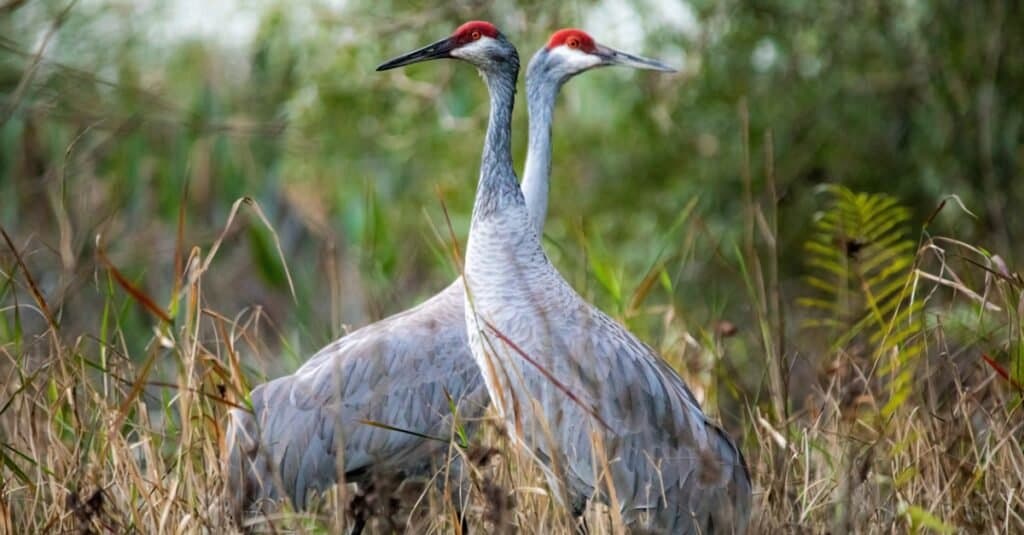
Sandhill cranes perform courtship dances during their Platte River stopover, strengthening pair bonds as part of their daily routine.
©iStock.com/GummyBone
Courtship dances occur throughout the stopover. Pairs bow, leap, and toss plant material into the air while flapping their wings. These displays reinforce bonds that often last for life. Near sunset, cranes return to the river in long lines, using rising air currents to reduce effort. Once settled, their combined calls carry across the valley well into the night.
Energy Management During Migration
Research into mid-continent Sandhill Crane migration highlights careful energy planning. Birds time their arrival in Nebraska to match the availability of waste grain. This strategy allows rapid refueling without excessive foraging effort. Telemetry data show that cranes adjust stopover length based on body condition and food access.
When agricultural practices reduce residue in one region, some cranes shift to additional staging sites, including areas farther north. Stored fat becomes critical later in migration, especially when birds cross remote landscapes with little early spring food. Spending several weeks in the Platte Valley ensures they leave with reserves sufficient for breeding success.
Peak Migration and Viewing Seasons
Sandhill cranes migrate through the central United States twice each year, but the spring movement through Nebraska is by far the most significant. In most years, cranes begin arriving in noticeable numbers by mid-February, with peak concentrations from early March through early April, although weather can shift the timing. During this period, daily counts in the central Platte River corridor may exceed one million birds as a large portion of the North American population gathers to rest and refuel, creating the well-known migration that draws visitors from around the world.
In fall, cranes move south again between late September and November, but the migration is more spread out. Birds travel in smaller groups, stay for shorter periods, and do not concentrate in Nebraska the way they do in spring, making sightings quieter and less predictable.
Viewing opportunities are carefully managed to protect the birds during sensitive times. Many visitors focus on dawn and dusk, when cranes leave river roosts in the morning and return in the evening, producing the highest activity. Daytime viewing along public roads allows people to watch feeding flocks without disturbing roosting areas, and live camera feeds provide a way to observe the migration remotely.
Other Wildlife Sharing the Flyway
The Platte Valley supports far more than cranes during spring migration. Large flocks of snow geese pass through, often filling nearby wetlands. Ducks and other waterfowl use the same stopover habitats. Raptors, including red-tailed hawks and peregrine falcons, hunt over fields and river channels.
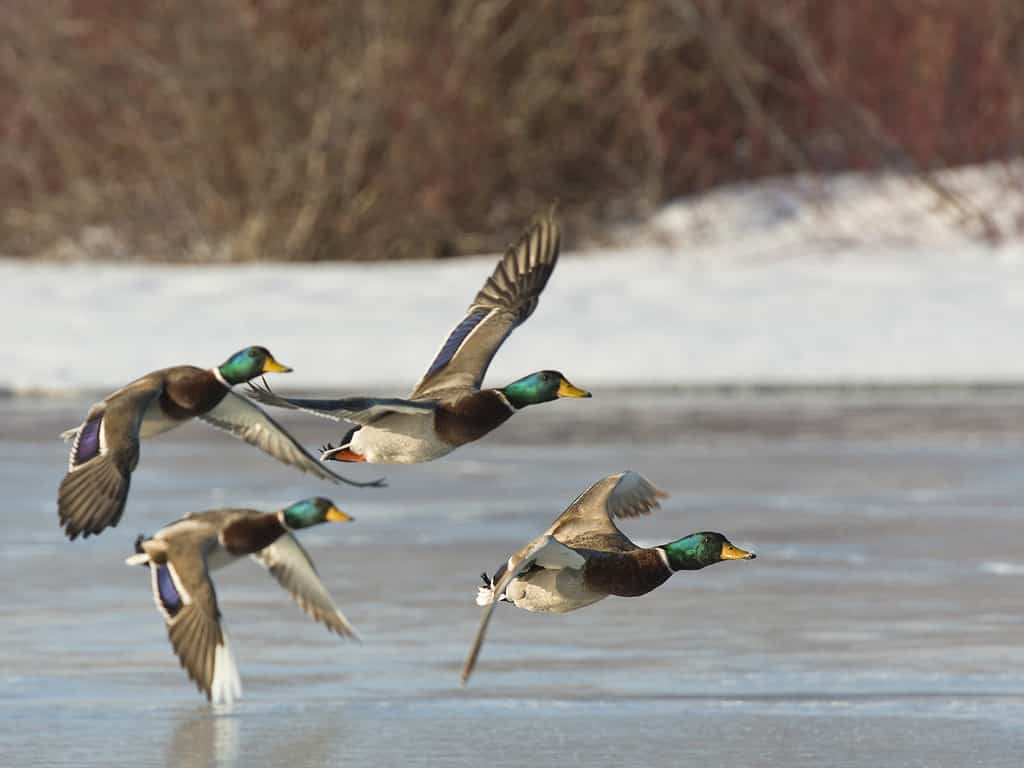
Mallard ducks travel through the Platte Valley during migration, sharing wetlands and flyways with many other bird species.
©SteveOehlenschlager/iStock via Getty Images
Songbirds and shorebirds also rely on the valley as a stepping-stone north. The overlap of species means observers can encounter dozens of birds in a single day. This concentration reflects the importance of the Central Flyway as a shared migration route for species with very different needs.
Conservation Efforts in the Platte Valley
Because so many cranes depend on a narrow stretch of river, the Platte Valley has become a focus of long-term conservation planning. Organizations partner with landowners to manage grazing, maintain open channels, and limit tree growth along sandbars. These actions preserve the wide, visible river structure cranes require.
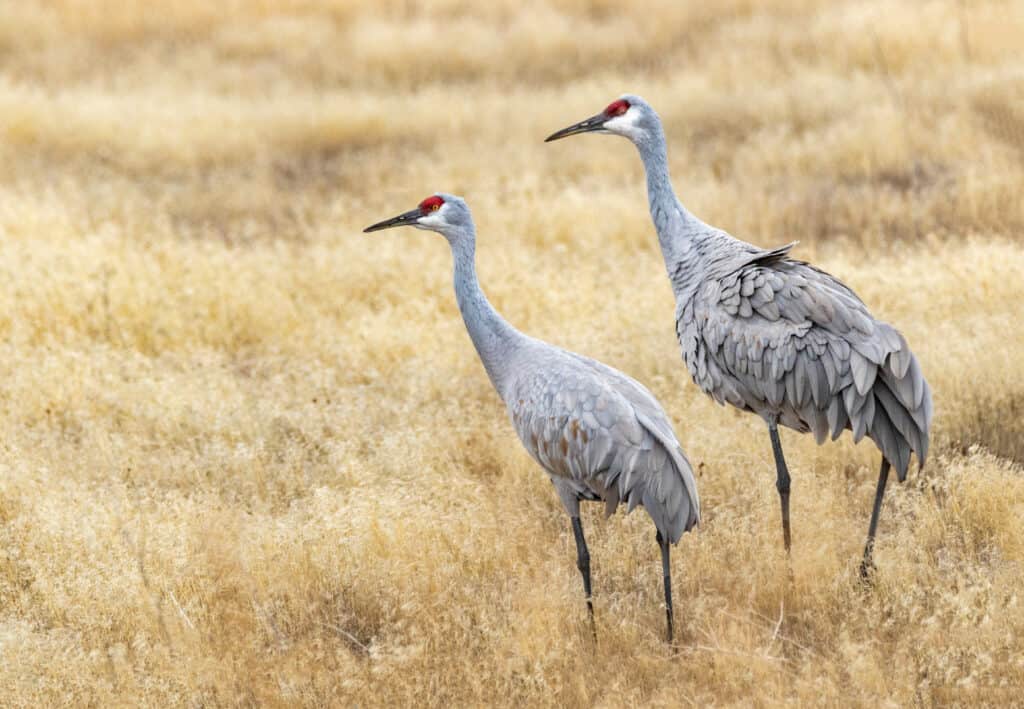
Sandhill cranes feed in open fields along central Nebraska’s Platte River, where visitors can spot large flocks during daylight hours.
©Michael Chatt/Shutterstock.com
Farmers also play a role. Practices that leave some waste grain after harvest support migrating birds without major changes to production. Wildlife agencies promote viewing guidelines that reduce disturbance, asking visitors to remain on designated roads and platforms. Together, these efforts support cranes while balancing agricultural use.
Where to See Sandhill Cranes in Nebraska
Nebraska offers several well-known locations for viewing Sandhill Cranes during migration. The central Platte River region between Grand Island and Kearney hosts the largest concentrations. The main sandhill crane hub in Nebraska is the Crane Trust Nature & Visitor Center, located along the Platte River near Kearney, right in the heart of the spring migration corridor. It is one of the best places in the state to learn about cranes, with indoor exhibits, riverfront trails, and guided viewing opportunities during migration season. The visitor center also has a well-stocked gift shop that sells crane-themed books, artwork, clothing, and Nebraska wildlife souvenirs, making it a popular stop for visitors who want something to take home.
Nearby viewing spots such as the Alda Sandhill Crane Viewing Deck and public roadside turnouts complement the experience, but Crane Trust is the central place that combines watching, education, and souvenirs in one stop.
Planning a Crane-Watching Visit
Successful viewing depends on timing and preparation. Early morning and evening provide the most activity, while midday offers quieter observation of feeding behavior. Cold mornings remain common through March, so warm clothing helps during extended waits.
Binoculars or spotting scopes improve views without requiring close approach. Staying inside vehicles along roads reduces disturbance, as cranes tolerate parked cars better than people on foot. Following posted guidelines ensures that birds can rest undisturbed during a demanding phase of migration.
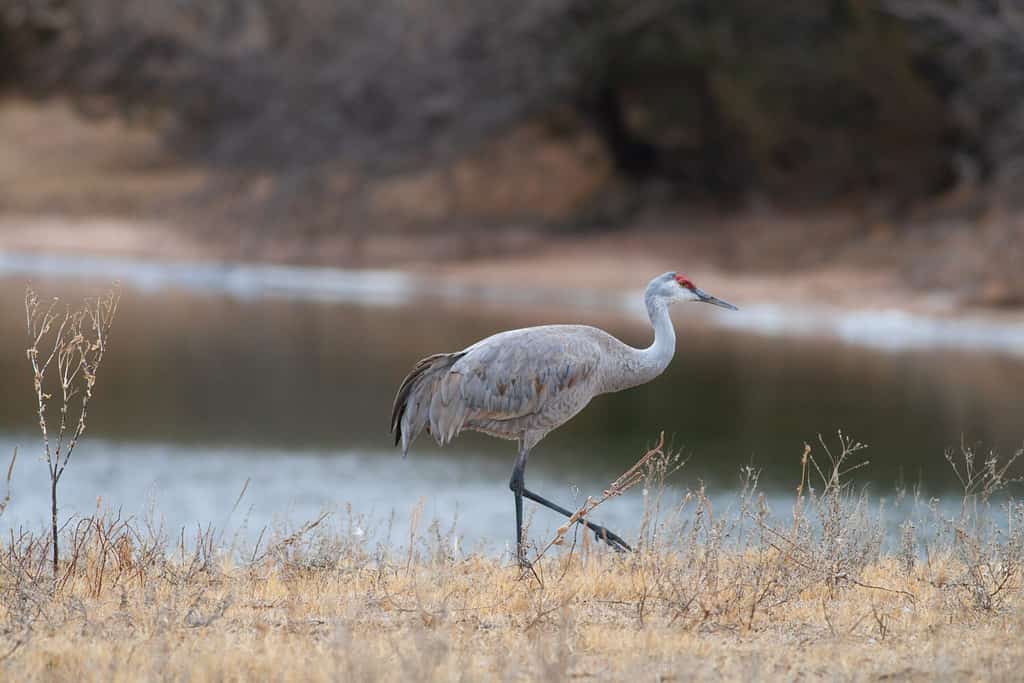
Sandhill cranes can be quietly observed feeding during the day, especially when viewers keep their distance and follow proper viewing guidelines.
©Benjamin Tillotson/Shutterstock.com
The Last Departures of Spring
By April, crane numbers decline as flocks continue north. Fields empty, river roosts thin, and the valley returns to a quieter state. The early February arrivals set the process in motion, drawing wave after wave of birds into the corridor.
The Platte River migration highlights how seasonal patterns still shape wildlife movement across the Great Plains. For those who witness it, the experience reflects endurance, timing, and reliance on a landscape shaped by natural and human forces alike.