
Quick Take
- Rottweilers' most notorious trait is widely considered a flaw, yet it is secretly one of their greatest guard dog advantages. See how reputation works →
- A Rottweiler's natural guarding instinct can turn dangerous fast, and most owners would be surprised by what triggers it. Explore their guarding instincts →
- There's a psychological phenomenon rooted in color bias that makes Rottweilers more intimidating than their behavior alone ever could. Discover Black Dog Syndrome →
- Their loyalty sounds like a selling point, but that changes once you factor in what it actually demands from your daily schedule. See what loyalty demands →
Rottweilers make the best guard dogs because they’ve been bred for the task for centuries. However, before adopting a Rottweiler, you should familiarize yourself with the breed. They’re strong, imposing dogs that can weigh up to 100 pounds. Rottweilers require ample daily exercise and mental stimulation. They do best in households where someone is home most of the day, and where they can have at least a couple of hours of hands-on walks, play, training, and mental enrichment daily. Continue reading to learn more about Rottweilers and whether they are the right dog for you.
Rottweilers are Big Dogs
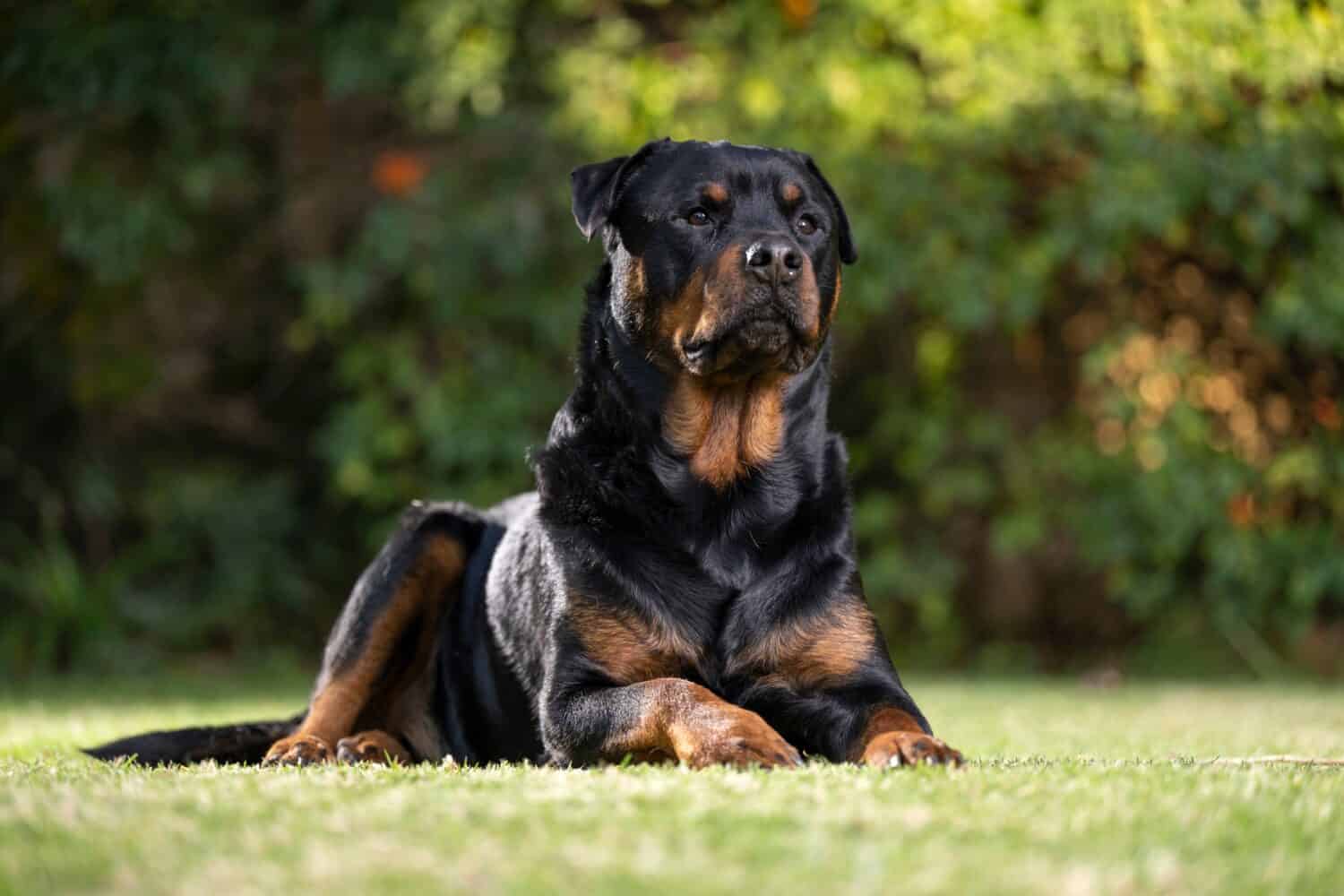
The average Rottweiler is a powerful dog, with males weighing 95–135 lbs and standing 24–27 inches tall. Female Rottweilers are significantly smaller and lighter, typically weighing 80–100 lbs and standing 22–25 inches tall. Because they are both highly intelligent and physically powerful, they will quickly take over a household that lacks clear and consistent boundaries.
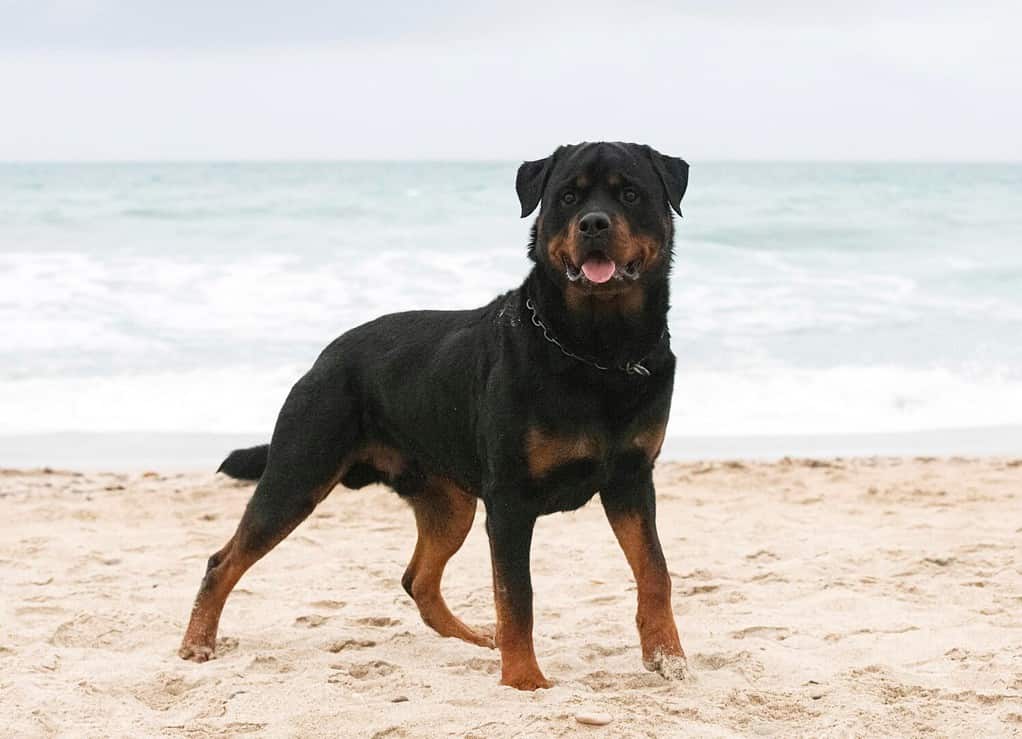
Rottweilers can weigh over 100 pounds.
©cynoclub/Shutterstock.com
Rottweilers are not recommended for first-time dog owners due to their immense physical strength, strong-willed nature, and intense socialization requirements. While they are incredibly loyal, intelligent, and loving companions, they can easily overwhelm an inexperienced handler.
They Were Bred to Protect
Size isn’t all that Rottweilers have on their side, though. They were also bred for protection, dating back to the Roman Empire.

Rottweilers were initially bred as livestock guardians.
©Rita_Kochmarjova/Shutterstock.com
Because they were historically bred to drive cattle and protect Roman legions, Rottweilers possess an innate, genetically hardwired instinct to guard their family and territory. However, an untrained Rottweiler with a powerful, unchecked guarding instinct can be a major liability. Without guidance, their natural territorial behavior can escalate into dangerous resource guarding, in which they aggressively defend the home, yard, or even specific pieces of furniture from family members or guests. A well-trained Rottweiler learns to be protective instead of aggressive. Proper training teaches them to recognize that normal human interactions are not dangerous.
They’re Brave
Rottweilers tend to know their strength and walk with their heads held high. They’re confident dogs, especially when properly socialized from a young age. Their courage is a core breed trait, historically developed for herding cattle, pulling carts, and protecting property. Rottweilers typically stand their ground calmly and assess a situation before acting.
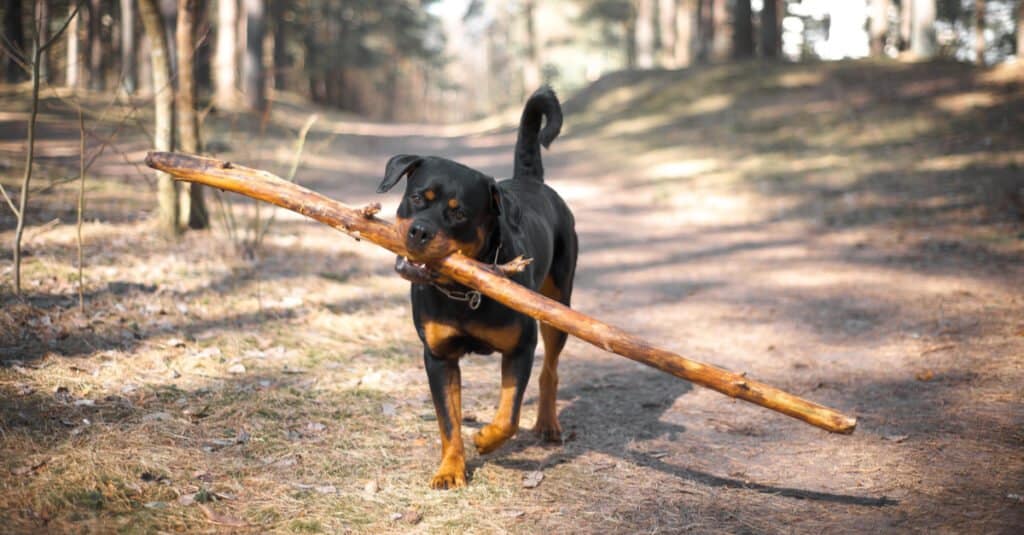
Most Rottweilers are incredibly confident and brave dogs.
©Mariya Kuzema/Shutterstock.com
Rottweilers are Easy to Train
Professional training is highly recommended for Rottweilers, especially for first-time owners. While they are highly intelligent and capable of learning complex tasks, they are not considered easy to train for beginners due to their strong will and physical power. Rottweilers constantly assess situations and will test boundaries to see what they can get away with. A professional trainer will teach you how to physically manage and control a massive, powerful dog safely without using force. Professional training teaches you to read your dog’s body language and project calm, firm authority.
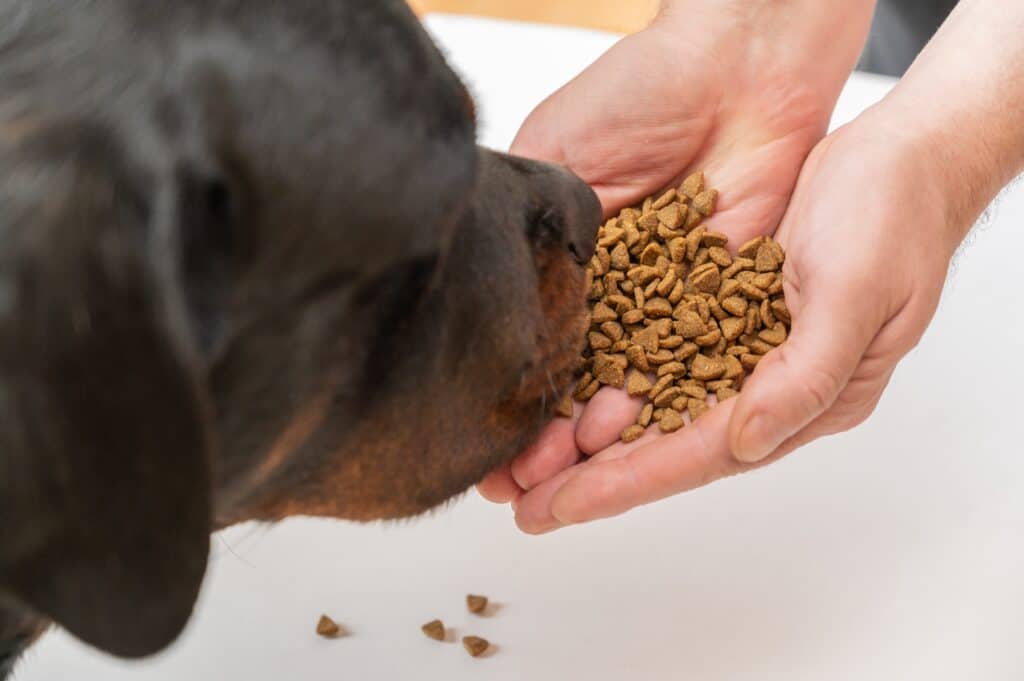
Rottweilers can be easily trained using positive reinforcement.
©Dmitriev Mikhail/Shutterstock.com
A professional trainer will teach you how to physically manage and control a massive, powerful dog safely without using force. Professional training trains you to read your dog’s body language and project calm, firm authority.
Their Black Coats are Intimidating
Dogs with black coats are historically seen as less desirable, a phenomenon widely known as Black Dog Syndrome.
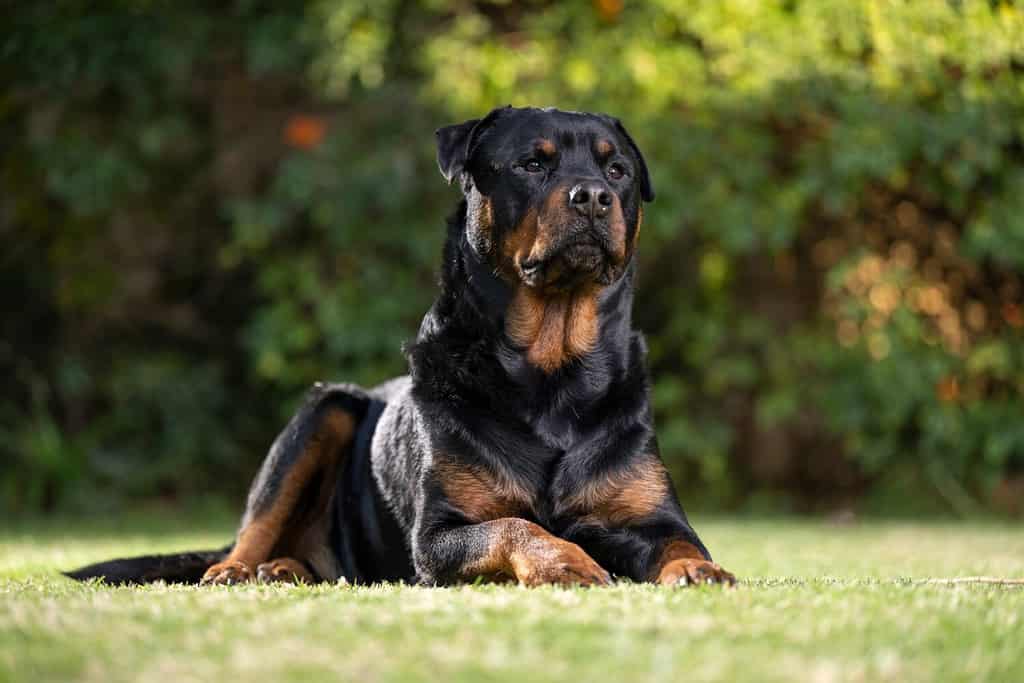
Studies find that black dogs tend to be viewed as more aggressive than lighter-colored ones.
©Phillip van Zyl/Shutterstock.com
Although many people perceive large, black dogs as more intimidating than lighter-colored dogs, there is no scientific evidence to support this belief. However, it’s widely enough believed to give Rottweilers an advantage as guard dogs. Their primarily black coats may deter strangers from approaching on walks or entering your home.
They Have a Reputation
Rottweilers have a reputation for being aggressive. This image is largely fueled by their imposing size, powerful build, and history as guard dogs. However, experts emphasize that this reputation is largely a product of human influence and stereotypes rather than their actual disposition.

Many people fear the Rottweiler breed.
©Tatiana Makotra/Shutterstock.com
Their reputation does have one benefit, and it’s that people are unlikely to come near them. This is yet another way that Rottweilers can act as a deterrent without even growling.
They’re in Tune With their Environment
Because they are naturally observant, Rottweilers excel at reading environments and identifying potential hazards long before human owners notice them. This sharp focus ensures that they are deeply attuned to their family’s emotional cues and physical routines, allowing them to offer comforting companionship and a secure presence.
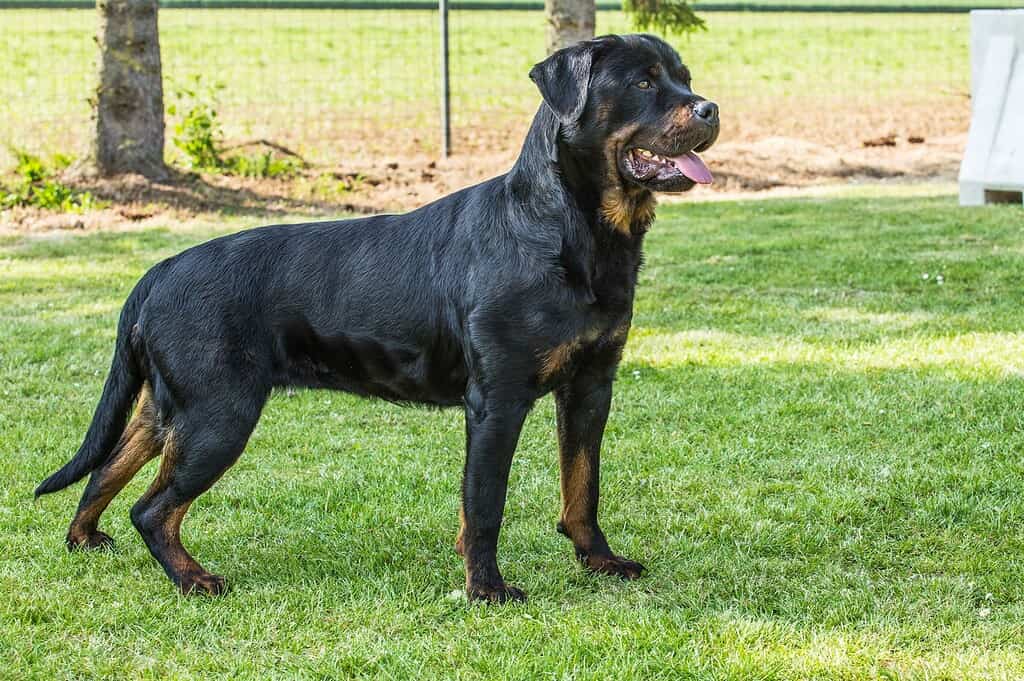
The breed is very alert and unlikely to miss any potential threats.
©iStock.com/Eric Metz
When channeled through proper training, their alertness manifests as a calm, confident vigilance that keeps households safe and provides owners with immense peace of mind.
Rottweilers are Affectionate and Loyal
When a Rottweiler loves you, it’s forever. They stick to their people like glue and will protect them fiercely, sometimes even with their lives.
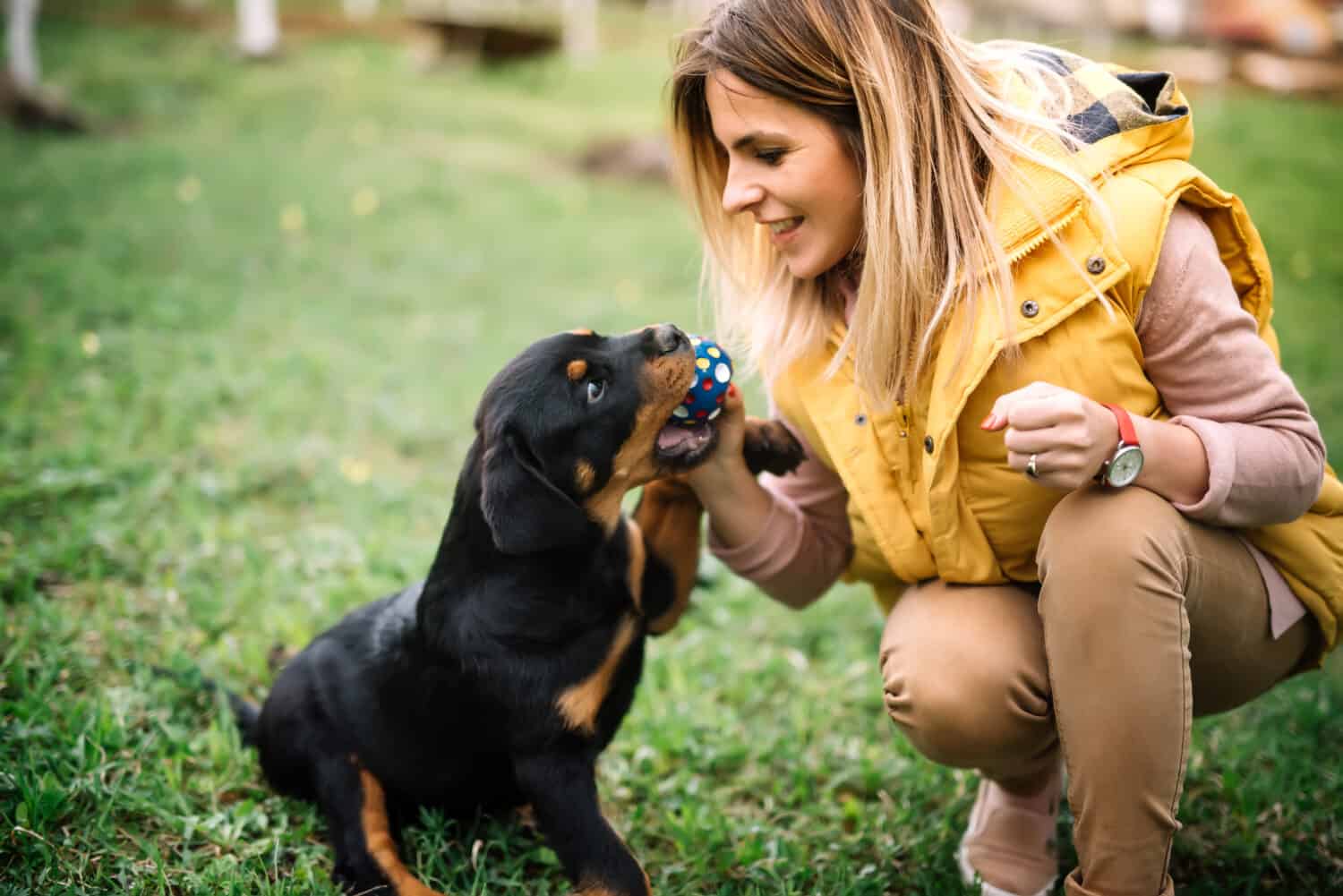
Rottweilers usually take time to warm up to strangers, but are loyal once they do.
©bogdanhoda/Shutterstock.com
They are typically very affectionate and may think they’re lap dogs.
While this trait endears them to most people, it’s also important to consider whether you have the time for a clingy dog. Rottweilers should live indoors with their families and should not be left alone for extended periods, such as a full workday.
Their Coats are Easy to Care For
Rottweilers have a short, dense double coat that sheds moderately year-round and heavily twice a year during seasonal changes.
They do not require professional grooming because their coat is low-maintenance. Regular brushing at home, occasional baths, and standard nail and ear care are enough to keep them healthy.

Rottweilers’ coats are easy to maintain.
©Anton Ewlyn Fernando/Shutterstock.com
They’re Active
Rottweilers are high-energy working dogs that require at least one hour of daily exercise to maintain their physical and mental health. This routine should combine vigorous activities like brisk walks, jogging, or hiking with structured play sessions like fetch and tug-of-war.

Rottweilers are active and adventurous.
©Donamen/Shutterstock.com
Because of their high intelligence, physical exertion must be paired with mental stimulation, such as puzzle toys, obedience training, or agility courses, to prevent boredom. Without this vital daily outlet, their pent-up energy can quickly manifest as destructive behaviors like chewing, digging, or excessive barking.