
Quick Take
- The reason invisible fencing "works" is also the reason it can permanently backfire on you. See how fear drives it →
- If your dog ever escapes, the fence itself becomes the reason they won't come back. Why dogs won't return →
- Invisible fencing protects your yard from exactly one direction, and it is not the one most owners worry about. What it fails to block →
- Every invisible fence requires a training step that the marketing never mentions, and skipping it is not optional. The required training phase →
There are many reasons to consider invisible fencing for your dogs. Invisible fences offer a budget-friendly, highly customizable boundary that preserves your property’s appearance while aiming to keep your pets safe. They are especially popular for irregularly shaped yards and for preventing dogs from digging under or jumping over traditional fences. However, punishment-based training tools, such as electric fences, can negatively affect your dogs and your relationship with them. Invisible fences can also create serious behavioral issues. Continue reading to learn more about how invisible fencing can create more problems than it solves.
Invisible Fencing Works by Hurting Your Dog

Invisible fencing harms a dog both physically and mentally.
©Parilov/Shutterstock.com
Don’t let anyone convince you that invisible fences are harmless. The pet industry has heavily rebranded shock collars and electric fences, using deceptive, sanitized terms for aversive training tools. In reality, these systems can inflict both physical pain and psychological trauma on your dog.
The truth is that invisible fencing wouldn’t work if it didn’t hurt your dog. The prongs on the collar deliver a shock when your dog approaches the boundary, which typically makes them move away.
The pain has to be strong enough to act as a deterrent even when your dog is high on adrenaline and really wants to chase something out of the yard.
While there are sometimes warnings in place, such as a sound or vibration to alert the dog that it’s too close, your dog isn’t likely to learn what these mean without experiencing the shock at least once. The reason they respond to these cues is fear of injury.
Shocks often cause dogs to associate the yard with pain, creating fear and reactivity. When a dog runs across the boundary, returning home becomes terrifying for them, and the system offers no protection against other animals entering your yard.
How Does Invisible Fencing Work?
An invisible fence operates using a hidden boundary such as a buried wire, wireless radio signal, or GPS that transmits a signal to a receiver collar worn by your pet. As your pet approaches the set boundary, the collar emits an audible warning. If they continue, it delivers an electric shock, prompting them to retreat. Because there are no physical barriers, consistent training is required for your dogs to learn to associate the warning beep and possible shock with the boundary.
Dogs avoid the invisible fence boundary because they’re afraid of it and the pain it represents. Even when the invisible fence works perfectly, it is still stressful for the dogs, and it is something they encounter multiple times a day.
This fear can lead to behavioral issues, increased reactivity, and aggression.
Proper Training is Key

Dogs often become more fearful when an invisible fence is used.
©Cheryl Ann Studio/Shutterstock.com
The trial-and-error training phase presents a significant challenge because dogs must inevitably experience the electric shock to learn where the invisible boundary lies. During this adjustment period, the unexpected correction can trigger acute stress, anxiety, and confusion, since the dog cannot see a physical barrier to explain the sudden discomfort.
If the training is rushed or the shock level is set too high, some dogs may develop a fear of their own yard. To minimize this distress, modern training protocols rely heavily on visual flags and positive reinforcement, ensuring the dog thoroughly understands the warning beep before ever receiving a shock.

Invisible fencing is a compromise for those who need a boundary, but not at the expense of the view.
©Gorodenkoff/Shutterstock.com
Professional training is recommended, and major brands include certified trainers and training programs as part of their installation packages, but this may not be true for all companies. Because containment depends entirely on the dog’s behavioral conditioning rather than a physical barrier, proper training determines whether the system succeeds or fails. Professionals use structured, multi-step programs (often starting indoors) to build a positive association with boundary flags before any correction is introduced.
Professionals use structured, multi-step programs (often starting indoors) to build a positive association with boundary flags before any correction is introduced. Professional conditioning teaches dogs to immediately back away when they hear the warning tone.
Electric Fencing Doesn’t Keep Others Out of Your Yard

Other animals and people can still walk into your yard easily.
©iStock.com/likedat
Invisible fences may keep your dog inside (if you’re lucky), but they don’t keep other people or animals out. This means that children, dogs, and other animals can freely run into your yard while your dog is outside.
Supervising your dog outdoors can help you to intervene if something goes wrong. But, if you’re outside with your dog anyway, why not consider letting them run on a long leash or training a reliable recall cue?
Passersby or other dogs may become frightened by your dog because they are unaware that it is contained.
This can cause them to react fearfully or aggressively, and your dog may respond in kind. This can also cause your dog to ignore the shock and run past the fencing barrier.
Well-intentioned people might also walk into the yard assuming your dog is loose, either trying to check their collar for tags or to knock on your door.
If the System Fails, Your Dog Can Escape

Invisible fencing is not fail-proof, and dogs can still run away.
©Ammit Jack/Shutterstock.com
If the fencing system breaks, the battery on your dog’s collar runs out, or any other technical errors occur, your dog can run out of the yard.
Some dogs will learn the boundaries and continue to respect them even without the fencing. Others may continue to test the boundaries until a situation like this occurs, and escape at the first opportunity.
Some dogs are motivated enough by outside forces that they’ll ignore the pain and cross the boundary anyway.
This makes the fencing useless when you need it most.
If Your Dog Gets Out, They’re Unlikely to Return Home

Once loose, your dog is less likely to return home since they’re afraid of being shocked by the fencing.
©Anastasiia Cherniavskaia/Shutterstock.com
Once your dog is out of the yard, they’re much less likely to return home. After all, who opts into a painful experience if they can help it?
This is why experts recommend against punishing your dog for running away. They see it as punishment for coming home, not for leaving. Unfortunately, even if you react well when your dog returns, they know that the invisible fence will not.
The Collar Prongs Can Seriously Injure Your Dog’s Skin
Your dog is unlikely to become seriously injured through short use, but their risk goes up if you keep the shock collar on them long-term. The prongs can irritate or break the skin, which can also lead to infections.
Other Methods of Training Your Dogs to Stay
While invisible fencing has its advantages, there are other, more humane ways to corral your dogs.

There are several alternatives to invisible fencing that are more effective.
©Jus_Ol/Shutterstock.com
Some examples of fear-free training to keep your dog in the yard include:
- Recall training: Train your dog to come when called, using treats or other rewards to reinforce the behavior. Though it takes time and effort, many dogs can learn a reliable recall that allows them to be safely off-leash in the yard. (Never unattended!)
- Redirect door-dashing: If your dog darts toward the door and sprints outside, first implement boundaries to stop this behavior, such as baby gates. Work on teaching them to sit at the door and wait for a release cue before going outside, or teach a place cue where they learn to sit somewhere away from the door while it’s open.
Alternatives to Invisible Fencing

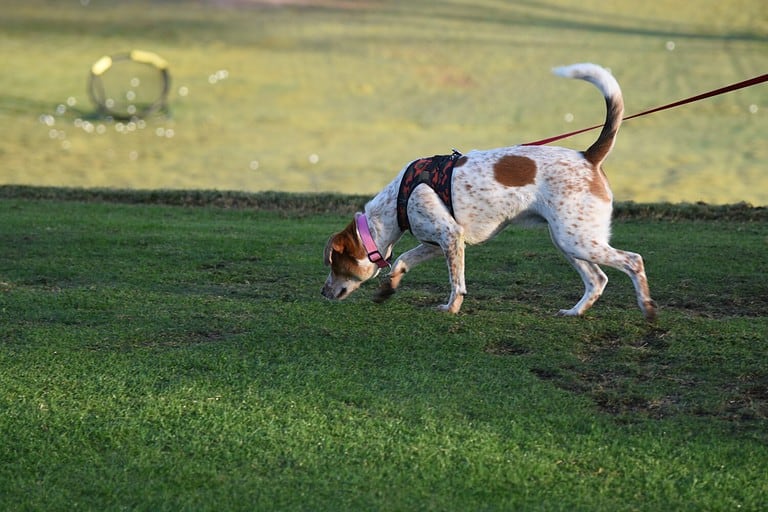
Use a leash to keep your dog out for potty breaks.
©art nick/Shutterstock.com
Aside from training, there are also other alternatives to electric fencing. The most obvious of these is traditional fencing, but it may be out of budget or not allowed in your neighborhood.
Other methods to consider include:
- Leashing your dog. Dogs should be supervised when using invisible fencing anyway, so clipping a leash onto their collar only takes a moment.
- Hands-on exercise. If you’re worried about your dog getting enough exercise, it’s important to know that letting them out on their own usually isn’t enough. Many dogs won’t exert much energy outside alone and need a buddy to play with. Hands-on play, walks, and other activities with you are much more effective for burning off energy.
At the end of the day, many alternatives to invisible fencing require effort on your part. But so does using invisible fencing—it requires training and is unreliable, so your dog will need to be supervised in the yard at all times.
Adopting a pet means putting in the effort to care for and train it properly. Seemingly quick fixes like invisible fencing often don’t work and can cause more problems than they solve.