
Quick Take
- The price gap between budget and quality dog boarding is wider than most owners expect, and what justifies the difference is probably not what you'd guess. See what drives the price gap →
- Most owners evaluate a boarding facility by how it looks. But there is one sense that matters far more, and it tells you everything. Spot the warning signs →
- A tired dog after boarding is fine. The problem is that a specific kind of tired is a red flag, and most owners can't tell the difference. Learn to read post-boarding tiredness →
- Most owners skip one important step every time they book a facility, and doing so puts their dog at risk. See the step owners skip →
Planning a trip when you have a dog means an extra item on your to-do list; and a big one at that! Where will your furry companion stay while you’re gone? Dog boarding has evolved significantly over the past decade, but what you pay today depends on a number of factors. Knowing what to look for can make all the difference in both your budget (important) and your dog’s welfare (even more important). What are the true costs to board a dog in our modern life, and how can you know when you’ve found the right spot?
Christina Holtz, CEO of Bay Paws Pet Resort, a multi-location luxury boarding facility serving the Tampa Bay area, breaks it down. Based on her expertise, here’s what you should know about boarding your dog in 2026.
What Does Dog Boarding Cost in 2026?
According to Holtz, “The national average for standard boarding currently ranges from $35 to $65 per night. However, for a luxury resort experience, owners should expect to pay between $45 and $125+ per night depending on the suite size.”

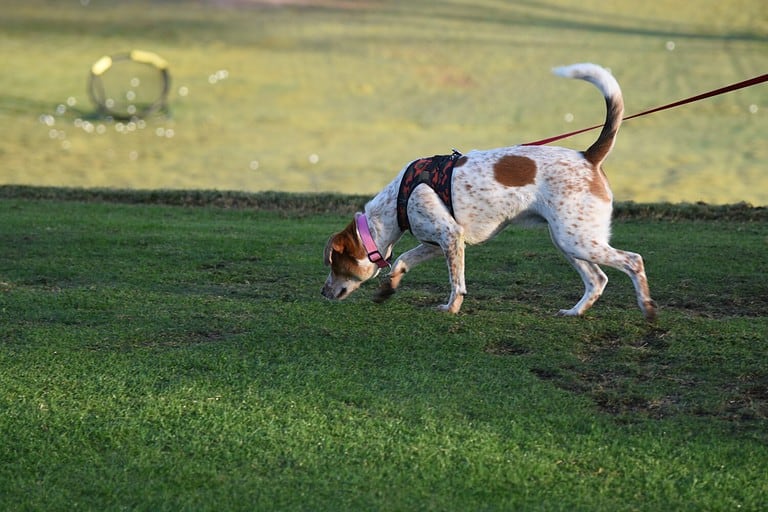
Dog boarding costs vary by location and the types of accommodations your dog might need.
©iStock.com/Christine McCann
Three key factors tend to drive prices the most:
- Geography. Boarding in a major urban center typically costs 20–30% more than at a comparable rural facility due to higher overhead and operational costs, even at facilities offering equivalent care.
- Accommodation tier. Facilities differentiate themselves most clearly through accommodation tier, much like hotels. Suite size and included amenities drive the price variation; dogs requiring more intensive care or premium amenities will cost more.
- Add-ons and customization. These options layer on additional costs but can also meaningfully improve your dog’s experience. Group play sessions, one-on-one play time, enrichment activities, extra cuddle sessions, and grooming appointments can all contribute to your final bill, but may well be worth it depending on your dog’s needs.
What Should a Quality Dog Boarding Facility Include?
“A luxury resort should offer a holistic experience that mirrors the care a pet receives at home,” Holtz says. The bare minimum for a reputable facility in 2026 includes climate-controlled spaces with proper ventilation, strict vaccination requirements for all pets, and staff trained in pet CPR and first aid.

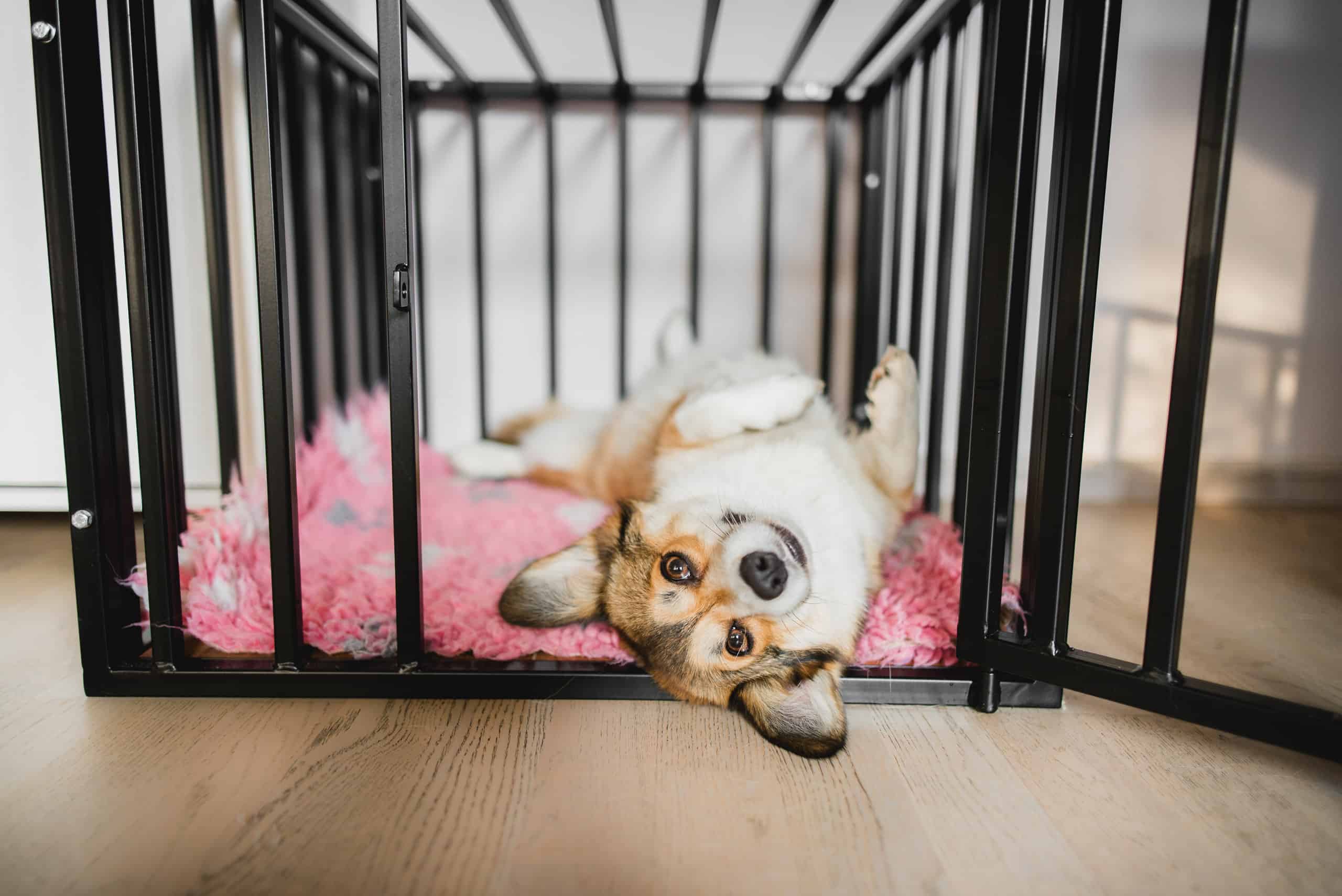
Some dog boarding facilities offer grooming services, which can indicate a quality operation.
©Olena Yakobchuk/Shutterstock.com
Beyond that baseline, some features that point to a high-quality operation include:
- 24/7 camera access. Holtz calls this “the gold standard for transparency”, and it’s the ability to check in on your dog via smartphone. Facilities that offer this option have nothing to hide, which is always a plus.
- A thorough intake process. “Quality care begins before the stay,” Holtz explains. “A top-rated resort will require a detailed intake form to learn your dog’s history, medical needs, quirky personality traits, and specific triggers.” A facility that asks only for vaccination records and emergency contact information is working with an incomplete picture of your dog and may not be the right place for your pet.
- Proactive communication. You should receive updates throughout your dog’s stay, an indication you’ve hired a team that’s paying attention to your beloved pet.
- Temperament-based playgroups. Dogs should be grouped by size and behavior, with consistent staff supervision.
- On-site professional grooming. The ability to book a bath or trim during a boarding stay is a huge perk, and it means your pup will be clean and ready to return home as soon as you are.
Red Flags to Watch for in Pet Boarding
A facility tour is a must when evaluating any potential dog boarding facility and, when you visit, Holtz advises trusting your senses. “A facility shouldn’t smell like heavy chemicals or pet waste,” she says. “A faint, clean, neutral scent is the sign of a high-quality sanitation program.”
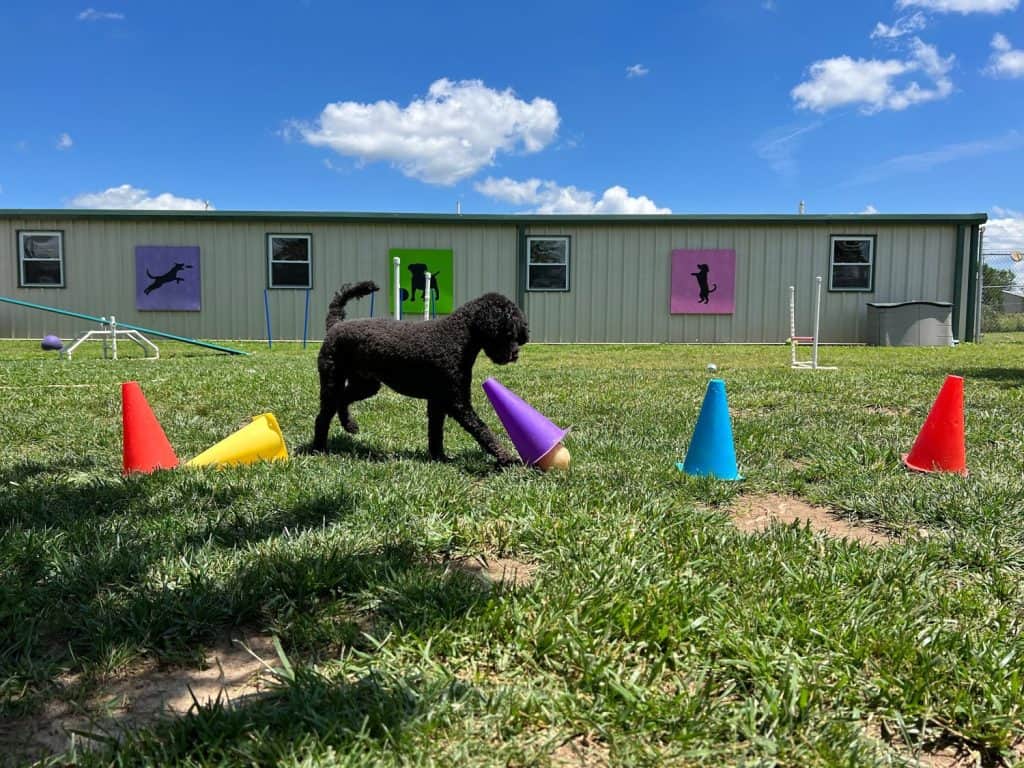
There can be red flags in any business, and dog boarding is no exception.
©Ryan Brix/Shutterstock.com
Other warning signs in a boarding business worth taking seriously include:
- No facility tour. If a business won’t show you where your dog will actually sleep, that’s an immediate red flag.
- No vaccination requirements. A kennel that doesn’t verify vaccination records puts every animal in its care at risk for potential illnesses.
- Mixed or unsupervised playgroups. Dogs of all sizes and temperaments playing together without staff present is a safety issue.
- Excessive noise. Holtz notes that while some barking is normal, “a constant, high-stress roar suggests the dogs are overstimulated or insufficiently supervised.”
- Unsecured perimeters. On your tour, look for double-gated entryways and intact fencing at appropriate heights, with no obvious escape routes.
- No emergency protocols. Ask boarding owners directly: what happens if a dog is injured or becomes ill? A reputable facility will have a clear answer and an established relationship with a local emergency vet.
Quality care begins before the stay. A top-rated resort will require a detailed intake form to learn your dog’s history, medical needs, quirky personality traits, and specific triggers.
Christina Holtz, CEO of Bay Paws Pet Resort
How to Tell If Your Dog Had a Good Stay While Boarding
Holtz says the signs of a well-cared-for dog after time spent boarded are fairly consistent. “Your dog should be pleasantly tired from playing and socializing, but not lethargic or withdrawn,” she notes, calling it “happy tired.” If your dog returns anxious or noticeably thinner, that warrants a direct conversation with the facility about what happened during the stay.

Your dog’s behavior should be positive and calm when picked up from a quality boarding facility.
©DeRepente/iStock via Getty Images
Your dog’s behavior is likely easy to assess, especially if you’ve had them for a long time. Any dog with positive associations with a particular place will show it. Holtz also notes that quality facilities send dogs home with documentation — another way to confirm what happened during your absence. “They should return with a full ‘report card’ detailing their activities and behavior.”
Finding the Right Fit For Your Dog is Key
Dog boarding has never been a one-size-fits-all endeavor and shouldn’t be treated as one. When choosing a quality boarding facility, your dog’s personality and needs should drive the decision as much as price.

Boarding your dog should involve asking the right questions so that you can all have a relaxing vacation.
©PeopleImages.com – Yuri A/Shutterstock.com
On a final note, it’s worth visiting at least two facilities before booking. Ask questions, read recent reviews, and confirm all vaccination policies in writing. Thorough research and due diligence when vetting a boarding facility will make all the difference. And remember — no matter how great the vacation, nothing beats coming home.