
Quick Take
- If your bulbs keep disappearing, blaming the mole might be exactly why nothing you try ever works. Find out who's really guilty →
- A yard full of mole tunnels might actually be signaling something surprising about the health of your soil. See what moles reveal about soil →
- That sprawling tunnel network across your lawn may have a much simpler explanation than you think. One mole, many tunnels →
- Most homeowners skip a specific step before acting on moles, and skipping it is exactly why the problem keeps coming back. Identify before you act →
Most people meet moles through frustration. Or maybe it’s just me? I play ball in the backyard with my dog, Maisy, every morning, and most days, it’s like stepping onto a squishy mattress. Ridges of disrupted grass clearly illustrate the path the moles take when they cruise through my otherwise lovely backyard.
It is easy to see why moles have such a bad reputation. They are disruptive, yet almost never seen. But the more you understand what moles are actually doing underground, the harder it is to think of them as simple “pests.”
Moles are not rodents. They are not eating your tulip bulbs. They are not plotting the collapse of your lawn. They are highly specialized, insect-eating mammals built for one of the most physically demanding lifestyles in nature: living almost entirely underground.
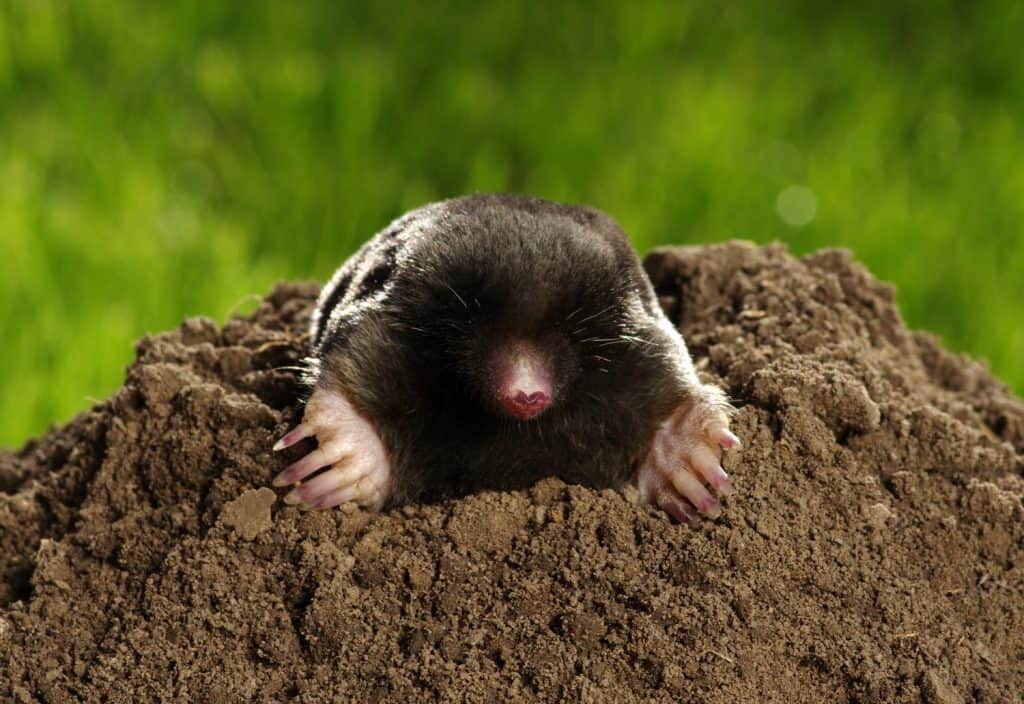
European moles have an incredibly fast metabolism.
©irin-k/Shutterstock.com
And while their tunnels can absolutely make a yard look messy, moles also play a real ecological role by aerating soil, mixing organic matter, and eating insects that can damage plants. Penn State Extension notes that moles help control grubs and insects, even though their tunneling can create lawn damage homeowners dislike.
What Is a Mole?
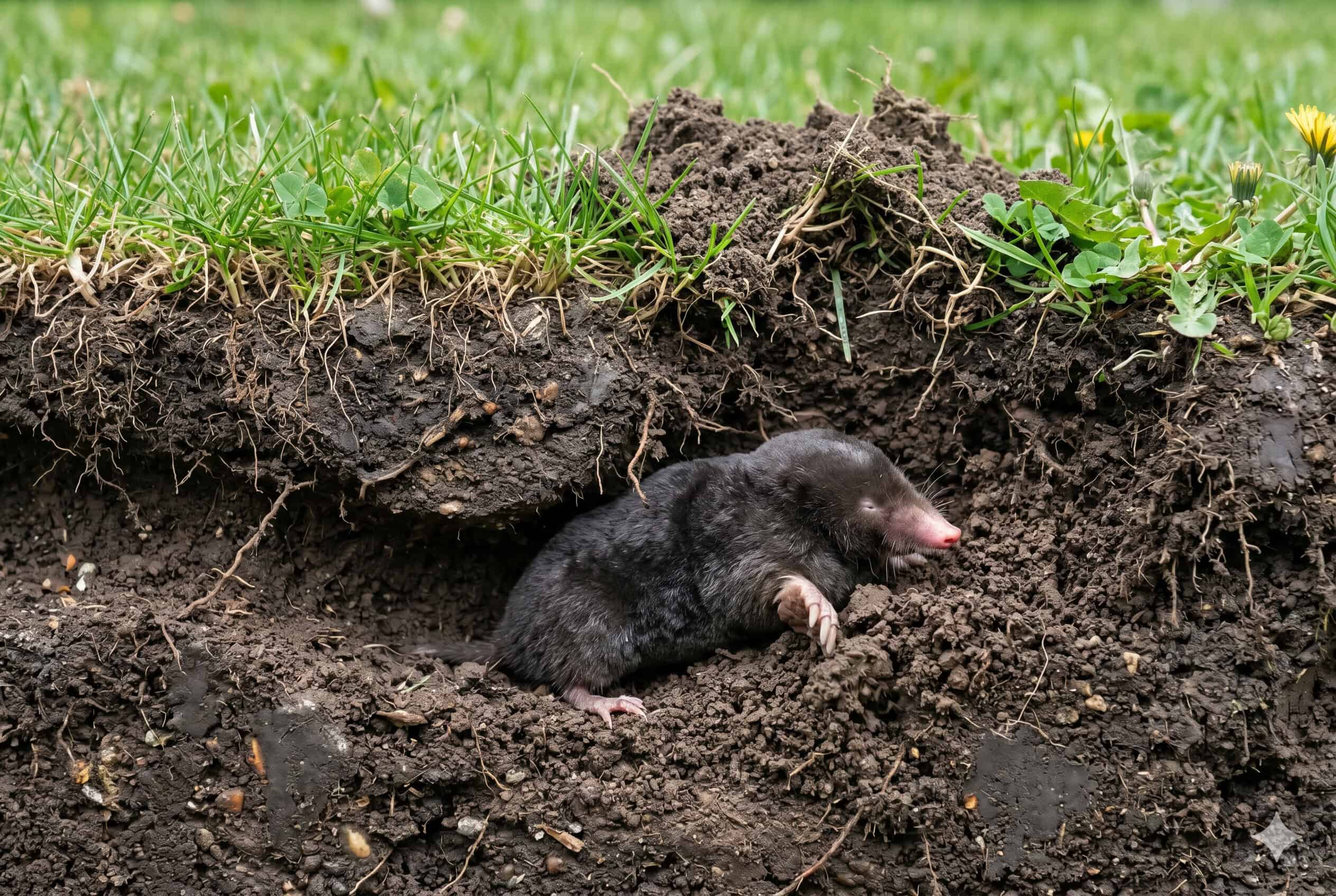
A mole is a small, burrowing mammal adapted for life beneath the soil surface. Its body is almost comical: powerful paddle-like front feet, dense fur that moves smoothly through tight tunnels, a pointed snout, tiny eyes, and no obvious external ears.
That design tells you almost everything about its life. Moles do not need sharp, long-distance vision because they are not scanning open fields for predators. They need strength, touch, smell, and the ability to push through packed soil hour after hour.
In North America, one of the best-known species is the eastern mole. The Missouri Department of Conservation describes eastern moles as animals that spend most of their lives underground and create tunnel systems while searching for food.
Their underground lifestyle is so complete that many people only ever see the evidence of a mole, not the animal itself.
No, Moles Are Not Eating Your Plants
One of the most persistent mole myths is that they are chewing through garden roots, bulbs, and vegetables. In most cases, that blame is misplaced.
Moles are insectivores. Penn State Extension identifies moles as animals that feed on grubs, earthworms, and insects, rather than plants.
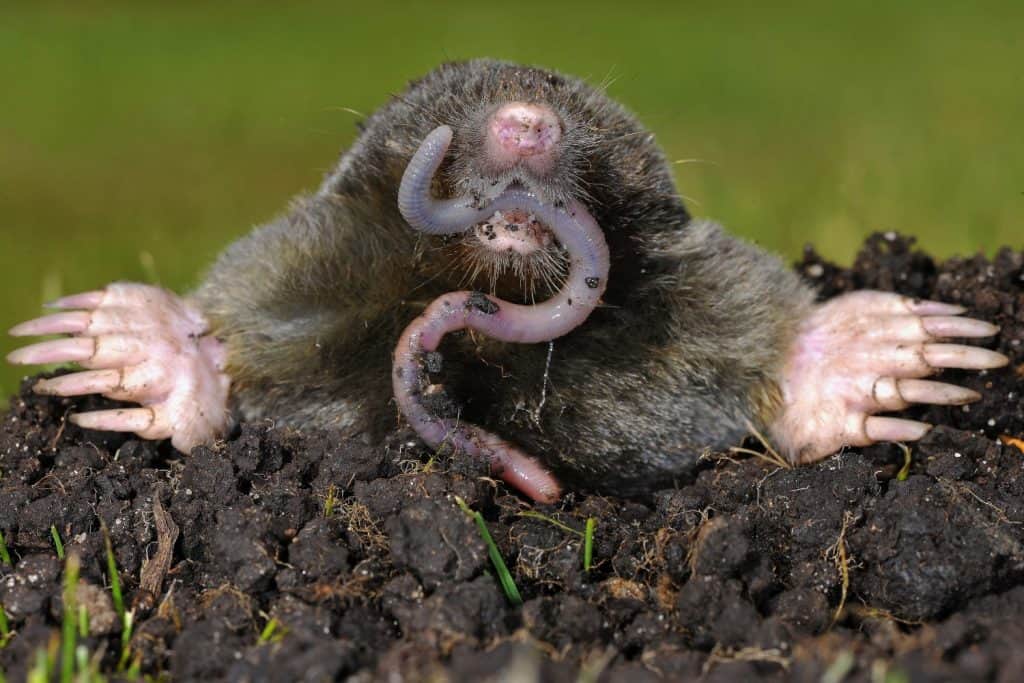
Moles are insectivores, feeding on grubs and earthworms.
©CezaryKorkosz/Shutterstock.com
So why do plants sometimes suffer when moles are around?
The damage is usually indirect. As moles tunnel, they can loosen soil around roots, disturb seedlings, or create air pockets that dry out root systems. That can stress plants, especially young ones. But the mole is not usually eating the plant itself.
This matters because the solution depends on the real problem. If bulbs are disappearing or stems are being gnawed, you may be dealing with voles, gophers, squirrels, or another animal entirely. Treating a vole problem like a mole problem is one reason so many yard-control efforts fail.
Why Moles Tunnel So Much
A mole’s tunnel is not just a home. It is a hunting route.
Think of a mole tunnel less like a random hole and more like a trapline. The mole moves through the soil searching for earthworms and insects. Some tunnels are temporary feeding paths close to the surface. Others are deeper, more permanent routes used repeatedly.
That is why mole activity often seems to spike when the soil is moist. Damp soil is easier to dig through, and earthworms and other invertebrates are more active near the surface. After rain, a lawn can become much more attractive mole habitat.
Those shallow raised ridges people notice in turf are typically feeding tunnels. The more dramatic dirt mounds usually appear when moles push excavated soil up from deeper tunnel systems.
From the mole’s perspective, this is efficient engineering. From the homeowner’s perspective, it looks like vandalism.
Both interpretations are understandable.
Moles Can Be a Sign of a Living Soil System
Moles often show up where the soil has something worth eating. That doesn’t necessarily mean you have a grub infestation. Moles also eat earthworms, which are usually a sign of healthy, biologically active soil. This is why “get rid of all grubs” is not a guaranteed mole solution. Even if grub numbers decline, a yard full of earthworms may still entice the moles.
This is also where generic advice can mislead people. A mole in the yard does not automatically mean the lawn is unhealthy. In some cases, it means the opposite: the soil has enough moisture and invertebrate life to support a predator.
The Missouri Department of Conservation points out that although mole tunnels can be unsightly, moles may help protect gardens and landscaping by eating insect pests.
That doesn’t mean you have to love molehills. It does mean moles deserve a more accurate diagnosis than “bad animal ruining good yard.”
The Hidden Benefits of Moles
Moles are frustrating because their benefits are mostly underground, while their damage is visible.
Their tunneling can help loosen compacted soil, allow air and water to move more deeply, and mix organic matter through the upper soil layers. The Missouri Department of Conservation notes that eastern mole tunneling aerates and mixes soil, helping air and rainwater penetrate deeper.
They also eat insects that many gardeners would rather not have, including cutworms and Japanese beetle larvae, according to the same source.
This puts moles in a complicated category. They are not purely beneficial in a manicured yard, but they are not ecological villains either. They are native soil predators doing exactly what they evolved to do.
With that in mind, the question becomes: where are they tolerable, and where are they causing enough damage to require action?
How to Tell If You Have Moles, Voles, or Gophers
Before doing anything, identify the animal correctly.
Moles create raised surface ridges and volcano-like mounds of loose soil. They are hunting underground insects and worms.
Voles are rodents. They often create surface runways through grass and may gnaw bark, roots, bulbs, and garden plants.
Gophers are also rodents and are more likely to feed directly on roots and underground plant parts. Their mounds often have a different shape and plugging pattern than mole mounds.
This distinction matters because moles, voles, and gophers behave differently and require different management strategies. If plants are being eaten, a mole may not be the culprit.
What Actually Works for Managing Moles?
When it comes to mole management, the biggest factors to consider are your tolerance, the size of the area, local laws, and whether the tunnels are active.
For many yards, the best first step is observation. Stomp down the mounds on a short section of raised tunnel and check whether it is pushed back up within a day or two. If it is, that tunnel is active. If not, the mole may have already moved on.
Because moles spend most of their lives underground, control can be difficult. Repellents may help in limited areas, but they often require repeated applications and may not solve an active tunnel problem. And broad claims about miracle home remedies should be treated skeptically.
Penn State Extension emphasizes that moles can be beneficial, but homeowners may become irritated when their mounds and tunnels disrupt lawns. That is the right balance: management should be based on actual damage, not panic.
A practical approach to mole management begins with assessing whether the damage is truly serious. A few tunnels in a back corner may not be worth intervention.
Next, confirm that the tunnels are active. Old tunnels can remain visible after a mole has moved elsewhere.
Third, reduce conditions that make specific areas especially attractive, such as overwatered soil or severe grub problems.
Fourth, protect high-value spaces rather than trying to sterilize the whole yard. Garden beds, new plantings, and small ornamental areas are often more realistic to defend than an entire lawn.
Why “One Mole” Can Look Like an Army
Moles are often solitary, but one active mole can create a surprising amount of visible tunneling. You may imagine a whole colony under the lawn when the damage could be caused by a small number of animals or even just one creature. That is because the animal is constantly searching for food, and its feeding routes can expand quickly through favorable soil.
There is also a timing issue. Mole activity may appear suddenly when soil conditions change. A stretch of wet weather, seasonal earthworm movement, or insect activity can make tunnels appear almost overnight.
The mole did not suddenly arrive with a master plan. The soil conditions changed, and the mole responded.
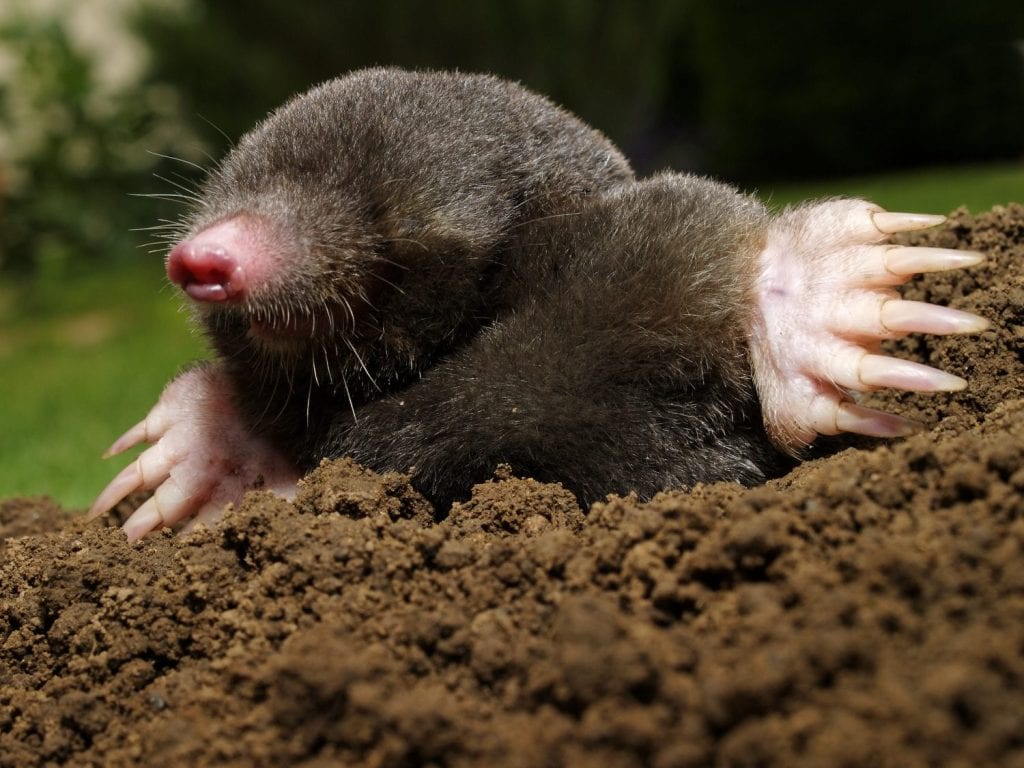
Moles have paddle-like paws that make them efficient tunnelers.
©Grimplet/Shutterstock.com
Should You Leave Moles Alone?
Sometimes, yes.
If the tunnels are not creating a safety issue, damaging high-value plantings, or causing serious landscape problems, tolerance is often the most ecologically sensible option. Moles are part of the soil food web. They eat invertebrates, move soil, and create underground spaces that may later be used by other small organisms.
The Missouri Department of Conservation states plainly that if people can tolerate mole digging, moles should often be left alone because of their useful role in the ecosystem.
That advice may not satisfy someone staring at a torn-up front lawn. But it is a useful reminder that not every wild animal that inconveniences us is doing ecological harm.
The Better Way to Think About Moles
Moles challenge the way people often think about yards.
A lawn looks simple from above, but below the surface is a busy, living system full of roots, fungi, worms, beetle larvae, moisture gradients, and small predators. Moles are one of the few animals that make that hidden world visible.
Their tunnels are annoying, but they remind us that under a neatly manicured lawn is a living habitat. That does not mean homeowners have to surrender their lawns. It does mean the best response starts with understanding instead of reflexive extermination.
The next time a raised ridge appears across the grass, it is fair to be irritated. But it is also worth pausing for a second to marvel at the small mammal with shovel-like hands moving through the dark, following the scent and vibration of worms, reshaping the soil one tunnel at a time.