
Quick Take
- A monkey that looks nearly identical to its cousin turned out to be a different species. What gave it away?
- Some of the Amazon's mightiest rivers quietly shape which species exist. How do they do it?
- Researchers were about to publish when they made one last call that changed the story.
- Being discovered may be the best and worst thing to happen to this monkey.
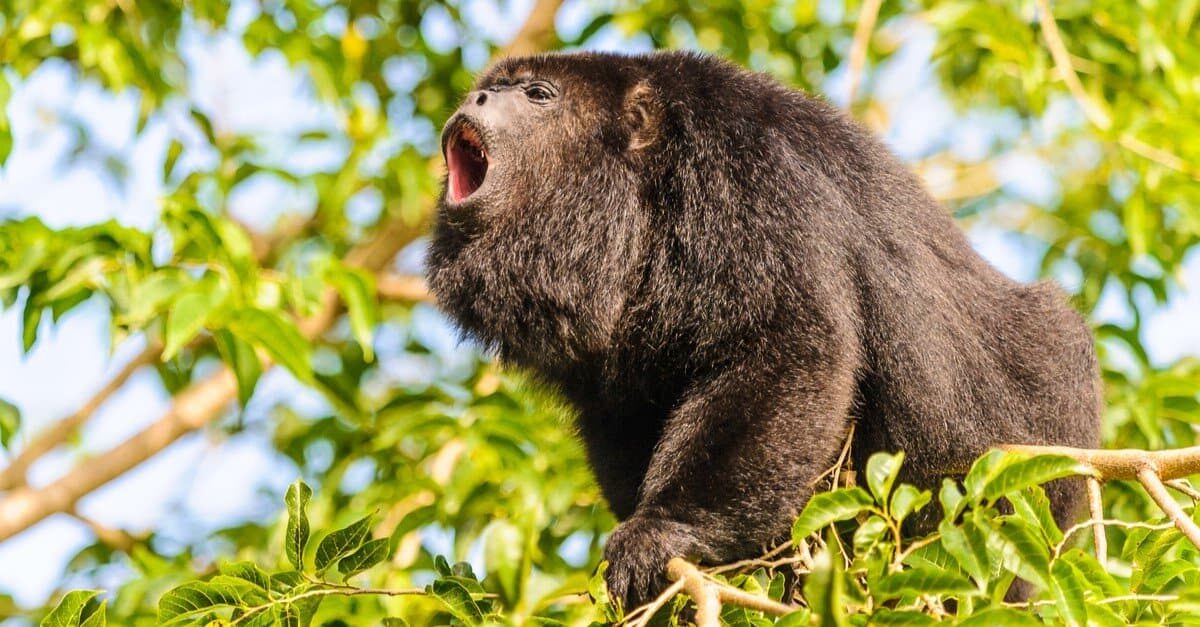
Rivers can act as natural barriers between animal populations, isolating them for thousands or even millions of years until they eventually evolve into distinct species. Scientists believe a similar process occurred in two types of howler monkeys: Alouatta sara and Alouatta matogrossensis. The former species is known for its red hair and typical howler monkey traits. Alouatta matogrossensis, however, has likely been its own separate species for more than half a million years.
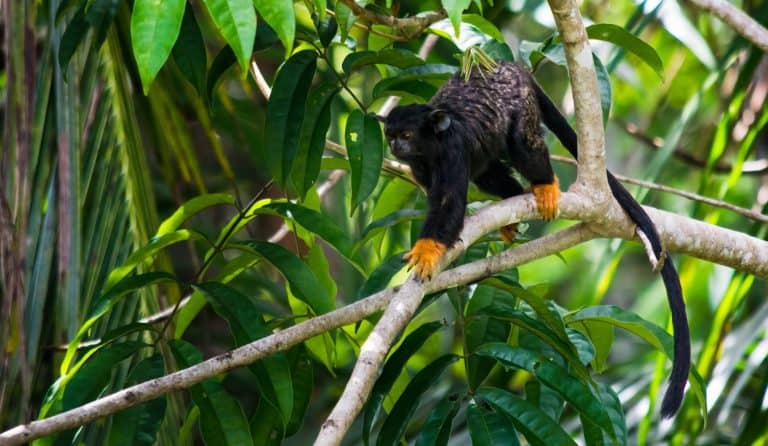
The latter species, Alouatta matogrossensis, is a newly recognized member to the howler monkey genus. Projeto Reconecta, an organization that builds rope bridges to help wildlife safely cross roads in Brazil, recently captured footage of these monkeys traversing the ropes. Let’s learn more about this newly discovered species, how researchers got video of it in the wild, and the environmental threats it faces.
Split by Rivers
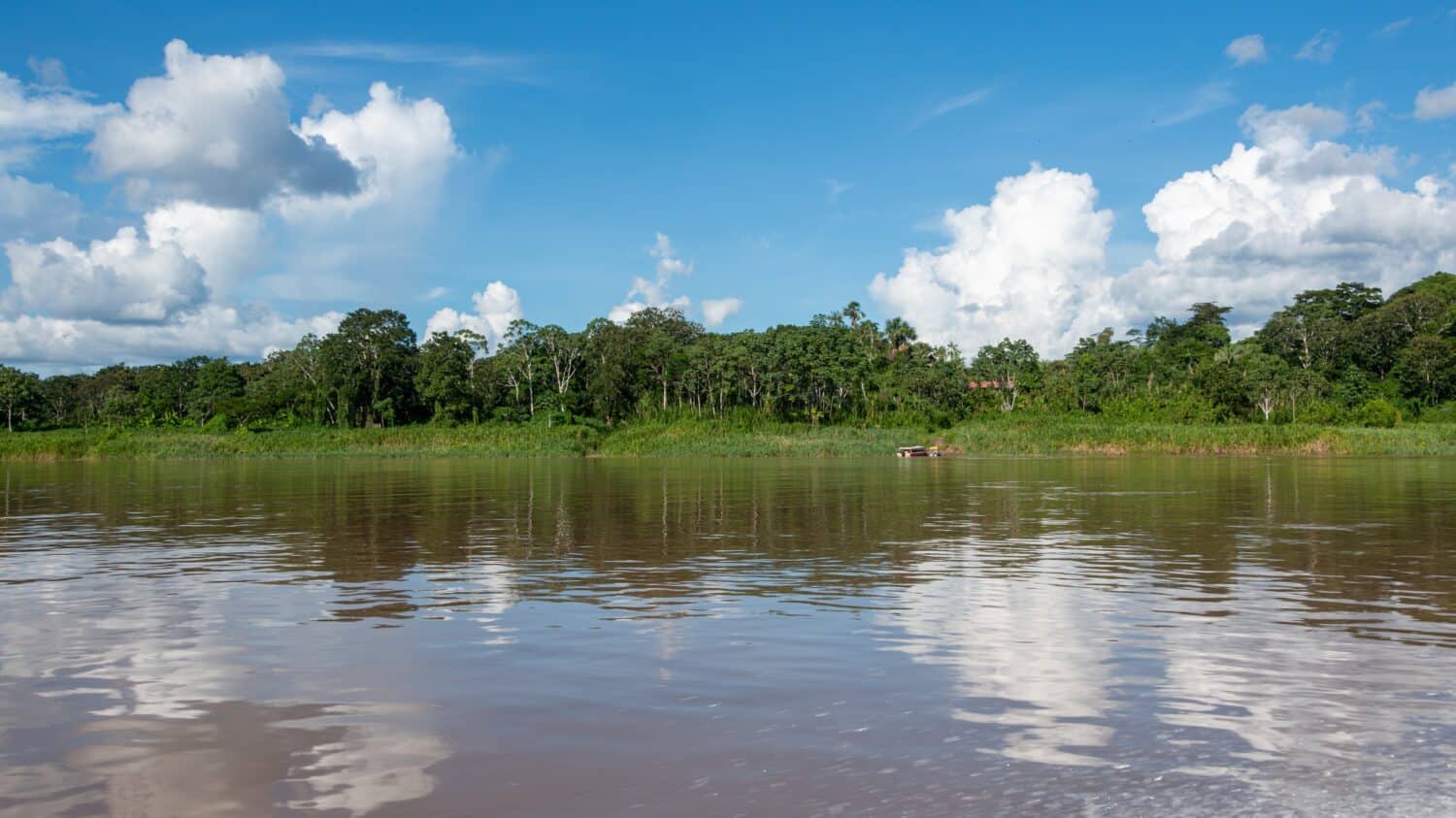
Rivers like Rio Branco and Xingu in Brazil serve as strong enough barriers that populations can’t mix, resulting in new species.
©Tetyana Dotsenko/Shutterstock.com
The story of the Alouatta matogrossensis echoes many stories of newly described species: by the time that scientists find and formally describe them, the species are already imperiled by growing environmental threats. A team of researchers from the University of Salford, as well as international collaborators, analyzed genomes of 11 howler monkey species in South and Central America. This netted two new species previously undescribed by science: Alouatta iroi and Alouatta matogrossensis. These findings come 85 years after the last howler monkey species in the region was described.
In the process of discovery, the research team added to the general understanding of regional primate evolution. They found that several major rivers that snake through the Amazon rainforest, including Rio Branco and Xingu, act as real barriers. Indeed, these waterways are formidable enough that they’ve prevented population mixing for millions of years, resulting in distinct species evolution.
Such is the case for Alouatta matogrossensis. To the untrained eye, this howler monkey species looks quite similar to the other howler monkey species in the region, Alouatta sara. However, this other species lives across the border in Bolivia, and scientists used genetic evidence to show their distinction from Alouatta matogrossensis. In the process, the scientists refined their understanding of two key surveying shortfalls: Linnaean and Wallacean. The Linnaean shortfall involves the lack of knowledge about the actual number of species that exist, and the Wallacean shortfall speaks to their geographic distributions.
Candid Camera
Just before the researchers were set to publish their findings about the newly discovered Alouatta matogrossensis species in the journal Communications Biology, they reached out to Projeto Reconecta. This project aims to protect Brazil’s incredible biodiversity by building canopy bridges across the country’s roadways. Their efforts protect creatures, particularly arboreal species, from car accidents and other human-caused problems. The researchers reviewed thousands of camera-trap photos staged near these canopy bridges. They saw pictures of capuchins, titi monkeys, and marmosets. They also spotted the newly described species, Alouatta matogrossensis.
As Fernanda Abra, a road ecologist and National Geographic Explorer who leads Reconecta, told National Geographic, “We were all amazed that we were providing safe crossing opportunities for a new monkey species.”
We were all amazed that we were providing safe crossing opportunities for a new monkey species.
The discovery of these pictures also affirmed the work of the researchers who described the new species. As Romina Batista, an evolutionary biologist and study co-author, told National Geographic, it helped with “knowing that there was a project in that region helping these animals, keeping their gene flow across the fragmented areas. That has a huge impact on maintaining this brand-new species that we just described.”
Found and Threatened
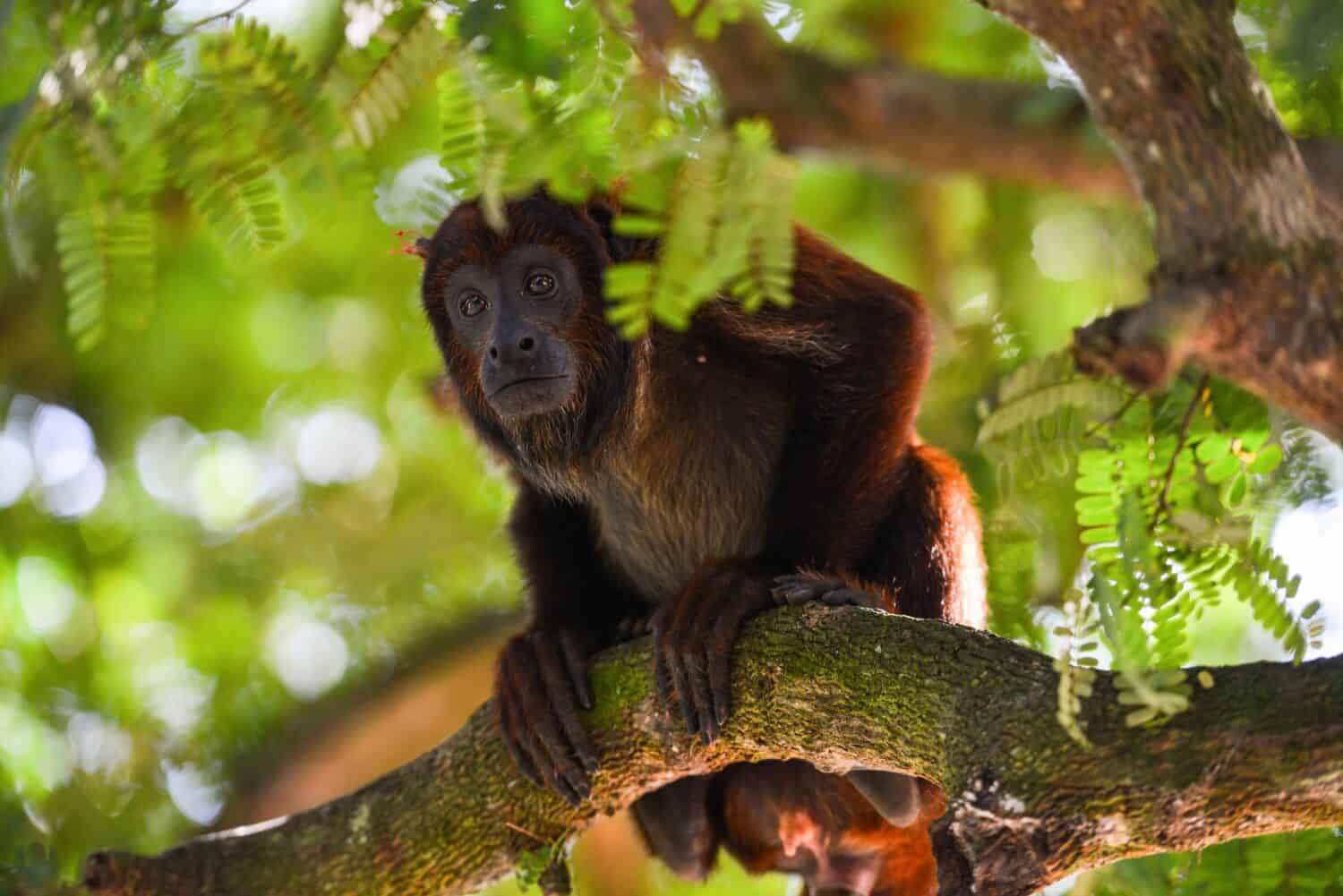
Photographic evidence of a newly described species with limited distribution might help unlock the resources to protect it from extinction.
©Pedro Carrilho/Shutterstock.com
One of the growing challenges scientists face when identifying a new species is protecting it from long-building environmental threats. Alouatta matogrossensis lives in an area of Brazil that has some of the highest deforestation rates in all of the Amazon. The natural habitat has been increasingly plowed and replaced with soybean fields and cattle pastures. The rope bridge camera that captured footage of the new howler monkey species sits on the edge of Alta Floresta, a small but burgeoning urban center. This means that the new species is already at severe risk of population reduction or outright extinction.
Scientists have yet to formally list the species with the International Union for Conservation of Nature (IUCN) Red List, but they believe it’s worthy of that status. They suggest that the species is already endangered or critically endangered due to the deteriorated state of its environment.
The fact that Alouatta matogrossensis appeared in a trap photo is beneficial. It shows that the canopy bridges are keeping species in the area safe. More importantly, however, it proves that the species has a small distribution, which might compel more outside resources to save it from extinction.