
Quick Take
- Anteaters have historically been classified into four species, although recent evidence suggests there may be as many as ten.
- Their long snouts, sticky tongues, and powerful claws make them highly specialized for feeding on ants and termites.
- Habitat destruction, agricultural fires, and road collisions are among the biggest threats facing anteater populations.
- Conservation projects are helping protect wild populations and rehabilitate orphaned anteaters.
World Anteater Day is an annual event on November 19, which is held to raise awareness and educate people about anteaters. There are some unusual-looking animals in the world, and anteaters certainly fall into this category with their elongated snouts and long tongues. However, despite their unusual appearance, they have a highly specialized diet, meaning they play an important role in the ecosystems where they live. Keep reading to discover what this role is and why they are so important!
How Many Species of Anteaters Are There?
Anteaters are native to the Americas, where they are mainly found in forests, although some are also found in grasslands and savannahs. Anteaters have historically been classified as four species – giant anteaters, silky anteaters, northern tamandua, and southern tamandua. However, recent evidence suggests that there may be as many as ten.
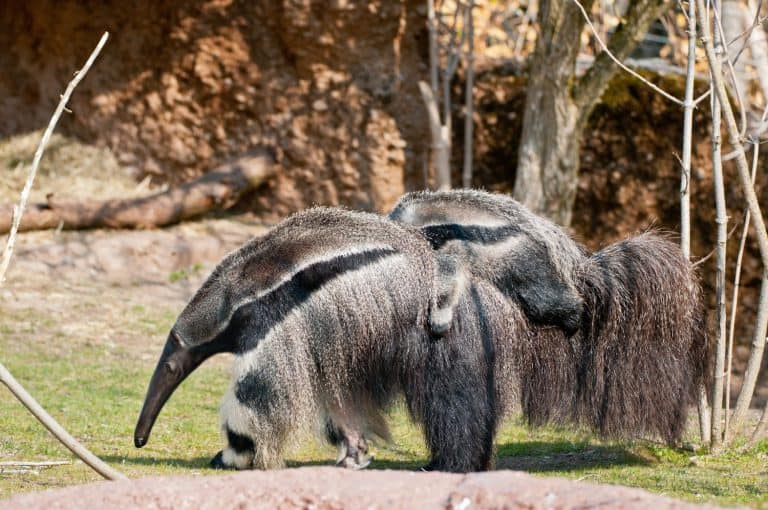
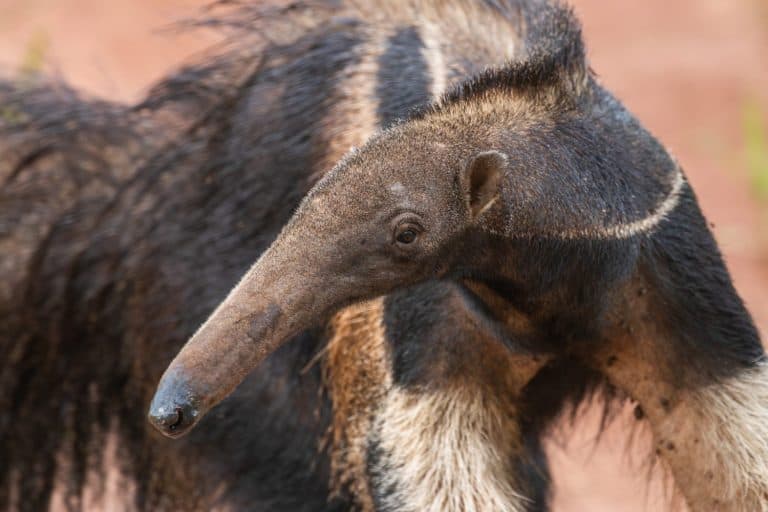
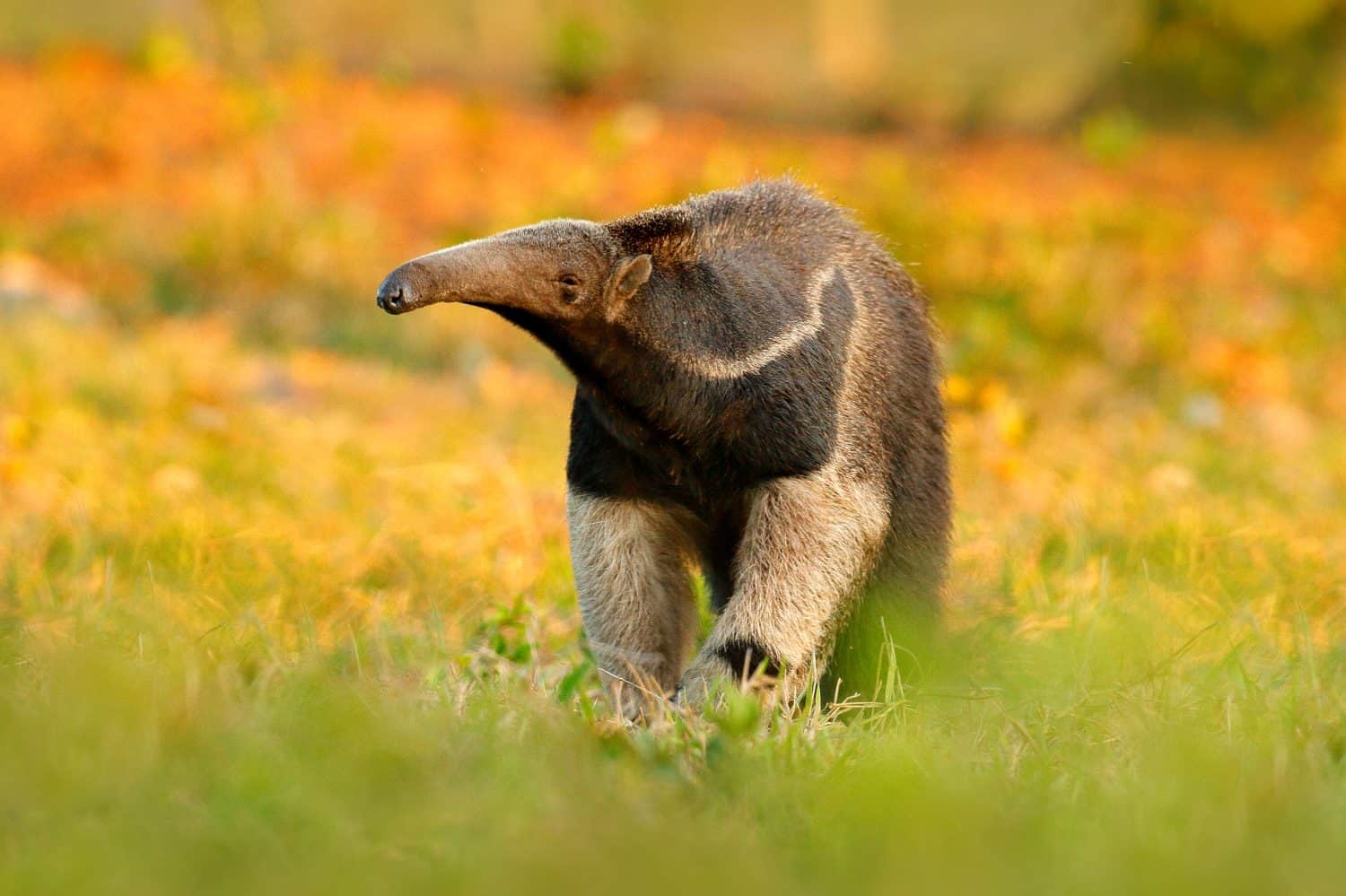
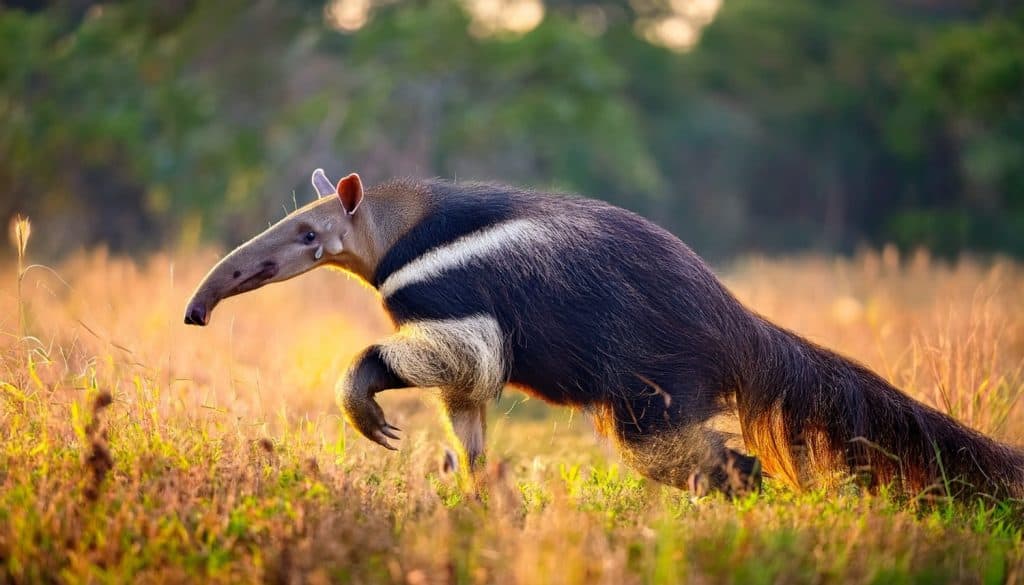
The giant anteater is the largest species and can reach around six to eight feet long, including its nose and long, bushy tail. They have a distinctive appearance, with white front legs and a grayish-brown to black head, body, and hind legs. Giant anteaters are classified as a vulnerable species by the IUCN. It is estimated that there are just 5,000 of them left in the wild and they have a declining population.
Silky anteaters are the smallest and average just 14 to 17 inches long, including a tail of around six to ten inches. The appearance of silky anteaters can vary, although most are silver-grey to yellowish-brown. They have an arboreal lifestyle and mainly inhabit lowland forests and mangroves. Silky anteaters were originally classified as one species. However, recent evidence suggests that there may be as many as seven species.
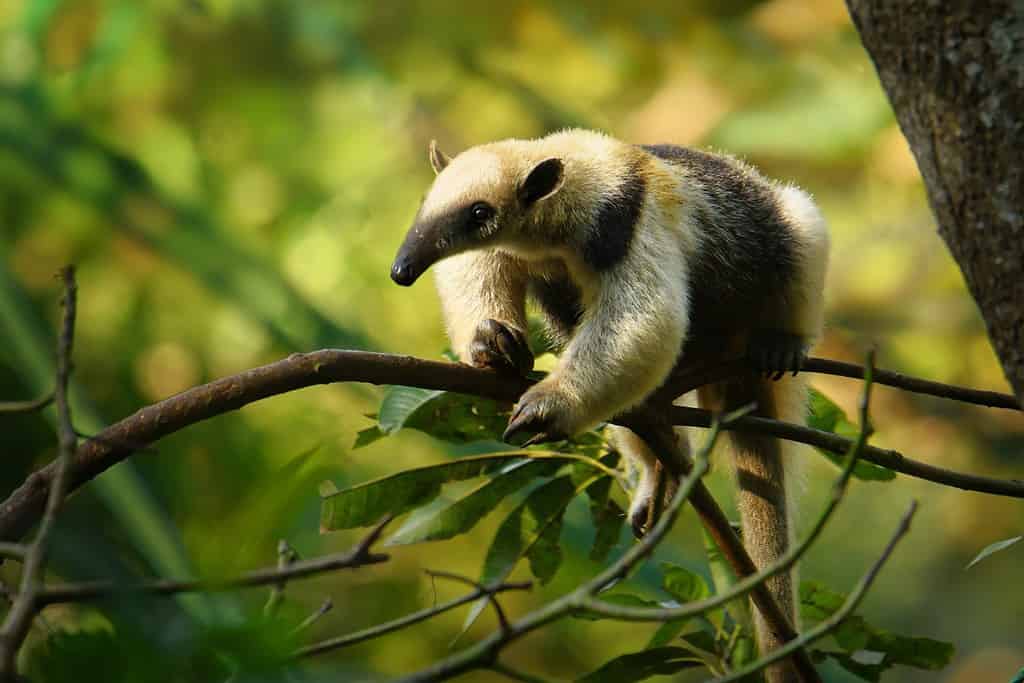
Northern tamanduas have a unique appearance.
©Martin Pelanek/Shutterstock.com
Northern tamanduas have a semi-arboreal lifestyle, spending around 40% of their time in the trees. They are medium-sized and reach around 40 to 51 inches long. Northern tamanduas have an unusual appearance, with a black pattern on their body as if they are wearing a vest. Meanwhile, their head, legs, and tail are white.
Southern tamanduas are around three to five feet long. They have a similar appearance to northern tamanduas. However, the dark vest marking can sometimes extend out onto their front legs. Their lighter-colored fur can be tan, brown, or pale yellow.
What Makes Anteaters Such Specialized Feeders?
Anteaters have some of the most unique adaptations of any animal. They feed predominantly on ants and termites, so they have extremely sharp, curved claws, especially on their front feet, so they can break into termite mounds. The claws of a giant anteater are particularly powerful and can be up to four inches long. They are also used for defense and giant anteaters have even been known to kill jaguars.
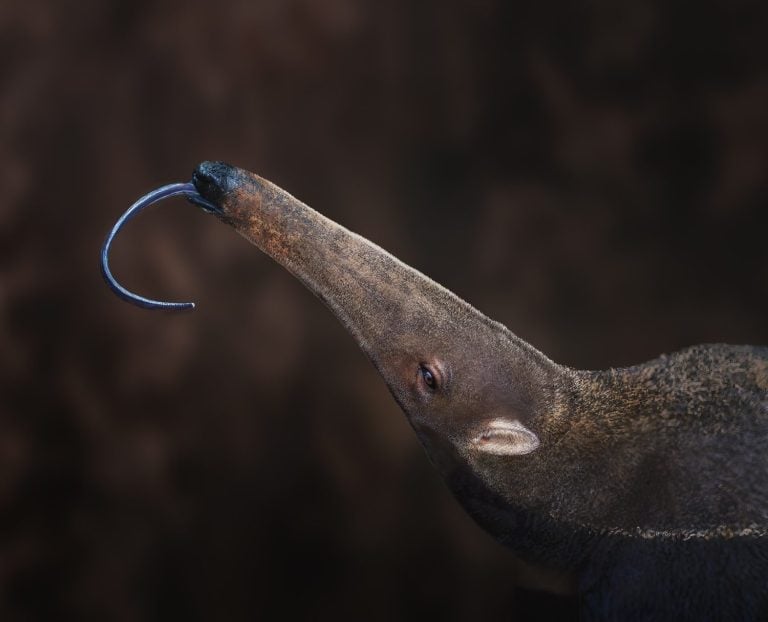
Anteaters have also developed an unusually long, tubular-shaped snout and tongue. Depending on the species, anteaters can have a head and snout length of approximately 12 to 18 inches long. The giant anteater also has the longest tongue of any land mammal, with it reaching up to two feet long.
Despite their long snout, anteaters actually have a very small mouth, which is located on the very end of their snout. Surprisingly, they also have no teeth at all. Instead, they use their long snout to reach deep into the ant nests and termite mounds. Their tongues have tiny, backward-facing projections and are covered with a sticky saliva. This is to help them collect the insects from the nests and draw them into their mouth. Giant anteaters can even flick their tongues in and out of their mouths up to 150 times per minute, allowing them to collect large quantities of food quickly.
Anteaters have a long snout and powerful claws.
©mariyamgul/Shutterstock.com
As anteaters consume so many ants and termites, they help to keep the populations of these insects in check. This makes anteaters vital for forest ecosystems in particular, as termites regularly damage trees by hollowing out the branches and trunks. Termite damage can significantly weaken trees, often causing them to fall.
Why Anteaters Are Threatened
Although only the giant anteater is officially classified as a vulnerable species, all species of anteaters face some degree of threats. The greatest concern for them is habitat loss, which threatens the forests that they live in. Deforestation is one of the biggest problems, as forests are cleared to make way for agriculture and expanding human settlements.
- LC Least Concern
- NT Near Threatened
- Vulnerable VU
- EN Endangered
- CR Critically Endangered
- EW Extinct in the Wild
- EX Extinct
As the forests disappear, the anteaters lose the places they live and their source of food. Fragmentation of habitats can leave populations isolated and struggling to survive. This makes it harder for them to find food and also to successfully reproduce. Also, as human settlements continually expand, more infrastructure is created. Roads cause further fragmentation of their habitats, and an increasing number of anteaters are killed by vehicles while trying to cross them.

Road collisions are a major threat to anteaters.
©lifebehindthelens/Shutterstock.com
Fires also cause significant issues for anteaters, as they are deliberately set to clear land for crops and agriculture. In some areas, fires are lit every year to make sugarcane crops easier to harvest. Wildfires are also an issue, with millions of acres burning across Southern and Central America in 2026 alone. The fires destroy the anteater’s habitat. They also threaten the animals themselves, as they often cannot get away from the fire quickly enough.
Protecting Anteaters
Although anteaters face an increasing number of threats, there are measures that can help them. One of the most important ways to protect anteaters is by protecting the habitat that they depend on. Establishing protected areas can help to prevent further deforestation, while wildlife corridors can help by reconnecting fragmented populations.
Conservation organizations are also working to reduce the number of anteaters killed on the roads. In Brazil, the Anteaters and Highways project is a major initiative that aims to assess the impact of roads on giant anteater populations. The results can then be used to determine which areas are the most dangerous and where the anteaters need the most help, such as identifying the most suitable locations for wildlife crossings.
The TamanduASAS Project is a project that is dedicated to the rehabilitation of anteaters whose mothers were killed on the roads. They raise the orphaned pups until they are old enough and strong enough to be released back into the wild. Often, the young anteaters are released into rehabilitation enclosures first to allow them to adapt and to ensure that they are capable of fending for themselves. Upon release, they are also monitored via GPS tracking collars. The project has also been involved with the creation of the Retiro Águas Vivas Private Natural Heritage Reserve, which is now a key release site for the anteaters.