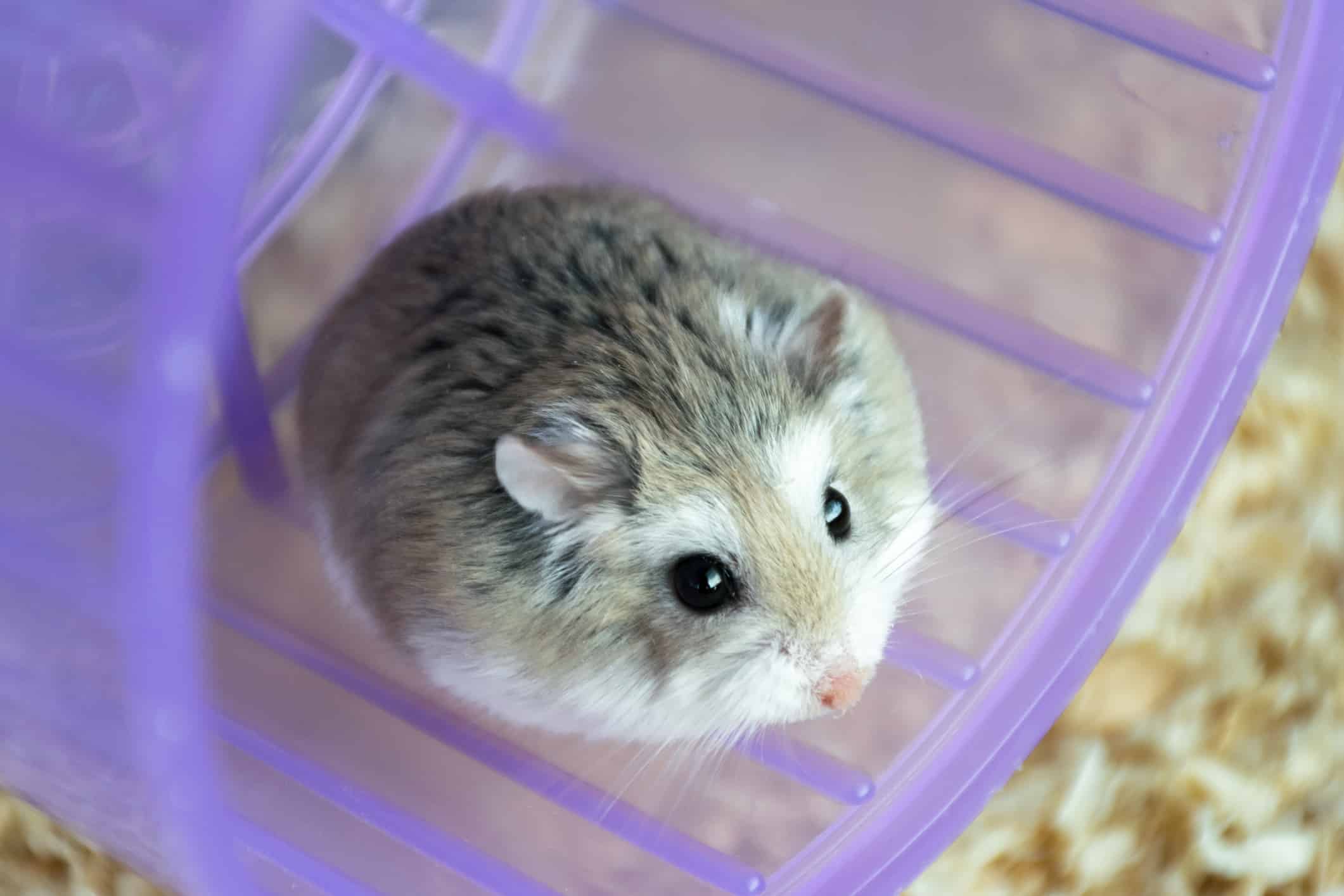

The Roborovski, also referred to as a robo dwarf hamster, is a small and active pet that requires specialized care. They are the smallest species of domesticated hamster, measuring around 2–3 inches in length. Robo hamsters are available in agouti coloration, with sandy brown and white bodies and no dorsal stripe. However, robo hamsters can also be found in rarer color forms like mottled, platinum white, red-eyed, and piebald. At first, robo dwarf hamsters might be a bit shy, but with plenty of socialization and proper care, they can make fun and interactive pets for both adults and children alike.
Lifespan and Care Requirements
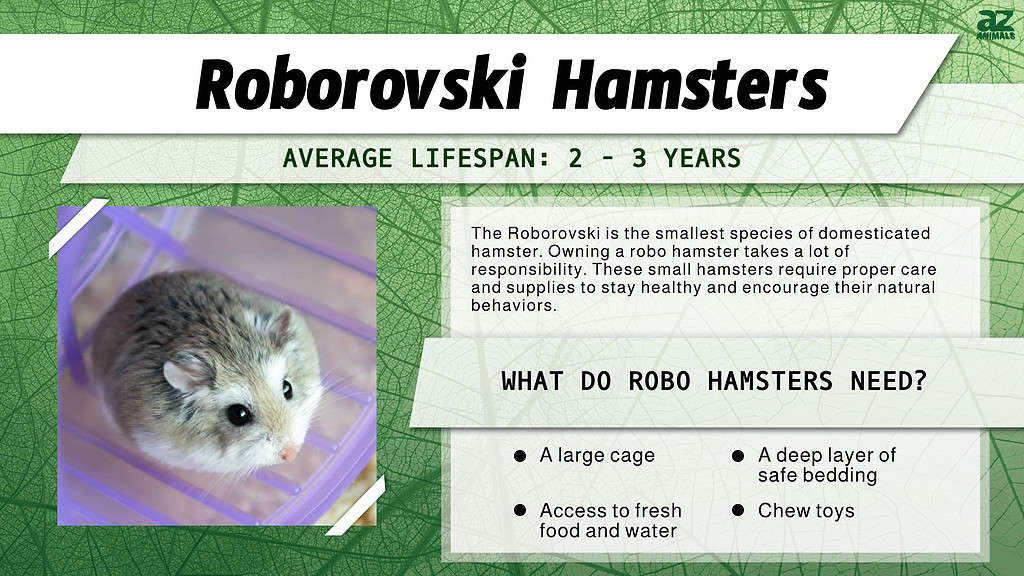
Caring for a robo hamster takes a lot of responsibility, time, and money. Before getting a robo dwarf hamster, you need to ensure that you can meet all of its needs. Like all species of hamster, the robo is a short-lived pet. Roborovski hamsters have an average lifespan of around two to three years, but a healthy and well-bred robo is more likely to live longer than one receiving improper care. Some robo hamsters can live well into their third year, but this is uncommon.
Although robo hamsters do not live for very long, they still require the proper care. They are not disposable pets that can be kept in small wire cages with an improper diet and no enrichment. Instead, robo hamsters require a spacious enclosure with a deep layer of substrate for burrowing, a quality diet, proper medical care, and plenty of enrichment.
Most of the robo hamster’s care requirements are similar to those of other hamster species, such as Syrians and other dwarf hamsters. As the smallest species, the main difference is that they may eat less food than some larger hamsters.
Pet Care Essentials
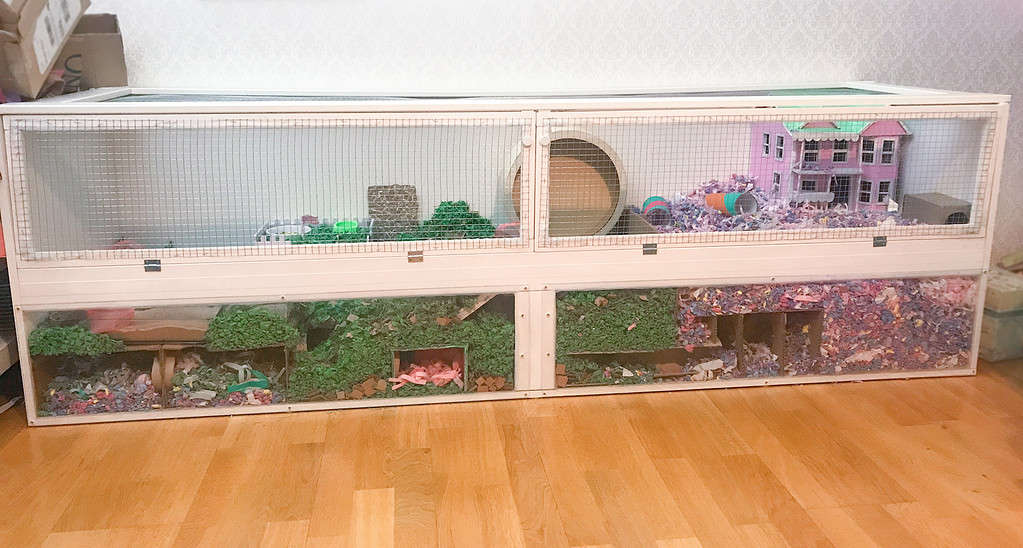
The minimum size cage requirement for a robo hamster is 600-775 square inches.
Let’s take a look below at what a robo hamster’s care entails. You will need the right size enclosure, proper bedding, high-quality food, and enrichment.
Enclosure
One mistake new hamster-owners make is choosing the wrong-sized cage for their hamster. The Roborovski hamster needs a spacious cage that meets the minimum floor space requirements of 600-775 square inches. A large cage with continuous floor space will provide robo hamsters with enough space to live comfortably. Robo hamsters are very active and enjoy exploring, so confining them to a small cage isn’t ideal. Even if you plan to take your robo hamster out for daily playtime or give them an exercise wheel, it still won’t replace their need for a large cage.
You can purchase hamster cages that already meet the minimum size requirements. You can also have your robo hamster cage custom-made, or consider alternatives. Large glass fish tanks or plastic bins can be converted to a comfortable enclosure for your robo hamster. You will need to create a mesh lid for these types of cages to prevent your robo from escaping and keep the cage ventilated.
Your robo hamster’s cage should be spot-cleaned two to three times a week and deep-cleaned every one to two months. Spot cleaning involves removing soiled bedding that they urinated on, replacing their bath sand, and removing old food. When you do a deep clean of their cage, you will remove most of their bedding, replace it with a fresh batch, and wipe dirty surfaces with a non-toxic cleaning solution.
Bedding
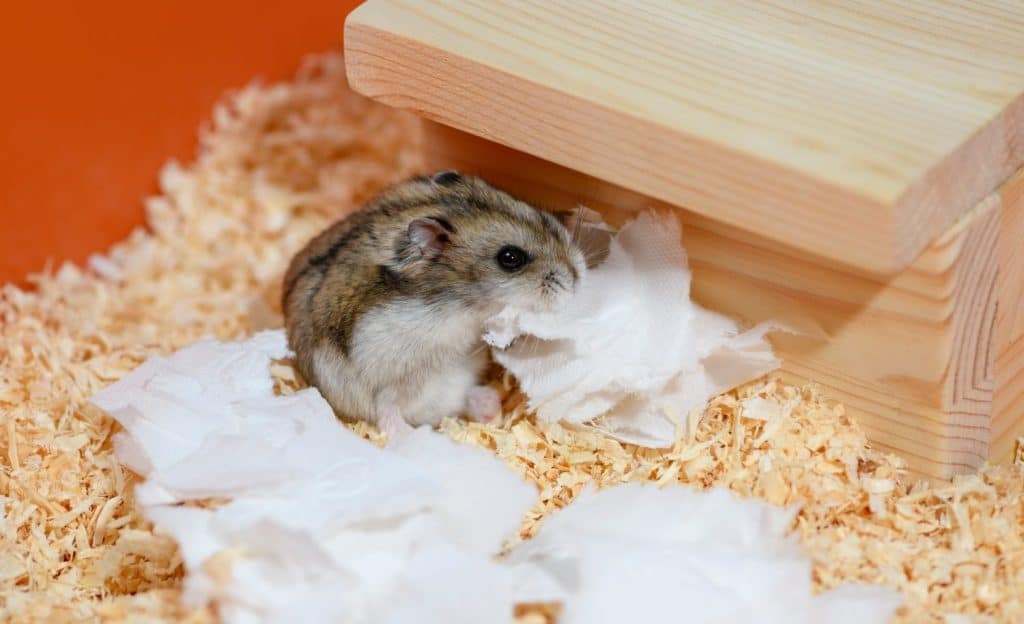
Torn toilet paper and aspen wood shavings make safe bedding for hamsters.
©IRINA ORLOVA/Shutterstock.com
Robo hamsters are avid burrowers and create burrowing systems in the wild. In captivity, this can be difficult for them unless they have a deep layer of bedding in their cage. They need at least 6 to 8 inches of bedding, although 10 is often recommended for hamsters. This will encourage your robo hamster to create burrows where they will spend most of their time eating and sleeping. Digging burrows in a deep layer of bedding is also a form of enrichment for them.
There are many different bedding options for hamsters, but not all of them are safe. Some substrates that are marketed for hamsters are unsuitable and may even put your hamster’s health at risk. The best bedding for robo hamsters is unscented paper bedding. This type of bedding is widely available and very safe. Robo hamsters also enjoy different bedding textures in the cage, such as a mixture of paper bedding and coco peat. Keep in mind that not all of the bedding on the suitable list is good for burrowing. Some of them do not hold burrows properly, so they need to be mixed with bedding that can hold burrows.
| Unsafe | Safe |
|---|---|
| Pine and cedar bedding (even kiln-dried) | Unscented paper-based bedding |
| Printed newspaper | Aspen wood shavings |
| Sawdust | Torn toilet tissue |
| Cat litter | Soft hay and grasses |
| Cotton-fluff nesting material | Coco peat or fiber |
| Scented or medicated bedding | Hemp bedding |
| Corncob | Walnut bedding |
| Straw | Paper-based pellets |
Diet

All hamsters need a balanced and healthy diet of pellets, grains, seeds, nuts, and fresh foods.
©RaquelVizcaino/Shutterstock.com
Robo hamsters are omnivores and thrive on a diet of pellets, grains, seeds, nuts, and fresh foods. They can also eat mealworms and other insects for additional protein. When choosing a hamster food, you want to consider the food’s quality and variety. Although robo hamsters can be fed a pellet food on its own, adding variety to the food encourages their natural foraging behavior. The pellets will form the basis of your robo hamster’s diet, and seed mixes can be bought separately.
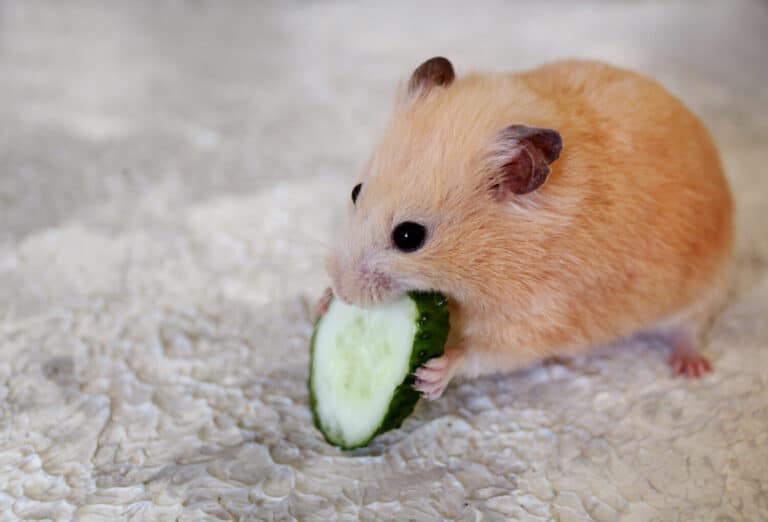
Robo hamsters require access to fresh water and food daily. Their food bowl should be kept filled and topped up when necessary. Hamsters have very fast metabolisms that require them to eat throughout the day. Fresh foods like carrots, spinach, cucumber, and broccoli can be fed to robo hamsters as a treat. They should not be fed often and only in small amounts of no more than half a teaspoon in size. Any fresh foods that your robo hamster does not eat should be removed to prevent spoiling.
Like all hamsters, the robo is a hoarder with two cheek pouches on either side of their face. Robo hamsters will naturally store their food in their cheek pouch to bring it back to their nest. This is their preferred place to eat and protect their food stash.
| Nutrients | Percentage |
|---|---|
| Protein: | 16% – 21% |
| Fiber: | 8% – 12% |
| Fat: | 4% – 7% |
Enrichment
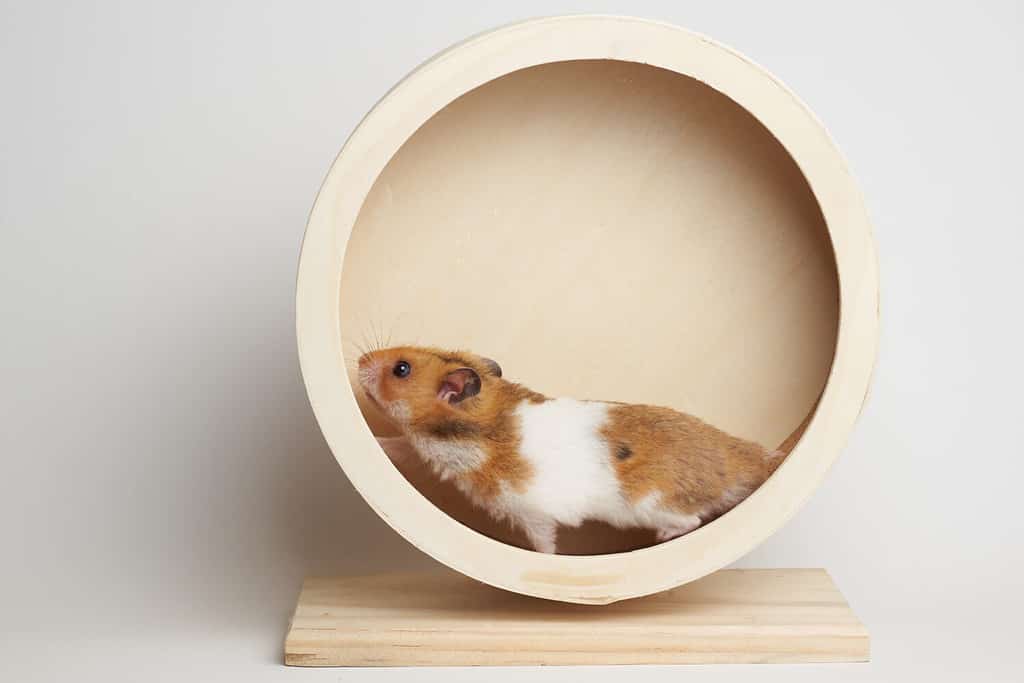
Hamsters enjoy running on exercise wheels, but you need a wheel with a smooth running surface.
©Johannes Menge/Shutterstock.com
Like any hamster, robo hamsters can become bored if they do not have any enrichment in their enclosure. The best forms of enrichment for robo hamsters are exercise wheels, chew toys, deep bedding layers, and sand baths. Hamsters love to chew, so offering them safe and non-toxic chew toys is a great way to encourage this behavior. Their teeth also continuously grow throughout their lives, so chew toys help keep your hamsters’ teeth in good shape.
As an active species of hamster, robos love running on their exercise wheel. They need a wheel between 8 to 10 inches in size with a smooth-running surface. You want to avoid wheels with mesh or bars since your robo’s paws can get trapped or damaged by them. Robo hamsters benefit from having different interactive toys in their enclosure as well. This includes things like tunnels, mazes, millet or oat sprays, reptile vines, cork bark, and wood pieces. However, levels and ladders are not recommended for robo hamsters since they could fall and injure themselves.
Robo hamsters love to clean themselves in sand since hamsters should never be bathed in water. Instead, the best way to bathe your robo hamster is in sterilized bathing sand created just for rodents. The sand should be unscented, dust-free, and non-toxic.
Cost Considerations

Roborovski hamsters need to be taken to an exotic veterinarian for checkups.
©Pixel-Shot/Shutterstock.com
Although hamsters are not as expensive as dogs or cats, they do have various initial and ongoing costs worth considering. The Roborovski hamster itself only costs between $10 to $30, which is fairly cheap. However, the proper supplies, food, and cages are costly. A robo hamster and their supplies may cost you around $300 to $550 in total. The enclosure, food, water bowls, and certain enrichment items will be one-time costs.
Although the upfront costs can be high, the ongoing costs for a robo hamster are much lower. You will only need to spend money on your robo hamster’s food, bedding, treats, bathing sand, and toys on a monthly basis. This will likely be around $30 to $60 per month, depending on how often your robo hamster needs these supplies replaced.
Like most pets, your robo hamster needs to be taken to an exotic veterinarian for checkups. So be sure that you have set money aside in case your robo does need to see a veterinarian. Perform weekly health checks to ensure your robo is in overall good health with tidy fur, bright eyes, and no limping or visible injuries. If you can handle your robo, you should check for any lumps and bumps that could indicate a problem. It is also recommended to take your robo hamster for a veterinarian checkup when they reach their senior life stage at over 1.5 years of age.
Handling and Socialization
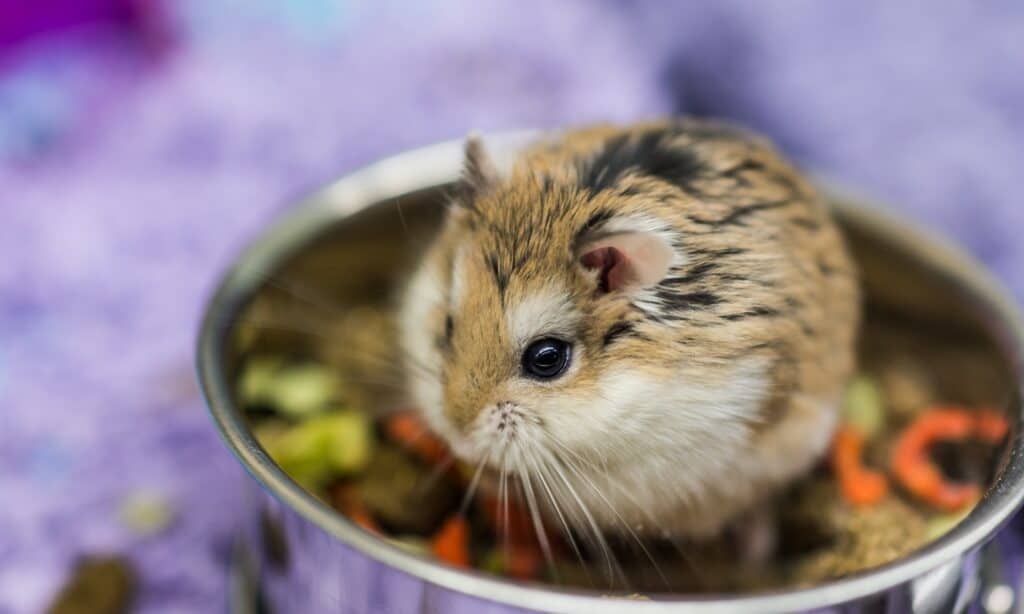
Robo hamsters are small, fast hamsters that can be difficult to handle.
©iStock.com/krblokhin
Roborovski hamsters are often described as being a timid species of hamster. They can take longer to warm up to their owners before they can willingly be handled. Robos are also very fast, and their small size makes it difficult to hold them in comparison to other hamsters. While some robo hamsters can become hold-able with early handling and socialization, others are too fast and fearful of being held.
When you first get your robo hamster, let them settle into their new home for three to five days. This means that you should leave your robo hamster alone and not interact with them aside from replacing their food and water. After this acclimation period, you can begin taming them.
The taming process involves getting your robo used to your scent and to being handled. During this time, you can offer them healthy treats in the palm of your hand. Avoid picking them up right away, since this can stress them out. Some experienced robo owners recommend handling them over a soft blanket or pillow, since robo hamsters are fast and may jump out of your hands. It is best to purchase a playpen or sit with them in a dry bathtub to prevent them from escaping during taming.
Keeping Roborovski Hamsters Together
Although Roborovski hamsters have historically been considered more tolerant of living in same-sex pairs or small groups, current best practices recommend housing all hamsters, including Roborovskis, individually to prevent fighting and injury.
It is not necessary to keep multiple robo hamsters together since they do not get lonely or crave companionship. Furthermore, robo hamsters may fight when they are kept together. This could result in injuries that require expensive vet visits. It could also require the purchase of another suitable cage and supplies so you can separate them, which would be costly.