
Quick Take
- A vocal trick perfected in concert halls turns out to have evolved independently in the forests of Madagascar, and the physics behind both are identical. See the vocal parallel →
- Indri lemurs can't survive in captivity, which makes studying their haunting songs a race against a deadline scientists are only beginning to understand. Learn about indri survival →
- Opening your mouth wider seems too simple to matter, yet for indris, that single movement is the difference between being heard and being ignored across miles of dense jungle. Explore how indris project sound →
- Indri songs are described as 'between a wail and a siren,' yet their structure reveals something far more sophisticated than any random animal call. Discover the song structure →
There are over 100 species of lemur, and all of them live on the mysterious island of Madagascar. Many of these species share similar qualities—specialized lower front teeth for grooming and female-dominant social hierarchies—but the indri lemur stands apart. Not only do they have short, stubby tails and heavily folivorous diets, but they also sing incredible songs. These vocalizations are as haunting as they are beautiful. They contain melodies, and when several indri synchronize their vocalizations, the sound carries for miles through the thick Madagascar foliage.
The latest research into these songs suggests a striking familiarity with professional opera singing. Scientists found that the subtle shape changes of the mouth and throat that opera singers use to project their voices involve mechanisms similar to those that indri rely on to communicate across wide distances. Let’s learn more about this latest research, how it resembles a vocal technique called formant tuning, and how understanding indri communication can help protect them in the wild.
The Indri Lemur
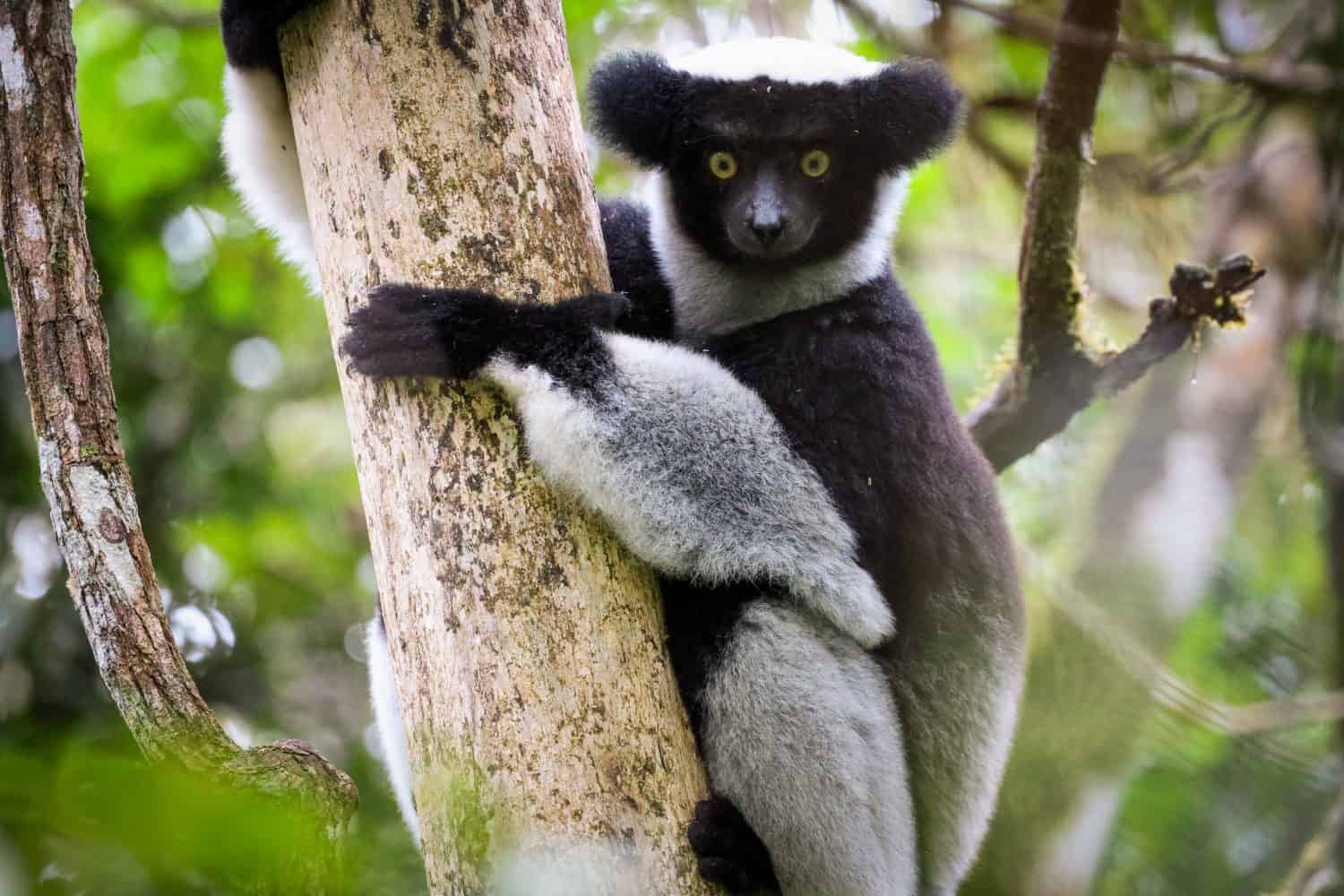
Despite their sacred status in local folklore, indri lemurs are at increasing risk due to hunting, agriculture, and habitat fragmentation.
©Dave Primov/Shutterstock.com
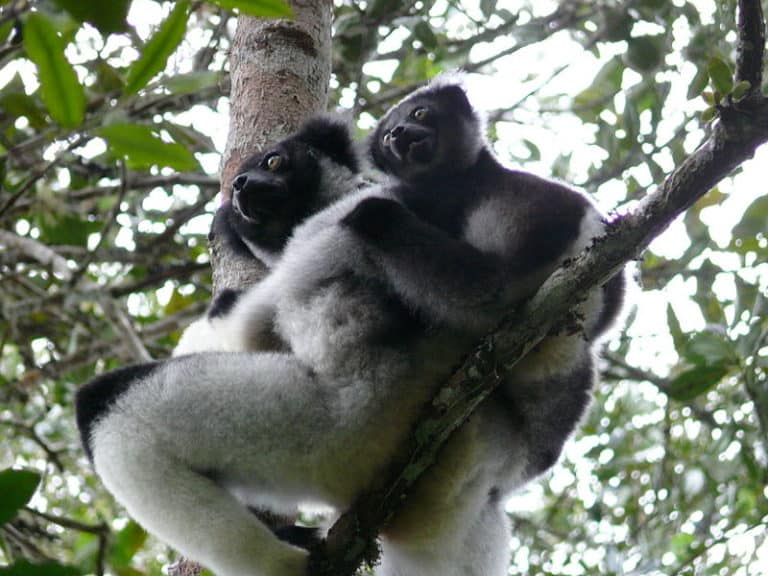
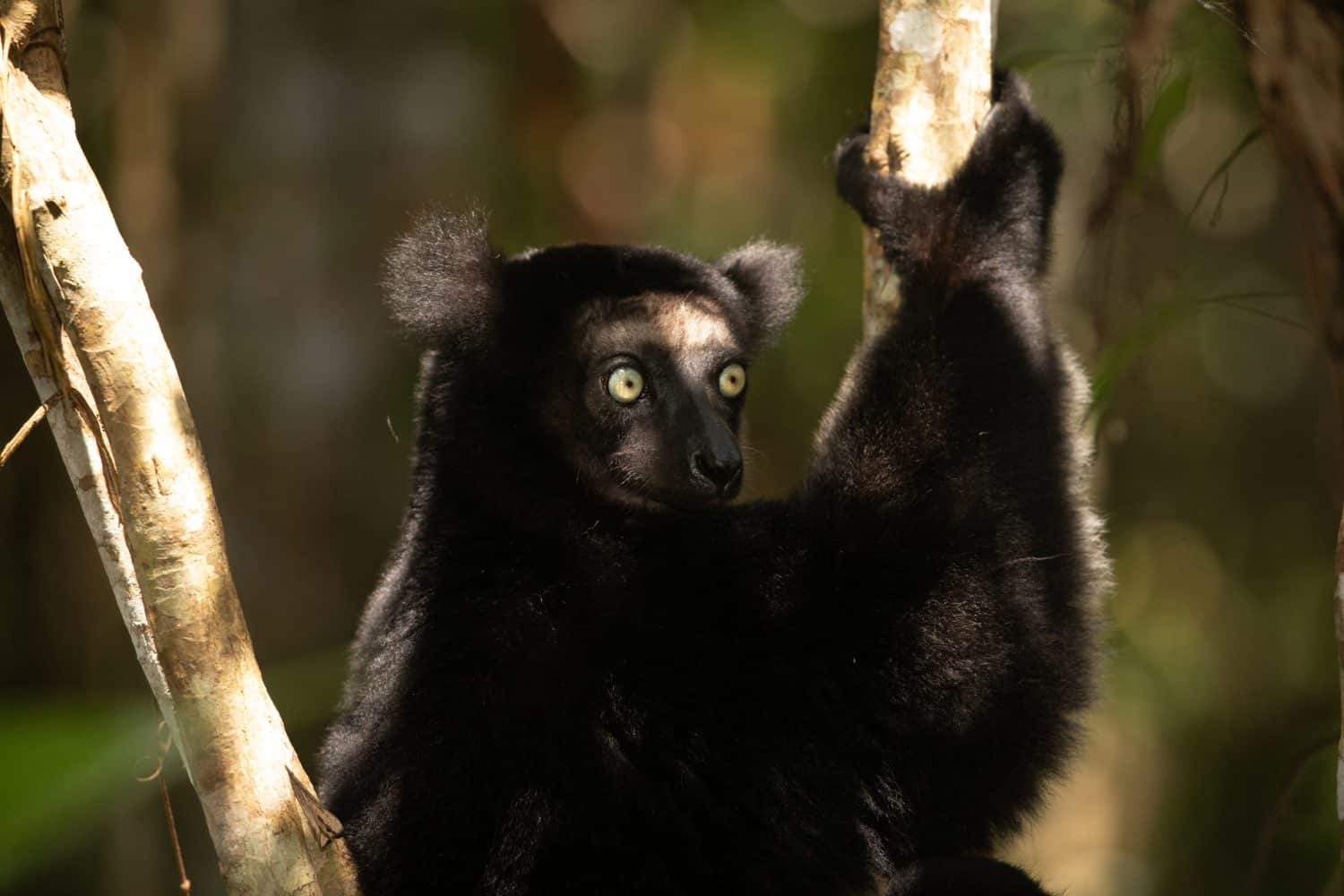
There are many lemur species living on the island of Madagascar, but indri lemurs are one of the largest. Indris, also called babakotos, reach over 25 inches in head-to-body length and weigh between 13 and 21 pounds. They have black and white fur and stay upright when climbing through the trees. They are monogamous and inhabit small family groups. While other lemurs are known to eat bugs and fruits, indris are the most specialized folivores among lemurs, subsisting mostly on young leaves but also eating flowers, fruit, seeds, and bark.
In local folklore, the indri have special status. While various stories explain this creature’s origins in different ways, all treat it as sacred and not to be harmed. Despite this mythological status, however, these lemurs are hunted regularly. Due to hunting, as well as agriculture and habitat fragmentation, indris have become a critically endangered species. Some estimates put their population between 1,000 and 10,000 individuals. Furthermore, research suggests their overall population could shrink by 80% over the next three generations.
The most remarkable thing about indri, however, is their haunting, melodic songs. Navigating the thick foliage of Madagascar isn’t easy, so indri rely on vocalizations that carry over miles to enforce territorial boundaries and maintain social unity. They don’t do well in captivity either, so scientists must study them in their natural habitat. With this context in mind, we turn to the latest research on these remarkable songs.
A Siren, Soprano Song
Seeking a better understanding of indri communication, scientists headed to Madagascar to learn more. The research team, comprising scientists from the University of Turin and the University of Warwick, among others, analyzed these songs to learn exactly how the lemurs produced them.
As lead author of the study, researcher Filippo Carugati explained to Reuters that these songs stand out. He said these songs are “often described as something between a wail and a siren: long, loud, rising and falling notes, quite haunting and almost mournful to human ears, but highly structured, sung as a duet with male and female phrases interlocking rather than simply overlapping.”
The research team analyzed 83 video recordings of 19 separate wild indris living in Madagascar’s Maromizaha forest and Mitsinjo reserve. By tracking facial movements from individual video frames and pairing them with synchronized audio, they were able to statistically determine whether mouth opening predicted pitch. These predictions not only worked, but they also pointed toward a technique opera singers use to dramatically extend their vocal delivery distance. Called formant tuning, this process involves shaping the vocal tract to align its resonant frequencies with the frequencies of the notes being sung. The scientists found that indris do something similar; they open their mouths wider for higher-pitched notes.
Communication Distance
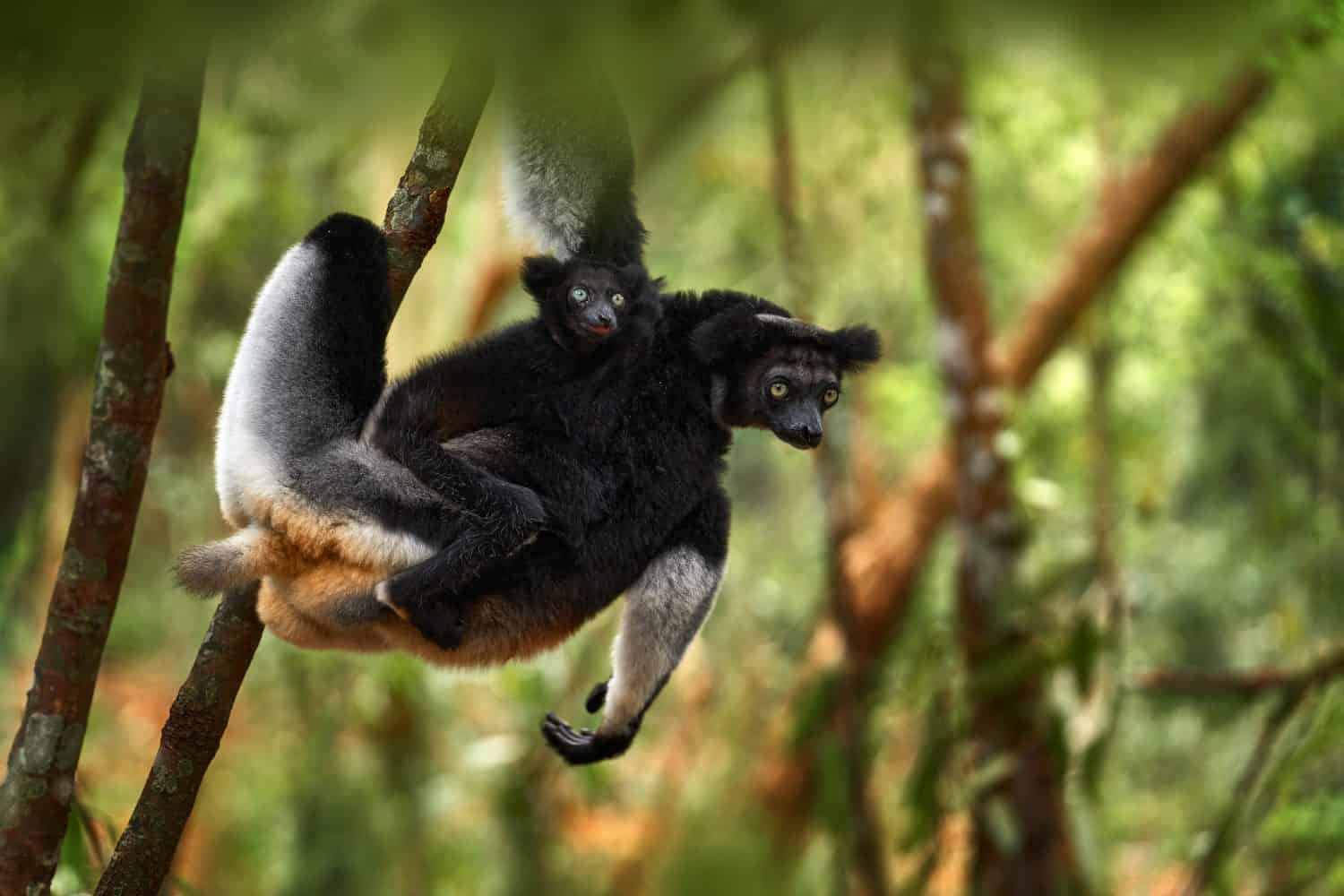
Indri lemurs’ haunting songs are integral to their survival in the wild.
©Ondrej Prosicky/Shutterstock.com
With this technique, indri lemurs can amplify the power and distance of their songs considerably. As researcher Filippo Carugati explained to Reuters, this process involves subtle muscle movements. He said, “Picture the shape of your mouth and throat as a kind of tube. When you open your mouth wider, you change the shape of that tube, and that changes which frequencies it naturally resonates with—a bit like how a longer or shorter tube on a wind instrument changes its tone.”
Indris rely heavily on their songs for all types of activities. Songs help indri relate to their environment and, when necessary, enforce territorial boundaries. The researchers noted that indri songs go on longer when one group is close to another. They also believe that this kind of research is important in shaping better appreciation for a species that needs the wild to survive.
As study co-author Chiara De Gregorio explained to Reuters, these songs are central to indri existence. She said, “Unlike many other species, they have so far proved extremely difficult to maintain and reproduce in captivity. Their survival ultimately depends on protecting them in the wild.”