
Quick Take
- Lemurs crossed hundreds of miles of open ocean to reach Madagascar, though not in the way you might expect. See how they crossed →
- One extinct lemur species was roughly the size of a gorilla, and it shared an island with a creature smaller than your fist. Explore the size extremes →
- Unlike nearly every other primate society, lemur groups flip the usual power structure upside down. See the female hierarchy →
- Madagascar's entire tourism economy hinges on lemur survival, and losing them would be far more than an ecological tragedy. See the economic stakes →
Mark your calendars for October 30, 2026, when we celebrate World Lemur Day. There are an estimated 112 species of lemurs, and all are native to Madagascar, the only place on Earth where lemurs occur naturally in the wild. Scientists believe the ancestors of lemurs drifted from Africa to Madagascar across the Mozambique Channel on floating rafts of tangled vegetation tens of millions of years ago. There, they evolved in relative isolation from other primates and occupied a wide variety of ecological niches.
These unique animals range in size from roughly one ounce to 20 pounds. Some lemurs are seed dispersers, playing an important role in the health of their ecosystems. Unfortunately, according to a 2020 report from the International Union for Conservation of Nature (IUCN), an estimated one-third of all lemur species in Madagascar were classified as Critically Endangered, with 98% threatened with extinction.
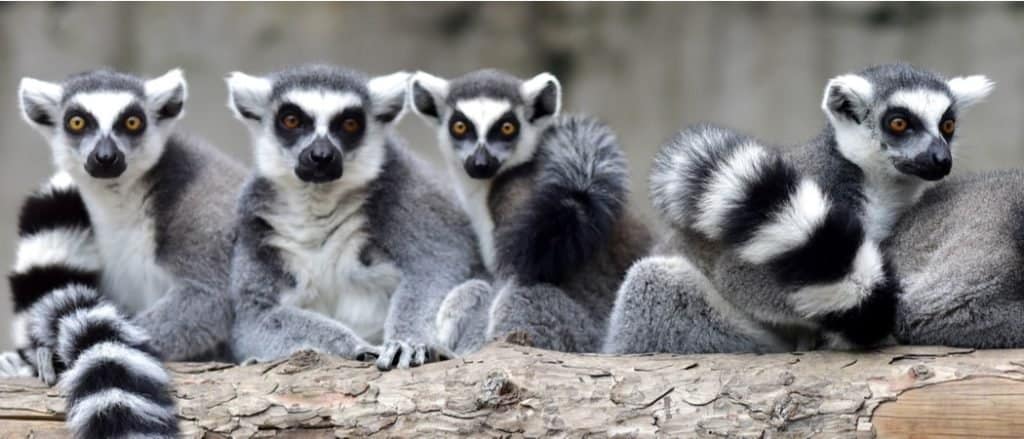
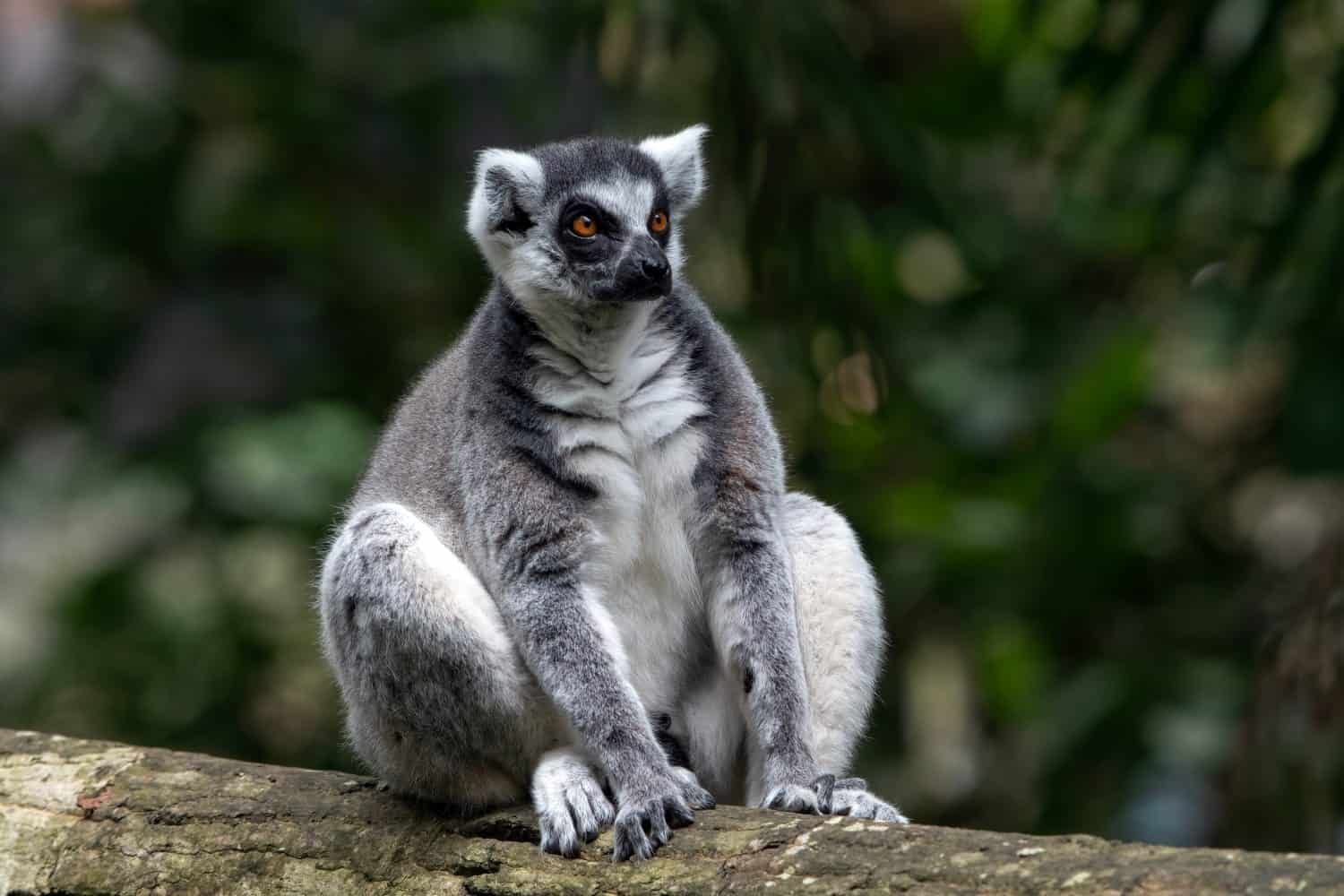
Ring-tailed lemurs are highly social and live in female-dominant groups.
©Wang LiQiang/Shutterstock.com
How Did Lemurs Find Their Way to Madagascar?
Fossil and genetic evidence shows us that lemurs did not originate in Madagascar. This biodiverse island has been isolated from the rest of the world for more than 80 million years. A staggering 85% of Madagascar’s species are found nowhere else in the world. The species that ended up on the island evolved with less competition and many new niches to fill, unlike in their former homes.
But how did lemurs arrive at such an isolated place? Scientists believe that lemurs rafted across the Mozambique Channel from Africa to Madagascar roughly 50 to 60 million years ago. Rafting occurs when animals are carried across bodies of water on mats of tangled vegetation.
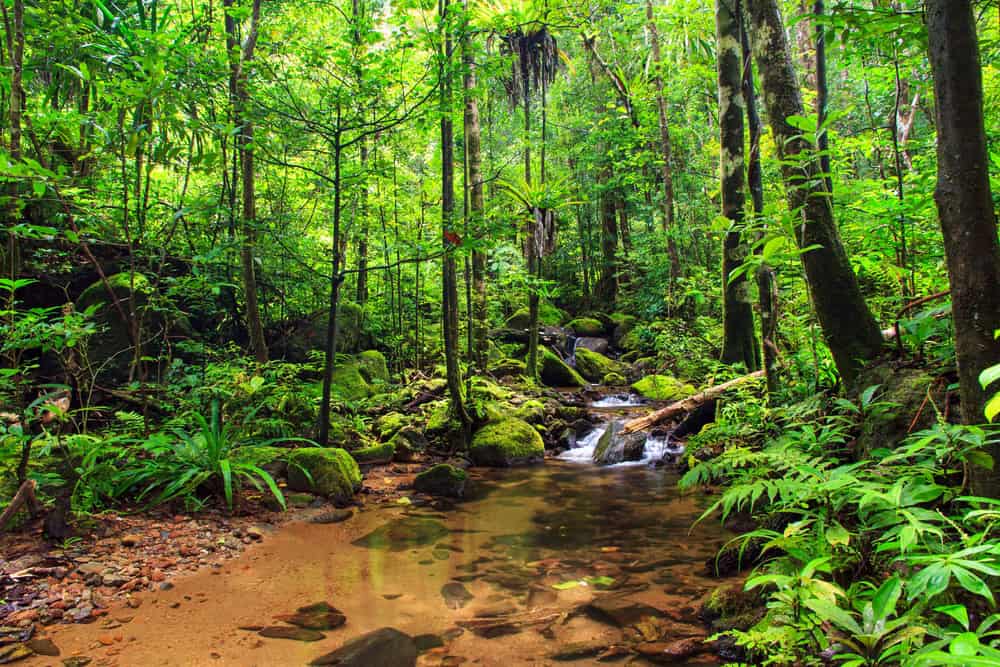
The Masoala National Park in Madagascar is a UNESCO world heritage site and home to the red ruffed lemur.
©Dennis van de Water/Shutterstock.com
Animals taking shelter in trees or other vegetation during storms could have been swept out to sea on the waves of a tropical storm. If conditions were right, and the ocean currents brought the rafts with their inhabitants swiftly to Madagascar, the ancient primates would have found themselves in an entirely new place.
From Tiny Mouse Lemurs to the Indri
Lemurs are in the suborder strepsirrhines, otherwise known as wet‑nosed primates. Left isolated to evolve on an island without much competition, lemur species developed to be remarkably diverse.
The smallest lemur, and possibly the smallest primate, is Madame Berthe’s mouse lemur (Microcebus berthae) at a tiny 3.5 to 4 inches with a weight of one ounce. The largest lemur that ever existed weighed an estimated 400 pounds, about the size of a gorilla. Archaeoindris fontoynontii weighed around 400 pounds.

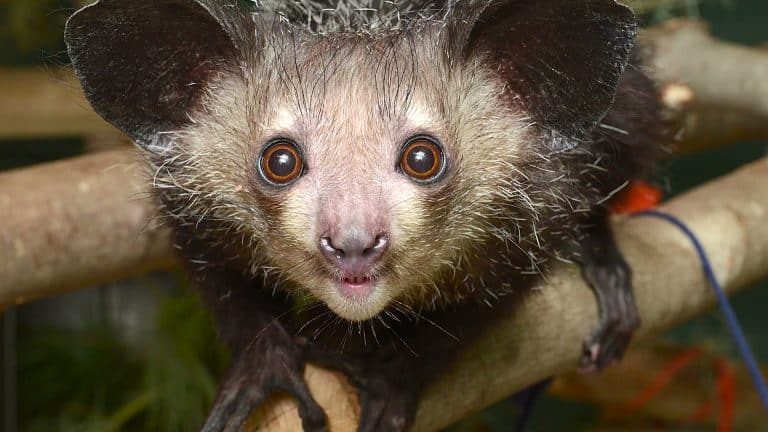
The aye-aye uses its specialized elongated middle finger to hunt by tapping on tree bark and listening for insects through echolocation.
©javarman/Shutterstock.com
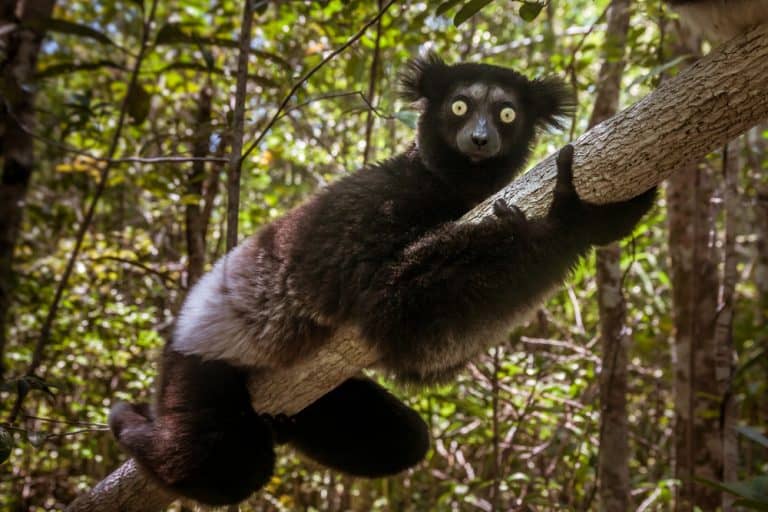
The largest living lemur is the indri (Indri indri) at around 20 pounds. The indri is famous for its haunting song, which it uses to communicate with other members of its group. One of the rarest lemurs to spot in the wild is the aye-aye (Daubentonia madagascariensis), an unusual nocturnal species with large bat-like ears and a specialized elongated middle finger.
Why Are Lemurs Such Social Animals?
Unlike male-dominated chimpanzees and gorillas, most lemur species form female-led social groups. Dominant females lead a group of 3 to 30 members. The dominant females eat first, get the best resting spots, and tell the others in the group when it’s time to leave an area. Males also rank hierarchically, but even the highest-ranking male is below the females.
Lemurs communicate through scent and vocalization. While the indri sing their haunting songs, black-and-white ruffed lemurs (Varecia variegata) howl and bark to defend their territory and keep in contact.
Ring-tailed lemurs (Lemur catta) communicate vocally. They also have a unique way of communicating by scent. Ring-tailed lemurs have scent glands on their chest and wrists. During mating season, the males rub their scents on their long tails and wave them at each other. The winner is the lemur with the most powerful stink.
Conservation Programs Give Lemurs a Lifeline
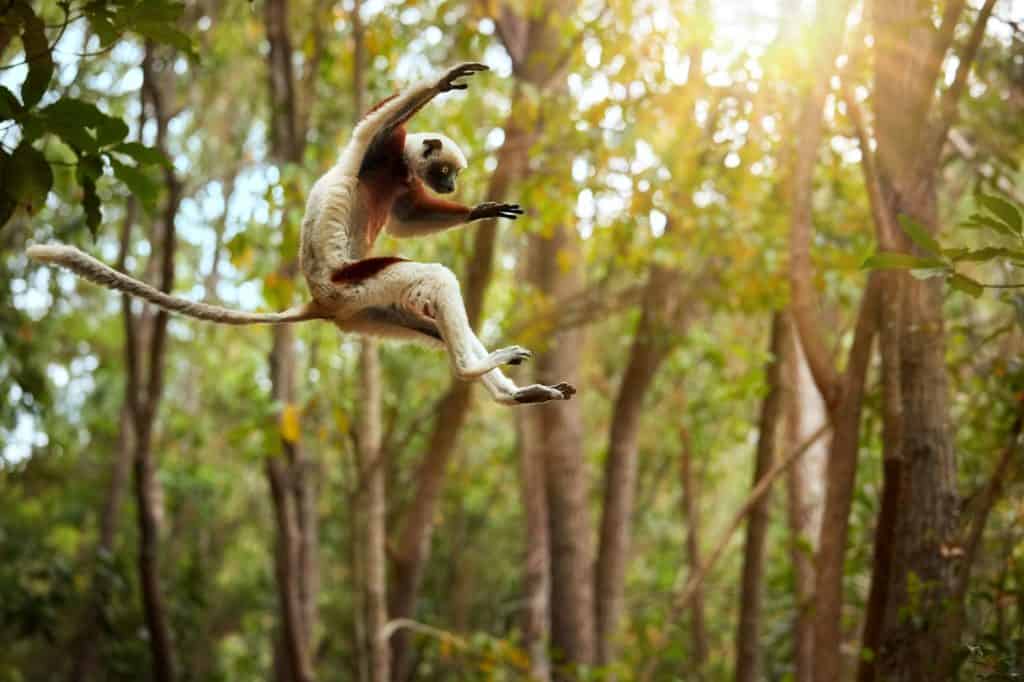
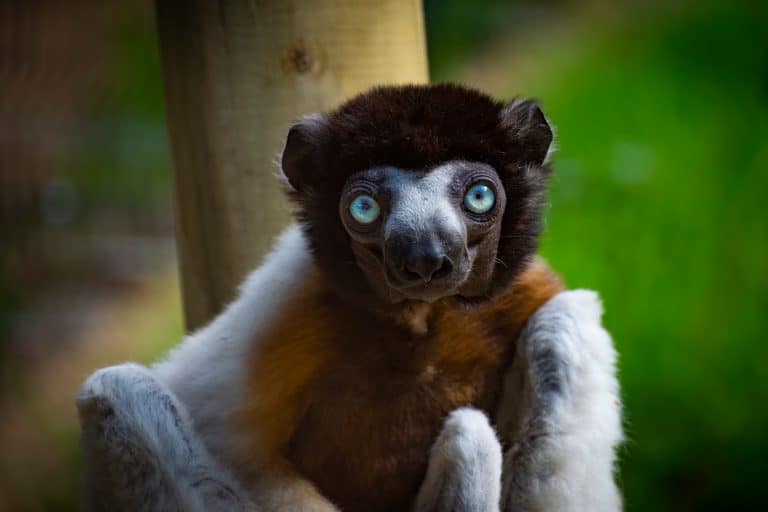
Coquerel’s sifaka can leap as far as 30 to 40 feet to reach the next tree.
©Martin Mecnarowski/Shutterstock.com
One important way zoos work to save endangered lemurs is through captive breeding programs. For example, the Duke Lemur Center (DLC) has seen thousands of births of baby lemurs through its breeding program, which began in 1966. One notable species it has helped is the critically endangered Coquerel’s sifaka (Propithecus coquereli).
How World Lemur Day Helps Lemurs
Another way to support lemur conservation is through raising public awareness. The Lemur Conservation Network (LCN) promotes the activities surrounding World Lemur Day, also known as the Annual Lemur World Festival. However, Jonah Ratsimbazafy, Secretary General of GERP and one of Madagascar’s leading primatologists, is the founder of the festival, which was first held in 2014.
Protecting Lemurs Means Protecting Madagascar
Saving the lemur also involves habitat protection and supporting local communities in Madagascar. The ecotourism industry is one of the country’s greatest sources of income. Many visitors come to see the endlessly fascinating lemurs in their natural environment. Ratsimbazafy explained in a statement published by the LCN, “Lemurs are the goose laying the golden eggs for Madagascar. Thousands of families depend on lemurs, because tourists will not come to see empty forests.”
Thanks to World Lemur Day, we are reminded of the threat facing Madagascar’s iconic primates. These diverse animals are irreplaceable because they evolved in isolation in Madagascar. If any species disappear, it will be gone forever.