
Quick Take
- Aye-ayes fill the same ecological niche as woodpeckers, though the body part they use to do it is far stranger than any beak. See their strange foraging →
- Scientists called aye-ayes solitary for decades, but new captive research has just made that label a lot more complicated. Explore the new study →
- For captive aye-ayes, more group time isn't always better. Researchers found a threshold at which the benefit flips entirely. Find the social threshold →
They resemble a mix of dog, rat, and bat. That might be the best way to describe the appearance of an aye-aye, an enigmatic primate native to Madagascar. Many aspects of aye-ayes point to the idiosyncrasies of evolution. Though they belong to the lemur family, these primates have rodent-like teeth that never stop growing. Even stranger, they find food by sticking their middle fingers into chewed-out holes to pull out grubs.
Nocturnal and long considered solitary, scientists thought they were extinct until their rediscovery in 1957. It turns out that there are far more aye-ayes in the wild than previously thought, though cultural beliefs and deforestation have threatened their numbers. To learn more about their nature and behavior, scientists recently studied several aye-ayes in captivity. They discovered that these mysterious and presumed solitary primates were willing to be more social with each other than expected in housed environments. Let’s learn more about this fascinating and mysterious creature, and what the latest research tells us about their social interactions.
Continue reading
Aye-Aye Background
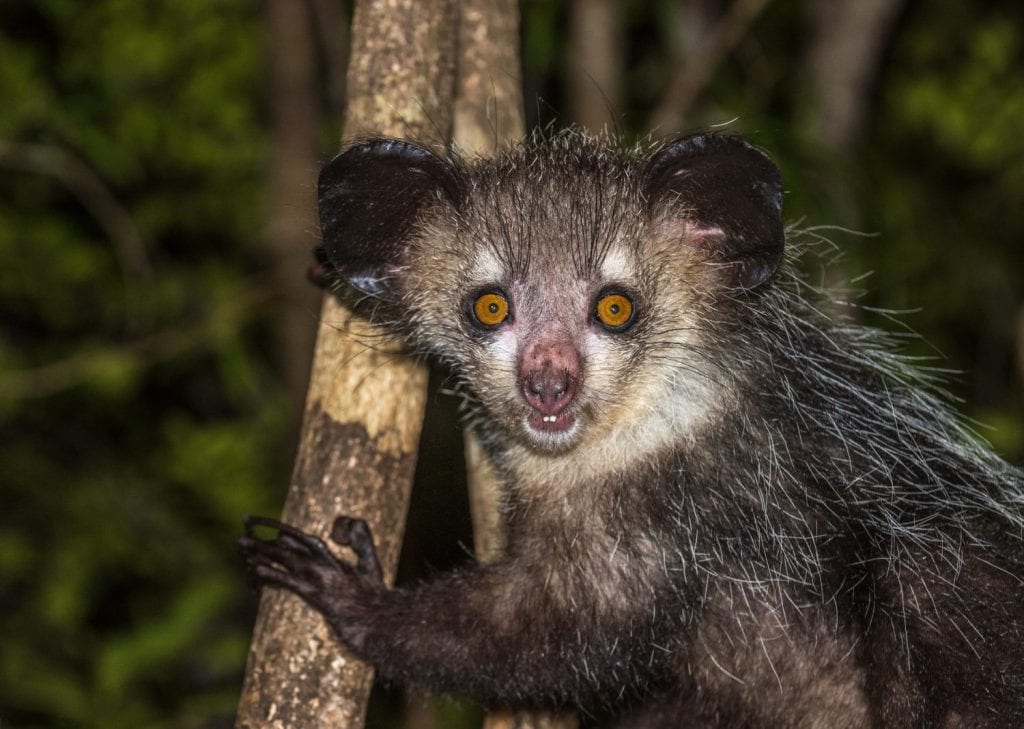
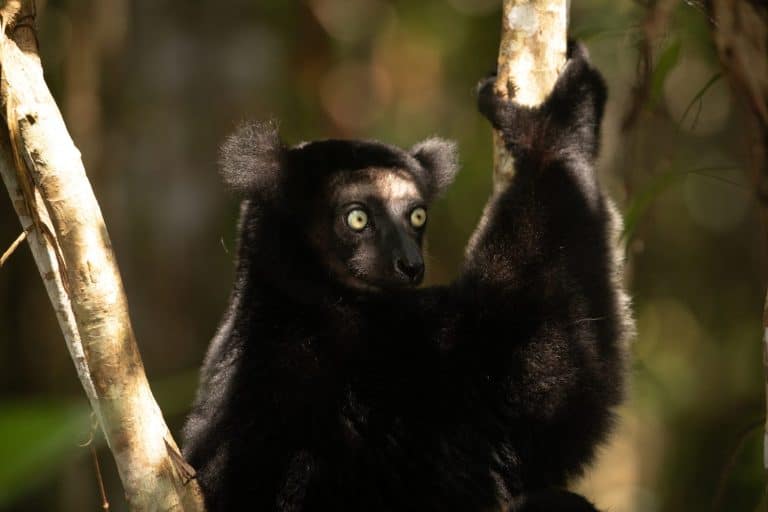
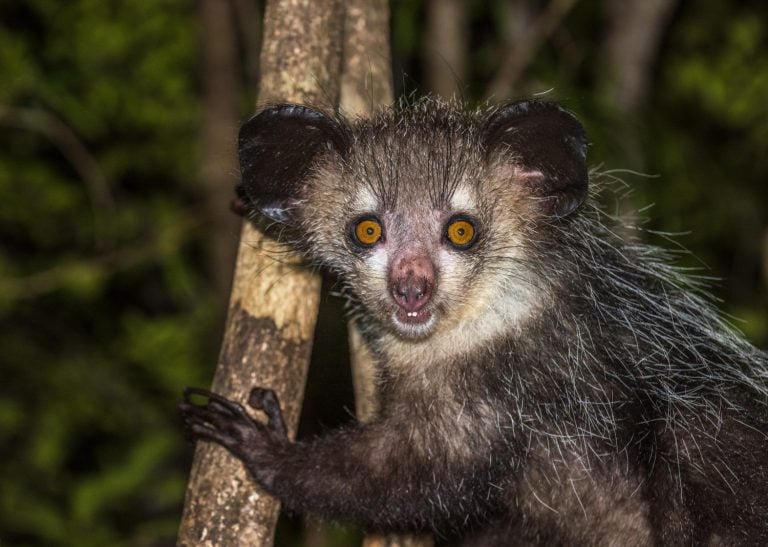
A striking-looking creature, aye-ayes have rodent-like teeth, abnormally large ears, and extended middle fingers.
©javarman/Shutterstock.com
There are plenty of small and mysterious primate species across the world, but aye-ayes might be the most enigmatic. Products of unusual evolution, they have rodent-like teeth, a canine-like appearance, and are associated with evil in local folklore. Aye-Ayes (Daubentonia madagascariensis) are long-fingered lemurs with the broadest distribution of any living lemur, found across nearly all coastal areas of Madagascar. They have coarse dark fur with prominent white guard hairs, small, intense eyes, and proportionally large ears capable of independent movement.
While many primates rely on grubs and bugs for food, aye-ayes have an adaptation that makes sourcing such insects a breeze: elongated middle fingers. Before using their elongated fingers, however, these primates drum on tree bark and listen closely for the sounds of wood-boring beetles. After chewing a hole in tree bark with their rodent-like teeth, aye-ayes insert their middle fingers deep into the holes, spear larvae, and pull them out with their elongated digits. They basically occupy the same ecological niche as woodpeckers.
Once thought to be extinct, aye-ayes have been discovered in greater-than-expected numbers during previous decades. Despite this, the IUCN still considers them to be endangered, a designation driven by several factors. Historically, folklore in Madagascar holds that the presence of aye-ayes is a bad omen. This leads to opportunistic killings of a creature seen as evil. Combined with poaching and deforestation, this has led to a considerable reduction in the aye-aye’s range. In response, captive breeding programs have helped stabilize their numbers. It was in these captive breeding programs that the latest study of their behavior took place.
Understudied Primates
The mysterious nature of aye-ayes has made studying them in the wild difficult. Like many other nocturnal creatures, scientists do not know much about their behavior or social interactions. Aye-ayes were long considered solitary, but the latest research suggests that these small primates may be friendlier with each other than previously thought.
A new study published in the journal Frontiers in Ethology investigated how aye-aye social behavior changes under different housing conditions. British scientists Gabriella Alisha Fraser and Paige Bywe closely observed three captive-born aye-ayes: a mature male, a mature female, and their juvenile male offspring, all living in the Twilight World section of the Bristol Zoo. Fraser and Bywe observed the primates over a nine-week period, using three distinct housing setups: solitary housing, paired housing, and full group housing.
These lemurs have a reputation for being solitary, but the researchers found the opposite. When housed together, all three aye-ayes groomed and played with each other during 12–16% of the observation time. Furthermore, their normal behaviors remained stable regardless of housing arrangement. Whether living alone or all together, the aye-aye subjects continued with normal feeding and percussive foraging behaviors. However, the researchers noted a slight increase in abnormal behaviors as activity levels increased over time.
Destressing Techniques
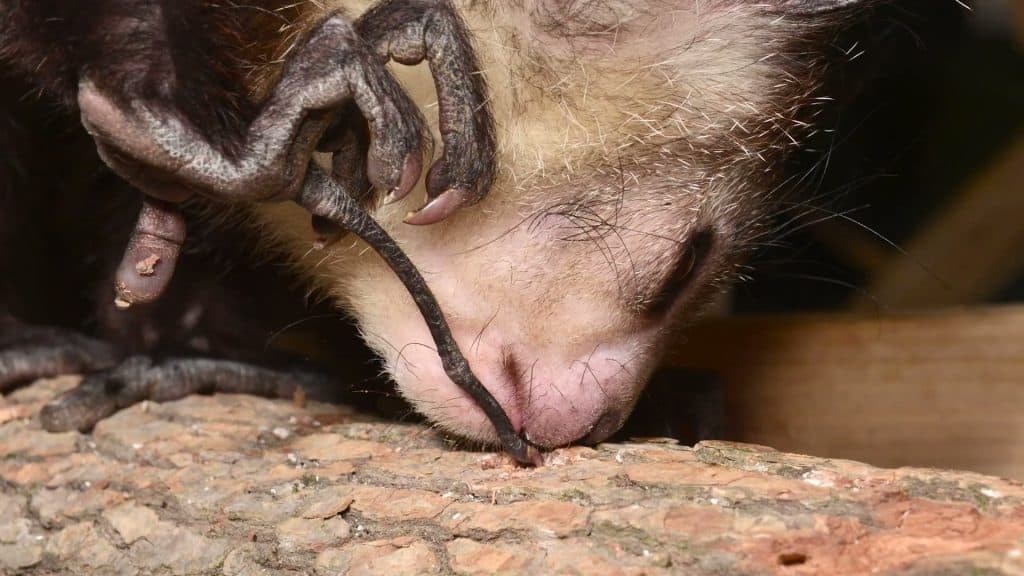
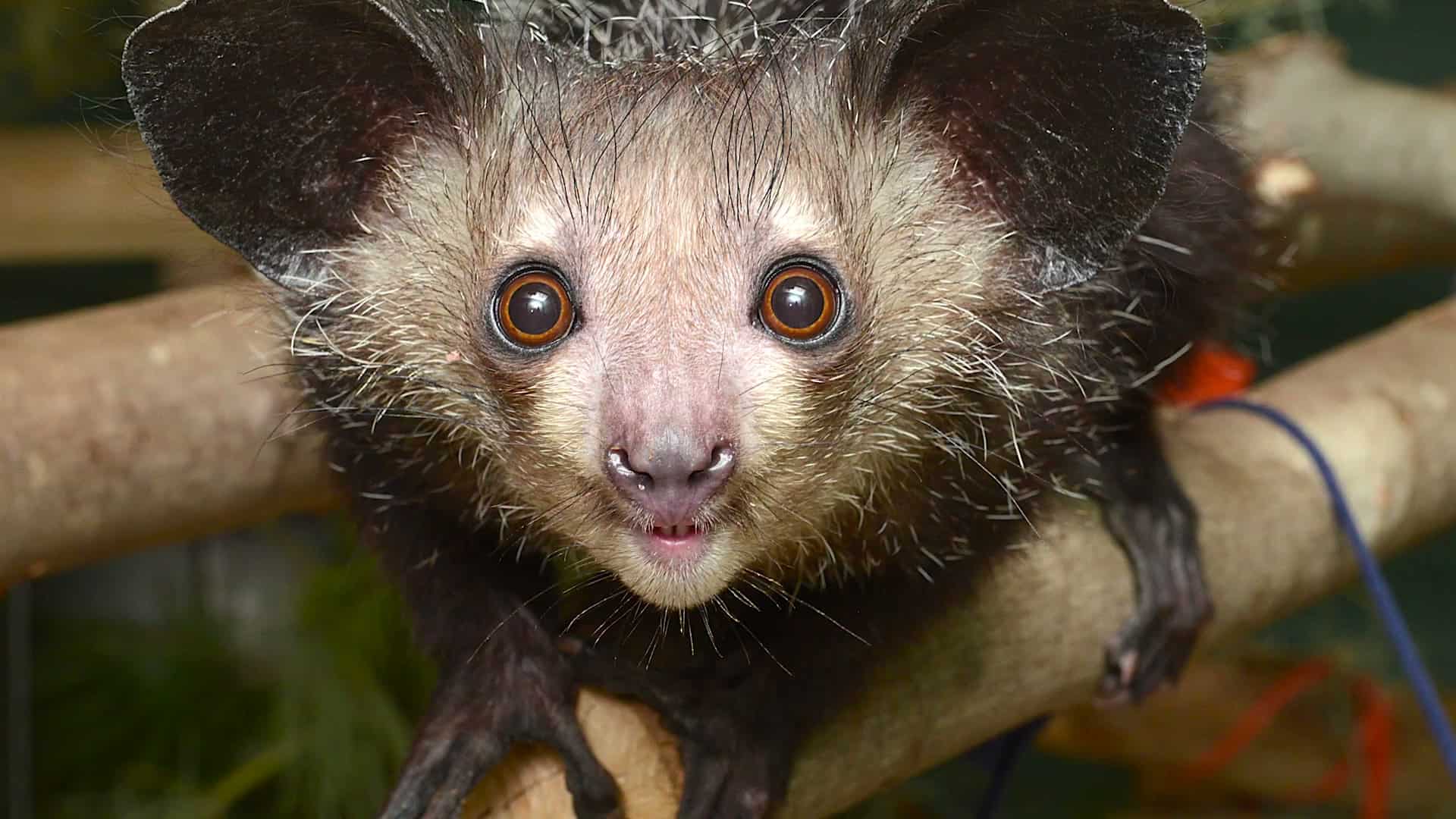
Researchers found that aye-ayes benefited from a measured amount of group interaction.
©Ant Lab (Dr. Adrian Smith) via YouTube — used under fair use – Original / License
Many animals in captivity display abnormal stress responses. Even captive-born animals are known to pull at their own hair or pace relentlessly as a response to stress. The researchers found that aye-ayes housed alone showed more stressful behaviors than those housed together. However, excessive group interaction caused stress behaviors and coping mechanisms to reappear.
There are only so many aye-ayes in captivity, so ensuring they live full, low-stress lives is a priority for zookeepers. This study shows that techniques exist to improve their quality of life, provided they are closely monitored. At the very least, short-term group interactions proved more beneficial than previously thought. It seems that even for normally solitary creatures like aye-ayes, a little group time can significantly improve their quality of life.