
Quick Take
- These birds look awkward and heavy on the ground, yet something changes the moment they catch the air. See their soaring behavior →
- California condors nearly vanished from Earth, and the number that remained in the wild before intervention is startling. The near-extinction crisis →
- The species name 'California condor' is increasingly a misnomer, and the reason why tells a bigger conservation story. Where condors live now →
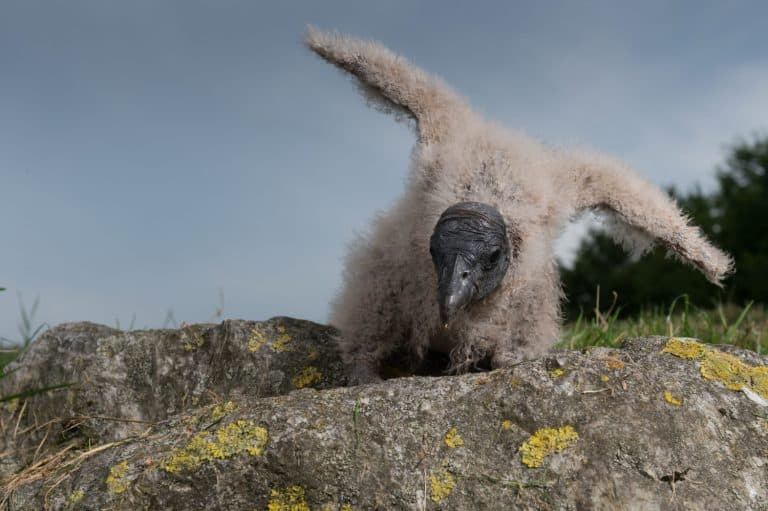
- Condor chicks take an unusually long time to master one basic skill, and their wingspan makes the learning curve dramatic. Explore their wingspan →
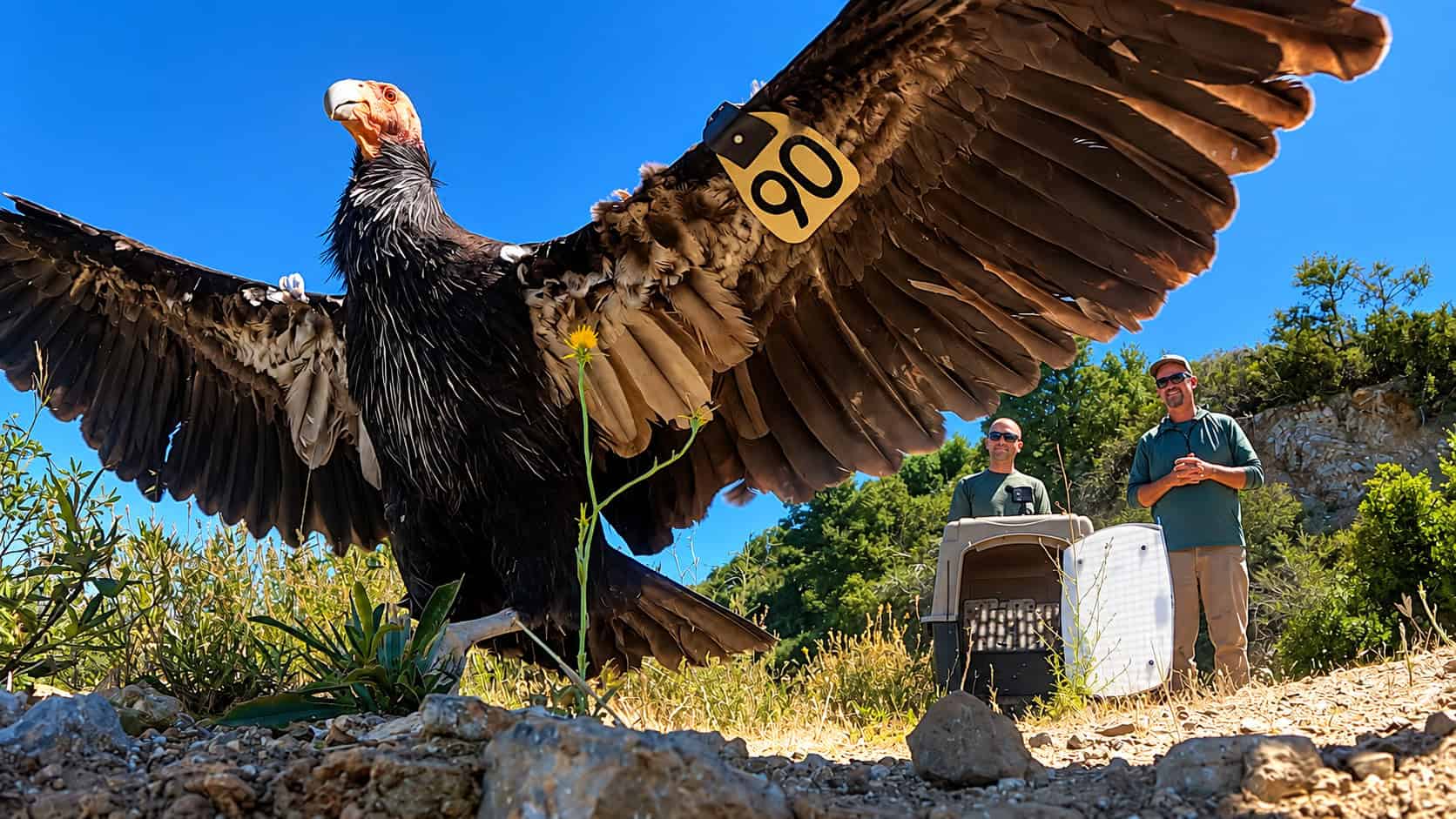
This clip captures a remarkable moment as a massive condor is released back into the wild. The bird steps carefully out of its transport crate, pauses to take in its surroundings, and then stretches its enormous wings. For a few seconds, you really get a sense of just how huge these birds are before it finally heads off into the open landscape.
Condors are among the largest flying birds on Earth, and seeing one at ground level makes that scale even more impressive. Once airborne, though, these heavy birds transform into remarkably graceful fliers, using rising air currents to stay aloft with surprisingly little flapping.
Watch the Incredible Release
How Many Condor Species Are There?
There are two living species commonly known as condors: the Andean condor (Vultur gryphus) and the California condor (Gymnogyps californianus). Both belong to the Cathartidae family of New World vultures. The king vulture (Sarcoramphus papa) belongs to the same family, but it is a separate species and is not considered a condor.
How Big Is the Andean Condor?
The Andean condor is one of the largest flying birds in the world and has the largest wingspan of any living land bird. Its wings can stretch roughly 10.5 feet from tip to tip, while adults may weigh more than 30 pounds.
These giants live along western South America, primarily in the Andes and surrounding open country from Colombia and Ecuador south through Peru, Bolivia, Chile, and Argentina to Tierra del Fuego. They favor mountains, high grasslands, deserts, and coastal regions where open terrain makes it easier to spot food.
Andean condors often roost and nest on cliffs, rocky ledges, and caves. Their broad wings are perfectly suited to riding thermal air currents, allowing them to soar for hours while using relatively little energy. Some individuals may travel as far as 200 miles in a day while searching for food.
Like other condors, Andean condors are primarily scavengers. Most of their diet comes from carrion, including the remains of wild and domestic mammals. They have occasionally been observed taking small live animals such as rabbits or birds, but scavenging is by far the more important part of their feeding strategy.
Where Do California Condors Live?
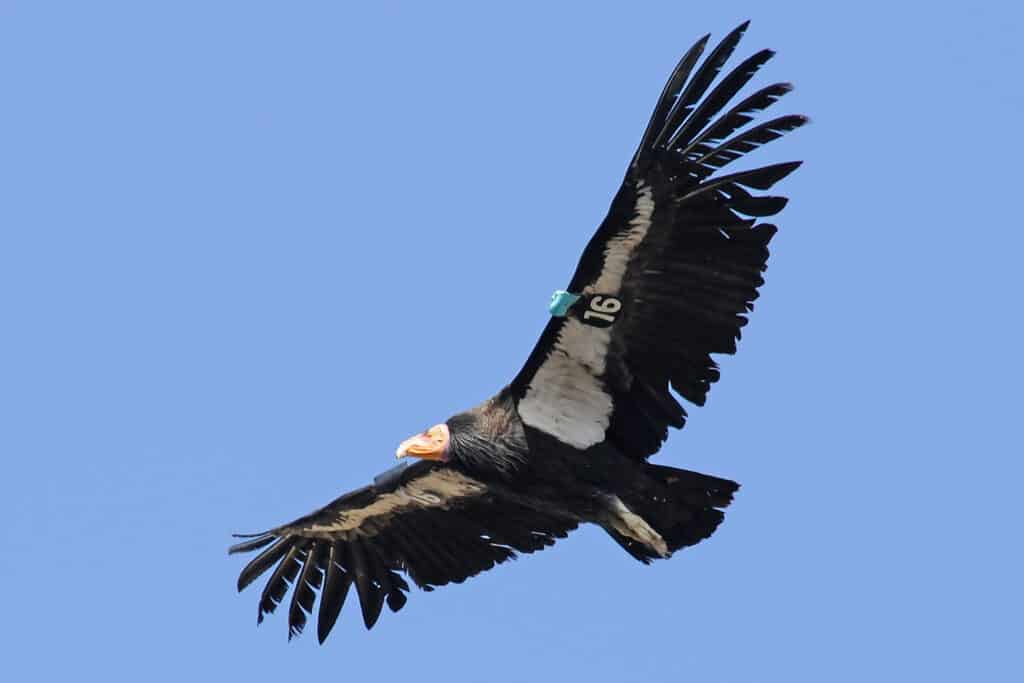
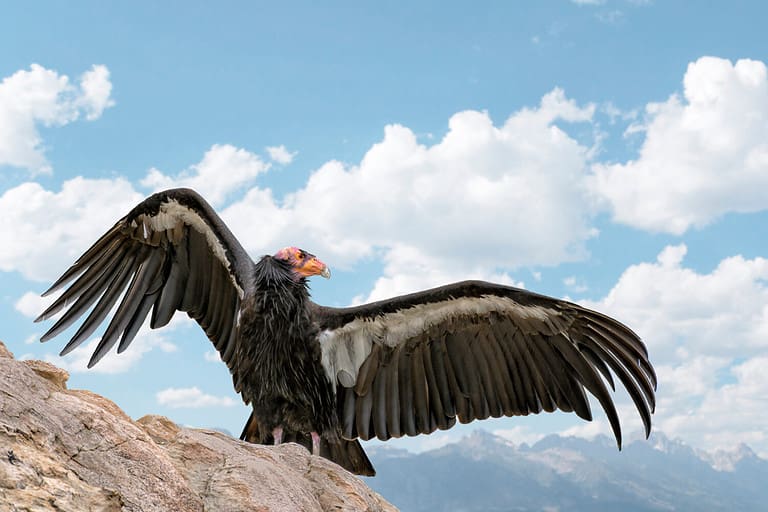
California condors are North America’s largest flying land birds, with wingspans approaching nine feet.
©Brian A Wolf/Shutterstock.com
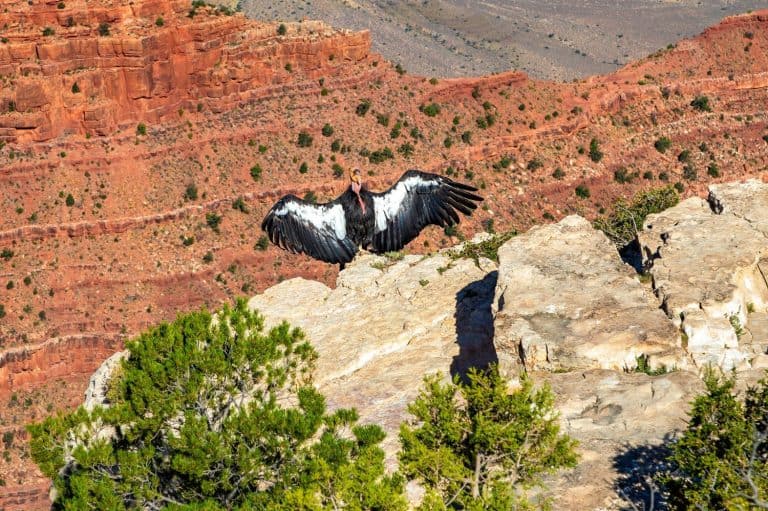
Despite the name, California condors are no longer limited to California. Reintroduced populations now live in parts of central and southern California, Arizona, Utah, and Baja California. Good places to watch for them include the Big Sur coast and Pinnacles National Park, along with areas around the Grand Canyon.
The species came frighteningly close to disappearing. By the 1980s, only 22 California condors remained, and the last wild birds were brought into captivity in 1987 as part of an intensive breeding program. Their descendants have since been released back into the wild, and the population now numbers in the hundreds.
Recovery has been slow partly because California condors reproduce at a leisurely pace. Females generally lay a single egg during a nesting attempt, and successful pairs do not necessarily breed every year. Young birds remain dependent on their parents for well over a year and can take months to master the art of flying and landing. Considering their nearly nine-foot wingspan, those early practice runs can be pretty dramatic.