
Quick Take
- A doctor let a monster bite him on purpose, and he never guessed what that agony was hiding.
- One scientist noticed a strange pattern in how a desert lizard handles going months without food.
- A hormone that fades in minutes has a lizard twin that lasts for hours. Why does that matter?
- The venom isn't in your Ozempic, yet the drug couldn't exist without it.
There’s a monster that lurks in the southwestern deserts of North America. Slow-moving and starkly patterned, the Gila monster is the only venomous lizard native to the United States. Despite being relatively harmless, this lizard developed a fearsome reputation over the centuries. Farmers avoided it, while cowboys warned travelers about it. However, even Gila monsters feature surprisingly helpful attributes. The lizard’s latest claim to fame is its integral role in the creation of GLP-1 receptor agonist medications.
The world is full of mystery, and it seems, full of unlikely breadcrumbs leading to revolutionary scientific discoveries. The Gila monster’s venomous bites were avoided feared by early settlers in the southwestern United States. While rarely life-threatening, their bites can be incredibly painful, producing severe localized symptoms and swelling. Only in the past few decades did curious scientists take a closer look at the mechanisms of this monster’s venom. Doing so led to one of the defining medicinal discoveries of our time, as GLP-1 receptor agonists function as quasi-miracle drugs. Originally marketed for treating diabetes, these medications have since been found to combat obesity, perfect blood sugar, protect organs, and strengthen the cardiovascular system. Let’s learn more about the Gila monster and how its painful venom held the unexpected answers to several medical issues.
The Gila Monster
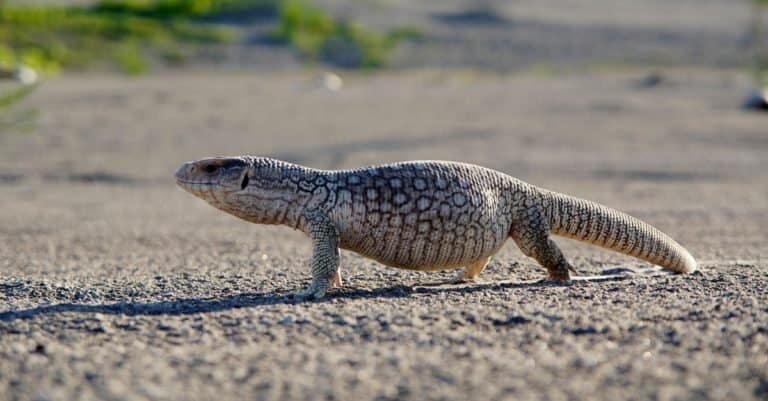
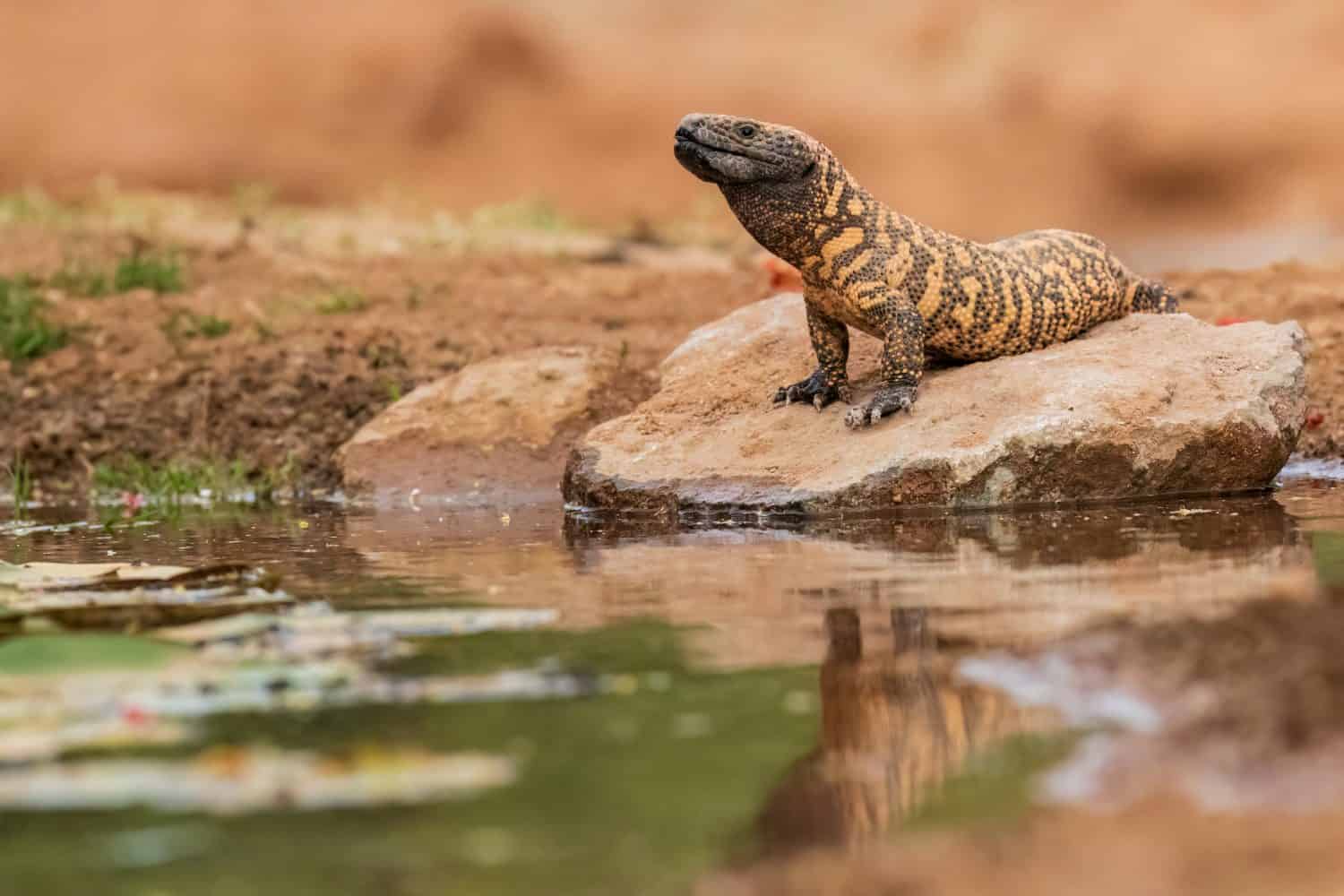
Traipse around the southwestern deserts of North America, and you will eventually run into a Gila monster (Heloderma suspectum). These lizards are heavy creatures, reaching up to two feet in length. They are also the only venomous lizard native to the United States. Their striking beaded skin is awash in patterns of black and pink, orange, or yellow.

The Gila monster is one of the only venomous lizards native to North America.
©Charlotte Bleijenberg/ via Getty Images
These venomous lizards are found most often in dry desert and oak woodland environments. Though they are striking in appearance, Gila monsters spend the majority of their time in underground burrows to escape the heat. They may not move quickly but are capable of opportunistically catching prey; their favorite meals are bird and reptile eggs, insects, and small mammals. Well-placed fat deposits allow Gila monsters to survive on just three or four hefty meals a year.
Whereas snakes inject venom through large, hollow fangs, Gila monsters transmit venom through grooves in their lower teeth. Chewing bites work their venomous saliva into bite wounds. This ability has made Gila monsters a feared creature in the southwestern deserts. That reputation, however, didn’t stop several Old West-era scientists from testing just how dangerous the Gila monster’s venom could be. Most notably, Tombstone, Arizona’s Dr. George Goodfellow allowed himself to be bitten in 1891. Though he eventually made a full recovery, he spent five days in bed writhing in pain. Little did Goodfellow realize what kind of medical secrets this painful venom contained.
The Discovery
In 1990, Dr. John Eng, an endocrinologist at the Bronx Veterans Administration Center, noticed something while researching new hormones. He learned that certain reptile venoms caused the pancreas to enlarge. Even more curious, Eng realized that Gila monsters can maintain constant blood sugar levels despite not eating for long periods. An analysis of the monster’s venom produced a peptide called Exendin-4; it triggers the release and synthesis of insulin from cells in the pancreas.
Next, Dr. Eng realized that this peptide was oddly similar in structure and function to GLP-1, a hormone that stimulates insulin production in the human pancreas. Whereas GLP-1 remained active for just a few minutes, Exendin-4 remained active for hours. This hinted towards a novel, effective, and long-acting diabetes treatment. Over time, other scientists and doctors learned that exendin-4 and its derivative, exenatide, produced surprisingly beneficial effects. Not only do they trick the brain into feeling full, but they also produce anti-inflammatory signaling that reduces cardiovascular events, protects organs, and even seems to reduce addiction cravings.
- 1891 Dr. George Goodfellow lets a Gila monster bite him The Tombstone, Arizona doctor spends five days in bed writhing in pain, then makes a full recovery.
- 99 years later
- 1990 Dr. John Eng notices the venom's effects At the Bronx Veterans Administration Center, the endocrinologist finds a peptide called Exendin-4 in the venom; it triggers the release and synthesis of insulin.
- 36 years later
- 2026 Ozempic earns about $9.1 billion In the first six months of the year, Ozempic generated roughly $9.1 billion USD.
Semaglutide Sensation

The discovery of a peptide in Gila Monster venom paved the way for the almost-miraculous class of GLP-1 drugs.
©Caroline Ruda/Shutterstock.com
In the last several years, GLP-1s have gone from an obscure treatment to a worldwide phenomenon. Semaglutide drugs like Ozempic and Wegovy have utterly reshaped the pharmaceutical industry. The numbers don’t lie; 18% of American adults have taken a GLP-1 at some point, with approximately 12% of the country’s adult population currently using one. During just the first six months of 2026, Ozempic generated roughly $9.1 billion USD.
18%
%
of American adults have taken a GLP-1 at some point; approximately 12% currently use one
While Gila monster venom is not an ingredient in commercial GLP-1 medications, the drugs would not have been possible without it. The venom provided a clue as to how the body could function without food and inflammation. If anything, the winding journey of Gila monster venom shows two things. First, the secrets to health may lie in unexpected, even dangerous places. Second, the difference between medicine and poison may be the dose itself.