
Arizona is home to 107 diverse reptile species. Some, like the Gila monster and rattlesnake, are venomous! Gila monster vs. rattlesnake. How do these reptiles stack up? Both species have a deadly bite, but their venom affects their prey differently. Rattlesnake venom is hemotoxic; it attacks the victim’s blood cells and tissues. Gila monster venom is primarily neurotoxic; it affects the victim’s nervous system, making it impossible to move!
In a battle between these two venomous reptiles, which one has what it takes to be the winner? Follow along as we compare each species’ size, survival strategy, and more to see who should be afraid of who.
Top 10 Key Points
- Rattlesnakes have different ways of moving, including slithering, sidewinding, and backward, depending on their environment.
- The average size of a rattlesnake ranges from 3 to 6 feet long, although some species can grow up to 8 feet long and weigh up to 15 pounds.
- Rattlesnakes can climb trees and swim across rivers and lakes.
- Rattlesnakes have camouflage abilities to blend into their environment, which helps them avoid predators and sneak up on prey.
- Rattlesnake venom is a mixture of enzymes, peptides, and proteins. It is hemotoxic, causing severe tissue damage and hemorrhaging in prey.
- Gila monster venom is primarily neurotoxic, affecting the victim’s nervous system and making it impossible to move.
- Gila monsters are immune to various venoms, including their own, giving them an unfair advantage in battles against venomous predators like rattlesnakes.
- Gila monsters have a unique survival strategy of relying on their venom and immunity to defend themselves against threats.
- Gila monsters are large lizards, with an average size ranging from 3 to 6 feet long and weighing up to 15 pounds.
- Gila monsters have excellent camouflage abilities, allowing them to blend into their environment and avoid predators.
Overview: Rattlesnakes
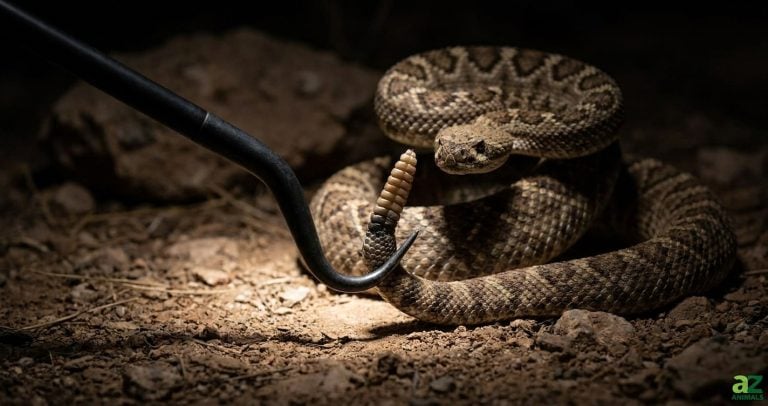
Venomous rattlesnakes live throughout the Americas ranging from Canada to Argentina. Known for their unique warning system, the rattle on their tail, these reptiles can deter predators and humans. Baby rattlesnakes have a “button,” the first sign of a growing rattle.
Understanding rattlesnake behaviors helps with conservation efforts and public safety. It also helps us determine which animal has the advantage in this matchup. For instance, how does a rattlesnake move and give them an advantage in a fight against the game master?
Rattlesnakes move in a variety of ways. Sometimes they slither; other times, they sidewind. They choose their movements depending on their environment and what’s going on. These expert survivalists also have excellent camouflage and concealment abilities. They can blend into their environment, making it impossible to know they’re there until you’re up close.
Rattlesnake: Physical Characteristics
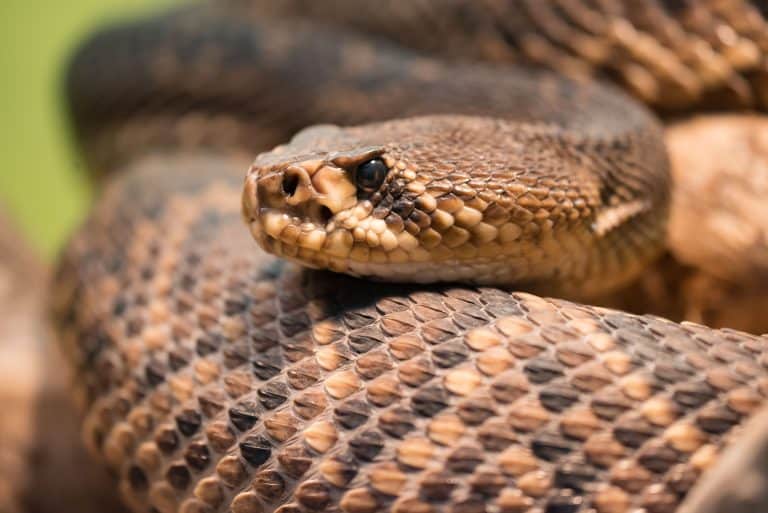
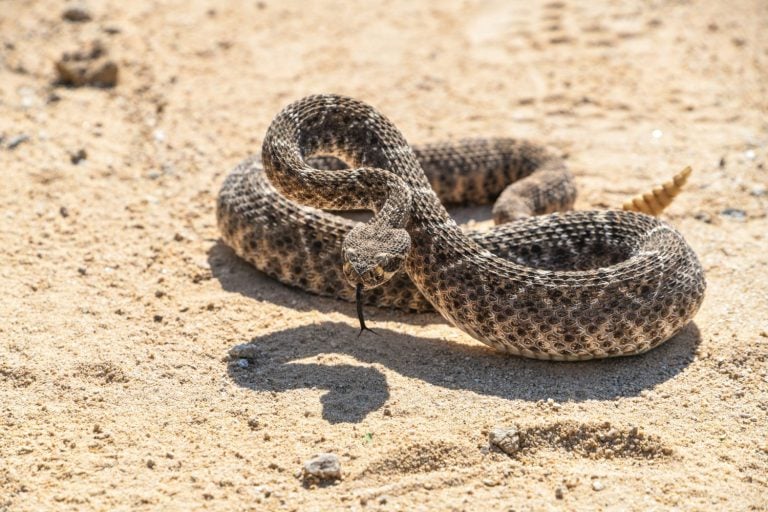
Rattlesnakes are considered heavy-bodied snakes; they are much larger than some of the smaller snake species. Their most notable physical characteristic is their rattle, made of hollow, interlocking segments. The rattle sits at the end of the tail and serves as a warning system for predators. These reptiles are also known for their triangular-shaped head and extra-thick neck.
Looking at their faces, you’ll see rattlesnakes have distinct vertical pupils. They also have a pair of heat-sensing pits on either side of their head. The heat-sensing pits help them detect prey and navigate their surroundings.
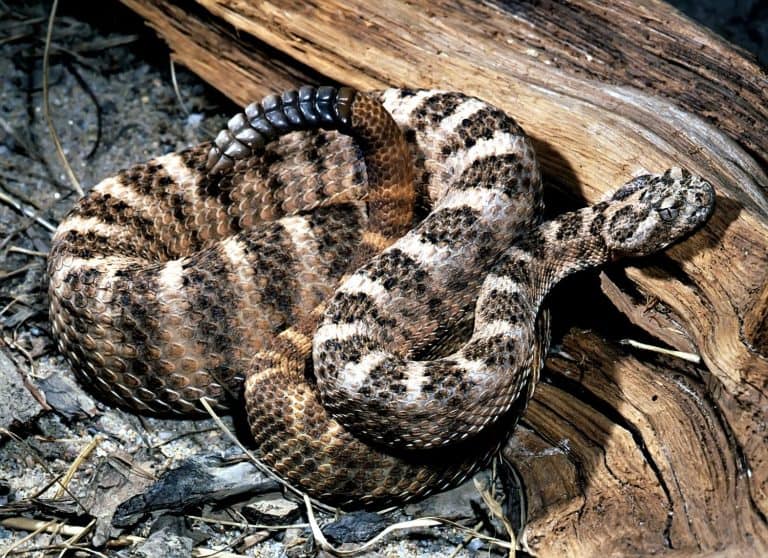
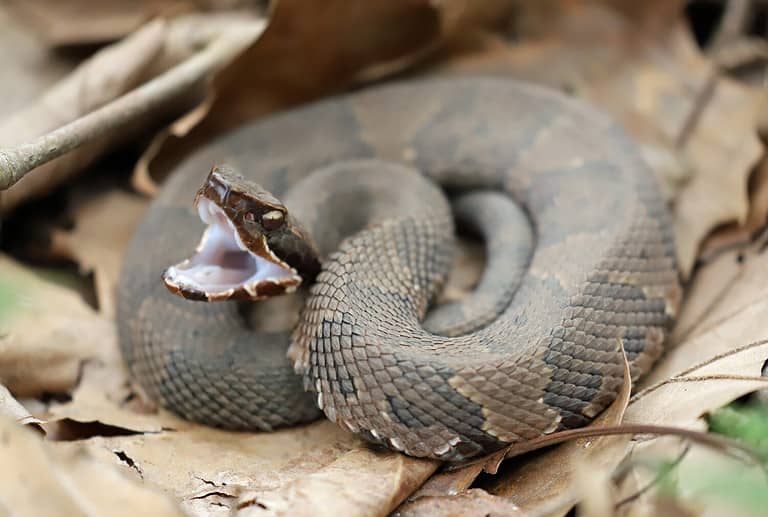
Rattlesnakes are covered in scales ranging from light brown to darker shades of brown or black. Sometimes they’re gray. The scales are also different textures between different rattlesnake species. Sometimes rattlesnakes are smooth, other times rough and rigid.
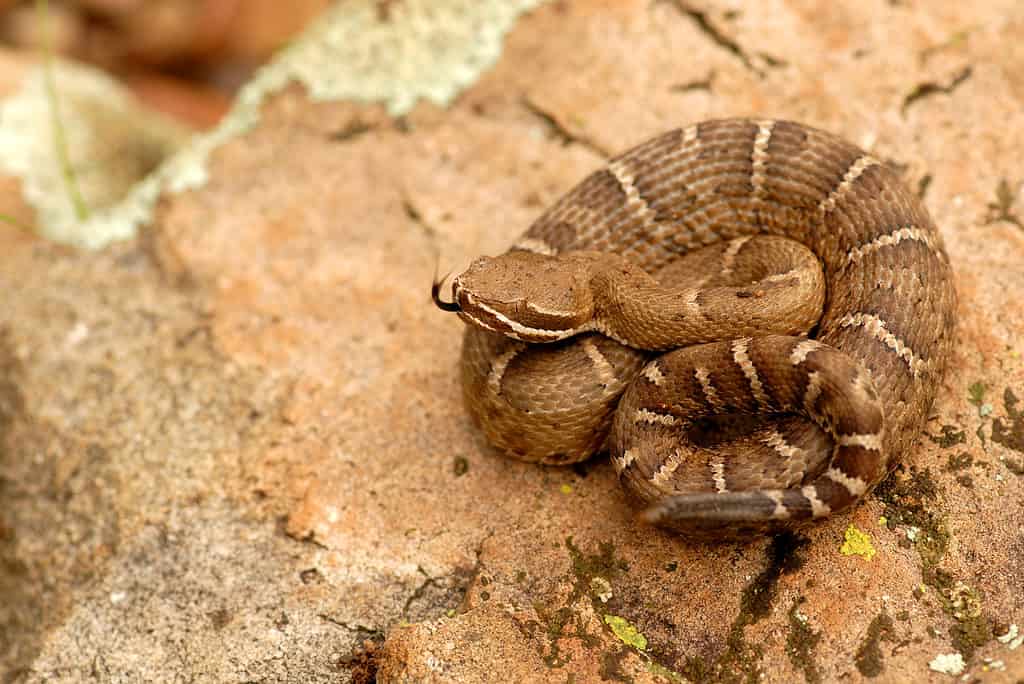
Arizona ridge-nosed rattlesnakes have a dark brown base color with pale white and yellow stripes on their bodies and white stripes across their face.
©Rusty Dodson/Shutterstock.com
Rattlesnake: Average Size
Is the rattlesnake big enough to win this animal battle? The average rattlesnake ranges from 3 to 6 feet long. Some species can grow up to 8 feet long. On average, they also weigh between 1 to 5 pounds, with some weighing up to 15 pounds. The largest rattlesnake on record is the Eastern diamondback; it can grow up to 8 ft and way over 30 pounds.
Survival Instincts: How Rattlesnakes Respond to Danger
The rattlesnake doesn’t have to see its opponent fight. Instead, they can use their sense of sight, smell, and ability to detect vibrations. If the rattlesnake feels threatened, it’ll begin rapidly rattling its tail to warn other animals to get away. If the warning is ignored, the snake can strike with venomous fangs. Their hemotoxin venom kills red blood cells.
The bite is fatal to humans, but would it be strong enough to kill a Gila monster? For this animal matchup, the venom’s strength is irrelevant. You read right. The rattlesnake’s bite is worthless in this matchup. Unfortunately for the snake, the lizard is immune to venom.
The Gila monster is immune to various venoms, including its own. The large lizard would remain unphased even if the rattlesnake landed a bite. Things aren’t looking good for our slithering fighter.
Slithering and Sidewinding: Rattlesnake Movements
Rattlesnakes can slither, sidewind, and move backward. Moving backward, they use their tail to push themselves away from danger. Slithering is their preferred movement when they smoothly undulate their bodies from side to side.
Sidewinding is a special skill reserved for navigating loose sand or unstable surfaces. When rattlesnakes sidewind, they lift their body’s front part off the ground. Then they swing their body forward while the remaining part follows. The bottom half of their body follows the top half in a rippling motion.
These fast movers can also climb trees and swim across rivers and lakes. When climbing trees, they use their muscular body to grip hold of the bark as they work their way up.
Hidden in Plain Sight: Rattlesnake Camouflage
Both of the reptiles in this fight have extraordinary camouflage abilities. Rattlesnakes are often hidden in plain sight.
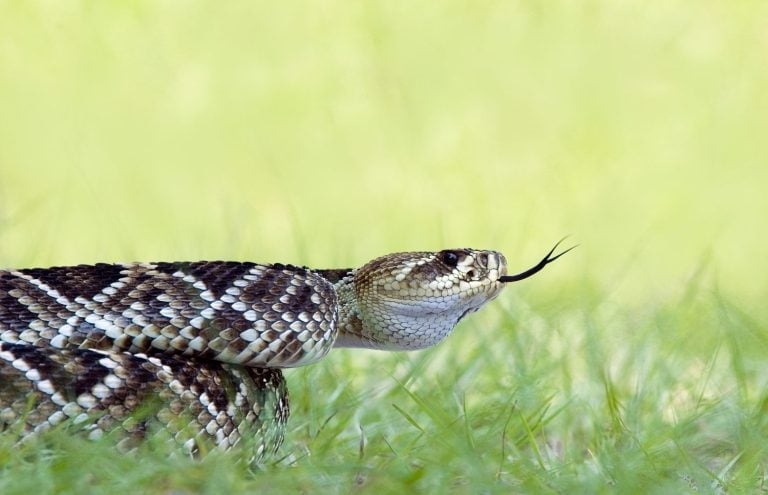
There’s the Eastern diamondback rattlesnake with distinctive diamondback-shaped patterns on their scales and other varieties with muted, earthy tones. The colorations can vary within a single species. Individual snakes will show differences and scale, hue, and pattern. These earthy colors help them avoid predators and give them an advantage when sneaking up on prey.
Coral snakes and certain rattlesnake species share a common defense mechanism. Coral snakes have aposematic colorations that warn predators to stay away. Certain rattlesnake species have the same built-in defense to protect them from eagles, hawks, foxes, coyotes, and mountain lions. Mountain lions love slapping rattlesnakes to the ground and then eating them. Other snakes love dining on rattlers, like the king snake.
Snake Toxins: Rattlesnake Venom
Rattlesnake venom is made of a mixture of enzymes and peptides. There are also other proteins mixed in. Hemotoxic venom can have a variety of effects on the body. Hemotoxins can cause severe tissue damage and hemorrhaging. This is because they target the red blood cells and tissue. The venom is so powerful that it can help the rattlesnake with digestion by breaking down the tissues and proteins of the prey.
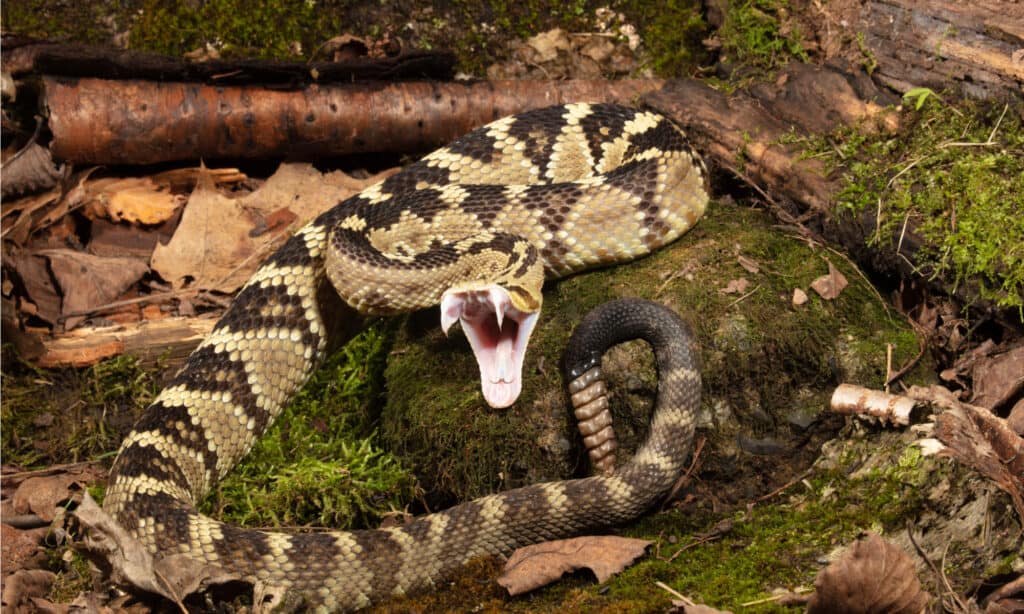
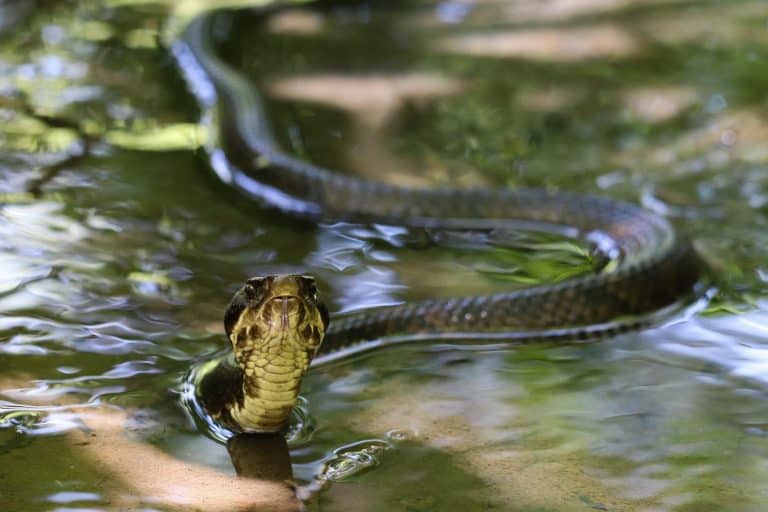
Rattlesnake venom is a mixture of enzymes, peptides, and proteins. It is hemotoxic, causing severe tissue damage and hemorrhaging in prey.
©Joe McDonald/Shutterstock.com
Overview: Gila Monster
Dramatic is the best way to describe how a Gila monster looks. These large venomous lizards have pink, black, yellow, and orange markings. Similar to a rattlesnake, the markings are a visual warning for predators.
The Gila monster is one of the biggest lizards native to the United States. Adults can reach up to 2 feet in length. They’re known for being very slow unless running to evade a threat. One of the reasons they prefer slow movements has to do with their large size. If they move around too much, they could overheat.
Staying cool is difficult when you have a large lizard body. Still, Gila monsters have a unique way of regulating their body temperature. They use burrows to cool down during the hot desert days. They stay safe in their borough while it’s hot and come out to bask in the cool nighttime air.
These brightly colored lizards can also climb trees, which can be helpful when stealing eggs out of a bird’s nest. They feed on small mammals, birds, reptiles, insects, and eggs. Gila monsters crack eggs open and swallow other meals whole.
Gila Monster: Physical Characteristics
The Gila monster has a stout round body covered in bold colors. The distinctive pattern includes uneven patches and black, pink, orange, and beige bands. All of the colors blend together seamlessly like a work of art.
Look at the Gila monster’s big head and wide blunt snout. The scales are small, giving them a textured appearance. And their eyes are small with unmistakable black and yellow coloration. If it opens its mouth, you’ll see that the Gila monster has thin sharp teeth, which help deliver its venomous bite. The teeth are driven into their prey with a powerful jaw. Once they bite down, they can’t escape.
Life-Saving Tail
Unlike other lizard species, the Gila monster’s tail isn’t designed to be detachable. If they lose their tail in a fight, it won’t regrow. Nevertheless, the tail is the lizard’s most important life saving. The thick tail stores fat reserves and can also serve as a weapon. Fat reserves in the Gila monster’s tail keep them alive throughout hibernation.
Average Size and Appearance
Male and female Gila have similar sizes and appearances. There doesn’t appear to be any significant sexual dimorphism. Juveniles have brightly colored bands of pink, orange, and yellow that fade to darker colors as they mature.
A baby Gila is only 6 inches long, and it’ll take 3 to 5 years for them to reach its full size. Fully grown, these lizards can reach two feet long. They usually weigh between 1 to 1.5 pounds. Their big heads are similar to the large head of the heavy body rattlesnake. They also have wide mouths and strong jaws.
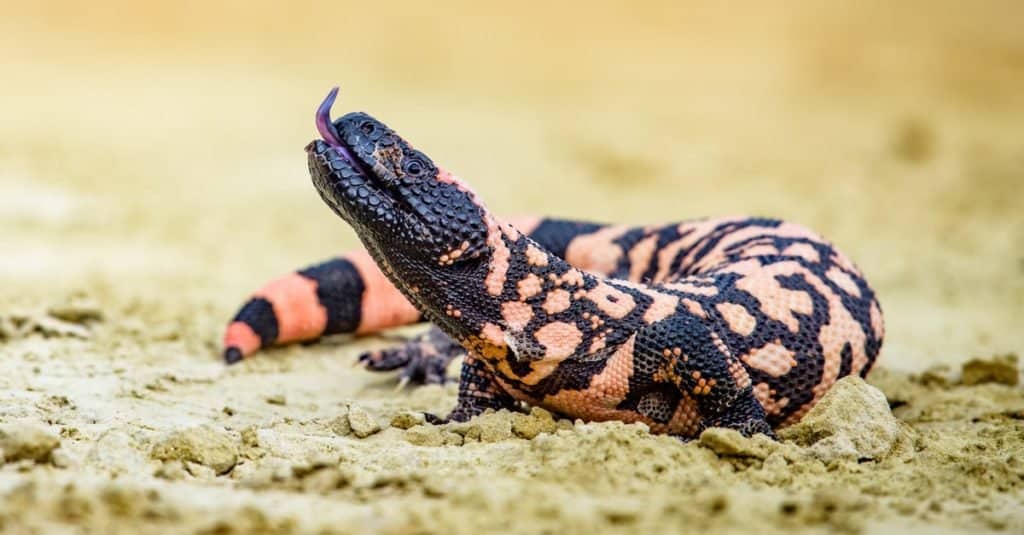
Dramatic is the best way to describe how a Gila monster looks. These large venomous lizards have pink, black, yellow, and orange markings.
©Vaclav Sebek/Shutterstock.com
Gila Monsters: Masters of Self-Defense
The Gila monster has a fleshy forked tongue that picks up odors in the air. Sometimes the smells lead them to a meal; other times, they protect the lizard from a hungry predator.
Since the Gila monster is a slow-moving lizard, its main defense is its venomous bite and fearless attitude. This lizard knows how to intimidate other animals. They can puff up their bodies and lash their tails. All of these behaviors are a warning to predators to back off, or else!
If an animal grabs the Gila monster’s tail, it can quickly twist and turn its body to escape. These lizards are usually slow-moving but can reach speeds of 15 mph if they have to.
If trying to escape doesn’t work, it’s time to bite! This big lizard has a deadly bite. It’s not fatal to humans, but it could kill a rattlesnake.
Deadly Bite: Lizard Toxins
Certain lizard species, like the Komodo dragon and Gila monster, have evolved to use venom for hunting and defense. Komodo dragons are the biggest lizards in the entire world. They can grow to over 120 pounds and reach lengths of 10 feet.
Scientists mistakenly thought that Komodo dragons were killed prey through the sepsis in their saliva. They didn’t realize that the Komodo dragon has venom glands that secrete toxic proteins. The proteins are similar to the hemotoxic venom that rattlesnakes use. It causes blood clotting, muscle paralysis, and tissue damage.
The Gila monster’s venom immobilizes its prey, making it easier to swallow them whole. They can also use their deadly bite to defend themselves against predators and threats. It takes only one bite to cause significant pain, swelling, and other unpleasant side effects.
Potency of Gila Monster Venom
The key ingredient in Gila monster venom is exendin-4, a peptide that can slow digestion. Researchers have formulated a synthetic version of this peptide to help treat type 2 diabetes.
How potent is the Gila monster’s venom? It’s similar to the toxicity of a Western diamondback rattlesnake. However, the lizard doesn’t use a lot of venom. Only a small amount is released during the bite.
When a Gila monster bites, it holds on tightly. Sometimes they hold on to their victim for over 10 minutes. This allows plenty of time for the neurotoxic venom to seep in.
There isn’t any anti-venom for a Gila monster bite, but don’t worry. It’s rare for a Gila monster to bite a human; they usually only do if provoked or startled. Since 1956, there have been only nine medical records of the Gila monster envenomating humans. The non-fatal bite causes swelling, internal bleeding, and reduced blood pressure.
Gila monsters love eating snakes, but will they be able to eat a large rattlesnake? Let’s find out who the winner of this animal matchup is now.
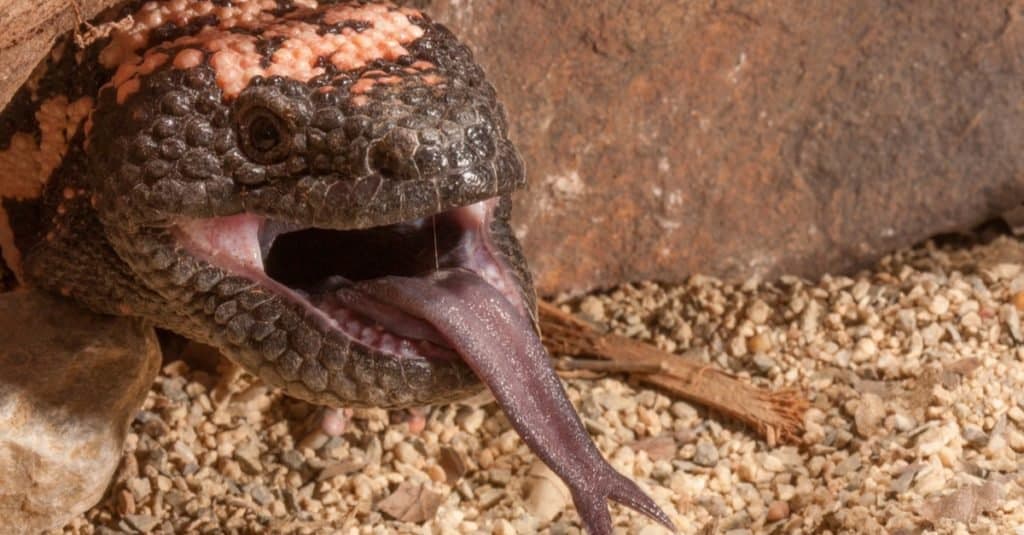
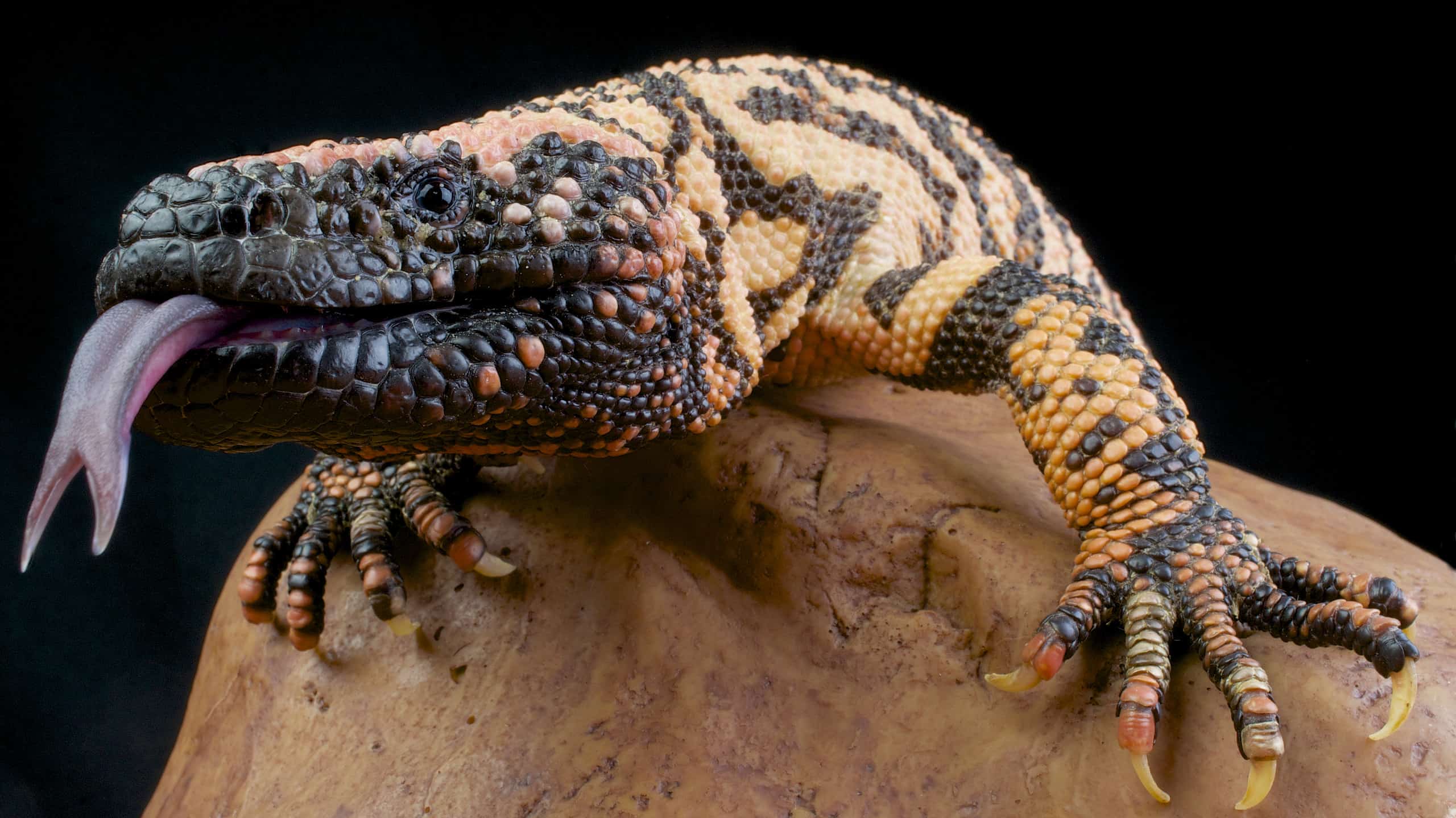
Gila monster venom is primarily neurotoxic, affecting the victim’s nervous system and making it impossible to move.
©K Hanley CHDPhoto/Shutterstock.com
Rattlesnake vs. Gila Monster: Who Will Win?
The Gila monster wins the fight against a rattlesnake. It may look like a harmless slow, chubby orange and black lizard with pebbly scales, but Gila monsters are fierce fighters.
In a rattlesnake vs. Gila monster fight, it’s a tough call. Both iconic reptiles are venomous and can produce toxins capable of taking down animals bigger than themselves.
The key difference is that the Gila monster is immune to venom, and the rattlesnake isn’t. Both species deliver venom in very different ways. Rattlesnakes have long, hollow fangs. Gila monsters have grooved teeth. This gives them an advantage in a snake vs. lizard battle. Their teeth are designed to lock onto prey, giving them plenty of time to inject their venom.
The rattlesnake venom is mostly hemotoxic and targets the tissues and red blood cells. The Gila monster’s neurotoxic venom immobilizes the prey by targeting their nervous system.
It was a tough fight. But the winner is clear. When a Gila monster and rattlesnake square off, the victory goes to the team Lizard.
Rattlesnake Escape
When the enemy is immune to your venom, what do you do? Run! The rattlesnake isn’t going to be able to win the fight since the Gila monster is immune to its venom. But it could sidewind its way out of there. Rattlers are skilled at slithering, sidewinding, moving backward, and climbing trees. They use these movements when ambushing prey.