Quick Take
- The Southern North Sea Marine Protected Area supports around 20% of the UK's North Sea harbor porpoise population.
- Bottom trawling damages seabed habitats, disturbs marine ecosystems, and can reduce the availability of prey for porpoises.
- Despite its protected status, the Southern North Sea MPA remains open to intensive commercial fishing.
- Greenpeace activists have dropped boulders onto 45 square miles of seabed to create a barrier against bottom trawling.
Marine protected areas are sections of the ocean dedicated to protecting rare or threatened marine animals and their habitats. However, despite its protected status, the Southern North Sea Marine Protected Area remains open for intensive commercial fishing. Greenpeace activists have therefore taken an unusual approach to protecting the harbor porpoises that live there: dropping enormous boulders onto the seabed. This prevents fisheries from using the controversial practice of bottom trawling in the region.
Why Is the North Sea Important?
The North Sea is located off the east coast of England and is regarded as one of the most productive seas in the world, producing millions of tons of fish every year. The rich ecosystem means that it is home to a diverse array of animals. Harbor porpoises are just one of the many animals that live there, and the Southern North Sea MPA has been identified as an area of importance for them.
The Southern North Sea MPA covers an area of around 14,266 square miles and includes both important winter and summer habitats for the porpoises. It also supports around 20% of the UK’s North Sea harbor porpoise population. Although harbor porpoises are classified as a species of Least Concern by the IUCN Red List, populations also face localized threats, which may cause numbers to dwindle. Entanglement in commercial fishing nets is one of the biggest threats that the species faces. However, practices such as bottom trawling also damage their habitat and deplete their prey. It also causes severe underwater noise pollution, which can affect the porpoise’s ability to hunt and navigate using echolocation.
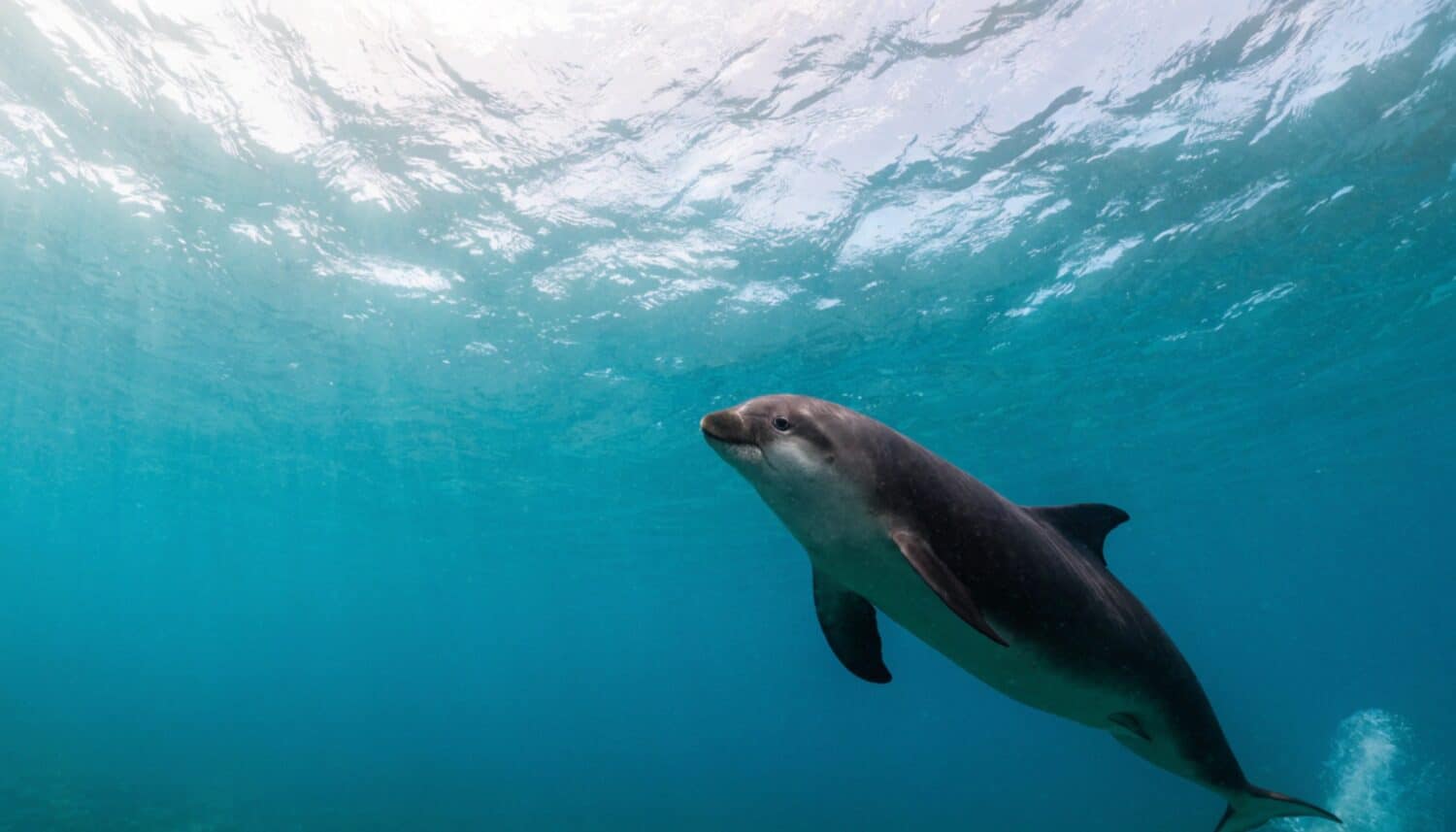
Harbor porpoises are at risk from bottom trawling on the east coast of England.
©Marine Lens Studio/Shutterstock.com
How Bottom Trawling Affects Marine Life
Bottom trawling is one of the most damaging practices used by the commercial fishing industry. It involves dragging a net along or close to the sea floor in order to capture fish. However, the heavy nets and the equipment used act like a bulldozer, damaging or flattening habitats and organisms in their path. This can include vulnerable habitats such as coral reefs and seagrass meadows. They also disturb the sediment on the seabed, potentially causing the release of carbon stored in the muddy sediment.
Stirring up this sediment causes the carbon to be exposed to oxygen, speeding up the breakdown of organic matter and the release of carbon dioxide. Bottom trawling also disturbs many of the small microorganisms that live in or near the seafloor. These organisms play a vital role in the transformation of carbon by helping to break down organic matter.
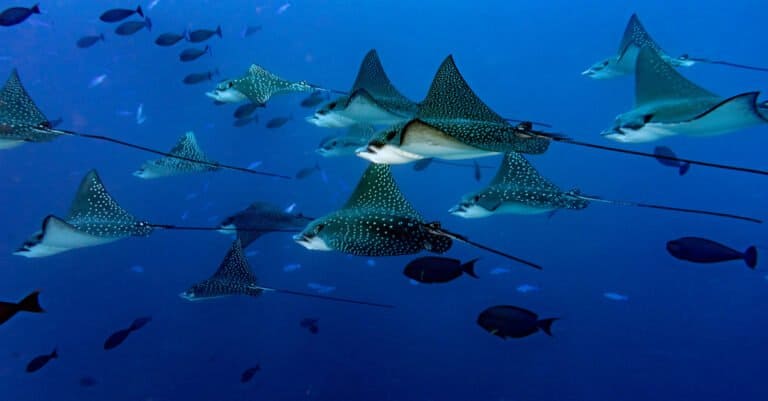
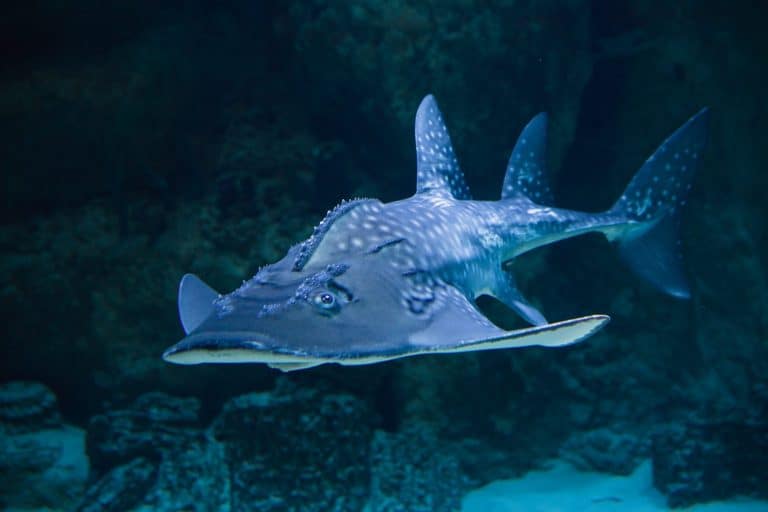
The damage isn’t limited to the seabed itself, though. Bottom trawling can seriously injure or kill many different species, including harbor porpoises, sharks, rays, and dolphins. This is because they are often caught up in the nets as bycatch as the nets sweep along the floor of the ocean. Bottom trawling is one of the leading causes of bycatch in the world. It often leads to the death of many animals that were not the target species.
Why Is Fishing Still Allowed in Protected Areas?
Although Marine Protected Areas (MPA) are created for the purpose of protecting key marine species and their habitats, being designated as an MPA doesn’t mean that it is automatically protected from all human activities. In particular, commercial fishing isn’t automatically prohibited within their boundaries. Restrictions depend on the conservation needs of each site and the regulations introduced to protect it.
There are 113 Marine Protected Areas in the waters around the UK, and the UK government has identified bottom trawling as being a threat in 75% of them. However, just 11% of them are fully protected from bottom trawling. This means that many areas designated to protect marine wildlife remain vulnerable to damaging fishing practices. Despite this, the Southern North Sea MPA is one of the areas that is most frequently bottom trawled. A report by Oceana found that in 2025 it was subjected to 30,936 hours of bottom trawling. This is despite it being an area designated for the protection of animals.
30,936
hours
of bottom trawling in the Southern North Sea MPA in 2025
Can Underwater Boulders Protect the Ocean?

Underwater boulders could prevent bottom trawling in important harbor porpoise habitats.
©ErnstS/Shutterstock.com
Greenpeace activists have decided to take direct action to prevent further damage to the Southern North Sea MPA by bottom trawling. To achieve this, they have started dropping massive boulders into the sea to create an underwater barrier on the seafloor. The boulders are intended to snag the nets, making it difficult for the fishing vessels to drag them across the seafloor.
So far, Greenpeace has dropped enough boulders to cover 45 square miles of the MPA. If successful, the intervention could help to protect the seabed from further disturbance by bottom trawling. This could give the habitat a chance to recover, while also improving the availability of prey.
However, the long-term effectiveness of the intervention will depend on whether it actually deters fishing vessels from attempting bottom trawling around the barriers. Also, the boulders cannot prevent every type of fishing, so it’s not a complete solution. It’s also not a replacement for official legislation prohibiting bottom trawling, as lasting protection will require the government to introduce proper restrictions in the MPA.