Quick Take
- A mother elephant has a specific, instinct-driven move she uses to physically shield her calf, and the behavior is more calculated than it looks. See how mothers shield calves →
- Wild elephants can identify something specific in a human's voice that tells them how dangerous that person might be. Discover how elephants read voices →
- An injured elephant walked up to a human safari lodge in Zimbabwe, and even the people who helped him couldn't agree on why. Read the Zimbabwe lodge story →
- Elephants that regularly encounter humans don't always behave the way you'd expect. Their past shapes their reactions in ways that could surprise safari-goers. Explore how experience shapes behavior →
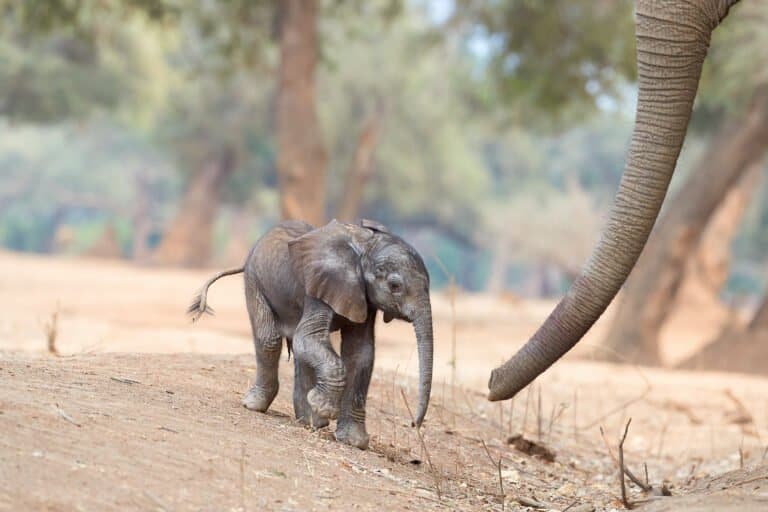
Elephants are the largest land mammals on Earth, and their size makes the calf in this video look especially tiny. The clip at the top of the page begins as a mother elephant crosses a road with her calf following close behind. The youngster lags a little, and the mother appears to encourage it along with movements of her trunk before continuing across.
The baby elephant eventually follows, but something else catches its attention once it reaches the road. A safari vehicle carrying the photographer and other people is parked nearby, and the curious calf begins moving in its direction. The mother quickly notices that her youngster has wandered off course. She stops, turns back, and closes the distance between them.
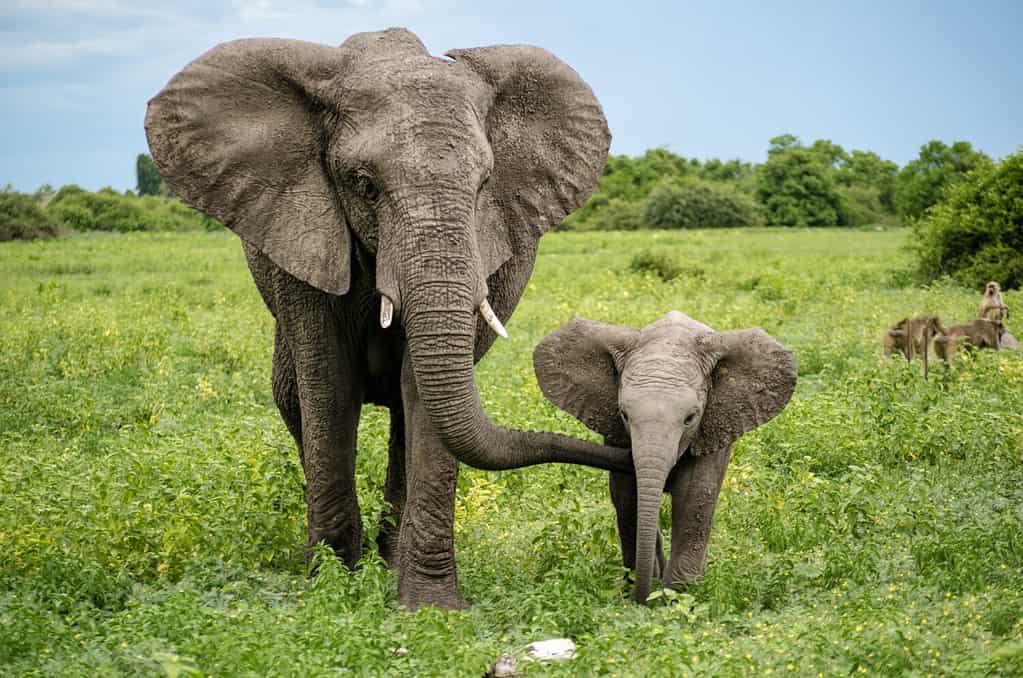
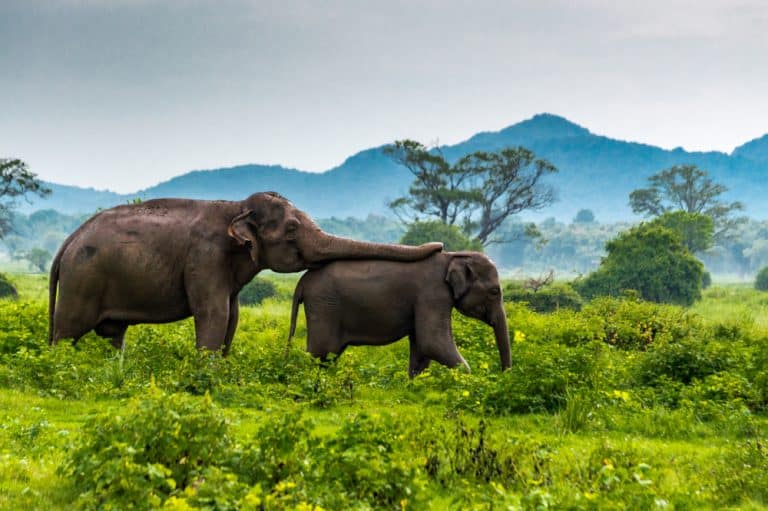
Elephant mothers often use their trunks as a means to guide and take care of their calves, as seen in the video at the top of the page.
©Aelice/Shutterstock.com
The calf still seems interested in the people, but mom has other plans. She steps toward the youngster, reaches her trunk over its body, and guides it back toward her. The calf then backs into the space between her legs, a position that puts it safely beside and beneath its much larger mother. Close maternal care is an important part of a young elephant’s development, and researchers have documented mothers using their bodies, trunks, and vocalizations to guide and protect calves. After the brief detour, the pair continues across the road and away from the vehicle.
Wild Elephants Can Be Remarkably Good at Reading Human Threats
Elephants are highly intelligent, social animals, and research shows that their responses to humans can be surprisingly sophisticated. In one study of wild African elephants in Kenya’s Amboseli National Park, elephants distinguished among human voices based on characteristics associated with ethnicity, sex, and age. They responded more defensively to voices belonging to groups that historically posed a greater threat. That does not mean an elephant can magically know whether every person it encounters is friendly or dangerous, but it does show how much information these animals can gather and use when deciding how to react.
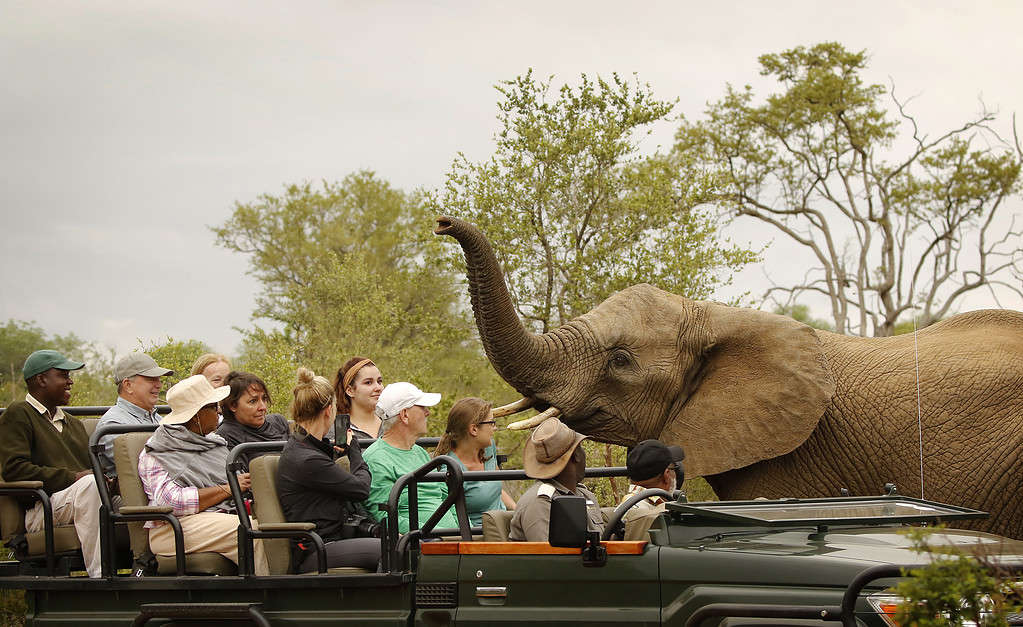
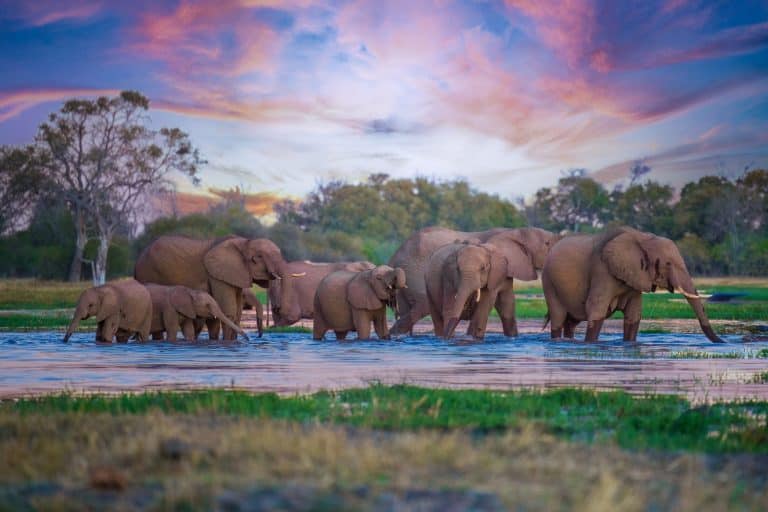
When elephants have positive interactions with human beings, they often show curiosity and wonder towards any nearby!
©jacobeukman/iStock via Getty Images
That ability matters in places where elephants and people share the same landscape. Poaching for ivory remains a serious threat to African elephants, along with habitat loss and human-elephant conflict. Elephants can also become accustomed to the presence of researchers, conservation workers, safari vehicles, and other people they encounter repeatedly. Their behavior around humans can therefore vary considerably depending on the situation and their previous experiences.
One remarkable case in Zimbabwe shows why it is important not to push that intelligence into outright mind-reading. In May 2016, an injured bull elephant later named Ben appeared outside staff housing at Bumi Hills Safari Lodge. He was dehydrated and limping, with a badly infected shoulder wound believed to have come from a poaching attempt and older bullet holes in one ear. The elephant remained near the lodge while a veterinarian was brought in to treat him. The unusual encounter was widely reported as an elephant seeking help from humans, but even the people involved acknowledged that nobody could know for certain why Ben approached the lodge. What is clear is that he stayed long enough to receive treatment, and the encounter became another striking example of just how complex elephant behavior can be.