
Quick Take
- A pigeon that gets drunk and falls out of trees actually won a national competition, and its drinking habit had nothing to do with it.
- Ripe fruit turns into something unexpected inside a kererū, and the consequences are visible from the ground. Watch the tipsy birds →
- If you ever find a grounded, disoriented kererū, the instinct to help it could actually make things worse. Learn about kererū hazards →
- This bird is one of New Zealand's most important forest engineers, a status it owes to its taste for fruit. See their role as seed dispersers →
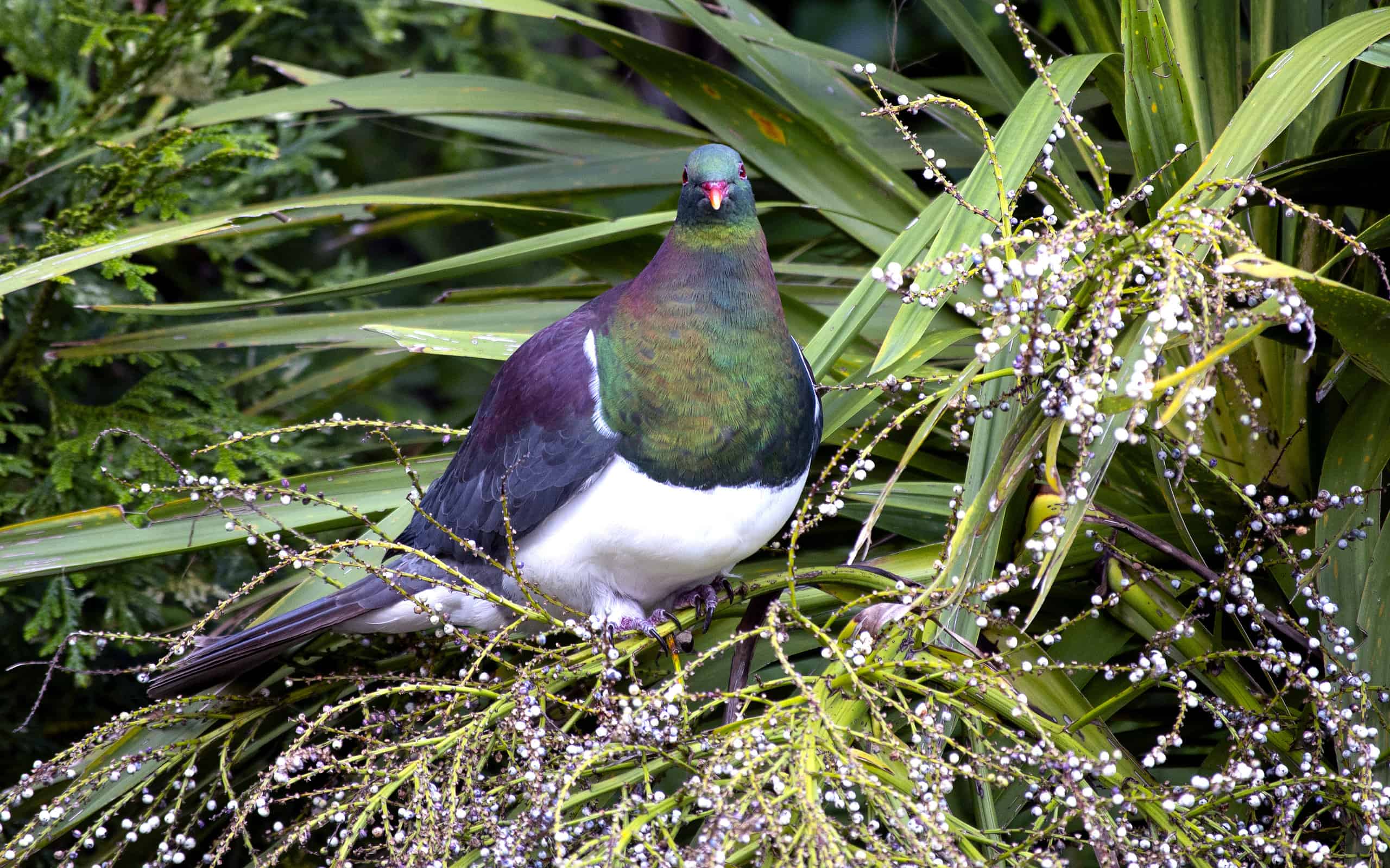
Meet the kererū, also known as the New Zealand pigeon or wood pigeon. This big, unmistakable bird won New Zealand’s Bird of the Year competition in 2018, and it has also earned a much stranger reputation. At certain times of year, kererū gorge themselves on ripe fruit. In warm conditions, that fruit can ferment in the bird’s crop and produce alcohol, leaving some kererū temporarily intoxicated. The result can be poor coordination, clumsy flight, and, occasionally, birds falling from trees. In the footage below, several kererū appear decidedly unsteady on their feet. If an intoxicated bird ends up grounded and unable to fly safely, wildlife rescuers recommend keeping it somewhere warm and quiet and contacting a bird rescue center rather than trying to feed or give it water.
Watch the Extraordinary Sight Now
Where Do Kererū Normally Live?
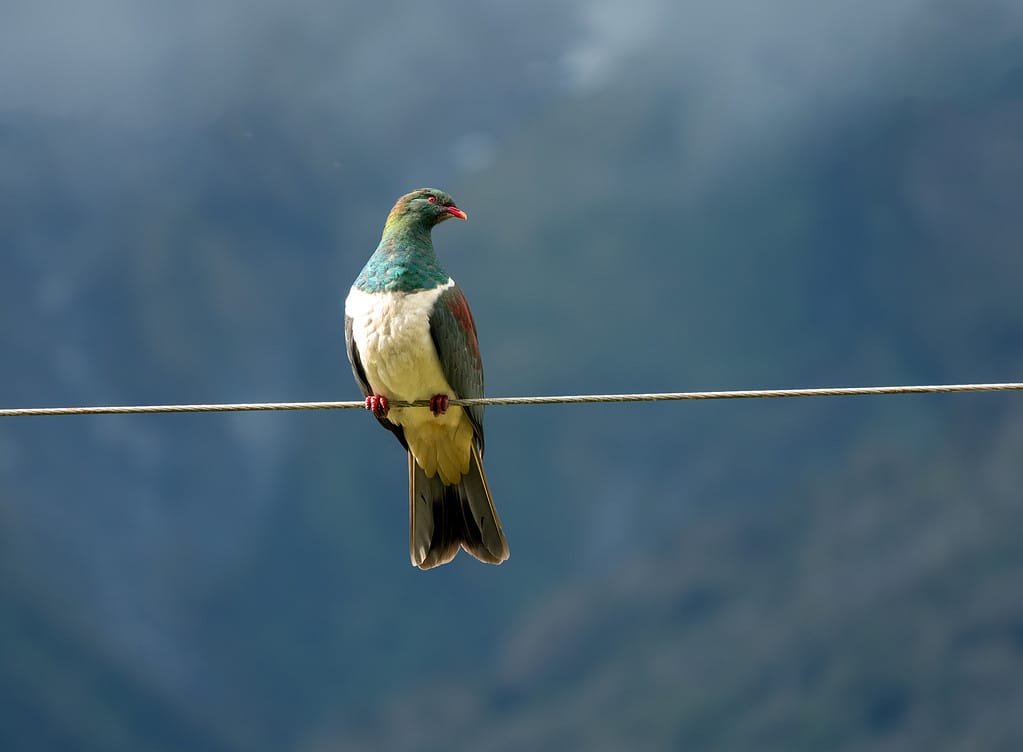
Kereru are often spotted perching on electric lines.
©Leamus/iStock via Getty Images
The scientific name for the kererū is Hemiphaga novaeseelandiae, and the species is endemic to New Zealand. New Zealand Birds Online describes kererū as widespread from Northland to Stewart Island, as well as on some offshore islands with suitable habitat. New Zealand’s Department of Conservation currently classifies the species as Not Threatened nationally, although numbers can decline locally where introduced predators are not controlled. Kererū live in many kinds of forest, but they are hardly confined to the wilderness. They also turn up in farmland shelterbelts, urban parks, and rural and suburban gardens. At some seasonal feeding sites, flocks of 20 to 50 birds can gather, with even larger groups occasionally recorded. They often perch conspicuously on treetops and powerlines and may allow people to get surprisingly close.
What Do New Zealand Pigeons Normally Eat?
Kererū eat fruit, flowers, buds, and leaves from a wide range of native and introduced plants. Ripe fruit appears to be their preferred food when it is available, which is where their unusual intoxication problem can begin. When fruit becomes scarce, they rely more heavily on foliage. Important leaf foods include kōwhai, tree lucerne, broom, willow, elm, and poplar. Most feeding takes place in trees, shrubs, and vines, although kererū have also been recorded feeding on the ground in a few locations, including on clover and possibly other herbs. Their appetite for large fruit also makes them extremely important seed dispersers in New Zealand forests.
What Threats Do They Face?
Habitat loss was a serious problem for kererū in the past, particularly during the early 1900s, although New Zealand Birds Online notes that it probably has relatively little effect on regional populations today. The biggest current threat is predation by introduced mammals, especially feral cats, stoats, possums, and ship rats. Nests are particularly vulnerable. Kererū are also killed in collisions with vehicles, windows, overhead power lines, and telephone wires, and some have been electrocuted while perched on power poles. Illegal hunting remains another threat. The good news is that kererū populations have increased substantially in places where invasive predators have been removed or kept at very low levels.