
Quick Take
- Reaching 20 feet in length is a mandatory achievement for a saltwater crocodile to claim territory.
- Managing 4 sets of muscles creates a critical buoyancy constraint during complex underwater maneuvers.
- It is hard to fathom that a 2,000-pound reptile can vanish without causing a single surface ripple.
- This scouting process is necessary for the crocodile to distinguish between the meat and the caretaker.
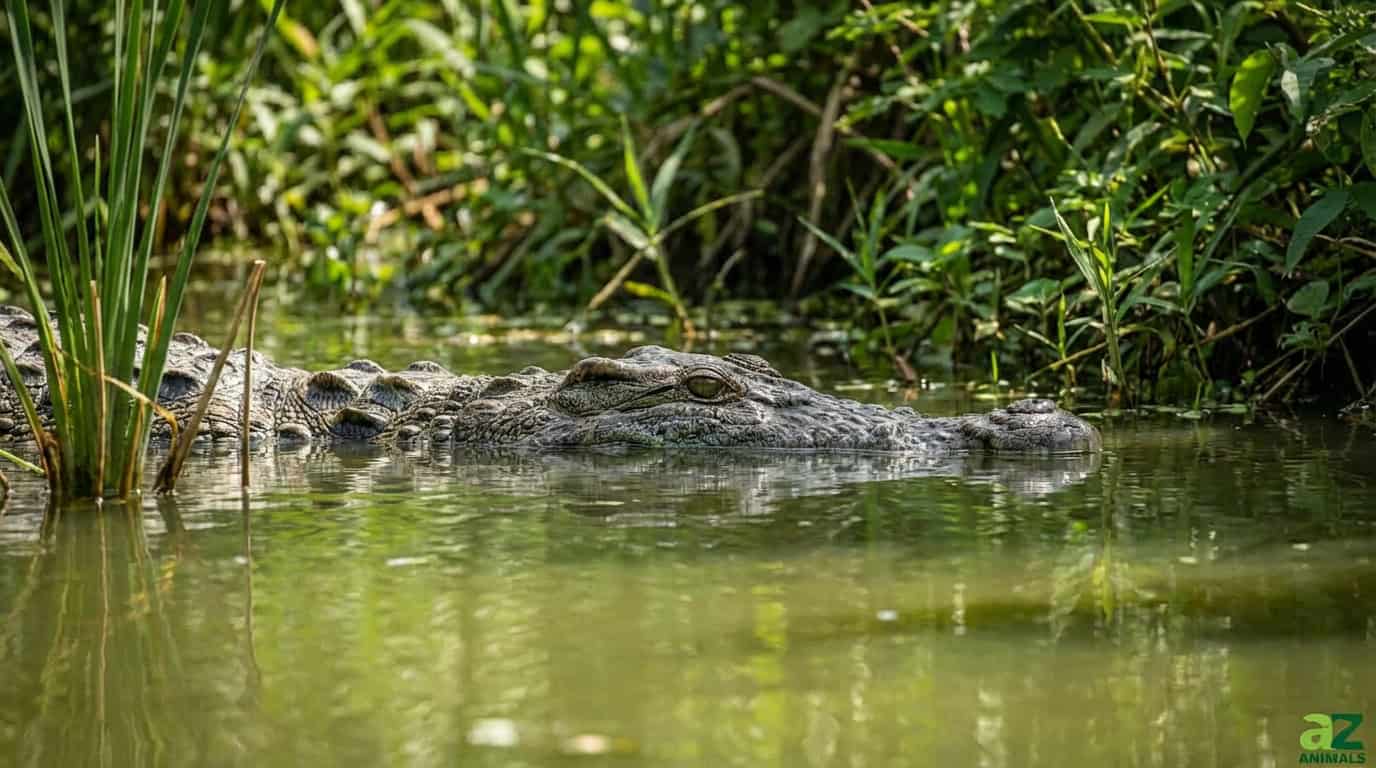
You will never see it coming. Born to lurk, the saltwater crocodile is a master of stealth. These apex predators can wait perfectly still on the water’s surface, plunge to the bottom, or roll their massive bodies without causing even the slightest ripple. A video has been making the rounds on the internet showing one of these giants appearing seemingly out of nowhere, reminding us why they are the undisputed kings of the water.
Don’t Poke the Croc!
As the video begins, there is no obvious sign of danger. A wrangler pokes a stick into murky, still water surrounded by sun-dried grass. Despite the man’s composure, the situation is incredibly high-stakes; he stands at the water’s edge with only a wooden pole for defense.
What begins as a quiet scene turns into an explosive spray of whitewater as a massive Saltwater crocodile — potentially 15 to 17 feet long — breaks the surface in a lightning-fast feeding response. The crocodile is so well-camouflaged that it is nearly impossible to spot until it is inches away.
As the video unfolds, the crocodile moves with its characteristic side-to-side gait, following the wrangler who holds a piece of meat. While the crocodile is focused on the food, it is a stark reminder that to a “Saltie,” anything that moves is a potential meal.
How Do Crocodiles Float?
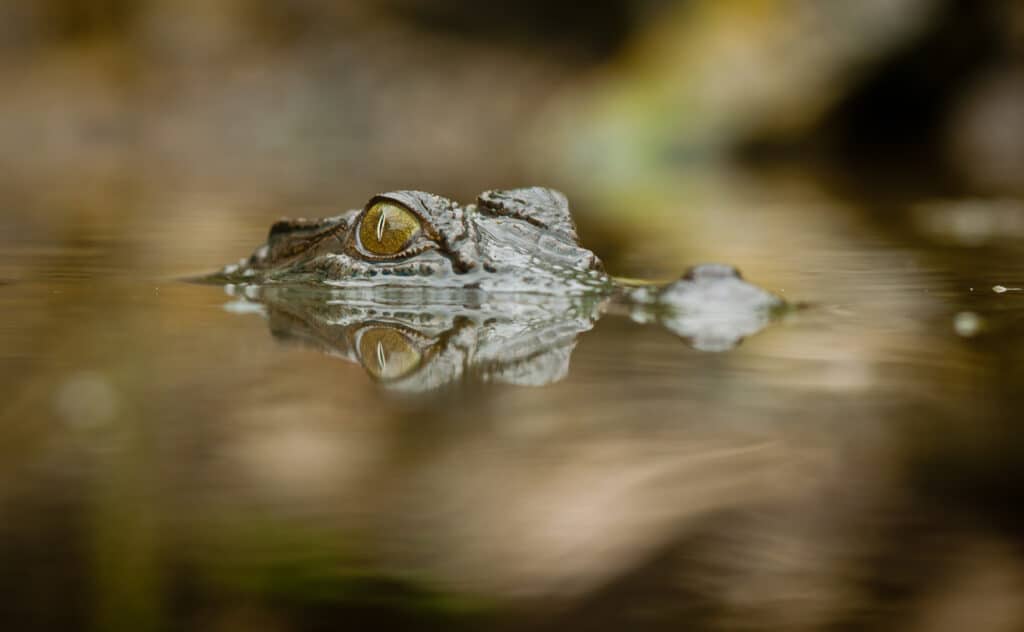
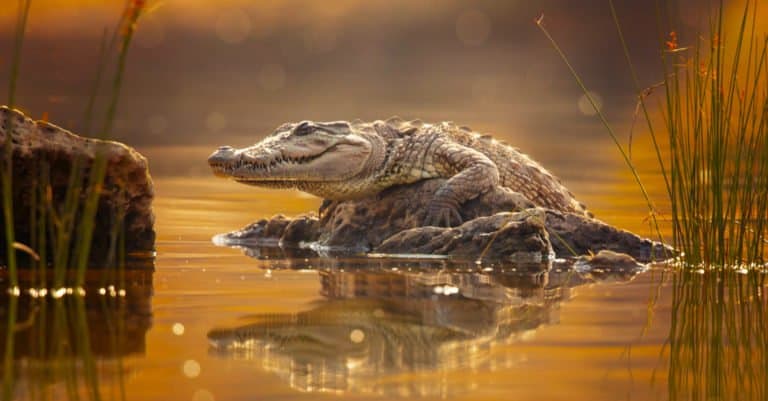
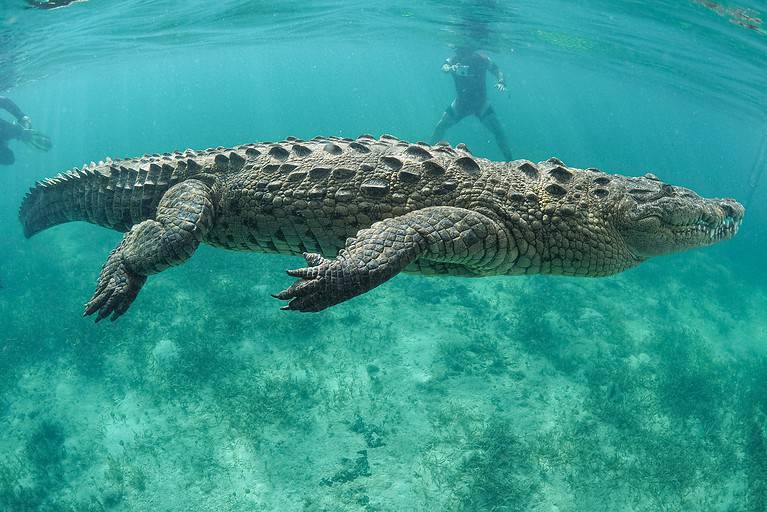
Crocodiles float by controlling the position of their lungs.
©Johan Larson/Shutterstock.com
Crocodiles control their buoyancy by manipulating the position of their lungs. This biological engineering is as vital to their survival as their powerful jaws.
Using four sets of specialized muscles, crocodiles move their lungs around their torso like internal floats:
- To Roll: They shift their lungs to one side or the other.
- To Dive: They pull their lungs toward the tail, shifting their center of buoyancy backward.
- To Rise: They push their lungs toward the head.
Is It Normal Behavior For A Crocodile To Sneak Up On A Human?
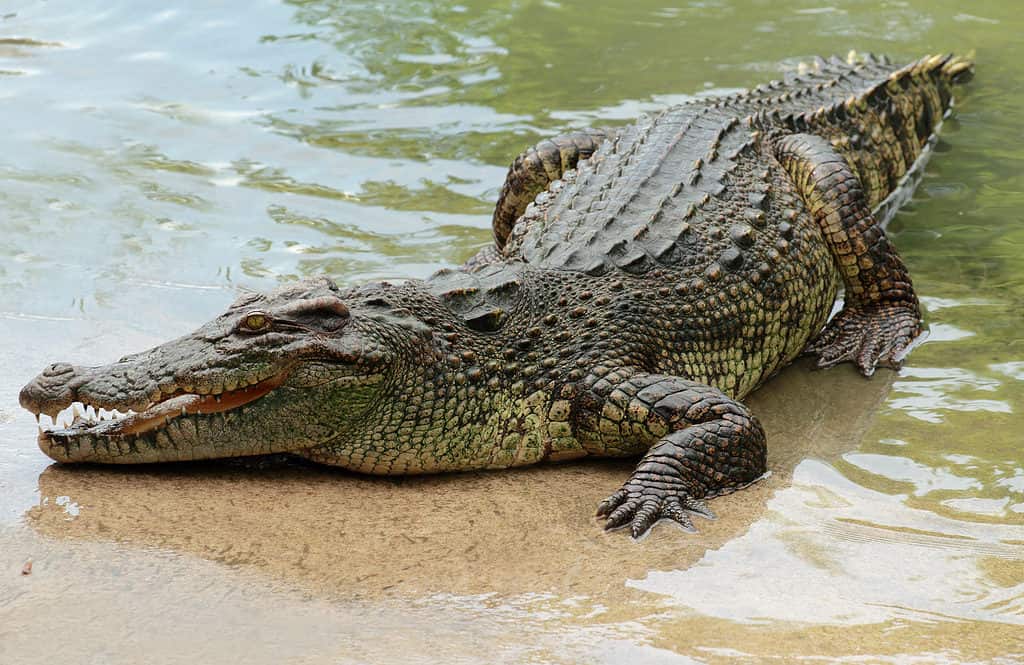
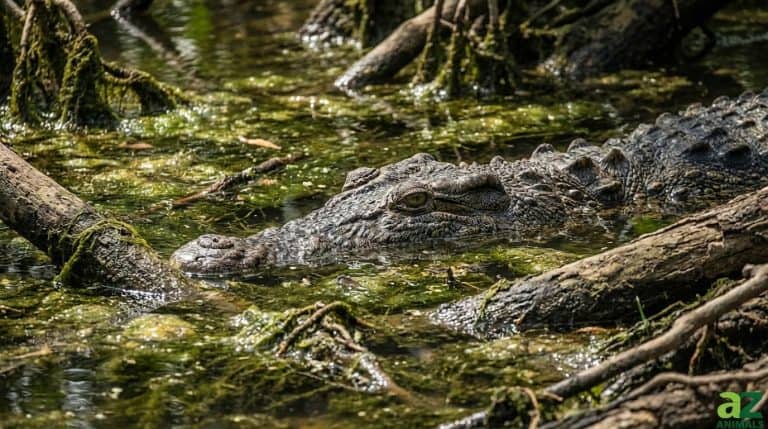
Crocodiles are stealthy hunters who can easily sneak up on their prey.
©Naypong Studio/Shutterstock.com
Crocodiles are ambush hunters by nature. While many smaller species of crocodiles and alligators may shy away from human contact, the Saltwater crocodile is famously territorial and predatory.
In their habitat, it is perfectly normal behavior for them to stalk anything at the water’s edge. Often, a “surprise” encounter isn’t because the crocodile “appeared out of nowhere,” but because its natural camouflage and patience allow it to blend perfectly with the mud and reflections of the water.
Where Do They Live?
Saltwater crocodiles have a massive range, found throughout Southeast Asia, Northern Australia, and the eastern coast of India. While they are famous for inhabiting estuaries and coastal areas, they are equally at home in freshwater rivers, swamps, and billabongs. During the heat of the day, they are often seen basking on mudbanks to regulate their body temperature, but they become most active—and dangerous—at night and during twilight hours.
Lifespan & Conservation
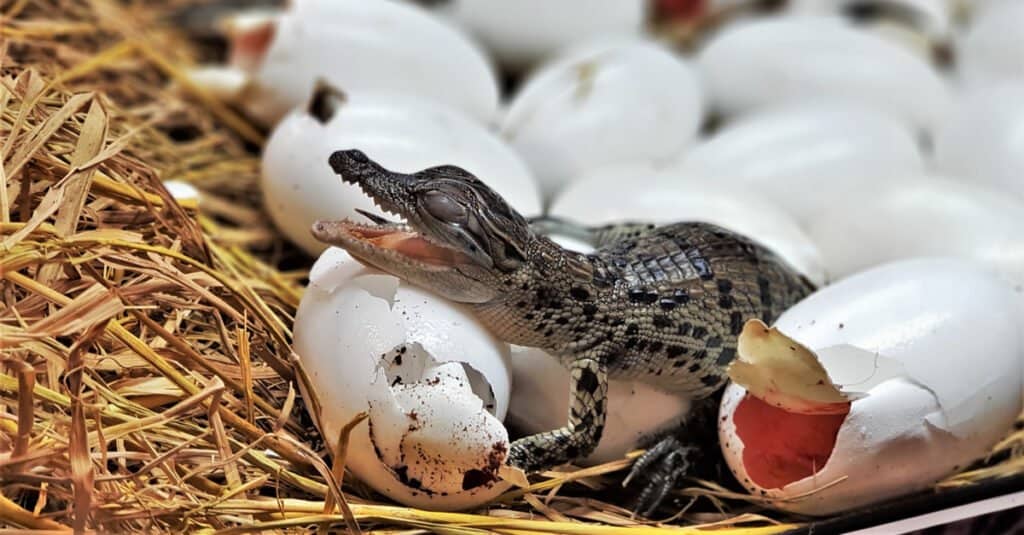
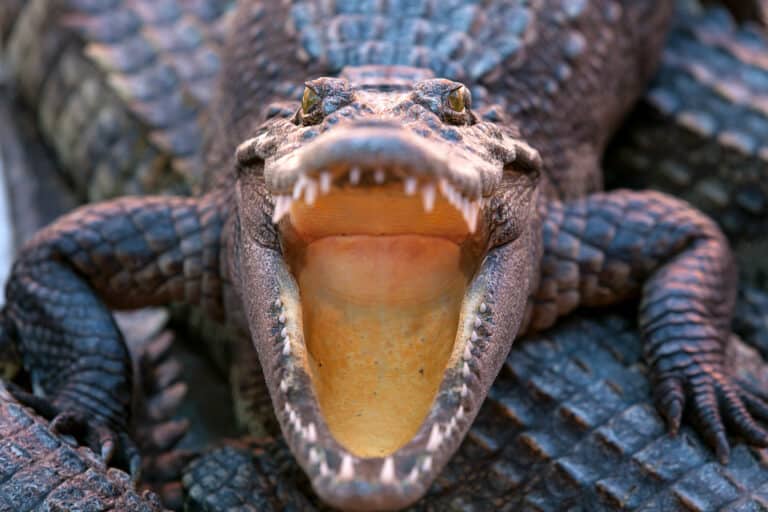
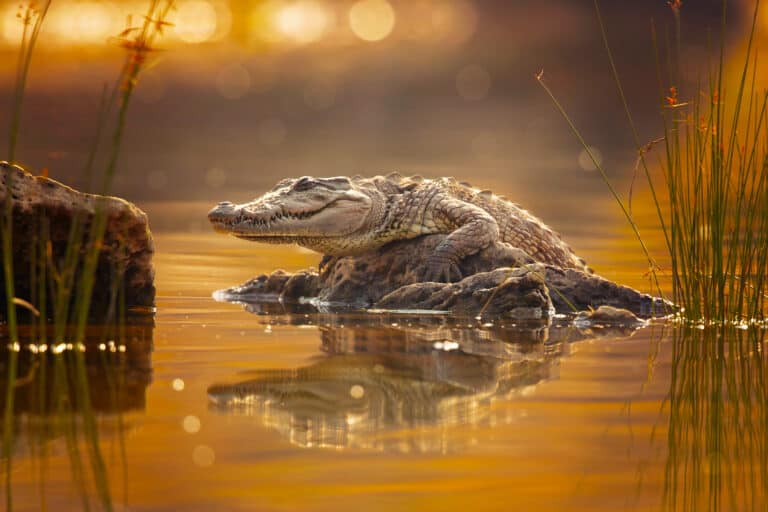
Freshwater crocodile hatchlings are very tough and resilient.
©Arunee Rodloy/Shutterstock.com
Crocodiles are among the longest-living animals on Earth, with an average lifespan of 70 to 100 years. Some individuals in protected environments have even been known to exceed a century.
Despite being ancient survivors, they face modern threats. Habitat destruction, water pollution, and climate change affecting nesting temperatures all pose risks to their future. Conservation efforts in places like Australia’s Northern Territory have been highly successful, helping populations bounce back from the brink of extinction in the mid-20th century.
How Big Are Saltwater Crocodiles?
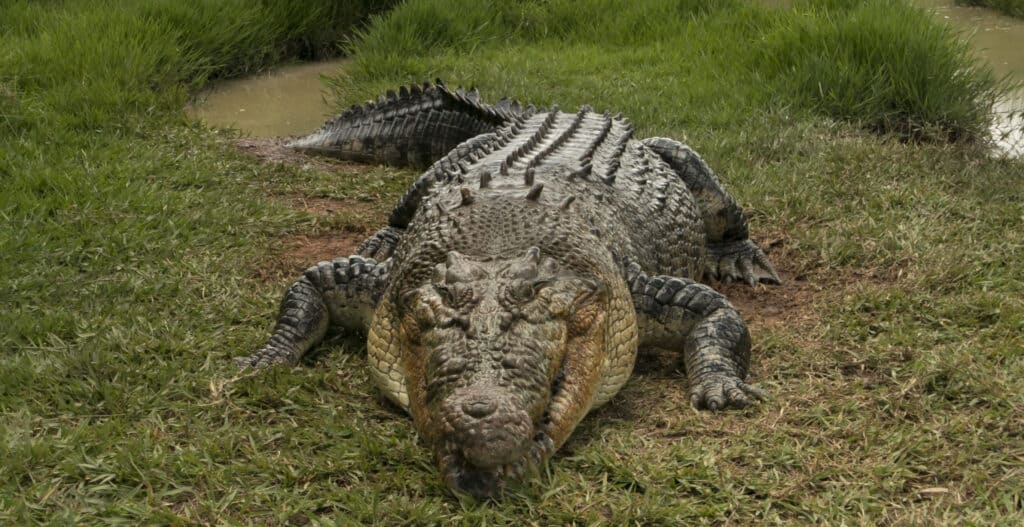
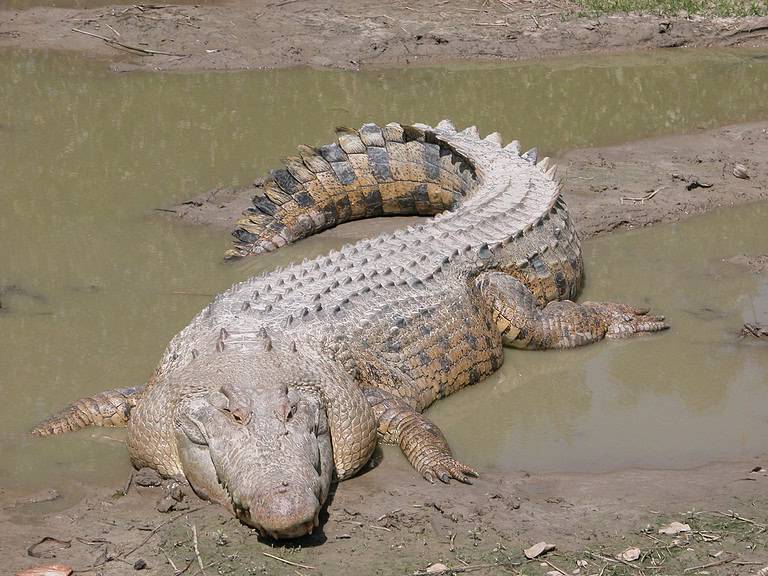
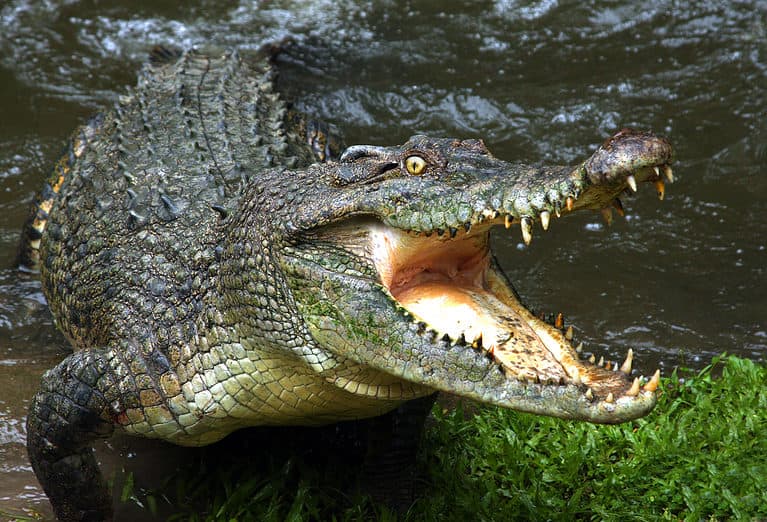
The largest saltwater crocs are around two thousand pounds!
©Firepac/Shutterstock.com
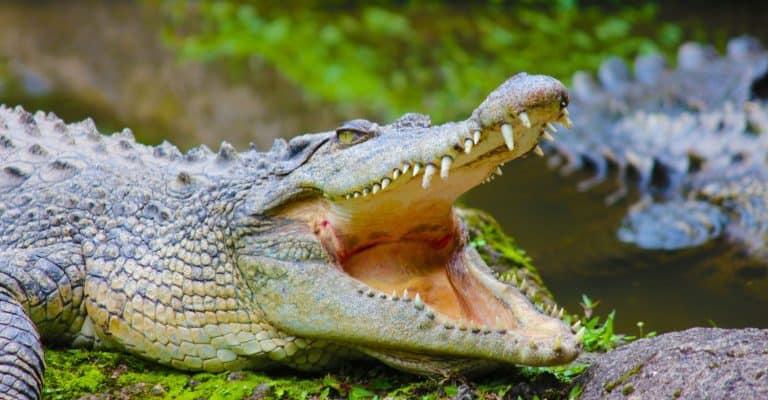
The Saltwater crocodile (Crocodylus porosus) is the largest living reptile on Earth. Their growth from hatchling to apex predator is staggering:
- Hatchlings: Measure about 8 inches long and weigh only a few ounces.
- Juveniles: Grow quickly, reaching 4 to 8 feet in their first few years.
- Adult Males: Typically average 14 to 17 feet in length and can weigh between 1,000 and 1,500 pounds.
- Record Breakers: Rare “giants” have been recorded at lengths of 20 feet, weighing in at a massive 2,000 pounds—roughly the weight of a small car.