
The annual red crab migration has begun! This extraordinary event has been shared in social media posts like this one. There is no doubt that the crabs are already on the move in the lead-up to the major spawning event that takes place around the 15th or 16th of November. Then, the tiny crab larvae will be released into the sea. However, there is a lot for them to do before that can take place! Their behavior is governed by the weather, tides, and the phases of the moon. Let’s explore this extraordinary event and the animals that participate in it.
The Red Crabs of Christmas Island
The red crab migration takes place on Christmas Island, located approximately 1615 miles north-west of Perth and 300 miles south-west of Jakarta, Indonesia. The island covers just 52 square miles and features tropical rainforests, karst landscapes (with sinkholes and caves), cliffs, wetlands, coastal areas, and, of course, the sea. It has been hailed as the ‘Galapagos Islands of the Indian Ocean’ and boasts a rich array of flora and fauna. This Australian territory, with a human population of just over 2000 people, also has a very large number of red crabs!
The red crabs (Gecarcoidea natalis) are the island’s most famous residents and are crucial for the local ecosystem. You will find them in all sorts of places on the island. Whilst they primarily reside in the rainforests, they also turn up on shore terraces and even people’s gardens! These crustaceans are very sensitive to a lack of moisture, so they hang out in burrows they have dug themselves or in deep rock crevices. In the dry season, they will not leave their hideouts and even plug the entrances with leaves to maintain the moisture. Their diet consists of fallen leaves, seedlings, fruits, and flowers. That said, they are also willing to eat other dead crabs, birds, and snails.
Why Do the Crabs Migrate?
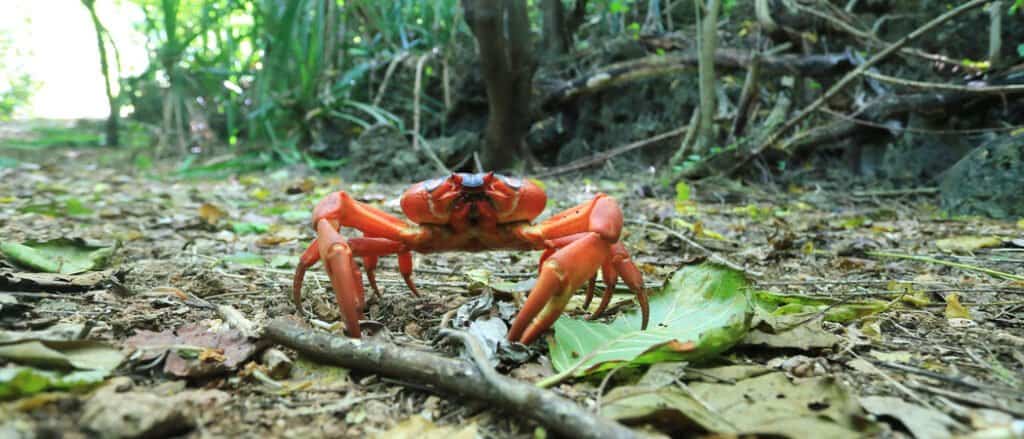
Christmas Island red crabs live in the forests.
©TravellingFatman/Shutterstock.com
Red crab migration is connected with their reproduction. The crabs may hang out in the rainforest for a lot of the time, but they need to be near the water to release their offspring – a process called spawning. The larvae ride the ocean currents, and if they survive, they will return to the island as small crabs. This happens about a month after spawning, though in some years the return of baby crabs to land may occur as late as February.
So, how does this process work? The larger male crabs are the first to arrive at the ocean’s edge. They will have lost moisture on their journey from the plateau, so the first thing they do is take a dip in the sea. Then, they start to dig burrows on the lower terraces. This can get confrontational as so many crabs try to dig burrows in a limited stretch of shoreline. As the female crabs arrive, mating takes place near the burrows. That pretty much completes the list of chores for the male crabs, so they have one more dip in the sea before heading back inland. Meanwhile, the females enter the moist burrows where they produce eggs and stay there for around two weeks while the eggs develop. Each female can produce up to 100,000 eggs! The females will wait for the appropriate time to spawn.
The Process of Migration
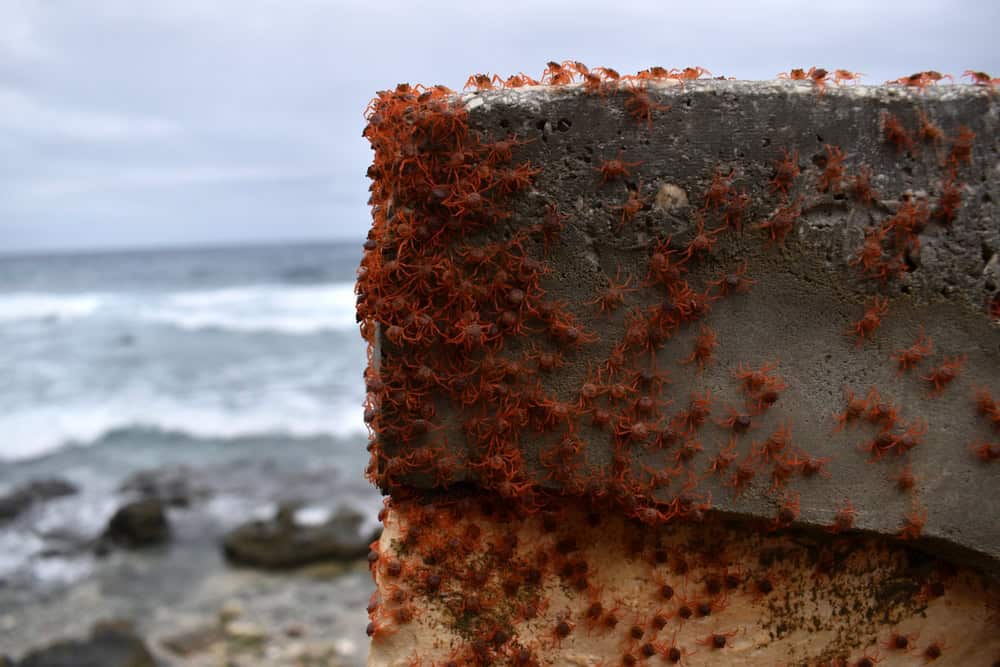
Migration is a part of the red crab’s lifecycle.
©Sofia Varano/Shutterstock.com
For these crabs, migrating is hard work! As soon as they leave their forest burrows, they start to lose moisture and put themselves at risk of dehydration. During the middle of the day, they stay in the shade, and most make their treks early in the morning or late in the afternoon. Nothing will stop them in their mission – you literally see them marching, albeit slowly, down roads and streets. Describing the experience of witnessing the migration in this article in Euronews, Christmas Island National Park acting manager Alexia Jankowski said, “So if you leave your front door open, you’re going to come home and have a whole bunch of red crabs in your living room. Some people, if they need to drive their car out of the driveway in the morning, they’ve got to rake themselves out or they’re not going to be able to leave the house without injuring crabs.”
How Do Crabs Know When to Migrate?
The phase of the moon determines the exact timing and speed of the migration. This also controls its speed. It is usually in October or November and starts with the first rainfall of the wet season. However, it has never been as late as January. To understand the exact timing of the migration, we need to work backward from spawning. The female crabs must spawn during the most favorable tide to give their offspring the best chance of being washed out to sea, where they are more likely to survive. This is a receding high tide during the last quarter of the moon. It’s remarkable that the crabs can instinctively determine the best time to leave the forest so they can spawn during this tide.
Rainfall is also important. They need to wait for the first rainfall to start their trek to prevent dehydration. However, if the rainfall is late, they have to move very quickly to get to the coast on time. They may not take their time and stop to eat and drink as they would normally do. If the rains are exceptionally late, they may abandon trying to make one tide and wait to catch it the next month.
Spawning Is Also Spectacular
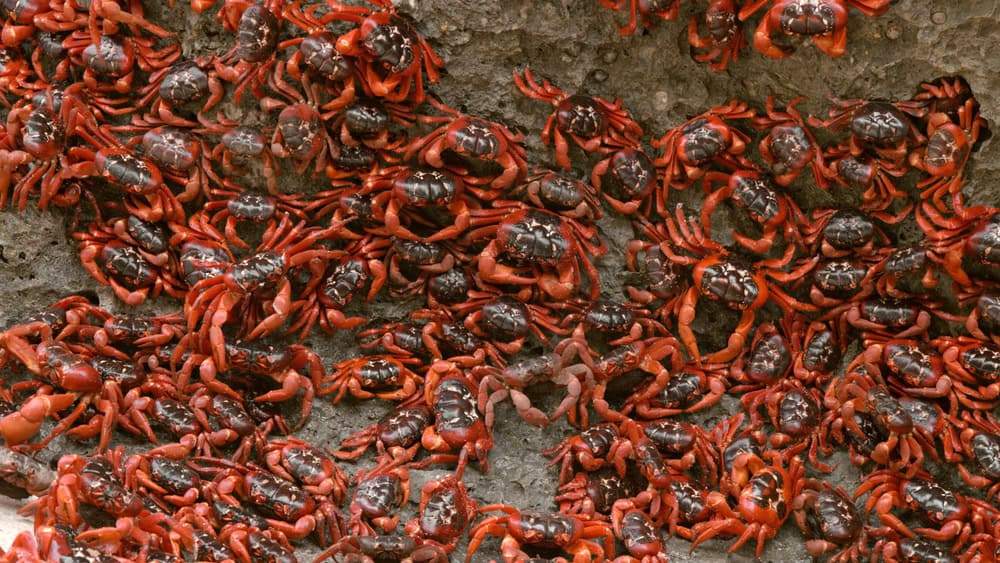
As the female crabs rest in their seaside burrows with their eggs, they are waiting for the last quarter phase of the moon. Once this happens, they all head out and form huge groups at the shoreline. This is also a spectacular sight as a hundred crabs per 10 square feet jostle for position. Just before dawn, the high tide starts to turn, and the females enter the sea to release their eggs. Spawning can take place over five or six consecutive nights.
Baby Crabs Return to the Island
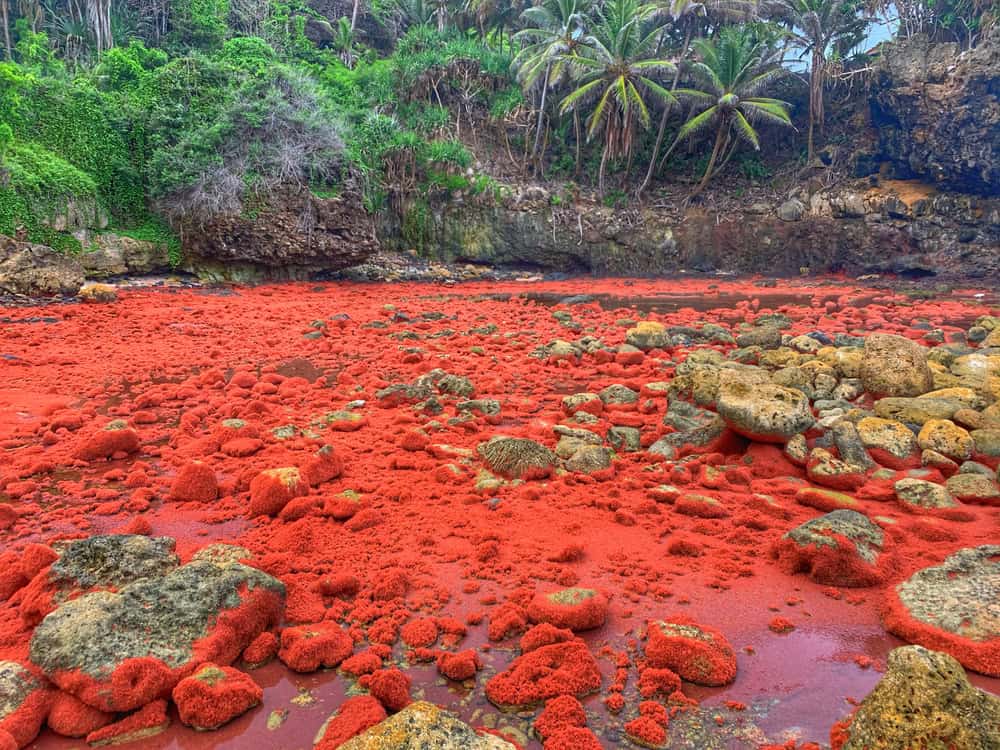
Returning baby crabs turn the shoreline red.
©Carl Nelson/Shutterstock.com
Millions and millions of eggs are released into the sea and immediately hatch into larvae. You can see them swirling in clouds in the water. As the tide recedes, they are dragged out to sea. The tiny creatures go through several life stages in the seawater, but the sad reality is that most of them will perish. They are preyed on by fish, manta rays, and whale sharks lurking in the water. However, around once or twice a decade, a huge number of them do survive, and this is enough to sustain the population.
The surviving larvae eventually develop into a stage known as megalopae. These gather in pools close to the shore as they transform into tiny crabs. At this stage of development, they leave the water and start to retrace the journey that their parents made a few weeks before. This is no small feat for a creature that barely measures 3/16 of an inch across! It takes them nine days to reach their new plateau home. Islanders also protect the crabs at this stage of their lives, using leaf blowers to move them away from areas where they could be crushed. Once in the forests, they will hide away in rocky crevices and amongst forest debris for three years as they mature.
Humans and the Red Crab Migration
The red crab migration is a fabulous annual tourist attraction on Christmas Island. However, the interests of the crabs, not their human visitors, are paramount. The best viewing spots are at Drumsite, Ethel Beach, Great Beach, and Flying Fish Cove. Some sections of road are closed, possibly with short notice, so that the crabs can migrate safely. The island has even constructed special crab bridges to help these crustaceans cross highways safely!