
Quick Take
- Turtles outlasted every mass extinction event for 250 million years, yet researchers pinpointed one specific trait that made some species far more likely to survive than others. See their survival secret →
- Coastal development doesn't just shrink turtle habitat. It triggers a navigational instinct that turns baby turtles into a death trap for themselves. Explore the coastal threat →
- Rising temperatures don't just threaten turtle nesting beaches. They're quietly skewing something about future generations that could unravel the entire population. See how climate skews populations →
- Six of seven sea turtle species are threatened, and every single cause traces back to the same source. The good news is that there are small daily choices that directly counter it. Find your daily impact →
May 23rd is World Turtle Day. It’s the perfect time to celebrate what makes these creatures so amazing and focus on what you can do to protect them.
Turtles Coexisted with Dinosaurs
The first turtles emerged more than 250 million years ago, during the Triassic period. Unlike their modern descendants, those earliest species were not aquatic. Instead, they were purely land-based creatures. Over time, some slowly transitioned into marine dwellers, while others continued to evolve on land. Fossils from those earliest species, including Odontochelys semitestacea, show that these turtles had only partially formed shells.
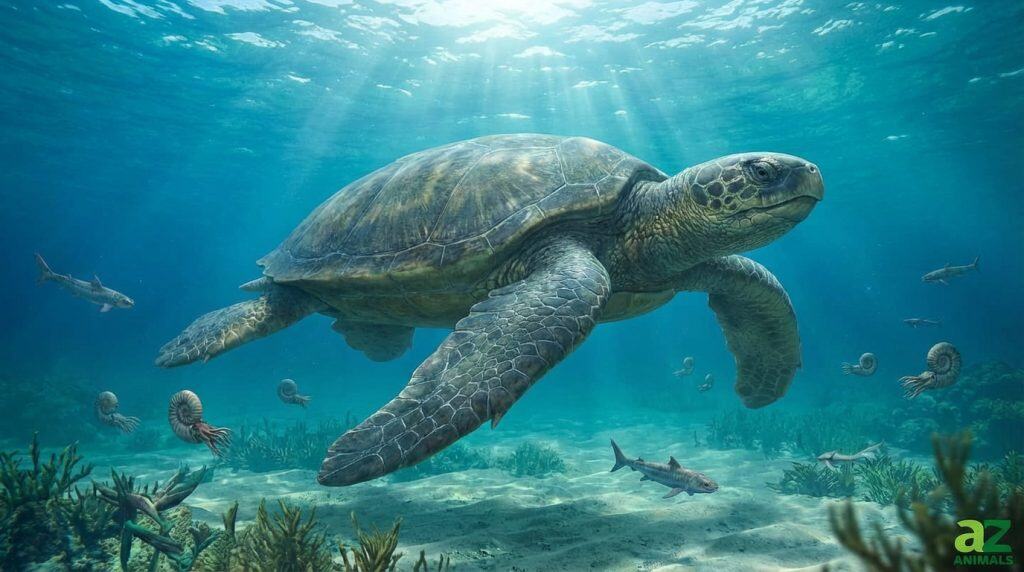
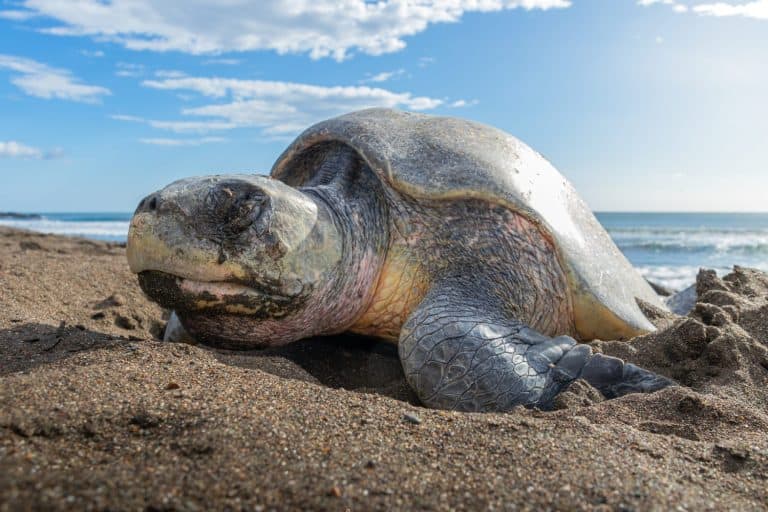
Turtles have been around for more than 250 million years.
©A-Z Animals
Over time, these turtles evolved, with some becoming the sea creatures we know today. By the Cretaceous period, around 110 million years ago, species like Archelon ischyros more closely resembled the sea turtles we know and love today. They had fully formed, streamlined shells for easier underwater movement, along with powerful flippers for propulsion.
However, unlike modern sea turtle species, these ancestors were enormous, sometimes exceeding 13 feet in length.
Turtles Are Tough
Turtles have existed for hundreds of millions of years. They’ve survived several mass extinction events, including the one that ushered in the age of the dinosaurs and the one that eventually closed the chapter on dinosaurs altogether.
They lived through the end of the Triassic period, around 201 million years ago. This was the extinction event that allowed dinosaurs to become the dominant land animals on Earth.
When the Cretaceous-Paleogene extinction event occurred around 66 million years ago, wiping out dinosaurs and many other animals, turtles were one of the few species that survived. Scientists believe that turtle species diversity actually increased following the extinction event.
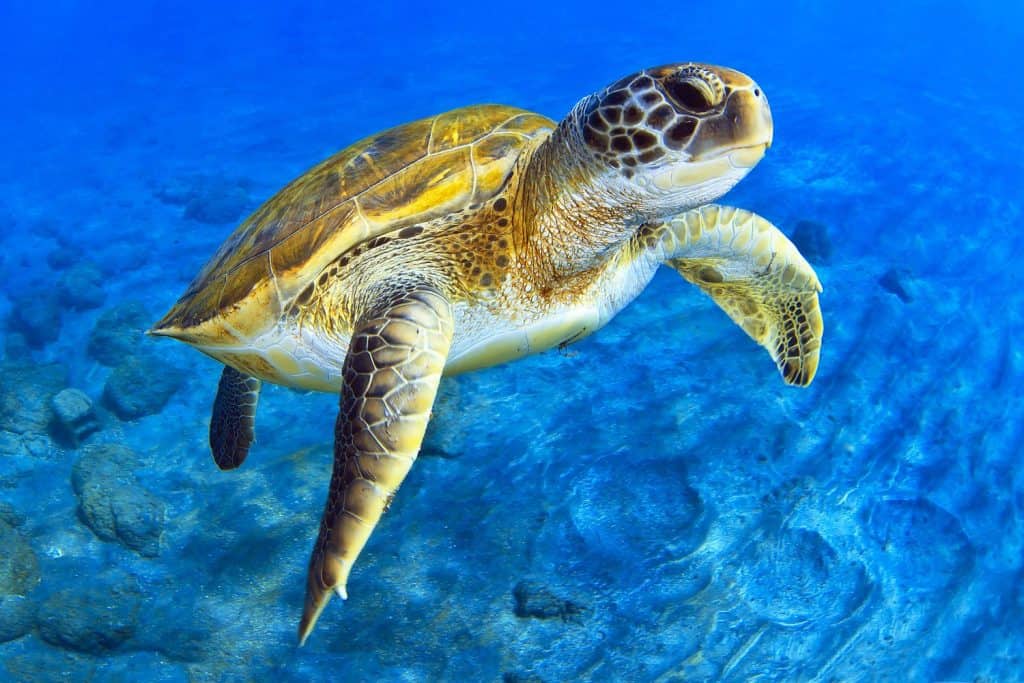
Turtles have survived several mass extinction events.
©David Carbo/Shutterstock.com
One recent study shed light on why some turtles seemed impervious to mass extinction events. Researchers believe this resilience is related to their diets. Turtles that ate hard-shelled prey like gastropods and bivalves were more than five times as likely to survive as those that were herbivores or ate fish.
But even though turtles survived catastrophic events that wiped out nearly all animal life on the planet, they may not be able to cope with the threats created by humans.
Threats to Turtles Today
Worldwide, five of the seven sea turtle species are classified as threatened or endangered. There are five main threats to turtle populations today, according to the Marine Turtle Specialist Group of the IUCN. All are human-related.
Fisheries bycatch
Each year, commercial fishing operations using trawl nets, gill nets, and longline hooks accidentally catch hundreds of thousands of sea turtles. The sea turtle’s need to periodically surface for air puts them in the direct line of these fishing threats.
Discarded fishing gear is another threat. When nets and lines are discarded in the world’s oceans, they become traps for marine life, including sea turtles. If a turtle becomes entangled in one of these “ghost nets,” it is unable to swim or feed normally.
Poaching
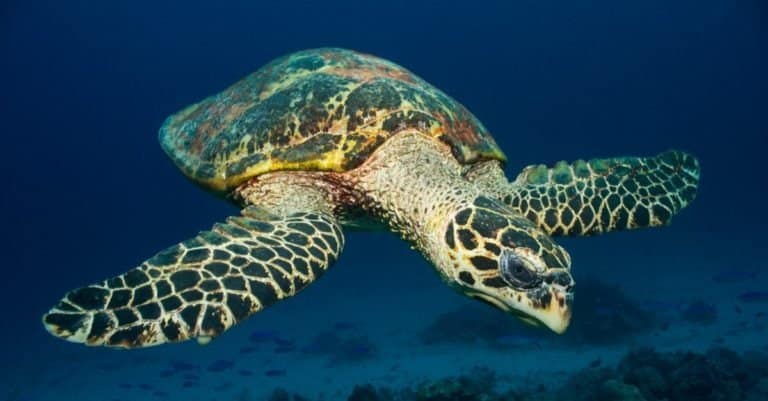
Turtle meat and eggs are regularly harvested for food and as a means for impoverished populations to supplement their incomes. Turtles are also prized for folk medicine and religious ceremonies. Some species, like hawksbills, are hunted for their beautiful shells. Poachers and hunters take tens of thousands of turtles each year, devastating populations worldwide.
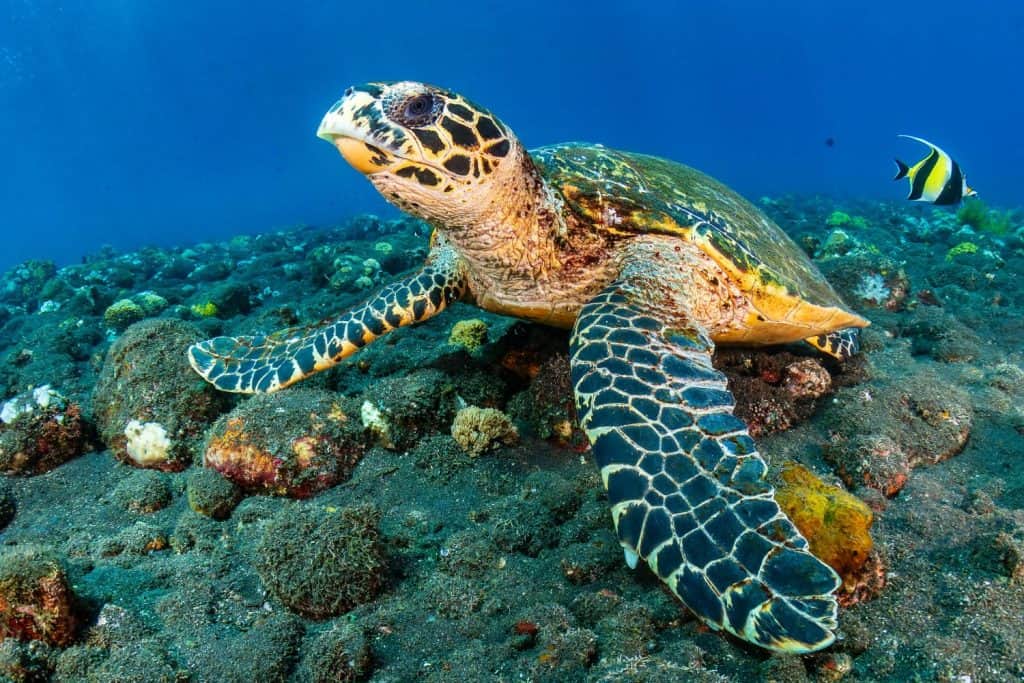
Hawksbill turtles are poached for their shells.
©Richard Whitcombe/Shutterstock.com
Coastal development
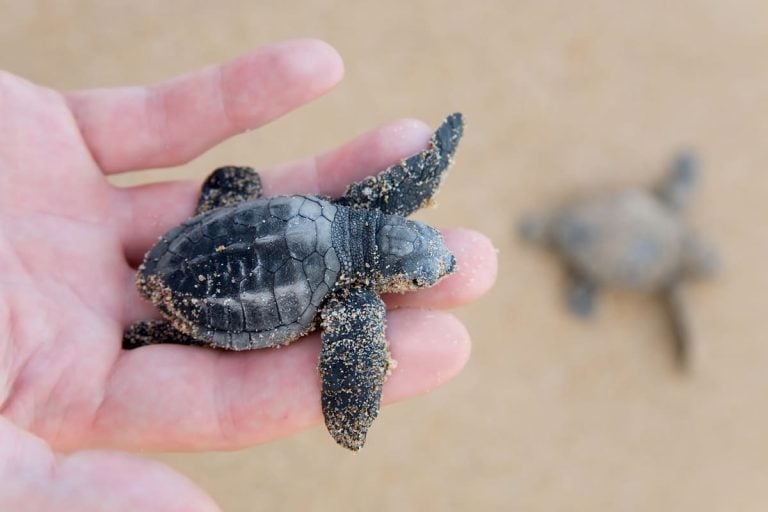
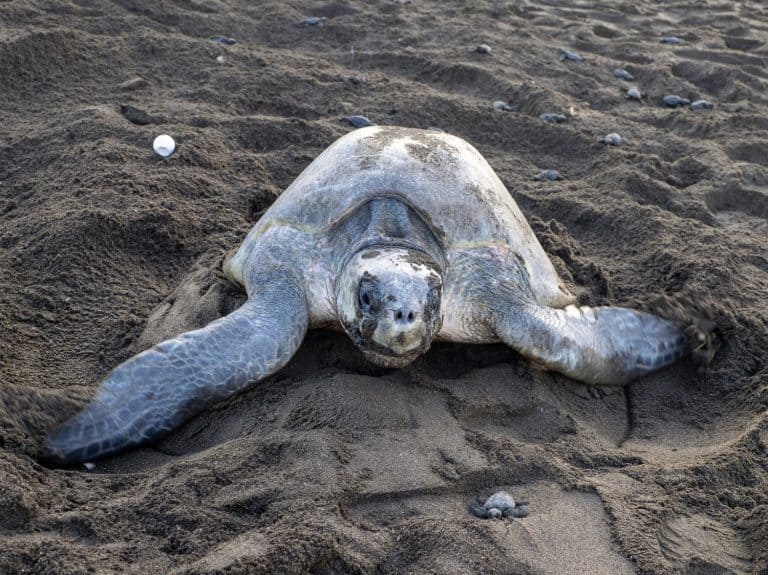
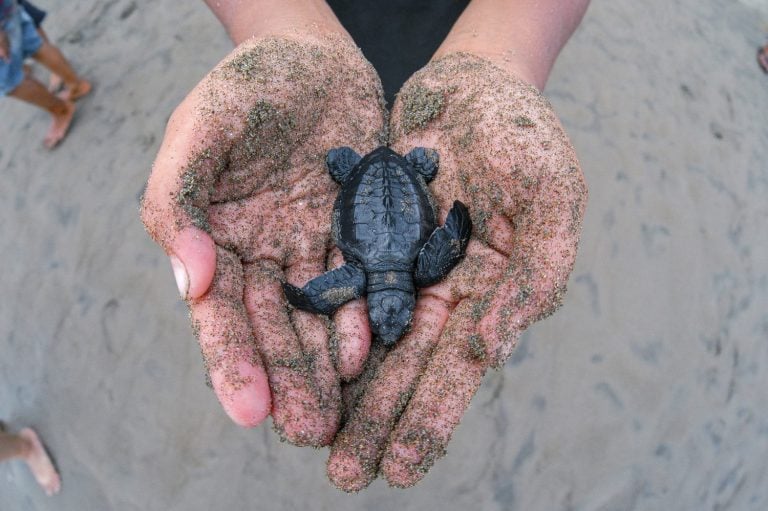
Turtles nest on sandy beaches to lay their eggs and ensure the survival of the next generation. Unfortunately, development along the world’s coastlines creates unintended consequences for baby turtles, who instinctively move toward the brightest light source when they emerge from their nests.
Normally, that light source would be the open ocean as it reflects the light of the open sky. However, as development expands along turtle nesting beaches, hatchlings are attracted inland toward lighted buildings, airports, and other manmade structures. When hatchlings move in the wrong direction, they become vulnerable to dehydration, predators, and the dangers of busy roads.
Pollution
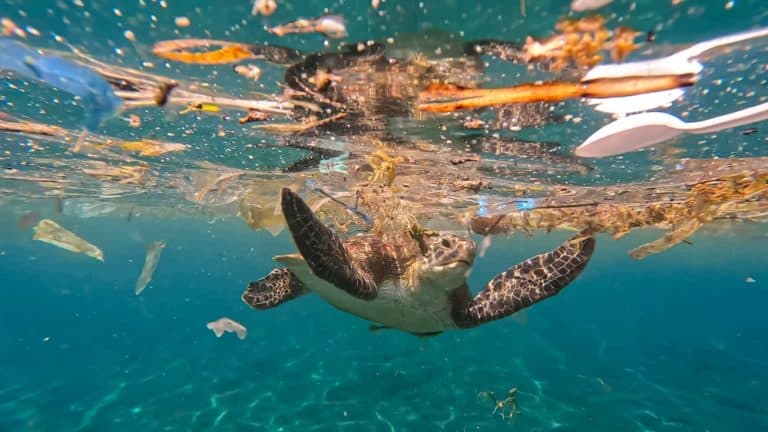
In the sea, plastic bags closely resemble jellyfish, which are a favorite food of sea turtles. Many turtles die from ingesting plastic debris. Chemical pollution and oil spills also contribute to significant turtle deaths each year. Floating debris in the ocean, such as ghost nets or trash, also poses entanglement threats, leading to further loss of turtle life.
Climate change
One often overlooked impact of rising world temperatures is how it affects sea turtle nests. As sea levels rise, turtles lose increasing amounts of their nesting habitat. Warmer sea temperatures also destroy the coral reefs that turtles rely on as a food source.
Beyond that, the ratio of male to female hatchlings is also affected. The sex of hatchlings is determined by nest temperature, with warmer sand producing more females. If the ratio of males to females becomes too imbalanced, it could have long-term effects on the number of eggs laid and the survival of the species.
How You Can Help Turtles
You can take small steps each day to help protect sea turtle populations.
One strategy is to make more educated seafood choices. Ask where and how your seafood was caught, then choose the options that were harvested using turtle-friendly techniques. Seafood Watch, run by the Monterey Bay Aquarium, is a helpful tool to use.
Another way to help is by making sensible choices about the products you use daily. Skip single-use plastic in favor of reusable shopping bags, bottles, and straws. Not only is plastic damaging to the environment, but it also makes its way into the world’s oceans and eventually gets ingested by marine life.

Plastic pollution is a huge threat to sea turtles.
©Rich Carey/Shutterstock.com
Other ways you can help include participating in beach clean-ups to keep garbage from making its way into the water. You should also avoid nesting beaches at night during the breeding season. Your presence, especially if you’re using a flashlight, disturbs female sea turtles when they come ashore to lay their eggs. When you visit the beach, leave it as you found it. Avoid leaving behind anything, such as sandcastles or toys, that could obstruct hatchlings from reaching the ocean.
Volunteering and donating to sea turtle conservation organizations is another way to help sea turtles. Whether you donate money or volunteer to walk nesting beaches and identify freshly laid nests, every effort helps.