
Quick Take
- Raising this eaglet by hand was never really an option. Why hand-rearing fails →
- The belief that parent birds reject chicks touched by humans turns out to be wrong. The truth about human scent →
- Wedge-tailed eagle nests present a problem that required a specialist most people wouldn't expect on a wildlife rescue team. Meet the arborist →
- Each rescued eaglet carries more conservation weight than its single life suggests, a fact that comes down to how this species reproduces. Conservation stakes explained →
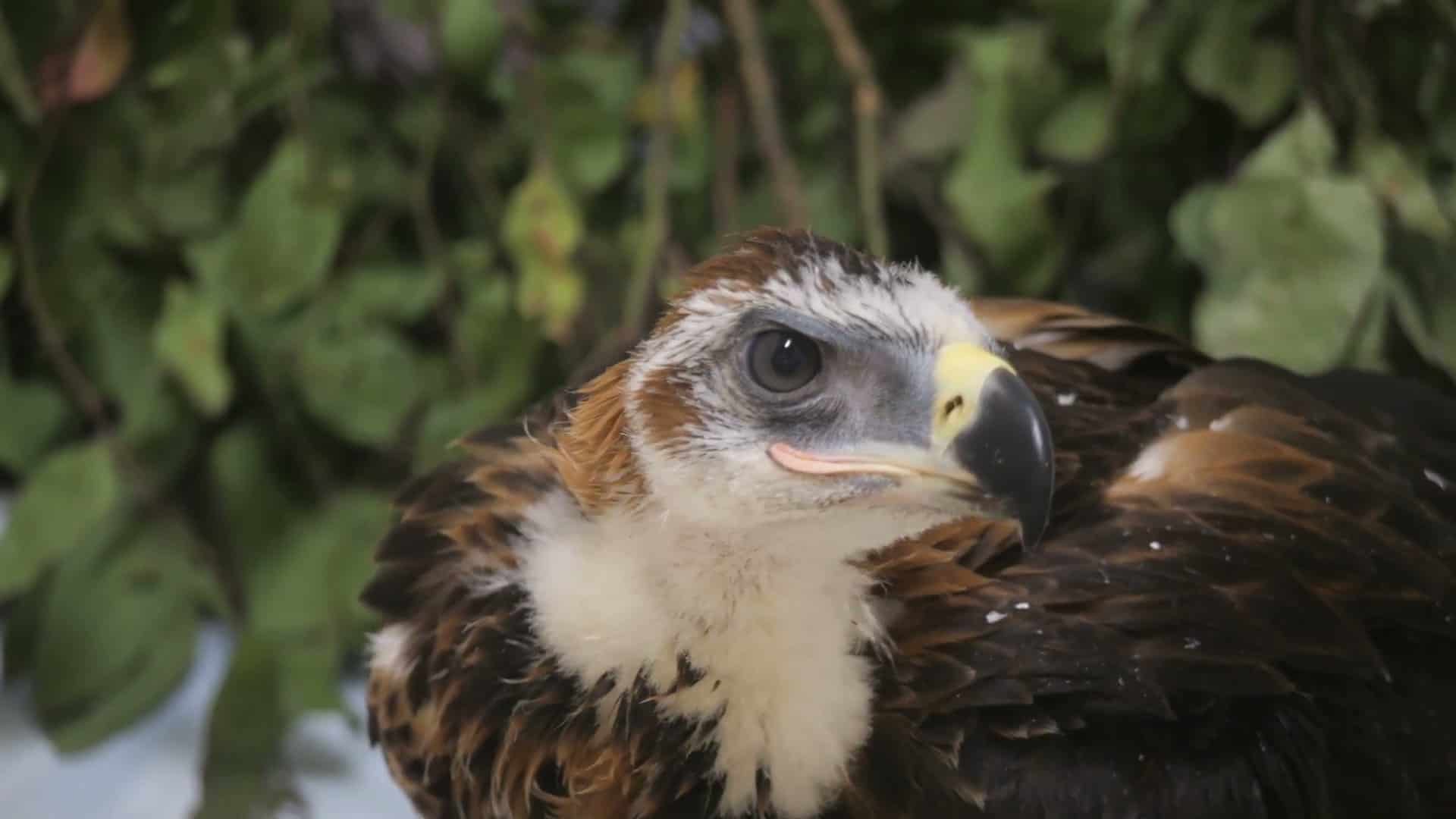
When a member of the public in Doreen, north of Melbourne, Victoria, Australia, found a young wedge-tailed eagle on the ground with a visible wound, the bird was already in serious trouble. Nestlings of Aquila audax are entirely dependent on their parents for food and protection, and a grounded eaglet has effectively no chance of survival without intervention. The wound turned out to be hiding a fracture in one wing.
The bird was taken to Healesville Sanctuary’s Australian Wildlife Health Centre, part of Zoos Victoria, where staff stabilized the fracture and moved the eaglet into the raptor rehabilitation facility. Large birds of prey need room to stretch, exercise and feed in ways that mimic wild conditions, which is why specialist raptor centers use tall, long flight aviaries rather than standard hospital enclosures. Confining a growing eagle in cramped quarters can cause feather damage and muscle wastage that undermine any future release.
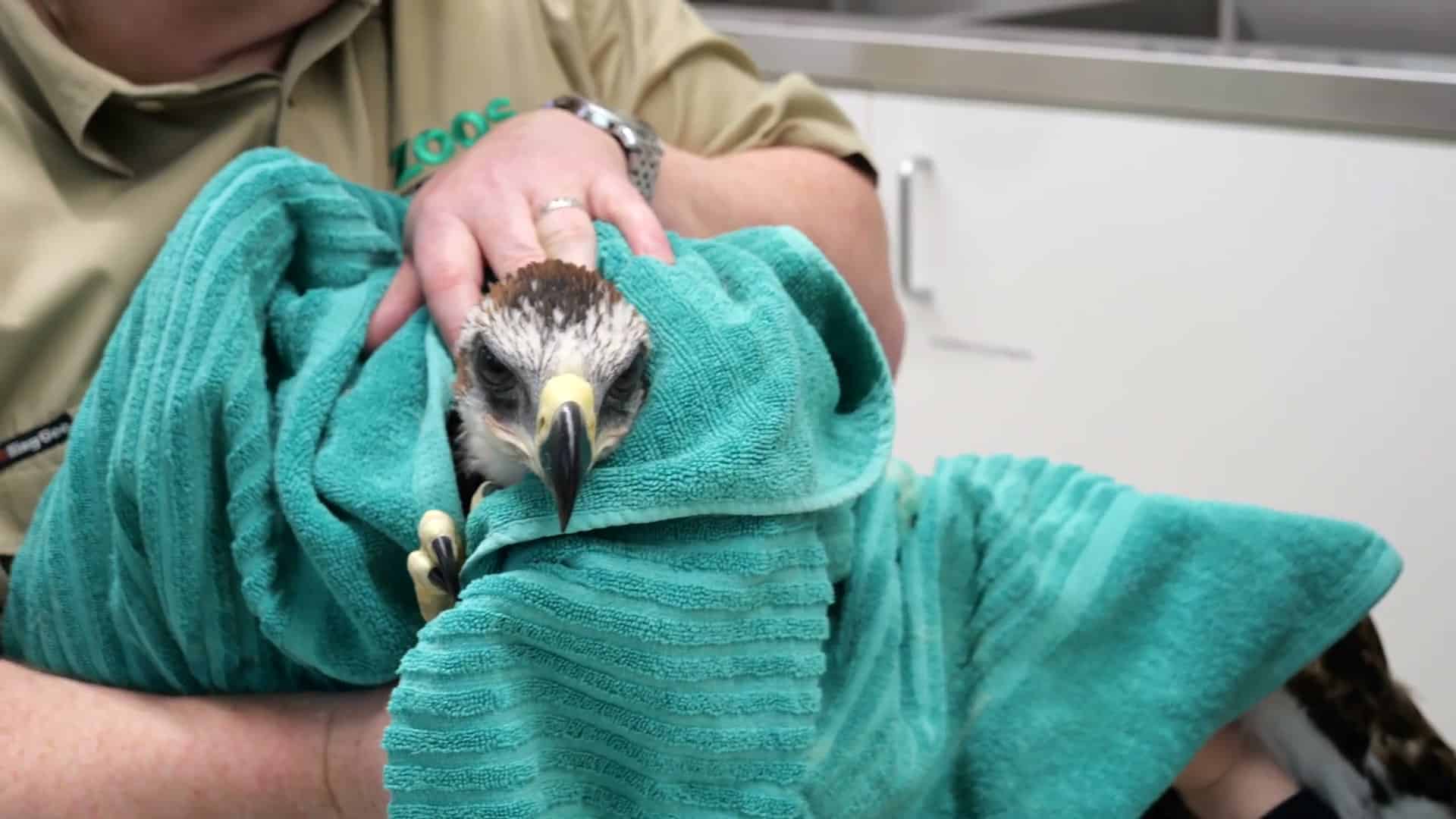
The experts at Healesville Sanctuary’s Australian Wildlife Health Centre helped rehabilitate the wedge-tailed eaglet till it was ready to be returned to its nest.
©Werribee Open Range Zoo via YouTube — used under fair use – Original / License
The wedge-tailed eagle is Australia’s largest raptor, with a wingspan that can exceed 2.3 meters (approximately 7.5 feet) in females. Pairs are monogamous and territorial, building bulky stick nests in tall trees or on cliff ledges and typically raising one or two chicks per season. Nestlings remain in the nest for around 70 to 80 days and continue to be fed by the adults for months after fledging while they learn to hunt. That extended parental care is exactly why rehabilitators try so hard to reunite young raptors with their families rather than hand-rear them.
When All Else Fails
Hand-rearing a top predator is a last resort. Eaglets raised by humans risk imprinting, a developmental process described in classic work by Konrad Lorenz, in which young birds form social and sexual attachments to their carers instead of their own species. An imprinted eagle may beg from people, fail to recognize mates, and lack the hunting skills its parents would have taught it. Returning the bird to the nest sidesteps all of that.
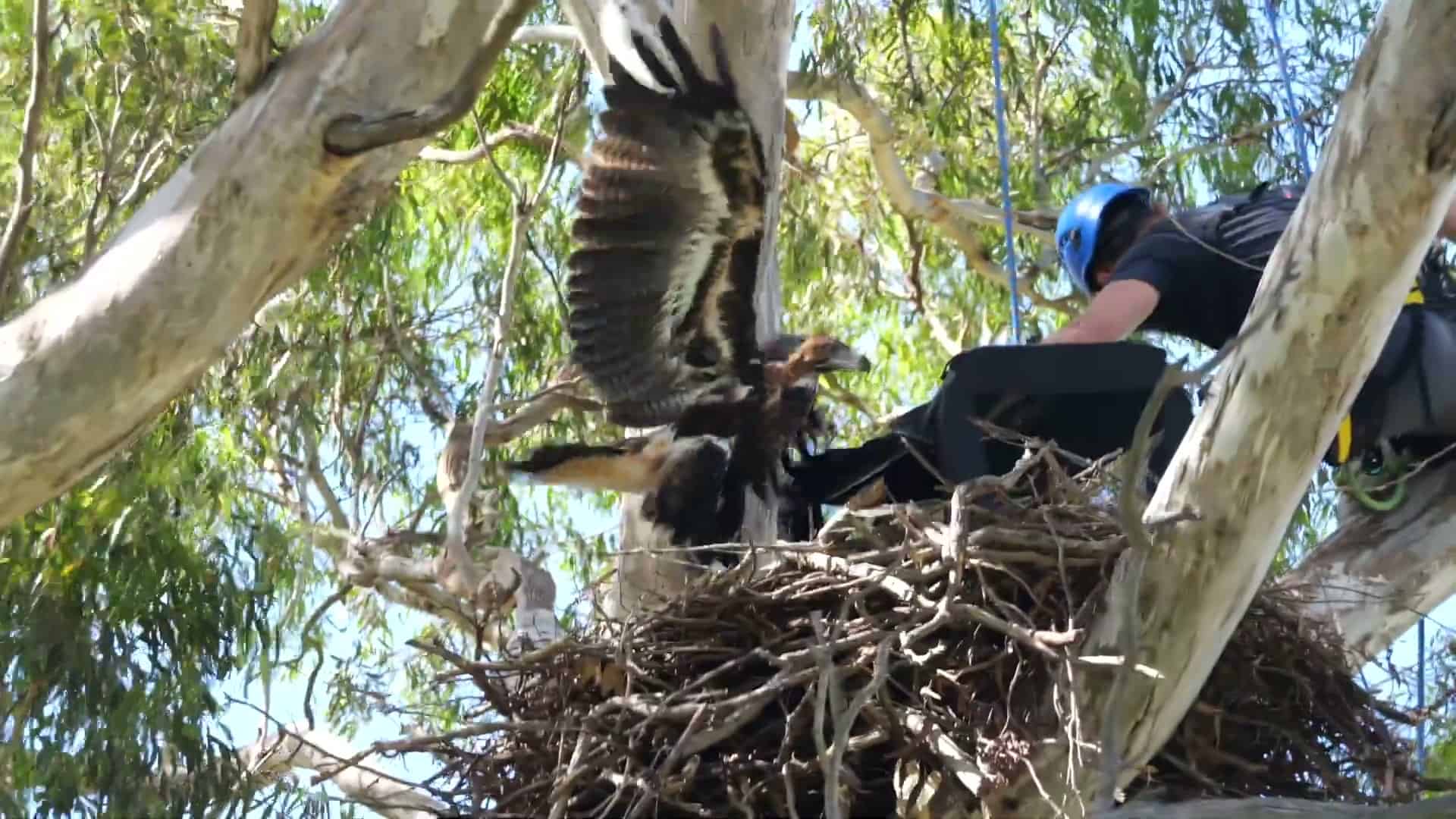
Zoos Victoria worked with an arborist to ensure the eaglet was returned safely to its nest.
©Werribee Open Range Zoo via YouTube — used under fair use – Original / License
Nest reunions, sometimes called renesting, are an established technique in raptor conservation. Groups such as the Raptor Center at the University of Minnesota and HawkWatch International have documented successful returns of nestling hawks, eagles and owls to their original nests, and have shown that adult raptors will generally continue to feed a returned chick. The old folk belief that parent birds reject young that have been touched by humans is not supported by evidence; most birds have a poor sense of smell and identify their chicks by location and behavior.
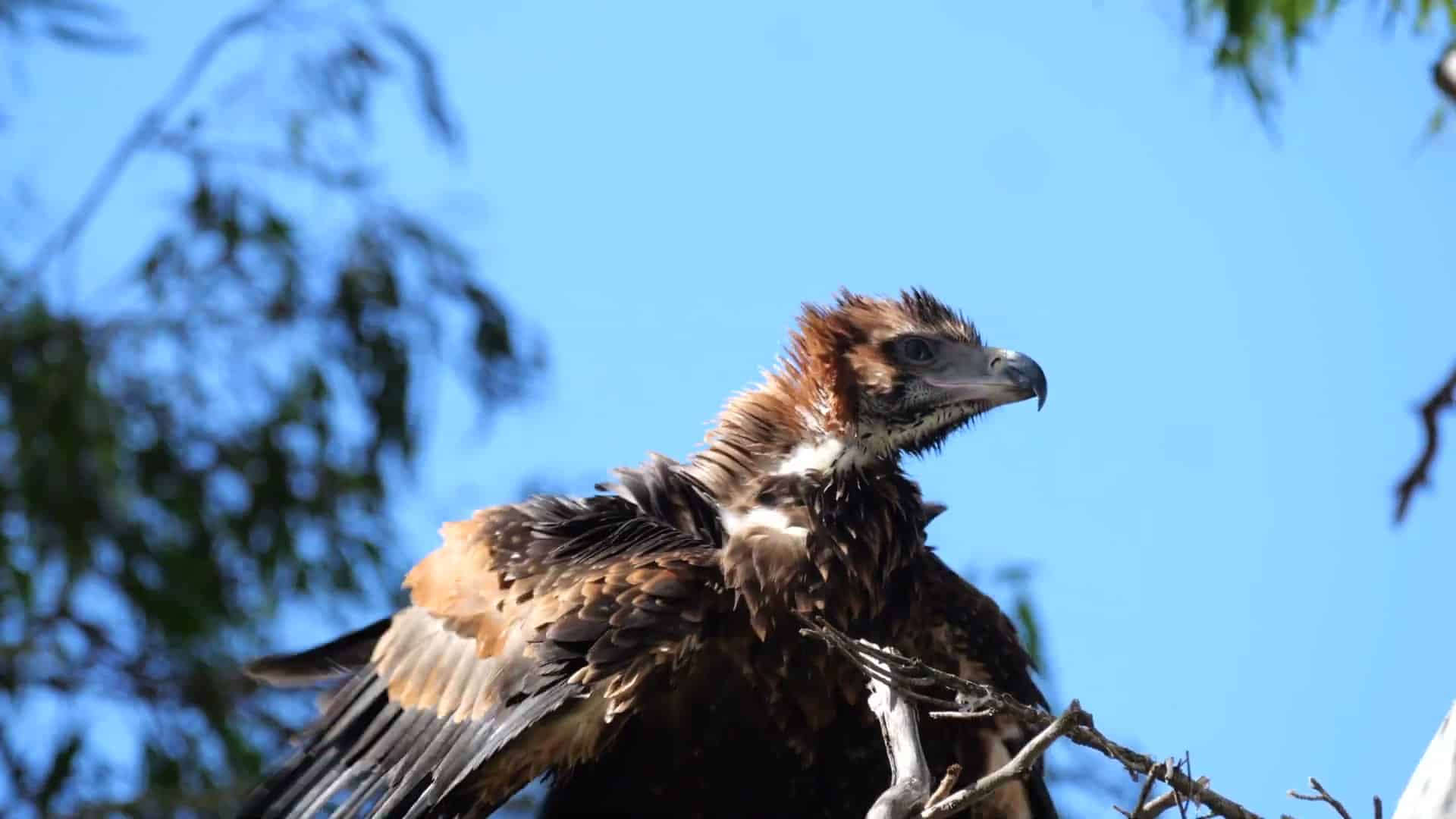
Not long after being returned to its nest, the eaglets parents were seen flying nearby, a sign of a successful rehabilitation and return to nature.
©Werribee Open Range Zoo via YouTube — used under fair use – Original / License
Getting the eaglet physically back into a wedge-tailed eagle nest is its own problem. These nests are often 15 to 35 meters (approximately 50 to more than 100 feet) up in the tallest trees in the territory and can weigh more than 200 pounds after years of reuse. That is why the Zoos Victoria team worked with an arborist to climb to the nest, and with the landholder who had first reported the bird. Once placed back among the sticks, the eaglet was seen spreading its wings on the nest platform, the kind of self-maintenance behavior that suggests a bird is alert and physically capable.
Why This Matters
From a population standpoint, every returned eaglet matters more than it might seem. Wedge-tailed eagles are long-lived and slow to reproduce, and the Tasmanian subspecies (Aquila audax fleayi) is listed as endangered under federal environmental law, with habitat loss, collisions and historical persecution all contributing to declines. Mainland populations are more secure but still face threats from vehicle strikes, secondary poisoning from rodenticides, and lead exposure from carrion contaminated with ammunition fragments, a problem documented across multiple raptor species.
The Doreen rescue is a small case study in what modern raptor rehabilitation looks like when it works: a member of the public who reported the bird quickly, a veterinary team capable of treating orthopaedic injuries in a large raptor, a purpose-built flight aviary, and a coordinated release that put the bird back in the nest, with its parents still flying overhead.