
Quick Take
- Toy fox terriers and rat terriers come in a variety of color combinations.
- Rat terriers are excellent rodent hunters.
- Toy fox terriers descend from fox terriers, which were originally bred to flush foxes out of their dens.
Originally bred for hunting vermin and guarding, terriers share a common, spirited nature, intense curiosity, a strong prey drive, and a fearless, often stubborn, independence. They are typically vocal, active, and require consistent, firm training. There are 32 terrier breeds recognized by the American Kennel Club (AKC), including Jack Russell, West Highland, and Cairn terriers. Two terriers that are sometimes confused are the toy fox terrier and the rat terrier. Continue reading to discover what sets these two breeds apart.

The toy fox terrier has tall, erect, V-shaped ears, a short, smooth coat, and a short tail that may be docked.
©iStock.com/betyarlaca
Size
Size is one of the key differences between the toy fox terrier and the rat terrier. Standard rat terriers are typically larger than toy fox terriers. Although miniature rat terriers, developed in the 1920s, are significantly smaller than standard rat terriers, this article will focus on the standard rat terrier.

Miniature rat terriers are significantly smaller than standard rat terriers.
©iStock.com/Dendron
The standard rat terrier weighs 10 to 25 pounds and stands 13 to 18 inches tall at the shoulder.
The toy fox terrier is substantially smaller, weighing 4 to 9 pounds and standing 8.5 to 11.5 inches tall.
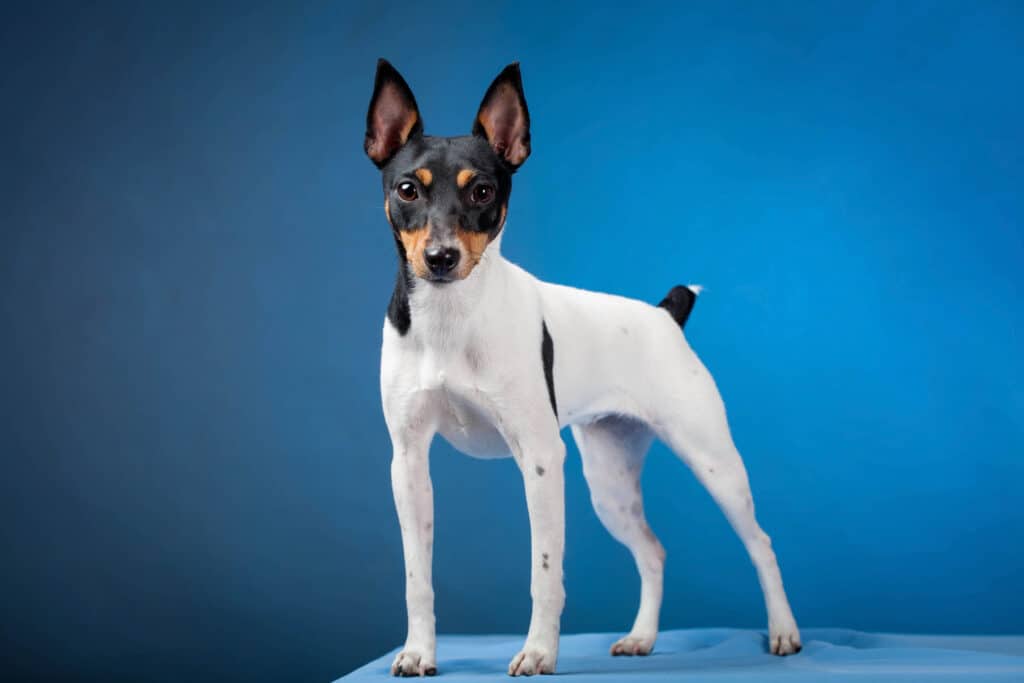
The toy fox terrier weighs between 4 and 9 pounds and stands 11.5 inches tall.
©iStock.com/Farinosa
Appearance
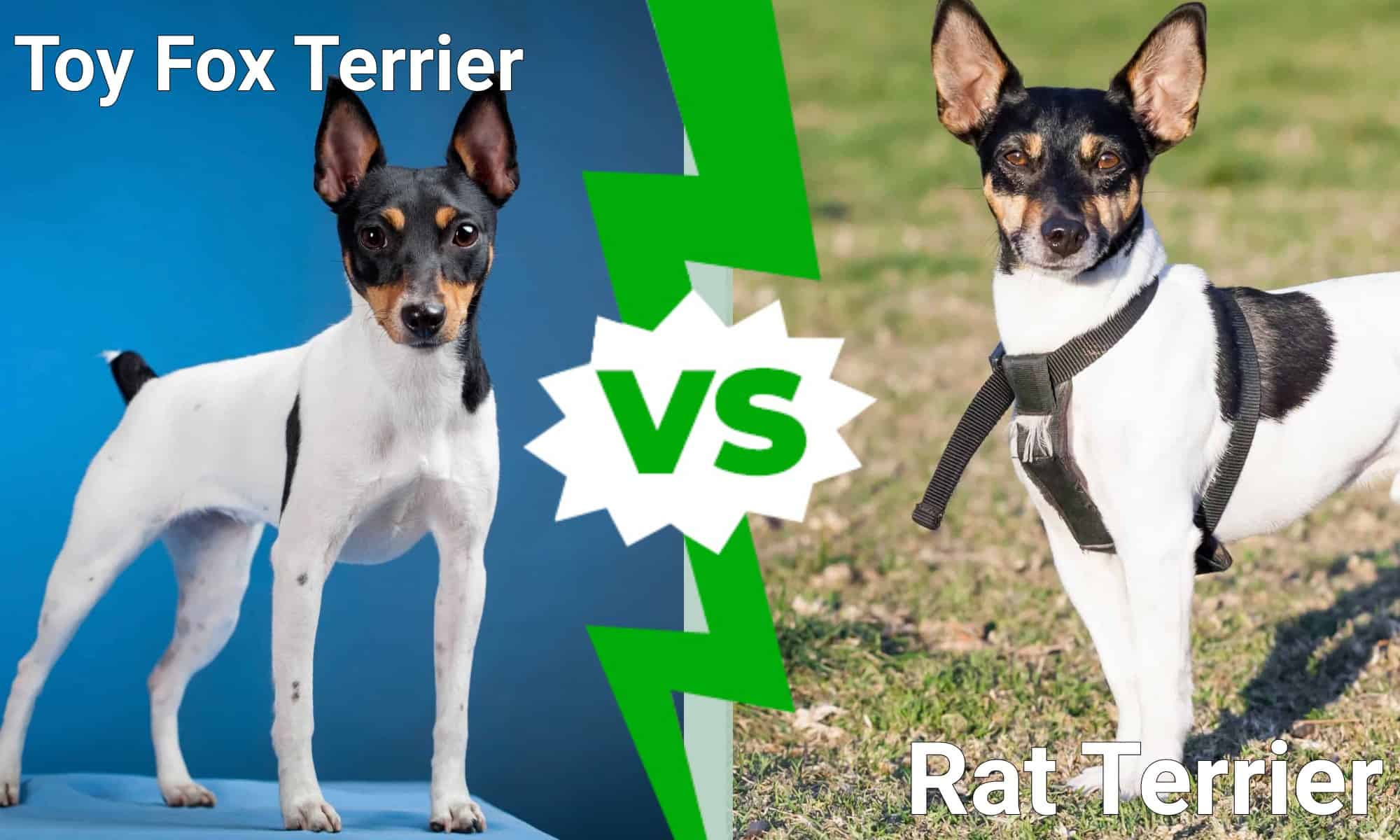
The toy fox terrier and the rat terrier both have tall, erect, V-shaped ears, a short, smooth coat, and a short tail that may be docked. However, rat terriers are typically more muscular than toy fox terriers.

The rat terrier has numerous colors available in its coat.
©iStock.com/sjallenphotography
The toy fox terrier typically has a white base coat with four AKC-recognized color combinations: white, black & tan; white & black; white, chocolate & tan; and white & chocolate.
The rat terrier has 18 AKC-recognized colors and 9 markings, including black, chocolate, blue, fawn, red, apricot, lemon, tan, white, and sable.
Temperament

The toy fox terrier is vocal and requires training to cut down on its yapping.
©iStock.com/Vasilisa_k
The toy fox terrier and rat terrier are both very energetic, playful dogs. Both breeds need to have something to do, or they will run amok. The toy fox terrier is slightly more vocal and requires training to curtail its yapping. The rat terrier is also a barker, but it is more easily trained.
Both breeds are known for being very friendly to people, although they will alert you when a stranger is nearby. However, once you welcome the stranger into your home, the dogs will be friendly toward them.
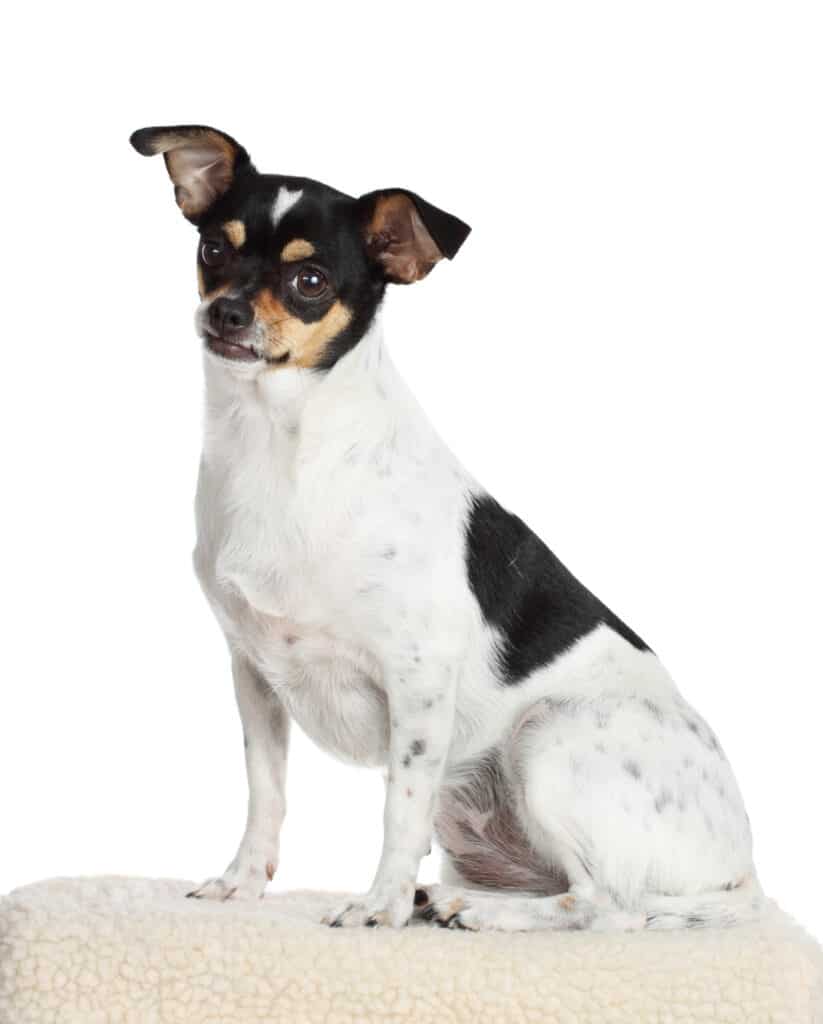
The rat terrier is very effective at catching and killing rats.
©iStock.com/LanaLanglois
Origins
The toy fox terrier and the rat terrier originated in the United States.
The toy fox terrier is bred primarily as a companion dog these days, but it was once used to help hunt foxes and perform in circuses. Fox terriers were bred to get into fox dens and flush the foxes out for hunters; the toy fox terrier descends from these dogs but was primarily developed as a companion.
The rat terrier is equally popular as a modern working dog and a companion dog. As their name suggests, they are used for controlling rodent populations. They’re very effective at catching and killing rats. Of course, they’re also kept as companions because of their loyal, loving nature and high energy.