
Quick Take
- The viral wall test is a fun trend, but not a real measure of dog intelligence.
- Results mix trust, body awareness, reflexes, and past experiences.
- Real smarts show in problem‑solving, social reading, and learning new tasks.
- Safe puzzle games and training give a better picture of your dog’s mind.
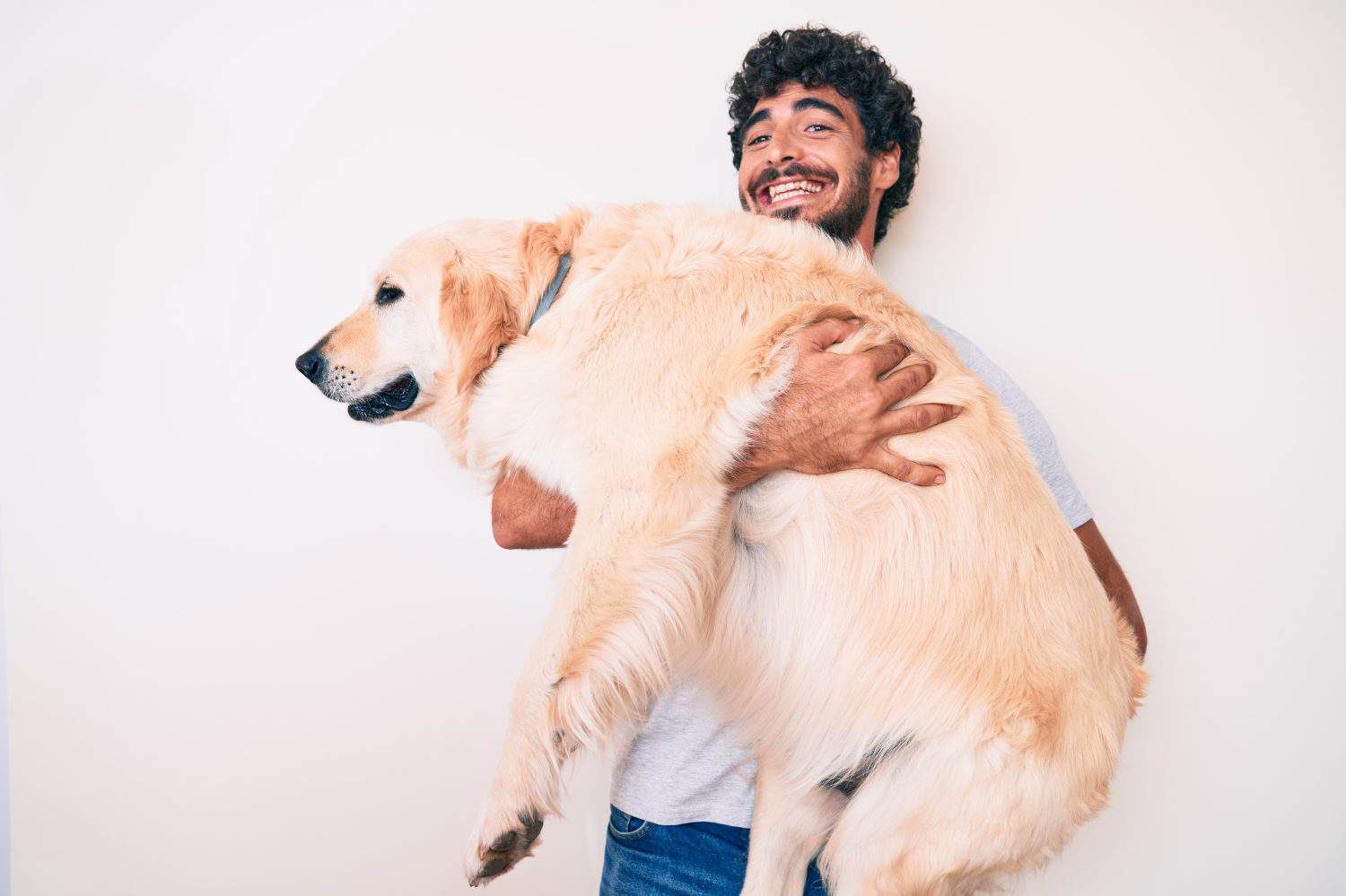
Scroll through social media, and you may run into the so-called dog intelligence wall test. In these clips, an owner holds their dog in front of themselves and walks toward a wall to see how the animal reacts. The claim of the test is that a clever dog will raise a paw and touch the wall before its nose bumps into it. If the dog just lets his face be smooshed into the wall, viewers jokingly say the dog failed the test.
The videos spread quickly because they are easy to recreate. Owners only need a wall, a phone camera, and a cooperative pet. Within seconds, the clip produces a moment of suspense as the dog approaches the barrier. Many viewers treat the outcome as a quick verdict on their dog’s mental ability.
The idea feels scientific at first glance, yet the reality is far more complicated. Animal behavior researchers point out that a short social media trend cannot measure canine intelligence in any reliable way. Dogs respond to the situation for many different reasons that have little to do with raw thinking ability. Understanding why requires a closer look at how the trend works and how scientists actually study the canine mind.
What Is the Viral Wall Test?
In most versions of the trend, an owner holds their dog and walks toward a wall. The idea is that a perceptive dog will sense the approaching surface and raise a paw to block contact before its face hits the wall. Some dogs lift a paw, others turn their heads to avoid bumping their noses, and some simply let their noses hit the wall. The contrast between these reactions is what makes the videos entertaining.
Of course, I had to try it on my own dogs: Rascal, a Chihuahua mix, and Ollie, a Spanish water dog. Rascal passed immediately and gave me an accusing look, clearly insulted. Ollie looked like he was about to eat the wall, but at the last second, lazily put up a paw. So, I’m not saying my dogs are intelligent, but… (breathes on fingernails, polishes them on shirt) they’re not NOT intelligent.
Why the Wall Test Is Not Scientific
Scientific experiments require careful control of variables. Researchers must keep conditions consistent so they can compare results across many trials. The viral wall test lacks this structure. Small changes in the setup create very different outcomes. Some owners guide their dogs quickly while others move slowly. Some dogs appear alert while others look like they just woke up. They also differ widely in age. Because the setup varies so much, the outcome says more about the situation than about the dog’s thinking ability.
Another issue involves subtle cues from the owner. Humans often give signals without realizing it. A shift in posture or pressure from the hands may alert the dog that something is approaching. When the dog responds to these signals, the video can appear to show intelligence when it is really responding to the handler. For these reasons, behavior researchers do not treat the wall trend as a measure of intelligence. It simply does not meet the standards required for reliable testing.
Trust and Body Awareness Play a Role
A dog’s reaction in the wall test often reflects trust and body awareness rather than reasoning ability. Dogs rely heavily on their relationship with the person guiding them. If the dog trusts the handler completely, it may remain relaxed and not feel any danger from the approaching wall.
Another factor is physical awareness. Some dogs are very sensitive to their body position and balance. These animals may quickly place a paw forward when they sense an obstacle nearby. Others rely more on sight and smell and may not respond the same way.
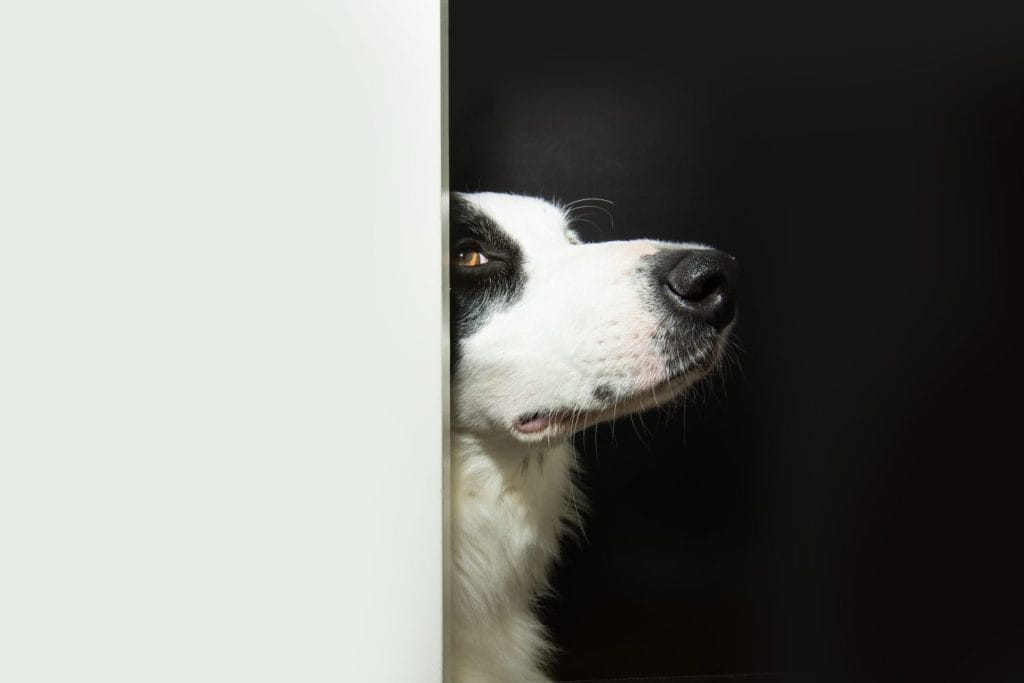
A dog’s previous experiences may make it more or less cautious when it is led to approach a wall.
©smrm1977/Shutterstock.com
Previous experience also shapes the outcome. A dog that has bumped into furniture before might react cautiously. A dog that has rarely encountered obstacles while being guided may remain calm and allow the person to lead. These differences reveal personality and life history more than intelligence.
How Researchers Study Dog Intelligence
Scientists who study canine cognition use structured tasks repeated across many dogs. These tasks allow researchers to compare behavior under the same conditions. One common method involves hiding food under containers while the dog watches. Researchers then observe whether the dog remembers the location after a short delay. Another approach examines how dogs respond to human gestures such as pointing or looking toward an object.
Dogs perform surprisingly well in these social tests. Many dogs can follow a pointing finger to find hidden food, a skill that young human children also display. This ability reflects strong social awareness rather than simple instinct. Researchers also use puzzle boxes that require dogs to push, pull, or lift objects to obtain a treat. By repeating the task across many trials, scientists can measure learning speed and persistence. These structured tests provide much more information than a single moment in front of a wall.
Different Types of Canine Intelligence
Psychologist Stanley Coren proposed that dogs display three main forms of intelligence:
- Instinctive intelligence refers to the natural skills that are bred for specific tasks. Herding dogs guide livestock, while retrievers collect objects and bring them back.
- Adaptive intelligence reflects how well a dog learns from experience and solves problems on its own. A dog that figures out how to open a gate or retrieve a hidden toy shows adaptive thinking.
- Working and obedience intelligence measures how quickly a dog learns commands from humans and how reliably it follows them.
These forms of intelligence interact with each other. A dog might excel in one area while performing less strongly in another. This complexity makes it difficult to summarize intelligence with a single number.
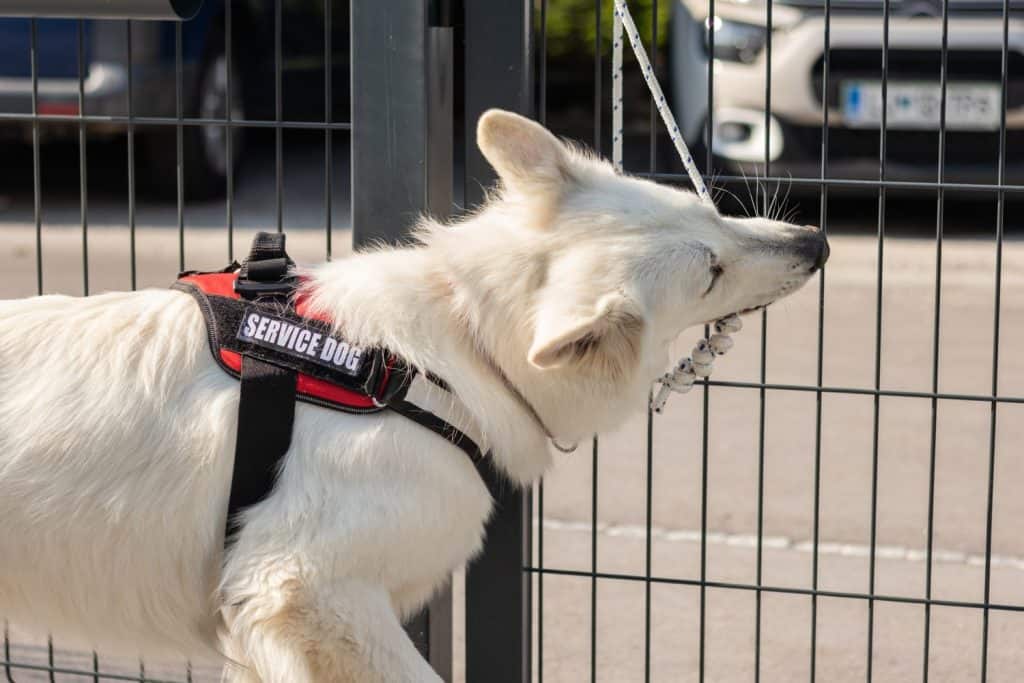
A dog learning to open a gate is an example of adaptive intelligence.
©24K-Production/Shutterstock.com
What Is the General Dog Intelligence Factor?
Recent research suggests that dogs may also share a general cognitive ability similar to what psychologists describe in humans. In several studies, scientists tested dogs across a range of tasks involving memory, problem solving, and persistence. When researchers analyzed the results, they noticed that dogs who performed well in one task often performed well in others. This pattern hints at an underlying mental capacity sometimes called a general intelligence factor.
Dogs that scored higher in these studies often explored new environments with curiosity and approached puzzles with determination. They also learned new tasks more quickly during repeated trials. Importantly, these studies involved many tasks across long periods of observation. The results emerged from patterns over time rather than from a single moment of behavior.
How Smart Is the Average Dog?
Many people wonder how dog intelligence compares with human development. Researchers who study canine cognition often say that an average dog shows mental abilities similar to a human toddler around two years of age.

Studies have indicated that dogs have an intelligence level comparable to that of a 2-year-old child.
©Volodymyr TVERDOKHLIB/Shutterstock.com
Dogs can learn dozens or even hundreds of words, signals, or gestures. Some trained dogs recognize more than one hundred spoken cues and respond accurately to them. Exceptional individuals have learned several hundred words connected to toys or actions.
Dogs also show an understanding of simple counting situations. When presented with small groups of treats, they can notice when the expected number changes. This ability suggests a basic sense of quantity. These skills demonstrate that dogs possess flexible thinking abilities that allow them to learn and adapt to human environments.
Breed Differences and Brain Size
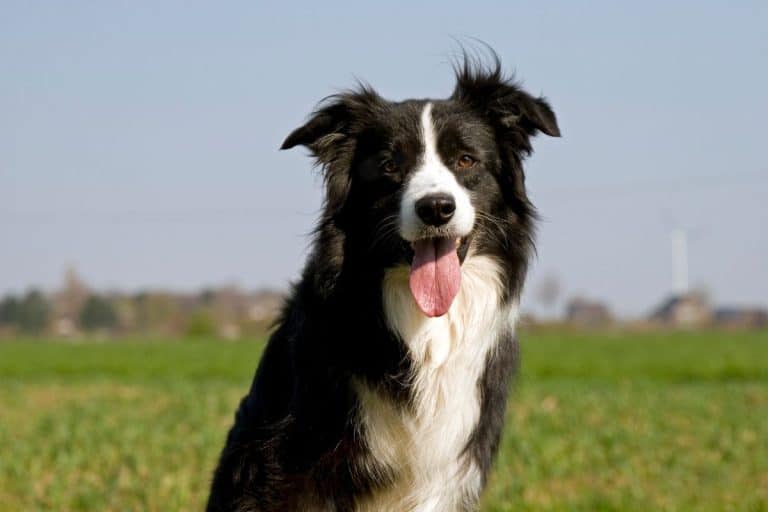
People often discuss breed rankings when talking about intelligence. Certain breeds learn obedience commands quickly and respond with consistency. Border collies, poodles, German shepherds, golden retrievers, and Doberman pinschers often appear near the top of these lists. These rankings focus mainly on working and obedience intelligence. Dogs bred for close cooperation with humans tend to excel in training tasks. Herding dogs in particular evolved to respond quickly to human direction.
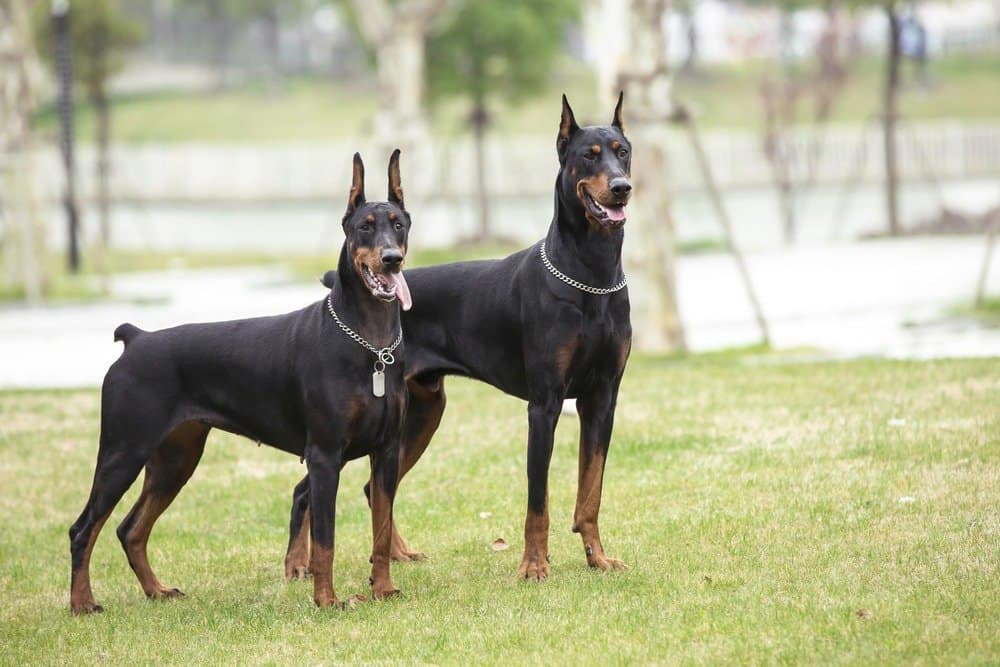
Doberman pinschers are a breed noted for their responsiveness to training.
©Jenson/Shutterstock.com
Other breeds may display strengths in different areas. Scent hounds possess extraordinary odor detection abilities. Terriers excel at persistence when tracking prey. These talents represent specialized forms of intelligence shaped by breeding history. Studies have also explored brain size in relation to cognition. Some research suggests that dogs with larger brains relative to body size perform slightly better in tasks involving self-control and short-term memory. However, individual training and experience still play a large role.
Everyday Signs of an Intelligent Dog
A dog’s intelligence often appears in daily life rather than in formal tests. One clear sign is problem-solving ability. Dogs that experiment with different actions when facing an obstacle show flexible thinking. Learning speed also provides clues. Dogs that grasp new commands after only a few repetitions demonstrate strong learning ability. Remembering these commands weeks later shows solid memory.
Social awareness forms another important element. Dogs observe human faces, gestures, and tone of voice. Many dogs adjust their behavior depending on a person’s mood or intention. Another sign involves behavioral flexibility. If scratching at a door fails to gain attention, a thoughtful dog might try barking or walking toward another person. This shift in strategy reveals active decision-making.
Safe and Engaging Brain Games for Dogs
Owners who want to explore their dog’s thinking abilities can try simple games that encourage problem-solving. One easy activity involves placing a treat under a plastic cup. The dog must tip or push the cup to obtain the reward. Hide and seek with toys provides another mental challenge. A favorite toy can be hidden in a nearby room while the dog waits. After release, the dog uses scent and memory to locate the object.
Puzzle feeders also stimulate the mind. These devices require the dog to move parts of the toy to release small pieces of food. The process encourages patience and exploration. Training sessions with new commands serve as another mental workout. Learning unfamiliar cues helps strengthen communication between dog and owner while building confidence.
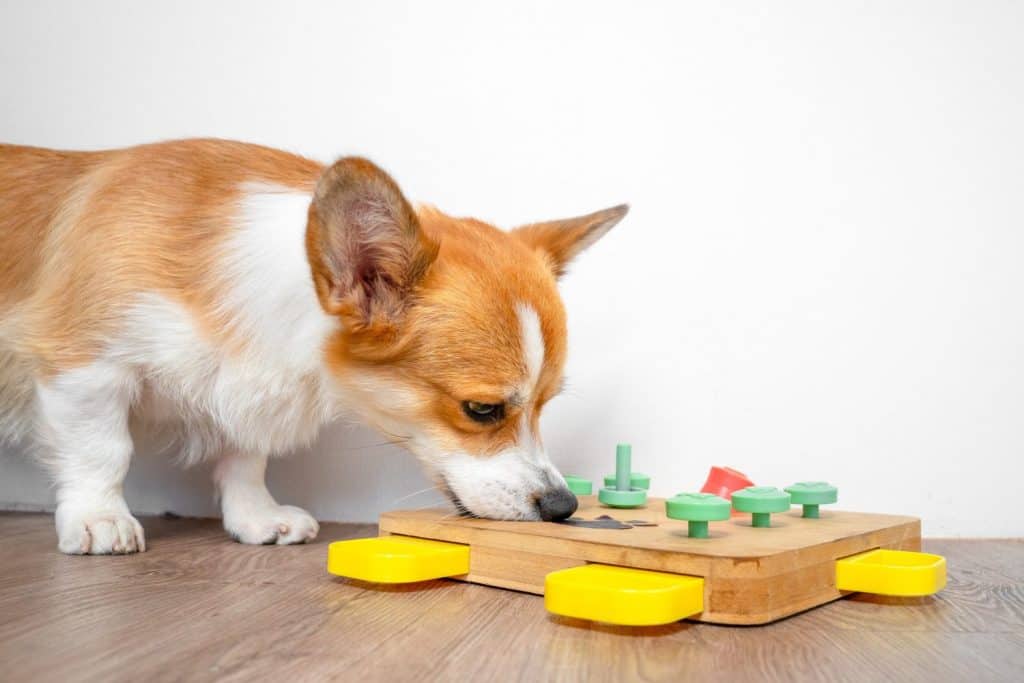
Puzzle feeders are a great way to provide mental stimulation for your dog…and observe its intelligence.
©Masarik/Shutterstock.com
Why the Wall Trend Still Draws Attention
Although the wall test does not measure intelligence, it highlights a real curiosity shared by many dog owners. People want to understand what their dogs think and how they interpret the world. This curiosity has encouraged decades of scientific research. In the past, many researchers underestimated animal cognition. Today, studies show that dogs possess advanced social awareness and learning abilities.
The popularity of the trend also reflects the strong emotional bond between humans and dogs. Owners enjoy trying interesting and fun experiments with their dogs to bond, see how their pets react in new situations, and share a laugh. It’s ultimately an expression of the affection and sense of endearment we feel toward our furry friends.
What Truly Reveals Dog Intelligence
True canine intelligence becomes visible across many situations. Dogs show their thinking ability through learning, memory, communication, and adaptability. These traits appear gradually through daily interaction with their human companions.
Owners who engage their dogs with thoughtful play, training, and exploration often discover how perceptive these animals can be. Over time, the relationship between dog and owner reveals far more about intelligence than any viral challenge.
The next time a video claims to measure a dog’s mind in a few seconds, it helps to remember that intelligence rarely appears in a single dramatic moment. It unfolds slowly through curiosity, learning, and trust built over years together.