
Quick Take
- Killing wolves to protect livestock actually made the livestock problem dramatically worse, and the reason why involves a vicious cycle that nobody saw coming. See the eradication history →
- Reintroducing just a handful of wolves to Yellowstone triggered a chain reaction that reshaped the entire park, rivers included. Explore Yellowstone's transformation →
- 90% of wolf attacks on livestock share one specific vulnerability, and fixing it could dissolve the biggest argument against wolf reintroduction. See livestock protection strategies →
While I was growing up in New Jersey, I had the true privilege of visiting the Lakota Wolf Preserve. The nonprofit preserve is home to captive-born wolves, lynx, bobcats, and foxes that were rescued from other situations and cannot be returned to the wild. Seeing the wolves was always my favorite part of the visit. Although I know now that standard gray wolves usually top off at around three feet tall, these majestic animals felt larger-than-life to me. But it wasn’t until I did my own research on wolves that I realized their unsettling history in our country. In the 1800s and into the early 1900s, wolves were nearly eradicated from North America. Settlers, expanding westward, poached and poisoned wolves in a misguided effort to protect livestock. What they failed to realize at the time was how important wolves are to a healthy and functioning ecosystem.
August 13 is International Wolf Day, making it the perfect time to educate yourself on wolves’ ecological impact and to combat negative myths and stigma around this animal. Although conservation and rewilding efforts have helped some wolf populations recover, wolves remain one of our world’s most controversial predators. Many people still hold negative perspectives about wolves or how they might affect communities, especially those based in agriculture. But we don’t need to be afraid of the “Big Bad Wolf.” Instead, let’s figure out how to support wolf populations and coexist peacefully.
Why Wolves Are So Fascinating
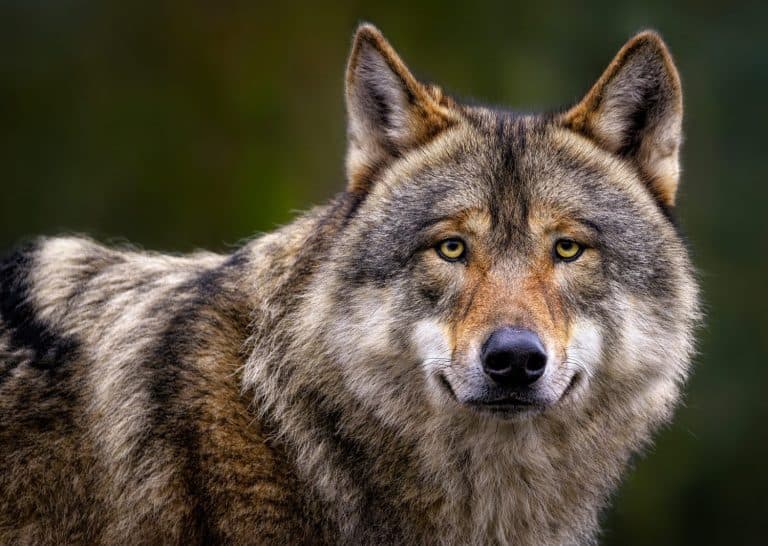
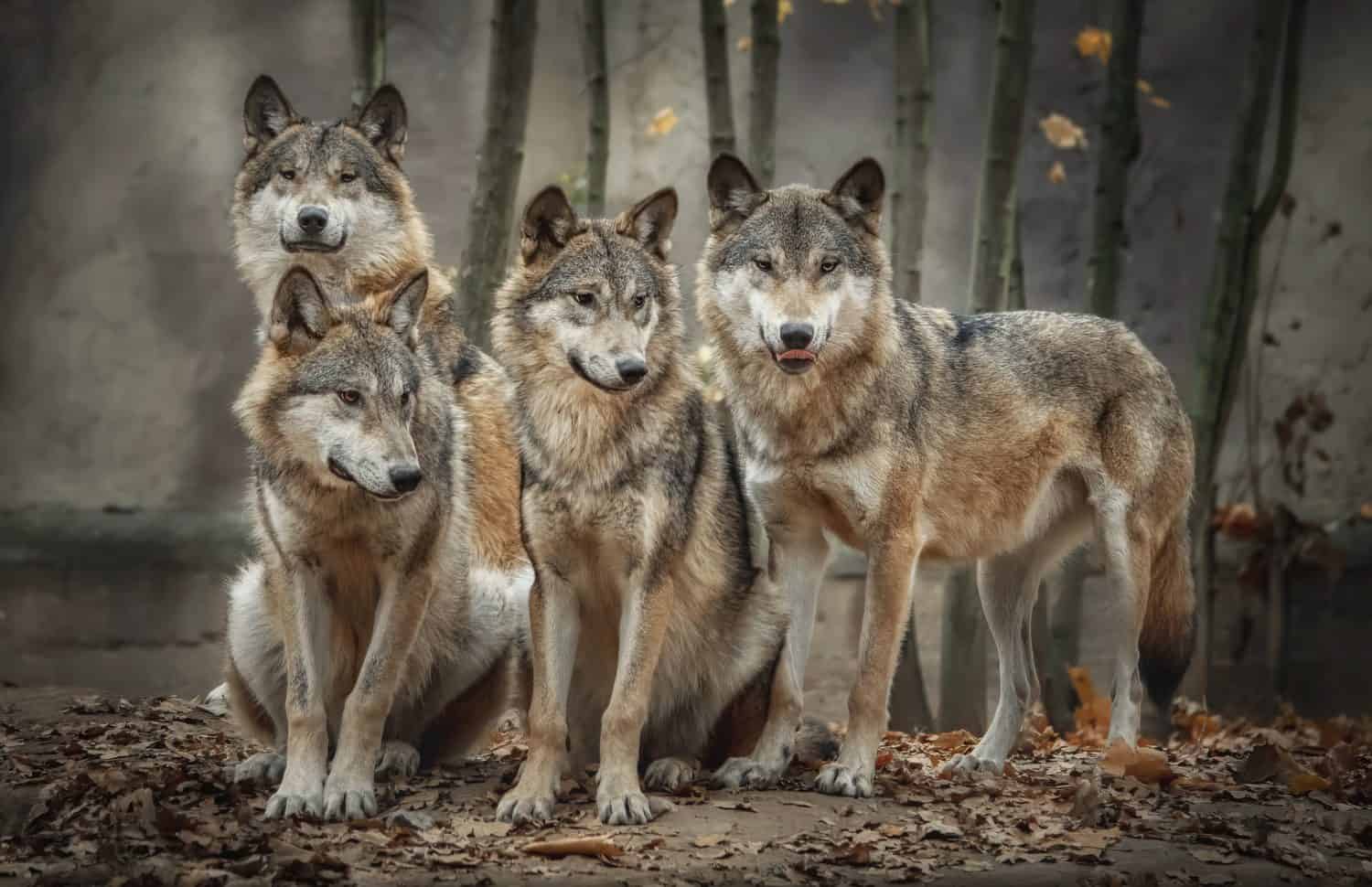
As you probably know, wolves are large carnivores who are part of the Canidae family. Other members of this family include dogs and foxes. In fact, today’s dogs and wolves even share a common ancestor from around 20,000 to 40,000 years ago!
Scientists often debate whether there are two or three main species of wolves. The most widely accepted species are the gray wolf (Canis lupus) and the red wolf (Canis rufus). However, some people also argue that the Ethiopian wolf (Canis simensis) should be considered a third main species, but scientists haven’t come to a full consensus on that. Under the main species are an estimated 38-40 subspecies, like the:
- Mexican wolf
- Eurasian wolf
- Arctic wolf
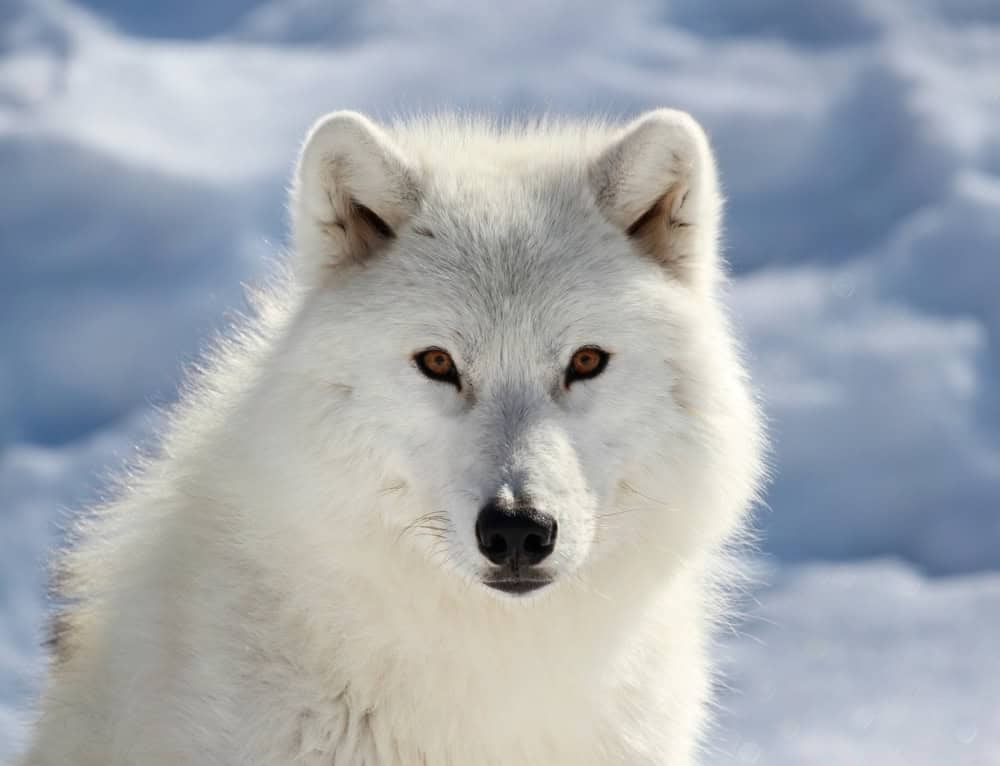
Arctic wolves’ white fur helps them blend into their snow-filled surroundings.
©karl umbriaco/Shutterstock.com
Wolves are usually monogamous, meaning in most cases they mate for life. Packs are typically made up of a mother and father (the breeding pair, known as the alphas), as well as their children. In some cases, other related wolves might join the pack. Packs vary in size, with some being just the mated pair and others having up to 12-15 members. Wolves often breed in the winter and then, after a roughly two-month pregnancy, give birth to pups in the spring. Unfortunately, only about half of all wolf pups survive into adulthood.
Communication
We’ve all seen wolves in movies or TV shows growling fiercely or howling at the moon. So would it surprise you to learn that wolves don’t actually howl at the moon? They howl more frequently at night because that is when they are most active. However, wolves howl primarily to communicate with their pack members or to warn other wolves to stay out of their territory. Their territories can be surprisingly vast, even up to 500-1,000 square miles.
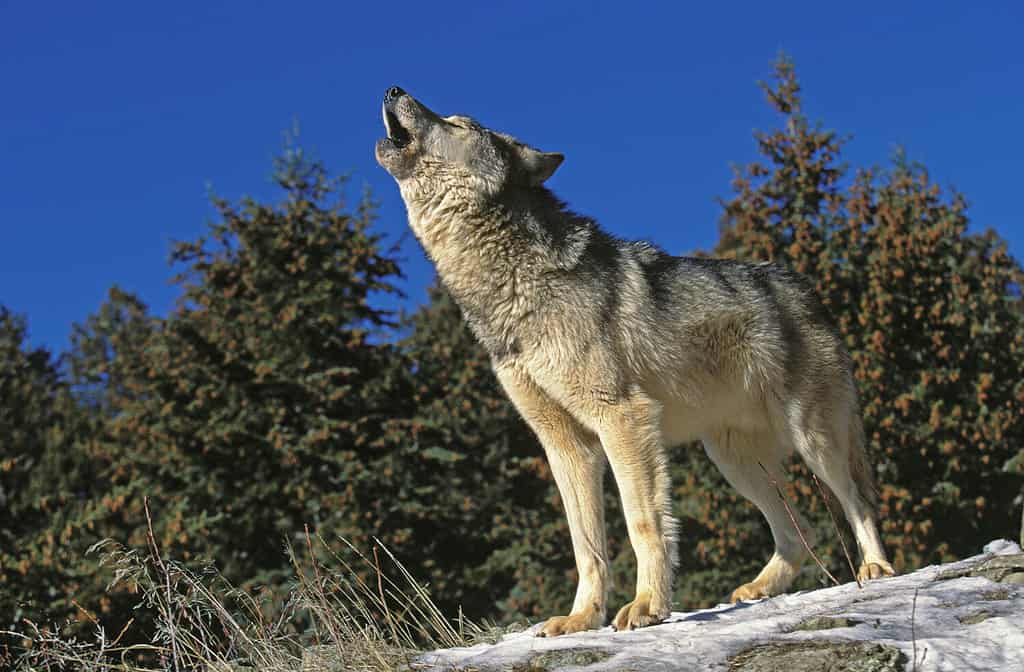
Beyond howling, wolves will mark their territory with urine or scat to warn away other packs.
©slowmotiongli/Shutterstock.com
Beyond vocalizations, wolves also use body language to communicate a wide range of messages. Dominant wolves carry their tails higher in the air, while their pack will tuck their tails to signify submissiveness. Eye contact is also a key method of communication. For example, wolves may make eye contact steadily to signal dominance or with relaxed lids to show they’re feeling playful. If you have a dog, you’ve probably seen them play bow or do the “zoomies.” Wolves actually do the same!
A History of Wolves
Wolves and their ancestors have been part of our planet for millions of years. Research in Quaternary International shares that wolf-like or wolf-sized canids likely first appeared in Eurasia. Over time, these animals continued to evolve, and the gray wolves we know today came about somewhere between 700,000 to one million years ago.
During the last Ice Age, wolves began to expand their range by crossing land bridges. In fact, one genetic study says most modern gray wolf DNA suggests shared ancestry following an expansion from Beringia, a former land bridge between Asia and North America. As a result, wolves’ historical range was vast. They lived across most of North America and Europe, as well as through Asia and the Middle East.
Today, their range is significantly smaller. Worldwide, wolves inhabit about two-thirds of their historical range. In the United States, they inhabit less than 10%. So what changed?
In simple terms, the world became more agrarian, and settlers saw wolves as a threat to their livelihoods.
Wolf-Killing Campaigns
Wolves are typically afraid of humans and keep their distance. But European settlers began to worry that wolves would eat their livestock. The first wolf bounty began in the Massachusetts Bay Colony in 1630, offering money to kill wolves as a way to protect livestock.
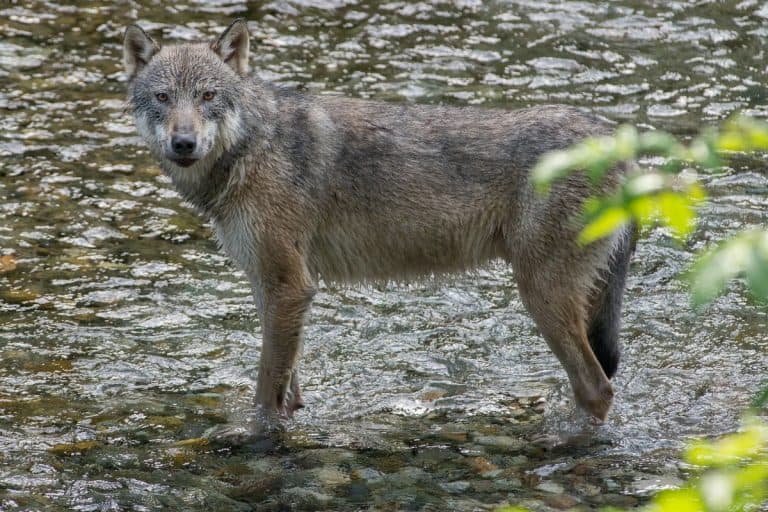
Typically, wolves prefer to prey on large hoofed mammals like elk, deer, moose, or bison. However, when natural prey is scarce, wolves may also prey on livestock. Because livestock often grazed unprotected and natural prey had declined in some areas, wolves sometimes took advantage.
The 1800s brought a rush of anti-wolf sentiment. They began doing whatever they could to rid the land of wolves, from poisoning to pit traps to hunting. At the same time, Europe was executing similar wolf eradication programs in the protection of livestock.
One major issue was that people were hunting wolves’ natural prey for food. This not only starved and killed some wolves but also drove the remaining wolves to prey more on livestock. It became a vicious cycle where more bounties were placed, incentivizing community members to kill wolves.
A Keystone Predator
The problem is wolves are a keystone species. Essentially, they balance the ecosystem. They often eat old, injured, or sick prey, preserving the health and longevity of prey populations. Keystone species also keep other species under control. For example, they control population size in deer. If the number of deer in an area exploded, they would begin taking over the food resources, making other animals compete for food. Over-competition can cause species to die out. If other species died out, the deer population would continue to grow unchecked, consuming all the plants in the area and ultimately destroying the health of the ecosystem. When wolves are around, however, they keep the system running as it should.
But nobody knew this or took it into consideration in the 1800s and 1900s. Bounties continued. The U.S. Forest Service and the Bureau of Biological Survey began clearing gray wolves from their habitats at the start of the 1900s. Even in Yellowstone National Park, wolves were trapped, baited, tortured, and killed, as many as 136 wolves over a 12-year period. Wolf-killing campaigns persisted until as late as 1965 in North America, and into the 1970s in certain areas of Europe. It’s no surprise that millions of wolves were unfairly eliminated, nearly eradicating the entirety of the wolf population through the 48 contiguous states.
Rewilding and Its Successes
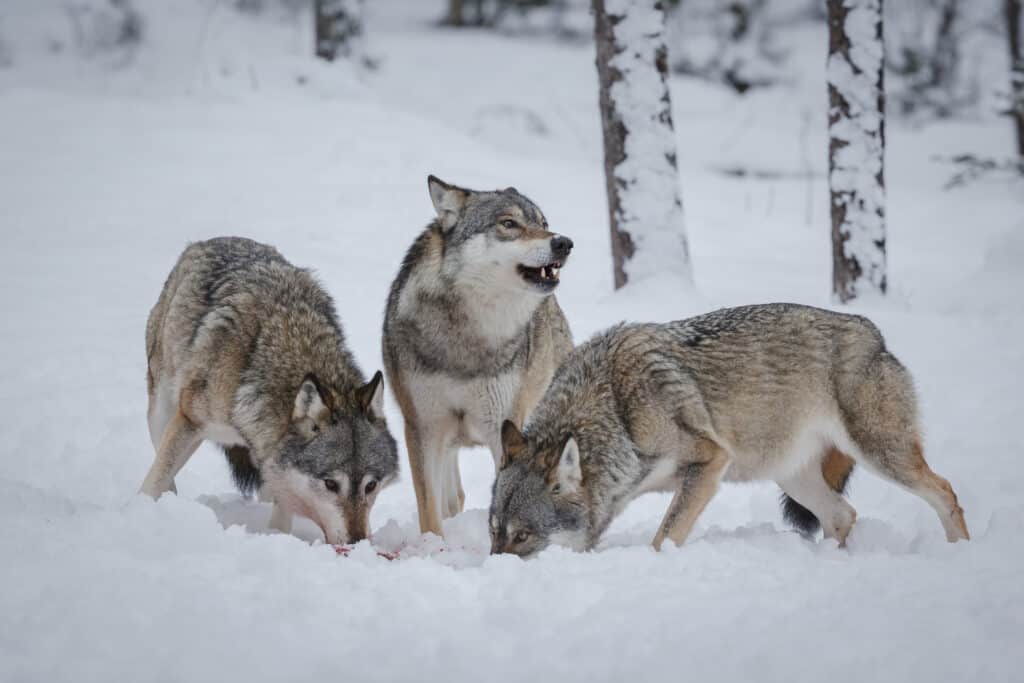
Rewilding is a conservation approach that brings back native species to their natural habitats.
©iStock.com/Neil_Burton
In the 1960s and 1970s, certain legislation began advocating for wolf protection. The red wolf and the Mexican gray wolf were listed as endangered under the Endangered Species Preservation Act (1966; 1969), then both the red and gray wolf under the Endangered Species Act (1973). The Act makes it illegal to kill endangered species and also protects the land these species live on. In Europe, protections were put into place for wolves under the 1979 Bern Convention on the Conservation of European Wildlife and Natural Habitats and the 1992 Habitats Directive, which says wolves cannot be killed unless they are a direct threat to humans or there’s no other way to stop them from killing livestock.
North American Efforts
These protections helped wolf populations begin to recover. But that wasn’t enough. Conservationists began planning rewilding initiatives to reintroduce wolves to areas within their former range. Canadian wolves were captured and relocated to Yellowstone National Park. These efforts began with 14 wolves in January 1995, then added 17 wolves in January 1996. The rewilding was a success. Once at Yellowstone, the wolves began driving coyotes out of certain areas, allowing for smaller animals and birds of prey to thrive. Wolves’ predation of elk also stopped the ungulates from eating all the grass and plants, which had been eroding the landscape and hurting species that relied on that space for their habitats. Biodiversity has now massively increased.
The last few Mexican gray wolves, then critically endangered, were placed into captive-breeding programs co-led by the United States and Mexico. In 1998, captive-bred wolves were released in New Mexico and Arizona, growing to an estimated 319 individuals as of 2025.
In Colorado, voters approved Proposition 114 to reintroduce gray wolves. 25 have been introduced between 2023 and 2025, though several have been killed.
European Efforts
Admittedly, Europe has not implemented many rewilding initiatives. However, several countries have been working to improve understanding of wolves and to preserve their protections. Rewilding Europe works directly with communities on coexistence measures. The EuroNatur Foundation has also taken part in several projects, including improving crossing paths between countries and sponsoring the Wolf Compensation Fund, which compensates farmers and ranchers for livestock lost to wolves. Portugal’s LIFE WolFlux project also set out to gather data and promote coexistence to support the Iberian wolf.
All these efforts have helped wolf populations rebound considerably.
Ongoing Conflicts
Despite the proven benefits of wolves, many people still mistakenly view wolves as bloodthirsty and harmful. Ongoing conflicts around livestock protection remain, and many people also worry that as communities and infrastructure expand, wolves will encroach on human space.
Hunters, farmers, and ranchers have frequently advocated for protections to be dropped. Between anti-wolf legislation and efforts by the U.S. Fish and Wildlife Service, wolves have also been delisted from the Endangered Species Act in several states. Under the Trump administration, protections have been further rolled back, with the administration stating there is no need for a nationwide wolf recovery plan. The administration is also moving to delist gray wolves completely from the ESA, a measure supported by many farmers, though this move is highly contested.
Similar calls to downgrade protections have been made across Europe, with some countries even starting to allow large-scale wolf hunts again.
Strategies for Coexistence
If we don’t learn to coexist with these beautiful creatures, we may lose them for good. And, if I haven’t stressed this enough, the loss of wolves would have serious negative effects on environmental health. Several strategies have been shown to mitigate issues.
First, electric fencing can deter wolves. Around 90% of documented wolf attacks on livestock examined in a particular study happened when the livestock were not protected. Between fencing and confining livestock to a guarded space at night, ranchers can minimize the chance of losing livestock to wolves. Getting a livestock guard dog is also recommended.
Compensation plans for farmers are another option. If farmers know that they will be compensated financially for their losses, they may be less likely to shoot or kill wolves that end up around their animals.
Data-sharing is another important strategy. By highlighting where wolves are located, their behavior, their feeding schedules, and other pertinent information, we can reduce the stigma around wolves and show that they aren’t just trying to harm humans.
Finally, we can advocate for our cities and towns to be built in wildlife-friendly ways. By zoning certain areas to remain more natural or wild, we can minimize the chance of accidental wolf-human interactions.
How You Can Help
On International Wolf Day, do your part in raising awareness of wolves’ environmental benefits and advocating for their protection. Even small efforts help! If you’d like to get involved, consider:
- Posting information about wolves on social media to educate others and fight the negative stigma
- Donating to organizations like Mission Wolf, the Greater Yellowstone Coalition, the Red Wolf Coalition, and the American Wolf Foundation
- Contacting your legislators to ask them to maintain protections for wolves in your state or country