
Quick Take
- The color most people assume is the rarest poodle shade isn't even close to the actual answer, which has a name that sounds more like a dessert. Discover the rarest color →
- White poodles look pure and simple, but the breeding process required to produce them comes with a hidden cost most owners never consider. White poodle breeding risks →
- Several poodle colors don't stay the color they're born, and the transformation can take years to complete. Colors that fade over time →
- Red poodles have a nickname for the gene that controls their color intensity, and that nickname sounds nothing like standard genetic terminology. The Rufus factor explained →
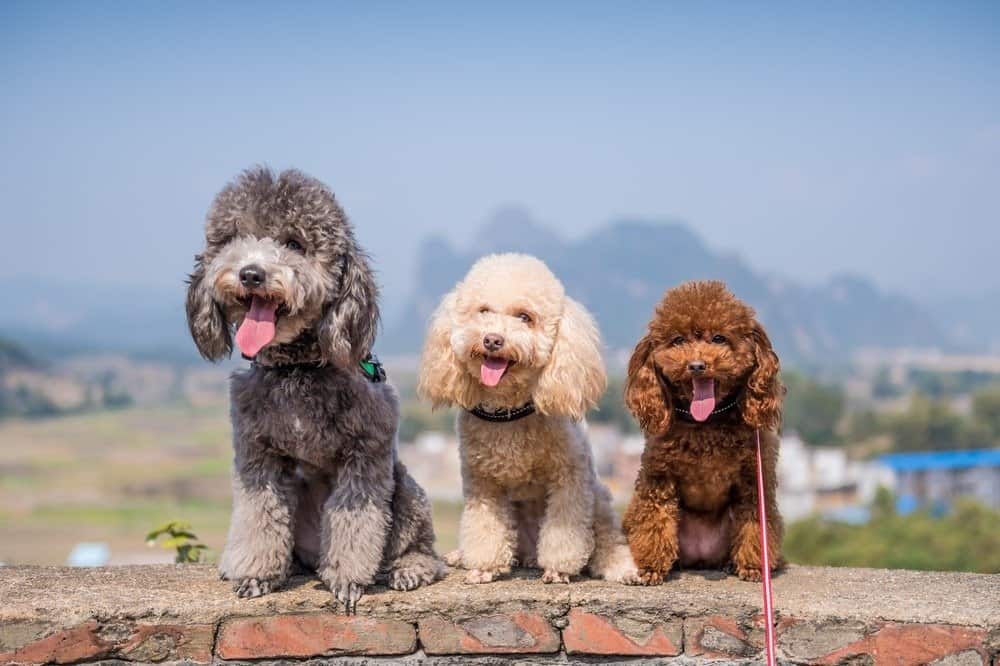
Poodles are among the most well-known breeds in the world. These dogs are well-known for their appearance, intelligence, and athleticism. When many of us think of poodles, we think of their white or black coats, but poodles can be many other colors. Standard, miniature, and toy poodles all have the same breed standard colors according to the American Kennel Club (AKC). Today, we will rank poodle colors from the rarest to the most common.
1. Apricot
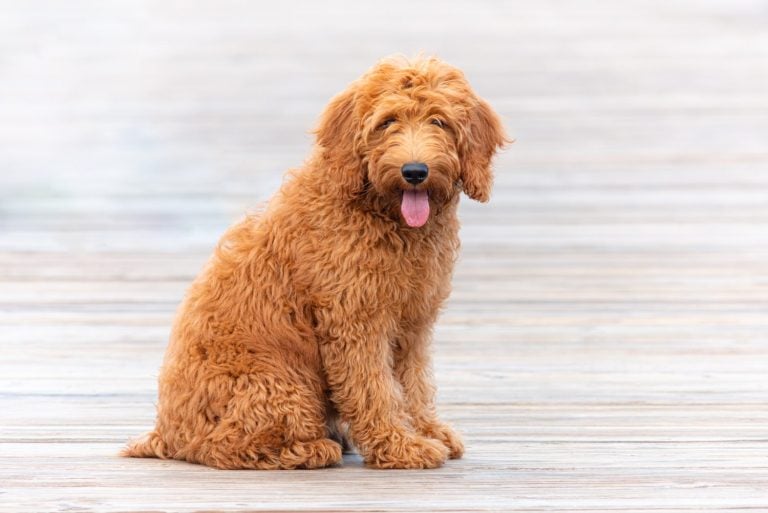
Many poodle fanciers argue that the rarest poodle color is apricot. Apricot is a dilution of red caused by a recessive gene. Apricot poodles can be a darker ginger color to a creamy light orange shade. Puppies be born a brighter orange color, which fades to a lighter shade during their first two years. The ideal apricot poodle has a black nose, lips, eye rims, and pads, although it can sometimes have liver colored points.
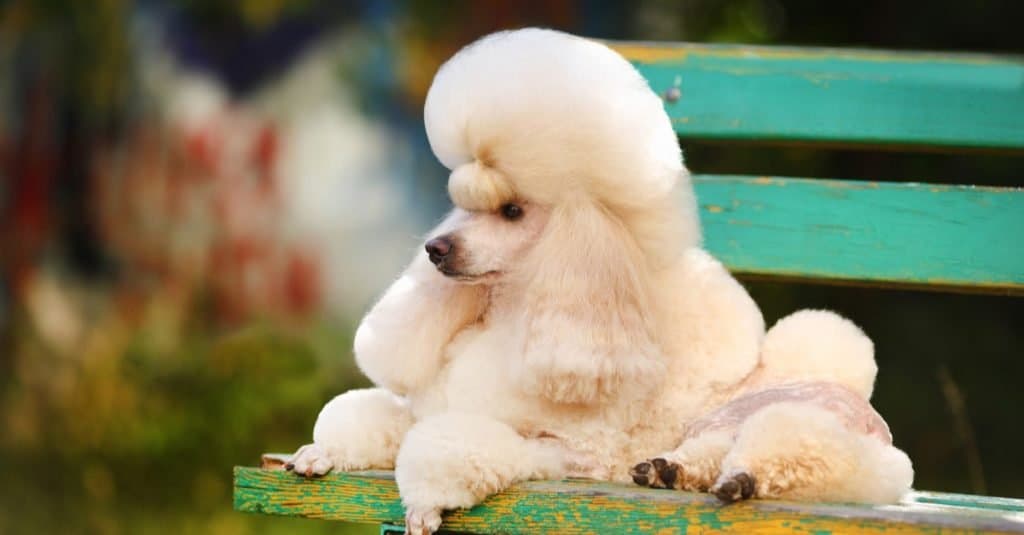
The rarest poodle color is apricot.
©Dulova Olga/Shutterstock.com
2. Red
Others believe that red is the rarest poodle color because the saturated red color puppies are born with can sometimes fade over time, similar to black poodles that tend to fade to silver as they age. It may be difficult to distinguish red from apricot poodles, as their coloring can appear very similar. Both colors are determined by recessive genes, but the intensity of the red color is determined by modifier genes, which have been nicknamed the Rufus factor. Ideally, red poodles have black points, but some may also have liver colored points.
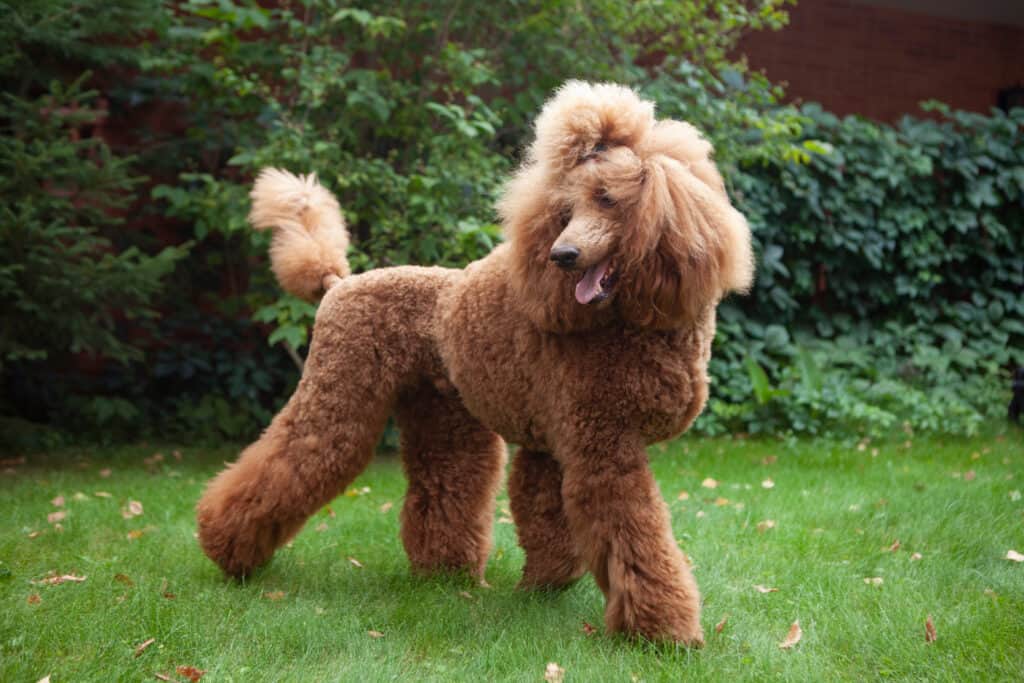
The red color can fade over time, similar to the black poodles that tend to fade to silver as they age.
©Diana Kellior/Shutterstock.com
3. Café au Lait
Café au Lait poodles result from a fading gene in brown coats. This color lacks silver and has more of a dark cream hue. The best way to describe their coloring is coffee with milk, which is what café au lait means in English. However, the color fades as the dog ages, so they can sometimes be confused with silver-beige poodles. These dogs should have liver-colored noses, eye rims, and lips with amber eyes.
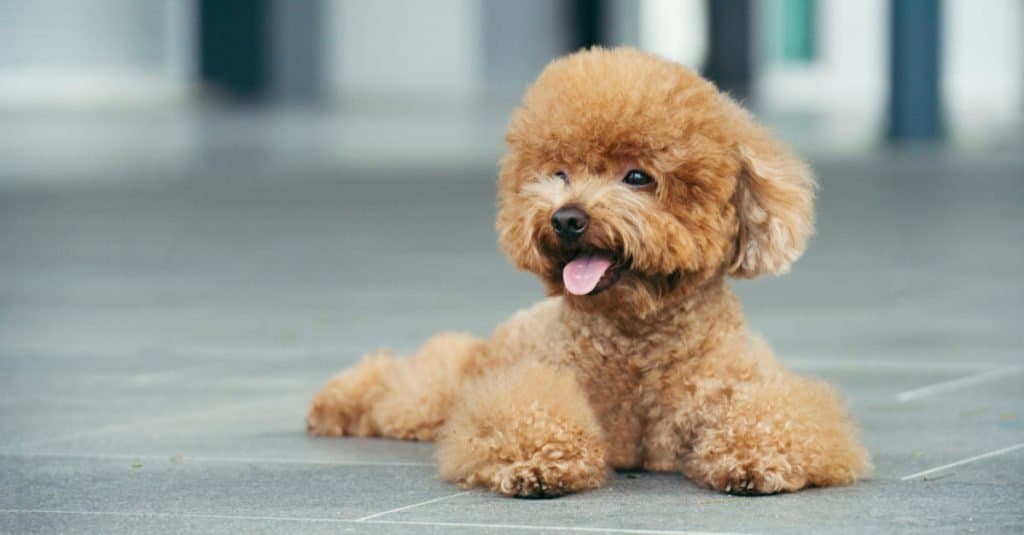
The best way to describe the café au lait coloring is coffee with milk, which is what café au lait means in English.
©Lim Tiaw Leong/Shutterstock.com
4. Silver Beige
Silver beige poodles get their color from a progressive greying gene. They are born dark brown or black and gradually fade to a silvery-beige or pale tan color. Their coat often fades by the age of 2. Liver-colored points with amber eyes are common, but black points are also acceptable.
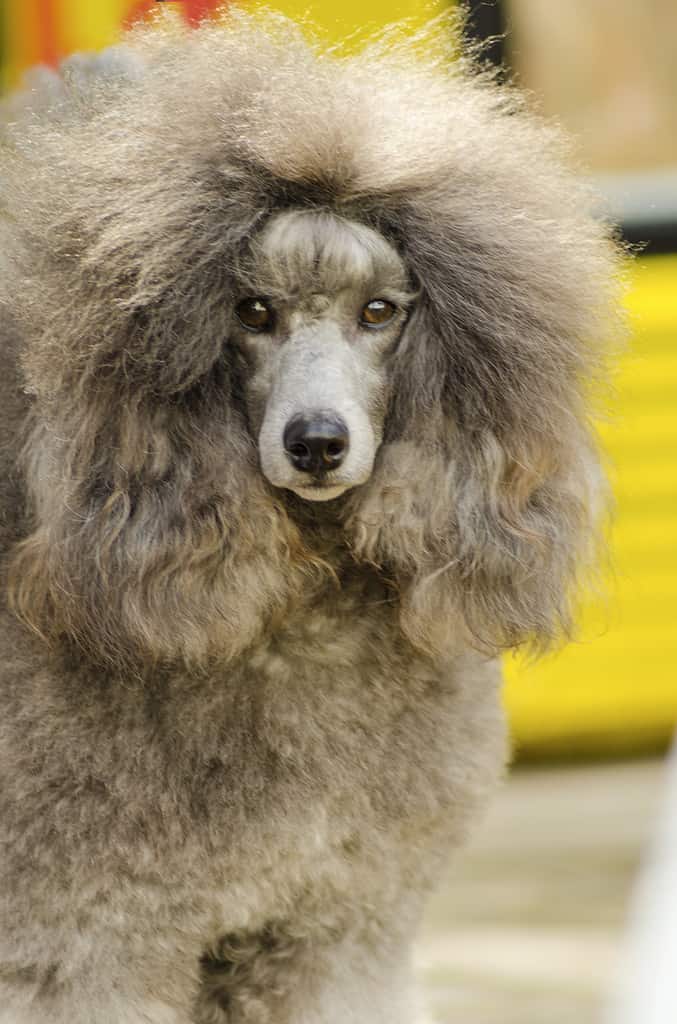
Liver-colored points with amber eyes are common in silver beige poodles.
©iStock.com/f8grapher
5. Blue
Blue poodles appear black when born, but they gradually fade to a deep gunmetal or steel blue between 1 and 3 years of age. Blue is caused by a progressive graying gene acting on a black coat. As with grey poodles, it is a dominant mutation, so if one parent has faded to blue, there is a chance the puppies will also fade to blue. Blue poodles should have black noses, lips, and eye rims.
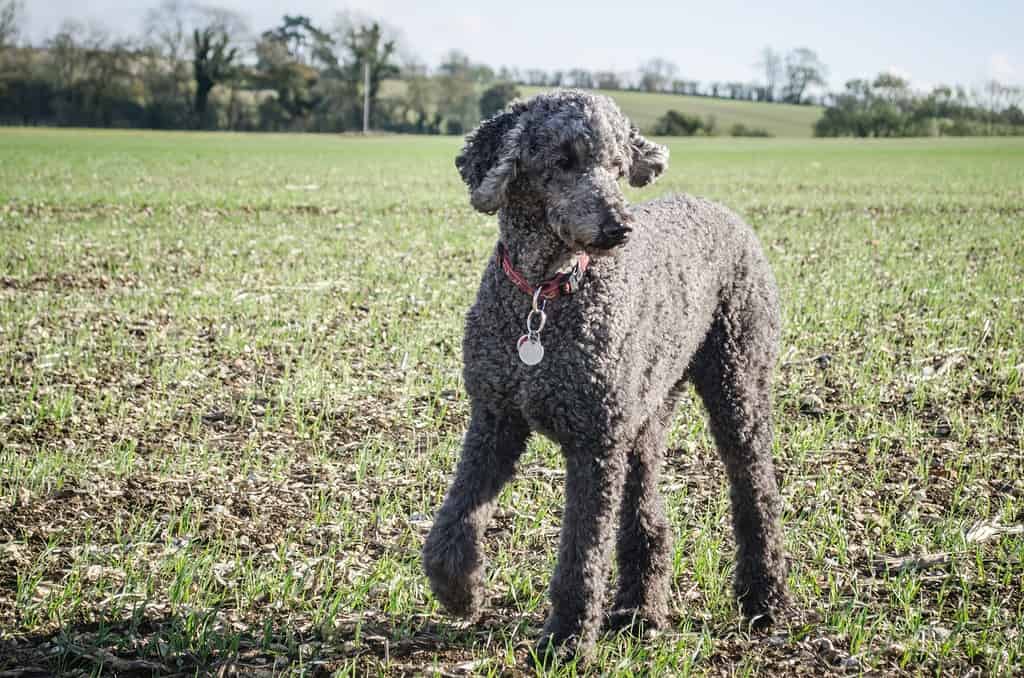
Blue poodles fade to a deep gunmetal or steel blue shade.
©iStock.com/OneToRemember
6. Silver
Silver poodles are born black. The graying gene shows incomplete dominance: puppies with two copies of the gene become silver, those with one copy become blue, and those with none remain black. The puppies begin to fade to their metallic silver shade at 6-8 weeks and complete the process within the first two years. Silver poodles have black points, which includes the nose, lips, and eye rims.
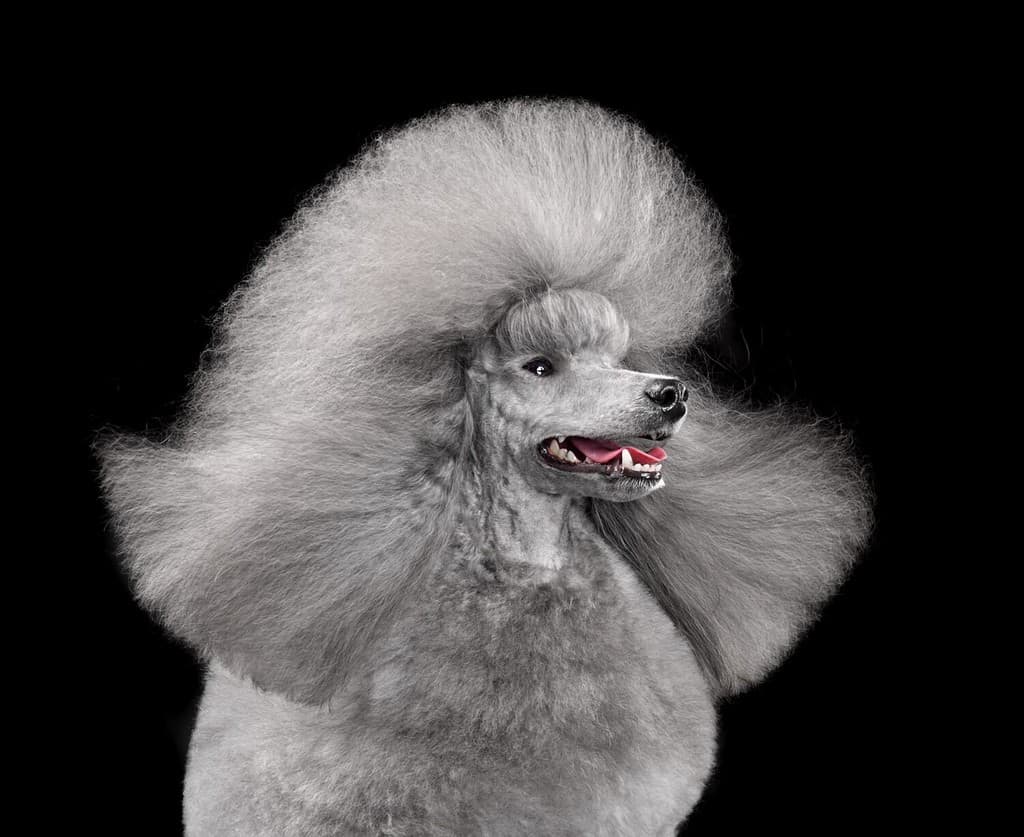
Silver poodles turn a metallic silver color typically within the first two years.
©Natallia Yaumenenka/Shutterstock.com
7. Brown
Brown is recessive, so both parents must carry the brown gene to ensure the puppies are brown. Their coats can range from a darker chocolate brown to a lighter chestnut shade. However, some brown poodles have a fading gene, which lightens their coat over time. Therefore, they are often mistaken for a café au lait poodle. True brown poodles should have liver-colored noses, lips, eye rims, and amber eyes.
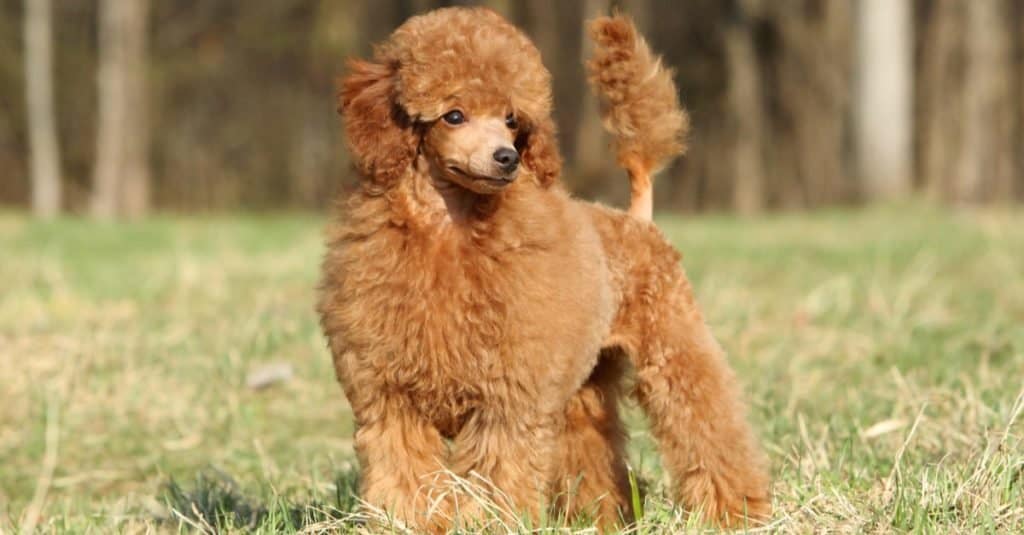
One of the more uncommon poodle colors is brown, due to recessive genes.
©Jagodka/Shutterstock.com
8. Grey
Grey poodles are the result of the progressive greying gene found in some poodles with dark coats. According to breeders, this is a dominant mutation, so if one of the parents is turning grey as they age, there is a chance that the puppies will also begin to fade to grey as they mature. Grey poodles must also have black points, including the nose, lips, and eye rims.
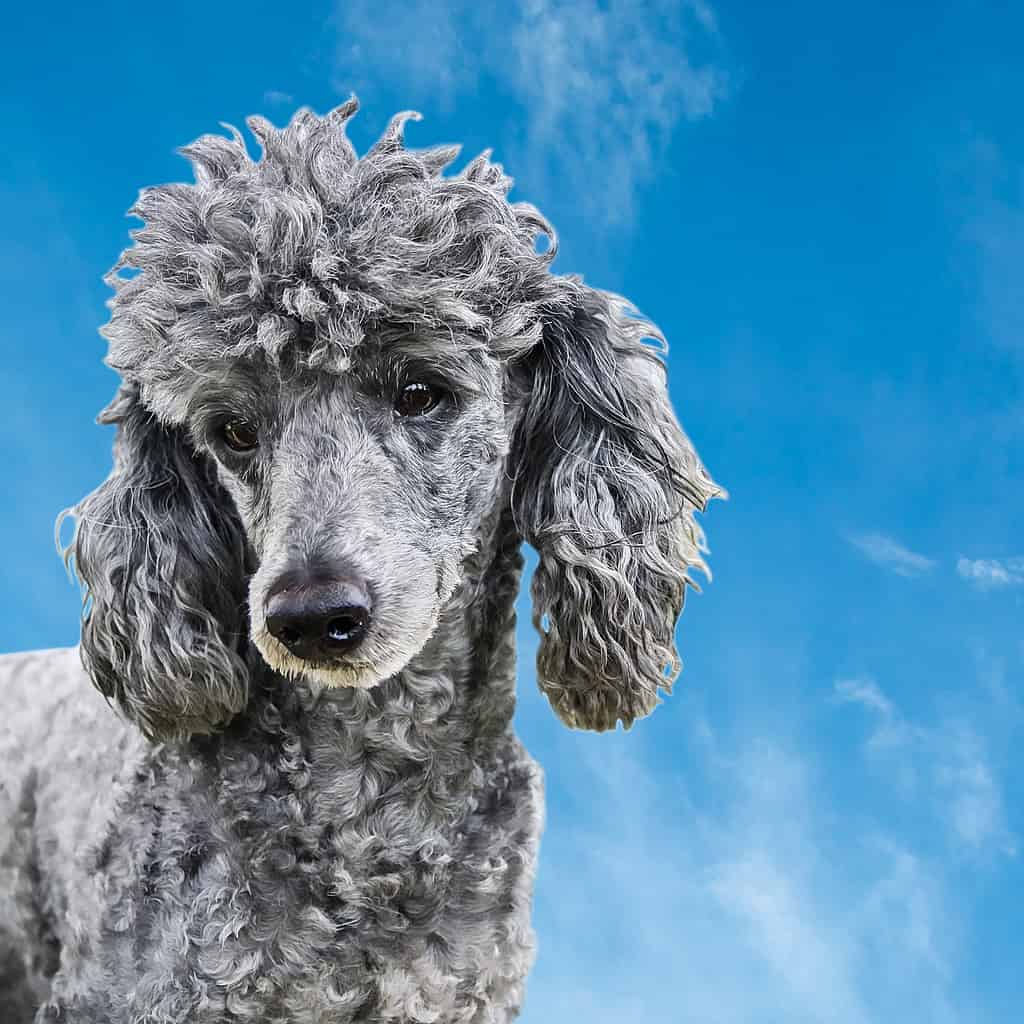
Grey poodles are born with black coats, but a progressive greying gene cause their coats to fade.
©iStock.com/HaiGala
9. Cream
The most reliable way to get cream puppies is by breeding two cream poodles, but two white poodles can also result in cream. Cream poodles have a warm, beige or yellowish tint to their coat, especially noticeable on the ears. True cream poodles must also have dark points, including the nose, eye rims, lips, and pads.

Cream poodles have a warm, beige or yellowish tint to their coat.
©iStock.com/Lumppini
10. White
Many people think the white poodle is the most common color. However, it ranks second because white is a recessive gene. The most reliable way to produce white puppies is to breed two white poodles. Puppies may have some cream coloring around the ears and other places, but this should fade as the puppies get older. True white poodles have black noses, lips, and eye rims with dark eyes.
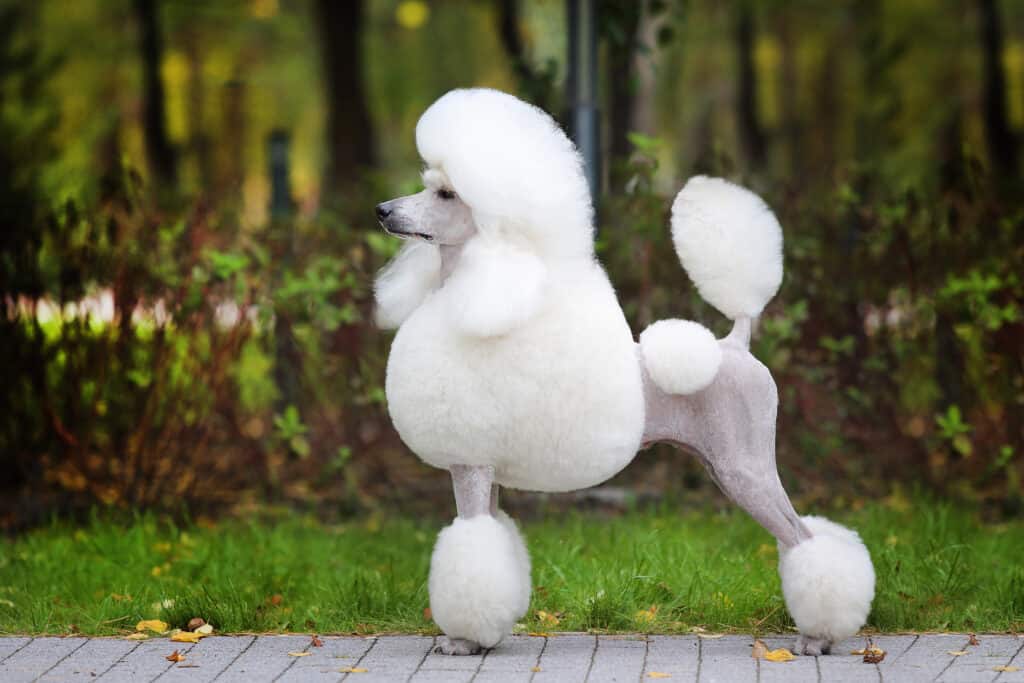
Breeders have to keep genetic anomalies out of the pool to ensure a pure white litter.
©Dulova Olga/Shutterstock.com
11. Black
Black is the most common of all poodle colors. This is due to the dominant gene found in these poodles. Darker tones are typically more prevalent, meaning they are likely to develop when mixed with lighter colors. However, dark poodles with a fading recessive gene will turn silver as they get older, so the black color doesn’t always remain. Black poodles should also have black points.
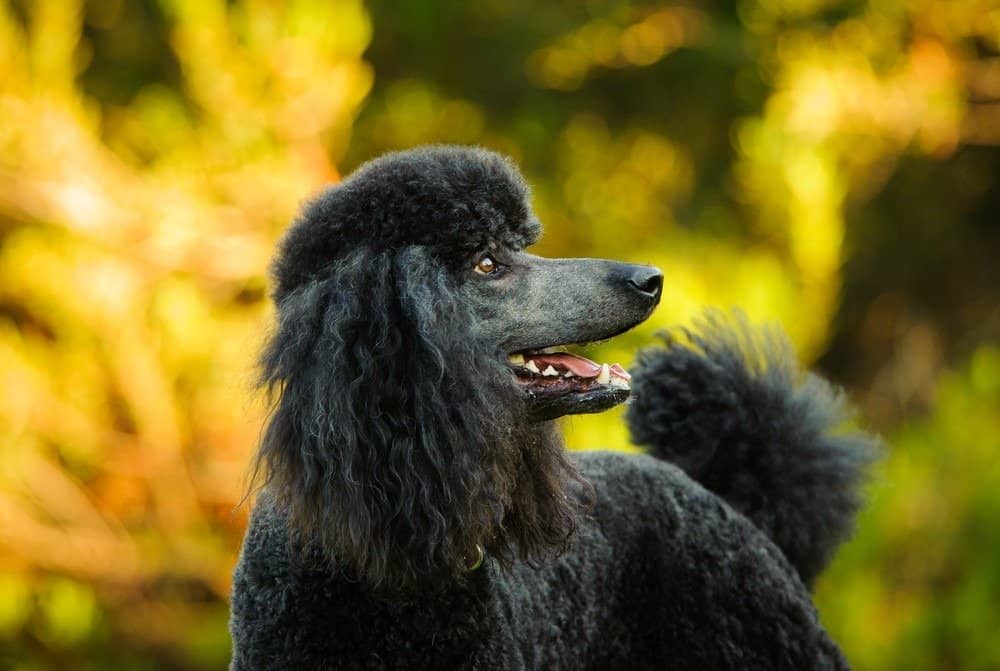
Black is the most common of all poodle colors.
©everydoghasastory/Shutterstock.com