














Quick Take
- Not every Goldendoodle coat is actually hypoallergenic, and the one most people overlook could be the worst offender. Explore the coat types →
- Their friendliness is both their greatest strength and a hidden liability that most owners don't anticipate. See the separation anxiety risk →
- There's a common pantry ingredient many dog owners consider harmless that can be especially dangerous for this breed. Check the risky ingredients →
- Goldendoodles inherit health conditions from both parent breeds, though responsible breeders are only able to screen for some of them. See inherited health conditions →
Developed in 1969 as guide dogs for people with allergies, Goldendoodles are a cross between a Golden Retriever and a Poodle, giving them the best of the two breeds. Goldendoodles have a sweet, pleasing nature like the Retriever and are highly intelligent and hypoallergenic like the Poodle. Their popularity skyrocketed during the “Designer Dog” trend in the 1990s.

Coat, Color, Size, and Weight
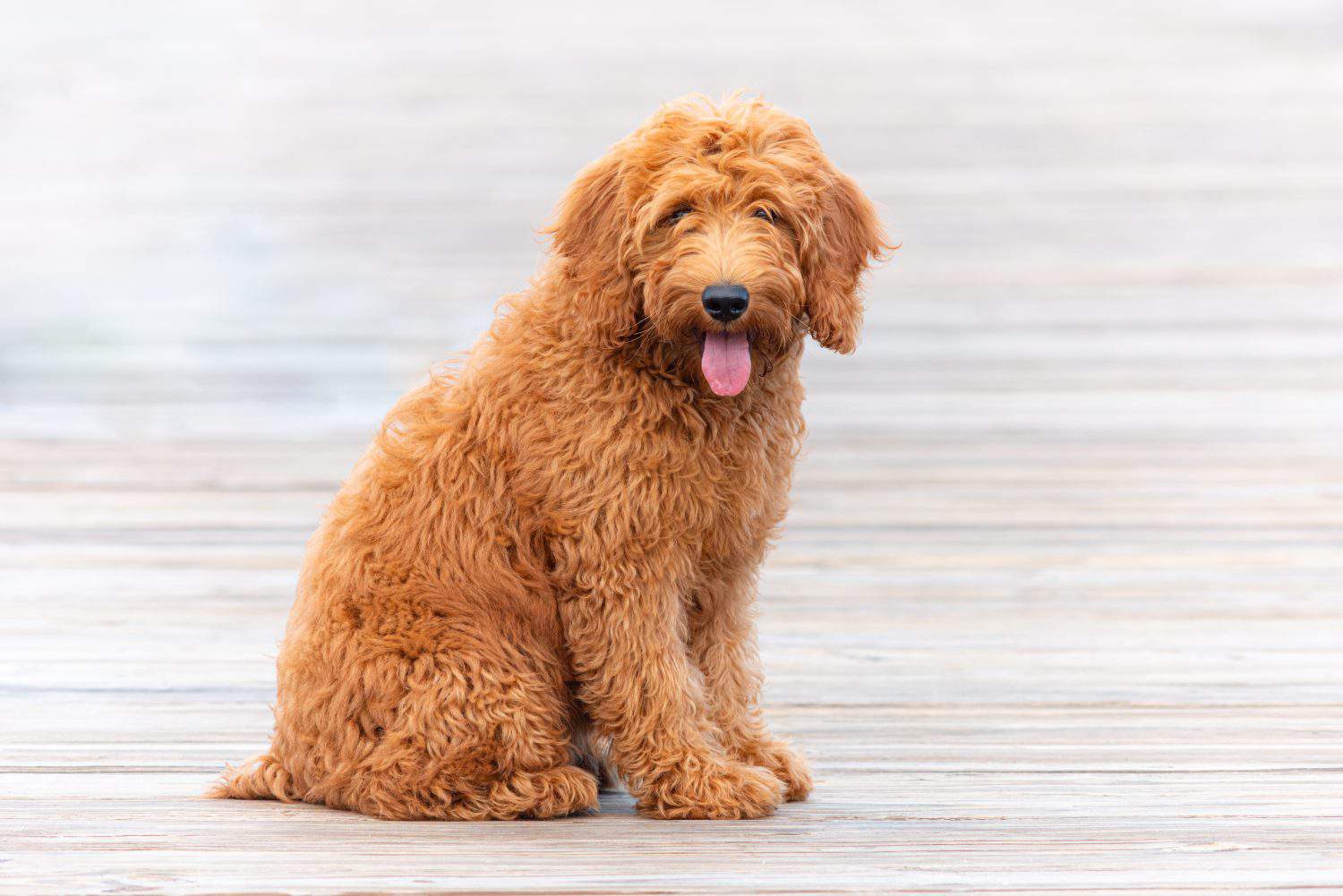
Goldendoodles have three coat types: straight, curly, and wavy. Depending on the dog’s coat type, it could mean more visits to the groomer. Straight hair, which is quite rare among this breed, tends to shed more than the other types and may be less suitable for people with allergies. However, no Goldendoodle coat type is guaranteed to be hypoallergenic. Overbrushing can cause more shedding, too.
While uncommon, curly-coated Goldendoodles shed minimally or not at all and require regular brushing and trimming of the hair around the eyes. The most common variety is the wavy-haired Goldendoodle. They are hypoallergenic and effectively do not shed, but they do need regular trimming every 6-8 weeks.
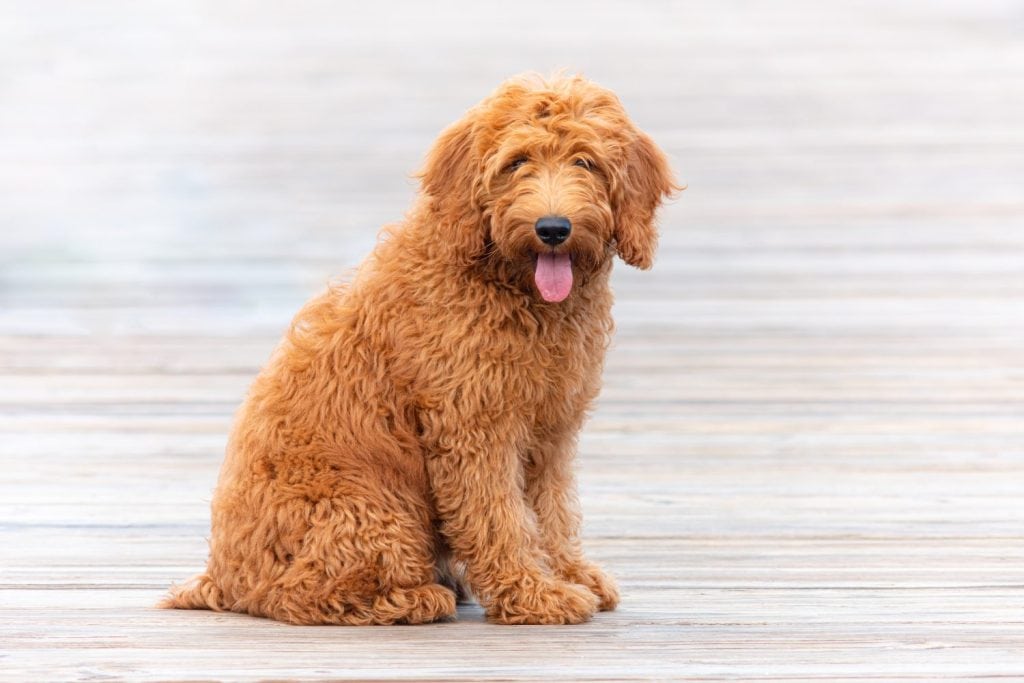
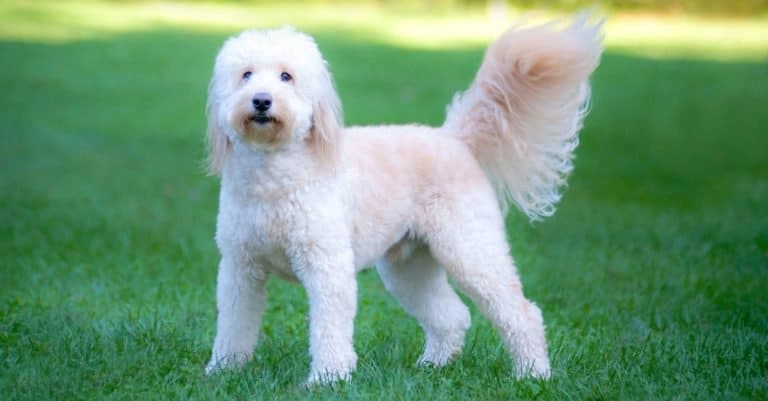
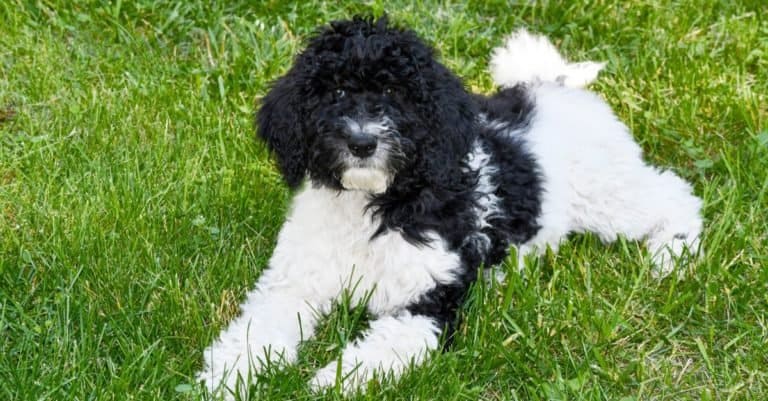
Goldendoodles come in a wide variety of colors: apricot, black, copper, cream, golden, red, and white. Of course, the golden coat is the most common color of the breed. The variations come from the Poodles with which the Golden Retrievers are bred with.
The variety associated with this breed extends to size as well. They come in miniature, medium, and standard. A miniature will grow to be between 13 and 15 inches tall and weigh as little as 15 pounds and up to 30 pounds. Medium Goldendoodles will reach 15 to 20 inches tall and weigh 30 to 45 pounds. Standards are quite large, weighing as much as 90 pounds, although the range is 45 to 90 pounds. They tend to be about 20 to 24 inches tall at the shoulder.
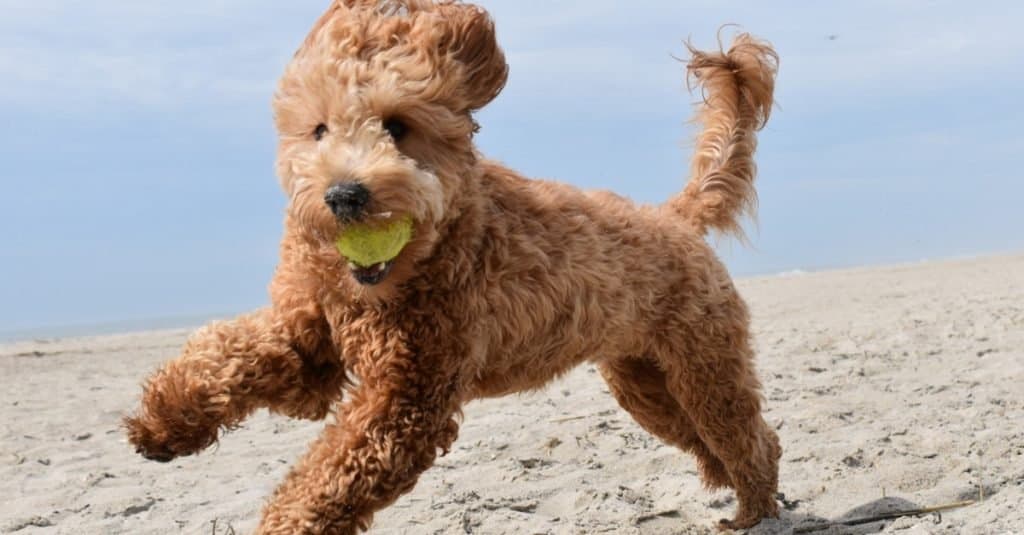
There are quite a few variations in color and size of Goldendoodles to choose from.
©W.H. Photography/Shutterstock.com
Female Goldendoodles of each size class tend to be at the lower range, while males are at the higher end of the range.
Common Health Issues
Goldendoodles suffer from a variety of health issues, many of which are inherited from the two breeds that make up this dog. For one, hip dysplasia is common in Golden Retrievers. This impacts the growth of the hips within the sockets and can cause intense pain for the dog as it ages.
From their Poodle lineage, the Goldendoodle can inherit eye issues, particularly cataracts. Cataracts cause cloudiness in the eye, and it first presents as a milky-white circle that blocks the retina. If left untreated, they can lead to blindness.
This breed is also prone to the autoimmune disorder Addison’s disease, a heart condition called sub-valvular aortic stenosis, and a hereditary skin condition known as sebaceous adenitis. Responsible breeders will screen for some of these conditions, but your canine companion must regularly see a veterinarian.
Temperament
This breed’s temperament is marked by sweetness, intelligence, and obedience. They are very loving to their owners and welcoming to other animals, and very patient with children of all ages.
Goldendoodles are very receptive to training, although not likely as a guard dog, as they tend to bond easily with strangers.
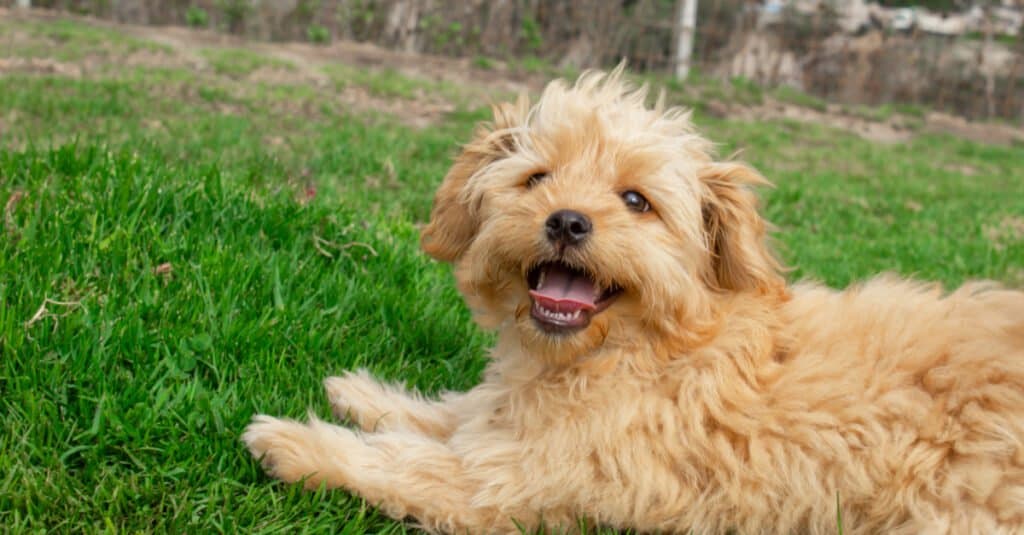
Goldendoodles are guaranteed to be sweet, intelligent, and obedient.
©Anasty/Shutterstock.com
They desire to be with their family all the time, which can leave them prone to developing separation anxiety if left alone for long periods and/or frequently. Regular and consistent exercise (walks, runs, fetch, swims even) throughout the day will help to ease their anxiety and meet their need to be active. They do travel well, so bring them along with you.
The Best Dog Food for Goldendoodles
Goldendoodles rapidly expel energy, which is why it is so important to feed this breed a high-protein diet. They will eat dry kibble just as happily as they will wet food, but high-fat options nourish their brain with omega-3s.

Goldendoodles need a high-protein diet to meet their desire for an active lifestyle.
©demanescale/Shutterstock.com
Avoid any foods with corn, soy, dairy, and wheat, as these foods are known to cause allergies in this breed. Another ingredient to avoid is legumes, which are associated with heart failure, and this breed is vulnerable to subvalvular aortic stenosis.
Maintenance and Grooming
Goldendoodles can suffer from ear infections, so clean their ears with a cotton ball or pad regularly. Their nails also need regular trimming, and it is recommended to set an ongoing appointment every 6-8 weeks with a groomer to trim/cut their coat, clean their ears and teeth, and trim their nails.
Goldendoodle Pictures
View all of our Goldendoodle pictures in the gallery.

cine-nomadic/Shutterstock.com
Sources
- Hill's Pet / Accessed March 10, 2021
- Crocket Doodled / Accessed March 10, 2021
- Dog Time / Accessed March 10, 2021
- Puppy Spot / Accessed March 10, 2021
- Green Garage / Accessed March 10, 2021
- The Happy Puppy Site / Accessed March 10, 2021
- Vetstreet / Accessed March 10, 2021
- The Spruce Pets / Accessed March 10, 2021
- Pride and Prejudoodles / Accessed March 10, 2021