E
Species Profile

Edible Frog

Pelophylax esculentus

The hybrid water frog of Europe
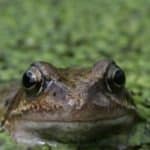
berichard / Creative Commons

Edible Frog Distribution

Click a location to explore more animals from that region

Invasive Species
Loading map...

At a Glance

Wild Species
Also Known As Green frog, Water frog, European green frog, European water frog
Activity Diurnal+
Lifespan 6 years
Weight 0.06 lbs
Status Least Concern
Did You Know?

Pelophylax esculentus is typically a natural hybrid between the Pool Frog (P. lessonae) and Marsh Frog (P. ridibundus), part of the European water-frog complex (Pelophylax).

Scientific Classification

The Edible Frog (Pelophylax esculentus) is a European ‘water frog’ best known as a hybridogenetic form associated with the Pelophylax water-frog complex and historically collected for consumption (frog legs).

Kingdom
Animalia
Phylum
Chordata
Class
Amphibia
Order
Anura
Family
Ranidae
Genus
Pelophylax
Species
Pelophylax esculentus

Distinguishing Features

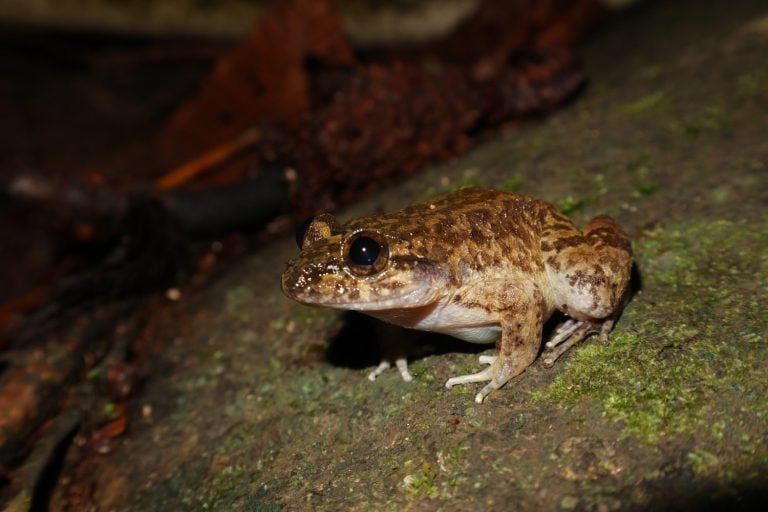
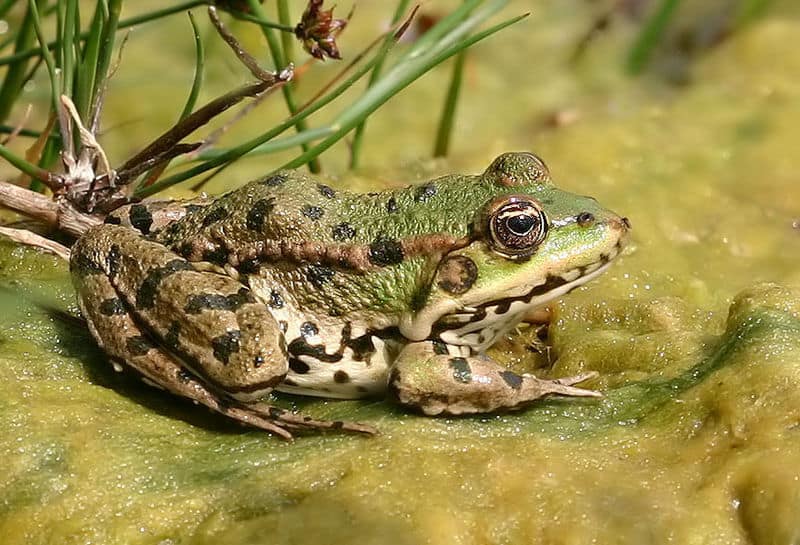
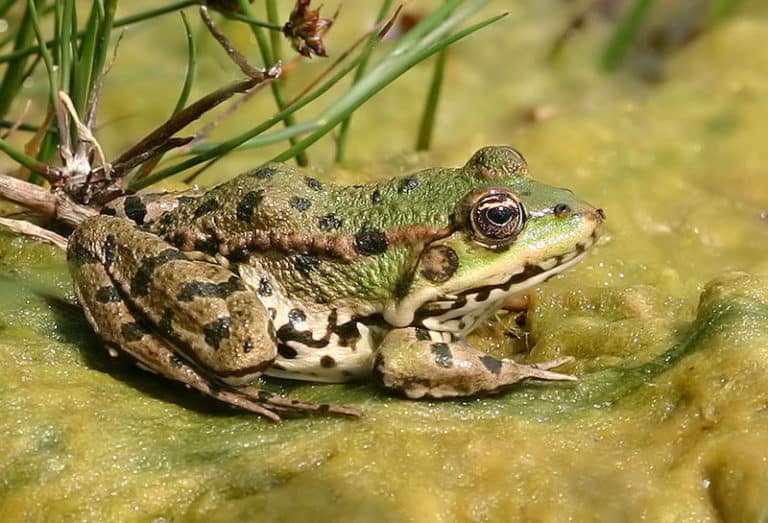
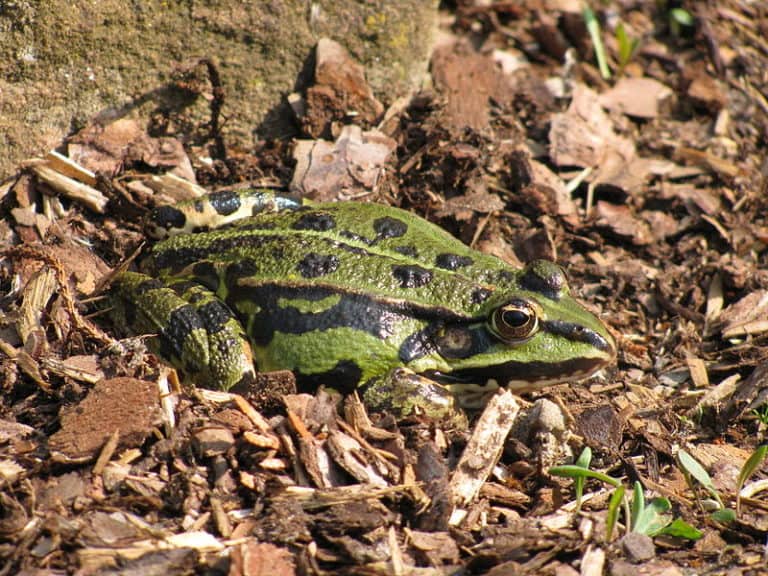
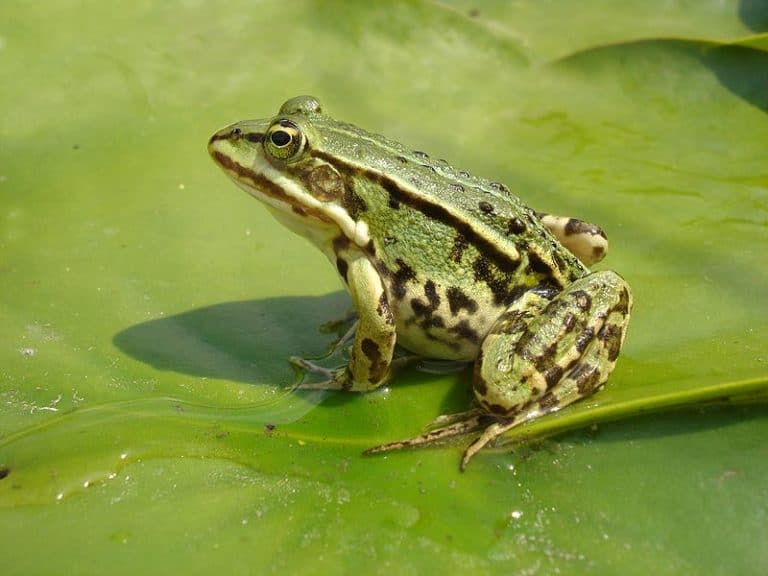
  • Green to olive-brown water frog with variable dark blotching; often a bright green dorsal stripe
  • Long hind legs; strong association with water and basking sites
  • Advertisement calls and morphology overlap with related Pelophylax species; reliable ID may require call analysis, range context, or genetic methods
  • Often described as part of a hybrid complex involving P. lessonae and/or P. ridibundus (hybridogenetic reproduction in many populations)

Physical Measurements

Males and females differ in size

Weight
0 lbs (0 lbs – 0 lbs)

Appearance

Primary Colors
Secondary Colors
Skin Type Moist, smooth to finely granular amphibian skin with conspicuous glandular texture; well-developed dorsolateral folds; semi-aquatic skin sheen common due to frequent immersion.
Distinctive Features
  • Adult size (snout-vent length): commonly ~4.5-9 cm; large females in some populations can approach ~10 cm SVL (values overlap with parental species).
  • Body form: streamlined 'water frog' build with long, powerful hind limbs and extensive toe webbing (adapted for swimming and rapid diving).
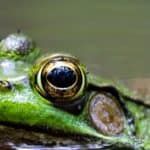
  • Head/face: prominent tympanum (external eardrum) and lateral darkening around the eye/tympanum often present; eye with horizontal pupil typical of ranid frogs.
  • Dorsolateral folds: usually clear and running from behind the eye toward the groin; can be used in combination with other traits but is not diagnostic alone within Pelophylax.
  • Ventral coloration: generally pale cream; throat can be variably pigmented-males often show darker/mottled throat during breeding/calling.
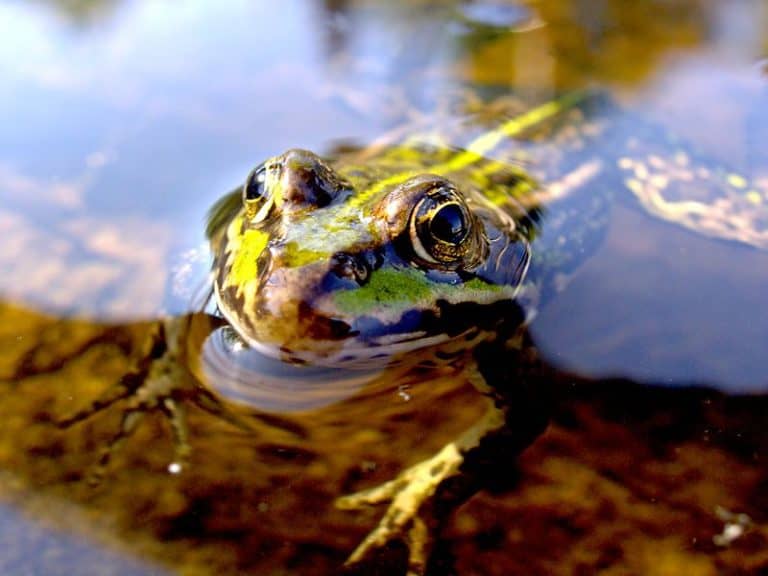
  • Behavior-linked appearance: often observed basking at water margins; when approached, typically performs a rapid plunge-dive into water and may remain submerged, matching its wetland and semi-aquatic lifestyle.
  • Habitat association (relevant to appearance/condition): typically occupies lowland wetlands-ponds, lakes, slow rivers, canals, marshes-often with abundant emergent vegetation; individuals may show greener tones in vegetated sites and browner tones in open/muddy margins.
  • Pelophylax esculentus, the edible frog of the Pelophylax water-frog group, is a hybrid (usually P. lessonae × P. ridibundus); breeding and looks vary by population, making identification hard.
  • Longevity (field-reported): typically several years; reports commonly fall around ~6-10 years in the wild, with longer maximums possible under favorable conditions (longevity varies with predation, climate, and local demography).

Sexual Dimorphism

Sexes overlap strongly in coloration and pattern; dimorphism is most consistent in size and breeding structures. Males are typically smaller than females and develop prominent vocal sacs and nuptial pads during the breeding season (timing varies with latitude, often spring to early summer in Europe).

  • Usually smaller-bodied than females at maturity within the same population (size ranges overlap).
  • Paired external vocal sacs inflate during calling; sac skin often appears grayish to darkened when expanded, making the throat region look darker/more contrasting.
  • Nuptial pads (darkened, roughened keratinized patches) develop on the thumbs during the breeding season for amplexus grip.
  • Calling behavior at water's edge or while floating; repeated call bouts can make the throat region appear more distended and darker due to sac use.
  • Typically larger and more robust-bodied, especially when gravid; abdomen can appear fuller during the breeding season.
  • Lacks nuptial pads and does not develop the conspicuously inflatable paired vocal sacs seen in males.
  • Throat generally less darkened/distended than in actively calling males, though coloration can still be variable and non-diagnostic.

Did You Know?

Pelophylax esculentus is typically a natural hybrid between the Pool Frog (P. lessonae) and Marsh Frog (P. ridibundus), part of the European water-frog complex (Pelophylax).

Adults are usually ~6-10 cm snout-vent length (SVL); large females can reach ~12 cm SVL in some populations (field guides and regional faunas report this upper bound).

It can reproduce by hybridogenesis: during gamete formation, one parental genome is often discarded, so the transmitted genome can be effectively "clonal" from one parent (classic work summarized in water-frog complex literature).

Many edible-frog populations are not self-sustaining without one of the parental species nearby-an unusual dependence for a named "species."

In good habitat it can be locally abundant, spending much of the day at the water's edge and diving instantly when disturbed.

The scientific name "esculentus" is Latin for "edible," reflecting a long history of harvest for frog legs in parts of Europe.

Unique Adaptations

  • Hybridogenesis (reproductive "genome exclusion"): enables persistence of hybrid lineages by passing on (usually) one parental genome while reconstituting hybridity each generation through mating with a parental species-one of the best-known vertebrate examples of this system.
  • Semi-aquatic locomotion toolkit: long hind limbs and extensive toe webbing support powerful swimming and rapid escape dives; this matches a lifestyle in open water and reedbeds.
  • Skin and water balance: permeable amphibian skin supports cutaneous respiration in water; mucous and granular glands help reduce desiccation and deter some predators (shared amphibian traits, critical for wetland living).
  • Color pattern plasticity: green/brown patterning and variable dorsal striping provide camouflage in mixed habitats (open water, reeds, grasses), contributing to frequent misidentification within Pelophylax.

Interesting Behaviors

  • Edge-sitting vigilance: commonly rests half-submerged along banks; at threat, it performs a rapid plunge-dive and may remain underwater for extended periods, resurfacing among vegetation.
  • Seasonal breeding choruses: males call from shallow water or floating vegetation in spring-early summer; calling intensity tracks temperature and time of day (typical of Pelophylax water frogs).
  • Hybrid population dynamics: breeding often involves "systems" (e.g., L-E, R-E, or mixed) where edible frogs and one parental species coexist; mating outcomes and tadpole viability depend on which genomes are present in the local pond network.
  • Diet as an ambush predator: takes aquatic and terrestrial invertebrates (notably insects), but larger individuals can take small vertebrates (fish fry, other amphibians) when available-typical ranid opportunism.
  • Overwintering strategy: adults commonly overwinter at pond bottoms or in mud/silt in oxygenated water; in some regions, late tadpoles may overwinter and metamorphose the following year (a pattern known in water-frog complexes).

Cultural Significance

In parts of Europe edible frogs (Pelophylax esculentus) were eaten for frog legs, hence the name. They are a key example in zoology and genetics for hybridogenetic reproduction, non‑Mendelian inheritance, pond metapopulations, and are often confused with the Pool Frog (P. lessonae) and Marsh Frog (P. ridibundus).

Myths & Legends

European folk belief often says frogs call rain or warn of weather. When frogs call loudly or appear in large numbers, people in wetland regions where Pelophylax water frogs live expect rain.

In French and Central European countryside tales, the edible frog (Pelophylax esculentus) and ponds were seen as a sign of plenty; many green frogs by marshes meant good luck for crops and gardens.

The European fairy-tale idea of the frog as a magical, in-between being—best known from 'The Frog King/Frog Prince' (Brothers Grimm)—comes from common pond frog images, not any single species (e.g., Edible Frog, Pelophylax esculentus).

In medieval/early modern Europe, people saw the Edible Frog (Pelophylax esculentus) and other wetland creatures as "cold" or "watery." Frog ponds were seen as places where land met wild water, common in marsh tales.

The Latin name esculentus ("edible") became a cultural story: naturalists and cooks called these green water frogs harvestable, linking Pelophylax esculentus to the food traditions of some European regions.

Conservation Status

LC Least Concern

Widespread and abundant in the wild.

Population Stable

Protected Under

  • Not globally listed by CITES; legal protection is primarily national/subnational across its European range and via site-based protection (occurrence in protected areas). Specific legal status varies by country/region.

Life Cycle

Birth 4000 tadpoles
Lifespan 6 years

Lifespan

In the Wild
3–12 years
In Captivity
5–15 years

Reproduction

Mating System Polygynandry
Social Structure Aggregation Group
Breeding Pattern Transient
Fertilization Substrate Spawning
Birth Type Substrate_spawning

Pelophylax esculentus breeds in shallow freshwater ponds in mixed male–female choruses. Males call; females mate by axillary amplexus. It's polygynandrous, with external eggs attached to vegetation. Many populations are hybridogenetic and need parental species; no parental care.

Behavior & Ecology

Social Breeding chorus (calling aggregation) Group: 20
Activity Diurnal, Crepuscular, Nocturnal
Diet Insectivore Insects-especially abundant shoreline and emergent aquatic taxa (commonly beetles and dipterans) taken opportunistically.
Seasonal Hibernates

Temperament

Generally wary and flight-prone: readily dives to refuge when approached, often remaining submerged/hidden in vegetation before resurfacing.
Seasonally more conspicuous and tolerant of proximity during breeding, when males prioritize calling/territory holding over avoidance.
Male-male competitive behavior in breeding congregations: calling contests, approach/spacing interactions, and occasional physical grappling consistent with ranid breeding assemblages (summarized for Pelophylax water frogs in Günther, 1996; Berger, 2008).

Communication

Advertisement call Male breeding call) given from water/vegetation at pond margins; functions in mate attraction and spacing among calling males within choruses (general function described for Pelophylax/Ranidae in Günther, 1996; Wells, 2007
Release call Emitted when clasped incorrectly, e.g., by another male) to terminate amplexus attempts (Wells, 2007
Distress call/scream when seized by a predator or handled Reported broadly in ranids; Wells, 2007
Visual signaling associated with calling: conspicuous inflation/deflation of vocal sacs and body posture at the water surface, aiding localization in dense vegetation Wells, 2007
Tactile communication during reproduction: amplexus grip, female positioning, and spawning contact cues Wells, 2007
Substrate/water-borne vibration and splash cues during close-range interactions E.g., abrupt dives, lunges) likely contribute to spacing and contest dynamics in dense choruses; evidence is largely inferential for this taxon, but consistent with anuran close-range signaling modalities (Wells, 2007

Habitat

Biomes:
Freshwater Wetland Temperate Forest Temperate Grassland Boreal Forest (Taiga)
Terrain:
Plains Valley Riverine Coastal
Elevation: Up to 3280 ft 10 in

Ecological Role

Generalist mesopredator in lentic freshwater and wetland edge food webs (links aquatic and terrestrial insect production to higher trophic levels).

Regulates populations of aquatic and terrestrial insects (including nuisance mosquitoes in suitable habitats) Transfers energy/nutrients between aquatic and terrestrial systems via foraging at shorelines and being prey for birds, snakes, mammals, and fish Serves as prey base supporting wetland predators (e.g., herons, storks, grass snakes) Contributes to wetland community structure by predation on larval insects and occasional predation on amphibian larvae

Diet Details

Main Prey:

Human Interaction

Domestication Status

Wild

Pelophylax esculentus is not domesticated. This wild hybrid, usually from P. lessonae × P. ridibundus, persists by hybridogenesis and often needs one parent species to breed. People catch it in parts of Europe for food (frog legs) and local trade, and scientists study its hybridogenesis, population genetics, and pollution effects.

Danger Level

Low
  • Zoonotic pathogen exposure typical of amphibian handling (notably Salmonella spp. risk from contact with skin/mucus or contaminated water).
  • Mild skin secretions may cause irritation in sensitive individuals; avoid contact with eyes/mouth and wash hands after handling.
  • Minor bite/scratch risk is low and typically superficial.
  • Indirect human-impact risk: moving or releasing animals can spread amphibian pathogens (e.g., Bd/Bsal) and can contribute to genetic introgression within the Pelophylax water-frog complex.

As a Pet

Not Suitable as Pet

Legality: Laws vary. Pelophylax esculentus is usually not CITES-listed, but many countries (especially in Europe) limit catching, keeping, or moving wild water frogs and may need permits. In the U.S., states set rules. Check local wildlife and disease rules.

Care Level: Experienced

Purchase Cost: $10 - $40
Lifetime Cost: $300 - $1,200

Economic Value

Uses:
Food Scientific research model Education/outreach Bioindicator/ecotoxicology Bait (local use)
Products:
  • frog legs (human consumption; historically and locally harvested in Europe)
  • laboratory research material for hybridogenesis, reproductive biology, and population genetics
  • environmental monitoring data (wetland health/contaminant exposure via amphibian bioindication)

Relationships

Predators 8

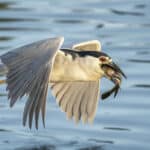
Grey Heron
Grey Heron Ardea cinerea
Black-crowned Night Heron
Black-crowned Night Heron Nycticorax nycticorax
White Stork Ciconia ciconia
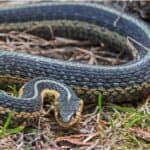
Grass Snake
Grass Snake Natrix natrix
Dice Snake Natrix tessellata
Eurasian Otter Lutra lutra
Northern Pike Esox lucius
European Perch Perca fluviatilis

Related Species 6

Pool Frog
Pool Frog Pelophylax lessonae Shared Genus
Marsh Frog
Marsh Frog Pelophylax ridibundus Shared Genus
Iberian Water Frog Pelophylax perezi Shared Genus
Levant Water Frog Pelophylax bedriagae Shared Genus
Common Frog
Common Frog Rana temporaria Shared Family
Agile Frog Rana dalmatina Shared Family

Edible Frog Classification and Evolution

The Edible Frog is a species of Frog found across Europe that is also known as the Common Water Frog and the Green Frog. The Edible Frog is a fertile hybrid of two other European Frogs, the Pool Frog and the Marsh Frog, that bred when populations where isolated close to one another during the ice ages. The scientific name of the Edible Frog means both “mud” and “guardian” as they are known to never stray far from water, almost guarding the muddy banks. It was first described in 1758 and has adopted its name as the “edible” Frog due to the fact that they are now seen as a culinary delicacy in France, particularly the legs.

Edible Frog Anatomy and Appearance

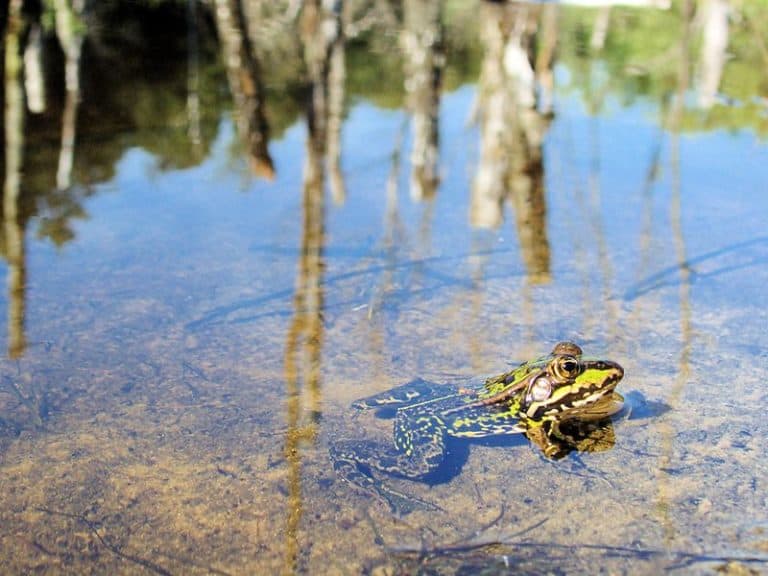
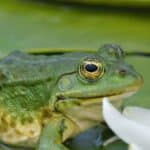
The Edible Frog is a medium sized Frog growing to around 9cm in length. Females tend to be larger than males and have been known to get up to 12 cm long. Adult Edible Frogs are mainly green in colour with light patches of brown on their backs, yellow eyes and a white underside, covered in a few dark spots. There are number of distinct differences between males and females including the fact that males become much lighter (and greener) during the mating season. Male Edible Frogs also have vocal sacs on the outside of their cheeks and extra skin patches on their feet, both of which are primarily for mating.

Edible Frog Distribution and Habitat

The Edible Frog is found across central Europe and as far north as Germany and Estonia. Southern populations of the Edible Frog are found from Croatia, through northern Italy and into the south of France. There are also isolated populations in Sweden and Bulgaria which are thought to have migrated from the countries nearby. Edible Frogs spend all of their time either in or very close to water and are most commonly found in calmer parts of rivers and streams, where there is a slow but constant flow of fresh water. They are said to prefer more open areas and can also be commonly spotted around lakes, ponds and marshes.

Edible Frog Behaviour and Lifestyle

Unlike many other species of Frog, the Edible Frog is a diurnal animal and is therefore most active during the day. This is when Edible Frogs are most likely to move away from the water, so that they can find a better supply of food or move to a different part of the water if need be. The Edible Frog is a relatively solitary animal so there is less competition for food but males are often seen sitting together in groups during the breeding season when they are trying to out-compete each other for a mate. Edible Frogs spend a large portion of their time sitting motionless on the muddy banks where they are perfectly camouflaged by their skin colour. They are also known to move onto land to hibernate during the colder winter months.

Edible Frog Reproduction and Life Cycles

The breeding season for Edible Frogs begins during March and generally lasts for a couple of months. Males sing by drawing air in and out of their vocal sacs to produce the highest-pitched sound possible, as the female is most attracted to the loudest Frog. After courting her in a lake, pond or swamp, the male lets the female lay up to 10,000 eggs in a sticky mass into the water, before he fertilises them. Tadpoles can be as small as 0.5cm long when they hatch and are a grey/brown colour, then growing up to 7cm in length before metamorphoses occurs, and they leave the water as 2cm long young Frogs. Edible Frogs reach sexual maturity at the age of two and can live until they are 15 years old.

Edible Frog Diet and Prey

Adult Edible Frogs are carnivorous animals, surviving only by eating other animals. The tadpoles however, mainly eat vegetation although are known to supplement their diet with aquatic micro-organisms on occasion. Small invertebrates such as Insects, Spiders, Moths and Flies make up the majority of their diet along with larger aquatic animals like Fish, Newts and other Frogs, and even small Birds. Edible Frogs hunt for their food during the day and can be seen catching food in ponds, and even on land. There are even reports of Edible Frogs venturing up to 500 meters away from water in their quest for nutrition.

Edible Frog Predators and Threats

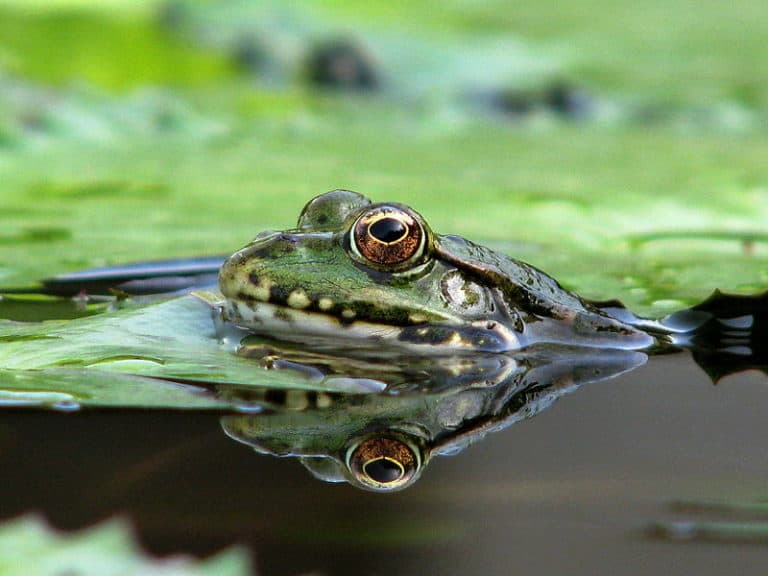
Edible Frogs remain very still when they are guarding the muddy banks, and this along with their camouflage, makes them very difficult for predators to spot. Their eyes are positioned near the top of their heads meaning they can also see danger coming whilst their body is mainly hidden. Snakes, Owls and water-dwelling Birds are the main predators of the Edible Frog, along with Humans who commonly eat them. Edible Frogs will jump into the water and hide if they sense approaching danger, and will make a loud screeching sound if caught. Edible Frog populations are also under threat from habitat destruction mainly caused by deforestation and water pollution.

Edible Frog Interesting Facts and Features

The Edible Frog is one of the few animals in the world that is a fertile mix of two different species, as although similar but genetically different species are known to mate, it is very rare that their offspring will be able to breed. The kl. of the Edible Frog’s scientific name indicates that the species is made up of chromosomes that have been stolen from other species. The esculentus part of the Edible Frog’s scientific name is Latin for edible as this species is one of the most commonly eaten Frog species in the world.

Edible Frog Relationship with Humans

As its name suggests, the Edible Frog is used as a food source by people across the continent, although they are most commonly eaten in France where Frog’s legs are often served as a national dish. The reason for Humans favouring this Frog over others is not really known but it may have something to do with their abundance. However, despite still being one of the most common Frogs in Europe, the Edible Frog is under threat across much of its natural range as more land is tampered with. Due to their permeable skin, they are also particularly susceptible to water pollution and will migrate from areas where the water quality has declined.

Edible Frog Conservation Status and Life Today

Today, the Edible Frog is listed as a species that is of Least Concern from extinction in the near future, but populations in certain areas are declining. They are particularly adaptable animals and have been able to inhabit man-made bodies of water. Providing however, that the water quality is good, there is an ample supply of food and little competition for it from other species.

View all 185 animals that start with E

Sources

  1. David Burnie, Dorling Kindersley (2011) Animal, The Definitive Visual Guide To The World's Wildlife / Accessed February 2, 2011
  2. Tom Jackson, Lorenz Books (2007) The World Encyclopedia Of Animals / Accessed February 2, 2011
  3. David Burnie, Kingfisher (2011) The Kingfisher Animal Encyclopedia / Accessed February 2, 2011
  4. Richard Mackay, University of California Press (2009) The Atlas Of Endangered Species / Accessed February 2, 2011
  5. David Burnie, Dorling Kindersley (2008) Illustrated Encyclopedia Of Animals / Accessed February 2, 2011
  6. Dorling Kindersley (2006) Dorling Kindersley Encyclopedia Of Animals / Accessed February 2, 2011
  7. Edible Frog Information / Accessed February 2, 2011
  8. Edible Frog Images / Accessed February 2, 2011
  9. Edible Frog Study / Accessed February 2, 2011
A-Z Animals Staff

About the Author

A-Z Animals Staff

AZ Animals is a growing team of animals experts, researchers, farmers, conservationists, writers, editors, and -- of course -- pet owners who have come together to help you better understand the animal kingdom and how we interact.
Connect:

Thank you for reading! Have some feedback for us?


Edible Frog FAQs (Frequently Asked Questions)

Edible Frogs are Omnivores, meaning they eat both plants and other animals.