

G
Species Profile

Green Frog

Lithobates clamitans

The banjo-voiced frog of pond edges
Tom Reichner/Shutterstock.com

Green Frog Distribution

Click a location to explore more animals from that region

Invasive Species
Loading map...
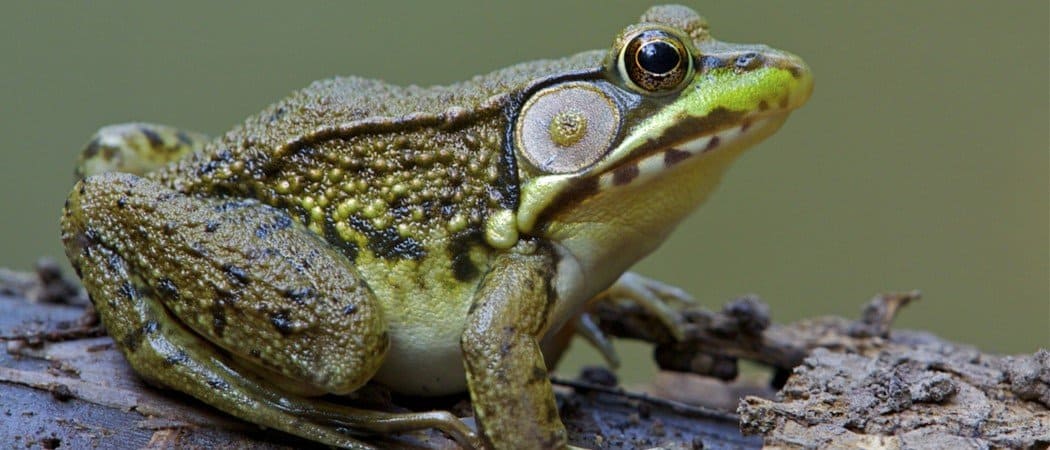
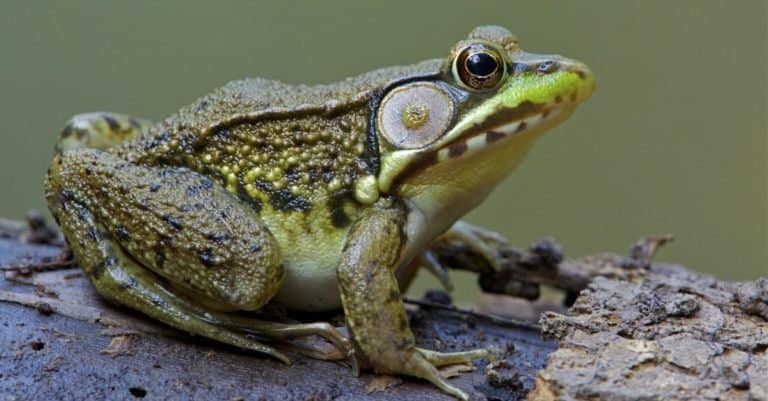
Green Frog, Lithobates clamitans, on log in a wetland / pond at Tyler State Park, Bucks County, Pennsylvania

At a Glance

Wild Species
Diet Carnivore
Activity Cathemeral
Lifespan 6 years
Weight 0.085 lbs
Status Least Concern
Did You Know?

Adult size is typically 54-97 mm snout-vent length (SVL), with large individuals reported to ~102 mm SVL (AmphibiaWeb; regional field guides).

Scientific Classification

A medium-to-large North American true frog commonly found around permanent freshwater; known for its green to bronze coloration and a distinct dorsolateral ridge running from behind the eye down the back.

Kingdom
Animalia
Phylum
Chordata
Class
Amphibia
Order
Anura
Family
Ranidae
Genus
Lithobates
Species
clamitans

Distinguishing Features

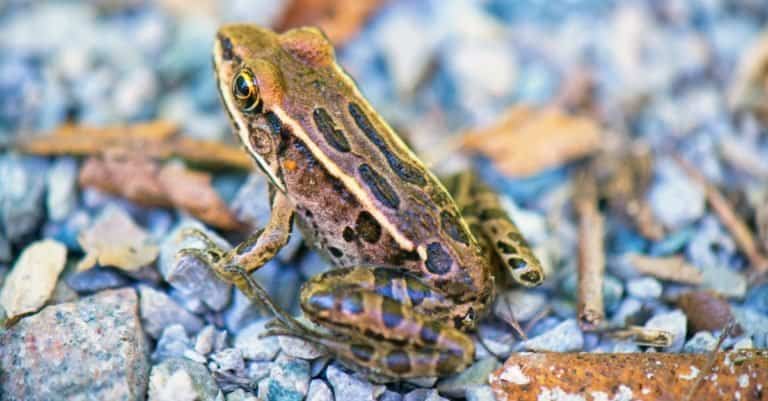
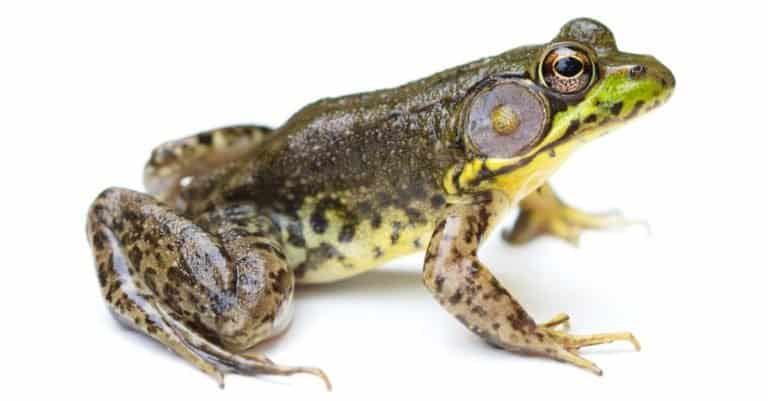
  • Prominent dorsolateral ridges (raised lines) along the back
  • Green to green-brown head/upper body with darker mottling; lighter underside
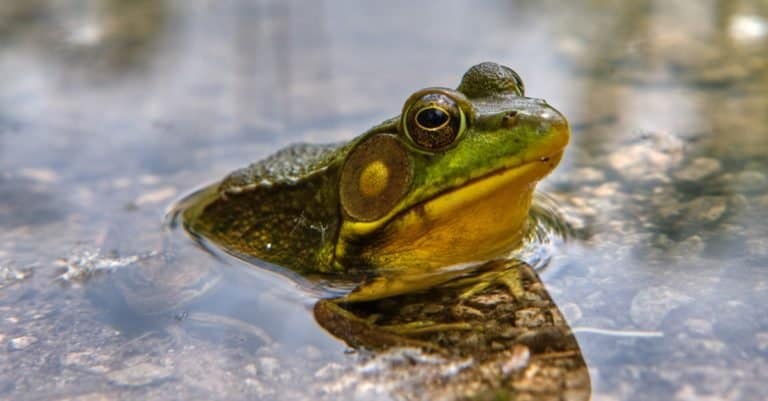
  • Large tympanum (external eardrum), often conspicuous behind the eye
  • Call often described as a loose banjo-string twang

Physical Measurements

Males and females differ in size

Length
3 in (2 in – 4 in)
Weight
0 lbs (0 lbs – 0 lbs)
Top Speed
4 mph
Green Frog: no confirmed speed

Appearance

Primary Colors
Secondary Colors
Skin Type Smooth-to-slightly granular, moist glandular skin typical of Ranidae (true frogs); prominent dorsolateral ridges (skin folds) and a large exposed tympanum; toes long with extensive webbing suited to permanent-water shorelines.
Distinctive Features
  • Adult size (snout-vent length): typically 5.5-10.0 cm, medium-to-large for North American ranids (AmphibiaWeb: Lithobates clamitans).
  • Large round tympanum (external eardrum) obvious behind eye; key identification trait in the field-especially compared to similar shoreline frogs.
  • Dorsolateral ridge: well-developed, raised ridge beginning just behind the eye and running down the back (a hallmark field mark emphasized in North American ID keys).
  • Head often greener than body; body often bronze/olive-classic 'green head, bronze body' look in many individuals.
  • Hind legs long with strong webbing; typically sits at water's edge and jumps to water when approached-appearance and posture strongly associated with permanent freshwater margins.
  • Typical longevity reported around 5-6 years in the wild, with longer potential in protected conditions (values commonly summarized in AmphibiaWeb/NatureServe accounts; longevity varies by locality).
  • Behaviorally relevant appearance: males develop visible calling posture at shoreline; advertisement call is a single, resonant 'gung'/banjo-like note (call note used alongside appearance for definitive North American identification; USGS/NatureServe summaries).

Sexual Dimorphism

Sexes overlap in overall coloration, but differ in body size and especially tympanum-to-eye proportions and throat coloration during the breeding season-standard diagnostic dimorphism in Lithobates clamitans (AmphibiaWeb).

  • Tympanum typically larger than the eye (often distinctly so), a common field ID metric for males in breeding season.
  • Throat usually yellow to yellow-green in breeding condition; may appear darker/more pigmented than females.
  • Nuptial pads on thumbs during breeding season; males possess paired vocal sacs used for the loud single-note call (behavior-linked morphological trait).
  • Females average larger-bodied than males within the same population (common in ranids; AmphibiaWeb).
  • Tympanum typically about the same size as the eye or only slightly larger; less exaggerated than in males.
  • Throat typically whitish/cream with less yellow pigmentation than males, especially outside peak breeding condition.

Did You Know?

Adult size is typically 54-97 mm snout-vent length (SVL), with large individuals reported to ~102 mm SVL (AmphibiaWeb; regional field guides).

Key field mark: dorsolateral ridges run from behind the eye down the back to near the groin-helpful for separating it from bullfrogs (which lack these ridges).

Male ID clue: the tympanum (external ear disk) is usually larger than the eye; in females it's closer to eye-size (common Ranidae trait used in field IDs).

Breeding females lay large surface egg masses commonly on vegetation; clutch sizes are commonly reported in the ~1,000-5,000 egg range (species accounts in AmphibiaWeb/NatureServe summaries).

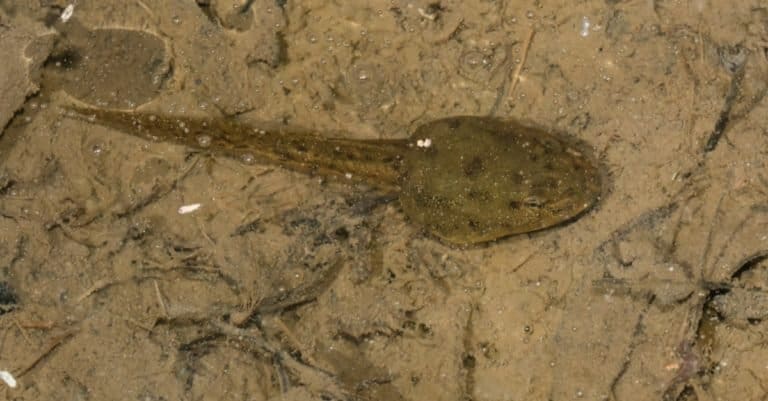
Tadpoles are large and often overwinter; larval development commonly lasts 1-2 years before metamorphosis (especially in cooler northern sites).

The advertisement call is often described as a short "plunk" or loose-banjo twang-one of the easiest ways to detect the species at night along permanent water.

Unique Adaptations

  • Dorsolateral ridges: prominent skin folds help channel water off the back and are a reliable Ranidae-style field character that also breaks up the body outline for camouflage.
  • Aquatic propulsion: long hind limbs and strongly webbed feet provide efficient swimming bursts and rapid "dive-to-escape" responses typical of true frogs (Ranidae).
  • Cutaneous respiration support: the highly vascular, moist skin allows significant gas exchange-especially important during long submergence and winter dormancy in water.
  • Color plasticity for concealment: green to bronze coloration (often with mottling) blends with algae, duckweed, and emergent vegetation along permanent freshwater edges.
  • Tadpole persistence: larvae are built for long residence in ponds/slow water, commonly surviving through winter and reaching large sizes before metamorphosis (a common life-history pattern in permanent-water ranids).

Interesting Behaviors

  • Edge-hugging habitat use: adults often sit at the waterline of permanent ponds, lake margins, slow streams, and marshy shorelines, diving in at disturbance.
  • Male territorial calling: males typically call from fixed stations (often partially floating or perched), using repeated calls and short chases to defend spacing from rivals during breeding season.
  • Seasonal breeding: breeding is generally late spring through summer (often May-August depending on latitude), with calling peaking on warm, humid evenings.
  • Predator-avoidance dive: when startled they frequently make a clean, angled plunge and remain submerged, relying on stillness and camouflage; resurfacing is often cautious and slow.
  • Overwintering strategy: in colder regions, tadpoles and many adults overwinter in water (often at pond bottoms), reducing activity and relying heavily on cutaneous respiration through the skin.
  • Opportunistic feeding: sit-and-wait predation on shoreline invertebrates (insects, spiders, snails) and occasional small vertebrates; they also forage in shallow water for aquatic prey.

Cultural Significance

The Green Frog (Lithobates clamitans) is a common pond-edge frog across eastern and central North America. Its banjo-like call is a classic summer sound. It is used in nature education and surveys and helps show wetland health because its thin skin and tadpoles link land and water.

Myths & Legends

In many Native North American stories, frogs are tied to rain and water. Eastern Woodlands peoples say frogs' voices call up rain or warn it is coming—fitting the Green Frog (Lithobates clamitans).

Green Frog (Lithobates clamitans) links to a Native North American tale of a Frog (or Toad) who swallows the world's water, causing drought, until animals trick it to laugh and the water returns.

In Ojibwe/Anishinaabe teachings, the frog marks spring, cleansing, and life's return after winter; the first strong frog calls signal when to begin water- and wetland-related seasonal activities.

European folktales, often retold in North America, make frogs like the "frog prince" a sign of change, matching real metamorphosis from tadpole to adult seen in pond frogs such as Lithobates clamitans.

Conservation Status

LC Least Concern

Widespread and abundant in the wild.

Population Stable

Life Cycle

Birth 4000 tadpoles
Lifespan 6 years

Lifespan

In the Wild
2–10 years
In Captivity
3–10.1 years

Reproduction

Mating System Promiscuity
Social Structure Aggregation Group
Breeding Pattern Transient
Fertilization Substrate Spawning
Birth Type Substrate_spawning

Behavior & Ecology

Social Chorus (breeding congregation) Group: 8
Activity Cathemeral
Diet Carnivore crayfish
Seasonal Hibernates

Temperament

Wary and quick to flee (rapid plunge to water) when approached; reliance on crypsis and escape rather than confrontation outside male-male breeding conflicts (Wells 2007).
Male-specific breeding-season aggression/territoriality: residents often tolerate juveniles or non-calling individuals at greater distances but respond strongly to rival calling males intruding on the calling site (Wells 2007).
Sit-and-wait predator with opportunistic diet; individuals often adopt repeated ambush perches along the same shoreline microhabitats, especially where prey traffic is high (Wells 2007).
Seasonally plastic behavior: in cooler periods, activity and responsiveness decline; in warm months, basking/foraging can occur by day and calling/foraging commonly continue after dark (Wells 2007).

Communication

Advertisement call Male): the characteristic 'banjo-like' series of notes used to attract females and signal territory ownership; call rate and duration vary with temperature and social context (Wells 2007
Encounter/aggressive calls Male): call variants given during close-range male-male interactions and territorial disputes (Wells 2007
Release call: produced when an individual is clasped inappropriately Typical of anurans; described generally in Wells 2007
Distress call: high-intensity vocalization when seized by a predator or handled Wells 2007
Acoustic spacing and territorial signaling: males use call timing and position Plus escalation to physical combat) to maintain territories within a chorus; chorus structure emerges from these interactions rather than from cohesive group formation (Wells 2007
Visual signaling components during calling: conspicuous inflation/deflation of the vocal sac can function as a close-range visual cue, especially at short distances or in low-noise settings Wells 2007
Tactile communication in reproduction: amplexus and physical positioning during mating and oviposition Wells 2007

Habitat

Biomes:
Freshwater Wetland Temperate Forest Temperate Grassland Boreal Forest (Taiga)
Terrain:
Coastal Plains Valley Riverine Muddy
Elevation: Up to 3937 ft

Ecological Role

Common mesopredator at the aquatic-terrestrial interface in permanent freshwater systems (ponds, lakes, marshes, slow streams).

Regulates populations of aquatic and terrestrial invertebrates (including many insect taxa) Transfers energy and nutrients across aquatic-terrestrial boundaries by consuming prey from both environments Serves as an important prey base for higher trophic predators (wading birds, snakes, mammals, large fish), supporting food-web stability

Diet Details

Main Prey:
Insects Spiders and other arachnids Earthworm Slugs and snails Aquatic insect larvae crayfish Tadpoles and small frogs Small fish +2

Human Interaction

Domestication Status

Wild

Green Frog (Lithobates clamitans) is a wild, not domesticated, frog of eastern and central North America. It lives in ponds, lakes, slow streams, and marsh edges. Adults are about 5.5–11 cm long and usually live a few years (sometimes longer in captivity). People interact through habitat work, monitoring, education, regulated collection, and citizen science.

Danger Level

Low
  • Low physical risk: not venomous; may give minor scratches or small defensive bites if handled.
  • Zoonotic hygiene risk: like many amphibians, can carry Salmonella on skin-handwashing after contact is recommended.
  • Conservation/health risk to other wildlife (indirect to humans): moving/keeping wild frogs can spread amphibian pathogens (e.g., Batrachochytrium dendrobatidis/chytrid fungus, ranaviruses) and is a key reason many jurisdictions restrict possession/transport.

As a Pet

Not Suitable as Pet

Legality: Laws vary by place. As a native species, many U.S. states and Canadian provinces limit or ban taking or keeping green frogs (Lithobates clamitans) and may need permits. Moving them can be restricted to stop disease; check local wildlife rules.

Care Level: Experienced

Purchase Cost: Up to $50
Lifetime Cost: $250 - $1,200

Economic Value

Uses:
Ecosystem services (insect control; prey base for fish, birds, reptiles, mammals) Bioindicator value (wetland health; contaminant and habitat monitoring) Research model (ecology, behavior, ecotoxicology, disease ecology) Education/outreach (natural history education; frog-call surveys/citizen science)
Products:
  • no major commercial products specific to this species; limited/occasional local use as bait or for consumption is possible but not a primary harvested ranid compared with American Bullfrog

Relationships

Ecological Equivalents 4

Animals that fill a similar ecological role in their ecosystem

American Bullfrog
American Bullfrog Lithobates catesbeianus Green Frogs (Lithobates clamitans) and bullfrogs use permanent water (ponds, lakes, slow rivers), are shore sit-and-wait predators, co-occur, and bullfrogs may eat juvenile or adult Green Frogs; both have tadpoles that typically take about a year to metamorphose.
Mink Frog Lithobates septentrionalis Similar habitat association with cool, permanent waters and vegetated shorelines. Both are medium-to-large ranids that use aquatic escape and forage on aquatic and terrestrial invertebrates. Where their ranges overlap in northern regions, they partition microhabitat and temperature but fill comparable predator roles along pond and lake margins.
Northern Leopard Frog
Northern Leopard Frog Lithobates pipiens Both are generalist insect-eaters and mid-level predators in freshwater and wetland areas. They eat a variety of small animals and are preyed upon by fish, snakes, turtles, and wading birds. Leopard frogs use open meadows, while green frogs stay by shorelines and permanent water.
Bronze Frog Lithobates clamitans clamitans

The green frog is known for being one of the least picky eaters and will consume just about any insect or animal that it can swallow.

One of the most common frogs native to the eastern states and parts of Canada, the green frog can be found just about anywhere there is a body of water for it to call home. This amphibian is known for its rich green hue, but subspecies can include varying shades of brown, bronze, and even blue. The green frog is well-populated and not considered endangered despite rising pollution rates that threaten its habitat. These amphibians prefer to be alone but are known for congregating around breeding season. Green frogs are also common pets due to their calm nature and are easy to care for.

4 Incredible Green Frog facts!

  • All species of green frogs tend to have a distinctive green upper lip despite fluctuating color variations
  • Males make a distinct mating call that sounds like a sole banjo string being plucked
  • Females can produce over 1,000 offspring each year
  • Green frogs are the most common type used for frog leg dishes in the culinary world and for scientific purposes

Green Frog Scientific name

The green frog’s most common scientific name is Lithobates clamitans, but it is also referred to as Rana clamitans. The term “lithobates” is derived from the Greek words “litho” and “bates” which mean “rock climber” when combined. The name can also translate to “one who treads on water”. It belongs to the Animalia kingdom and is in the Ranidae family. Lithobates are considered to be a true genus of frogs. Subspecies include the bronze frog and the northern green frog. The northern green frog is native to northeastern parts of North America while the bronze-green frog tends to populate near traditional green frogs.

Green Frog Appearance

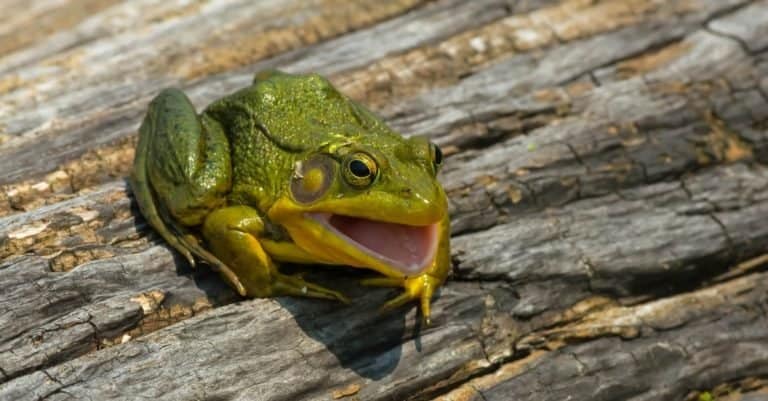
Green frogs are famous for their vivid green color. They are usually light in color but can have a muddied appearance similar to that of a bullfrog. However, some green frogs can have light to dark brown tones as well as a distinct bronze appearance. Their skin can feel slimy at times but is generally smooth to the touch, unlike the warty bullfrog. Green frogs often have light yellow bellies with small, black dots scattered throughout. Some can even have tones of blue in their skin. Their bulging eyes help them to see in all directions, making it easier for them to catch prey. Due to their exceptional vision capabilities, adult green frogs are generally able to escape from a potential predator with relative ease.

As an average-sized frog just under five inches long, this species is relatively easy to spot near bodies of water. This is especially true since it can be found out and about both day and night. Compared to other frogs, green frogs have a larger dorsolateral ridge that extends from their eyes down the back of their bodies. In fact, many people use this feature alone to identify the species because it is so distinct. Webbed toes help them maintain their grip and swim more efficiently. Green frogs also have a larger tympanum, or eardrum, than similar species. This is especially true for males. Female green frogs tend to have smaller tympanums that are roughly the size of their eyes or smaller.
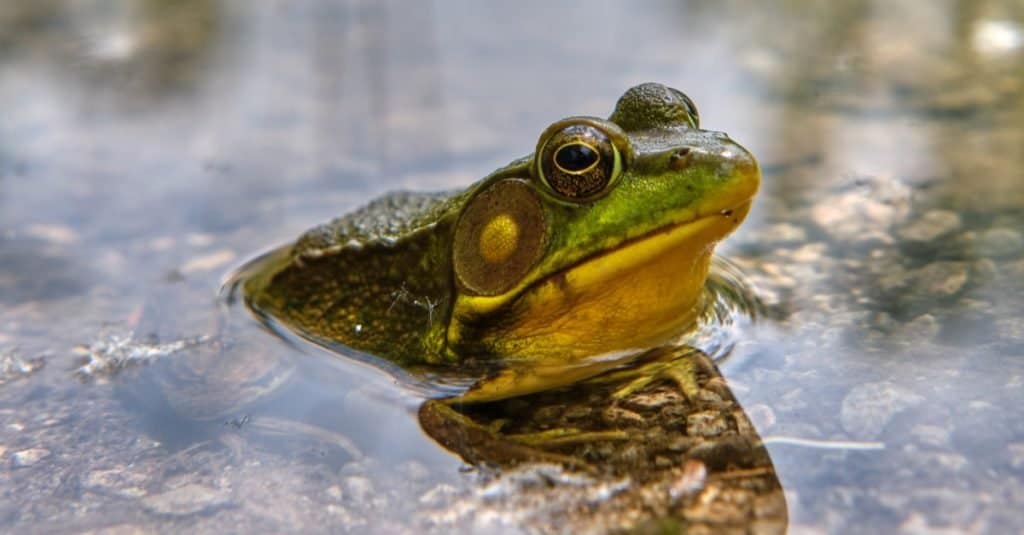
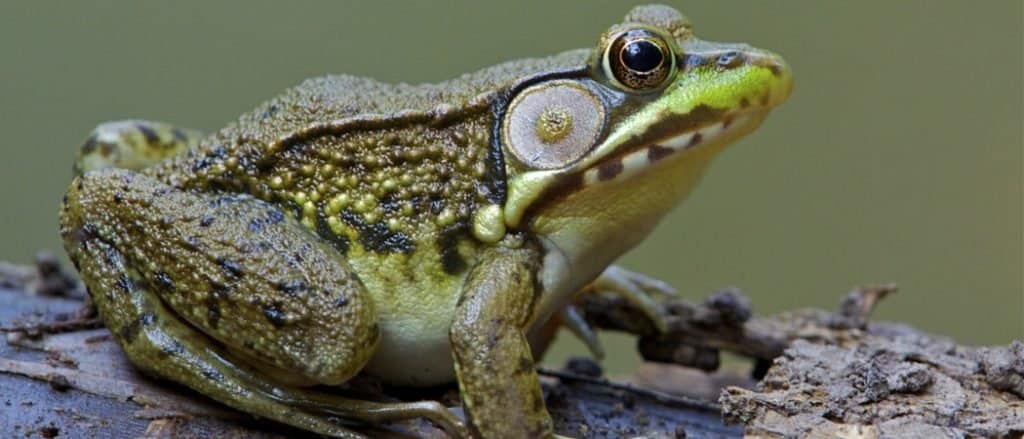
North American green frog sitting in marsh pond with clean background close-up

Green Frog Behavior

Green frogs and its’ subspecies prefer to live in solitude. However, they do make some exceptions. Breeding season, which is typically in the springtime, is the most time these frogs spend socializing. It is also common for several to live peacefully in the same area and may be found near bullfrog varieties as well as other frogs, as long as there is plenty of prey to catch. These frogs require easy and constant food sources as they practice a waiting technique that requires minimal movement on their part. While hunting, they prefer to sit and patiently wait for potential prey to get close enough for them to grab with their tongue or fit into their mouth.

Male frogs are known for displaying aggressive behavior when it comes to finding a mate. They often growl at other males to send a warning in various intensity levels before attempting to attack. Males omit these alert calls in different levels to send a specific message to other males. This variety of frogs is active both day and night. It is also dormant during the wintertime to conserve energy.

Green Frog Habitat

As one of the hardiest species of frogs, these frogs can thrive virtually anywhere they have access to a stable body of water. Lakes, ponds, and even small bogs are some of the most common areas they can be spotted. Native to the eastern half of the United States and parts of Canada, green frogs prefer areas with plenty of trees and vegetation. This often equates to more potential prey for them to feast on.

Green Frog Diet

This species of frog is carnivorous. It is also flexible when it comes to food choices. These frogs are known for eating virtually any insect or small animal that they can fit inside of their mouth. Some of their favorite prey includes fish, larvae, and even small birds and snakes. Green frogs use a sit and wait hunting tactic, so they prefer to be surrounded by constant food sources that are easily attained.

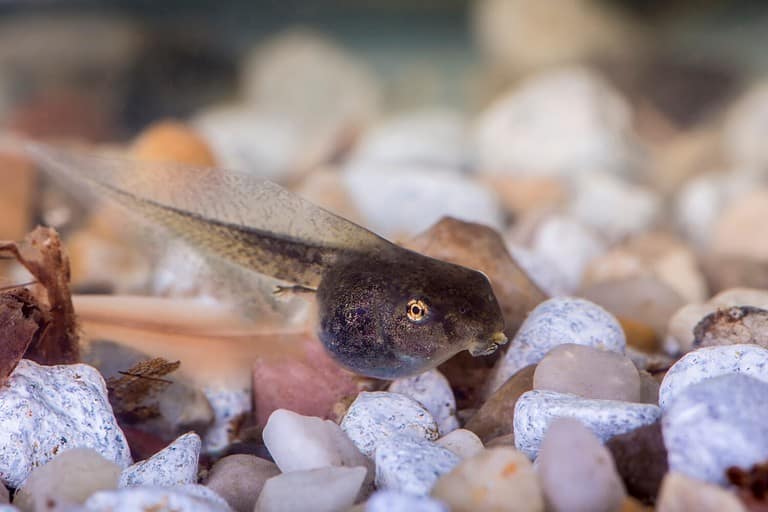
Tadpoles prefer to eat algae and even zooplankton. As they grow, they begin to consume larger insects before attempting to prey on small animals.

Green Frog Predators and threats

These frogs have plenty of predators. For starters, unhatched eggs are often consumed by aquatic insects such as leeches and dragonflies. Tadpoles and mature frogs alike are targeted by turtles, fish, and a variety of different birds. Small mammals such as raccoons and otters often consume adult green frogs as well.

The largest threat to these frogs is water pollution which can destroy their ability to breed and thrive. Another issue is the loss of habitat due to construction, fires, and other circumstances. However, these threats are considered minimal as this species is nowhere near extinction and programs are in place to protect heavily populated areas.

Green Frog Reproduction and Life Cycle

Female frogs select a mate based solely on the desirability of a territory. A large male is preferred by females, but satellite males, which are smaller and less dominant, often mate with females responding to their counterpart’s calls. Breeding season for green frogs usually occurs in the spring and can last up to three months.

The reproductive process is known as “amplexus” and consists of a male grasping a female’s back and fertilizing the eggs externally. Females first produce the eggs internally where they are nurtured before releasing them. This process leaves the frogs vulnerable to predators as they are easy prey. Eggs are produced in clutches that vary in size. Most clutches contain at least 1,000 eggs. The eggs may be attached to aquatic vegetation but often simply float to the water’s surface making them easy targets for potential predators. Fortunately, most eggs hatch in less than a week’s time. Adult frogs do not care for their young, making them vulnerable to a variety of different aquatic and land predators.

Once the eggs have hatched, the tadpole stage of development begins. This period of growth typically lasts up to two years after which they form into adult frogs. A typical adult can live up to 10 years in captivity, but most found in the wild live for six years or less. Due to their long lifespan and docile nature, these frogs are popular pets that are relatively easy to care for.

Green Frog Population

The population of these frogs has remained consistent despite industrialization and modern pollution sources. While exact figures are unknown, scientists estimate that there are at least 1,000,000 or more of these frogs in existence. Most green frogs reside in the eastern states in areas with plenty of tree and plant life. However, they can also be found in parts of Canada, especially Manitoba.

View all 261 animals that start with G

Sources

  1. Virginia Herpotological Society / Accessed February 18, 2021
  2. Bio Kids / Accessed February 18, 2021
A-Z Animals Staff

About the Author

A-Z Animals Staff

AZ Animals is a growing team of animals experts, researchers, farmers, conservationists, writers, editors, and -- of course -- pet owners who have come together to help you better understand the animal kingdom and how we interact.
Connect:

Thank you for reading! Have some feedback for us?


Green Frog FAQs (Frequently Asked Questions)

Green frogs are carnivores.