
G
Species Profile

Giant Clam

Tridacna gigas

The clam that runs on sunlight.
Sergius Bleicher/Shutterstock.com

Giant Clam Distribution

Click a location to explore more animals from that region

This map shows coastal regions where Giant Clam are found.

Loading map...
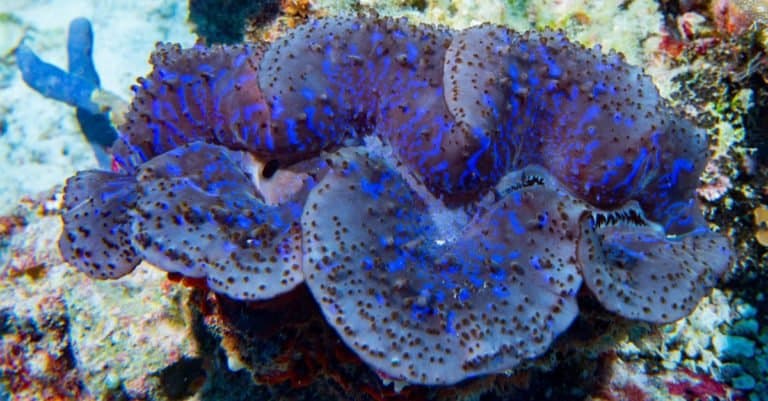
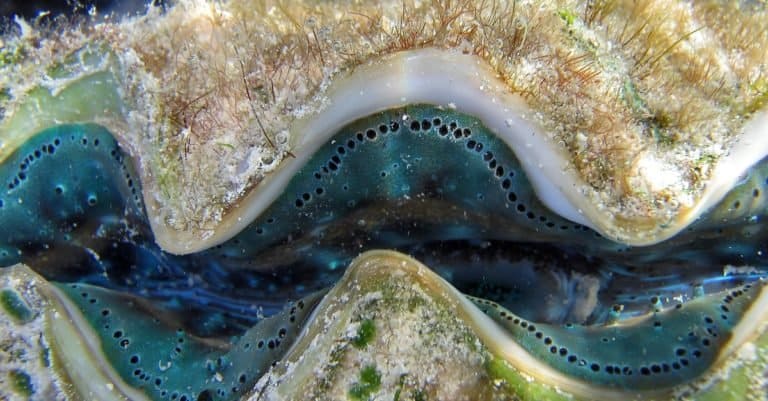
mantle of a giant clam, Tridacna, growing on a coral reef

At a Glance

Wild Species
Diet Filter Feeder
Activity Diurnal
Lifespan 60 years
Weight 230 lbs
Status Vulnerable
Did You Know?

Record size is ~137 cm shell length and ~230 kg mass (widely cited maximum for Tridacna gigas).

Scientific Classification

Tridacna gigas is the largest living bivalve mollusk, a reef-associated “giant clam” that hosts symbiotic algae (zooxanthellae) in its mantle, allowing it to obtain much of its energy from photosynthesis while also filter-feeding.

Kingdom
Animalia
Phylum
Mollusca
Class
Bivalvia
Order
Cardiida
Family
Cardiidae
Genus
Tridacna
Species
Tridacna gigas

Distinguishing Features

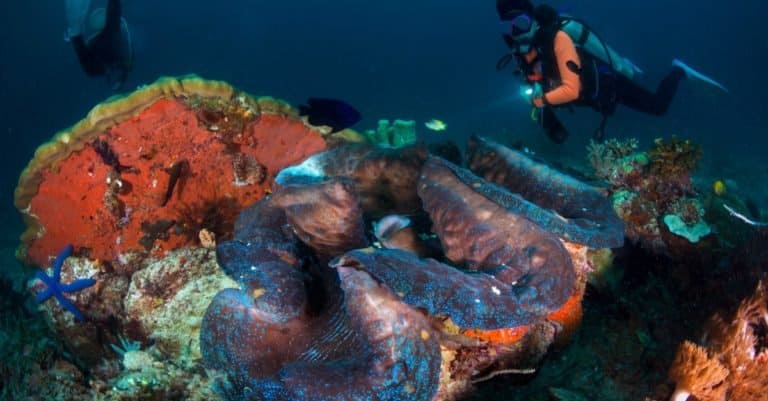
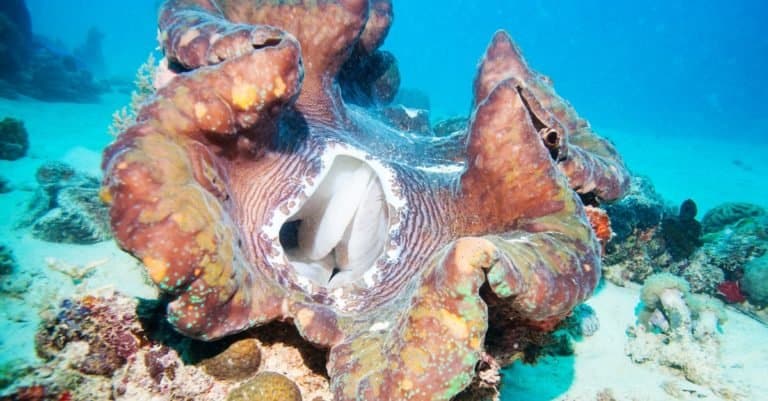
  • Extremely large, heavy shell with pronounced folds (fluting) in older individuals
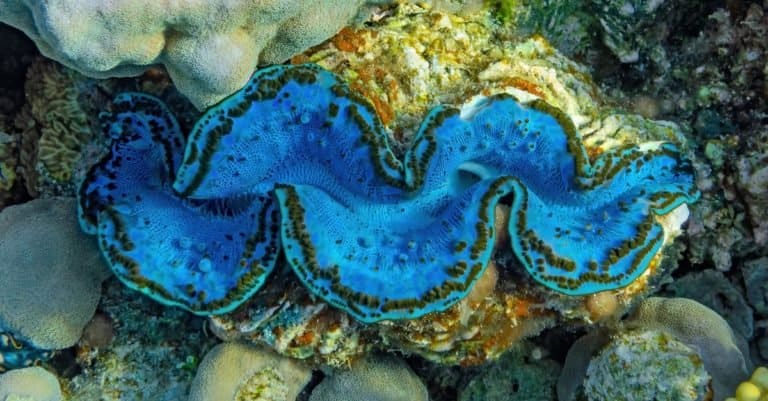
  • Large exposed mantle often with vivid blue/green/brown patterning and iridescent spots
  • Symbiotic algae in mantle tissues; thrives in bright light
  • Sessile adult lifestyle on reefs (unlike many mobile bivalves)

Physical Measurements

Length
3 ft 3 in (12 in – 4 ft 6 in)
Weight
441 lbs (44 lbs – 507 lbs)

Appearance

Primary Colors
Secondary Colors
Skin Type Thick hard two-part shell made of calcium with strong radial folds; the visible soft 'skin' is the fleshy mantle, which holds symbiotic dinoflagellates (zooxanthellae, Symbiodiniaceae) and iridophores that make bright colors.
Distinctive Features
  • Giant clam (Tridacna gigas) is the world’s largest living bivalve, with shells up to about 137 cm long and weights reported as high as around 230 kg in scientific reports.
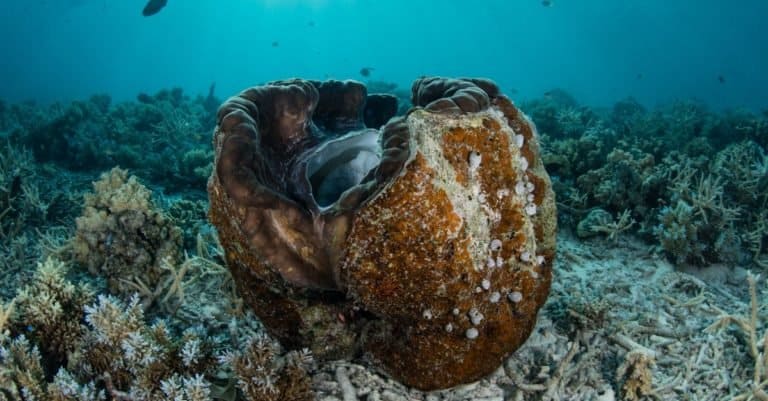
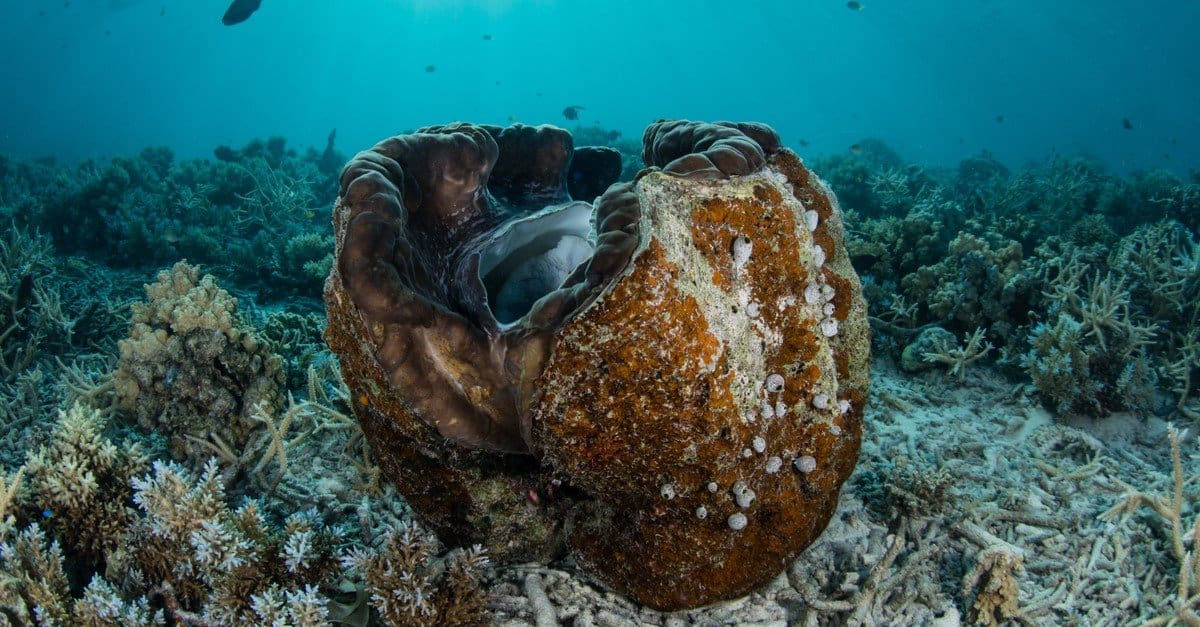
  • Massive, heavy valves with bold radial fluting; valves commonly grow embedded/anchored in coral reef framework, with a byssal opening in juveniles (attachment reduced as adults become very heavy).
  • Mantle greatly expanded beyond the shell margins in healthy, illuminated individuals; mantle tissue houses dense zooxanthellae enabling substantial energy gain from photosynthesis while also filter-feeding (reef-associated mixotrophy).
  • Large, conspicuous inhalant and exhalant siphonal openings visible when the clam is open; rapid mantle retraction and partial shell closure occurs in response to shadow/movement (light/shadow sensitivity).
  • Longevity is high for a bivalve: individuals can exceed ~100 years in suitable reef habitats (reported in giant-clam life history sources and conservation summaries; exact age varies with local growth conditions).
  • Reef-conservation/harvest history affects appearance in the wild: many regions have lost the very largest size classes due to historical overharvest; remaining populations may skew smaller, while protected reefs can still host very large, old individuals.

Did You Know?

Record size is ~137 cm shell length and ~230 kg mass (widely cited maximum for Tridacna gigas).

Exceptionally long-lived: documented to survive >100 years under natural conditions (giant clam longevity reported in reef ecology literature).

Houses photosynthetic dinoflagellates (zooxanthellae, Symbiodiniaceae) in its mantle and can obtain a major share of its energy from their photosynthate while also filter-feeding.

A functional sex-changer: typically matures first as male and later becomes a simultaneous hermaphrodite (protandry common in Tridacna).

A single large spawning event can release on the order of hundreds of millions of eggs (fecundity estimates for large T. gigas often cited up to ~500 million).

Its brilliant mantle colors come from specialized cells and microstructures that manage light for the algae (iridocyte/reflective structures), not from "paint" on the shell.

Unique Adaptations

  • Symbiotic "solar panels": a dense network of mantle tubules houses zooxanthellae close to light, enabling substantial photosynthetic energy gain in a sedentary animal.
  • Light-management microstructures: reflective/iridescent cells in the mantle help distribute light deeper to symbionts while limiting damage from excess irradiance-supporting high productivity in shallow reefs.
  • Massive, fluted shell: deep folds increase shell strength and help anchor the animal against waves and predators; thick shell growth also reduces vulnerability over time.
  • Powerful adductor muscle: allows sudden, tight closure against predators and sediment pulses; closure can be triggered by rapid changes in light (shadow) or touch.
  • High-efficiency nutrient recycling: wastes like ammonium can be taken up by symbionts, effectively recycling nitrogen within the clam-algae partnership-an advantage in nutrient-poor tropical waters.

Interesting Behaviors

  • Sun-harvesting posture: the mantle expands broadly in daylight to expose symbiotic algae to light, then retracts rapidly when shaded or disturbed (a strong "shadow response").
  • Broadcast spawning with synchronization: adults release sperm and eggs into the water column; spawning can cascade through a reef when chemical cues from one individual stimulate others.
  • Ontogenetic lifestyle shift: juveniles attach to reef substrate with byssal threads; large adults become essentially sessile, sitting heavily in place as the shell thickens.
  • Dual feeding strategy: filter-feeds by pumping seawater across gills for plankton and particulate food while simultaneously receiving sugars and other compounds from zooxanthellae.
  • Thermal/light stress behavior: under heat or intense stress, clams may reduce mantle extension; severe stress can lead to loss of symbionts (a "bleaching"-like condition analogous to corals).

Cultural Significance

Giant clam (Tridacna gigas) was widely taken across the Indo-Pacific for food and decoration. Its huge shells were traded worldwide and used in churches as holy-water basins. Today T. gigas is a reef protection symbol, farmed and used to restock reefs after overharvest.

Myths & Legends

Stories called giant clams (Tridacna gigas) "man-eating" came from sailors and later colonial adventure tales in the South Seas, saying clams snapped shut on divers and held them underwater.

In European church tradition, huge clam shells from the Indies were used as holy water basins and treated as wonderful gifts from far oceans, symbols of purity and plenty.

Curiosity-cabinet marvels: early modern collectors' anecdotes described giant clams as oceanic "monsters" or marvels fit for princes and emperors-stories that elevated them from food source to near-mythic natural treasure.

Giant clams (Tridacna gigas) are often shown in coastal tales as keepers of pearls and sea treasure. Their rock-like hiding on reefs and sudden bright mantle opening make people think so.

Conservation Status

VU Vulnerable

Facing a high risk of extinction in the wild.

Population Decreasing

Protected Under

  • CITES Appendix II (giant clams; Tridacnidae), regulating international trade in specimens and shells.
  • Widespread national/subnational harvest controls across Indo-Pacific range states (commonly including bans, size limits, gear restrictions, and permitting), plus protection within many Marine Protected Areas/no-take zones.

Life Cycle

Birth 100000000 larvas
Lifespan 60 years

Lifespan

In the Wild
40–100 years
In Captivity
20–80 years

Reproduction

Mating System Hermaphroditism
Social Structure Aggregation Group
Breeding Pattern Not Applicable
Fertilization Broadcast Spawning
Birth Type Broadcast_spawning

Tridacna gigas reproduces by broadcast spawning with external fertilization. Adults are protandrous hermaphrodites—first male, then female—releasing sperm then eggs to avoid self-fertilization. Sessile clams need other nearby clams; large females release millions of eggs; larvae are planktonic.

Behavior & Ecology

Social Solitary Group: 1
Activity Diurnal
Diet Filter Feeder photosynthate from symbiotic zooxanthellae (Symbiodiniaceae)

Temperament

Non-aggressive and non-territorial; lacks social dominance behaviors (sessile filter-feeder with symbiotic zooxanthellae).
Strong startle/defensive response: rapid mantle retraction and valve closure in response to shadows, vibration, or physical contact (a well-documented antipredator behavior in Tridacna; see general tridacnid sensory/behavior summaries in Lucas, 1988; Neo et al., 2015).
Spawning is broadcast and synchronized at the population level by environmental cues (season/temperature, often lunar/photoperiod timing depending on locality), but this is not 'sociality'-it is reproductive synchrony typical of many marine broadcast spawners (Lucas, 1988).
Giant clams (Tridacna gigas) can live over 100 years in the wild, so they stay fixed in one spot and do not roam or form social groups.

Communication

Chemical signaling associated with reproduction: like other broadcast-spawning bivalves, gamete release can act as a proximate cue that promotes spawning in nearby conspecifics Pheromonal/chemical induction discussed for tridacnid spawning in aquaculture and field-oriented reviews; Lucas, 1988
Mechanosensory and photic cueing rather than true communication: individuals detect rapid changes in light/shadow and water disturbance and respond by mantle withdrawal and shell closure Anti-predator reflex; Lucas, 1988; Neo et al., 2015
No evidence of coordinated signaling between individuals for group behaviors No schooling/flocking/pack coordination; sessile lifestyle

Habitat

Coral Reef Seabed/Benthic Coastal Rocky Shore
Biomes:
Terrain:
Coastal Island Rocky Sandy
Elevation: Up to 82 ft

Ecological Role

Reef-associated mixotrophic filter-feeder and symbiosis-based primary production hub (animal-algal mutualism) that links pelagic plankton to benthic reef nutrient and carbon cycling.

water-column particle removal/clarification through suspension feeding nutrient regeneration and localized enhancement of reef productivity (notably nitrogen and phosphorus recycling that supports symbiont photosynthesis) carbon fixation via symbionts and transfer into reef food webs biogenic carbonate contribution (shell growth adds CaCO3 to reef sediments over long lifespans) microhabitat creation (mantle/shell surfaces support epibionts; shell structure provides refuge for small reef organisms)

Diet Details

Main Prey:
Zooplankton Meroplanktonic animal larvae Protozooplankton
Other Foods:
Phytoplankton Photosynthate from zooxanthellae Dissolved organic matter and dissolved inorganic nutrients

Human Interaction

Domestication Status

Semi domesticated

The giant clam (Tridacna gigas) is a wild reef bivalve managed in hatcheries and mariculture since the late 20th century for food, shells, and aquariums. It’s also raised to restock depleted wild populations. Domestication is limited by very slow growth to ~137 cm, very long life (>100 years), and need for high light for mantle zooxanthellae.

Danger Level

Low
  • Pinch/crush injury to fingers/hand if a person inserts a hand between valves; closure is a defensive response to tactile disturbance.
  • Cuts/abrasions from sharp shell margins or epibionts when handled.
  • Diving/boating hazard is indirect (shells on reef can be hard/sharp); the common myth of giant clams trapping and drowning humans is not supported by evidence-adults are sessile and respond by closing, but documented human fatalities attributable to valve closure are lacking.

As a Pet

Not Suitable as Pet

Legality: Often legally restricted: Tridacna gigas (Tridacnidae) trade is regulated by CITES and usually needs export/import permits and proof of legal origin. Wild collection is often banned; captive-bred juveniles may be allowed with documents.

Care Level: Expert Only

Purchase Cost: $150 - $1,000
Lifetime Cost: $5,000 - $50,000

Economic Value

Uses:
Food fishery (subsistence and historical commercial harvest) Aquaculture/mariculture (food, restocking, aquarium trade) Ornamental/curio shell trade Tourism and reef-attraction value Ecosystem services (reef nutrient cycling, habitat contribution)
Products:
  • meat (adductor and other tissues)
  • large shells (decor, carving, architectural/ornamental use)
  • live juveniles for marine aquaria (mostly maricultured)
  • restocking seed for conservation programs
  • non-nacreous 'clam pearls' (rare, niche trade)

Relationships

Predators 8

Human
Human Homo sapiens
Titan triggerfish Balistoides viridescens
Yellowmargin triggerfish Pseudobalistes flavimarginatus
White-spotted puffer Arothron hispidus
Giant pufferfish Arothron stellatus
Humphead wrasse Cheilinus undulatus
Day octopus Octopus cyanea
Cushion sea star Culcita novaeguineae

Related Species 7

Smooth giant clam Tridacna derasa Shared Genus
Fluted giant clam Tridacna squamosa Shared Genus
Small giant clam Tridacna maxima Shared Genus
Boring giant clam Tridacna crocea Shared Genus
Tongan giant clam Tridacna tevoroa Shared Genus
Red Sea giant clam Tridacna costata Shared Genus
Bear paw clam Hippopus hippopus Shared Family

Ecological Equivalents 4

Animals that fill a similar ecological role in their ecosystem

Heart cockle
Heart cockle Corculum cardissa Occupies shallow, well-lit tropical reef environments and hosts Symbiodiniaceae (zooxanthellae) in its mantle tissues. Like Tridacna gigas, it gains a substantial portion of its energy from photosynthate produced by the symbionts while also filter-feeding (see reviews of cardiid/giant-clam photosymbioses in Lucas 1994; Neo et al. 2015).
Strawberry cockle Fragum fragum Another cardiid bivalve with photosymbiotic dinoflagellates. It shares the functional niche of a benthic, light-dependent, partially autotrophic suspension feeder in warm shallow seas (Lucas 1994; Neo et al. 2015).
Staghorn coral Acropora millepora Reef-dwelling invertebrate that depends on photosymbiosis with Symbiodiniaceae and on bright light; co-occurs with Tridacna gigas on clear, oligotrophic reef flats and slopes and is vulnerable to heat stress and bleaching.
Upside-down jellyfish Cassiopea andromeda Benthic, shallow-water cnidarian hosting Symbiodiniaceae. Shares a 'phototrophy + heterotrophy' strategy analogous to Tridacna gigas: photosynthate supplementation combined with capture/uptake of particulate food, making it a close ecological analogue despite distant taxonomy.

The giant clam is the largest, living bivalve mollusk!
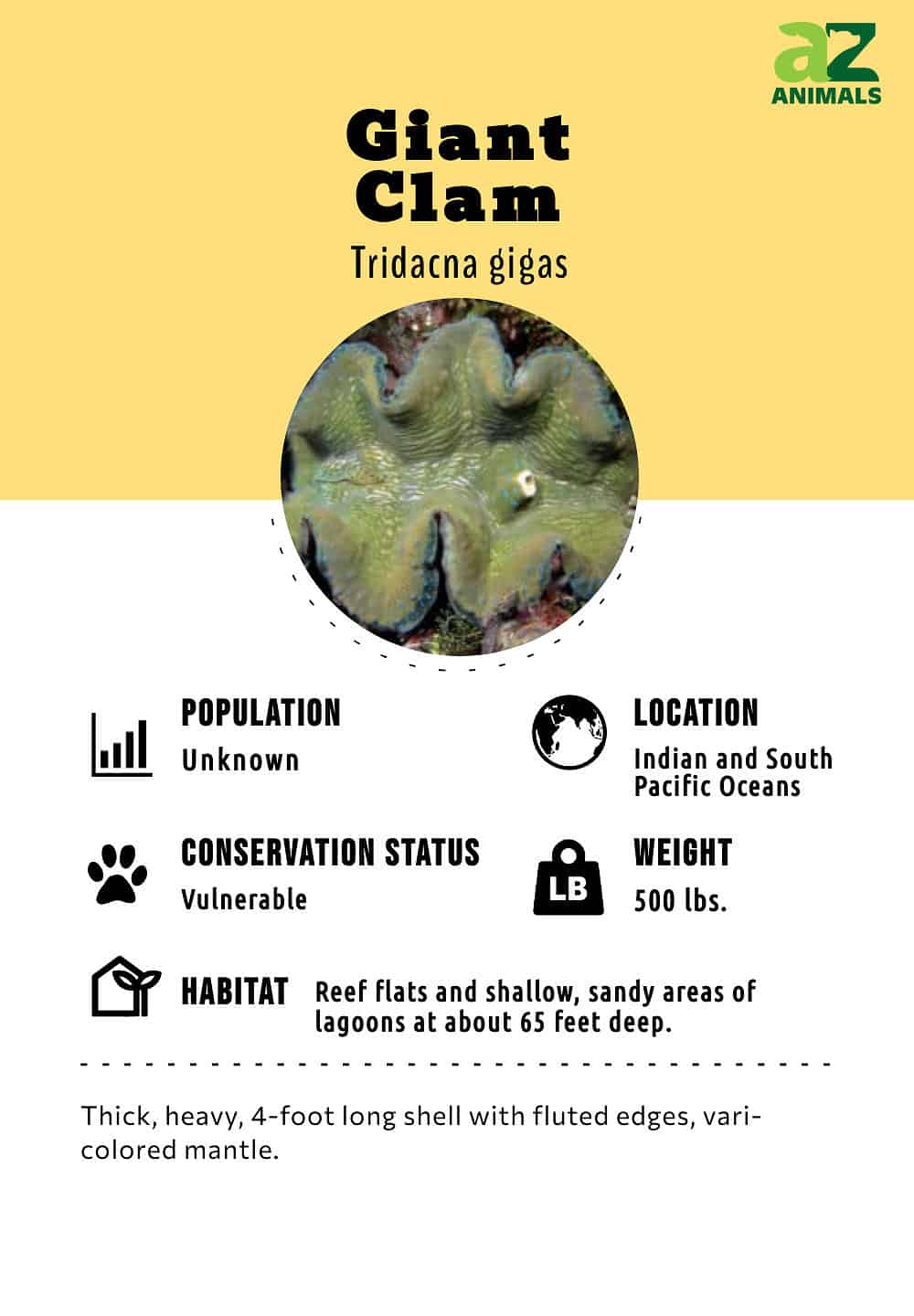
Giant clams grow to be about 4 feet in length. They live in the Indian and South Pacific Oceans. The exposed mantle, or soft tissue, of a giant clam features a combination of colors and patterns that can include yellow, green, iridescent blue, and purple. This species of clam is an omnivore eating tiny marine plants as well as animals in the form of zooplankton. The lifespan of this mollusk goes all the way up to 100 years or more!

4 Incredible Facts!

  • After attaching itself to a coral reef, this mollusk stays there for the rest of its life.
  • The bright colors in this clam’s mantle are caused by the algae in its system.
  • There is a legend claiming that these clams eat humans, but this is not true.
  • Many clams of this species live on the Great Barrier Reef off the coast of Australia.

Scientific Name
The scientific name of this clam is Tridacna gigas. The word Tridacna comes from the Greek word tridaknos meaning oyster, and the Latin word gigas means giant.

It belongs to the Phylum Mollusk, the Class Bivalve, the Order Cardiida and the Family Cardiidae, subfamily Tridacninae. There are two genera (Hippopus and Tridacna) with twelve known species living in tropical marine waters. Of these, several species are endangered.

One of the other, smaller “giant” clams is the southern giant clam. Its scientific name is Tridacna derasa. Although it has a similar appearance to the Tridacna gigas, the southern giant clam measures just 2 feet in length, so the Tridacna gigas is definitely the owner of the name “giant.”

Bivalve relatives include mussels, scallops, and oysters. The ancestors of bivalves are brachipods. They were the first clam-like species, nearly 252 million years ago. They evolved into clams in what was once the Tethys Sea back when Europe was under water 50 million years ago. Those long-ago, shallow and warm waters are now the Mediterranean Basin. Theory has it that big clams were a critical food source for pre-historic humans before they came out of Africa.

Appearance & Behavior
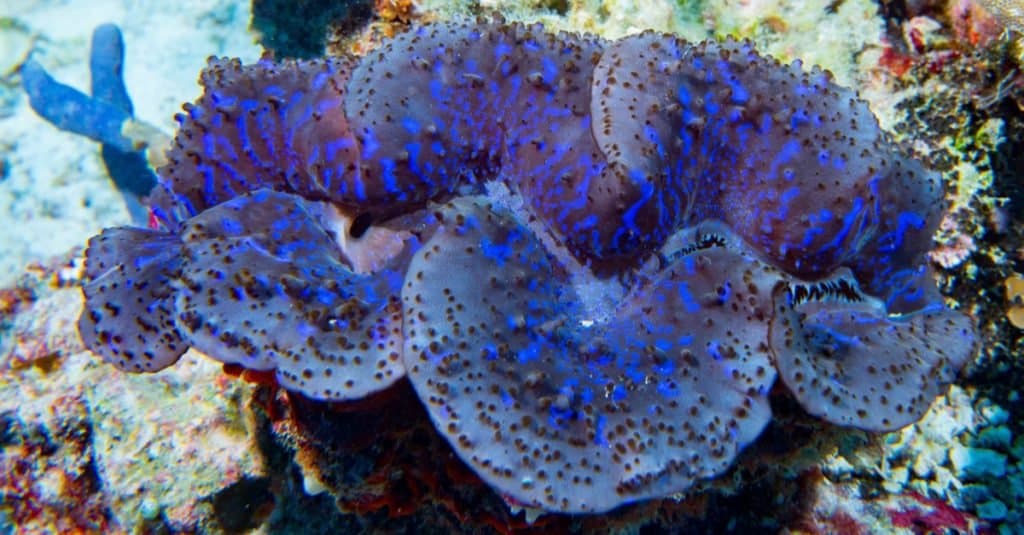
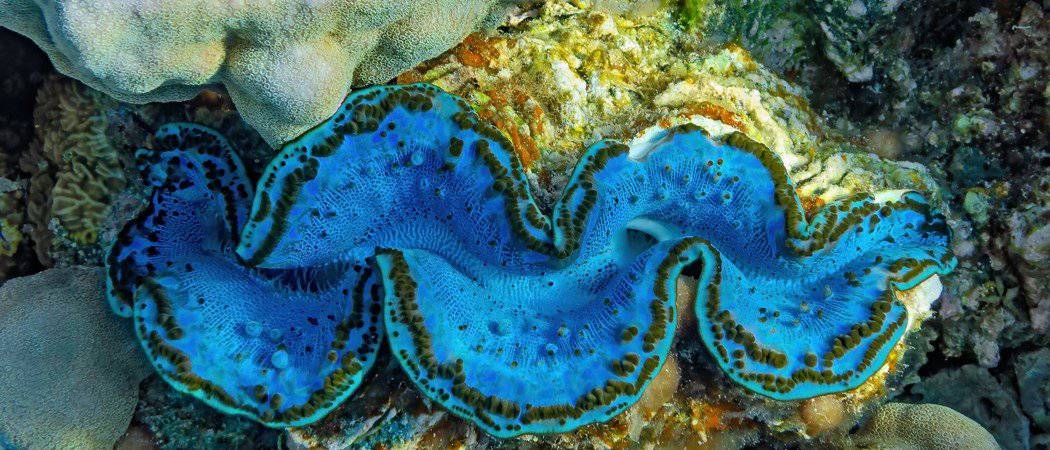
Blue color giant Tridacna clam underwater

The soft tissue mantle of the giant clam accounts for only 10% of its body weight; the rest is all shell!

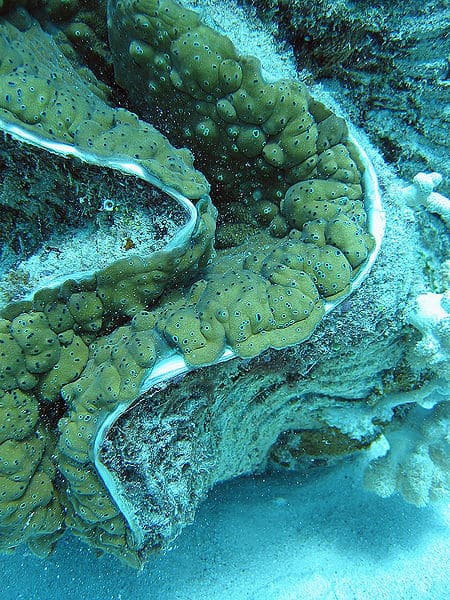
These clams have a thick, heavy shell with fluted edges that protects the mantle, or soft tissue, inside it. Its mantle, which accounts for only about 10 percent of its body weight, is colorful, displaying patterns of brown, iridescent blue, green, yellow, and purple. The algae stored in this clam’s body is what makes its mantle so colorful. An adult clam’s mantle has pale spots on it known as windows.

The size of these clams ranges from 4 feet to 4.5 feet in length. They weigh around 500 pounds. Picture 3 bowling pins lined up end to end and you have the length of a 4-foot giant clam. A 500-pound giant clam is equal in weight to half of a horse. The heaviest giant clam on record is 550 pounds!

The sheer size of an adult giant clam, as well as its thick shell, serves as excellent protection against most predators. Furthermore, this clam can close its shell most of the way to protect itself from threats. An adult clam isn’t able to snap its shell closed.

Habitat

These clams live in warm water habitats. Specifically, they are found in the South Pacific and Indian Oceans. They live off the northern coast of Australia, as well as near the Nicobar Islands and Fiji. The Great Barrier Reef near Australia is home to many of these clams. They live in reef flats as well as in shallow, sandy areas of lagoons.

They are usually found at a depth of around 65 feet. In an ocean, a depth of 65 feet is not very deep! Living in shallow areas allows these clams access to filtered sunlight.

Diet
These clams are omnivores. However, since they are attached to a coral reef, they can’t hunt for food. Luckily, the food comes to them! These mollusks have a siphoning system that takes in tiny prey, such as phytoplankton and zooplankton, that floats by. This siphoning system is similar to the filtering system in a backyard swimming pool.

Also, the clam gets nutrients, including sugar and protein, from the billions of particles of algae stored in its tissue. This is what is called a mutually beneficial relationship. The algae enjoy the protection of living in the clam’s body tissue while the clam receives essential nutrients in return. Further, these clams open their shell during the daylight hours to allow sunlight to filter in through the clear spots, or windows, in its mantle; thus the sunlight plays a part in the photosynthesis that feeds the algae.

Predators and Threats

It may seem like the sheer size of this clam would keep all threats away. Nonetheless, this mollusk does have some predators. Reef fish, eels, and starfish eat the meat of the clam. When one of these predators takes a bite, it doesn’t kill the giant clam. However, it does cause injury.

Humans are another threat to this clam. People harvest them for their meat and shells. Specifically, the adductor muscle of a giant clam is considered one of the most delicious parts of this sea creature. They are especially popular in Japan, France, and throughout southeast Asia.

The larvae of these clams are eaten by fish, octopuses, and crabs. These larvae are so small that thousands of them could be eaten by one large fish. This is the main reason why a giant clam releases so many eggs; it increases the chances that some of them will survive to adulthood.

Water pollution is another threat to these clams. Pollution can affect their rate of reproduction.

Reproduction, Babies and Lifespan
Each giant clam has both sperm and eggs; that is, it is hermaphroditic. It reproduces by releasing both sperm and eggs into the open water. One giant clam can release 500 million eggs at one time! Eggs are fertilized by the sperm released by another giant clam. This is called broadcast spawning, and it may be coordinated with the phases of the moon.

The fertilized eggs hatch into larvae. Giant clam larvae circulate in the water looking for plankton and other tiny particles of food until they grow large enough to settle into one place near or on a coral reef.

A developing giant clam goes through many stages. It starts out as an egg and hatches into larvae. After that, it develops into a veliger, a pediveliger, a juvenile, and an adult. Although it takes years for a giant clam to achieve adult weight and size, it has a lifespan of up to 100 years. So, it has plenty of time to grow into a 4-foot, 500-pound grown-up!

Population and Conservation Status

According to the IUCN Red List of Threatened Species, the population of these clams is listed as unspecified. It’s threatened by humans and water pollution. The conservation status of this clam is Vulnerable.

View all 261 animals that start with G

Sources

  1. Wikipedia / Accessed February 28, 2021
  2. NOAA Fisheries / Accessed February 28, 2021
  3. Seattle Acquarium / Accessed February 28, 2021
Thank you for reading! Have some feedback for us?


Giant Clam FAQs (Frequently Asked Questions)

Giant Clams are Omnivores, meaning they eat both plants and other animals.