N S W E
Wildlife Expeditions

Wildlife of
Fiji

Fiji is notable for wildlife lovers for its dazzling coral reefs and lagoon life-manta rays, reef sharks, and technicolor fish-paired with lush island forests that shelter rare endemic birds and reptiles found nowhere else on Earth.
97 Species
18,274 km² Land Area
Overview

About Fiji

Fiji's wildlife character is defined by an intimate blend of ocean and rainforest: vibrant reefs fringe many of its 300+ islands, while the larger high islands (notably Viti Levu and Vanua Levu) hold pockets of tropical forest, rivers, and cloud-tinged uplands. This island isolation has produced distinctive endemic species-especially birds and reptiles-making Fiji a rewarding destination for travelers who love both snorkeling/diving and forest birding. While Fiji doesn't have large terrestrial mammals, its "big wildlife moments" often happen underwater, where biodiversity and visibility can be exceptional.

Key ecosystems include coral reefs, lagoons, seagrass beds, and mangroves that function as nurseries for fish and invertebrates and as feeding grounds for turtles; offshore passages and reef edges can deliver pelagic surprises like sharks, rays, and seasonal whales. On land, remaining native forests support endemics and are important for watershed health, while smaller outer islands can act as refuges for species vulnerable to invasive predators. As part of the wider Pacific, Fiji plays a meaningful global conservation role by safeguarding reef systems threatened by climate change, supporting locally managed marine areas, and contributing to regional efforts that combine traditional stewardship with modern science.

What makes the wildlife experience unique here is its accessibility and variety: you can go from a dawn chorus in forest reserves to world-class reef encounters the same day, often guided by community-led initiatives that tie wildlife viewing to local livelihoods. Fiji's living reefs, cultural connection to the sea, and concentrated endemism offer a distinctly Pacific wildlife story-one where conservation, community, and the ocean are inseparable.

Physical Features

Geography

Fiji's wildlife is shaped by its highly fragmented island geography: volcanic high islands (especially Viti Levu and Vanua Levu) create strong rainfall and elevation gradients that drive distinct forest types and localized endemism, while low islands, mangroves, and extensive reef-lagoon systems support globally significant marine biodiversity. Mountain ridges and deep river valleys isolate populations and concentrate remaining native forest, whereas leeward (drier) coasts and smaller islands favor dry forest, grassland/savanna mosaics, and coastal strand habitats. Surrounding coral reefs, seagrass beds, and mangroves form interconnected coastal nurseries that strongly influence fish, sea turtle, seabird, and invertebrate distributions.

18,274 km² Land Area
~156th largest country; about the size of Kuwait Size Rank

Key Landscapes

  • Volcanic high islands with rugged mountain interiors (Fiji's two largest islands), creating altitudinal habitat zonation and refuges for endemic forest species
  • Montane cloud-forest ridges and peaks in the Viti Levu highlands (including Mount Tomanivi, the country's highest mountain) with cooler, wetter conditions and high endemism
  • Deep river basins and floodplains-especially on Viti Levu (Rewa River) and major catchments like the Sigatoka-supporting riparian forests, wetlands, and freshwater fauna
  • Windward-leeward climate split: wetter southeast slopes vs drier western/northern lowlands, driving moist-forest vs dry-forest/grassland distributions
  • Coastal mangrove belts, estuaries, and mudflats that act as nurseries for fish and crustaceans and as habitat for coastal birds
  • Fringing reefs, barrier reefs, and lagoon systems (notably the Great Sea Reef) supporting reef fish, corals, and invertebrate diversity
  • Seagrass beds and sheltered bays that provide feeding grounds for turtles and habitat for juvenile fish
  • Limestone and coral islands (e.g., parts of Lau and small offshore islands) with thin soils, caves, and specialized coastal/karst vegetation important for seabirds and reptiles
  • Offshore islets and cliffed coasts used as seabird breeding sites, often key for biosecurity and predator-free refuges

Ecoregions

  • Fijian tropical moist forests (WWF)
  • Fijian tropical dry forests (WWF)
  • Fiji mangroves (WWF)
  • Fiji Islands (Marine Ecoregions of the World; Central Indo-Pacific realm)
Parks & Reserves

Protected Areas

Fiji's protected area system is a mix of legally established sites and strong community-led conservation. Formally designated areas include National Parks (notably managed through the National Trust of Fiji), forest/nature reserves, and a growing set of declared conservation areas. In practice, some of Fiji's most important biodiversity protection occurs through customary land/sea tenure and community management-especially Locally Managed Marine Areas (LMMAs) that regulate fishing and reef use-so the country's effective conservation footprint is often larger than what is "gazetted" on paper. Fiji's priorities are split between endemic-rich tropical forests (home to unique birds, frogs, and iguanas) and globally important coral reef ecosystems supporting sharks, turtles, and high coral diversity.

Protected Coverage

Approximate land under formal (gazetted/legal) protection: ~5-7% of Fiji's land area. (Marine protection is more extensive in practice through community LMMAs and district-level closures, but coverage varies by definition and how strictly 'formal' protection is counted.)

Notable Parks & Reserves

Sovi Basin Protected Area (Viti Levu)

Protected Area / Community Conservation Area (terrestrial)

Often cited as Fiji's largest contiguous tract of lowland-to-montane rainforest, crucial for watershed protection and as a stronghold for endemic forest birds and native frogs. Its remoteness and intact canopy make it one of the highest-value terrestrial conservation landscapes in the country.

Collared lory
Giant forest honeyeater
Fiji goshawk
Fiji tree frog
Fiji ground frog
Pacific boa

Bouma National Heritage Park (Taveuni)

National Heritage Park

A flagship rainforest reserve on Taveuni with excellent opportunities for birdwatching and protection of moist forest habitats. The island's forests support some of Fiji's most sought-after endemic birds and are important for maintaining intact headwater ecosystems.

Orange dove
Silktail
Collared lory
Fiji goshawk
Many-colored fruit dove
Pacific boa

Namena Marine Reserve (Kubulau District, Vanua Levu)

Marine Reserve / Locally Managed Marine Area (no-take core areas)

One of Fiji's premier no-take reef reserves, noted for exceptionally high coral diversity and reliable encounters with large reef fish and sharks. It is a regional conservation cornerstone and a leading wildlife-viewing/dive site.

Grey reef shark
Grey reef shark
Whitetip reef shark
Green sea turtle
Hawksbill turtle
Giant clams
Manta ray
Manta ray

Vatu-i-Ra Seascape (between Viti Levu and Vanua Levu)

Seascape Conservation Initiative / Network of community-managed marine protected areas

A high-biodiversity seascape linking reefs, channels, and island habitats, important for connectivity and migratory marine life. Conservation here focuses on protecting reef resilience and fish spawning/aggregation areas across multiple community-managed sites.

Manta ray
Manta ray
Humpback whale (seasonal)
Green sea turtle
Hawksbill turtle
Reef sharks
Bumphead parrotfish

Yadua Taba Crested Iguana Sanctuary (Yasawa Group)

Wildlife Sanctuary / Island Nature Reserve (species-focused)

Fiji's most famous stronghold for the endemic Fiji crested iguana, protected on an island sanctuary with strict controls to prevent invasive predators. It is one of the most important reptile conservation sites in the Pacific islands.

Fiji crested iguana
Fiji banded iguana
Pacific boa
Fiji bush skink
Collared lory

Sigatoka Sand Dunes National Park (Viti Levu)

National Park

A distinctive coastal dune ecosystem protecting rare native coastal vegetation and serving as habitat for a variety of resident and migratory shorebirds. It is also important for conserving fragile dune dynamics in a rapidly developing coastline.

Pacific golden plover
Whimbrel
Whimbrel
Wandering tattler
Pacific reef heron
Collared kingfisher

Upper Navua Conservation Area (Viti Levu)

Conservation Area (often cited in Fiji's wetland/river conservation priorities)

A rainforest river corridor protecting riparian forest, waterfalls, and freshwater biodiversity, with strong benefits for endemic birds and native amphibians. It is also valued for maintaining water quality and intact river-to-reef ecological processes.

Giant forest honeyeater
Collared lory
Fiji goshawk
Fiji tree frog
Fiji ground frog
Animals

Wildlife

Fiji's wildlife diversity is defined less by large terrestrial mammals and more by its island endemism and world-class marine ecosystems. Across more than 300 islands, habitats range from lowland and montane tropical rainforests to mangroves, freshwater streams, seagrass beds, and extensive coral reefs (including the Great Sea Reef). The terrestrial fauna features many endemic or near-endemic birds and reptiles shaped by long isolation, while the reefs support high fish diversity, sea turtles, sharks and rays, and seasonal marine megafauna. For most visitors, the "signature" wildlife experiences are reef snorkeling/diving, seabird and forest birdwatching, and seeing island reptiles and fruit bats in forested areas.

~20-30 terrestrial mammals (mostly bats plus introduced species); marine mammals present seasonally (several dolphins; humpback whales) Mammals
~160-200 species recorded (including many island endemics/near-endemics) Birds
~30-50 species (geckos, skinks, snakes; several endemics/near-endemics) Reptiles
~2-4 native frogs (low diversity; some island endemics) Amphibians

Iconic Species

Fiji Banded Iguana One of Fiji's most emblematic terrestrial reptiles-bright green with distinctive banding and strongly associated with coastal forests and smaller islands. Sought by visitors as a flagship for Fiji's unique island wildlife and conservation.
Fiji Crested Iguana Critically important and highly localized, this iguana is a conservation icon for Fiji's dry forest remnants. Where present, it represents one of the most sought-after "special finds" for naturalists.
Collared Lory A brilliantly colored native parrot often encountered in forested areas and around flowering trees; it is one of the most recognizable birds for visitors and a strong symbol of Fiji's forest biodiversity.
Fiji Goshawk A distinctive native raptor and one of the top birds for Fiji birding. It's notable as a prominent island predator in Fiji's forest ecosystems and can sometimes be seen perched along forest edges.
Fiji Petrel One of the rarest seabirds in the world and a legendary target for dedicated birders. Sightings are extremely difficult, but its presence underlines Fiji's global importance for Pacific seabird conservation.
Humpback Whale
Humpback Whale Seasonally present in Fijian waters during the South Pacific winter; whales migrate through or breed in the region. Whale watching (where permitted and well-managed) is a marquee wildlife experience.
Green Sea Turtle A cornerstone of Fiji's reef and lagoon wildlife, commonly encountered while snorkeling/diving in seagrass and reef habitats. Fiji is regionally important for sea turtle conservation and nesting protection.
Hawksbill Sea Turtle Highly valued for reef encounters; hawksbills are strongly linked to coral reef health and are a key focus of conservation efforts across the Pacific, including Fiji.
Giant Manta Ray A bucket-list species for divers; mantas use productive reef channels and cleaning stations where protection and responsible tourism can support conservation outcomes.
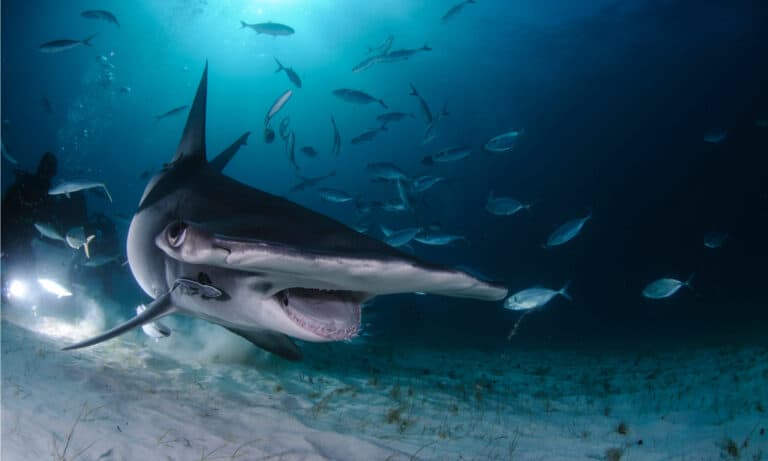
Scalloped Hammerhead A headline shark species for Fiji diving, particularly around reef drop-offs and channels. Its presence highlights Fiji's role in protecting shark diversity in the South Pacific.

Endemic Species

Fiji Crested Iguana Endemic to Fiji and strongly tied to intact dry forest; a flagship for habitat protection and invasive predator control on key islands. Endemic
Fiji Banded Iguana Endemic to Fiji (Fiji iguanas are unique in the Pacific); notable for its restricted island distributions and vulnerability to habitat loss and invasive species. Endemic
Red-throated Lorikeet A small, striking lorikeet endemic to Fiji; increasingly scarce and a priority species for forest conservation. Endemic
Fiji Shrikebill An endemic forest passerine best found in native woodland; valued by birders as a classic Fiji specialty. Endemic
Pink-billed Parrotfinch A scarce endemic finch of native forests, notable for its limited range and sensitivity to habitat change. Endemic
Fiji Bush Warbler Endemic songbird associated with dense vegetation; a representative of Fiji's unique island bird assemblages. Endemic
Fiji Tree Frog A native (and locally endemic) frog illustrating Fiji's low but distinctive amphibian diversity; generally associated with moist forest and streamside habitats. Endemic
Rotuma Myzomela Near-endemic within Fiji's territory (Rotuma); a localized honey-eater that highlights how outer islands can harbor unique bird lineages. Endemic

Notable Populations

  • One of the world's most important strongholds for the genus Brachylophus (Fiji's iguanas), found nowhere else naturally and central to Pacific island reptile conservation.
  • Regionally significant South Pacific habitats for sea turtles (Chelonia mydas and Eretmochelys imbricata), with feeding and (in some areas) nesting sites tied to mangroves, seagrass, and coral reefs.
  • Seasonal presence of humpback whales in Fijian waters contributes to the broader South Pacific breeding/migration system, supporting whale-focused ecotourism when well-managed.
  • The Great Sea Reef and other reef systems underpin Fiji's globally recognized marine biodiversity, including diverse reef fish communities and high-value shark and ray assemblages that define the dive-wildlife experience.
Protection

Conservation

Primary Threats

  • Rising sea temperatures drive coral bleaching and reduce reef recovery; ocean acidification impairs coral growth; sea-level rise intensifies coastal erosion and salinizes low-lying farms and freshwater lenses on smaller islands; stronger cyclones (e.g., severe tropical cyclones) damage reefs, mangroves, and forests and create repeated recovery setbacks.
  • High dependence on coastal fisheries leads to heavy pressure on reef fish and invertebrates (e.g., sea cucumbers, including the dried sea cucumber product, and other invertebrate gleaning). Fishing close to shore and around population centers can deplete spawning biomass and alter reef food webs, undermining both biodiversity and local food security.
  • Introduced predators and competitors on islands (notably rats, feral cats, and invasive ants) threaten endemic birds, reptiles (including iguanas), and invertebrates through predation and nest failure. Invasive plants can also alter native forest structure, especially in disturbed lowland areas.
  • Conversion and fragmentation of lowland forests for agriculture, settlements, and plantations reduces native habitat and connectivity, affecting endemic forest species. Coastal development and land reclamation can remove mangroves and disturb turtle nesting and shorebird habitat.
  • Selective logging and forest degradation in some catchments increase sediment runoff into rivers and onto reefs, smothering corals and seagrass. Road access associated with logging can open previously intact areas to further land clearing and invasive species spread.
  • Sedimentation from poor land management, road works, and catchment erosion reduces water clarity and harms reefs; sewage and nutrient runoff near towns and resort areas can cause localized eutrophication and algal growth; plastics and marine debris accumulate on shorelines and reefs.
  • Alterations to rivers and coastal systems-such as drainage changes, shoreline hardening, and mangrove clearing-reduce natural coastal protection and nursery habitats. Changes in watershed hydrology can increase peak flows and sediment pulses after heavy rains.
  • Expansion or intensification of farming (including in floodplains and on steep slopes) increases erosion and agrochemical runoff, affecting freshwater quality and downstream reefs; clearing for pasture and crops can reduce remaining native lowland forest.
  • Roads, ports, and tourism infrastructure can fragment habitats and increase erosion during construction. Coastal infrastructure can encroach on mangroves and beaches, while improved access can increase pressure on remote reefs and forests.
  • Growth around Suva and other towns increases wastewater loads and solid waste challenges, contributing to coastal water quality problems and pressure on nearby reefs, mangroves, and urban-adjacent forests.
  • Where mineral extraction occurs, it can contribute to localized deforestation, tailings/sediment issues, and freshwater impacts that cascade to coastal ecosystems, particularly in sensitive island catchments.
  • Collection and trade pressures can affect high-value or charismatic native species (including some reptiles and birds) and marine ornamentals if not well managed, with risks amplified by Fiji's role as a transport hub in the Pacific.
  • Tourism and recreation can damage reefs (anchor damage, trampling, wildlife disturbance) and increase pressure on sensitive sites; unmanaged visitation to nesting or roosting areas can disrupt breeding of seabirds and coastal species.
Visit

Wildlife Tourism

Fiji's wildlife tourism is overwhelmingly marine-led: coral reefs, manta rays, sharks, turtles, dolphins, and seasonal whales are the headline draw, complemented by rainforest and island-endemic birds and reptiles. Economically, nature-based activities (diving, snorkeling, marine tours, island hikes) are a core pillar of the visitor experience and support many local operators, guides, and community-run marine protected areas (MPAs). Fiji has a long history of customary marine tenure and community stewardship that has evolved into modern conservation tools such as locally managed marine areas with temporary no-take (closed) zones that help replenish fish and reef health while creating standout visitor sites. Accessibility is strong for an island nation: international flights arrive into Nadi (Viti Levu) with easy onward connections to the Mamanuca and Yasawa islands by boat, and domestic flights to hubs like Taveuni and Vanua Levu. Most wildlife experiences are day trips or short transfers from resorts, making Fiji practical for both first-time and experienced wildlife travelers.

Best Time to Visit


- Jul-Oct: Peak whale season (humpbacks) in Fijian waters; best chance for dedicated whale-watching trips (often based out of island groups with experienced operators). Also prime for clear-water diving/snorkeling and large pelagics.
- May-Oct (dry season): Best overall visibility and sea conditions for reef wildlife-manta rays at cleaning stations (site-dependent), shark dives, and vibrant coral viewing; comfortable temperatures for rainforest walks and birding.
- Nov-Apr (wet/cyclone season): Lush forests and strong breeding activity for some birds and frogs; warm water and great snorkeling on calmer days, but heavier rain and potential cyclones can disrupt plans.
- Year-round highlights: Reef fish diversity and coral gardens; green and hawksbill turtles can be encountered throughout the year (nesting/peak activity varies by beach and year).

Top Wildlife Experiences

  • Snorkel or dive a community-managed no-take (closed) reef area with a local guide, learning how customary stewardship supports reef recovery while you look for giant clams, reef sharks, and dense schools of fish.
  • Join a responsible manta ray trip to a known cleaning/aggregation area (conditions and timing are site-specific), focusing on in-water etiquette and minimizing disturbance.
  • Do a dedicated shark dive with a reputable operator (often using controlled baiting protocols), aiming to see bull sharks and other reef species while learning about shark conservation in Fiji.
  • Take a humpback whale-watching excursion in peak season (Jul-Oct) with a marine-naturalist style briefing; prioritize operators with strong approach-distance and time-in-zone practices.
  • Kayak or stand-up paddle over shallow lagoon habitats at high tide to spot rays, juvenile reef fish, sea cucumbers, and seagrass-associated life without engine noise.
  • Night snorkel in a sheltered lagoon (conditions permitting) to see nocturnal reef behavior-octopus, hunting trevallies, sleeping parrotfish in mucus cocoons, and bioluminescence.
  • Hike a rainforest trail on Taveuni or Viti Levu with a birding-focused guide to look for Fiji's endemic and near-endemic birds (e.g., fruit-doves, parrots, and honeyeaters) and learn native plant uses.
  • Visit an iguana conservation facility/sanctuary experience (where available) to see Fiji's iguanas and understand island biosecurity and invasive-species threats.
  • Take a small-boat trip to outer reef walls and pinnacles for big-fish encounters (tunas, jacks, reef sharks) and dramatic coral formations-best paired with advanced snorkeling/diving skills.
  • Plan a turtle-focused snorkel or reef survey-style outing with a conservation group or community partner when available, contributing observations (citizen science) to local monitoring.

Safari Types Available

  • Boat-based wildlife safaris (reef cruises, dolphin/whale trips, outer-reef excursions)
  • Snorkeling safaris (guided lagoon and reef snorkeling, including night snorkels)
  • Scuba diving safaris (day trips, liveaboard-style itineraries where available, shark and pelagic-focused dives)
  • Kayak/SUP wildlife tours (lagoon and mangrove-edge paddles)
  • Walking safaris / guided nature hikes (rainforest and coastal trails, birding walks)
  • Community-led conservation experiences (no-take area visits, reef monitoring, local marine management briefings)
  • Wildlife photography outings (underwater and topside, often combined with boat or hike logistics)
Fun Facts

Did You Know?

Fiji has no native land mammals except bats; pigs, dogs, cats, rats, and even the mongoose were all introduced-so many "forest mammals" people expect on tropical islands simply never evolved there.

Several of Fiji's native frogs (Platymantis spp.) skip the tadpole stage entirely: they lay eggs on land that hatch into tiny, fully formed froglets-no standing freshwater needed for a larval phase.

Those famously "American" iguanas in Fiji are real: genetic studies indicate Fiji's Brachylophus iguanas are closest to New World iguanas, implying an extraordinary long-distance colonization event (often explained as rafting across the Pacific millions of years ago).

Some of Fiji's most threatened wildlife persists mainly on small offshore islands because predators like rats and mongooses are absent there-so conservation often focuses on keeping (or making) islands predator-free rather than only protecting large mainland forests.

Great Sea Reef off Vanua Levu is roughly 200 km long and is among the world's largest barrier reef systems.

Fiji is part of the range of the coconut crab (Birgus latro), the world's largest land-living arthropod-adults can reach ~4 kg and span close to a meter leg-to-leg.

Fiji is home to the Fiji petrel (Pseudobulweria macgillivrayi), listed as Critically Endangered and considered one of the world's rarest seabirds, with only a tiny number of confirmed records at sea and from land over the past century.

Fiji's iguanas (genus Brachylophus, e.g., the Fiji crested iguana) are the only iguanas native outside the Americas and nearby Caribbean-making Fiji one of the most geographically "out-of-place" spots on Earth to find an iguana lineage.

The Fiji Islands are as close as an island oasis as it gets. Swaying hammocks, coconut trees, vibrant culture, and fascinating villages and people. Fiji rests in the South Pacific. Over 330 islands make up Fiji. On its borders are New Caledonia, Vanuatu, Tonga, Samoa, and New Zealand.

Fiji hosts many of the world’s most preserved rainforests. And, of course, there are the jungle and wild animals that start where the bright beaches end. There are over 160 species of unique animals. Many of those are specific to Fiji and found nowhere else in the world.

The Official National Animal of Fiji
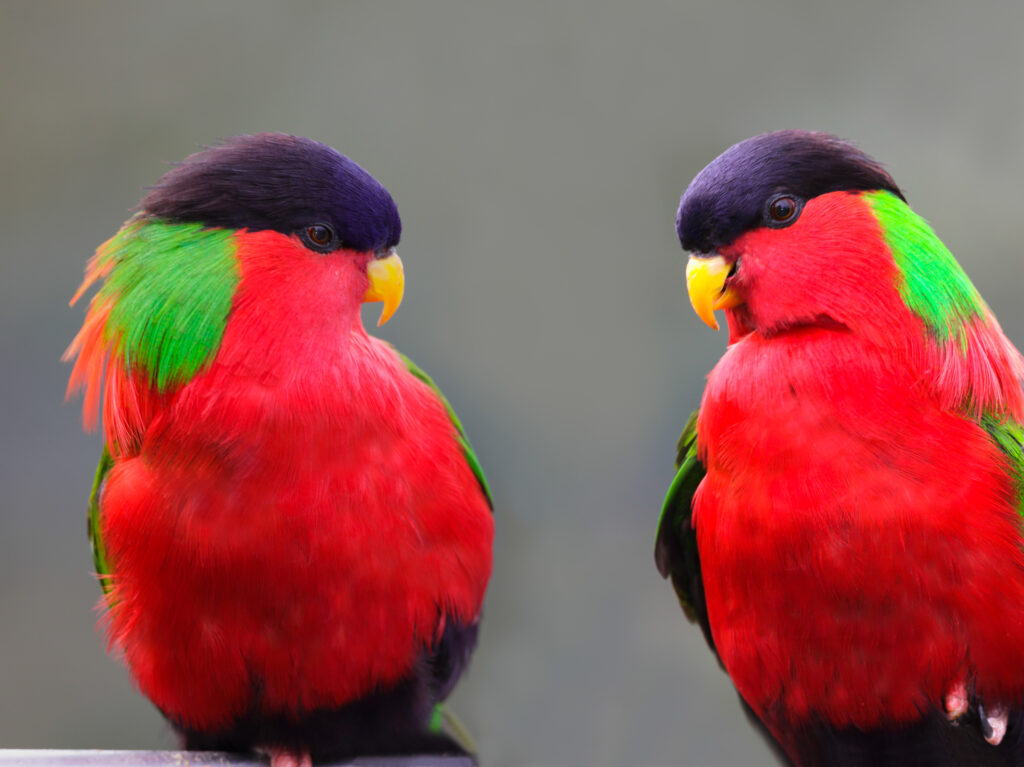
Collared Lory of Fiji

The collared Lory is the national bird of Fiji

Fiji’s national animal is the Collared Lory. This is a beautifully colored parrot that’s endemic to the islands of Fiji.

The national animals are easily recognized by their brilliant reds, lime greens, purples, orange-yellow bill, dim purple crown, and (wait for it!) pink-orange feet.

Spotted on rare occasions in cultivated fields, the exotic bird prefers tropical or subtropical moist wooded lowland areas. The Collared Lory usually makes its home in deeply forested Fiji regions, surrounded by flowering trees. But bird watchers will also find them flying over gardens with coconut palms or see them on plantations and the tree-lined streets of Suava.

In the coconut palms, you’ll spot the Collared Lory performing fluttering hops, alighting out of the fronds to descend through the stalks. These are energized wild animals, always moving, flying branch to branch or flower to flower. Its rapid wingbeats fill the air with a whirring noise.

The bird feeds on fruits, seeds, blossoms, nectar, and caterpillars. The animals eat upside down.

Where to Find the Top Wild Animals in Fiji
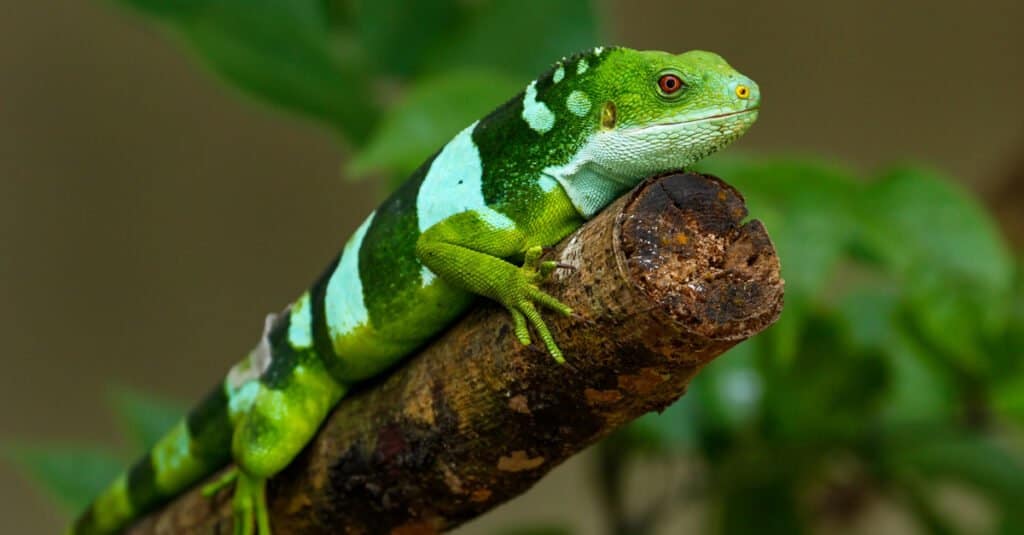
Most colorful iguanas - Fiji Banded Iguana

You might get a chance to see the Fiji Iguana at one of the many wildlife parks and nature trails in Fiji.

Fiji is a beautiful tropical island located in the South Pacific Ocean. It’s home to many unique species of animals, and there are plenty of opportunities for nature lovers to get up close and personal with them.

The most popular places to watch wildlife or see wild animals in Fiji include Kula Eco Park, Colo-i-Suva Forest Reserve, Vatuvara Private Islands, Bouma National Heritage Park, Taveuni Island Nature Trail, Kadavu Island Marine Reserve, and Koroyanitu National Heritage Park.

All these locations offer amazing experiences where visitors can observe some of Fiji’s native flora and fauna, as well as exotic birds like parrots or hornbills. Visitors should also make sure to take part in activities such as kayaking through mangrove forests or diving along coral reefs, which are great ways to spot wildlife without disturbing their natural habitats!

Fiji boasts a broad range of unique animals out there in the wild. Here are some of the wildlife you can expect to come across on the Fiji Islands.

  • Turtles – There are five species of turtles to enjoy here. You can find them almost anywhere but especially if you take a tour.
  • Fijian Monkey-Faced Flying Fox – One of the many unique animals you’ll find on the islands, this animal is on the list of potentially extinct animals. The only spot where you’ll find the Fijian Monkey-Faced Flying Fox is in the mountains of Taveuni Island.
  • Mongoose – You can find various types of land animals along the coasts of Fiji, including the mongoose, wildlife introduced to the islands to manage the rodent population.
  • Bolo Snake – You’ll find the bolo snake on Viti Levu Island. But don’t get too close. These exotic reptiles are dangerous animals.
  • Woodswallow – Cut out the Lau and Kadavu Islands, and you’ll find the wood swallow almost anywhere in Fiji. Bird lovers get a real kick out of these beautiful animals.

The Most Dangerous Animals in Fiji Today
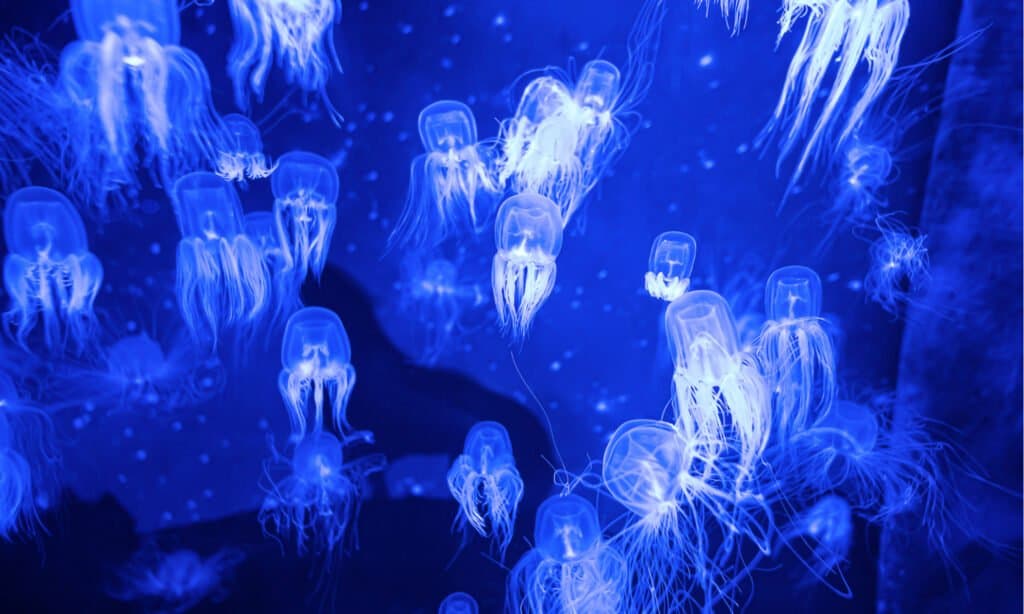
Deadliest Jellyfish - Box Jellyfish

The box jellyfish is one of the most dangerous animals in Fiji.

Fiji is home to a variety of fascinating creatures, all unique in their own way. However, some of these animals are more dangerous than others. The islands boast a wide array of predators and venomous creatures that could cause harm if encountered.

Among the most dangerous animals in Fiji include crocodiles, sharks, sea snakes, stonefish, jellyfish, and cone snails – all capable of delivering painful stings or bites that can be fatal. While they may not always be visible due to their nature as aquatic species or nocturnal hunters, it’s important to keep an eye out for them when exploring the waters around Fiji and take necessary precautions, such as wearing protective gear when swimming or boating in areas known for having high populations of these creatures.

It’s often amazing to think how some animals can be flat-out dangerous. The haven of beauty that is the Fiji Islands is no different. Among its many wonders are threats you want to keep away from.

  • Banded Sea Krait: Noted for its black and white banded skin, the sea krait lives in the waters of Fiju’s lagoons and shores. They’re not aggressive but will bite if provoked. They have a wide bite and venom 20 times more powerful than other land snakes.
  • Lionfish: Along with the Scorpionfish and stonefish, the lionfish has a venom that you want nothing to do with. They inject their poison with dorsal, pointy spikes on their backs. The spikes look frail but easily pierce wetsuits, gloves, and booties. They’re docile but steer clear of them.
  • Saltwater Crocodile: Fijians consider the saltwater crocs the most dangerous animals on the islands. They are extremely aggressive and ready to make you extinct.
  • Box Jellyfish: The box jellyfish takes its 10 feet long tentacles and uses them to detonate up to a half-million explosive cells on your skin. These cells erupt like darts, injecting a potent cocktail that attacks the heart and nervous system.

5 Largest Animals in Fiji
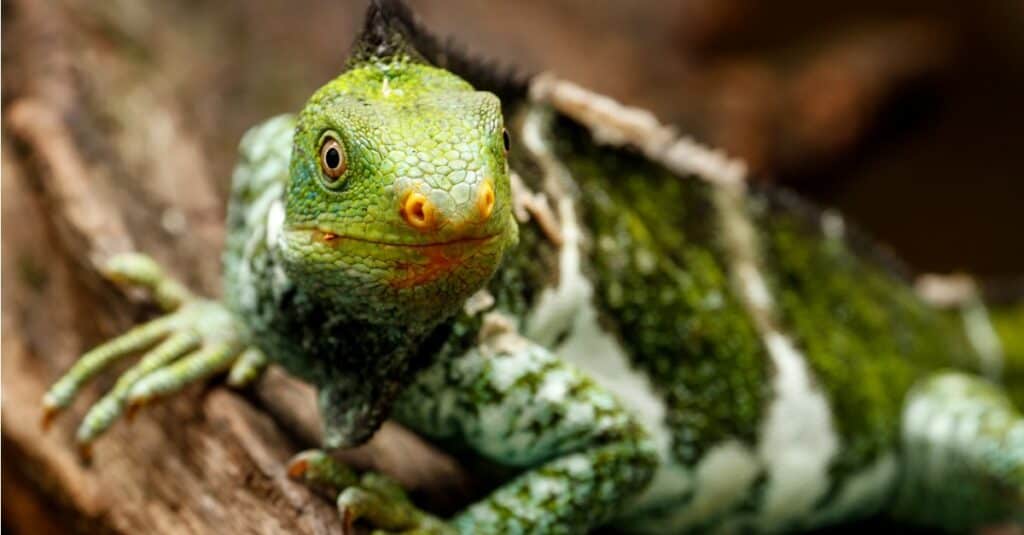
Largest Iguanas - Fiji-Created Iguana

The Fiji crested iguana is one of the larger animals found there.

The largest animals in Fiji are the Fijian crested iguana, the Fiji banded iguana, the Fijian palm civet, the sperm whale, and the saltwater crocodile. The Fijian crested iguana is a critically endangered species of lizard found only on two islands in the Yasawa Group of Islands. It can grow up to 12 inches long and lives among rocky areas and forest margins.

The Fiji banded iguana is also native to these same islands, but it is much smaller at 6-8 inches long. This species prefers living in coastal vegetation near sandy beaches or grassy fields with plenty of rocks to hide under during hot days.

Additionally, there’s the Fijian palm civet which inhabits dry forests throughout all of Fiji’s main islands as well as some offshore island groups like Lau Group and Kadavu Island group. It grows up to 24 inches long and feeds mainly on fruit that falls from trees or eggs taken from ground nests.

Fiji’s stunning marine life and tropical landscapes are home to two remarkable creatures: the giant sperm whale (Physeter macrocephalus) and the saltwater crocodile. Growing up to 60 ft (18 m) and weighing 45 tons, sperm whales possess an extraordinary ability to dive into great depths. Their powerful jaws and formidable teeth make them formidable predators. Encountering them is a once-in-a-lifetime experience, while their gracefulness and haunting songs instill a profound appreciation for marine ecosystems. Saltwater crocodiles, another remarkable creature, thrive in Fiji’s coastal waters and contribute to the nation’s rich biodiversity.

The 3 Rarest Animals in Fiji
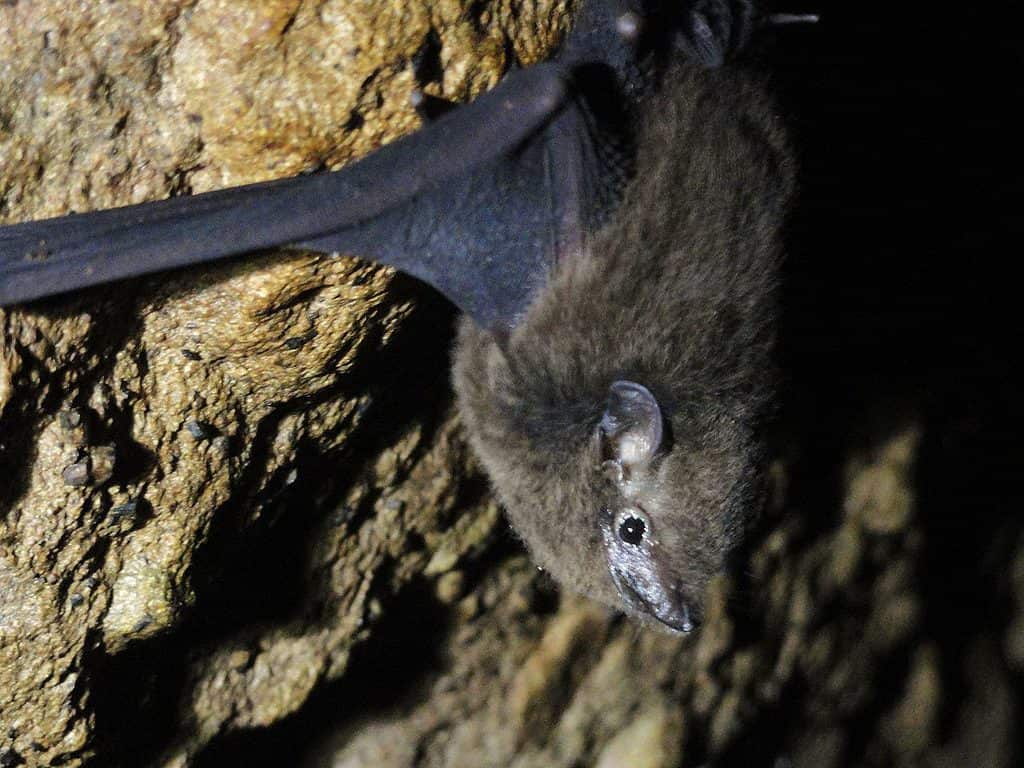
Pacific Sheath-Tailed Bat

The Pacific flying fox is a rare animal to spot in Fiji.

The first rare animal in Fiji is the Fijian Ground Frog. This species of frog can only be found in a few areas on the island and has been listed as ‘Near Threatened’ by IUCN Red List due to loss of habitat. It inhabits lowland forest areas, most commonly near streams or other damp habitats. It is a nocturnal amphibian that typically emerges at night to feed on small invertebrates such as insects, spiders, snails, and worms.

The second rare animal in Fiji is the Banded Iguana (Brachylophus fasciatus). This species of lizard lives mainly on coastal rocky outcrops and islands close to shorelines across Fiji’s northern region. They are mostly active during daylight hours, where they forage for food among vegetation such as leaves, flowers, and fruits but also eat smaller invertebrates such as snails, ants, and moths.

Lastly, we have the Pacific Flying Fox (Pteropus tonganus). This species of large bat can be found throughout much of the South Pacific, including parts of Fiji, where it roosts communally in large colonies located within forests, or mangrove tree stands near water sources. They are primarily fruit-eating animals that rely heavily on their sense of smell when locating ripe fruit trees that may serve as important food resources for them throughout different times of the year.

Endangered Animals in Fiji
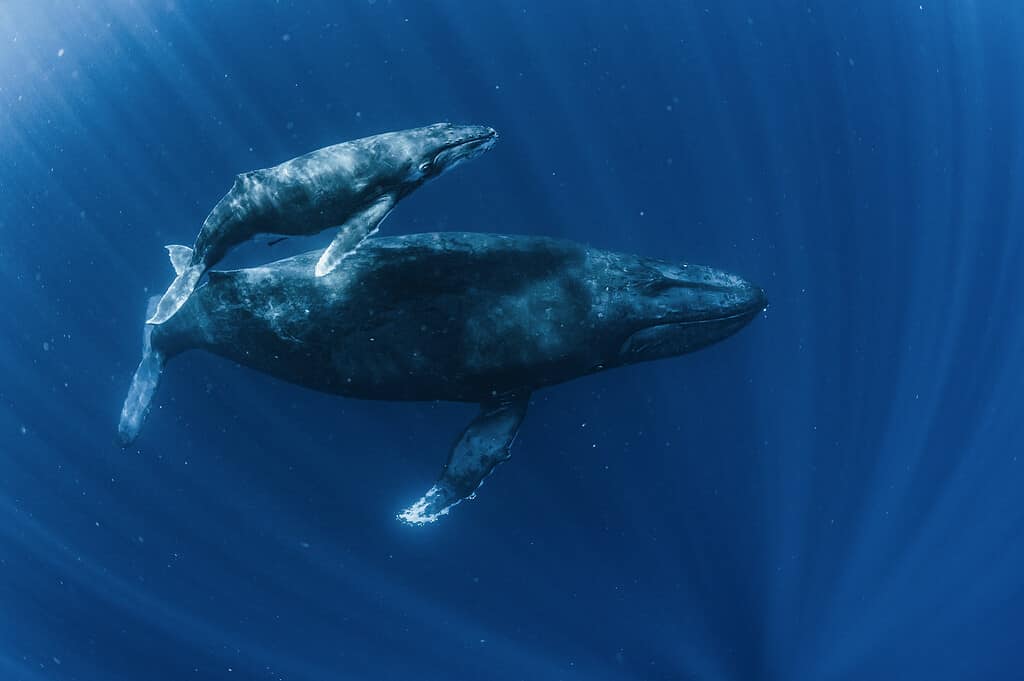
Humpback Whale, Whale, Underwater, Baleen Whale, Underwater Diving

You can see humpback whales swimming off the coast of Fiji.

The reasons why animals are becoming endangered in Fiji are multi-faceted. Some of the main threats to their populations include habitat destruction caused by deforestation and urbanization, overhunting for bushmeat, pollution from human activities, and competition with invasive species. In addition to these direct threats, climate change is having a profound effect on the environment of Fiji’s wildlife. It is exacerbating existing problems as well as creating new ones.

Humans can help preserve endangered animal populations in Fiji by taking steps such as protecting remaining natural habitats from destruction or development, reducing hunting pressure through education and enforcement measures, implementing laws that limit pollution from industry or agriculture, controlling non-native species invasions with proper management practices (e.g., fencing off certain areas), and addressing the causes of climate change through emissions reductions initiatives.

Fiji is home to a range of dangerous animals, unspoiled animals, and unique animals. But the islands also host a range of endangered animals. The possibility of these animals one day being extinct is unfortunate. Here’s a list of species of endangered animals in the Fiji Islands.

Animals Found in Fiji

97 species documented in our encyclopedia

Thank you for reading! Have some feedback for us?