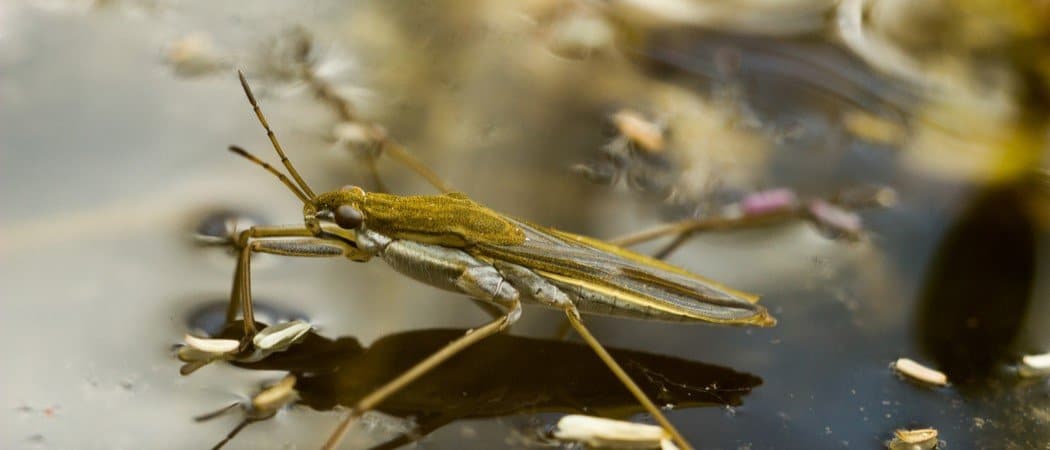
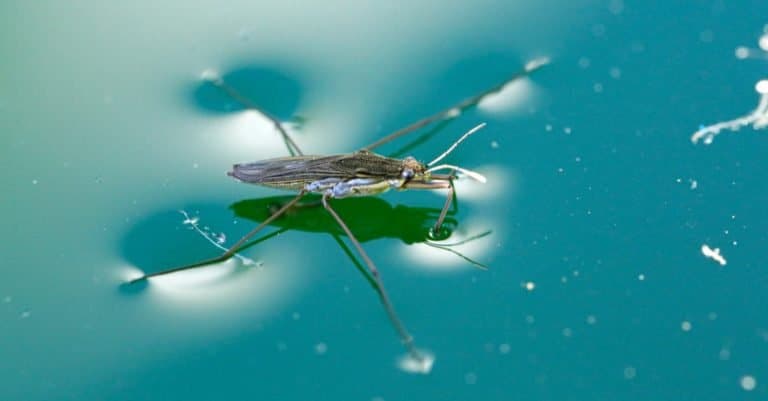
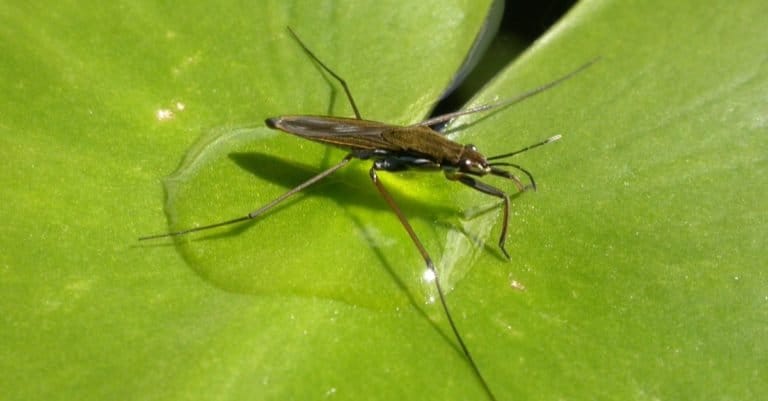
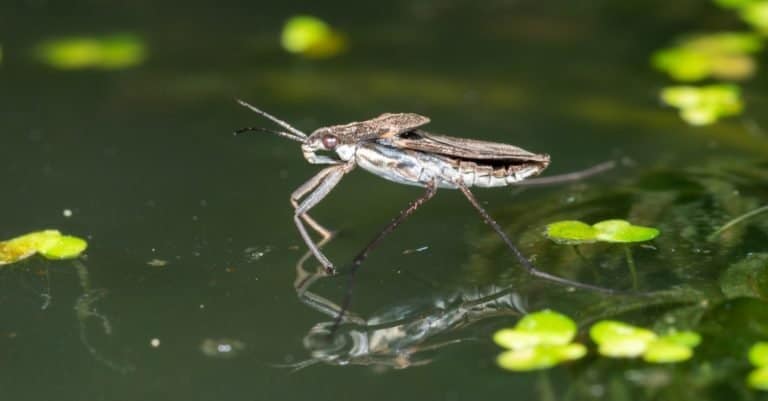
The pond skater, also known as a water strider, lives its entire life on or around water.
But unlike many other aquatic insects, it has the ability to glide serenely across the surface as if by magic. These bugs are an integral part of the ecosystem wherever they’re found. They keep the populations of other insects in check.
Pond Skater Facts
- The pond skater can dash across the water at up to a hundred body lengths per second.
- Male and female pond skaters have evolved an antagonistic reproductive relationship. Females have a shield on their genitals to protect against forced copulation. But males have also evolved the ability to copulate in a way that exposes the female to potential predators, thus forcing her to submit quickly. This antagonistic relationship is all about controlling the spread of the individual’s genes to the next generation.
- The pond skater female will carry between two and 20 eggs at a time. She lays them on rocks or vegetation just underneath the water.
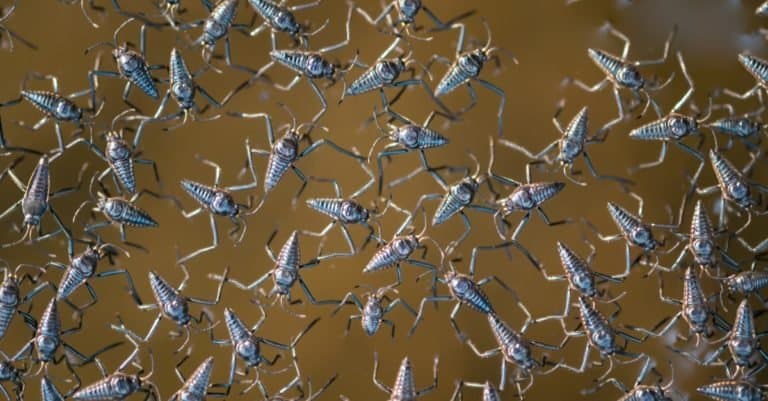
- The pond skater undergoes five different nymph stages in its life cycle, each of which lasts up to 10 days and ends with the insect molting its skin. It reaches the adult phase in its life cycle after two months or so. Many species have a lifespan of only about a year, which gives them a single chance to reproduce before they die.
Pond Skater Species, Types, and Scientific Name
The scientific name for the pond skater family is Gerridae. There are more than 350 species in this family. They are divided into several different genera. Gerris is the largest genus of pond skaters. It’s found worldwide and under many different ecological conditions. Halobates is the only genus that inhabits saltwater habitats. Most of the rest have local or limited distributions. Here is a short list of them:
- Gerris
- Halobates
- Rheumatobates
- Aquarius
- Limnogonus
- Neogerris
Appearance: How to Identify the Pond Skater
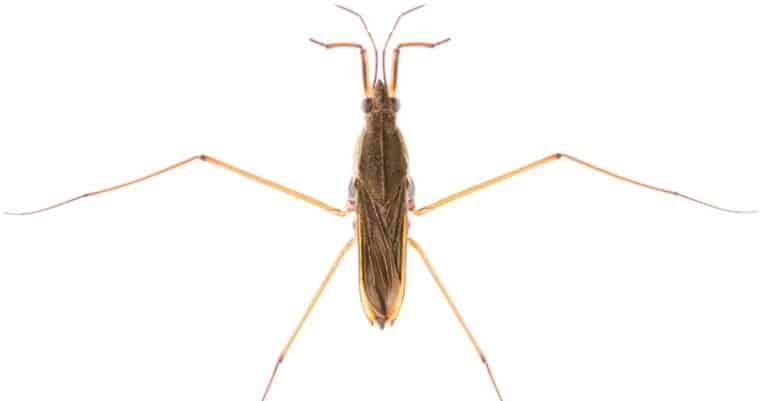
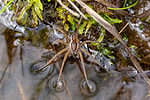
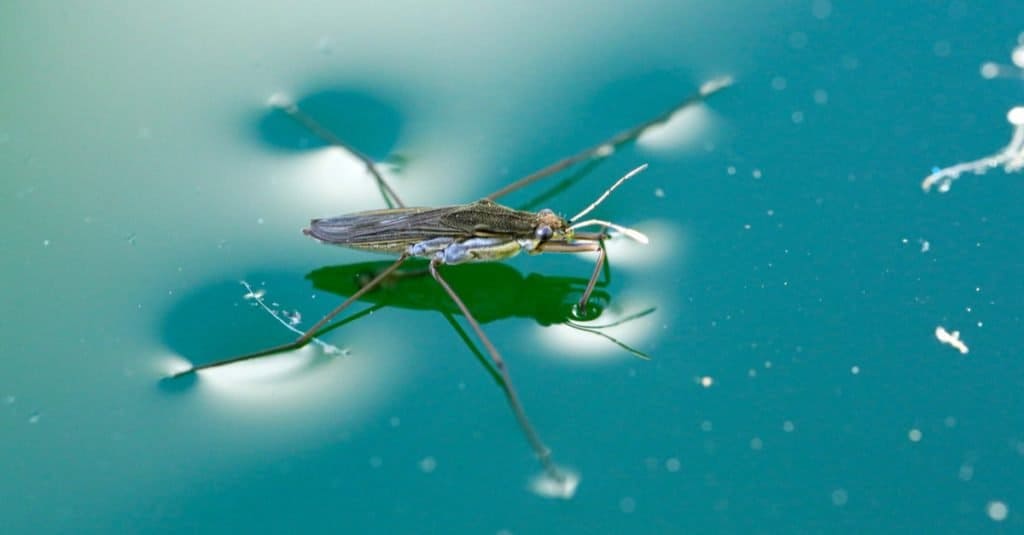
The pond skater is characterized by a slender body, three pairs of long, sinewy legs, and retractable claws. The entire brown or black-colored body is covered in tiny, water-repellent hairs that trap air and prevent the insect from sinking. They can support up to 15 times the entire insect’s weight, allowing it to stay buoyant even in heavy rainstorms.
The three pairs of legs each serve their own purpose. The shorter front pair is adapted for grabbing prey. The long middle pair serves as paddles for the insect to move. The back legs, which are the longest of all in size, allow the insect to steer and brake. The body itself measures about 0.2 inches long, but the legs can easily equal or exceed the size of the body.
The typical pond skater is a wingless insect because wings would tend to weigh down the body and make it more difficult to stay afloat. However, one of the most interesting facts about this insect is that newly born pond skaters can develop long or short wings out of necessity. This gives the pond skater the ability to fly away and seek out new water sources if conditions become crowded or dry. It is attracted to pretty much any reflective surface it can find.
©Maleo/Shutterstock.com
Habitat: Where to Find the Pond Skater
The pond skaters are found in freshwater rivers, lakes, ponds, and streams all over the world. The species in the genus Halobates are the only saltwater pond skaters (and the only saltwater insects in general).
Diet: What Do the Pond Skaters Eat?
The pond skater consumes spiders and insects that get too close to the water. It grabs the prey with the front legs, pierces the body, and then sucks out all of the inner parts. The pond skater’s favorite food is mosquito larvae that poke out from the surface of the water with a little snorkel. If there is not enough food available or it’s too overcrowded, then they have been known to cannibalize their own nymphs.
Prevention: How to Get Rid of the Pond Skater
Pond skaters do not usually cause large infestations on the scale of, say, ants or termites, but they are sometimes attracted to the surface of swimming pools. You can get rid of individual skaters by spraying them with soapy water. This prevents their ability to skate across the water. If you have a large infestation of pond skaters, then the best advice is to remove anything that attracts insects on which the pond skater feeds. The growth of algae is one of the most common problems that attract insects to a swimming pool. They can be removed by brushing the sides of the pool and any other areas and pushing the algae toward the filter. You can also trim or remove plants, eliminate areas of standing water, and maintain proper chlorine and pH balance in the pool to prevent insects from gathering.
Pond Skater Pictures
View all of our Pond Skater pictures in the gallery.

Kiolk/Shutterstock.com
Sources
- Cool Green Science / Accessed February 13, 2021
- Britannica / Accessed February 13, 2021
- SF Gate / Accessed February 13, 2021